






Phone / WhatsApp :+86 15868721920

Adresse :Binhai Industrial Park, Longwan District, Wenzhou

Can a Bad Oxygen Sensor Cause Poor Gas Mileage?

A biased or slow oxygen sensor can contribute to poor fuel economy, but mileage changes require diagnosis of fuel trims, temperature, airflow, leaks and driving conditions.

Oxygen Sensor Technical Guide

A biased or slow oxygen sensor can contribute to poor fuel economy, but mileage changes require diagnosis of fuel trims, temperature, airflow, leaks and driving conditions.

Fuel economy diagnosis sequence using baseline fuel trims leaks and oxygen sensor response decision checkpoints
Fuel economy is a system result; sensor replacement requires supporting diagnostic evidence. The checkpoints summarize the evidence to confirm before the next decision.

Quick answer

Yes. A slow or biased upstream oxygen sensor can cause the engine control module to apply incorrect fuel correction, which may reduce gas mileage. But poor fuel economy alone does not prove sensor failure. Driving pattern, tire pressure, thermostat operation, airflow measurement, fuel pressure, injectors, ignition, exhaust leaks and stored adaptations can produce the same complaint.

How an oxygen sensor can affect fuel use

When the engine is warm and operating in closed loop, upstream sensor feedback helps the control module evaluate mixture. If the signal is biased lean, the module may add fuel. If it is slow or biased rich, correction can also become inappropriate. Vehicle strategy may use fallback values when a circuit fault is detected, so the effect varies by application and operating condition.

Why a mileage drop is not proof

CheckHow it can imitate an O2 sensor problem
Trip pattern and weatherShort trips, idling, load and low temperature reduce measured economy.
Tires and alignmentLow pressure or rolling resistance raises fuel demand.
Thermostat / coolant dataAn engine that stays cold may remain in enrichment longer.
MAF/MAP and intake leaksIncorrect air calculation changes fuel trim and sensor readings.
Fuel pressure or injectorsDelivery faults can create rich or lean operation.
Ignition or mechanical conditionMisfire and low efficiency waste fuel and affect exhaust oxygen.

Use measured evidence

Compare fuel economy over similar routes and fill methods, then record codes, freeze-frame data and fuel trims. Inspect the intake and exhaust for leaks. Check coolant temperature, airflow data and sensor response under the operating conditions specified by service information. A healthy sensor can correctly report a problem created elsewhere.
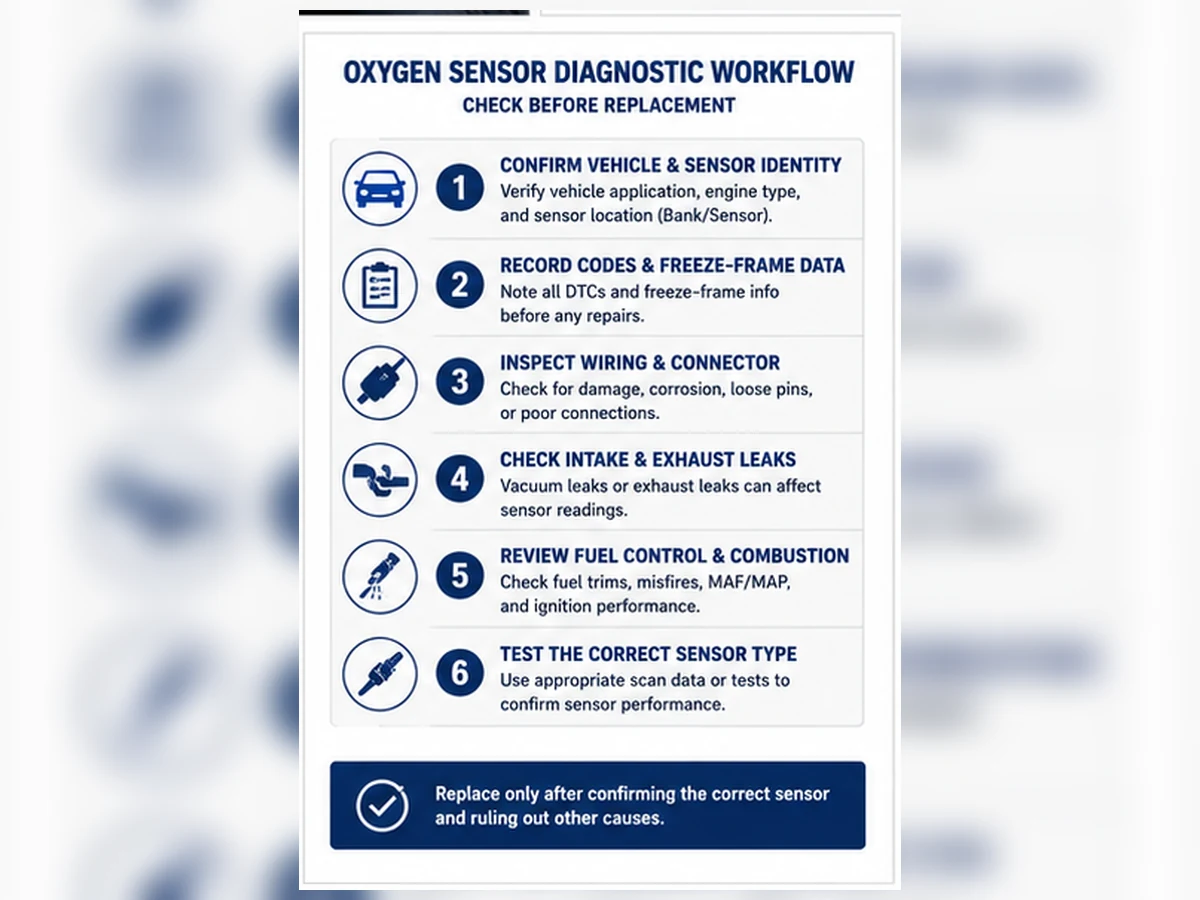
Six-step oxygen sensor diagnostic workflow
Test the system around the sensor before using fuel economy as a replacement decision.

Upstream and downstream effects are different

The upstream sensor is normally more directly involved in fuel-control feedback. A downstream sensor commonly monitors catalyst performance, although strategies differ. Replacing a rear sensor solely because mileage declined is therefore especially weak reasoning unless circuit tests and service data support it.

What to verify after repair

Correct the root cause, confirm that fuel trims and sensor data respond normally, and allow required monitors to run legally. Reset procedures differ by vehicle. Compare mileage only over enough similar driving to reduce normal variation; an immediate dashboard estimate is not reliable proof of savings.

How a sensor fault can change fuel use

When a warm engine meets closed-loop conditions, upstream oxygen-sensor feedback helps the control module evaluate mixture. A biased lean report can lead the module to add fuel; a slow or biased rich report can disrupt correction in another direction. The effect depends on the control strategy, operating time in closed loop and whether other inputs remain plausible. A downstream sensor commonly supports catalyst monitoring and should not automatically be blamed for a mileage complaint.

Possible pathSupporting evidenceWhat can imitate it
Biased lean feedback adds fuelPositive correction with failed response testIntake leak, low fuel delivery or exhaust leak
Slow response delays correctionTechnology-specific response outside specificationSlow real mixture change or low scan rate
Heater fault delays feedbackVerified heater circuit failure and enable conditionsFuse, wiring, ground or control fault
Fallback strategy after faultService information and stored diagnostic evidenceOther failed inputs or open-loop command

Build a credible fuel-economy baseline

Dashboard estimates are useful for trends but can change with trip length and reset history. For a stronger baseline, record fuel added and distance over several comparable fill cycles, using consistent fill practice. Note ambient temperature, route, average speed, load, tire pressure, fuel blend and idling. Do not compare a winter short-trip period with a warm highway period and assign the difference to one sensor.

Normalize the driving conditions

Cold starts and short trips keep the engine and catalyst below stable operating conditions for a larger share of the journey. Towing, roof loads, traffic and high speed increase energy demand independently of mixture feedback. Record these factors before diagnosis.

Check measurement and maintenance factors

Verify tire size and pressure, dragging brakes, alignment symptoms, fuel leaks and maintenance condition. An odometer or tire-size change can distort calculated mileage. Strong raw-fuel odor or a visible leak is a safety issue, not a sensor experiment.

Use a diagnostic order before replacing the sensor

  1. Record current, pending and permanent codes, freeze frame and readiness before clearing.
  2. Confirm engine reaches the expected operating temperature and closed-loop state.
  3. Review short- and long-term fuel trims by load and speed.
  4. Inspect intake and exhaust leakage, airflow/load data and fuel delivery.
  5. Identify the exact upstream sensor technology and run the specified response/circuit test.
  6. Repair the supported root cause and repeat the baseline under comparable conditions.
ObservationQuestion it raisesNext evidence
High positive trim mainly at idleUnmetered air or low-flow exhaust leak?Leak test and trim comparison at higher load
High positive trim across loadFuel delivery, airflow or sensor bias?Pressure/volume, load data and response test
Negative trimExcess fuel or biased input?Injectors, purge, pressure, temperature and sensor data
Normal trims but mileage complaintNon-mixture operating factor?Baseline, tires, brakes, route, load and warm-up

Inputs that commonly imitate an oxygen-sensor problem

Coolant temperature and thermostat operation

An engine that runs colder than intended may use a richer strategy and spend more time outside normal control conditions. Compare actual temperature data with the vehicle procedure; do not replace the oxygen sensor because the dashboard gauge appears normal.

Airflow, load and intake leakage

Incorrect MAF/MAP data or unmetered air changes the control module’s fuel calculation. A healthy oxygen sensor may report the resulting lean exhaust accurately. Compare load data, fuel trims and leak evidence.

Fuel delivery, injectors and purge

Excessive pressure, injector leakage or uncontrolled purge flow can create rich operation. Low pressure or restricted delivery can create lean operation. These causes must be tested rather than inferred from the oxygen-sensor signal alone.

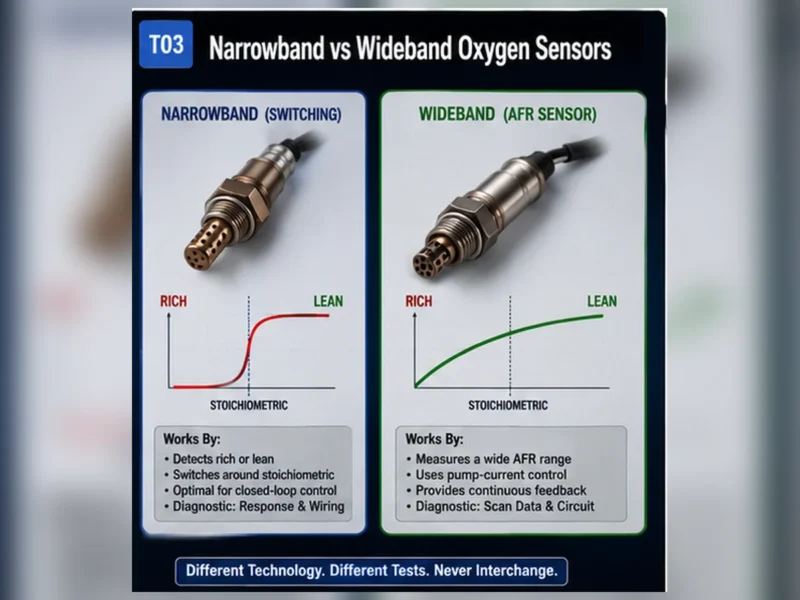
Interpret narrowband and wideband data correctly

A narrowband upstream trace and a wideband/A/F current or lambda parameter require different expectations. Confirm units, supported PID, engine temperature and commanded state. A single screenshot cannot show response over time or establish whether the sensor caused the fuel correction.

Data itemUseful questionLimitation
Short-term fuel trimWhat correction is occurring now?Changes rapidly with state and load
Long-term fuel trimWhat repeated trend was learned?Can retain history after a prior fault
Sensor voltage/current/lambdaDoes response match technology?Needs commanded state and test conditions
Closed-loop statusIs feedback currently enabled?Does not prove every input is correct

Composite scenario: cold operation drives the complaint

Composite diagnostic scenario: fuel economy falls during short winter trips and an older oxygen-sensor code is stored in history. Current trims are plausible when warm, but coolant-temperature data shows the engine does not reach the expected operating range. Thermostat diagnosis changes the repair direction. This is a composite example, not a Sunhyings customer case or savings claim.

Why no universal savings percentage is responsible

The benefit of replacement ranges from none, when the sensor was not faulty, to a meaningful correction when biased feedback affected fuel control. Vehicle, route, climate and other faults dominate the result. Do not promise a percentage improvement or calculate payback until diagnosis identifies the fault and a repeatable baseline exists.

Verify both the repair and the economy trend

After repair, confirm circuit and technology-specific sensor response, plausible fuel trims and completion of the relevant monitor. Then compare fuel use over similar routes and conditions. Learned adaptations may require the vehicle’s specified procedure and time to stabilize. Clearing memory repeatedly can erase diagnostic evidence without proving improvement.

Do not convert a mileage complaint directly into an order

A parts request should include the diagnostic basis as well as fitment identity. Record the tested sensor position, technology, OE reference, complete vehicle and engine, market/emissions package, connector and cable details. “Uses too much fuel” does not identify which sensor is involved or prove that any sensor failed.

For fleet or distributor analysis, separate catalog mismatch, no-fault-found returns and confirmed response failures. Do not advertise a guaranteed fuel-saving percentage. Product evidence can support fitment and specification; only controlled before/after vehicle data under comparable conditions can support an economy result.

If diagnosis supports replacement, verify the OE number, exact Bank/Sensor position, sensor technology, connector, lead and regional application before installation. A correctly diagnosed failure can still produce an unsuccessful repair when the replacement belongs to another position or calibration. Fitment approval and causal diagnosis remain separate gates.

Establish that fuel economy actually changed

A dashboard estimate over one short trip is not a reliable baseline. Fuel use changes with trip length, idle time, traffic, speed, ambient temperature, fuel blend, payload, tire pressure, roof loads, climate control and driver behavior. Before linking a complaint to an oxygen sensor, calculate fuel added over distance across comparable operation and record the conditions.

Baseline inputHow to record itWhy it matters
Fuel quantityUse consistent fill method and actual volume addedGauge movement and estimated range are not precise consumption
DistanceOdometer or verified trip distanceShort samples amplify normal variation
Trip mixCity, highway, idle time and average trip lengthCold starts and congestion change consumption
EnvironmentTemperature, seasonal fuel and weatherWarm-up and rolling/aero losses vary
Vehicle loadPassengers, cargo, trailer and accessoriesRequired engine work changes
Maintenance stateTires, brakes, filters, fluids and recent repairsNon-sensor changes can explain the trend
Fault contextCodes, warning lamps and drivability symptomsDefines whether diagnosis is urgent

Use the baseline to describe the problem, not to promise a sensor will restore a fixed MPG. If the data is inconsistent or unavailable, mark the fuel-economy change DATA NOT AVAILABLE and diagnose the reported symptoms separately.

How an upstream oxygen-sensor problem can affect fuel use

After enable conditions are met, the control module can use upstream oxygen-sensor feedback with airflow, load, temperature and other inputs to correct injector command. A biased, slow or unavailable signal can contribute to incorrect correction or to a fallback strategy. The effect depends on sensor technology, failure mode, vehicle calibration and operating state.

The sensor does not meter fuel directly. If it reports a true lean condition caused by unmetered air, low fuel delivery or an exhaust leak, adding fuel may be the controller’s rational response. Replacing that correctly reporting sensor leaves the root cause active. Conversely, a biased signal may drive correction even though the engine condition is different. Diagnosis must separate these paths.

Signal situationPossible controller responseFuel-use implicationEvidence needed
Accurate lean reportAdd fuel within control authorityConsumption may increase because another fault existsLeaks, fuel pressure, airflow and trim pattern
Sensor biased leanAdd fuel despite richer actual mixtureCan increase consumption and emissionsIndependent mixture/circuit/response evidence
Accurate rich reportReduce fuel within control authoritySensor is reporting an engine/fuel faultFuel pressure, injectors, purge, ignition and trims
Sensor biased richRemove fuel despite leaner actual mixtureDriveability and catalyst risk can resultTechnology-correct plausibility and response test
No valid feedbackUse fallback/open-loop strategy as calibratedEffect varies; no universal MPG loss appliesCode/status, operating state and service logic
Downstream concernPrimarily catalyst-monitor path in many systemsNot the first universal cause of poor mileageExact control strategy and related faults

Competing causes of poor gas mileage

SystemPossible causeEvidence to compare
Operating patternShort trips, long idle, traffic, high speed or heavy loadTrip history and comparable baseline
Tires/chassisLow pressure, alignment, bearing or brake dragPressure, temperature, coast/inspection and service data
Temperature controlEngine does not reach expected operating temperatureCoolant data, warm-up time and thermostat procedure
Air measurementAirflow or pressure input bias, intake restriction or leakLoad, airflow plausibility, trims and leak tests
Fuel systemPressure, injector leakage, purge flow or fuel qualitySpecified pressure/decay, balance and command tests
Ignition/mechanicalMisfire, compression or valve-control issueMisfire counters, ignition tests and mechanical evidence
ExhaustLeak before sensor or restrictionCold/hot leak inspection and backpressure/service tests
Calibration/dataIncorrect tire size, module update or unsupported parameterVehicle configuration and service information

Use fuel trims as context, not a replacement verdict

Short-term correction shows immediate control response; long-term correction reflects learned adjustment over operating regions. Names, signs, units and reset behavior can vary, so use service definitions. Compare banks and more than one airflow condition. A single idle value cannot separate every cause.

General patternPossible directionNext checkBoundary
Positive correction strongest at idleUnmetered air or low-flow exhaust leakCompare at elevated airflow and perform leak testNot a universal threshold
Positive correction at idle and loadFuel delivery, airflow measurement or broad lean conditionFuel pressure, airflow plausibility and both banksSensor bias remains one possibility
Negative correction with rich symptomsExcess fuel, purge, injector or measurement issueFuel pressure, injector and ignition evidenceRich sensor report may be accurate
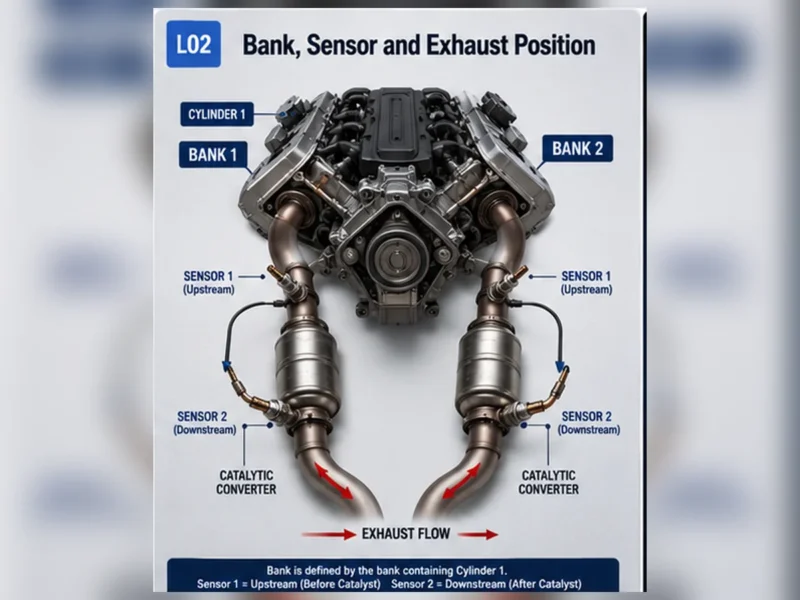
One bank differsLocalized leak, fuel, ignition, mechanical or circuit issueBank comparison and cylinder evidenceBank identity must be correct
Correction normal but mileage lowTrip/chassis/load or non-feedback causeRecheck consumption baseline and mechanical lossesNormal trim does not prove entire vehicle perfect

Diagnostic workflow for mileage plus an oxygen-sensor concern

  1. Quantify fuel use over comparable conditions and document the change.
  2. Scan all modules; preserve codes, status, freeze frame and readiness.
  3. Confirm operating temperature, trip pattern, tire/chassis and maintenance basics.
  4. Identify exact sensor technology, bank and position before graphing data.
  5. Inspect exhaust leaks, connector, harness and loaded heater circuit.
  6. Compare trims by bank and airflow with airflow, load, fuel and misfire context.
  7. Run the manufacturer-aligned response or plausibility test.
  8. Repair the supported root cause; do not order from MPG or code alone.
  9. Repeat the same diagnostic observations and monitor procedure after repair.
  10. Compare fuel use only across a sufficiently similar later sample.
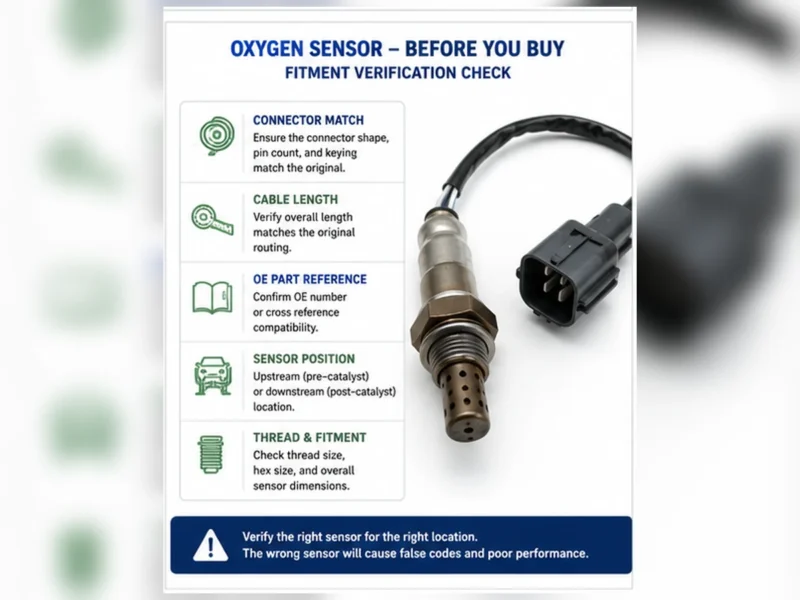
Wideband air-fuel ratio sensor with a multi-pin keyed connector and protected cable
A multi-pin connector can indicate a more complex circuit; it does not by itself prove technology, calibration or fitment.

Code families that can accompany the complaint

Code/conditionWhat it contributesWhat it does not prove
Lean/rich system codeFuel-control correction exceeded monitor logicWhich air, fuel, exhaust, circuit or sensor cause exists
Oxygen-sensor low/high codeNamed signal condition for bank/positionWhether signal reflects real mixture
Slow/no-activity codeResponse or activity concernCorrect temperature, circuit or root cause without testing
Heater codeHeater circuit monitor concernThat the sensor element is the failed circuit component
Misfire codeCombustion fault can distort oxygen and fuel useIgnition-only cause
P0420/P0430Catalyst efficiency monitor concernAutomatic upstream/downstream sensor order

Composite case: fuel use rises because the sensor reports an intake leak

Composite workshop scenario: a vehicle shows positive correction on both banks, especially at idle, with an oxygen-sensor lean indication. The sensors respond to an approved mixture change. A controlled intake test finds unmetered air. After repair, trims normalize under comparable conditions and the sensors remain in service.

The scenario does not say every idle-positive trim pattern proves a leak. It shows that a responsive sensor can be evidence of another fault. It is composite, not a Sunhyings customer case and contains no claimed fuel-saving percentage.

Composite case: a biased upstream signal is supported by independent evidence

Composite diagnostic scenario: one bank commands sustained fuel addition even though leak, fuel-delivery and ignition checks are satisfactory. Circuit integrity passes, and a manufacturer-aligned response comparison shows the named upstream sensor remains biased relative to the known stimulus and opposite bank. Exact fitment is confirmed and the sensor is replaced.

After repair, response and trims are verified and the relevant monitor completes. Fuel economy is evaluated later over comparable trips rather than promised at installation. This is a composite reasoning example, not a test result for a Sunhyings part.

Measure repair success at three levels

LevelSuccess evidenceTiming
Physical/circuitCorrect part/position, secure routing, sealed exhaust and valid heater circuitImmediately after installation
Control/monitorTechnology-correct response, plausible trims and monitor completionUnder specified operating conditions
Fuel-use outcomeCalculated consumption over comparable distance/trip/environmentAfter enough representative driving

A warning lamp that stays off for one short trip is not the same as monitor completion. A better dashboard estimate is not the same as measured fuel use. Preserve before/after data and investigate any remaining condition rather than assigning all change to the replacement sensor.

Selection and claim record if replacement is supported

  • Vehicle, engine, market/emissions configuration and exact Bank/Sensor position
  • OE/cross-reference source and revision
  • Narrowband, titania or wideband/A/F technology
  • Connector, pins, lead, clips, thread and shield confirmation
  • Baseline fuel-use method and conditions
  • Codes, circuit, leak, trim and response evidence
  • Package, part and lot/date plus installed-route photos
  • Post-repair response, readiness and later comparable consumption data

Sunhyings can review exact fitment and sourcing data submitted for a project. This page does not promise a fuel-economy gain, stock, fitment, price, MOQ or lead time for an unverified part number.

Control normal variation when comparing before and after fuel use

A valid comparison does not require laboratory precision, but it does require consistent definitions. Use the same fuel-economy calculation, comparable route mix, similar seasonal conditions and enough distance that one cold start or long idle period does not dominate the result. Note tire pressure, load and maintenance changes. Do not discard unfavorable trips merely to make the repair appear successful.

Variation sourceControl or recordMisleading conclusion to avoid
Fill variationUse repeatable pump/fill method and multiple fills where practicalOne fill proves exact improvement
Trip mixCompare similar city/highway/idle proportionsHighway after repair versus city before repair
Temperature/seasonRecord ambient range and seasonal fuel contextAll change came from the sensor
Driver/loadRecord major changes in speed, payload or towingVehicle condition alone determines fuel use
Adaptation/monitorAllow required control and monitor operationImmediate display reset is a validated trend
Other maintenanceList tires, brakes, thermostat, filters and simultaneous repairsAttribute combined repair outcome to one part

If the sensor circuit and monitor now pass but measured fuel use remains poor, do not repeatedly replace the sensor. Revisit the baseline, operating conditions and competing mechanical or control causes. The repair can be technically correct without explaining every component of the original fuel-cost complaint.

Contamination can connect fuel use, sensor response and catalyst risk

Rich operation, oil consumption, coolant entry and unsuitable silicone products can affect the sensing element and catalyst. Deposits on a removed sensor are useful evidence but not a complete chemical diagnosis. Photograph them, review oil/coolant history and test the related engine system. Replacing a contaminated sensor without correcting exposure can create a repeat repair.

ObservationInvestigation directionBoundary
Dry dark sootRich operation, misfire, trip pattern and temperatureAppearance alone cannot name the cause
Oil-related depositsConsumption, seals/rings/ventilation and misfireDo not promise a sensor fixes oil use
Coolant-related evidenceCooling-system loss and internal leak diagnosisColor is not a laboratory identification
Possible silicone poisoningReview sealants and service historyDo not clean with unapproved chemicals
Heat-damaged harnessRouting, shields and exhaust temperature/root causeReplacing element alone leaves physical cause

How to investigate “new sensor did not improve MPG”

A fuel-economy outcome alone is not a product-conformity test. Start by confirming the delivered part, exact application/position and installation. Review the original diagnostic basis, circuit and response results, baseline method and all simultaneous repairs. Then test the product and vehicle against defined specifications.

Claim evidenceQuestion answered
Invoice, package, part and lot/dateWhat product was supplied?
Vehicle/engine/emissions/positionWas the fitment claim correct?
Before/after code and response recordWas the original circuit concern corrected?
Installed route and connector photosWas physical installation appropriate?
Fuel-use baseline and comparison conditionsIs the claimed economy change measurable?
Other diagnostic/maintenance changesWhat competing causes or confounders remain?

A supplier should not dismiss the claim solely because a bench test passes, and a buyer should not declare the sensor defective solely because MPG did not change. Classify evidence, identify missing data and close the actual nonconformance or vehicle cause.

Do not trade legal emissions monitoring for apparent economy

Spacers, simulators, sensor deletes, software code suppression and catalyst-monitor defeat do not diagnose or repair poor fuel economy. They can conceal evidence and violate emissions law. Restore the designed system, correct engine and exhaust faults and verify readiness through the applicable legal monitor process.

A catalyst or sensor monitor that remains incomplete after codes are cleared is not evidence of improved emissions or fuel control. Meet the manufacturer’s enable conditions safely, retain permanent-code history as required and investigate any returning fault. For U.S. applications, EPA/CARB rules take priority; other markets require their own regulatory check. “Off-road use” is not a general permission to defeat the system.

The useful customer promise is diagnostic discipline, not a percentage: confirm the complaint, test the system, install the verified part only when supported and measure the outcome under comparable conditions.

Technical pass before economy attribution

First require correct part identity, secure installation, valid heater and signal operation, plausible fuel control and completed monitor evidence. Only then compare longer-term consumption. If technical checks pass but economy does not improve, the result directs diagnosis toward other vehicle or operating causes rather than another unsupported sensor replacement.

Prepare a fitment or sourcing request

Send the OE number, year/make/model, engine or VIN details, market and emissions package, exact bank/sensor position, connector and old-part photos, quantity and any packaging or approval requirements. Sunhyings will review the supplied data for capability and sourcing feasibility; fitment is not confirmed until application evidence is matched.

Contact Sunhyings with your fitment data

Frequently asked questions

How much mileage can a bad oxygen sensor reduce?

There is no dependable universal percentage. The effect depends on sensor bias, control strategy, driving conditions and other faults.

Will replacing an O2 sensor improve gas mileage?

Only when the sensor is actually faulty and affecting control. Replacement will not correct tire, thermostat, airflow, injector or driving-pattern causes.

Can a downstream sensor cause poor mileage?

Its primary role is commonly catalyst monitoring, so diagnose the vehicle strategy and circuit rather than assuming the rear sensor controls fuel.

Can poor mileage occur without a check-engine light?

Yes. Operating conditions, maintenance issues and some biased inputs may affect economy before a monitor sets a code.

What data should I check first?

Record consistent fuel use, codes and freeze frame, then inspect fuel trims, coolant temperature, airflow data, intake/exhaust leaks and sensor response.
Technical references