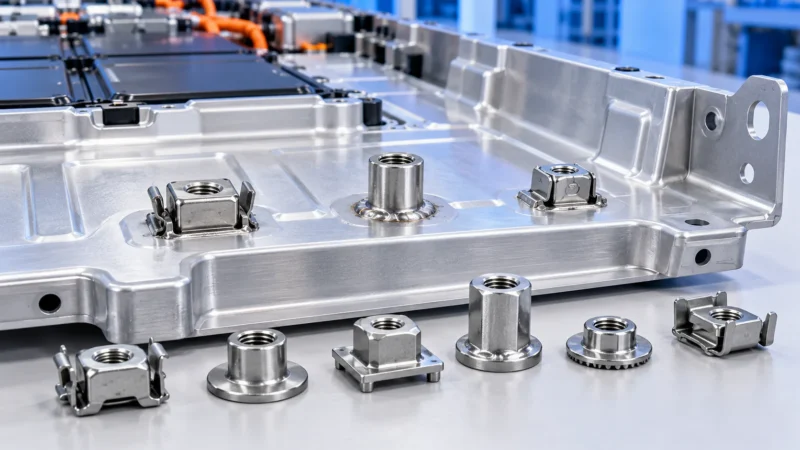
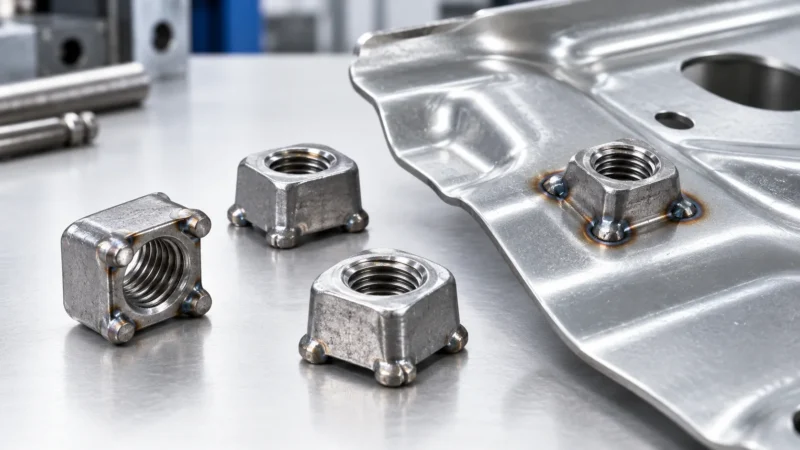
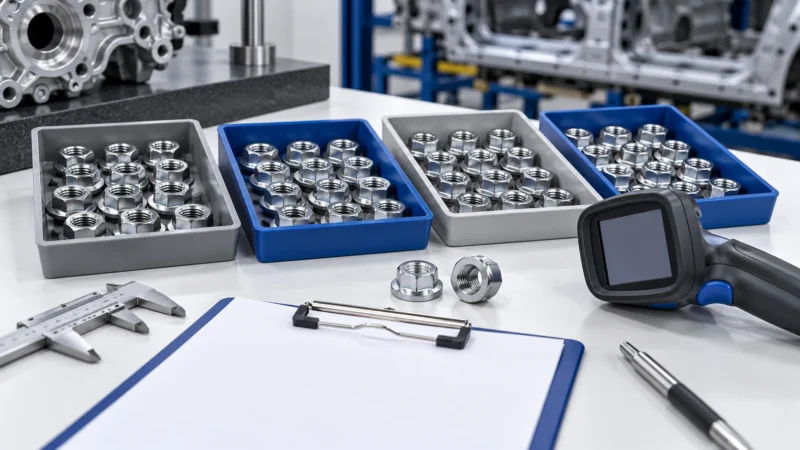
The distinction matters because galvanizing changes the dimensions and friction behavior of threaded components. The nut must provide sufficient clearance for the coated bolt without sacrificing the thread strength required for the assembly. Lubrication and the combination of components then affect how the assembly develops pretension during tightening. The RCSC 2025 Specification for Structural Joints Using High-Strength Bolts addresses these relationships through its requirements for coated bolting components, matched assemblies, inspection records, and installation verification.
What Does “Hot-Dip Galvanized A325” Actually Specify?
The designation A325 identifies a high-strength structural bolt grade now covered by ASTM F3125/F3125M. For the conventional heavy-hex product discussed here, Grade A325 Type 1 is the relevant bolt identity. Hot-dip galvanizing is a separate coating requirement, generally associated with ASTM F2329/F2329M for the structural bolting components covered by the applicable specification.
These designations serve different purposes. ASTM F3125 addresses the structural bolt product and its applicable material and mechanical requirements. ASTM F2329 addresses the hot-dip zinc coating applied to fasteners. ASTM A563 establishes requirements for the corresponding heavy-hex nuts, while ASTM F436 applies to the specified hardened washers. RCSC requirements then govern the use, assembly, installation, and inspection of the components in structural joints.
A purchase description reading only “A325 galvanized bolts” leaves several essential questions unanswered. It does not identify the complete bolt configuration, thread size, exact length, governing specification edition, nut grade, overtapping requirements, lubrication condition, or evidence that the delivered components have been verified together.
For a procurement engineer, the first decision is therefore whether the order specifies the actual structural bolting assembly or only some of its individually identifiable components. The former establishes a basis for checking compatibility; the latter leaves critical assembly requirements unresolved.
Why Hot-Dip Galvanized A325 Bolts Need Overtapped Nuts
Hot-dip galvanizing deposits zinc on the external threads of a bolt. The added material changes the effective thread dimensions, so a conventional internal thread may not provide the clearance needed for proper assembly.
The usual solution is to use an overtapped nut: its internal threads are enlarged within the requirements of the applicable nut specification to accommodate the galvanized bolt. RCSC 2025 Section 2.8.1.1 specifically requires hot-dip galvanized nuts to be overtapped in accordance with ASTM A563.
However, overtapping introduces a mechanical trade-off that buyers should not overlook.
The load transferred between a bolt and nut depends partly on the geometry and effective engagement of their threads. Increasing the nut’s internal thread dimensions reduces the amount of material engaged between the mating thread flanks. Excessive overtapping can therefore reduce the nut’s resistance to thread stripping, even when the nut screws onto the bolt smoothly.
This creates two different acceptance questions:
- Fit: Can the nut be assembled onto the galvanized bolt without unacceptable interference?
- Strength: Does the overtapped nut retain the required load-carrying capability when paired with that bolt?
Passing the first does not establish the second. Running a nut down a bolt by hand is a useful preliminary fit observation, but it is not a substitute for specification-based nut acceptance and assembly testing.
Which nut grade is appropriate?
For ASTM F3125 Grade A325 Type 1 bolts in the coated Group 120 configuration, RCSC 2025 Table 2.2 identifies ASTM A563 Grade DH heavy-hex nuts. Section 2.3.2 also permits ASTM A194 Grade 2H nuts as substitutes for certain ASTM A563 grades, including DH.
This does not mean that any DH or 2H nut from any source is automatically suitable. The nut must still satisfy the applicable coating, overtapping, dimensional, mechanical, and assembly requirements. The substitution provision addresses the permitted grade; it does not eliminate the need to establish compatibility with the particular galvanized bolt.
Nor should the larger list of nut grades allowed for plain, uncoated Group 120 Type 1 bolts be applied to coated assemblies. Coating changes the required mating-thread arrangement, which is why RCSC distinguishes these configurations.
Where conventional hardened washers are specified, their grade, type, and finish also need attention. Under RCSC 2025 Section 2.5, applicable washers are generally specified to ASTM F436, and the Type designation is required to correspond with that of the bolt. The quantity and placement of washers depend on the structural joint and installation arrangement; they should not be assumed from the fact that an A325 bolt is galvanized.
The purchasing consequence is straightforward: specify a compatible bolting set and require the supplier to identify the actual nut grade and overtapping basis. An independently purchased galvanized nut is not an acceptable replacement simply because its nominal thread designation matches the bolt.
In an illustrative delivery, galvanized A325 bolts are paired with nuts that turn poorly after final processing. The nominal thread callout did not establish the required coated fit and treatment. Hold the components, confirm the applicable nut requirements and supplied condition, then resolve the assembly evidence. Do not chase the threads or add an arbitrary lubricant to force installation.

Why Lubrication and Rotational Capacity Matter for Matched Assemblies
A correctly overtapped nut addresses an important geometric problem, but thread geometry is only part of the assembly’s behavior during tightening.
When a bolting assembly is tightened, the applied turning effort is consumed in several ways. Some contributes to the development of bolt tension, while a substantial portion is lost through friction at the threads and rotating bearing surfaces.
Galvanizing can increase thread friction and make the relationship between applied torque and achieved pretension less consistent. Lubrication helps control that friction, allowing the assembly to develop pretension more predictably under the applicable tightening method.
This is why a torque value that appears suitable for an uncoated bolt should not be transferred directly to a galvanized assembly. Even assemblies having the same nominal diameter and bolt grade may behave differently if their coatings, nuts, washers, or lubrication conditions differ.
What rotational-capacity testing actually verifies
Rotational-capacity testing, commonly called ROCAP testing, evaluates the behavior of the bolting assembly under a defined tightening and rotation procedure.
Its purpose includes checking whether the combination of bolt, overtapped nut, washer, and lubricant can undergo the required installation-related deformation without unacceptable thread stripping or other specified failure. The test is particularly relevant to galvanized assemblies because it addresses the combined effects of thread fit, lubrication, and mechanical performance.
Under the provisions discussed in RCSC 2025 Section 2.8 and the applicable ASTM F3125 requirements, the responsible supplier must address the required rotational-capacity verification of the supplied galvanized assembly before shipment.
The exact testing procedure, required rotation, sampling basis, and acceptance criteria must come from the governing product specification and edition. A general online rotational-capacity chart should not be treated as universal acceptance criteria for every bolt length, grade, or configuration.
It is also important to distinguish a rotational-capacity test from a routine material certificate. A report identifying a bolt’s material and mechanical properties does not necessarily demonstrate that the actual coated bolt, lubricated nut, and washer combination has been verified together.
Why buying components separately changes responsibility
RCSC’s commentary explains that galvanized high-strength bolts and nuts are intended to be furnished as matched assemblies. The supplier is expected to provide nuts whose lubrication and assembly performance have been evaluated with the supplied bolts.
If bolts and nuts are purchased from separate suppliers, that responsibility is not automatically transferred to either supplier. The purchaser may need to arrange the appropriate combination testing and demonstrate compliance of the assembled set.
Separate sourcing is therefore not inherently impossible, but it introduces additional verification responsibility. A purchasing arrangement should identify who will establish the compatibility of the final combination and who will issue or retain the relevant records.
A supplier’s report for one combination cannot automatically qualify a different combination of bolts, nuts, washers, and lubricant.
Rotational-capacity testing is not field pre-installation verification
Another common misunderstanding is to treat a supplier’s successful ROCAP test as proof that the assembled bolts are ready for installation under any method.
The two verification activities address different questions.
Rotational-capacity testing evaluates the product assembly under the applicable ASTM testing requirements. It provides evidence about the compatibility and performance of the specified components.
Pre-installation verification, as required by RCSC 2025 for applicable pretensioning methods, evaluates representative assemblies using the installation procedure and equipment that will be employed on the project. It accounts for the delivered component condition, cumulative tolerances, lubrication, and the method used to achieve pretension.
A supplier’s ROCAP result does not automatically replace site pre-installation verification. Conversely, a satisfactory pre-installation verification result is not intended to prove that every individual component complies with its ASTM product specification.
The Engineer of Record and governing structural requirements determine which connections need pretensioning and the installation method to be used. A snug-tightened connection should not automatically be assigned the same pre-installation verification requirements as a connection requiring pretensioning.
For procurement, the practical step is to define the required supplied assembly evidence separately from the contractor’s later installation verification responsibilities.
Coating, Storage and Inspection: What Must Be Verified?
A galvanized A325 assembly may be correctly specified and tested before shipment, yet arrive in a condition that requires additional attention.
The first inspection concerns the supplied finish. Hot-dip galvanized components should be identified by their specified coating process, and the relevant coating inspection records should address the requirements of the applicable ASTM F2329 edition. Those requirements may include coating thickness, appearance, and other specified acceptance characteristics.
A visual zinc finish alone cannot establish compliance with the required coating specification. Nor does a coating certificate, by itself, establish the mechanical performance of the bolt or the compatibility of the complete bolting assembly.
Buyers should be particularly careful when suppliers quote alternative finishes as equivalent. An offer describing an assembly as zinc-coated may refer to hot-dip galvanizing, mechanical galvanizing, or another coating system. These should not be silently substituted when the purchase order calls for a specific process.
Lubrication is part of the supplied condition
Galvanized structural bolt assemblies may depend on lubrication applied under controlled conditions. That lubricant must remain suitable through packaging, transportation, storage, and installation.
RCSC 2025 commentary notes that some lubricants used on galvanized assemblies can be affected by moisture or heat. Changes to the supplied lubrication condition can affect installation behavior, particularly where pretension is achieved through rotation.
The supplier’s recommended packaging and storage conditions therefore have a technical purpose beyond keeping the fasteners clean. Protective packaging helps preserve the condition in which the assembly was supplied and verified.
Adding a different lubricant at the jobsite is not a universally acceptable remedy. RCSC 2025 Section 2.10 permits certain field lubrication practices but restricts relubrication of particular matched assemblies to the manufacturer or work performed under the manufacturer’s direction.
Where assemblies intended for pretensioned or slip-critical joints accumulate rust or dirt, the applicable RCSC provisions require cleaning, necessary lubrication, and retesting before use. The disposition of affected components must follow the specified procedure rather than an informal decision based on whether a nut still turns.
Documents must refer to the delivered components
Receiving inspection should establish the connection between the physical components and their supporting records.
For the applicable structural bolting products, RCSC 2025 Section 2.9 requires test reports documenting conformity to the applicable specifications to be available to the Engineer of Record and Inspector before assembly or erection.
The supplier should therefore be able to identify which reports support the bolts, nuts, washers, coating, and assembly testing supplied under the order. The exact documentation format and traceability identifiers should follow the applicable product standards and project purchasing requirements.
A bolt material test report, a nut certificate, a galvanizing inspection record, and a rotational-capacity test record are not interchangeable. They establish different aspects of compliance.
Where the purchase order requires traceability by lot, heat, batch, or assembly identification, those identifiers should allow the receiving inspector to match the delivered items with the correct records. A generic certificate referencing a product family is not adequate evidence for a particular lot unless the governing documentation requirements permit that identification and its relationship to the shipment can be established.
The buyer’s acceptance question is therefore not simply whether the documents exist, but whether they refer to the actual delivered configuration and collectively address the requirements of the purchase order.
A hypothetical order arrives with bolt and nut certificates from separate sources but no clear responsibility for the required assembly tests. Individual certificates do not answer that question. Reconcile the matched supply scope, lubrication condition and applicable rotational-capacity evidence, maintaining the component-lot relationship through receiving and field verification.
How to Specify and Receive Hot-Dip Galvanized A325 Assemblies
A useful request for quotation identifies the complete bolting arrangement and establishes who is responsible for its compatibility and documentation.
The exact fields depend on the project, but the following distinctions prevent common gaps between the purchase description and the delivered assembly.
| RFQ or receiving item | What the buyer should establish |
|---|---|
| Bolt specification | ASTM F3125/F3125M Grade A325, Type 1, heavy-hex configuration, and applicable edition |
| Dimensions | Nominal diameter, thread designation, required length, and quantity; confirm the structural connection’s dimensional requirements |
| Coating | Hot-dip galvanizing to the applicable ASTM F2329/F2329M edition, rather than an unspecified zinc finish |
| Nut | Compatible heavy-hex nut grade, coating, overtapping, and any permitted substitution |
| Washer | Applicable ASTM F436 type, finish, and project-required washer configuration |
| Lubrication | Supplied lubricant condition and handling or relubrication restrictions |
| Assembly verification | Applicable rotational-capacity test evidence, identifying the responsible supplier and covered components |
| Inspection documents | Required bolt, nut, washer, coating, and assembly records with sufficient identification of the delivered lots |
| Packaging and delivery | Protection of the supplied assembly condition and segregation of differently identified lots or configurations |
The table is a purchasing framework, not a substitute for the project’s approved structural specification. A buyer should not independently select bolt pretensioning requirements, alter the approved washer arrangement, or authorize component substitutions that require engineering review.
Hypothetical example: identical bolt size, incomplete assembly specification
Assume an EPC buyer requires 600 sets of 3/4-inch-diameter ASTM F3125 Grade A325 Type 1 heavy-hex bolts for an outdoor steel structure. The required lengths and connection arrangements have already been defined by the structural drawings. Hot-dip galvanizing is specified for corrosion protection.
One supplier quotes the galvanized bolts, while a second offers ASTM A563 heavy-hex nuts described only as galvanized. The second quotation does not identify the nut grade, whether the nuts were overtapped for hot-dip galvanized structural bolts, the lubrication condition, or whether the final bolt-nut-washer combination has undergone the applicable rotational-capacity verification.
The quotations may look commercially compatible because the nominal thread dimensions agree. From an engineering procurement standpoint, however, the assembly remains insufficiently specified.
Before accepting the second offer, the buyer needs to establish several facts. The nut grade must be permitted for the coated A325 Type 1 assembly. The coating process and overtapping must match the relevant requirements. The lubrication must be compatible with the assembled bolts, and the party responsible for assembly testing must be identified.
If the two suppliers cannot provide coordinated verification for the final combination, the purchaser must resolve how that verification will be performed and documented. The alternative is to request a complete matched assembly from a supplier that accepts responsibility for the combination.
This hypothetical case does not assume that either supplier’s parts are defective or that a rotational-capacity test would fail. The problem is the absence of evidence needed to accept the proposed combination. The decision is to resolve that gap before release for use, rather than infer compatibility from the shared nominal size.
Receiving inspection should have a clear release decision
On receipt, the inspector should compare the physical items and their identification against the purchase order and applicable approved technical documents. This includes distinguishing bolt Grade and Type, checking the specified nut grade and coating information, verifying the washer designation, and reviewing the required test and traceability documents.
The condition of the packaging and components also matters. Corrosion, contamination, disturbed lubrication, or mixed identification should trigger further evaluation under the applicable requirements, not automatic use or arbitrary field cleaning and relubrication.
If the required component or assembly evidence is missing, the appropriate action is to segregate the affected material pending documentary clarification, accepted retesting, or disposition under the project quality procedure. Receiving acceptance should not be based solely on head markings, visual finish, or hand assembly.
For buyers comparing quotations, the most useful commercial question is not simply “Can you supply galvanized A325 bolts?” It is:
“Can you identify the complete matched bolting assembly, its applicable coating and nut requirements, and the records that demonstrate the delivered combination meets the specified acceptance criteria?”
A quotation that answers that question provides a stronger basis for procurement than one offering a lower price for individually described components without defined assembly responsibility.
The final installation requirements remain governed by the approved structural design, applicable specification editions, and the project’s inspection procedures. Procurement should deliver the right components and evidence so that those requirements can be executed—not attempt to replace the Engineer of Record’s connection decisions.
Technical references
The engineering discussion above is based on the following publicly identifiable standards and technical sources. The governing contractual editions must be confirmed for an actual project.
- RCSC — Specification for Structural Joints Using High-Strength Bolts (2025). Particularly Sections 2.3, 2.5, 2.8–2.10, and 7.
- ASTM F3125/F3125M-26 — Structural Bolts and Assemblies. Official specification scope and document identity.
- ASTM F2329/F2329M-15(2023) — Hot-Dip Zinc Coatings for Fasteners. Official coating specification identity.
- ASTM A563/A563M-26 — Carbon and Alloy Steel Nuts. Official nut specification identity.
- ASTM F436/F436M-24 — Hardened Steel Washers. Official washer specification identity.
Frequently asked questions
Can plain nuts be used with hot-dip galvanized A325 bolts?
Do not assume compatibility. Specify the permitted nut grade, coating, overtapping, lubrication and matched-assembly requirements for the governing specifications.
Does free hand fit prove a galvanized assembly is acceptable?
No. It is only a limited observation. Required product, coating and assembly conformity evidence still needs review.
Is rotational-capacity testing the same as field verification?
No. Applicable supplier assembly testing and pre-installation verification serve different purposes; establish each requirement separately.