








Technischer Leitfaden für Sauerstoffsensoren
Ein Leitfaden zum Austausch des Sauerstoffsensors bei Chevrolet, der sich auf Diagnose, genaue Fahrzeug- und Motoridentifikation, Sensorposition, Nachweis der Passgenauigkeit und sichere Überprüfung konzentriert.
Kurze Antwort
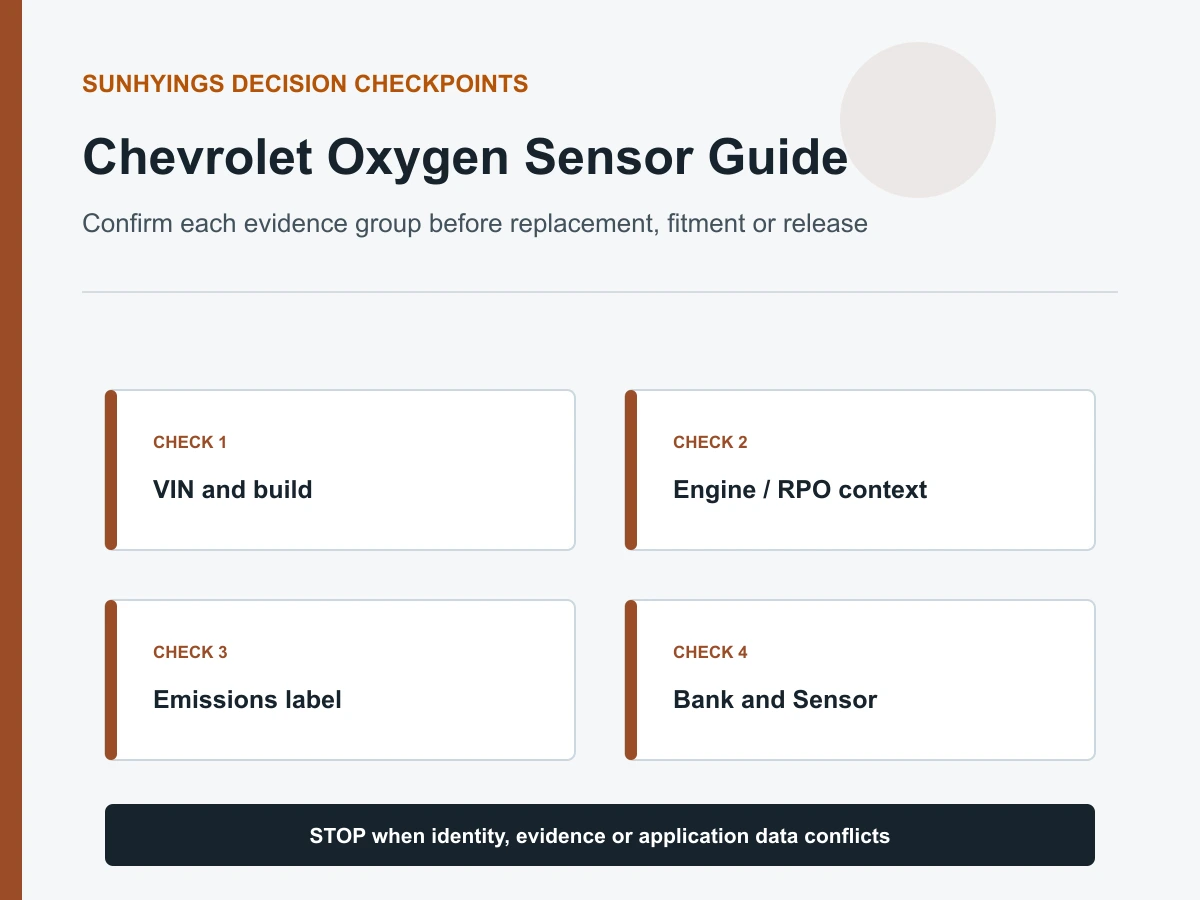
Wählen oder ersetzen Sie bei einem Chevrolet-Fahrzeug keinen Sauerstoffsensor allein anhand des Modellnamens oder Fehlercodes. Bestätigen Sie das genaue Baujahr, Modell, den Motor, die VIN/Fahrzeugdaten, den Verkaufsmarkt und die Abgaskonfiguration; identifizieren Sie dann Bank- und Sensorposition, Sensortechnologie, OE-Referenz, Stecker und Leitung. Die Fahrzeugidentität von Chevrolet/GM kann vom Motor, den VIN/Fahrzeugdaten, der Abgaskonfiguration und RPO-Informationen abhängen; wählen Sie nicht allein anhand des Modellabzeichens. Ein Code grenzt den Testpfad ein, beweist jedoch nicht, dass der Sensor defekt ist.
Was dieser Chevrolet-Leitfaden bestätigen kann und was nicht
Dies ist ein neutraler Leitfaden zur Diagnose- und Passformüberprüfung. Er veröffentlicht keine ungeprüfte Chevrolet-OE-Nummer, Modelljahranwendung, Sensoranzahl, Arbeitszeit oder Drehmomentwert. Der Bestand, die Herstellung und die genehmigte Passform von Sunhying werden nicht beansprucht. Genaue Serviceinformationen und aktuelle Anwendungsdaten für die VIN/Konfiguration bestimmen die Reparatur.
Beliebte Chevrolet-Modellnamen sind keine vollständigen Passungsidentitäten
| Modellsuche | Informationen noch erforderlich | Warum es wichtig ist |
|---|---|---|
| Silverado Lambdasonde | Baujahr, Motor, FIN/Fahrgestellnummer, Markt/Abgasnorm und genaue Position | Ein Modellname kann verschiedene Abgas- und Sensorsysteme abdecken. |
| Equinox Lambdasonde | Baujahr, Motor, FIN/Fahrgestellnummer, Markt/Abgasnorm und genaue Position | Ein Modellname kann verschiedene Abgas- und Sensorsysteme abdecken. |
| Malibu Lambdasonde | Baujahr, Motor, FIN/Fahrgestellnummer, Markt/Abgasnorm und genaue Position | Ein Modellname kann verschiedene Abgas- und Sensorsysteme abdecken. |
| Tahoe Lambdasonde | Baujahr, Motor, FIN/Fahrgestellnummer, Markt/Abgasnorm und genaue Position | Ein Modellname kann verschiedene Abgas- und Sensorsysteme abdecken. |
Fahrzeug- und Sensoridentität ermitteln
- FIN und genaues Baujahr/Modell/Ausstattungskontext
- Motorhubraum/-code und Kraftstoffart, sofern zutreffend
- Verkaufsmarkt und Abgasnorm/Konfiguration
- Bank 1 oder Bank 2 und Sensor 1 oder Sensor 2
- OE-Nummer aus einer verifizierten Quelle oder lesbarem Altteil-Etikett
- Sensortechnologie, Steckercodierung, Pins, Leitung und Clips
Vor der Bestellung diagnostizieren
Aktuelle, anstehende und permanente Fehlercodes, Freeze-Frame und Bereitschaft aufzeichnen. Kabelverlegung, Kontakte und Abgaslecks prüfen. Heizungsstrom/-Masse/-Steuerung bei Heizungscodes testen. Kraftstofftrimwerte und technologiespezifische Sensorreaktion bei Gemisch- oder Reaktionscodes vergleichen. P0420/P0430 betrifft die Katalysator-Effizienz und ist keine automatische Bestellung des hinteren Sensors.
Sichere Installationsgrenzen
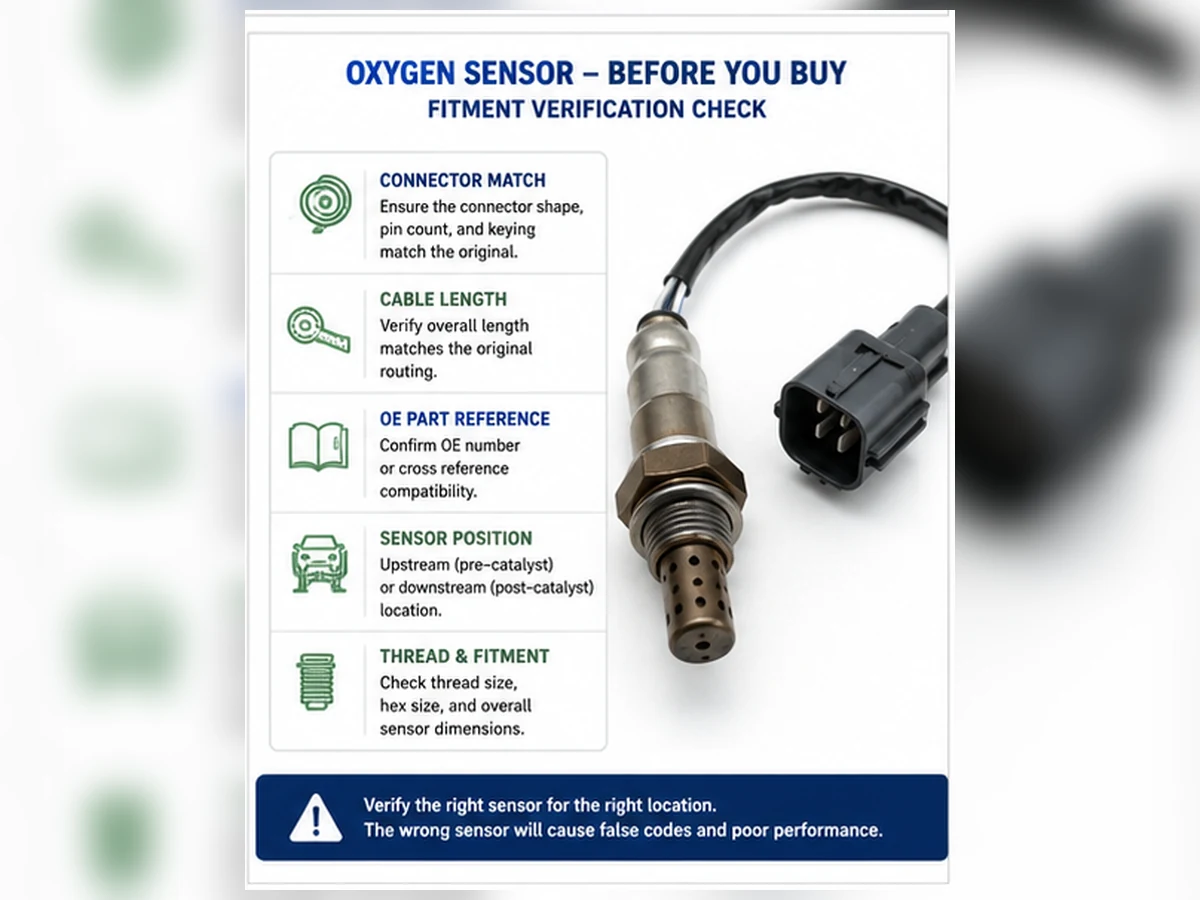
Lassen Sie den Auspuff abkühlen und verwenden Sie eine zugelassene Fahrzeugstütze. Befolgen Sie die genaue Chevrolet-Serviceanleitung und die Anweisungen zum Austausch der Sonde für Zugang, Drehmoment und Gewindedichtmittel. Schneiden Sie kein direkt passendes Kabelbaum. Verlegen Sie die Leitung weg von Hitze, scharfen Kanten und beweglichen Teilen und bringen Sie alle Clips und Schutzvorrichtungen wieder an.
Überprüfung nach der Reparatur
Stecker, Kabelverlegung und Abgasdichtheit prüfen, dann Heizung/Stromkreis und Sensorreaktion unter festgelegten Bedingungen bestätigen. Das geltende gesetzliche Überwachungsverfahren abschließen. Das Löschen von Fehlercodes, die Verwendung eines Abstandhalters/Simulators oder die Deaktivierung eines Monitors beweist keine Reparatur.
Eine Chevrolet-Überprüfungssequenz, die Modellnamensraten vermeidet
| Schritt | Nachweis zur Aufzeichnung | Stoppbedingung |
|---|---|---|
| Fahrzeugidentität | Fahrgestellnummer, Baujahr, Modell, Motor/Bau und Verkaufsmarkt | Motor oder Konfiguration bleibt unklar |
| Emissionskennung | Motorraumaufkleber und anwendbare regionale Konfiguration | Katalog unterscheidet die Konfiguration nicht |
| Physische Position | Bank, Sensornummer und Katalysatorbeziehung | Service- und physische Diagramme stimmen nicht überein |
| Teileidentität | OE-Referenz, Technologie, Steckverbinder, Leitung und Klemmen | Kritische Feldkonflikte |
| Nachweis des Ausfalls | Codes, Schaltkreisprüfungen, Lecks, Einstellungen und Reaktionstest | Sensorausfall wird nicht unterstützt |
Die Fahrzeugidentifikation von Chevrolet/GM kann neben VIN und Modelljahr auch Motor- und RPO-/Aufbaukontext erfordern. Ein Silverado- oder Tahoe-Emblem kann mehrere Motoren abdecken; Equinox und Malibu ändern ebenfalls die Antriebsstränge über Generationen hinweg. Bewahren Sie das genaue Abgasetikett und den Markt.
Fragen zur Beantwortung bei häufigen Chevrolet-Modellsuchen
| Suchbegriff | Fragen vor der Diagnose oder Bestellung |
|---|---|
| Silverado Lambdasonde | Welches Modelljahr, Motor/RPO, Abgaskonfiguration, Bank und Sensorposition? Ist der Steckverbinderweg für diesen Abgasstrang korrekt? |
| Equinox Lambdasonde | Welche Motor- oder Turbokonfiguration, Baubereich und Markt? Ist die angeforderte Position stromaufwärts oder stromabwärts von welchem Katalysator? |
| Malibu Lambdasonde | Welcher Motor/Antriebsstrang, Emissionsaufkleber und Produktionszeitraum? Welche OE-Referenz und Technologie sind verifiziert? |
| Tahoe Lambdasonde | Welche V8-/Motorkonfiguration und welcher RPO-Kontext? Wo befindet sich Zylinder 1 und welcher Bank-/Sensorstromkreis wird genannt? |
Eine Modellfamilientabelle ist eine Überprüfungsliste, keine Anbauliste. Sie enthält absichtlich keine Sensoranzahl, Seite, OE-Nummer oder Jahresbereich. Diese Fakten müssen aus aktuellen Informationen stammen, die mit dem genauen Fahrzeug übereinstimmen.
Lesen Sie Chevrolet-Terminologie im Kontext
Sauerstoffsensor, beheizter Sauerstoffsensor und A/F-Sensor
Chevrolet/GM-Daten verwenden üblicherweise HO2S- und Bank-/Sensor-Beschreibungen, während Teilelisten diese oft zu vorgelagertem oder nachgelagertem O2-Sensor verkürzen. “Sauerstoffsensor” und “O2-Sensor” bezeichnen die breite Familie. A/F-, Breitband- und beheizte Bezeichnungen können auf unterschiedliche Stromkreise oder Rollen hinweisen, aber die vollständige Servicebeschreibung ist maßgeblich. Leiten Sie die Technologie nicht aus der Anzahl der Drähte oder einem Marktplatztitel ab.
Bank- und Sensorbezeichnung
Bank 1 enthält Zylinder 1. Sensor 1 befindet sich üblicherweise vor dem betreffenden Katalysator und Sensor 2 dahinter. Diese übliche Benennung hilft bei der Orientierung, gibt jedoch keine universelle physische Seite an. Bestätigen Sie die Zylindernummerierung und den Abgasstrom für den genauen Motor.
Allgemeine Scan-Tool-Bezeichnungen
Ein Scan-Tool kann HO2S-Spannung, A/F-Strom, Lambda oder Äquivalenzverhältnis anzeigen. Bestätigen Sie, dass die PID unterstützt wird, mit dem physischen Stromkreis übereinstimmt und die erwarteten Einheiten verwendet. Ein allgemeines Menü kann Positionen oder Werte auflisten, die für das Fahrzeug nicht implementiert sind.
Motorsteuerungsbänke, Katalysatoren und Verbinder kartieren
Silverado- und Tahoe-V-Motorkonfigurationen erfordern eine Zylinder-1-Bankidentifikation, während Equinox- und Malibu-Anordnungen unterschiedliche Motor- und Katalysatoranordnungen verwenden können. Verwenden Sie keine universelle Links-/Rechts-Regel. Ordnen Sie jeden Abgasstrang zu und folgen Sie seinem Stecker im richtigen Schaltplan.
| Kartenelement | Nachweisquelle | Häufiger Fehler verhindert |
|---|---|---|
| Zylinder 1 und Bank | Genaues Motordienst-Diagramm | Fahrer/Beifahrer oder vorne/hinten Abkürzung |
| Katalysator-Reihenfolge | Auspuffanordnung für die Konfiguration | Falsche Sensor 1/Sensor 2-Position |
| Steckverbinderweg | Schaltplan und gründliche physikalische Inspektion | Testen eines nahegelegenen, aber anderen Stromkreises |
| Sensortechnik | Service- und zugelassene Anwendungsdaten | Schmalband-/Breitband-Testfehlanpassung |
Motor-, Bau- und Emissionsvarianten berücksichtigen
RPO- und Motorinformationen können Komponenten unterscheiden, die ein Modellabzeichen und Baujahr gemeinsam haben. OE-Nummern können ebenfalls übergehen, daher notieren Sie die Quelle und Revision, anstatt eine marktplatzübergreifende Referenz zu kopieren. Eine sichtbare Steckerübereinstimmung bleibt nur eine physische Prüfung.
Ein Registrierungsjahr oder Modellabzeichen entspricht nicht unbedingt dem Produktionsdatum oder dem VIN-Einschnitt. Importierte Fahrzeuge können auch vom Markt abweichen, der von einem lokalen Katalog angenommen wird. Notieren Sie das Emissionsschild unter der Motorhaube und verwenden Sie einen Katalog, der den Verkaufsmarkt explizit abdeckt.
Verwandeln Sie Chevrolet-Codes in Testpfade, nicht in Teilebestellungen
| Codetyp | Erste Prüfungen | Nicht abschließen |
|---|---|---|
| Heizkreis | Korrekte Position, Sicherung/Versorgung, Masse/Steuerung, Steckverbinder und Element | Der Sensor ist allein anhand des Codes ausgefallen |
| Niedrige/hohe/keine Aktivität | Signal-/Referenzkreis, Betriebszustand und tatsächliches Gemisch | Ein angezeigter Grenzwert identifiziert das ausgefallene Bauteil |
| Langsame Reaktion | Freigabekriterien, Lecks, Technologie und gesteuerte Reaktion | Jeder langsame Graph erfordert Austausch |
| P0420/P0430 | Fehlzündung, Kraftstoffregelung, Lecks, beide Sensoren und Katalysator | Der nachgeschaltete Sensor ist automatisch defekt |
Speichern Sie alle aktuellen, anstehenden und permanenten Codes, Freeze-Frame und Bereitschaft vor dem Löschen. Mehrere Codes können einen gemeinsamen Versorgungs-, systemweiten Gemischfehler oder Fehlzündung aufdecken. Das Löschen des Speichers kann den Kontext entfernen und Monitore zurücksetzen, ohne etwas zu reparieren.
Live-Daten mit Technologie und Betriebszustand interpretieren
Aufwärm- und Regelzustand bestätigen
Ein kalter Sensor oder Motor außerhalb des geschlossenen Regelkreises sollte nicht mit einer Warmansprechspezifikation verglichen werden. Notieren Sie Kühlmitteltemperatur, Last, Drehzahl und Sollzustand zusammen mit dem Sensorwert.
Ansprechverhalten mit Kraftstoffkorrekturwerten vergleichen
Positive oder negative Korrektur zeigt an, was das Steuergerät versucht, nicht welche Komponente ausgefallen ist. Ansaugleckagen, Luftmassen-/Lastfehler, Kraftstoffzufuhr, Spülung, Zündung und mechanischer Zustand können das Abgasergebnis erzeugen, das ein gesunder Sensor meldet.
Downstream-Daten im Katalysatorkontext verwenden
Das Downstream-Signal wird in Verbindung mit dem Upstream-Verhalten und den Katalysatorüberwachungsbedingungen bewertet. Ein Wellenformvergleich ohne Abgasdichtheit, Motorzustand und gültige Überwachungskriterien kann keinen defekten Sensor oder Katalysator feststellen.
Ersatzidentität erst nach Diagnose aufbauen
| Passformfeld | Erforderlicher Nachweis | Ablehnen, wenn |
|---|---|---|
| OE-Referenz | Lesbarer Teil oder stromgesteuerter Katalogquellcode | Nicht verifizierte Querverweise oder ungeklärte Nachfolgeregelung |
| Fahrzeugbereich | Fahrgestellnummer/Bau, Motor, Markt und Emissionskonfiguration | Nur Modell/Jahr |
| Position | Bank/Sensor und Katalysatorbeziehung | “Vorne” oder “Hinten” bleibt mehrdeutig |
| Technologie | Angegebenes Schmalband-, Breitband-/A/F- oder anderer Schaltkreis | Drahtanzahl ist die einzige Übereinstimmung |
| Schnittstelle | Gewinde, Abschirmung, Stecker, Stifte, Leitung und Klemmen | Der Kabelbaum muss gewaltsam eingeführt, durchtrennt oder gedehnt werden. |
Für Chevrolet: VIN/Build und Motor/RPO-Kontext, Emissionsmarkt, vollständige Bank-/Sensor-Beschreibung, OE-Referenz sowie Fotos von Stecker und Kabel einreichen. Ein Kandidat für eine GM-Referenz muss mit der genauen Konfiguration abgeglichen werden, bevor eine Passaussage getroffen wird.
Direkt- und Universalpassung sind separate Entscheidungen
Ein direkt passender Sensor liefert einen anwendungsspezifischen Stecker und eine Kabelanordnung, benötigt aber dennoch eine genaue Abdeckung. Ein Universalsensor erfordert herstellergenehmigte Schaltungskompatibilität und Splice-Anweisungen; universell bedeutet nicht jedes Chevrolet-Fahrzeug. Drahtfarben sind kein universeller Pinout-Standard. Schneiden Sie kein direkt passendes Kabelbaum und improvisieren Sie keine Splice in der Nähe des Auspuffs.
Installations- und Sicherheitsprüfungen
- Lassen Sie den Auspuff abkühlen und verwenden Sie zugelassene Fahrzeughebebühnen/Stützen.
- Bestätigen Sie den physischen Sensor und Stecker vor dem Trennen.
- Schützen Sie Auspuffgewinde und umliegende Komponenten während des Ausbaus.
- Vergleichen Sie alte und neue Technologie sowie Schnittstellendetails.
- Befolgen Sie die genauen Produkt-/Service-Drehmoment- und Gewindeverbindungsanweisungen.
- Hitzeschutzmanschetten, Klemmen, Abschirmungen und sichere Kabelverlegung wiederherstellen.
Es gibt kein verantwortliches universelles Drehmoment oder Arbeitszeit für jede Chevrolet-Anwendung. Zugang, Korrosion, Sensordesign und umgebende Komponenten variieren. Stoppen Sie, wenn Gewinde, Bung, Stecker oder Kabelbaum beschädigt werden und der Arbeitsumfang sich ändert.
Eine Beweishierarchie verwenden, wenn Quellen widersprechen
Suchergebnisse kombinieren oft Besitzerdiskussionen, Marktplatzangebote, generische Code-Definitionen und Anwendungskataloge. Sie haben nicht die gleiche Autorität. Beginnen Sie mit den genauen Chevrolet-Serviceinformationen für Schaltungsidentität, Diagnosebedingungen, Steckeransichten und Installationsverfahren. Verwenden Sie eine aktuelle, kontrollierte Teilequelle für OE-Identität und Supersession. Verwenden Sie das Motorraum-Label, VIN/Build-Daten und das ausgebauten Teil, um die Konfiguration zu klären. Aftermarket-Kataloge können dann als Querverweise bewertet werden, nicht als Beweis behandelt, nur weil mehrere Verkäufer dieselbe Zeile wiederholen.
| Nachweisquelle | Angemessene Verwendung | Grenze |
|---|---|---|
| Exakte Serviceinformationen | Position, Schaltung, Testbedingungen und Reparaturverfahren | Muss Motor, Markt und Konfiguration entsprechen |
| Kontrollierte OE-Teiledaten | Teileidentität, Position und Ablösungspfad | Eine Ablösung erfordert noch eine Anwendungsabstimmung |
| Fahrgestellnummer-/Bau- und Emissionsschild | Fahrzeug- und regulatorische Konfiguration | Die Fahrgestellnummer allein liefert keinen Reparaturtest |
| Entfernter Sensor und Steckverbinder | Physischer Vergleich und lesbare Kennungen | Das Aussehen kann keine elektrische Kompatibilität belegen |
| Ersatzteilkatalog | Kandidaten-Querverweis und kommerzielle Abdeckung | Quelle, Revision und Ausschlüsse müssen bekannt sein |
| Forum- oder Marktplatzseite | Mögliches Symptom oder Terminologiehinweis | Kein Nachweis für Diagnose oder Passgenauigkeit |
Wenn zwei kontrollierte Quellen widersprüchlich sind, erfassen Sie beide Werte, deren Daten und die genauen Fahrzeugfelder. Mitteln Sie nicht die Antworten und wählen Sie nicht das Angebot mit dem klarsten Produktfoto. Halten Sie die betroffene Anwendung zurück, bis der Konflikt durch eine autoritative Quelle oder einen dokumentierten physischen und elektrischen Vergleich gelöst ist.
Erstellen Sie ein Diagnose-Nachweispaket vor dem Austausch
Ein nützlicher Datensatz ermöglicht es einem anderen Techniker zu verstehen, warum der Austausch genehmigt wurde. Erfassen Sie die vollständige DTC-Beschreibung und den Status, Freeze-Frame-Bedingungen, relevante Servicetestschritte, Batterie-/Systemspannung, Heizleistungs- und Steuerungsprüfungen, wo zutreffend, Kabelbaum- und Anschlusszustand, Ergebnisse der Ansaug- und Abgasleckprüfung, Kraftstofftrimms, Fehlzündungsnachweise und die technologiespezifische Sensorreaktion. Identifizieren Sie den physisch geprüften Steckverbinder. Ein Diagramm ohne Fahrzeugzustand, Einheiten und Sensorposition kann nicht zuverlässig interpretiert werden.
Trennen Sie Beobachtungen von Schlussfolgerungen. “P0135 gespeichert” ist eine Beobachtung. “Der Heizkreis hat spezifizierte Versorgung, aber ein offenes Element am identifizierten Steckverbinder” ist ein Nachweis, der eine Sensorentscheidung stützt. “Der Sensor ist defekt”, basierend nur auf einem Code, ist eine unbegründete Schlussfolgerung. Dieselbe Disziplin gilt für Gemisch- und Katalysatorüberwachungscodes: Dokumentieren Sie die getesteten konkurrierenden Ursachen und den Zustand, unter dem die Überwachung oder Reaktion fehlgeschlagen ist.
Nachweise nach der Reparatur aufbewahren
Erfassen Sie die eingebaute Teilidentität und Charge, falls verfügbar, Steckverbindereingriff, Kabelverlegung, Abdichtung der Abgasanlage und Werte nach der Reparatur unter vergleichbaren Bedingungen. Löschen Sie den Zustand vor der Reparatur nicht, bevor er gespeichert ist. Wenn ein Problem zurückkehrt, trennt dieses Paket falsche Montage, Installationsschäden, wiederkehrende Stromkreisfehler, ungelöste Motorfehler und mögliche Produktabweichungen. Es gibt einem Lieferanten auch genügend Informationen, um nachzuforschen, ohne anzunehmen, dass jede Warnleuchte ein Garantiefehler ist.
Vergleichen Sie den alten und den Ersatzsensor als System
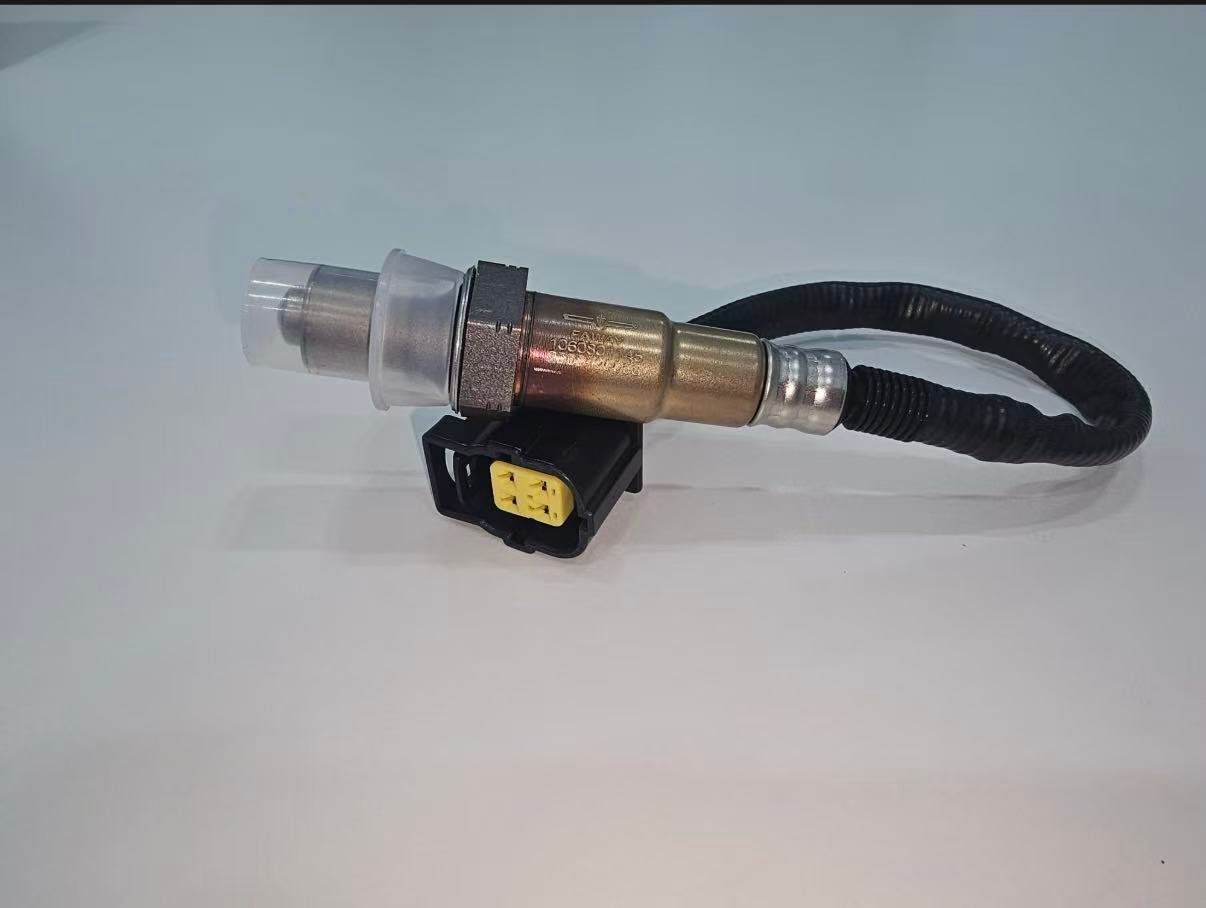
Legen Sie die Teile nebeneinander, ohne das Sensorelement zu verunreinigen oder zu beschädigen. Vergleichen Sie die gestempelten oder etikettierten Kennungen, Gewinde und Dichtsitz, Sechskant-Zugang, Schildlänge und Lochmuster, Kabelabschirmung, gesamte Leitungslänge, Tüllen und Clips, Steckergehäuse, Kodierung, Verriegelung, Kontaktanzahl und sekundäre Verriegelung. Vergleichen Sie dann die Zeichnung oder Anwendungsspezifikation. Eine sichtbare Übereinstimmung ist ein Ausschlusskriterium, keine endgültige Freigabe: Heizwiderstandsbereich, Signalstrategie, Kalibrierung und Pinbelegung können abweichen, während die Gehäuse gleich aussehen.
Lehnen Sie die Installation ab oder stoppen Sie sie, wenn das Kabel über den Auspuff gespannt werden muss, der Stecker Kraftaufwand erfordert, ein Clip nicht in seine ursprüngliche Position zurückkehrt, das Schild ein anderes Bauteil berührt, das Gewinde oder der Sitz abweicht oder die spezifizierte Technologie nicht bestätigt werden kann. Modifizieren Sie keinen passgenauen Stecker, um einen Kandidaten einzupassen. Wenn ein Universalsensor ausdrücklich zugelassen ist, verwenden Sie nur die Anwendungs- und Spleißanleitung des Herstellers und behalten Sie den erforderlichen Kabelbaumschutz in der Nähe des Auspuffs bei.
Treffen Sie explizite Entscheidungen zum Stoppen, Diagnostizieren und Freigeben
Ein guter Arbeitsablauf zwingt nicht jede Anfrage zu einem Verkauf. Verwenden Sie drei sichtbare Zustände. Stopp wenn Fahrzeugidentität, Abgaskonfiguration, physikalische Position oder Sensortechnologie mehrdeutig sind oder wenn zwei autoritative Quellen widersprüchlich sind. Diagnose wenn die Passung bekannt ist, aber die Beweise keinen Sensorausfall belegen; führen Sie die vom Kundenauftrag geforderten Prüfungen des Stromkreises, auf Lecks, Kraftstoffsteuerung und Reaktionsverhalten durch. Freigabe nur wenn sowohl der Ersatzbedarf als auch die Teileidentität bestätigt sind. Dokumentieren Sie, wer die Entscheidung getroffen hat und welche Nachweise verwendet wurden.
Diese Trennung verhindert, dass eine korrekte Diagnose mit dem falschen Teil kombiniert wird, und verhindert, dass ein korrekt aussehendes Teil für einen nicht diagnostizierten Fehler verkauft wird. Sie gibt dem Kundendienst auch eine wahrheitsgemäße Antwort, wenn wichtige Daten fehlen: Der Status ist “Ausstehend”, nicht „passt wahrscheinlich“. Geben Sie bei einer Anfrage nur freigegebene Anwendungszeilen als Angebot ab und listen Sie blockierte Zeilen separat auf. Bewahren Sie bei einer Reparatur die ursprünglichen Nachweise auf, bis die relevante Schaltkreisreaktion und die rechtliche Überwachung nach der Installation überprüft wurden.
| Entscheidungsstatus | Typischer Nachweis | Zulässige nächste Aktion |
|---|---|---|
| Stopp | Konflikt: Motor, Markt, Position, Technologie oder Quelle | Autoritative Daten anfordern; keine Bestellung oder Passformangabe |
| Diagnose | Fahrzeug/Schaltkreis bekannt, Fehlerursache noch offen | Führen Sie den genauen Servicetest und die Konkurrenzursachenprüfungen durch |
| Freigabe | Ausfallnachweis und vollständige Ersatzidentität stimmen überein | Genehmigen Sie das kontrollierte Teil/Anwendung und den Installationsplan |
| Überprüfen | Installierte Identität, Verlegung, Abdichtung und Reaktion dokumentiert | Reparatur unter festgelegten Bedingungen bestätigen und Status überwachen |
Nutzen Sie VIN-, Build- und RPO-Nachweise gemeinsam
Ein Chevrolet-Abzeichen und Modelljahr identifizieren den Antriebsstrang nicht vollständig. Silverado und Tahoe können mehrere Motoren und Emissionskonfigurationen bieten, während Equinox und Malibu Motoren und Auspuffanordnungen über Generationen und Märkte hinweg ändern. Beginnen Sie mit dem VIN/Build-Datensatz und dem genauen Motor. Wenn GM-RPO-Informationen relevant und aus einem autoritativen Fahrzeugdatensatz verfügbar sind, bewahren Sie die Codes, die den Antriebsstrang oder die Emissionskonfiguration definieren. Kopieren Sie keine RPO-Liste von einem nicht verwandten Fahrzeug oder dekodieren Sie sie über eine ungeprüfte Marktplatzseite.
Das Motorraum-Emissionslabel ist eine separate Prüfung. Notieren Sie die anwendbaren Zertifizierungs- oder Konfigurationsinformationen, die der Katalog benötigt, ohne das Label in einen öffentlichen Fahrzeugidentifikator zu verwandeln. Wenn VIN/Build, RPO-Kontext, Label und aktuelle Teiledaten nicht übereinstimmen, stoppen Sie die Anwendungsentscheidung. Der Konflikt kann auf eine importierte Konfiguration, einen Katalogauswahlfehler, einen vorherigen Motor- oder Auspuffwechsel oder einfach unvollständige Daten hinweisen; keines wird gelöst, indem die häufigste Silverado-Listung ausgewählt wird.
| Chevrolet-Identitätsebene | Entscheidungsunterstützt | Was es allein nicht beweisen kann |
|---|---|---|
| VIN-/Baudaten | Fahrzeug-, Produktions- und Motorkontext | Genaue Reparaturanleitung oder Teilepassung |
| Motor-/RPO-Kontext | Konfigurationsunterschiede innerhalb eines Modells | Physischer Sensorzustand |
| Emissionslabel | Regulatorische Konfiguration und Marktprüfung | OE-Nachfolge |
| Systemdiagramm | Bank, Sensor, Schaltkreis und Steckerzuordnung | Aktuelle verkaufbare Teilenummer |
| Daten zu kontrollierten Teilen | OE-Identität und Nachfolge | Nachweis, dass der Sensor den Fehlercode verursacht hat |
Übersetzen Sie GM HO2S und Bank/Sensor-Begriffe sorgfältig
Diagnoseinformationen von Chevrolet/GM können HO2S mit Bank- und Sensorbezeichnern verwenden, während Einzelhandelslisten upstream, downstream, vorne, hinten, links oder rechts verwenden. Bewahren Sie die vollständige Servicebezeichnung. Bank 1 ist die Zylinderbank, die Zylinder 1 enthält, nicht eine universelle Fahrer- oder Beifahrerseite. Sensor 1 befindet sich im Allgemeinen vor dem relevanten Katalysator und Sensor 2 dahinter, aber das genaue Abgasdiagramm bestimmt, wo mehrere Katalysatoren oder zusammengeführte Pfade vorhanden sind.
Gehen Sie bei einem Reihenmotor nicht davon aus, dass ein generisches Bank-2-Menü einen physischen Kreislauf beschreibt. Identifizieren Sie bei einem V-Motor Zylinder 1 in den passenden Motorinformationen, bevor Sie unter das Fahrzeug gehen. Verfolgen Sie den Abgaspfad und die Steckernummer, und überprüfen Sie dann den physischen Kabelbaum, wenn das Abgas kühl ist. So vermeiden Sie das Trennen eines nahegelegenen Sensors, insbesondere wenn Leitungen kreuzen oder Stecker über Hitzeschilden montiert sind.
Chevrolet-Motor- und Auspuffanordnungen getrennt halten
Silverado- und Tahoe-Suchen konzentrieren sich oft auf Modellname oder Hubraum, aber ein Anwendungsdatensatz sollte Motorfamilie, Bauzeitraum, Markt-/Emissionskonfiguration und Antriebsstrangdetails bewahren, wo der Katalog sie erfordert. Equinox und Malibu können Reihenmotoren, Turbo-Varianten oder verschiedene Antriebsstränge über Generationen hinweg verwenden. Ein Sensor, der an einer Position an einem Motor verwendet wird, kann nicht allein anhand des Steckeraussehens auf eine andere Konfiguration übertragen werden.
- Ermitteln Sie genaues Fahrzeug, Motor und Bauzeit aus maßgeblichen Aufzeichnungen.
- Stimmen Sie die Emissionskonfiguration und die aktuellen Serviceinformationen ab.
- Lokalisieren Sie Zylinder 1 und verfolgen Sie jeden relevanten Katalysatorpfad.
- Identifizieren Sie den benannten HO2S-Kreislauf und Stecker im Schaltplan.
- Ermitteln Sie die OE-Identität und Nachfolge in aktuellen Teiledaten.
- Gewinde, Abschirmung, Stecker, Leitung und Clips vor der Freigabe vergleichen.
Behalten Sie die Quellrevision und ausgeschlossene Konfigurationen in einem Händlerkatalog bei. Eine breite Zeile mit versteckten Motorausschlüssen ist nach der Kennzeichnung und Syndizierung an Marktplätze schwieriger zu korrigieren.
Chevrolet-Diagnosenachweise vor einer Sensor-Entscheidung
Prüfen Sie bei Heizkreis-Codes die gemeinsamen Versorgungen und Sicherungen, wo der genaue Schaltplan sie zeigt, den Steuerkreis, Steckeranschlüsse, Hitzeeinwirkung auf Kabelbäume und Elementwerte gemäß dem GM-Verfahren. Mehrere zusammenhängende Heizungscodes können auf ein gemeinsames fahrzeugseitiges Problem hinweisen. Stellen Sie bei Signal- oder Gemischcodes fest, ob der Sensor einen realen Abgaszustand meldet: Prüfen Sie Ansaug- und Abgaslecks, Luftmassen-/Lastdaten, Kraftstoffzufuhr, Spülung, Zündung, Fehlzündungen und motorische Anzeichen.
Bei langsamer Reaktion oder fehlender Aktivität stellen Sie sicher, dass der Motor warm ist und die erforderlichen Überwachungsbedingungen vorliegen. Verwenden Sie die korrekte PID, Einheiten und den gesteuerten Antworttest für die Sensortechnologie. Verurteilen Sie kein vorgeschaltetes Bauteil, nur weil ein generischer Scanwert nicht wie ein Schmalbandsensor umschaltet. Bewahren Sie bei P0420/P0430 die Motor- und Kraftstoffregelungshistorie, überprüfen Sie die Abgasdichtheit und bewerten Sie das korrekte Sensorpaar mit Katalysatornachweis. Der Code benennt keinen nachgeschalteten Sensor zum Austausch.
Berücksichtigen Sie vorherige Reparaturen und Abgasänderungen
Prüfen Sie, ob eine vorherige Reparatur einen Universalsensor eingebaut, einen Stecker verändert, Gewinde beschädigt, einen Clip weggelassen oder eine Abgaskomponente geändert hat. Dokumentieren Sie Änderungen, ohne sie als Ursache anzunehmen. Ein ausgetauschter Katalysator oder Sensor erfordert dennoch korrekte Identität und Überwachungsdiagnose. Geben Sie keine Anleitung zu Distanzstücken, Simulatoren, Löschungen oder Softwareumgehungen; die Wiederherstellung des ordnungsgemäßen Systembetriebs ist das Ziel.
Chevrolet-Anwendungsfreigabedatensatz
| Feld | Freigabenachweis | Haltebedingung |
|---|---|---|
| Fahrzeug/Aufbau | VIN-basierter Kontext und Produktionsinformationen | Nur Typ und Modelljahr angegeben |
| Motor/RPO | Maßgeblicher Konfigurationsdatensatz, falls zutreffend | Motorvariante bleibt unklar |
| Emissionen/Markt | Typenschild und Katalogumfang stimmen überein | Importierte oder regionale Konfiguration nicht aufgelöst |
| Position | Bank/Sensor auf Katalysator und Steckverbinder abgebildet | Verkürzung links/rechts oder vorne/hinten |
| OE-Identität | Aktuelle Quelle und Nachfolge abgeglichen | Unkontrollierter Querverweis-Konflikt |
| Schnittstelle | Technologie, Verstiftung, Gewinde, Abschirmung, Leitung und Klemmen | Änderung oder erzwungene Verlegung erforderlich |
Für eine Sunhyings-Beschaffungsanfrage übermitteln Sie diesen Datensatz mit erwarteter Menge und Verpackungs- oder Freigabeanforderungen. Der Datensatz unterstützt eine verantwortungsvolle Leistungsfähigkeitsprüfung; er bestätigt für sich genommen keinen Bestand, keine Mindestbestellmenge, keine Lieferung, keine OE-Gleichwertigkeit oder Passgenauigkeit. Diese Aussagen bleiben projektspezifisch und müssen vor Angebot oder Veröffentlichung belegt werden.
Zusammengesetztes Chevrolet-Überprüfungsszenario
Komplexes technisches Szenario: Eine Silverado-Anfrage enthält Jahr und Modell, aber keinen Motor/RPO oder Emissionsaufkleber. Ein allgemeines Diagramm kennzeichnet Bank 1 nach Fahrzeugseite, während die genaue Zylindernummerierung des Motors nicht überprüft wurde. Der Prüfer pausiert die Bestellung, klärt Fahrzeug- und Positionsidentität und folgt dann dem korrekten Schaltkreistest. Dieses Szenario kombiniert häufige Katalog- und Diagnoserisiken; es ist kein Sunhyings-Kundenfall, Passgenauigkeitsdatensatz oder Anspruch in Bezug auf ein bestimmtes Fahrzeug.
Zusammengesetztes Chevrolet-Diagnoseszenario
Komplexes Diagnoseszenario: Ein Equinox hat einen Magerkeitscode und ein Verkäufer empfiehlt den stromaufwärtigen Sensor allein anhand von Jahr und Modell. Genaue Bau- und Motorinformationen identifizieren zuerst die Anwendung und den Schaltkreis. Kraftstofftrim-Prüfung und ein Lecktest finden dann ungemessene Luft, während der installierte Sensor während des angegebenen Tests in der erwarteten Richtung reagiert. Das Luftleck wird repariert und der Sensor wird nicht nur wegen der Meldung des Magerzustands ersetzt.
Die Abfolge ist bewusst evidenzbasiert: Bestätigen Sie den genauen Stromkreis, testen Sie die fahrzeugseitigen Ursachen und vergleichen Sie die Reaktion mit dem geltenden Verfahren, bevor Sie ein Teil freigeben. Es ist ein zusammengesetztes Schulungsbeispiel, kein Sunhyings-Kunde, kein Garantieergebnis und keine Aussage, dass das genannte Modell häufig diesen Fehler hat.
Reparatur überprüfen und überwachen
Überprüfen Sie nach der Reparatur die Verriegelung des Steckers, die Kabelführung, den Wärmeabstand und die Abdichtung des Abgassystems. Prüfen Sie die Heizung/den Stromkreis und die technologiespezifische Sensorreaktion unter definierten Bedingungen. Führen Sie den anwendbaren gesetzlichen Bereitschaftsmonitor vollständig durch. Eine manuell gelöschte Warnleuchte ist kein Beweis dafür, dass der ursprüngliche Monitor bestanden hat; dauerhafte Codes können bestehen bleiben, bis das Steuergerät ein erfolgreiches Ergebnis bestätigt.
Emissions- und Produktanspruchsgrenze
Verwenden Sie keine Abstandshalter, Entstörer, Simulatoren, Sensordeletes oder Softwareänderungen, um die Katalysatorüberwachung zu verschleiern. Diese Methoden beheben nicht die Ursache und können gegen Abgasgesetze verstoßen. Diese Bildungsseite bestätigt nicht, dass Sunhyings einen Sensor für eine Chevrolet-Anwendung verkauft, lagert, herstellt oder garantiert. Die Passgenauigkeit bleibt bis zum Abgleich projektspezifischer Nachweise ausstehend.
Bereiten Sie eine Montage- oder Beschaffungsanfrage vor
Senden Sie die OE-Nummer, Baujahr/Marke/Modell, Motor- oder Fahrgestelldaten, Markt- und Emissionspaket, genaue Bank-/Sensorposition, Stecker- und Altteilfotos, Menge sowie etwaige Verpackungs- oder Zulassungsanforderungen. Sunhyings prüft die gelieferten Daten auf Eignung und Beschaffungsmöglichkeit; die Passgenauigkeit wird erst bestätigt, wenn die Anwendungsnachweise übereinstimmen.
Häufig gestellte Fragen
Wie finde ich den richtigen Sauerstoffsensor für Chevrolet?
Verwenden Sie die VIN/Konfiguration, den Motor, das Markt-/Emissionspaket, die genaue Bank und Position, die OE-Referenz, die Technologie und die Anschluss-/Kabeldetails.
Beweist ein Chevrolet-Sauerstoffsensor-Fehlercode, dass der Sensor defekt ist?
Nr. Diagnostizieren Sie Verkabelung, Heizungsversorgung/-steuerung, Abgaslecks, Gemischanpassungen und Sensorreaktion anhand genauer Serviceinformationen.
Befindet sich Bank 1 immer auf einer Seite eines Chevrolet?
Bank 1 enthält Zylinder 1; seine physische Seite hängt vom Motor und Einbau ab.
Können Sensor 1 und Sensor 2 dasselbe Teil verwenden?
Nur wenn die aktuell verifizierten Anwendungsdaten dieses genaue Teil für beide Positionen aufführen.
Bedeutet P0420, dass der nachgeschaltete Sensor ausgetauscht werden muss?
Nr. P0420 ist ein Code für die Effizienz des Katalysatorsystems und erfordert eine Diagnose von Motor, Abgasanlage, Sensor und Katalysator.
Kann Sunhyings die Chevrolet-Passform anhand eines Modellnamens bestätigen?
Nr. Reichen Sie vollständige Fahrzeug-, Motor-, Emissions-, Positions- und OE/physische Nachweise für eine Passungsprüfung ein.