






Technischer Leitfaden für Sauerstoffsensoren
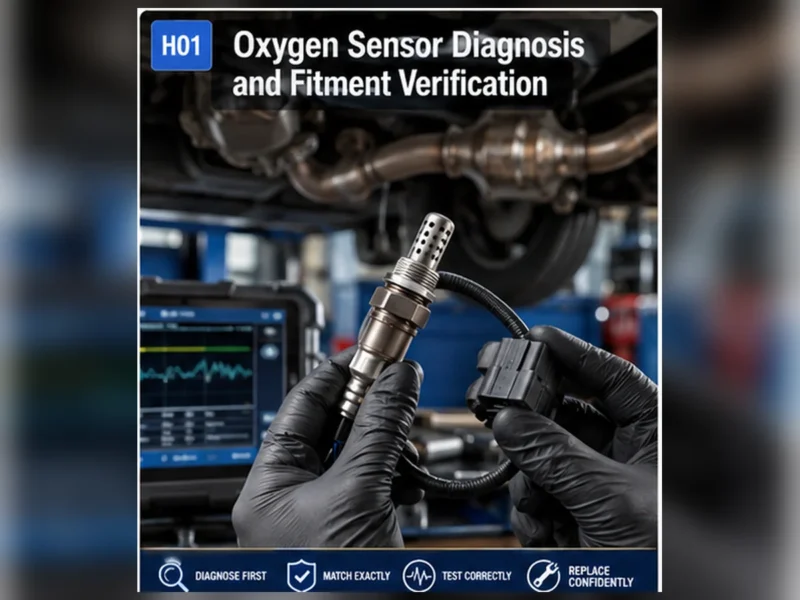
Verwenden Sie OE-Nummer, Fahrzeug- und Motordaten, Sensorposition, Technologie, Stecker- und Kabeldetails, um den richtigen Sauerstoffsensor auszuwählen.
Kurze Antwort
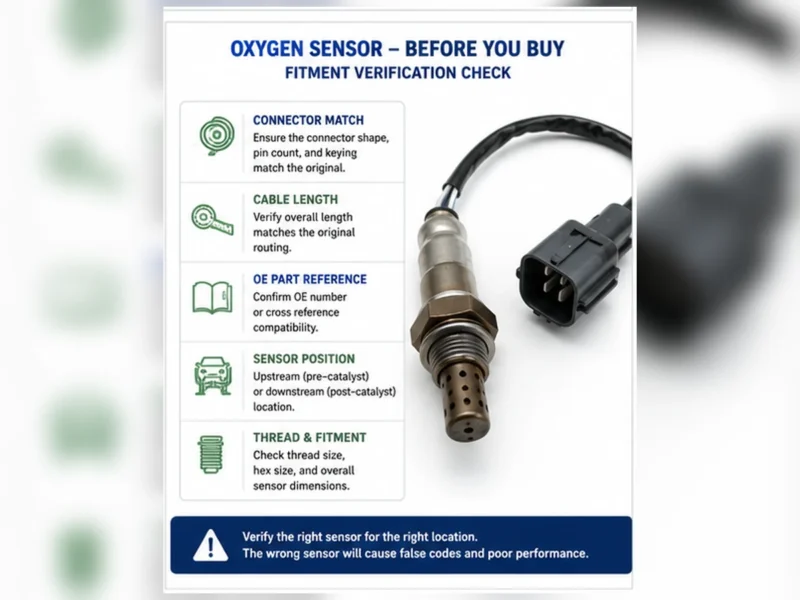
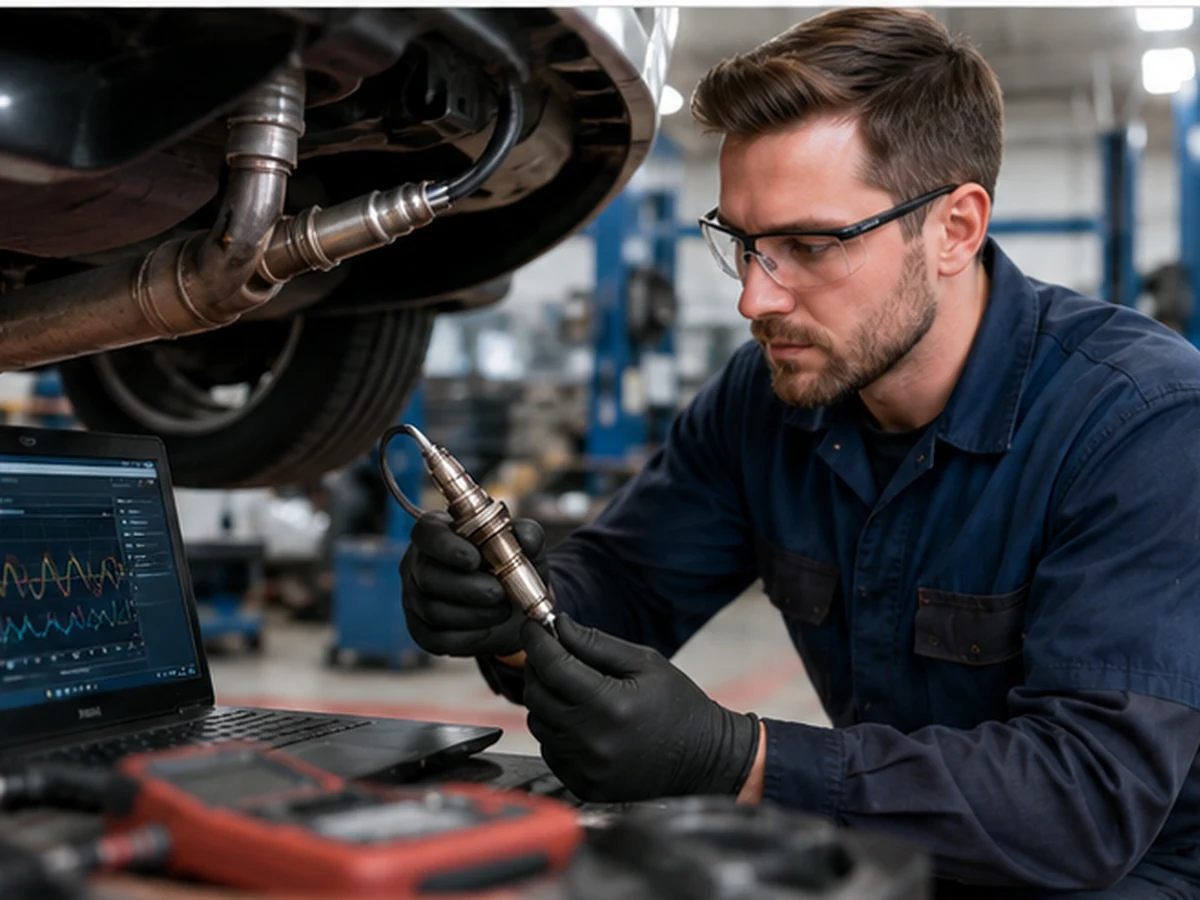
Sauerstoffsensor nach geprüfter Identität auswählen, nicht nach Aussehen. Beginnen Sie mit der OE-Nummer und den vollständigen Fahrzeugdaten, bestätigen Sie dann Motor, Markt oder Emissionspaket, Bank- und Sensorposition, Sensortechnologie, Steckercodierung, Pin-Anzahl, Kabellänge, Gewinde sowie Direkteinbau- oder Universalausführung. Ein passender Stecker oder eine passende Drahtanzahl allein garantiert weder Passform noch Kalibrierung.
Minimale Passungsidentität aufbauen
| Erforderliche Eingabe | Warum es die Entscheidung ändert |
|---|---|
| OE/OEM-Nummer | Verankert die Suche an der Originalanwendung; Aftermarket-Referenzen sind Kandidaten, die noch einer Überprüfung bedürfen. |
| Baujahr, Marke und Modell | Definiert den Fahrzeugbereich, unterscheidet jedoch möglicherweise nicht zwischen Motoren oder Emissionspaketen. |
| Motor / FIN oder Motorkennung | Unterscheidet Auspuffanordnung, Kalibrierung und Steckervarianten. |
| Markt und Emissionspaket | In Bundesstaaten wie Kalifornien und anderen regionalen Konfigurationen können andere Teile verwendet werden. |
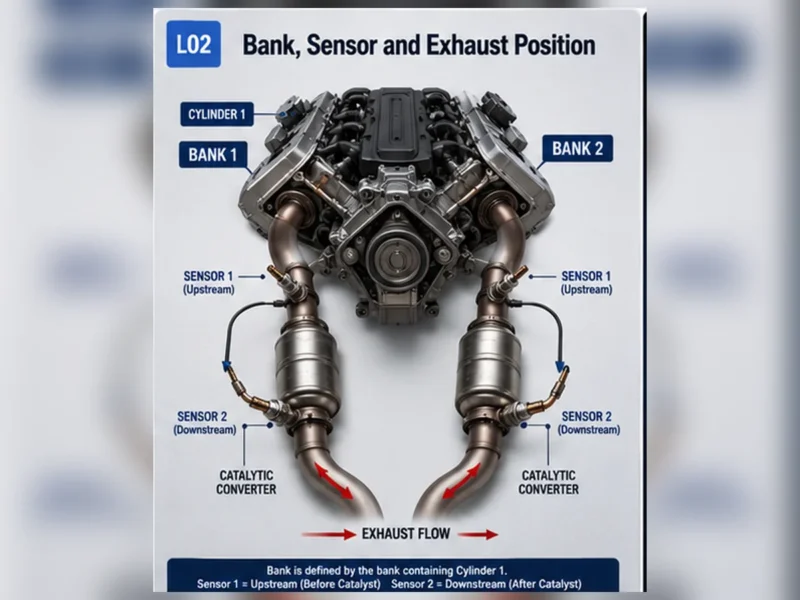
| Bank- und Sensorposition | Verhindert die Bestellung der richtigen Familie für die falsche Abgasposition. |
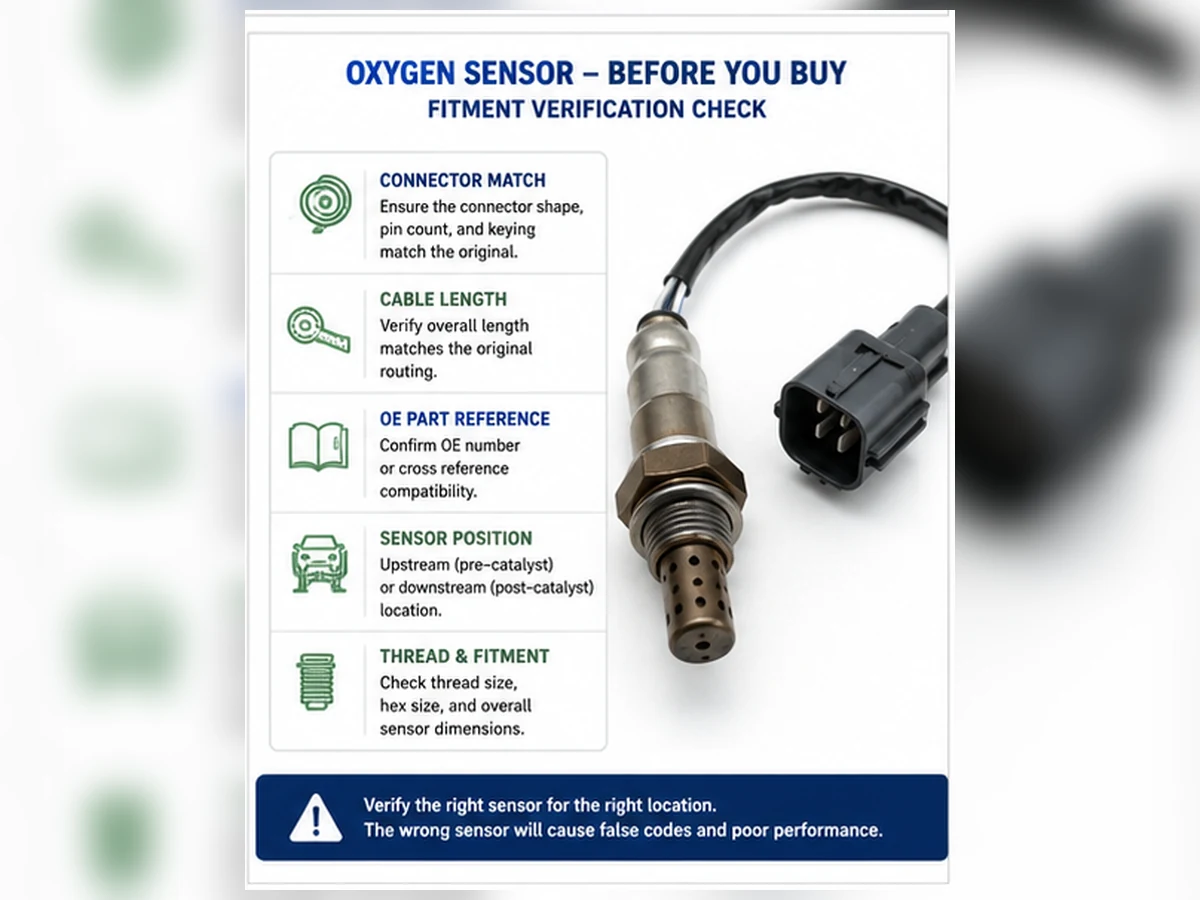
| Stecker und Kabel | Codierung, Pin-Anzahl, Leitungslänge und Clip-Positionen beeinflussen die Montage. |
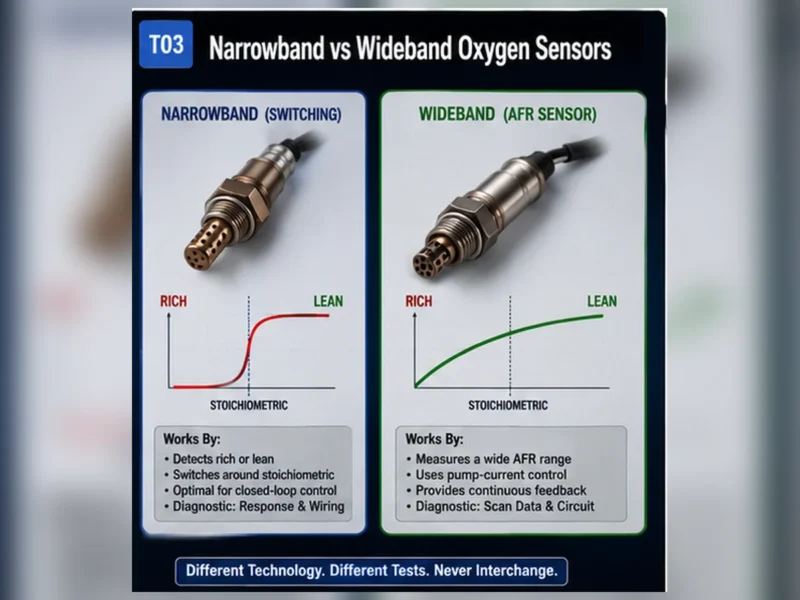
| Sensortechnik | Schmalband-, Breitband-/A/F- und Titandioxid-Ausführungen werden nicht allein durch das Aussehen ausgewählt. |
OE-Nummer versus Aftermarket-Kreuzreferenz
Eine OE-Nummer ist ein starker Ausgangspunkt, aber es können Nachfolgeversionen und marktspezifische Varianten existieren. Ein Aftermarket-Querverweis ist eine Katalogzuordnung, kein automatischer Beweis dafür, dass jede Spezifikation und Position identisch ist. Überprüfen Sie den aktuellen Katalogeintrag anhand des Fahrzeugs und des ausgebauten Teils.
Bank- und Sensorposition bestätigen
Bank 1 enthält Zylinder 1. Sensor 1 ist im Allgemeinen vorgeschaltet und Sensor 2 nachgeschaltet für diese Bank. Gehen Sie nicht davon aus, dass Bank 1 immer auf derselben physischen Seite ist. Verwenden Sie Serviceinformationen, die Abgasanordnung und die vollständige Codebeschreibung.
Direktpassend oder universell?
Ein direkt passender Sensor wird mit einem anwendungsspezifischen Stecker und Leitungsanordnung geliefert. Ein Universalsensor kann ein herstellergenehmigtes Spleißverfahren und eine sorgfältige Identifizierung des Stromkreises erfordern. Universal bedeutet nicht jedes Fahrzeug oder jede Position. Für viele Käufer reduziert der Direkteinbau das Verkabelungs- und Installationsrisiko, wenn die Anwendung verifiziert ist.
Physische Details vergleichen, ohne sich allein darauf zu verlassen
- Gewindedurchmesser und Steigung
- Sechskant- und Körperfreiheit
- Geometrie des Schutzschildes
- Steckergehäuse, Kodierung und Verriegelung
- Pin-Anzahl und Schaltungszuordnung
- Kabellänge, Hitzeschutzschlauch und Verlegeclips
Physikalische Ähnlichkeit ist ein Ausschlusskriterium, kein vollständiger Nachweis. Kalibrierung und elektrische Eigenschaften erfordern weiterhin einen verifizierten Katalogabgleich.
Informationen für eine Passungs- oder Beschaffungsanfrage
Geben Sie die OE-Nummer, Fahrzeug-/VIN-Daten, Motor, Region, Emissionspaket, genaue Sensorposition, Anschlussfotos, Altteileetikett, Leitungslänge und benötigte Menge an. Für Distributorprojekte nennen Sie auch Verpackungs-, Kennzeichnungs-, Rückverfolgbarkeits- und Freigabedokumentationsanforderungen. Sunhyings kann die eingereichten Daten auf Beschaffungsmachbarkeit prüfen; dies ist keine garantierte Übereinstimmung, bis die Anwendungsnachweise bestätigt sind.
Eine Auswahlreihenfolge verwenden, die Konflikte aufdeckt
Beginnen Sie mit den stärksten Identifikatoren und stoppen Sie, wenn diese widersprüchlich sind. Eine verifizierte OE-Nummer und genaue Fahrzeugkonfiguration haben mehr Gewicht als das Aussehen des Steckers oder ein Marktplatztitel. Wenn das Etikett des ausgebauten Teils, das Katalogergebnis und die Fahrzeugdaten auf unterschiedliche Teile hinweisen, wählen Sie nicht die bequemste Antwort. Klären Sie Supersessions, Motorkennung, Emissionspaket und physikalische Position mit aktuellen Anwendungsdaten.
| Auswahlschritt | Nachweis | Stoppbedingung |
|---|---|---|
| 1. Fahrzeugidentität | Jahr, Marke, Modell, Motor, VIN-Details und Markt | Motor- oder Emissionskonfiguration bleibt unklar |
| 2. Position | Bank, Sensornummer und Katalysatorbeziehung | Physischer Sensor kann nicht mit dem Service-Diagramm abgeglichen werden |
| 3. OE-Identität | Entfernte Teilenummer oder kontrollierter Katalogeintrag | Nummer ist veraltet, unlesbar oder führt zu widersprüchlichen Positionen |
| 4. Technologie | Schmalband, Breitband/Lambda, Titandioxid oder spezifizierte Schaltung | Auflistung basiert nur auf der Anzahl der Drähte |
| 5. Schnittstelle | Gewinde, Stecker, Stifte, Kabel, Clips und Abschirmung | Jegliche erzwungene oder geänderte passgenaue Kabelbaumlösung wäre erforderlich |
Warum vollständige Fahrzeugdaten wichtig sind
Motor und Kalibrierung
Das gleiche Modelljahr und die gleiche Ausstattungsvariante können mehrere Motoren umfassen. Die Anordnung der Abgaskrümmer, die Sensortechnik und die Steckerbelegung können sich mit Hubraum, Motorkennbuchstabe oder Kalibrierung ändern. Eine VIN-basierte Suche ist nur dann sinnvoll, wenn der Katalog die relevanten Felder korrekt dekodiert und anwendet.
Markt und Emissionspaket
Bundesweite (US), kalifornische und andere regionale Konfigurationen können unterschiedliche Katalysatoren, Sensorpositionen oder Kalibrierungen verwenden. Importierte Fahrzeuge und Änderungen während des Modelljahres können Unsicherheiten verursachen. Notieren Sie das Abgaslabel und den Verkaufsmarkt, anstatt davon auszugehen, dass eine nordamerikanische Auflistung weltweit gültig ist.
VIN-Trennstellen und Produktionsdaten
Einige Katalogeinträge verwenden ein Produktionsdatum oder eine VIN-Trennstelle. Diese sind nicht mit dem Zulassungsjahr austauschbar. Wenn eine Trennstelle angewendet wird, erfassen Sie die genaue VIN oder die Bauinformationen und befolgen Sie die Aufnahmeregel des Katalogs.
Sensortechnologie vor Preisvergleich identifizieren
| Technologielabel | Typische Datenrepräsentation | Auswahlrisiko |
|---|---|---|
| Zirkonia-Schmalband | Fett-Mager-Umschaltspannung unter definierten Bedingungen | Verwechslung mit einem Breitbandsensor mit anderer Schaltung |
| Breitband / A/F | Strom-, Lambda- oder Äquivalenzverhältnis-Strategie | Marktplatz-Eintrag bezeichnet jeden beheizten Sensor als “Breitband” |
| Titandioxid | Vom Fahrzeug definierte Widerstands-/Spannungsstrategie | Aussehen oder Drahtanzahl wird zur Identifikation verwendet |
Die Technologie bestimmt die Erwartungen an Heizung und Signal. Prüfen oder ersetzen Sie keine Schaltkreise anhand einer allgemeinen Farbtabelle. Ein Teil, das eingeschraubt und verbunden wird, kann dennoch elektrisch inkompatibel sein.
Stecker- und Leitungsdetails systematisch prüfen
Steckergesicht und Kodierung
Vergleichen Sie die Steckfläche, Kodierpositionen, Rastrichtung und Anschlussanzahl. Fotos sollten rechtwinklig zum Stecker und scharf genug sein, um die Kodierung zu zeigen. Ähnliche Gehäuse können unterschiedliche Anschlussbelegungen enthalten, daher ist die Steckerform eher ein Ausschlusskriterium als ein endgültiger Nachweis.
Kabellänge und Führungsclips
Messen Sie entlang des Kabelwegs ohne Dehnung. Überprüfen Sie Hitzeschläuche, Tüllen und Clip-Positionen. Eine zu kurze Leitung kann die Anschlüsse belasten; eine zu lange kann Abgas- oder bewegliche Teile berühren. Passgenaue Kabelbäume sollten nicht gekürzt werden, um eine falsche Katalogauswahl auszugleichen.
Gewinde, Sechskant und Schirm
Gewinde und Sechskant bestimmen die Installationsschnittstelle, während die Schirmgeometrie die Abgasexposition und den Freiraum beeinflusst. Diese Abmessungen müssen übereinstimmen, aber ihre Übereinstimmung beweist keine Kalibrierung oder Schaltkreiskompatibilität.
Wann ein Universalsensor eine geeignete Wahl ist
Erwägen Sie einen Universalsensor nur, wenn der Hersteller die Technologie und Anwendung angibt, eine zugelassene Umgebungsspleißmethode bereitstellt und eine klare Schaltkreisidentifikation liefert. Universal bedeutet, dass der Stecker nicht vorinstalliert ist; es bedeutet nicht uneingeschränkte Fahrzeugkompatibilität. Verwenden Sie keinen hitzegeschädigten Stecker wieder und splissen Sie nicht in der Nähe des Abgases.
| Frage | Direkt passend | Universell |
|---|---|---|
| Anschlussverschraubung mitgeliefert? | Ja | Nein; genehmigte Übertragung/Abschluss erforderlich |
| Primary advantage | Reduced installation variables | May cover a defined compatible circuit when supported |
| Primary risk | Wrong catalog position | Circuit or splice error in addition to fitment error |
| Erforderlicher Nachweis | Current application match | Application, technology and splice instructions |
Komplexes Szenario: Gleicher Modellname verbirgt zwei Abgassysteme
Composite engineering scenario: a buyer selects by model and year, but the catalog shows different upstream sensors for two engines and regional emissions configurations. The connector photos look similar. Checking the engine code, emissions label, position and OE number resolves the correct candidate before installation. This is a composite selection pattern, not a Sunhyings fitment claim or customer case.
Teil vor Einbau auf Richtigkeit prüfen
Match the package number to the order and compare the sensor with the approved record while both remain returnable. Check the label, connector, pins, lead, clips, thread, shield and supplied instructions. Do not contaminate the sensing end or install a part merely to test whether it fits. Photograph discrepancies and stop if the package, catalog and physical part do not agree.
Rückfallvermeidungsprotokoll erstellen
Keep the catalog result or quotation revision, OE reference, full vehicle identity, emissions label, exact position and comparison photos with the order. For an installation complaint, add the original codes, diagnostic basis, delivered package label and images of connector and routing. This separates a catalog conflict from a circuit fault, installation damage or an unresolved engine condition.
A responsible seller should not convert incomplete information into a guaranteed-fit statement. When a required field is missing, the correct outcome is Pending Fitment Review. The same rule applies to bulk buyers: approve application data by revision and require notification before a supplier expands or changes coverage.
Do not use the fault code as the part number
A code can identify a bank, position, circuit or monitored condition, but it does not encode the connector, cable length, technology or OE reference. P0420/P0430 does not identify a replacement oxygen sensor at all. Record codes as diagnostic evidence, then complete the independent fitment identity before selecting a part.
Keep diagnosis and fitment as separate approvals
The first approval answers whether replacement is justified; the second answers which exact part is compatible. Passing one does not pass the other. This two-gate record reduces the common errors of ordering the right sensor for the wrong position or ordering a perfectly matched part for a fault caused by wiring, leakage or fuel control.
Vor der Katalogsuche eine feste Datenreihenfolge verwenden
The safest selection sequence begins with vehicle identity and exact exhaust position, then moves to OE/application evidence and finally to physical and electrical confirmation. Starting with a connector photo or trouble code reverses that sequence and encourages visually similar but incompatible choices.
| Schritt | Erforderliche Eingabe | Where to obtain it | Stoppbedingung |
|---|---|---|---|
| 1. Fahrzeugidentität | VIN, year, make, model and exact engine | Vehicle, registration and verified decoder/service data | Model/year only where multiple engines exist |
| 2. Market/emissions | Sales region, emissions label/configuration and relevant build breakpoint | Vehicle label and service/application data | Regional configuration unknown |
| 3. Position | Bank and Sensor number relative to catalyst | Cylinder numbering and exhaust diagram | Only “front,” “rear” or physical side supplied |
| 4. Diagnostic basis | Failed test for the named circuit/response | Workshop record and service procedure | DTC or symptom used as proof of failure |
| 5. OE/application | Readable OE number or current controlled mapping | Removed part and verified catalog | Cross-reference with no source/revision |
| 6. Technology | Narrowband, titania or wideband/A/F and circuit | Vehicle and product specification | Wire count used as technology proof |
| 7. Interface | Thread, shield, connector, pins, lead and clips | Drawing and contextual comparison photos | Any unresolved physical conflict |
Eine OE-Nummer als Anker behandeln, nicht als endgültige Schlussfolgerung
A readable OE number from the removed part can strongly anchor the search, but supersessions, prior repairs and market-specific variants still matter. An aftermarket cross-reference is a candidate mapping created by a catalog owner. It does not automatically prove identical electrical behavior, connector, lead or every application row.
| Evidence situation | Aktion | Grund |
|---|---|---|
| OE number, vehicle and position all agree | Proceed to technology and interface confirmation | Three independent identity layers align |
| OE number maps to two aftermarket parts | Check engine, emissions, VIN breakpoint and position details | Cross-reference may cover variants |
| Removed part number conflicts with vehicle catalog | Investigate prior repair and supersession before ordering | Installed part may be wrong or catalog may be stale |
| Number is unreadable | Use full vehicle/position plus connector and dimensional evidence | Do not invent digits from a blurred mark |
| Marketplace list claims many OE numbers | Request source, revision and part-level specification | Long lists can merge incompatible applications |
Sensortechnologie vor dem Vergleich von Leitungen oder Preisen identifizieren
Zirconia narrowband sensors report around a rich/lean transition. Wideband or air-fuel-ratio sensors use a controlled pump-cell strategy and more complex electronics. Titania designs operate differently from zirconia. The vehicle controller and sensor form a matched system; technology cannot be converted by splicing a different connector.
| Technology clue | What it can indicate | Why it is insufficient alone | Required proof |
|---|---|---|---|
| Number of wires/pins | Heater and signal circuit complexity | Different technologies can share counts | Electrical/product specification |
| Scan-data label | Voltage, current, lambda or A/F representation | Tool may derive or rename values | Service data and supported parameter definition |
| Connector shape | Application family or revision clue | Shell similarity does not prove pinout | Keying, terminal map and OE/application data |
| Position | Upstream often has feedback role | Position does not mandate one technology | Exact vehicle specification |
| Product marketing name | Seller’s category | “Lambda” and “O2” are broad terms | Part-level technical data |
Die physikalische Schnittstellenprüfung abschließen
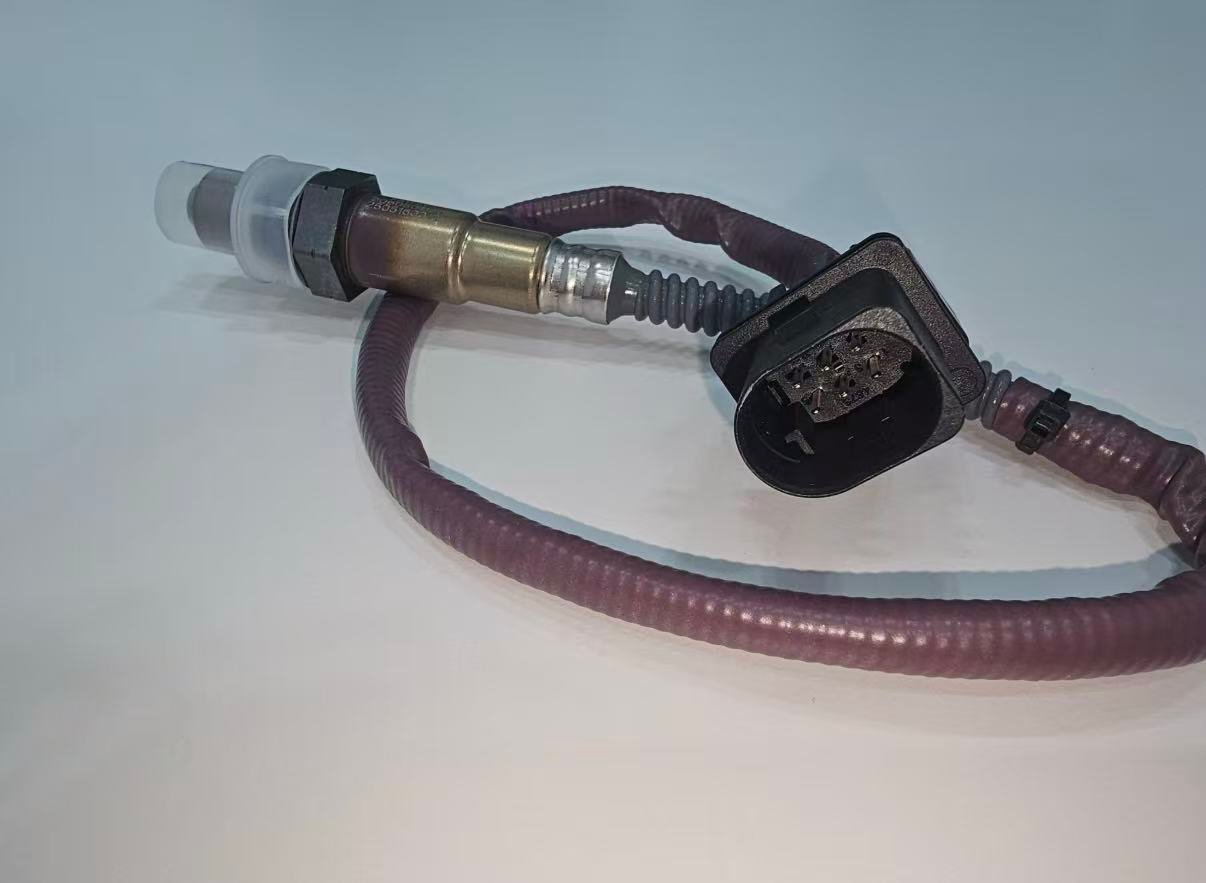
Use clear, same-angle photos and measurements only after the application record is established. Compare the connector face rather than the back of the housing, count and locate terminals, examine keys and locking features, and check lead length along the intended route. Thread diameter alone does not prove the correct pitch, seat, shield or calibration.
| Merkmal | Nachweis | Failure if wrong |
|---|---|---|
| Thread and seat | Drawing/specification and old-part comparison | Damage, leak or inability to seat |
| Sechskant- und Körperfreiheit | Dimensions and installed access | Tool/access conflict or contact |
| Shield geometry | Specified design for exhaust position | Clearance or gas-exposure conflict |
| Connector keys/lock | Face photo and controlled drawing | Forced fit or insecure connection |
| Pin assignment | Electrical map and product specification | Wrong signal/heater circuit or damage |
| Lead length/insulation | Measured route, heat rating and strain relief | Stretch, melt or unsupported loop |
| Clips/grommets | Application route and supplied hardware | Chafe, movement or heat exposure |
Direktpassend und universell sind unterschiedliche technische Entscheidungen
A direct-fit sensor supplies an application connector and should install without cutting or re-keying the harness. A universal sensor may require an approved connector-transfer or splice procedure, but it still must match technology and circuit. Wire colors are not a universal pinout. If exact compatibility and an environmentally durable joining method are not documented, select a verified direct-fit part.
| Frage | Direct-fit answer | Universal answer |
|---|---|---|
| How is fit established? | Controlled vehicle/position catalog plus specification | Technology/circuit compatibility plus manufacturer instructions |
| Connector work | None; do not cut the supplied harness | Only the approved termination method |
| Main installation risk | Wrong application or route | Misidentified circuits, poor seal or unsuitable splice location |
| Warranty record | Part, vehicle, position and installation evidence | Add pin map, splice materials and procedure evidence |
| Stop rule | Any key, lead or application conflict | Any uncertainty in technology, pinout or approved method |
Lieferanten erst vergleichen, wenn die obligatorischen Passungskriterien erfüllt sind
Price, warranty and delivery cannot compensate for an unresolved fitment identity. First require a controlled application table, part specification, validation evidence, production control and traceability. Then compare commercial terms for candidates that pass.
| Nachweisebene | Buyer question | Schwacher Ersatz |
|---|---|---|
| Application governance | Who owns sources, revisions, supersessions and conflicts? | Unversioned fitment spreadsheet |
| Part specification | Are technology, heater, interface and materials defined? | Photo and OE list only |
| Validierung | Which identified samples, methods, criteria and results? | Test-name list without reports |
| Produktionskontrolle | Which checks are 100% and which are sampled? | Equipment photographs |
| Traceability/change | Can lot/revision be traced and changes notified? | Certificate logo on packaging |
| Claims | What evidence supports OEM approval or certification wording? | “OEM quality” marketing phrase |
Komplexer Fall: OE-Kreuzreferenz und Anschlussnachweis widersprechen sich
Komplexes Beschaffungsszenario: two supplier catalogs map the same OE candidate to different connectors. The buyer does not choose the cheaper listing. Vehicle engine, emissions configuration and exact position are confirmed, then connector drawings and application revisions are requested. One mapping belongs to a different market variant and is removed from the quote.
The example shows why a cross-reference is a candidate, not interchangeability proof. It is composite and does not describe a Sunhyings supplier or customer.
Komplexer Werkstattfall: Ein universeller Sensor wird vor dem Spleißen abgelehnt
Composite workshop scenario: a universal sensor has the same number of wires as the removed wideband unit, but the documentation does not identify compatible technology or pin functions. The installer stops rather than match colors. A verified direct-fit sensor with the correct connector, lead and application record is selected.
The decision avoids experimenting on an emissions-control circuit. It does not claim that every universal sensor is unsuitable; it shows that universal fit requires documented electrical compatibility and an approved joining method.
Endgültige Auswahldokumentation vor dem Kauf
- Vehicle, engine, VIN/build and market/emissions identity
- Bank/Sensor position and diagnostic basis
- OE number or controlled cross-reference source and revision
- Technology and electrical/heater requirements
- Thread, shield, connector, pins, lead and clips
- Direct-fit or universal installation method
- Supplier specification, validation, traceability and warranty evidence
- Any unavailable information marked
DATA NOT AVAILABLEand held open
Katalogkonflikte vor der Auftragsbestätigung lösen
Conflicts are not rare exceptions to hide. They are signals that the selection record is incomplete, a source is stale or the application has a genuine variant. Create a hold state rather than letting the sales channel choose whichever row produces a result.
| Conflict | Likely investigation | Approval evidence | Do not do |
|---|---|---|---|
| Two OE numbers for one vehicle/position | Supersession, build/VIN or emissions variant | Current source showing which condition selects each | List both as universally interchangeable |
| Two connectors under one aftermarket SKU | Catalog merge or product revision | Drawing/revision and application split | Ship randomly and let installer adapt |
| Old part differs from catalog result | Prior wrong repair, supersession or configuration error | Service/application reconciliation | Assume the installed part is original |
| Lead length differs | Wrong bank/position or route revision | Installed-route measurement and controlled drawing | Stretch, extend or tie excess near heat |
| Technology descriptions conflict | Terminology, catalog or cross-reference error | Electrical specification for vehicle and candidate | Choose by wire count |
| Certificate scope differs from sales claim | Wrong legal entity/site or overbroad claim | Correct certificate plus part-level evidence | Use the logo as SKU approval |
Record the conflict owner, sources reviewed, decision, date and affected rows. If the source cannot be resolved, mark the mapping blocked. This prevents the same uncertainty from reappearing in ecommerce, quotation, warehouse picking and warranty analysis.
Eine Musterfreigabe muss Produkt, Anwendungsdaten und Verpackung gemeinsam prüfen
A sensor that threads into one bung has not passed a complete sample review. Define the candidate part/revision, exact applications and positions, sample lot and acceptance criteria before inspection. The approved sample must be traceable to the later production design, process and site or changes must trigger review.
| Sample area | Inspection or test | Pass evidence | Failure action |
|---|---|---|---|
| Identity | Part, revision, lot/date and package linkage | All records name the same product | Quarantine unidentified sample |
| Anwendung | OE/YMME/engine/emissions/position source review | Approved rows with revision | Block conflicting rows |
| Physikalische Schnittstelle | Thread, shield, connector, pins, lead and clips | Drawing and measured sample agree | Correct product or drawing |
| Electrical/function | Defined heater and technology-specific response tests | Method, criteria, results and equipment trace | Investigate; do not waive by appearance |
| Vehicle evaluation | Exact engine/emissions/position and safe service method | Documented fit, route and legal monitor result | Stop if identity or method is uncertain |
| Label/barcode | Scan in receiving and picking workflow | Correct part, quantity, language and trace fields | Correct artwork/data before launch |
| Change linkage | Compare sample design/process/site to production plan | Notification and revalidation terms agreed | Approval not transferable to unknown production |
Auswahl bei Wareneingang und Installation erneut prüfen
Catalog approval does not remove packing or picking risk. At receiving, compare label, part, lot/date and packaging with the purchase record. Before installation, compare the old and new part in context and confirm the application/position record. Keep protective caps in place until installation and prevent contamination of the sensing end.
If the connector, lead, thread or shield conflicts, do not modify the part. Photograph the complete mismatch, preserve labels and request a data/product investigation. Separating catalog error, packing error and product nonconformance improves corrective action and protects valid inventory.
RFQ-Vorlage für eine exakte Sauerstoffsensorauswahl
| RFQ section | Required content |
|---|---|
| Market and channel | Sales countries, retail/workshop/distributor/private label and launch scope |
| Part list | OE candidates, customer part numbers and exact Bank/Sensor positions |
| Anwendung | YMME, engine, emissions/region, VIN breakpoints and data-source requirements |
| Produkt | Technology, heater/electrical, thread, shield, connector, pins, lead and clips |
| Approval | Samples, dimensions, electrical/response/durability tests and documents |
| Qualität | Traceability, inspection, nonconformance, change notification and claim process |
| Kommerziell | Forecast by part, quantity, Incoterm, destination, packaging and requested timing |
Sunhyings can review a submitted RFQ for sourcing feasibility. The existence of this process does not confirm stock, fitment, price, MOQ, lead time or certification for an unreviewed part number.
Häufige Auswahlfehler und die Nachweise, die sie verhindern
| Ausfall | Why it happens | Vorbeugung |
|---|---|---|
| Correct model, wrong engine | Catalog search stops at year/make/model | Require engine code/VIN and emissions configuration |
| Correct engine, wrong position | Bank/Sensor field omitted | Map cylinder 1 and catalyst relationship |
| Connector fits, circuit differs | Housing appearance treated as electrical proof | Verify technology, pins and specification |
| Lead melts or stretches | Length and clips excluded from fitment | Compare complete installed route |
| Code remains after installation | Code used as diagnosis or vehicle fault remains | Complete circuit/system tests before order |
| Sample passes but production changes | No change notification or revision linkage | Contractual notification and revalidation control |
The best selection process is deliberately conservative: a held order is preferable to a modified harness, damaged connector or repeat emissions repair. When exact information is missing, ask for it and preserve the unanswered field. Do not let an ecommerce interface silently replace unknown engine, position or emissions data with a broad default.
After installation, confirm that the selected part follows the original routing, the connector locks, the exhaust is sealed and the technology-specific response is plausible. Complete the applicable legal monitor. If the original code returns, reopen diagnosis and selection records rather than assuming either that the new sensor is defective or that the catalog match proves the vehicle has no other fault.
For a distributor, feed every confirmed catalog conflict back to the controlled application database and affected inventory. A corrected return without a data correction leaves the same error active for the next buyer.
The final purchase authorization should name the exact approved part and revision, not only a supplier family. If any mandatory identity field changes before shipment, reopen the selection check rather than carrying approval forward automatically.
Prepare a fitment or sourcing request
Send the OE number, year/make/model, engine or VIN details, market and emissions package, exact bank/sensor position, connector and old-part photos, quantity and any packaging or approval requirements. Sunhyings will review the supplied data for capability and sourcing feasibility; fitment is not confirmed until application evidence is matched.
Frequently asked questions
Kann ich einen Sauerstoffsensor nur nach Fahrzeugmodell auswählen?
Nicht zuverlässig. Motor, Markt oder Emissionspaket sowie die genaue Bank-/Sensorposition können das erforderliche Teil ändern.
Reicht die OE-Nummer aus?
Es ist der stärkste Ausgangspunkt, aber überprüfen Sie Nachfolgeregelungen und bestätigen Sie dies gegen Fahrzeug, Markt, Position und aktuelle Katalogdaten.
Bedeutet derselbe Anschluss, dass der Sensor passt?
Nein. Das Erscheinungsbild des Anschlusses garantiert nicht die gleiche Kalibrierung, Technologie, Kabelverlegung oder Auspuffposition.
Ist ein universeller Sauerstoffsensor für jedes Auto geeignet?
Nein. Universal beschreibt die Anschlussmethode, nicht die universelle Fahrzeugkompatibilität. Befolgen Sie die Anwendungs- und Spleißanweisungen des Sensorherstellers.
Welche Fotos helfen bei der Passformprüfung?
Klare Fotos des alten Teileetiketts, des Gewindekörpers, der Anschlussfläche und Kodierung, des gesamten Kabels und der Führungsklemmen sind neben Fahrzeug- und OE-Daten hilfreich.