Material selection plays a vital role in ensuring the integrity of piping systems in demanding environments. Engineers see clear differences when comparing duplex 2205 vs super duplex 2507. Super Duplex 2507 often provides longer service life and fewer maintenance cycles, especially in offshore or chemical settings. Using Super Duplex 2507 can reduce labor and downtime over decades, making it a cost-effective choice despite a higher initial price. SUNHY’s certified manufacturing and full traceability help guarantee reliable performance and compliance for critical projects.
Duplex 2205 vs Super Duplex 2507: Overall Comparison
Key Differences Summary
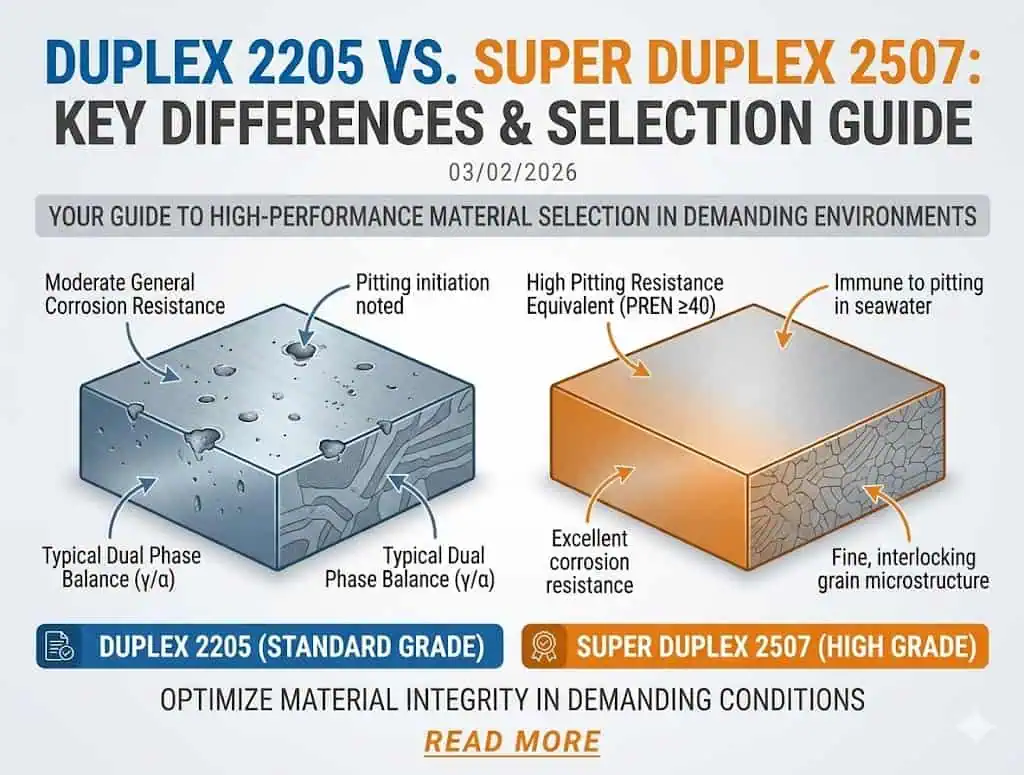
When comparing duplex 2205 vs super duplex 2507, engineers notice several important distinctions. Duplex 2205, the widely used standard duplex stainless steel, offers a balance of strength and corrosion resistance. Super duplex 2507, however, delivers even higher mechanical strength and superior resistance to harsh environments. The table below highlights the main differences:
| Property | Duplex 2205 | Super Duplex 2507 |
|---|---|---|
| Yield Strength | ≥450 MPa | ≥550 MPa |
| Tensile Strength | ≥620 MPa | ≥800 MPa |
| Elongation | 25–30% | 15–25% |
| Corrosion Resistance | Good resistance to pitting and crevice corrosion | Excellent resistance, suitable for long-term service in seawater |
Duplex stainless steels like duplex 2205 provide good performance in many industrial settings. Super duplex grades such as super duplex 2507 excel in more aggressive environments, especially where high chloride levels exist.
PREN (Pitting Resistance Equivalent Number) values help measure corrosion resistance. The chart below shows how duplex 2205 vs super duplex 2507 compare:
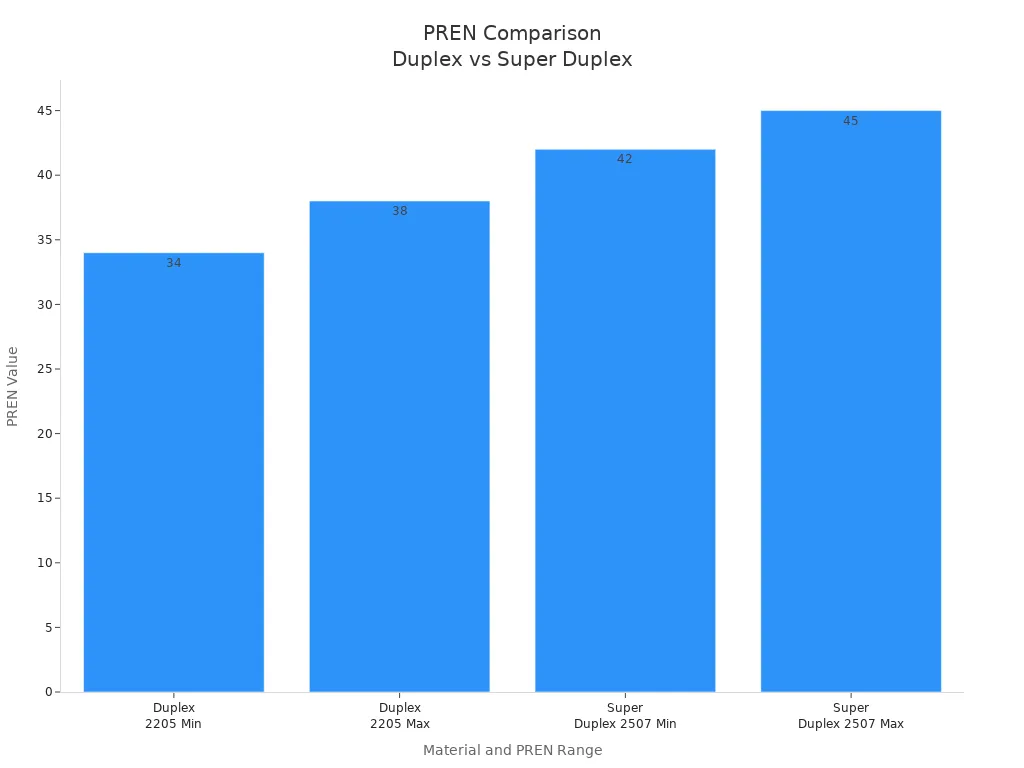
| Material | PREN Value Range | Corrosion Resistance Characteristics |
|---|---|---|
| Duplex 2205 | 34 – 38 | Moderate resistance to pitting and crevice corrosion |
| Super Duplex 2507 | 42 – 45 | Superior resistance to pitting and crevice corrosion |
Super duplex 2507 offers higher PREN values, which means better protection against pitting and crevice corrosion.
Material Choice Importance
Selecting the right duplex stainless steel impacts safety, service life, and cost. Duplex 2205 vs super duplex 2507 decisions depend on the environment and mechanical needs. Duplex 2205 suits moderate corrosive conditions, while super duplex 2507 fits extreme environments like offshore platforms.
A 30-year veteran purchasing consultant advises, “B2B clients should avoid common pitfalls by verifying supplier certifications and ensuring full material traceability. Cost control starts with understanding the total lifecycle value, not just the initial price. Reliable supply chains reduce project risk and prevent costly delays.”
Tip: Always request EN 10204 3.1 Mill Test Certificates and check for compliance with ASTM or ISO standards when sourcing duplex or super duplex materials.
Chemical Composition & PREN
Duplex 2205 Alloy Details
Duplex 2205 contains a balanced mix of chromium (21-23%), nickel (4.5-6.5%), and molybdenum (2.5-3.5%). This alloy also includes nitrogen, manganese, and trace elements. The microstructure of duplex 2205 combines both austenite and ferrite phases. This structure gives the alloy its strength and moderate corrosion resistance.
- Main elements: Chromium, nickel, molybdenum, nitrogen
- Typical uses: Chemical processing, oil and gas, marine environments
Super Duplex 2507 Alloy Details
Super Duplex 2507 features higher levels of chromium (24-26%), nickel (6-8%), and molybdenum (3-5%) compared to duplex 2205. It also contains more nitrogen. This composition creates a stronger microstructure and boosts resistance to harsh chemicals and seawater.
- Main elements: Higher chromium, nickel, molybdenum, and nitrogen
- Typical uses: Offshore platforms, desalination plants, aggressive chemical processing
Expert Insight: A 30-year veteran purchasing consultant notes, “Chemical differences between duplex 2205 and super duplex 2507 can impact procurement risks. Super duplex 2507’s higher alloy content may lead to longer lead times and tighter supply. Reliable suppliers with full traceability, like SUNHY, help reduce these risks and ensure consistent quality in the supply chain.”
PREN Comparison
PREN (Pitting Resistance Equivalent Number) measures an alloy’s ability to resist pitting corrosion. Super Duplex 2507 has a PREN value of 42 or higher, while Duplex 2205 has a PREN of about 35. This difference means super duplex 2507 offers much higher protection in aggressive environments.
| Material | PREN Value | Corrosion Resistance Comparison |
|---|---|---|
| Duplex 2205 | 35 | Moderate |
| Super Duplex 2507 | ≥ 42 | High |
- PREN values guide engineers in selecting materials for environments with high chloride or seawater exposure.
- Higher PREN means better performance against pitting and crevice corrosion.
Tip: Always compare PREN values when choosing materials for critical piping systems. This simple step can prevent costly failures and extend service life.
Mechanical Properties
Strength & Toughness
Duplex stainless steel grades such as duplex 2205 and super duplex 2507 show impressive mechanical properties. Super duplex 2507 delivers higher strength and toughness than duplex 2205. This advantage makes it ideal for demanding applications where high strength is critical.
| Property | Duplex 2205 | Super Duplex 2507 |
|---|---|---|
| Yield Strength (MPa) | 450+ | 550+ |
| Ultimate Tensile Strength | 620+ | 800+ |
| Uniform Elongation (%) | 25–30 | 15–25 |
Super duplex 2507 achieves a yield strength of 715 MPa and an ultimate tensile strength of 939 MPa. Uniform elongation reaches 24.8%. These values show that super duplex 2507 can handle greater loads and resist deformation under stress. Duplex 2205 still offers solid performance for many industrial uses.
A 30-year veteran purchasing consultant explains, “Selecting the right duplex grade based on mechanical properties ensures long-term cost control. Higher strength materials like super duplex 2507 reduce the need for thicker walls and frequent replacements, which lowers maintenance costs over time.”
Hardness & Ductility
Hardness and ductility affect how duplex materials perform in real-world conditions. Super duplex 2507 has a maximum Brinell hardness of 310 HB and a Rockwell C hardness up to 32. Duplex 2205 typically measures around 30–35 HRC. These hardness levels allow both grades to resist wear and surface damage.
- Super duplex 2507 suits harsh environments, oil and gas, chemical processing, and marine applications.
- Duplex 2205 provides good corrosion resistance and strength for many uses but may not match super duplex 2507 in extremely demanding conditions.
Ductility remains important for fabrication and installation. Both duplex grades offer enough ductility for forming and welding, which supports reliable performance in complex piping systems.
In summary: Super duplex 2507 stands out for high strength and hardness, making it the preferred choice for aggressive environments. Duplex 2205 balances strength, ductility, and cost for less severe conditions.
Corrosion Resistance
General Resistance Performance
Duplex stainless steel grades like duplex 2205 and super duplex 2507 show strong corrosion resistance in many industries. The table below compares their resistance in seawater and chemical processing environments:
| Material | Corrosion Resistance in Seawater | Corrosion Resistance in Chemical Processing |
|---|---|---|
| Duplex 2205 | Excellent in mildly aggressive environments | Sufficient for most industrial applications |
| Super Duplex 2507 | Superior in high-chloride environments | Excellent in aggressive environments |
Super duplex 2507 provides excellent corrosion resistance in both seawater and chemical processing, especially where high chloride levels exist. Duplex 2205 offers reliable resistance for less aggressive conditions. Engineers often choose super duplex for critical systems exposed to medium-to-high chloride environments.
A 30-year veteran purchasing consultant advises, “Always verify the application’s exposure to chlorides and request full material traceability. This step prevents costly failures and ensures long-term performance.”
Chloride Stress Resistance
Chloride can cause severe corrosion problems. Duplex 2205 and super duplex 2507 both resist chloride attack, but their performance differs:
- Duplex 2205 is essential for direct immersion in seawater and brackish water.
- It works well in industrial brines and de-icing salts, where chloride concentration matters.
- Duplex 2205 is effective in moderate chloride exposure, such as chemical process piping and marine equipment.
- Super duplex 2507 excels in severe conditions, including deep-sea and desalination applications, due to its superior resistance to pitting and crevice corrosion.
Super duplex 2507 stands out for its resistance to pitting and stress corrosion cracking in high-chloride environments.
Erosion & Crevice Resistance
Corrosion failures often result from pitting, stress corrosion cracking, and localized attack. Super duplex 2507 resists these threats better than duplex 2205. In one case, a super duplex valve in a water treatment line failed after several years due to stress corrosion cracking. The crack started at the bottom of pits, where local stress was highest. High chloride and sulfur compounds increased the risk.
- Pitting corrosion
- Stress corrosion cracking (SCC)
- Localized corrosion from microstructural variations
Selecting the right grade prevents these failures and extends service life. Super duplex 2507 offers the best protection in harsh environments, while duplex 2205 remains a solid choice for less severe exposure.
Applications
Duplex 2205 Uses
Duplex 2205 finds wide use in industries that require a balance of strength, corrosion resistance, and cost-effectiveness. Engineers often select duplex 2205 for its reliable performance in moderate environments. The most common duplex 2205 applications include:
- Chemical processing equipment, especially where handling corrosive chemicals is necessary.
- Oil and gas industry equipment, such as pipelines, well casings, and offshore platforms.
- Pulp and paper industry, particularly for bleaching process equipment.
- Power industry equipment, including flue gas desulfurization systems.
- Marine components exposed to seawater, like ship propellers and shafts.
- Pollution control equipment, such as scrubbers.
- Fittings for connecting and controlling fluid flow in high-pressure pipelines.
Duplex 2205 applications often involve seawater exposure, but the alloy performs best in mildly aggressive environments. Its use in subsea pipelines and marine systems highlights its versatility.
Super Duplex 2507 Uses
Super duplex 2507 serves industries that demand the highest corrosion resistance and mechanical strength. This alloy excels in harsh environments where standard duplex stainless steel may not suffice. Key super duplex 2507 applications include:
- Desalination plants and water treatment facilities, where seawater and brine create aggressive conditions.
- Subsea pipelines and offshore platforms in the oil and gas sector.
- Chemical processing plants handling highly corrosive substances.
- Petrochemical industry applications, such as PVC strippers.
- Marine systems requiring long-term durability in direct seawater contact.
Super duplex 2507 protects critical infrastructure in subsea pipelines and high-chloride environments. Its superior performance ensures long service life and reduced maintenance.
Industry Considerations
Selecting between duplex 2205 and super duplex 2507 depends on the specific requirements of each industry. The following table summarizes key certifications for these alloys:
| Certification | Description |
|---|---|
| AS9100 | Quality management system standard for aerospace. |
| ISO 9001:2015 | International standard for quality management. |
| DFARS | Defense Federal Acquisition Regulation Standards. |
A 30-year veteran purchasing consultant advises, “Match the material to the environment and risk profile. For subsea pipelines or direct seawater exposure, super duplex 2507 minimizes failure risk. For less aggressive settings, duplex 2205 offers a cost-effective solution. Always verify supplier certifications and traceability to ensure compliance and reduce project risk.”
Direct Answer: Duplex 2205 suits moderate corrosive environments, while super duplex 2507 is best for aggressive, high-chloride, or subsea applications.
Cost & Fabrication
Price Comparison
When comparing the costs of super duplex 2507 and duplex 2205, engineers see a clear difference. Super duplex 2507 costs more per kilogram than duplex 2205. The table below shows the average cost difference:
| Parameter | 2507 (Super Duplex) | 2205 (Duplex) |
|---|---|---|
| Cost | Higher | Lower |
Direct Answer: Super duplex 2507 is more expensive than duplex 2205 due to its higher alloy content and increased demand in critical applications.
Several factors influence these prices:
- The cost of super duplex 2507 depends on raw materials like nickel, chromium, and molybdenum. These prices can change quickly because of mining activities and supply chain interruptions.
- International supply chain disruptions, such as transportation delays or geopolitical conflicts, can increase logistics costs and affect material prices.
- Regulatory changes and trade policies may impact both the cost and delivery schedules, making procurement more complex.
A 30-year veteran purchasing consultant recommends, “To control costs, buyers should monitor raw material trends and work with suppliers who offer full traceability and flexible delivery options. This approach helps reduce the risk of unexpected price hikes and project delays.”
Fabrication & Welding
Fabricating and welding duplex stainless steel requires careful attention to detail. Both duplex 2205 and super duplex 2507 can be welded using standard techniques, but super duplex 2507 needs stricter control of heat input and cooling rates. This ensures the right balance of austenite and ferrite phases, which protects mechanical strength and corrosion resistance.
Key fabrication points:
- Use qualified welders and follow approved procedures.
- Maintain clean surfaces to prevent contamination.
- Control heat input to avoid loss of corrosion resistance.
A consultant with 30 years of experience advises, “Choose suppliers with proven fabrication expertise and certified quality systems. This reduces the risk of weld failures and ensures reliable performance in service.”
Tip: Always request welding procedure specifications and welder qualifications when sourcing fabricated components.
Material Selection Guide
Choosing Based on Environment
Selecting the right material depends on the severity of the environment and exposure to corrosive agents. The table below summarizes when to use each grade:
| Material | Recommended Conditions |
|---|---|
| Duplex 2205 | Moderate environments, such as chemical processing, brackish water, and mild chlorides |
| Super Duplex 2507 | Extreme conditions: seawater, highly acidic fluids, high chloride (~19,000 ppm), and aggressive chemicals |
Super Duplex 2507 contains more molybdenum and nitrogen, which increases its resistance to corrosion. Its high PREN value (above 40) makes it ideal for harsh marine and offshore settings. Duplex 2205 works well in less aggressive environments, offering reliable performance and cost savings.
Tip: A 30-year veteran purchasing consultant recommends, “Always match the material to the environment’s severity. For seawater or high-chloride exposure, Super Duplex 2507 is the safest choice.”
Choosing Based on Mechanical Needs
Mechanical load requirements play a key role in material selection. Consider the following points:
- Duplex 2205 offers high yield strength, about twice that of standard austenitic stainless steels. It suits most structural applications where strength is important.
- Super Duplex 2507 provides even greater strength, making it suitable for heavy-duty, vibration-prone, or high-pressure equipment.
- The specific application and expected loads should guide the choice. Over-specifying can increase costs without added benefit.
Direct Answer: Choose Super Duplex 2507 for maximum strength and demanding loads; select Duplex 2205 for strong, cost-effective solutions in moderate conditions.
Choosing Based on Budget
Budget often influences material selection for large projects. Consider these factors:
- Duplex 2205 has a lower initial cost, making it attractive for projects with moderate corrosion risk.
- Super Duplex 2507 costs more upfront but delivers long-term savings by reducing maintenance, replacements, and downtime.
- Its longer service life and high resistance to aggressive media result in a higher return on investment, especially in offshore or critical infrastructure.
A 30-year veteran consultant advises, “Evaluate total lifecycle costs, not just purchase price. Investing in Super Duplex 2507 can prevent costly shutdowns and extend system reliability.”
Note: Stainless steel is 100% recyclable, and both grades support sustainability goals by reducing environmental impact through longer service life and less frequent replacement.
Duplex 2205 gives strong resistance to stress corrosion cracking and excellent corrosion resistance in moderate environments. Super Duplex 2507 offers superior corrosion resistance and higher strength for extreme offshore and chemical conditions. The table below compares key features:
| Feature | Duplex 2205 | Super Duplex 2507 |
|---|---|---|
| corrosion resistance | Excellent in moderate settings | Superior in aggressive environments |
| strength | Lower yield strength | Higher yield strength |
| cost | Balanced cost and weldability | Higher cost |
| applications | Pipelines, chemical plants | Offshore, marine, aggressive chemicals |
Engineers should evaluate environmental severity, mechanical load, and lifecycle cost. Certified manufacturers like SUNHY provide traceable documentation and compliance with international standards. A 30-year veteran consultant advises B2B clients to prioritize material traceability and quality assurance for long-term reliability.
FAQ
What is the main difference between Duplex 2205 and Super Duplex 2507?
Super Duplex 2507 offers higher strength and superior corrosion resistance. Duplex 2205 provides balanced performance for moderate environments. Engineers select Super Duplex 2507 for extreme conditions.
Which grade is better for seawater applications?
Super Duplex 2507 is better for seawater exposure. Its high PREN value protects against pitting and crevice corrosion. Duplex 2205 works well in less aggressive marine settings.
How do engineers verify material quality?
Engineers request EN 10204 3.1 Mill Test Certificates. They check compliance with ASTM, DIN, or ISO standards. Certified suppliers like SUNHY provide full traceability.
Can both grades be welded easily?
Both grades can be welded using standard techniques. Super Duplex 2507 requires stricter heat control. Qualified welders and approved procedures ensure reliable performance.
What factors affect the cost of these materials?
| Factor | Impact on Cost |
|---|---|
| Alloy Content | Higher for 2507 |
| Supply Chain | Disruptions raise prices |
| Certifications | Increase reliability |
Super Duplex 2507 costs more due to higher alloy content and demand.