
Wood & Composite Fastening Solutions · OEM T-Nut Manufacturer
Tee Nuts: High-Retention Threads for Wood, MDF, and Composites
Creating reliable, heavy-duty machine threads in wood, particleboard, or fiberglass is notoriously difficult. Standard wood screws strip out under dynamic loads, and traditional nuts have no way to grip the soft substrate. Through decades of progressive stamping and cold-forging innovation, we manufacture a comprehensive line of Tee Nuts (T-Nuts) engineered to permanently anchor into softer materials. By placing the nut on the “blind side” of the workpiece and utilizing aggressive anti-rotation mechanisms like multi-prong flanges and ribbed shanks, our T-Nuts convert pulling tension into extreme clamping force, delivering indestructible joints for commercial furniture, marine composites, and recreational structures.
Configurations: 6-Prong Tee Nut, Ribbed Shank (Propel Nut), Round Base T-Nut.
Materials: High-Carbon Steel, 304/316 Stainless Steel (Marine Grade).
Finishes: Zinc Plated (Clear/Yellow), Black Oxide, Plain.
Readiness: Precision automated-feed tolerances, High-Shear integral barrels, PPAP Level 3 available.
Types of Tee Nuts
 Special Nuts
Furniture & Specialty
Weld Nuts Series
Inserts & Rivet Series
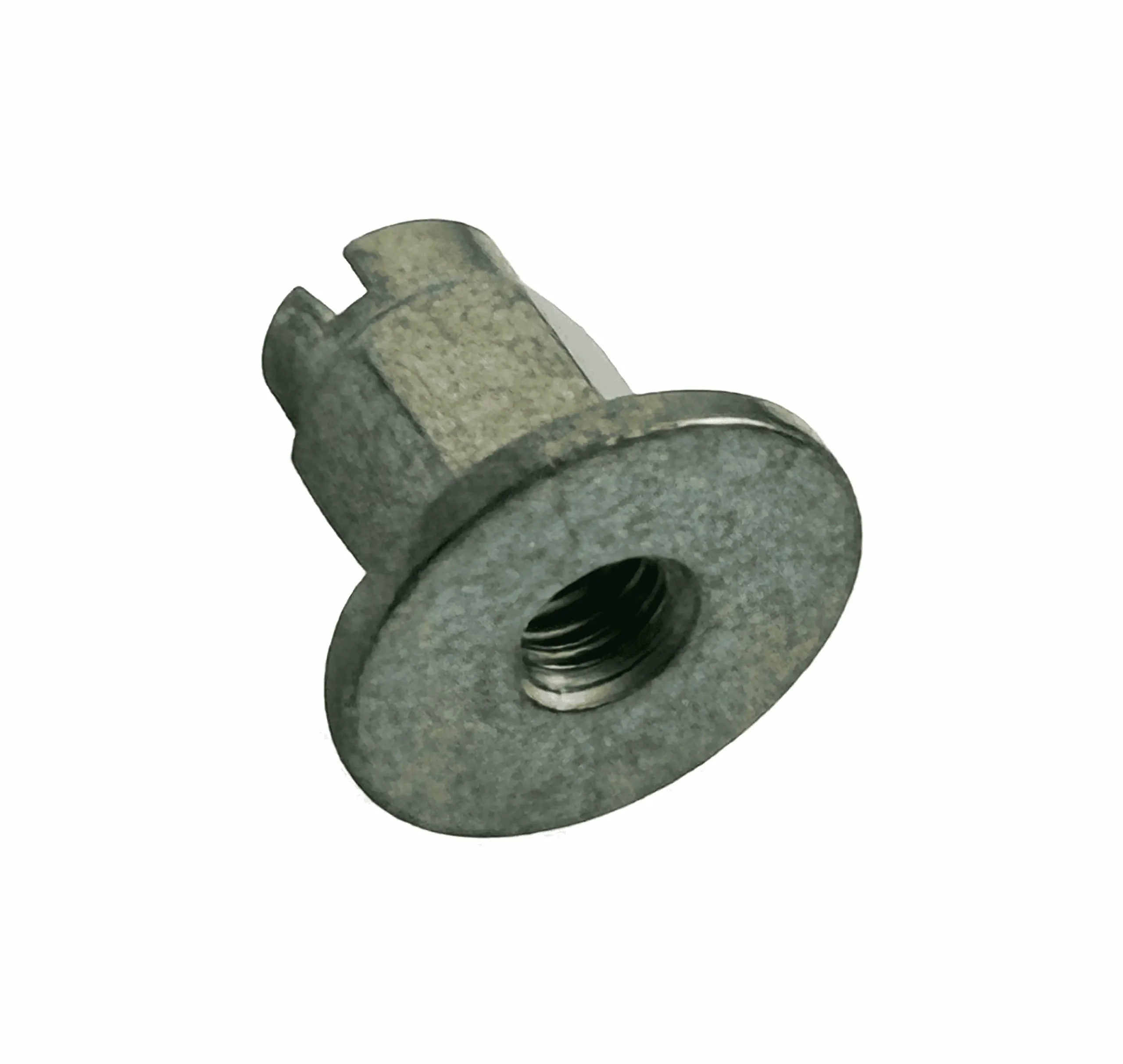
Round Base T-Nut
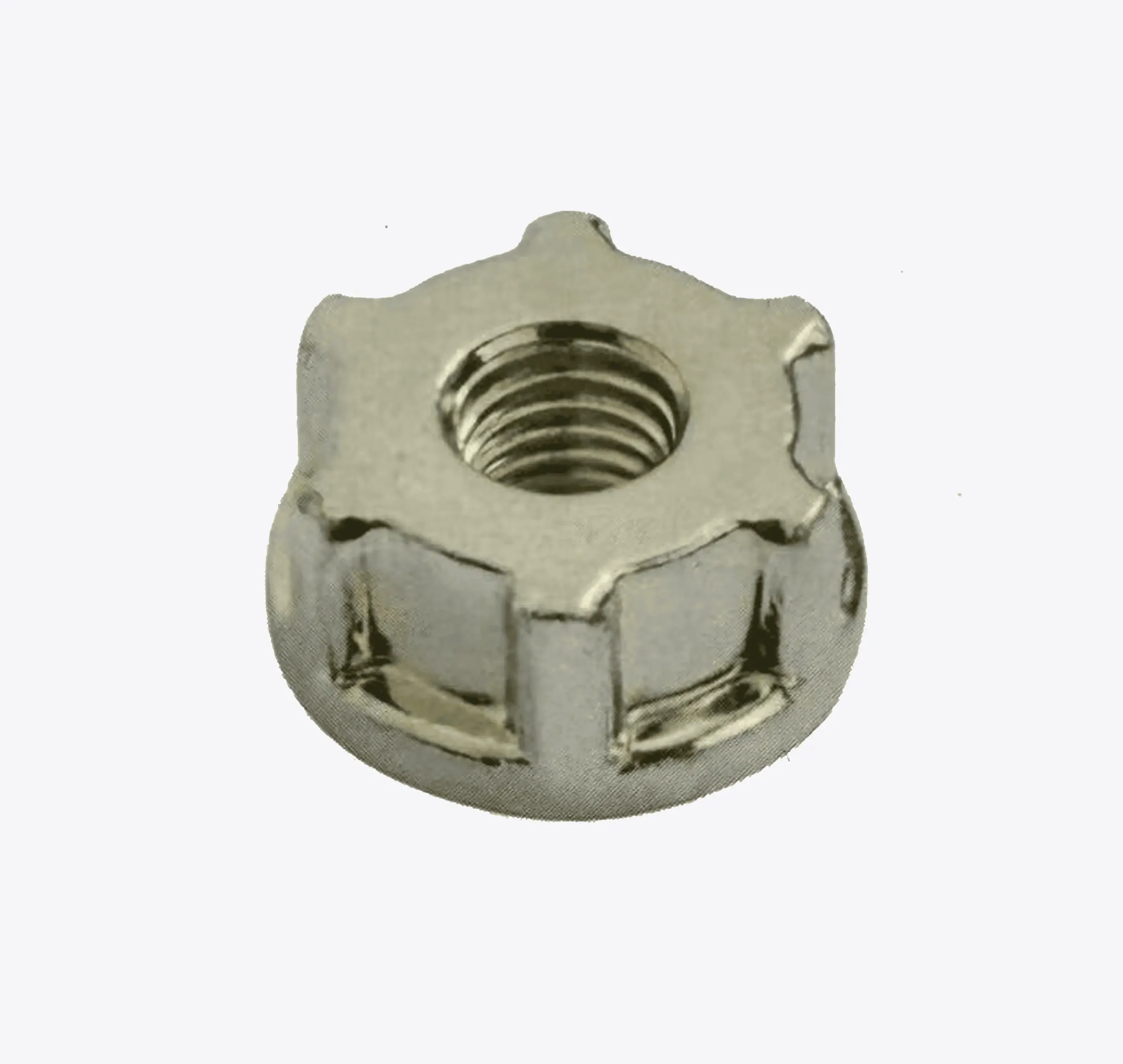
6-Prong Tee Nut
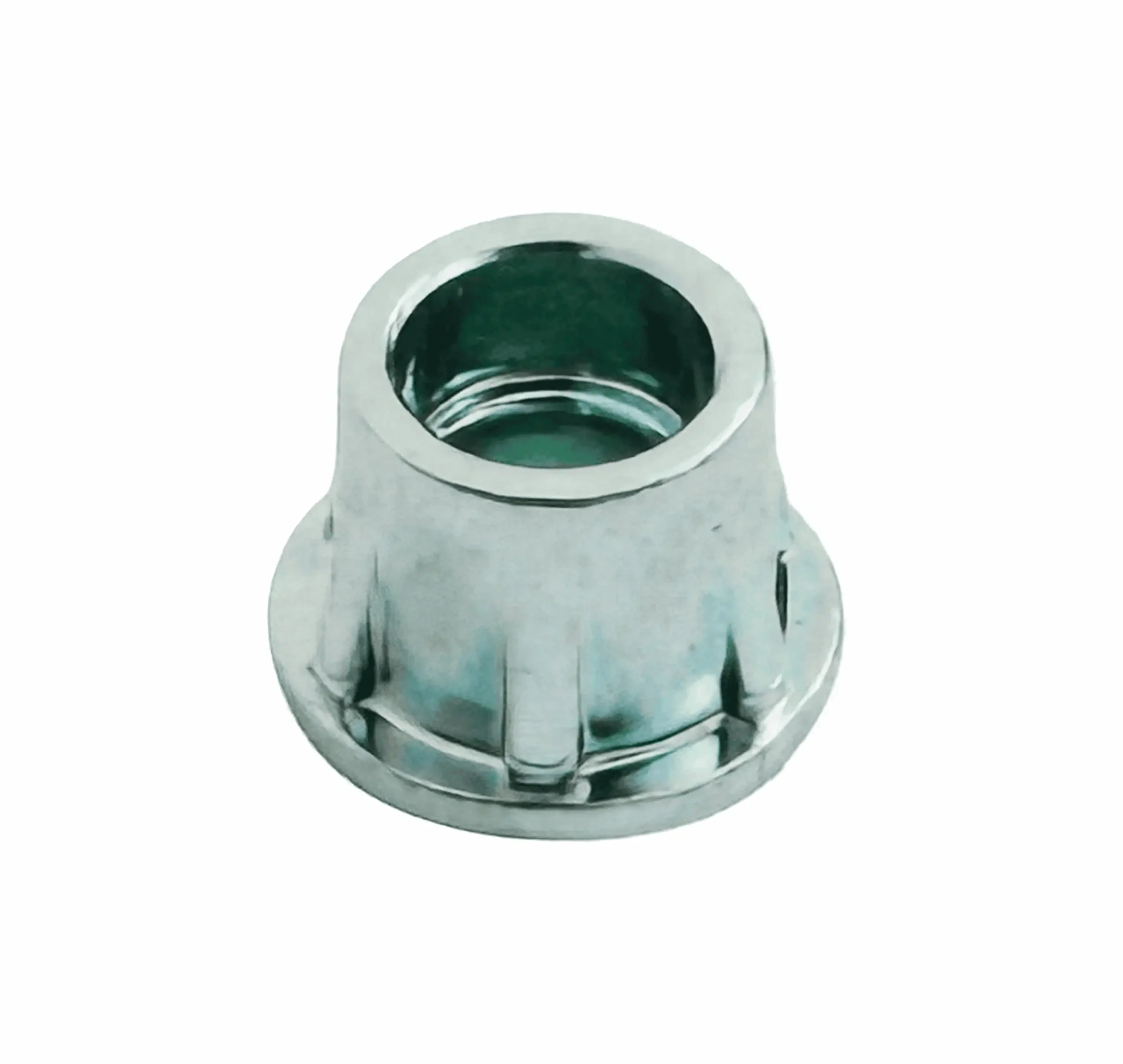
Ribbed Shank Tee Nut (Propel Nut)
The Engineering Advantage: Blind-Side Physics
The structural integrity of a T-Nut relies entirely on correct orientation. T-Nuts are designed to be installed on the blind side (the back side) of the material, opposite to where the mating bolt is inserted.
When you tighten the bolt from the front, it pulls the T-Nut deeper into the wood. The larger the pulling force (tension), the harder the flange compresses against the back of the panel. This effectively sandwiches the substrate, distributing the load across the wide surface area of the flange. If installed backward (on the front face), the bolt will simply “push out” the nut, resulting in immediate joint failure.
What Is A Tee Nut?
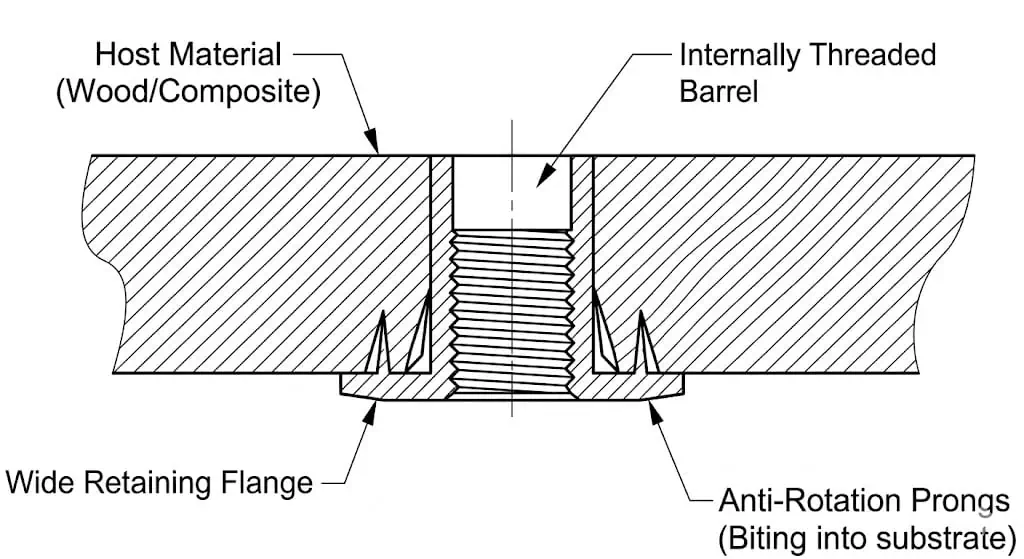
A Tee Nut (T-Nut or blind nut) is a specialized threaded fastener used primarily to provide a flush, heavy-duty internal thread in wood, particleboard, or composite materials. Structurally, it resembles a top hat, featuring a long internally threaded barrel and a wide, flat flange. The flange is typically equipped with sharp prongs or the barrel features extruded ribs. When installed on the blind side (back side) of the material, these mechanisms bite into the substrate to prevent the nut from spinning, while the wide flange distributes the tensile load to prevent the nut from being pulled through the material.
Key Anatomy & Characteristics:
Wide Retaining Flange: Distributes heavy clamping loads over a large surface area of the soft substrate, preventing pull-through.
Internally Threaded Barrel: Provides a deep, strong metal thread for machine bolts.
Anti-Rotation Mechanisms (Prongs or Ribs): Sharp spikes on the flange or vertical splines on the barrel that lock the nut into the host material, defeating the torsional force of a turning bolt.
Blind-Side Installation: Converts pulling tension into clamping compression, creating an incredibly strong joint.
Dimensional Reference: Common Metric T-Nuts
(Note: Barrel length is a critical specification. The barrel must be slightly shorter than your material thickness so it does not protrude from the front face when fully seated.)
| Thread Size | Hole Prep Dia. (Approx) | Base/Flange Diameter | Standard Barrel Lengths | Typical Application |
| M5 | 6.5 mm | 15.0 mm | 6mm, 8mm, 10mm | Light cabinetry |
| M6 | 7.5 mm | 17.0 mm | 9mm, 12mm, 15mm | Office furniture frames |
| M8 | 9.5 mm | 22.0 mm | 11mm, 15mm, 17mm | Heavy seating, bed frames |
| M10 | 12.0 mm | 25.0 mm | 13mm, 17mm, 20mm | Climbing walls, heavy timber |
Factory Engineering: Solving OEM Assembly Failures
Pain Point 1: Prongs Folding or Flattening During Insertion
The Cause: Cheaply stamped T-Nuts use soft, low-grade steel. When hammered or pressed into dense wood, the prongs fold flat against the flange instead of penetrating, destroying all anti-rotation capability.
Our Solution: We utilize heavy-tonnage progressive stamping presses combined with high-carbon steel alloys. Our dies are engineered to cut steep, razor-sharp bevels onto each prong. This guarantees clean penetration into the toughest materials without buckling.
Pain Point 2: Barrel Separation (Shearing off the Flange)
The Cause: Poorly manufactured T-Nuts often suffer from a weak junction between the threaded barrel and the flat flange. Under heavy tightening torque or dynamic vibration, the barrel snaps completely off the base.
Our Solution: Our cold-forging and deep-drawing processes ensure a seamless, integral transition between the barrel and the flange. The grain structure of the metal is compressed and aligned at the corner radius, resulting in extreme tensile and shear strength that exceeds industrial furniture standards.
Industry Application Case Study
Sector: Commercial Theater & Stadium Seating
The Challenge: A manufacturer of high-end auditorium seating was facing a high defect rate. They were assembling heavy metal seat brackets to curved plywood backrests using standard 4-prong T-Nuts. The automated pneumatic drivers were applying too much torque, causing the 4-prong nuts to completely spin out and chew through the expensive plywood, resulting in a 9% scrap rate.
Our Solution: We upgraded their bill of materials to our precision-stamped M8 6-Prong Tee Nuts. The two additional prongs increased the rotational grip surface by 50%.
The Result: The 6-prong design effectively distributed the torque across a wider area of the plywood. The nuts held perfectly during the high-speed pneumatic bolt run-down. Spin-out failures dropped to 0%, saving the OEM thousands of dollars in scrapped wooden components per month.
FAQ
Should I use a pronged T-Nut or a ribbed Propel Nut?
It depends entirely on your material density. For softwoods (pine, fir), plywood, and MDF, use a Pronged T-Nut; the soft fibers will easily accommodate the prongs. For hardwoods (oak, maple, walnut) or rigid plastics, the prongs can act as wedges and split the material. In those cases, always drill a precise hole and press in a Ribbed Shank Tee Nut (Propel Nut).
Can T-Nuts be fed through automated insertion machines?
Yes, but standard pronged nuts can easily tangle their prongs together in vibratory bowl feeders. If you are using automated insertion equipment, we highly recommend our Round Base T-Nuts or specifically toleranced Propel Nuts to ensure jam-free high-speed assembly.
How do I prevent the T-Nut from falling out before the bolt is inserted?
While the prongs provide some initial hold, T-nuts can fall out during shipping if the assembly is shipped “knocked down” (unassembled). To prevent this, you can specify T-Nuts with pre-drilled brad holes in the flange (to secure them with small nails) or use a dab of industrial adhesive on the flange during insertion.