
Precision Sheet Metal Fastening · OEM Self-Clinching Nut Manufacturer
Self-Clinching Nuts: Permanent, Flush-Mounted Threads for Ultra-Thin Sheet Metal
When your chassis design requires load-bearing threads in sheet metal too thin to be tapped, and welding introduces unacceptable thermal distortion, you need a highly controlled cold-flow fastening solution. Relying on decades of precision machining and cold-forging expertise, we manufacture S Series (Carbon Steel) and CLS Series (Stainless Steel) Self-Clinching Nuts. Engineered to be pressed into pre-punched holes, our clinching fasteners mechanically displace the host material into a specially designed undercut. The result is a permanent, high-torque thread that leaves the reverse side of your panel perfectly flush and cosmetically flawless.
Series / Materials: S Series (Heat-Treated Carbon Steel), CLS Series (300 Series Stainless), SP Series (Hardened Stainless).
Thread Sizes: M2 to M10 / #2-56 to 3/8-16.
Sheet Compatibility: Aluminum, Cold Rolled Steel, Copper, and Stainless Steel (Host panel must be softer than the nut).
Readiness: Strict Hardness Control (Rockwell Scale), Optical Thread Sorting, and PPAP Level 3 documentation.
Types of Self-Clinching Nuts
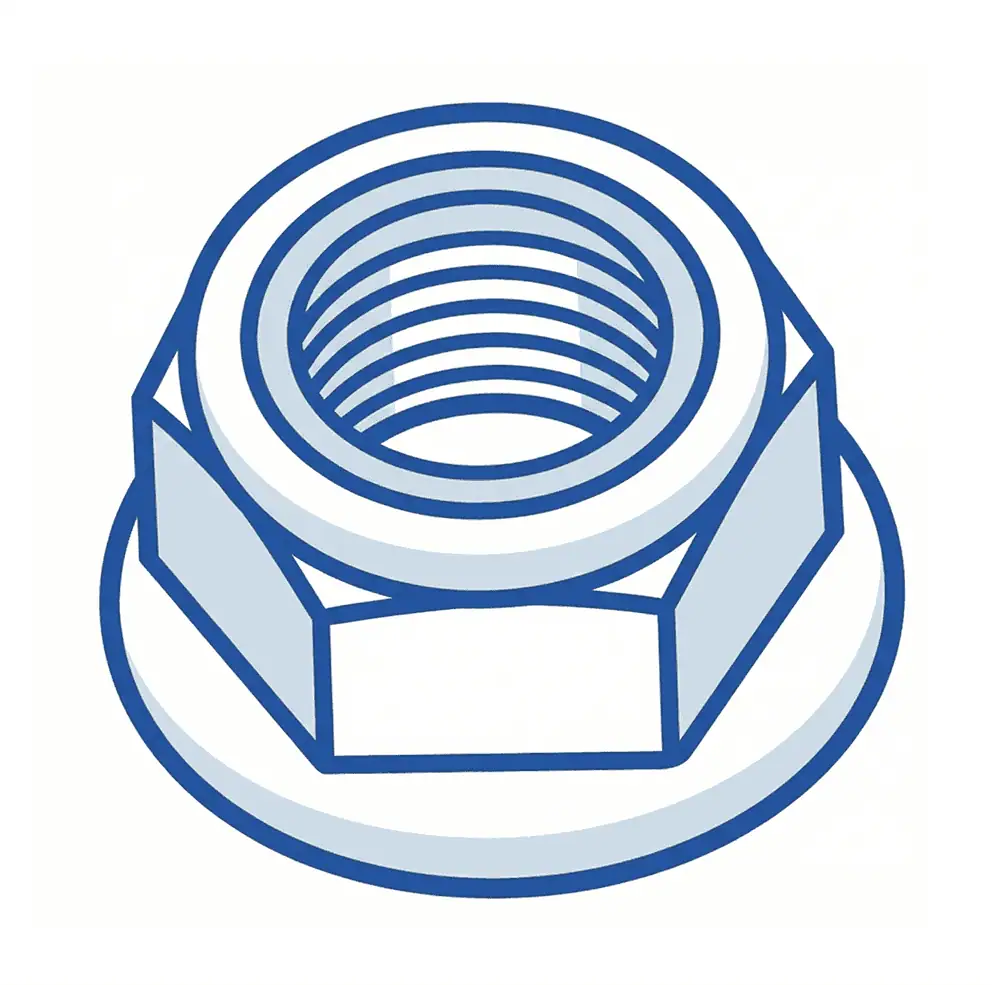 Special Nuts
Inserts & Rivet Series
Weld Nuts Series
Furniture & Specialty

CLS Series Self-Clinching Nut

S Series Self-Clinching Nut

Self-Clinching Nut
The Engineering Advantage: The Physics of Cold Flow & Mechanical Interference
Unlike weld nuts or rivet nuts, self-clinching nuts rely entirely on the ductility of the host sheet metal and a specialized mechanical locking geometry. When steady squeezing force (not an impact blow) is applied via a press, the knurled teeth (clinching ring) bite into the sheet metal. This forces the displaced host metal to “cold flow” plastically into the engineered undercut (annular recess) beneath the head of the nut.
This creates a permanent, structural lock:
The knurled ring resists “torque-out” (spinning) when a screw is tightened.
The displaced metal locked into the undercut resists “push-out” (axial dislodgement) when axial load is applied.
The result is a high-strength threaded insert with a completely flush reverse side, requiring zero secondary finishing or weld grinding.
What Is A Self-Clinching Nut?
A self-clinching nut is a specialized threaded fastener engineered to be pressed into ductile sheet metal. During installation, the nut’s knurled teeth bite into the panel, forcing the host metal to “cold flow” plastically into a precisely engineered undercut. This creates a permanent, load-bearing threaded insert that strongly resists torque and push-out forces, while leaving the reverse side of the sheet perfectly flush with no welding required.
Key Anatomy & Characteristics:
Knurled Clinching Ring: The serrated teeth that bite into the sheet metal to prevent the nut from spinning (torque-out resistance) when a screw is tightened.
Annular Recess (Undercut): The engineered groove beneath the head where the displaced host metal flows and locks, preventing the nut from being pushed out (axial retention).
Flush Reverse Side: Because the clinching action is contained entirely within the thickness of the sheet metal, the back of the panel remains flat and cosmetically flawless.
Internal Thread: Provides a high-strength, reusable fastening point in materials otherwise too thin to be tapped.

Dimensional Reference: Metric S & CLS Series Baseline
(Note: Every clinching nut requires a highly specific hole size and minimum sheet thickness. Using an oversized hole will drastically reduce push-out strength.)
| Thread Size | Pre-Punched Hole Size (+0.08 / -0) | Nut Profile Type | Max Sheet Hardness (HRB) | Min Sheet Thickness |
| M2 | 4.25 mm | -0, -1, -2 | 80 (S) / 70 (CLS) | 0.8 mm |
| M3 | 4.25 mm | -0, -1, -2 | 80 (S) / 70 (CLS) | 0.8 mm |
| M4 | 5.40 mm | -0, -1, -2 | 80 (S) / 70 (CLS) | 0.8 mm |
| M5 | 6.35 mm | -0, -1, -2 | 80 (S) / 70 (CLS) | 1.0 mm |
| M6 | 8.75 mm | -1, -2 | 80 (S) / 70 (CLS) | 1.2 mm |
Factory Engineering: Solving OEM Assembly Failures
Pain Point 1: Insufficient Push-Out Strength (Nuts Falling Out)
The Cause: If the annular recess (undercut) is machined too shallow, or the knurling geometry is blunt, an insufficient volume of metal will cold-flow into the recess, causing the nut to pull right out of the panel under load.
Our Solution: We utilize multi-station, high-precision CNC formers and dedicated cold-heading dies to guarantee a deep, strictly toleranced undercut profile and razor-sharp broaching teeth. This maximizes metal displacement, ensuring our push-out limits meet or exceed international standards.
Pain Point 2: Panel Warping or Bulging After Installation
The Cause: Pressing poorly designed nuts into a chassis displaces the metal radially (outward) instead of axially (into the undercut). This creates immense stress that warps thin panels or causes the edge of the hole to bulge upwards.
Our Solution: Our clinching rings are geometrically optimized with a precise taper. This directs the cold flow of the sheet metal smoothly downward into the recess, eliminating radial stress and guaranteeing perfectly flat, distortion-free OEM chassis panels.
Industry Application Case Study
Sector: Medical Device Enclosures & Consoles
The Challenge: An OEM manufacturing control units for MRI machines used 1.5mm 5052 aluminum chassis. They initially attempted to use projection weld nuts, which caused severe cosmetic burn marks and heat-affected zones that warped the delicate aluminum frames. They then switched to cheap clinching nuts, but the nuts spun out when technicians applied high torque to the grounding screws.
Our Solution: We transitioned their assembly line to our precision-forged CLS Series Stainless Steel Self-Clinching Nuts. We analyzed the hardness of their 5052 aluminum (HRB 60) and confirmed the CLS nuts possessed the ideal superior hardness to bite effectively.
The Result: The deeper knurl penetration locked perfectly into the soft aluminum. Torque-out resistance increased by 45%, zero cosmetic damage was sustained on the exterior face, and overall assembly time was cut by completely eliminating the welding station and post-weld grinding.
FAQ
Can I install a self-clinching nut using a hammer or impact wrench?
Absolutely not. Clinching requires the host metal to undergo plastic deformation (cold flow). A sudden impact blow from a hammer will simply shatter the nut, crack the host material, or warp the panel. You must use an arbor press, a hydraulic press, or a specialized hardware insertion machine that applies steady, parallel squeezing force.
Why are my CLS Series nuts failing to clinch into my stainless steel panels?
The Golden Rule of Clinching: The fastener must always be significantly harder than the host sheet metal. CLS series nuts are made of 300-series stainless, rated for a maximum host hardness of HRB 70. However, most 300-series stainless sheet metal is typically HRB 88 or harder. The nut is softer than the panel and is crushing itself. For stainless panels, you must specify our SP Series (Hardened Stainless) Self-Clinching Nuts.
Which side of the punched hole should I press the nut into?
Always press the nut into the punch side of the hole (the side where the punch entered the metal), never the burr side (the exit side). The punch side has a smooth, slightly radiused edge that encourages optimal cold flow of the metal down into the nut’s undercut.