
Precision Cylindrical Fastening · OEM Machined Parts Manufacturer
Barrel Nuts & Cross Dowels: Precision Right-Angle and Flush Fastening
Traditional wood screws fail catastrophically in end-grain, and standard hex nuts leave sharp, exposed threads that are unacceptable in architectural or consumer-facing applications. Utilizing advanced multi-axis CNC turning and precision cold-heading, we manufacture high-strength Barrel Nuts (Cross Dowels) and Flat Head Barrel Nuts (Binding Posts/Sex Bolts). Whether you are engineering knock-down (KD) furniture that demands indestructible 90-degree joints, or architectural glass panels requiring tamper-resistant, flush-mounted connections on both sides, our cylindrical nuts provide unparalleled shear strength and a clean, safe finish.
Configurations: Cross Dowels (with alignment slots), Flat Head Barrel Nuts, Security Binding Posts.
Manufacturing Process: CNC Swiss Turning (High Precision) & Cold Forging (High Volume).
Materials: Free-Machining Brass, Carbon Steel, 304/316 Stainless Steel, Aluminum.
Readiness: Strict concentricity tolerances, custom barrel lengths, and PPAP Level 3 available.
Types of Barrel Nuts
 Special Nuts
Furniture & Specialty
Weld Nuts Series
Inserts & Rivet Series
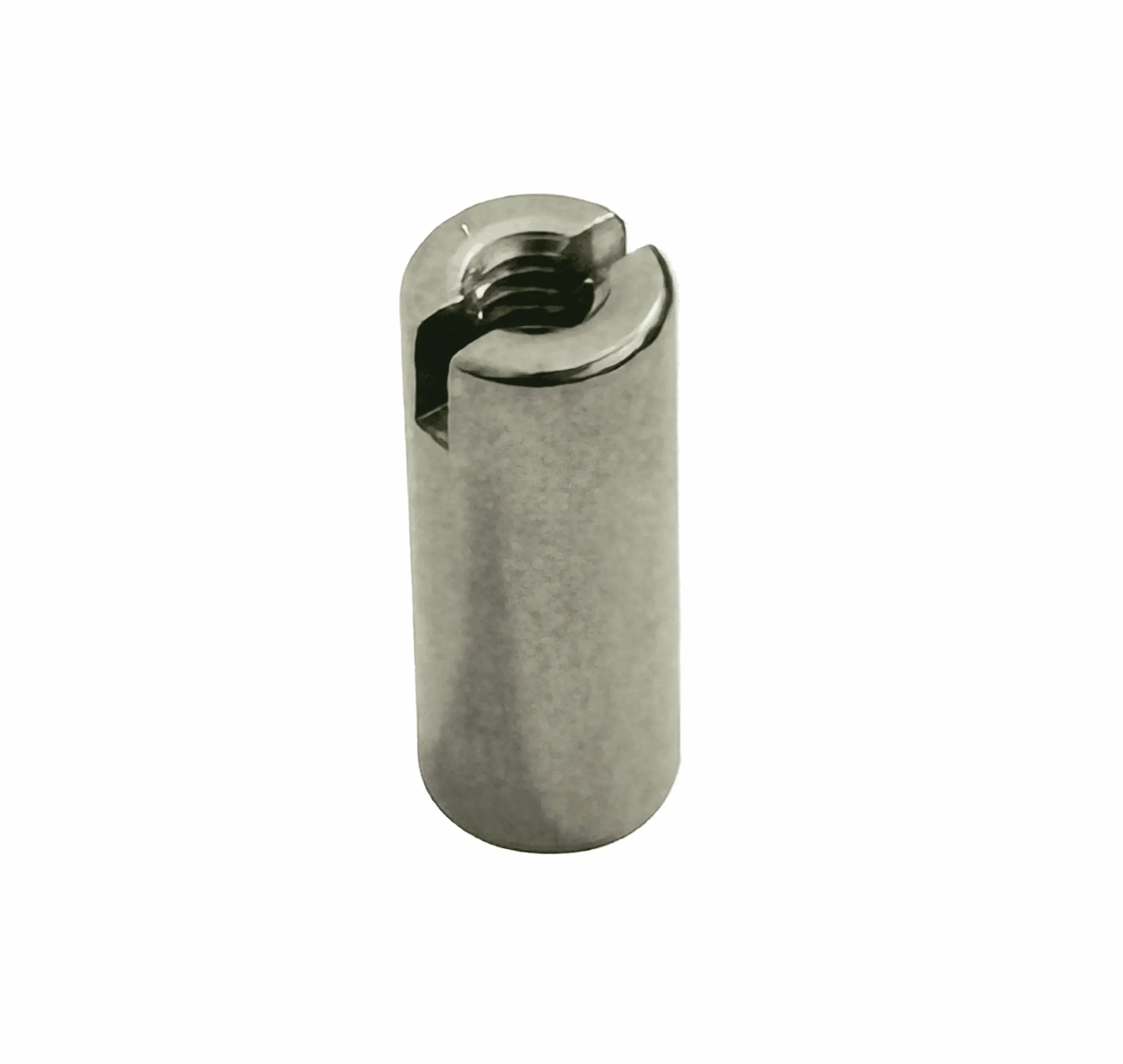
Cross Dowel (Barrel Nut)
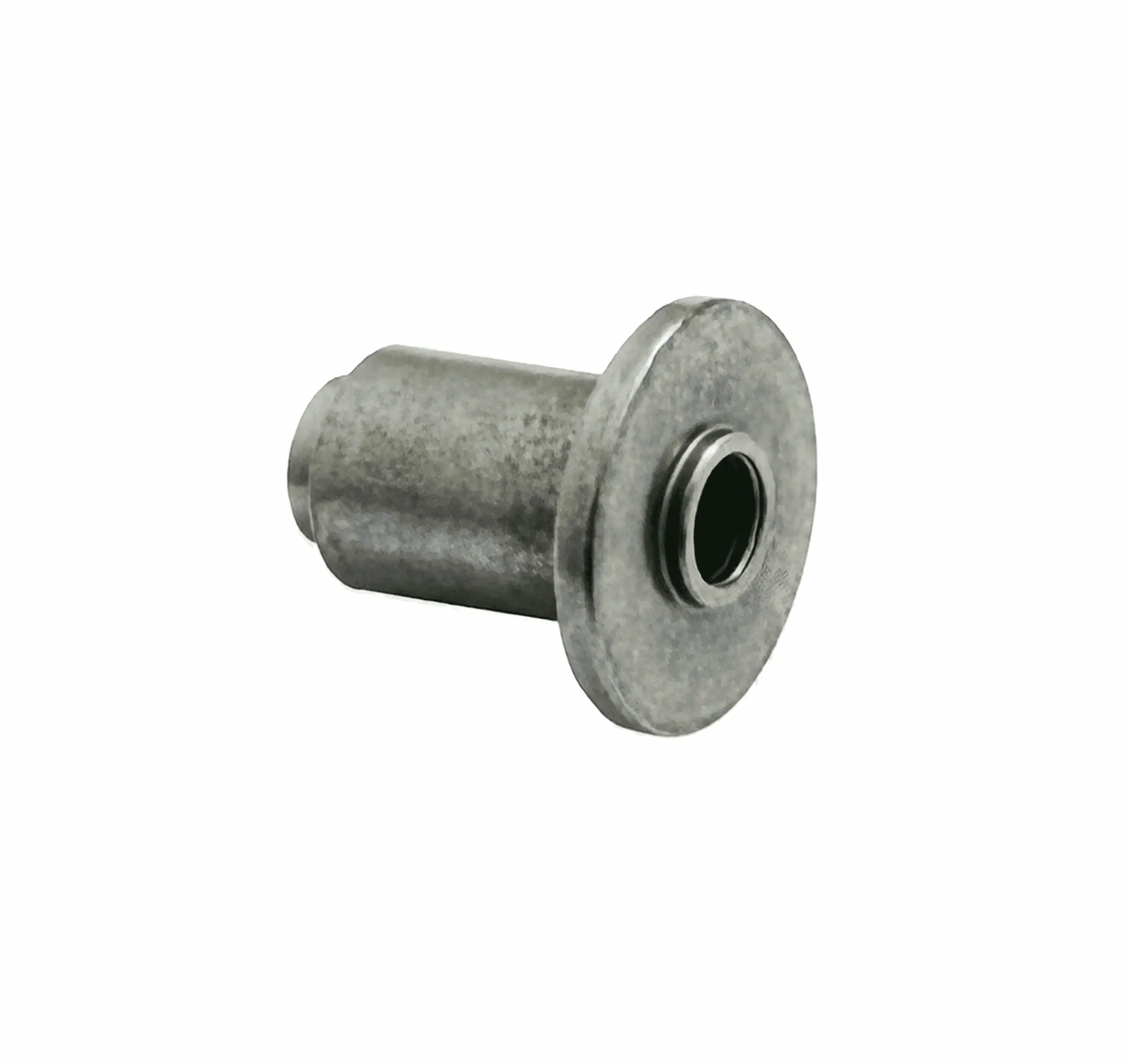
Flat Head Barrel Nut
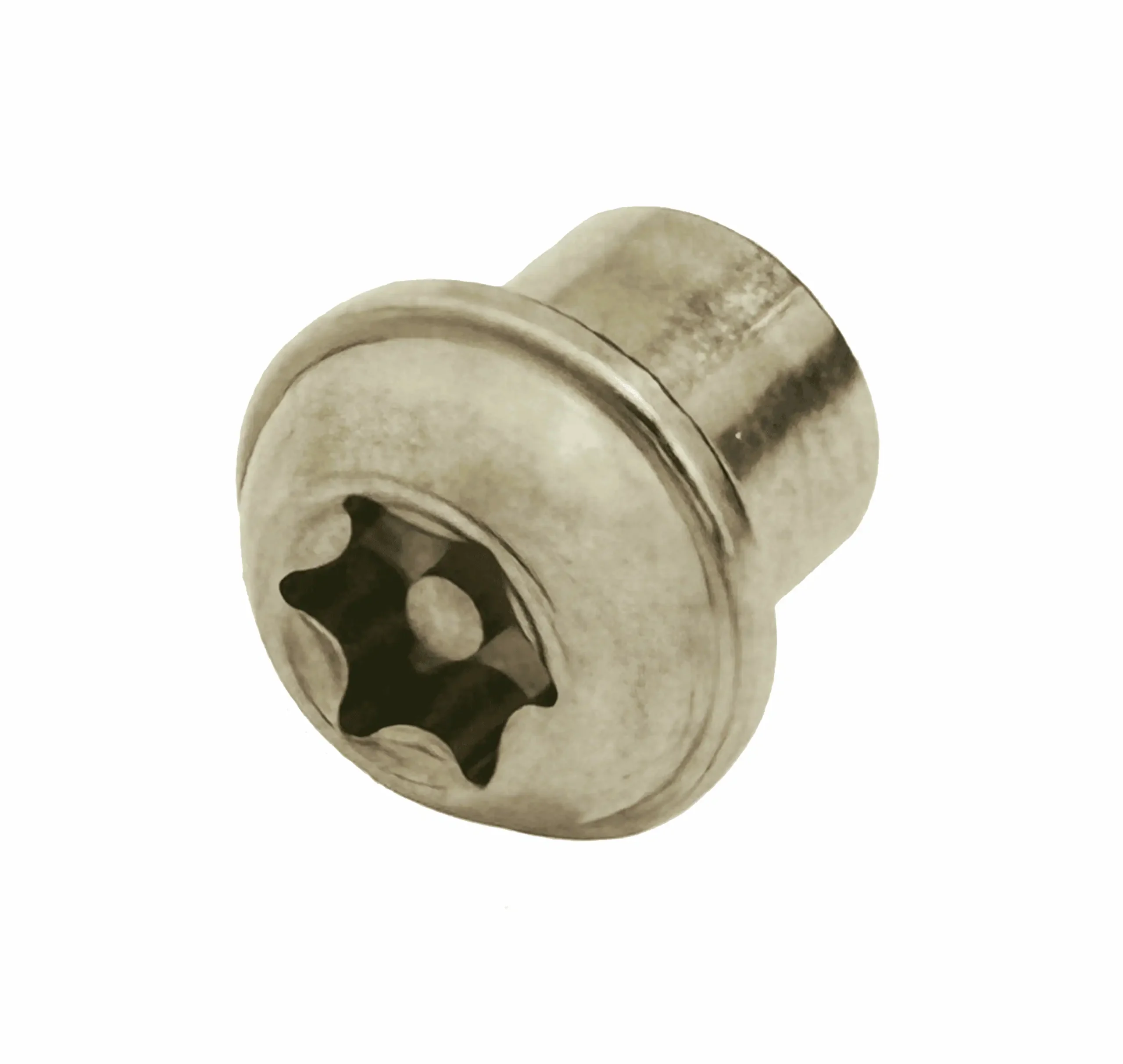
Security Barrel Nut (Female Binding Post)
The Engineering Advantage: Defeating End-Grain Failure
Why use a Cross Dowel instead of screwing directly into the wood? It comes down to the physics of material grain.
Wood grain is structurally similar to a tightly packed bundle of drinking straws. If you drive a standard screw directly into the “end-grain” (parallel to the straws), the threads have virtually nothing to grip; the screw will pull out under minimal load. By boring a vertical hole and dropping in a Cross Dowel, you introduce a solid steel anchor that rests across the grain. When the bolt engages the dowel, the load is distributed across the entire cylindrical surface of the nut and against the tough “cross-grain” of the wood, creating an indestructible right-angle joint capable of withstanding extreme dynamic racking forces.
What Is A Barrel Nut?
A barrel nut is a highly versatile cylindrical fastener designed for specialized joining applications where standard nuts cannot function. The term encompasses two main variants: Cross Dowels, which are solid cylinders with a perpendicular threaded hole used to create immense right-angle holding power in end-grain wood and composites; and Flat Head Barrel Nuts (Binding Posts), which are internally threaded tubes with a low-profile head, designed to mate with a machine screw to provide a secure, flush, and aesthetically clean finish on both sides of an assembly without exposing sharp threads.
Key Anatomy & Characteristics:
Cylindrical Outer Body: Distributes clamping force and shear loads evenly across the mating material’s internal bore.
Perpendicular Thread (Cross Dowels): Intercepts bolts at a 90-degree angle for knock-down (KD) furniture and structural timber joints.
Axial Thread (Binding Posts): Internally tapped along the length of the barrel to sleeve through a material and mate flush with a screw.
Alignment Slot: A groove on the end of a cross dowel allowing operators to precisely rotate and align the internal threads with a blind bolt.

Dimensional Reference: Common Metric Cross Dowels
(Note: For cross dowels, the alignment of the threaded hole relative to the cylinder edge is critical for successful assembly.)
| Thread Size | Cylinder Outer Diameter (OD) | Total Cylinder Length | Alignment Feature | Typical Application |
| M6 | 10.0 mm | 13 mm, 14 mm | Flathead Slot | Standard KD Furniture |
| M6 | 10.0 mm | 20 mm | Flathead Slot | Bed Frames / Cribs |
| M8 | 12.0 mm | 20 mm, 25 mm | Flathead / Cross Slot | Heavy Timber Joinery |
| M10 | 14.0 mm | 30 mm, 40 mm | Flathead Slot | Workbench Sub-frames |
Factory Engineering: Solving OEM Assembly Failures
Pain Point 1: Bolt Cross-Threading During Blind Assembly
The Cause: In flat-pack furniture, the cross dowel is hidden deep inside a bored hole. If the threaded hole of the dowel is machined slightly off-center, or if the user cannot align it perfectly with the incoming bolt, the bolt will cross-thread and destroy the nut.
Our Solution: We utilize precision CNC Swiss lathes to guarantee absolute concentricity of the perpendicular tapped hole. Furthermore, we forge a deep, highly defined alignment slot on the top of the cylinder. This allows the end-user to insert a flathead screwdriver and easily rotate the dowel to visually align the thread with the bolt path.
Pain Point 2: Binding Posts Shearing Under Load
The Cause: Many suppliers provide hollow brass or cheap aluminum binding posts meant only for paper bookbinding. When OEMs use these in structural architectural panels, the thin barrel walls shear under lateral loads.
Our Solution: For structural applications, we manufacture Heavy-Wall Flat Head Barrel Nuts using cold-forged Carbon Steel and 304 Stainless Steel. The thick barrel wall is engineered to act as a solid shear pin, safely absorbing heavy lateral forces between joined panels without fracturing.
Industry Application Case Study
Sector: Commercial Playground Equipment & Park Seating
The Challenge: A manufacturer was assembling heavy HDPE plastic playground structures and timber park benches. Using standard through-bolts and hex nuts left exposed, sharp threads protruding from the equipment. This failed critical child-safety compliance tests due to extreme snagging and laceration hazards.
Our Solution: We engineered a custom line of M8 Stainless Steel Flat Head Barrel Nuts (Sex Bolts) with Pin-in-Torx security heads.
The Result: The barrel nut sleeved cleanly through the timber and plastic. Once mated with the security screw on the other side, the joint was completely flush, smooth, and tamper-proof. The playground equipment passed all safety certifications, and the 304 stainless steel provided decades of rust-free outdoor performance.
FAQ
Can I use a Flat Head Barrel Nut as a pivot pin for moving parts?
Yes, they are frequently used for this purpose (often called “Chicago Screws” or pivot posts in knife making and linkages). The smooth, unthreaded outer diameter of the barrel acts as an excellent low-friction bearing surface for rotating components.
How deep should the hole be for a Cross Dowel?
The bored hole must be exactly deep enough so that the center of the cross dowel’s threaded hole aligns perfectly with the axis of the intersecting bolt hole. If the hole is too deep, the user will struggle to lift the dowel back up into alignment.
What is the difference between a Binding Post, a Sex Bolt, and a Chicago Screw?
Industrially, they refer to the exact same fastening principle (an internally threaded barrel with a head, mating with a machine screw). “Chicago Screws” typically refers to smaller brass variants for leatherwork/bookbinding. “Binding Posts” are often used in electronics or architectural glass. “Sex Bolts” (or mating bolts) is the heavy-duty structural engineering term.