








Technischer Leitfaden für Sauerstoffsensoren
Ein Leitfaden zum Austausch des Honda-Sauerstoffsensors mit Schwerpunkt auf Diagnose, genauer Fahrzeug- und Motoridentifikation, Sensorposition, Nachweis der Passgenauigkeit und sicherer Überprüfung.
Kurze Antwort
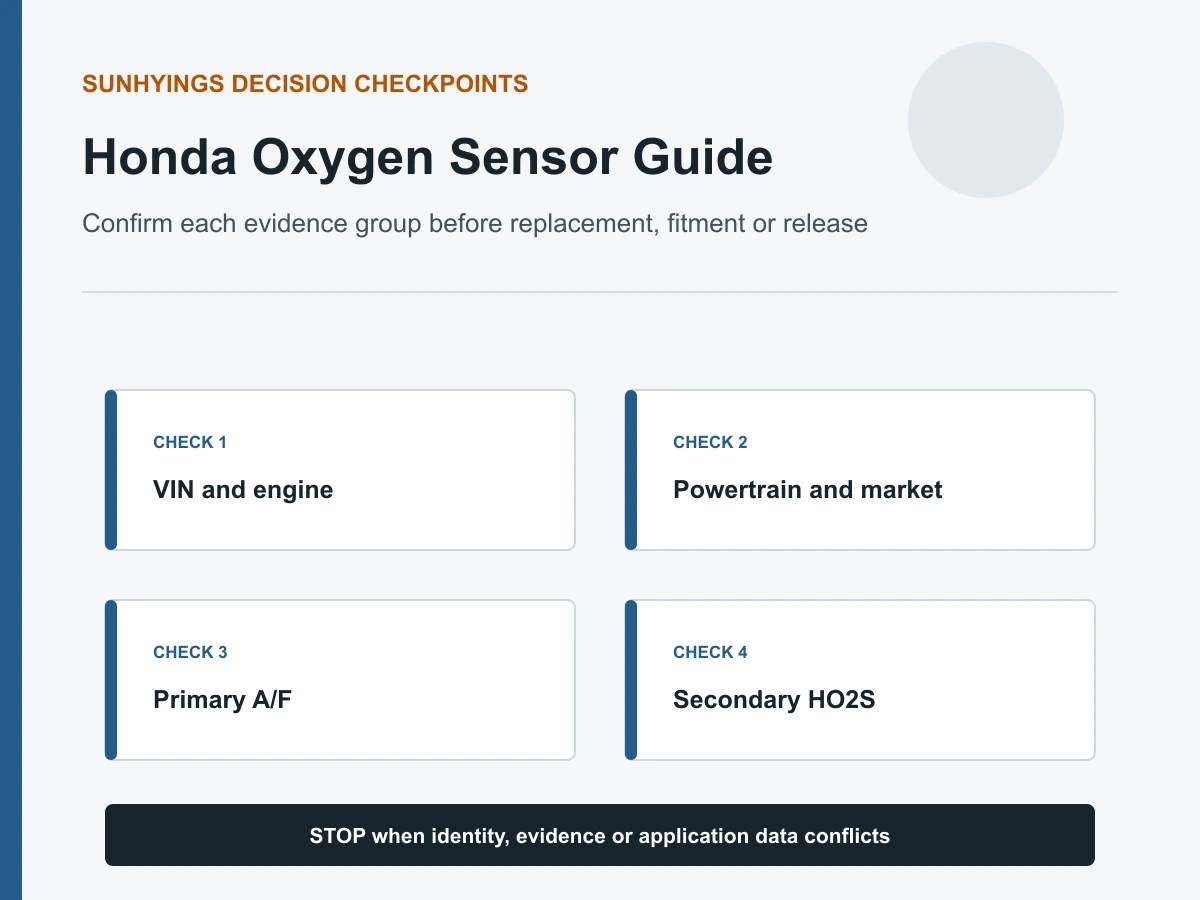
Wählen oder ersetzen Sie bei einem Honda-Fahrzeug keinen Sauerstoffsensor allein anhand des Modellnamens oder Fehlercodes. Bestätigen Sie das genaue Baujahr, Modell, den Motor, die VIN-/Fahrzeugdaten, den Verkaufsmarkt und die Abgaskonfiguration; identifizieren Sie dann Bank- und Sensorposition, Sensortechnologie, OE-Referenz, Stecker und Leitung. Honda-Service- und Kataloginformationen können einen primären A/F-Sensor von einem sekundären beheizten Sauerstoffsensor unterscheiden; verwenden Sie die genaue Anwendungsterminologie. Ein Code grenzt den Testpfad ein, beweist aber nicht, dass der Sensor defekt ist.
Was dieser Honda-Leitfaden bestätigen kann und was nicht
Dies ist ein neutraler Leitfaden zur Diagnose und Einbauprüfung. Er veröffentlicht keine ungeprüfte Honda-OE-Nummer, Modelljahranwendung, Sensoranzahl, Arbeitszeit oder Drehmomentangabe. Sunhyings Bestand, Herstellung und genehmigter Einbau werden nicht beansprucht. Genaue Serviceinformationen und aktuelle Anwendungsdaten für die VIN/Konfiguration bestimmen die Reparatur.
Beliebte Honda-Modellnamen sind keine vollständigen Identifikatoren für die Passgenauigkeit
| Modellsuche | Informationen noch erforderlich | Warum es wichtig ist |
|---|---|---|
| Civic-Sauerstoffsensor | Baujahr, Motor, FIN/Fahrgestellnummer, Markt/Abgasnorm und genaue Position | Ein Modellname kann verschiedene Abgas- und Sensorsysteme abdecken. |
| Accord Sauerstoffsensor | Baujahr, Motor, FIN/Fahrgestellnummer, Markt/Abgasnorm und genaue Position | Ein Modellname kann verschiedene Abgas- und Sensorsysteme abdecken. |
| CR-V Sauerstoffsensor | Baujahr, Motor, FIN/Fahrgestellnummer, Markt/Abgasnorm und genaue Position | Ein Modellname kann verschiedene Abgas- und Sensorsysteme abdecken. |
| Pilot Sauerstoffsensor | Baujahr, Motor, FIN/Fahrgestellnummer, Markt/Abgasnorm und genaue Position | Ein Modellname kann verschiedene Abgas- und Sensorsysteme abdecken. |
Fahrzeug- und Sensoridentität ermitteln
- FIN und genaues Baujahr/Modell/Ausstattungskontext
- Motorhubraum/-code und Kraftstoffart, sofern zutreffend
- Verkaufsmarkt und Abgasnorm/Konfiguration
- Bank 1 oder Bank 2 und Sensor 1 oder Sensor 2
- OE-Nummer aus einer verifizierten Quelle oder lesbarem Altteil-Etikett
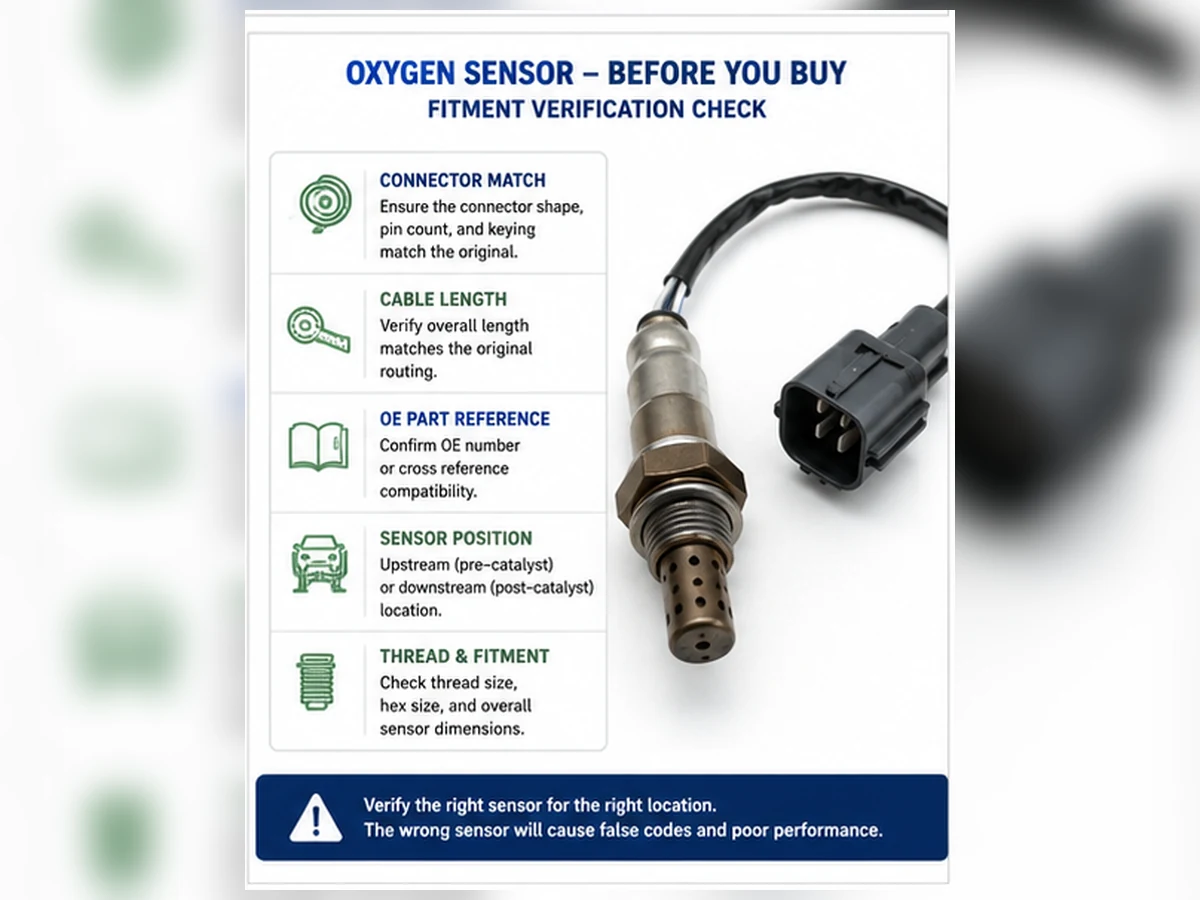
- Sensortechnologie, Steckercodierung, Pins, Leitung und Clips
Vor der Bestellung diagnostizieren
Aktuelle, anstehende und permanente Fehlercodes, Freeze-Frame und Bereitschaft aufzeichnen. Kabelverlegung, Kontakte und Abgaslecks prüfen. Heizungsstrom/-Masse/-Steuerung bei Heizungscodes testen. Kraftstofftrimwerte und technologiespezifische Sensorreaktion bei Gemisch- oder Reaktionscodes vergleichen. P0420/P0430 betrifft die Katalysator-Effizienz und ist keine automatische Bestellung des hinteren Sensors.
Sichere Installationsgrenzen
Lassen Sie das Abgas abkühlen und verwenden Sie eine zugelassene Fahrzeugstütze. Befolgen Sie die genaue Honda-Serviceanleitung und die Anweisungen zum Austausch des Sensors für Zugang, Drehmoment und Gewindedichtmittel. Schneiden Sie kein direkt passendes Kabelbaum. Führen Sie die Leitung weg von Hitze, scharfen Kanten und beweglichen Teilen und bringen Sie jede Klemme und Abschirmung wieder an.
Überprüfung nach der Reparatur
Stecker, Kabelverlegung und Abgasdichtheit prüfen, dann Heizung/Stromkreis und Sensorreaktion unter festgelegten Bedingungen bestätigen. Das geltende gesetzliche Überwachungsverfahren abschließen. Das Löschen von Fehlercodes, die Verwendung eines Abstandhalters/Simulators oder die Deaktivierung eines Monitors beweist keine Reparatur.
Eine Honda-Überprüfungssequenz, die das Raten von Modellnamen vermeidet
| Schritt | Nachweis zur Aufzeichnung | Stoppbedingung |
|---|---|---|
| Fahrzeugidentität | Fahrgestellnummer, Baujahr, Modell, Motor/Bau und Verkaufsmarkt | Motor oder Konfiguration bleibt unklar |
| Emissionskennung | Motorraumaufkleber und anwendbare regionale Konfiguration | Katalog unterscheidet die Konfiguration nicht |
| Physische Position | Bank, Sensornummer und Katalysatorbeziehung | Service- und physische Diagramme stimmen nicht überein |
| Teileidentität | OE-Referenz, Technologie, Steckverbinder, Leitung und Klemmen | Kritische Feldkonflikte |
| Nachweis des Ausfalls | Codes, Schaltkreisprüfungen, Lecks, Einstellungen und Reaktionstest | Sensorausfall wird nicht unterstützt |
Honda-Modellnamen können Saugmotor, Turbo, Hybrid und verschiedene Marktkonfigurationen umfassen. Die gleiche Verbrauchermodellbezeichnung ist keine Sensoridentität. Notieren Sie die VIN, die genaue Motor-/Antriebsstrang- und Emissionskennzeichnung, bevor Sie Servicedaten oder ein Katalogergebnis auswählen.
Fragen zur Beantwortung bei häufigen Honda-Modellsuchen
| Suchbegriff | Fragen vor der Diagnose oder Bestellung |
|---|---|
| Civic-Sauerstoffsensor | Welche Generation/Baujahr, Motor- oder Turbo-/Hybridkonfiguration, Markt und genaue primäre/sekundäre Position? |
| Accord Sauerstoffsensor | Welche Motor-/Antriebsstrang- und Emissionskonfiguration? Bezeichnet die genaue Serviceinformation das Gerät als A/F-Sensor oder sekundären HO2S? |
| CR-V Sauerstoffsensor | Welche Motor- und Antriebsstrang-/Antriebskonfiguration, Produktionszeitraum und Katalysatorposition? Welcher OE-Referenzwert wird gesteuert? |
| Pilot Sauerstoffsensor | Welche V6-Konfiguration, Zylinder-1-Bank und Sensornummer? Sind die Steckverbinderwege von Bank 1 und Bank 2 eindeutig identifiziert? |
Eine Modellfamilientabelle ist eine Überprüfungsliste, keine Anbauliste. Sie enthält absichtlich keine Sensoranzahl, Seite, OE-Nummer oder Jahresbereich. Diese Fakten müssen aus aktuellen Informationen stammen, die mit dem genauen Fahrzeug übereinstimmen.
Honda-Terminologie im Kontext lesen
Sauerstoffsensor, beheizter Sauerstoffsensor und A/F-Sensor
Die Honda-Dokumentation kann für verschiedene Positionen und Signalstrategien die Begriffe primärer A/F-Sensor und sekundärer beheizter Sauerstoffsensor verwenden. “Sauerstoffsensor” und “O2-Sensor” bezeichnen die breite Familie. A/F-, Breitband- und beheizte Bezeichnungen können auf unterschiedliche Schaltungen oder Rollen hinweisen, aber die vollständige Servicebeschreibung ist maßgeblich. Leiten Sie die Technologie nicht aus der Anzahl der Drähte oder einem Marktplatz-Titel ab.
Bank- und Sensorbezeichnung
Bank 1 enthält Zylinder 1. Sensor 1 befindet sich üblicherweise vor dem betreffenden Katalysator und Sensor 2 dahinter. Diese übliche Benennung hilft bei der Orientierung, gibt jedoch keine universelle physische Seite an. Bestätigen Sie die Zylindernummerierung und den Abgasstrom für den genauen Motor.
Allgemeine Scan-Tool-Bezeichnungen
Ein Scan-Tool kann HO2S-Spannung, A/F-Strom, Lambda oder Äquivalenzverhältnis anzeigen. Bestätigen Sie, dass die PID unterstützt wird, mit dem physischen Stromkreis übereinstimmt und die erwarteten Einheiten verwendet. Ein allgemeines Menü kann Positionen oder Werte auflisten, die für das Fahrzeug nicht implementiert sind.
Motorsteuerungsbänke, Katalysatoren und Verbinder kartieren
Bei Reihenmotor-Konfigurationen von Civic, Accord oder CR-V und V6-Pilot-Konfigurationen ist eine unterschiedliche Bank-Logik erforderlich. Bei einem V-Motor folgt Bank 1 Zylinder 1; bei einem Reihenmotor kann eine allgemeine Bank-2-Scan-Bezeichnung keinen physischen Stromkreis darstellen. Verfolgen Sie Katalysatoren und Steckverbinder anhand genauer Diagramme.
| Kartenelement | Nachweisquelle | Häufiger Fehler verhindert |
|---|---|---|
| Zylinder 1 und Bank | Genaues Motordienst-Diagramm | Fahrer/Beifahrer oder vorne/hinten Abkürzung |
| Katalysator-Reihenfolge | Auspuffanordnung für die Konfiguration | Falsche Sensor 1/Sensor 2-Position |
| Steckverbinderweg | Schaltplan und gründliche physikalische Inspektion | Testen eines nahegelegenen, aber anderen Stromkreises |
| Sensortechnik | Service- und zugelassene Anwendungsdaten | Schmalband-/Breitband-Testfehlanpassung |
Motor-, Bau- und Emissionsvarianten berücksichtigen
Generationen von Civic, Accord und CR-V können Motoren, Turbo-/Hybridstatus und Abgasanlagen ändern. Pilot V6-Anwendungen erfordern eine Identifizierung der beiden Banken. Übernehmen Sie keine Teilenummer oder Seitenkonvention von einer Generation oder einem Motor auf eine andere.
Ein Registrierungsjahr oder Modellabzeichen entspricht nicht unbedingt dem Produktionsdatum oder dem VIN-Einschnitt. Importierte Fahrzeuge können auch vom Markt abweichen, der von einem lokalen Katalog angenommen wird. Notieren Sie das Emissionsschild unter der Motorhaube und verwenden Sie einen Katalog, der den Verkaufsmarkt explizit abdeckt.
Honda-Codes in Testpfade umwandeln, nicht in Teilebestellungen
| Codetyp | Erste Prüfungen | Nicht abschließen |
|---|---|---|
| Heizkreis | Korrekte Position, Sicherung/Versorgung, Masse/Steuerung, Steckverbinder und Element | Der Sensor ist allein anhand des Codes ausgefallen |
| Niedrige/hohe/keine Aktivität | Signal-/Referenzkreis, Betriebszustand und tatsächliches Gemisch | Ein angezeigter Grenzwert identifiziert das ausgefallene Bauteil |
| Langsame Reaktion | Freigabekriterien, Lecks, Technologie und gesteuerte Reaktion | Jeder langsame Graph erfordert Austausch |
| P0420/P0430 | Fehlzündung, Kraftstoffregelung, Lecks, beide Sensoren und Katalysator | Der nachgeschaltete Sensor ist automatisch defekt |
Speichern Sie alle aktuellen, anstehenden und permanenten Codes, Freeze-Frame und Bereitschaft vor dem Löschen. Mehrere Codes können einen gemeinsamen Versorgungs-, systemweiten Gemischfehler oder Fehlzündung aufdecken. Das Löschen des Speichers kann den Kontext entfernen und Monitore zurücksetzen, ohne etwas zu reparieren.
Live-Daten mit Technologie und Betriebszustand interpretieren
Aufwärm- und Regelzustand bestätigen
Ein kalter Sensor oder Motor außerhalb des geschlossenen Regelkreises sollte nicht mit einer Warmansprechspezifikation verglichen werden. Notieren Sie Kühlmitteltemperatur, Last, Drehzahl und Sollzustand zusammen mit dem Sensorwert.
Ansprechverhalten mit Kraftstoffkorrekturwerten vergleichen
Positive oder negative Korrektur zeigt an, was das Steuergerät versucht, nicht welche Komponente ausgefallen ist. Ansaugleckagen, Luftmassen-/Lastfehler, Kraftstoffzufuhr, Spülung, Zündung und mechanischer Zustand können das Abgasergebnis erzeugen, das ein gesunder Sensor meldet.
Downstream-Daten im Katalysatorkontext verwenden
Das Downstream-Signal wird in Verbindung mit dem Upstream-Verhalten und den Katalysatorüberwachungsbedingungen bewertet. Ein Wellenformvergleich ohne Abgasdichtheit, Motorzustand und gültige Überwachungskriterien kann keinen defekten Sensor oder Katalysator feststellen.
Ersatzidentität erst nach Diagnose aufbauen
| Passformfeld | Erforderlicher Nachweis | Ablehnen, wenn |
|---|---|---|
| OE-Referenz | Lesbarer Teil oder stromgesteuerter Katalogquellcode | Nicht verifizierte Querverweise oder ungeklärte Nachfolgeregelung |
| Fahrzeugbereich | Fahrgestellnummer/Bau, Motor, Markt und Emissionskonfiguration | Nur Modell/Jahr |
| Position | Bank/Sensor und Katalysatorbeziehung | “Vorne” oder “Hinten” bleibt mehrdeutig |
| Technologie | Angegebenes Schmalband-, Breitband-/A/F- oder anderer Schaltkreis | Drahtanzahl ist die einzige Übereinstimmung |
| Schnittstelle | Gewinde, Abschirmung, Stecker, Stifte, Leitung und Klemmen | Der Kabelbaum muss gewaltsam eingeführt, durchtrennt oder gedehnt werden. |
Überprüfen Sie bei der Honda-Passformprüfung den Quellbegriff (primäre A/F oder sekundäre HO2S), den genauen Motor/Antriebsstrang, den Emissionsmarkt, die Bank-/Sensorposition, die OE-Referenz und den Steckverbinderverlauf. Eine Steckerübereinstimmung kann die korrekte Signalstrategie nicht festlegen.
Direkt- und Universalpassung sind separate Entscheidungen
Ein direkt passender Sensor liefert einen anwendungsspezifischen Steckverbinder und Leitungsverlauf, benötigt aber dennoch eine genaue Abdeckung. Ein Universalsensor erfordert eine vom Hersteller genehmigte Schaltungskompatibilität und Spleißanweisungen; universell bedeutet nicht jedes Honda-Fahrzeug. Drahtfarben sind kein universeller Pinout-Standard. Schneiden Sie keinen direkt passenden Kabelbaum und improvisieren Sie keinen Spleiß in der Nähe des Auspuffs.
Installations- und Sicherheitsprüfungen
- Lassen Sie den Auspuff abkühlen und verwenden Sie zugelassene Fahrzeughebebühnen/Stützen.
- Bestätigen Sie den physischen Sensor und Stecker vor dem Trennen.
- Schützen Sie Auspuffgewinde und umliegende Komponenten während des Ausbaus.
- Vergleichen Sie alte und neue Technologie sowie Schnittstellendetails.
- Befolgen Sie die genauen Produkt-/Service-Drehmoment- und Gewindeverbindungsanweisungen.
- Hitzeschutzmanschetten, Klemmen, Abschirmungen und sichere Kabelverlegung wiederherstellen.
Es gibt kein verantwortliches universelles Drehmoment oder Arbeitszeit für jede Honda-Anwendung. Zugänglichkeit, Korrosion, Sensordesign und umgebende Komponenten variieren. Stoppen Sie, wenn Gewinde, Bung, Steckverbinder oder Kabelbaum den Arbeitsumfang ändern.
Eine Beweishierarchie verwenden, wenn Quellen widersprechen
Suchergebnisse kombinieren oft Besitzerdiskussionen, Marktplatzlisten, generische Code-Definitionen und Anwendungskataloge. Sie haben nicht die gleiche Autorität. Beginnen Sie mit genauen Honda-Serviceinformationen für Schaltungsidentität, Diagnosebedingungen, Steckeransichten und Installationsverfahren. Verwenden Sie eine aktuelle kontrollierte Teilequelle für OE-Identität und Supersession. Verwenden Sie das Unterhauben-Etikett, VIN-/Baudaten und das entfernte Teil, um die Konfiguration zu ermitteln. Aftermarket-Kataloge können dann als Querverweise bewertet werden, nicht als Beweis, nur weil mehrere Verkäufer dieselbe Zeile wiederholen.
| Nachweisquelle | Angemessene Verwendung | Grenze |
|---|---|---|
| Exakte Serviceinformationen | Position, Schaltung, Testbedingungen und Reparaturverfahren | Muss Motor, Markt und Konfiguration entsprechen |
| Kontrollierte OE-Teiledaten | Teileidentität, Position und Ablösungspfad | Eine Ablösung erfordert noch eine Anwendungsabstimmung |
| Fahrgestellnummer-/Bau- und Emissionsschild | Fahrzeug- und regulatorische Konfiguration | Die Fahrgestellnummer allein liefert keinen Reparaturtest |
| Entfernter Sensor und Steckverbinder | Physischer Vergleich und lesbare Kennungen | Das Aussehen kann keine elektrische Kompatibilität belegen |
| Ersatzteilkatalog | Kandidaten-Querverweis und kommerzielle Abdeckung | Quelle, Revision und Ausschlüsse müssen bekannt sein |
| Forum- oder Marktplatzseite | Mögliches Symptom oder Terminologiehinweis | Kein Nachweis für Diagnose oder Passgenauigkeit |
Wenn zwei kontrollierte Quellen widersprüchlich sind, erfassen Sie beide Werte, deren Daten und die genauen Fahrzeugfelder. Mitteln Sie nicht die Antworten und wählen Sie nicht das Angebot mit dem klarsten Produktfoto. Halten Sie die betroffene Anwendung zurück, bis der Konflikt durch eine autoritative Quelle oder einen dokumentierten physischen und elektrischen Vergleich gelöst ist.
Erstellen Sie ein Diagnose-Nachweispaket vor dem Austausch
Ein nützlicher Datensatz ermöglicht es einem anderen Techniker zu verstehen, warum der Austausch genehmigt wurde. Erfassen Sie die vollständige DTC-Beschreibung und den Status, Freeze-Frame-Bedingungen, relevante Servicetestschritte, Batterie-/Systemspannung, Heizleistungs- und Steuerungsprüfungen, wo zutreffend, Kabelbaum- und Anschlusszustand, Ergebnisse der Ansaug- und Abgasleckprüfung, Kraftstofftrimms, Fehlzündungsnachweise und die technologiespezifische Sensorreaktion. Identifizieren Sie den physisch geprüften Steckverbinder. Ein Diagramm ohne Fahrzeugzustand, Einheiten und Sensorposition kann nicht zuverlässig interpretiert werden.
Trennen Sie Beobachtungen von Schlussfolgerungen. “P0135 gespeichert” ist eine Beobachtung. “Der Heizkreis hat spezifizierte Versorgung, aber ein offenes Element am identifizierten Steckverbinder” ist ein Nachweis, der eine Sensorentscheidung stützt. “Der Sensor ist defekt”, basierend nur auf einem Code, ist eine unbegründete Schlussfolgerung. Dieselbe Disziplin gilt für Gemisch- und Katalysatorüberwachungscodes: Dokumentieren Sie die getesteten konkurrierenden Ursachen und den Zustand, unter dem die Überwachung oder Reaktion fehlgeschlagen ist.
Nachweise nach der Reparatur aufbewahren
Erfassen Sie die eingebaute Teilidentität und Charge, falls verfügbar, Steckverbindereingriff, Kabelverlegung, Abdichtung der Abgasanlage und Werte nach der Reparatur unter vergleichbaren Bedingungen. Löschen Sie den Zustand vor der Reparatur nicht, bevor er gespeichert ist. Wenn ein Problem zurückkehrt, trennt dieses Paket falsche Montage, Installationsschäden, wiederkehrende Stromkreisfehler, ungelöste Motorfehler und mögliche Produktabweichungen. Es gibt einem Lieferanten auch genügend Informationen, um nachzuforschen, ohne anzunehmen, dass jede Warnleuchte ein Garantiefehler ist.
Vergleichen Sie den alten und den Ersatzsensor als System
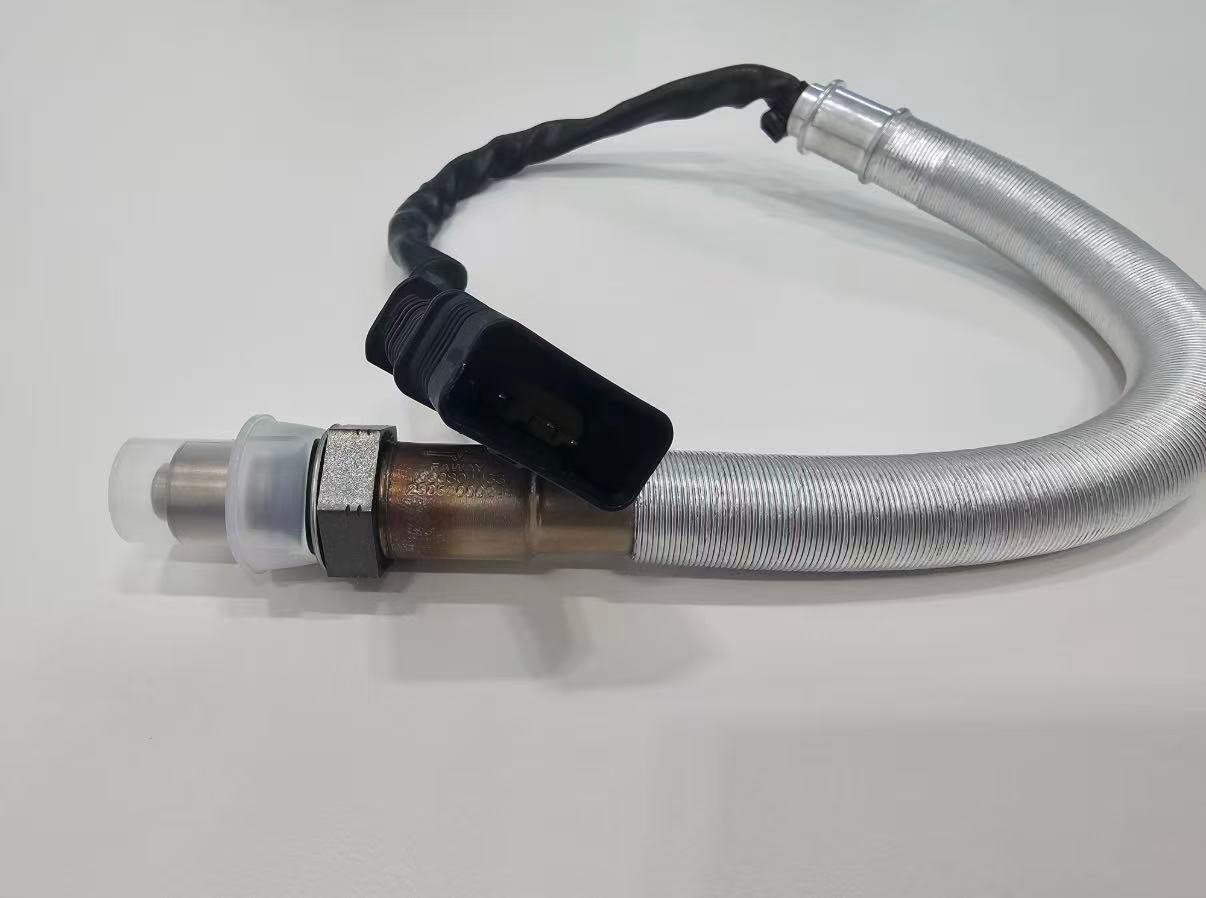
Legen Sie die Teile nebeneinander, ohne das Sensorelement zu verunreinigen oder zu beschädigen. Vergleichen Sie die gestempelten oder etikettierten Kennungen, Gewinde und Dichtsitz, Sechskant-Zugang, Schildlänge und Lochmuster, Kabelabschirmung, gesamte Leitungslänge, Tüllen und Clips, Steckergehäuse, Kodierung, Verriegelung, Kontaktanzahl und sekundäre Verriegelung. Vergleichen Sie dann die Zeichnung oder Anwendungsspezifikation. Eine sichtbare Übereinstimmung ist ein Ausschlusskriterium, keine endgültige Freigabe: Heizwiderstandsbereich, Signalstrategie, Kalibrierung und Pinbelegung können abweichen, während die Gehäuse gleich aussehen.
Lehnen Sie die Installation ab oder stoppen Sie sie, wenn das Kabel über den Auspuff gespannt werden muss, der Stecker Kraftaufwand erfordert, ein Clip nicht in seine ursprüngliche Position zurückkehrt, das Schild ein anderes Bauteil berührt, das Gewinde oder der Sitz abweicht oder die spezifizierte Technologie nicht bestätigt werden kann. Modifizieren Sie keinen passgenauen Stecker, um einen Kandidaten einzupassen. Wenn ein Universalsensor ausdrücklich zugelassen ist, verwenden Sie nur die Anwendungs- und Spleißanleitung des Herstellers und behalten Sie den erforderlichen Kabelbaumschutz in der Nähe des Auspuffs bei.
Treffen Sie explizite Entscheidungen zum Stoppen, Diagnostizieren und Freigeben
Ein guter Arbeitsablauf zwingt nicht jede Anfrage zu einem Verkauf. Verwenden Sie drei sichtbare Zustände. Stopp wenn Fahrzeugidentität, Abgaskonfiguration, physikalische Position oder Sensortechnologie mehrdeutig sind oder wenn zwei autoritative Quellen widersprüchlich sind. Diagnose wenn die Passung bekannt ist, aber die Beweise keinen Sensorausfall belegen; führen Sie die vom Kundenauftrag geforderten Prüfungen des Stromkreises, auf Lecks, Kraftstoffsteuerung und Reaktionsverhalten durch. Freigabe nur wenn sowohl der Ersatzbedarf als auch die Teileidentität bestätigt sind. Dokumentieren Sie, wer die Entscheidung getroffen hat und welche Nachweise verwendet wurden.
Diese Trennung verhindert, dass eine korrekte Diagnose mit dem falschen Teil kombiniert wird, und verhindert, dass ein korrekt aussehendes Teil für einen nicht diagnostizierten Fehler verkauft wird. Sie gibt dem Kundendienst auch eine wahrheitsgemäße Antwort, wenn wichtige Daten fehlen: Der Status ist “Ausstehend”, nicht „passt wahrscheinlich“. Geben Sie bei einer Anfrage nur freigegebene Anwendungszeilen als Angebot ab und listen Sie blockierte Zeilen separat auf. Bewahren Sie bei einer Reparatur die ursprünglichen Nachweise auf, bis die relevante Schaltkreisreaktion und die rechtliche Überwachung nach der Installation überprüft wurden.
| Entscheidungsstatus | Typischer Nachweis | Zulässige nächste Aktion |
|---|---|---|
| Stopp | Konflikt: Motor, Markt, Position, Technologie oder Quelle | Autoritative Daten anfordern; keine Bestellung oder Passformangabe |
| Diagnose | Fahrzeug/Schaltkreis bekannt, Fehlerursache noch offen | Führen Sie den genauen Servicetest und die Konkurrenzursachenprüfungen durch |
| Freigabe | Ausfallnachweis und vollständige Ersatzidentität stimmen überein | Genehmigen Sie das kontrollierte Teil/Anwendung und den Installationsplan |
| Überprüfen | Installierte Identität, Verlegung, Abdichtung und Reaktion dokumentiert | Reparatur unter festgelegten Bedingungen bestätigen und Status überwachen |
Primäres A/F und sekundäres HO2S sind nicht austauschbare Bezeichnungen
Die Honda-Service- und Teilesprache kann einen primären Luft-Kraftstoff-Verhältnissensor und einen sekundären beheizten Sauerstoffsensor identifizieren. Ein Verbraucher kann beide als O2-Sensor bezeichnen, aber die Namen können auf unterschiedliche Steuerungsrollen, Signalstrategien und Diagnoseverfahren hinweisen. Bewahren Sie den Honda-Begriff bei der Erfassung des Codes, der Scandaten und der Teileanfrage. Die Umwandlung von allem in “vorderer Sensor” oder “hinterer Sensor” entfernt Informationen, die zur Auswahl des richtigen Tests und Bauteils erforderlich sind.
Ein primärer A/F-Sensor kann durch Strom, Lambda, Äquivalenzverhältnis oder einen herstellerspezifischen Wert dargestellt werden. Ein sekundärer HO2S kann anders bewertet werden. Bestätigen Sie die PID-Bezeichnung und Einheiten und verwenden Sie dann das genaue Honda-Verfahren, um Warmlauf, Drehzahl/Last und Sollbedingungen festzulegen. Eine allgemeine Anweisung, nach schnellem 0-1 V Umschalten zu suchen, kann für den Primärkreis ungeeignet sein. Ebenso beweist ein stationärer Sekundärwert, der außerhalb der Überwachungsbedingungen beobachtet wird, nicht, dass er gesund oder ausgefallen ist.
| Honda-Identitätsfeld | Warum es die Entscheidung steuert | Häufiger Katalogverlust |
|---|---|---|
| Primärer A/F-Sensor | Definiert vorgelagerte Rolle und technologiespezifischen Test | Reduziert auf generischen vorgelagerten O2-Sensor |
| Sekundärer HO2S | Definiert nachgelagerten Überwachungskreis | Reduziert auf hinteren Sensor ohne Bank/Position |
| Exakter Motor/Antriebsstrang | Wählt Schaltkreis-, Steckverbinder- und Abgaslayout aus | Zeilen-/Modellzusammenführung von Varianten |
| Emissionskonfiguration | Anwendung und Überwachungskontext können geändert werden | Markt wird aus dem Website-Standort abgeleitet |
Turbo-, Hybrid- und Saugmotoranwendungen trennen
Die Baureihen Civic, Accord und CR-V können über Generationen und Märkte hinweg Saug-, Turbo- und Hybridantriebe umfassen. Dies sind keine geringfügigen Ausstattungsunterschiede. Die Motoridentität bestimmt den Abgasweg, die Sensorposition, die Steckverbinderposition und die Servicedaten. Beginnen Sie mit dem VIN-/Aufbaukontext und einer maßgeblichen Motoridentifikation; übernehmen Sie niemals einen OE-Kandidaten aus einer Antriebsstrangspalte in eine andere, nur weil Modellname und Steckerfoto ähnlich aussehen.
Notieren Sie bei einer Hybridanwendung, ob der Motor lief und die Prüfbedingungen des Verfahrens erfüllt waren, als die Live-Daten erfasst wurden. Das Start-Stopp-Verhalten des Motors kann eine beiläufige Leerlaufbeobachtung unterbrechen. Befolgen Sie die Honda-Sicherheitsinformationen für das gesamte Fahrzeug; ein Sensorleitfaden berechtigt nicht zur Hochvolt-Servicefreigabe. Verwenden Sie bei einer Turboanwendung das genaue Diagramm, um die Sensor- und Kabelbaumposition in der Nähe von Wärmequellen und Abschirmungen zu verstehen. Verallgemeinern Sie Zugang, Kabelführung oder Arbeitszeit nicht von einem Nicht-Turbomotor.
Honda-Reihenmotor und V6-Banklogik
Viele Civic-, Accord- und CR-V-Konfigurationen verwenden einen Reihenmotor mit einer Zylinderbank, während Pilot und einige Accord-Konfigurationen einen V6 mit zwei Bänken verwenden. Ein generisches Diagnosegerät kann dennoch ein Menü mit Bank-2-Einträgen anzeigen; ein Menüeintrag ist kein Beweis dafür, dass der Motor die Schaltung implementiert. Identifizieren Sie bei einem V6 den Zylinder 1 anhand des genauen Honda-Motordiagramms und folgen Sie dem Abgasweg, bevor Sie Bank 1 zuweisen. Verwenden Sie keine Firewall-/Kühler-, Links-/Rechts- oder Fahrer-/Beifahrer-Regeln über Modelle hinweg.
- Bestätigen Sie die Motorfamilie und die Zylinderanordnung.
- Zylinder 1 anhand der passenden Honda-Serviceinformationen lokalisieren.
- Jeden Krümmer- und Katalysatorpfad nachverfolgen.
- Den benannten Primär-/Sekundär- oder Bank-/Sensorstromkreis seiner Steckverbindung zuordnen.
- Die Steckverbindungsansicht und Drahtfarben nur anhand des exakten Diagramms prüfen.
Diese Zuordnung verhindert das Prüfen der falschen Steckverbindung, wenn Kabelbaumzweige nahe beieinander verlaufen. Markieren Sie die Steckverbindung während der Diagnose zerstörungsfrei und entfernen Sie die temporäre Kennzeichnung nach der Reparatur.
Honda-Code-Diagnose: Stromkreis, Gemisch und Katalysator-Nachweise getrennt halten
Ein Heizungscode erfordert den spezifizierten elektrischen Pfad: Versorgung, Sicherung sofern zutreffend, Steuerseite, Zustand der Steckverbindungsklemmen und Elementmessung unter Verwendung der Honda-Grenzwerte und Prüfpunkte. Ein Mager-/Fettcode erfordert motorsystembezogene Nachweise wie Ansaugleckage, Luftmassen-/Lastberechnung, Kraftstoffdruck oder -förderung, Einspritzverhalten, Spülung, Zündung und mechanischen Zustand. Der primäre A/F-Sensor kann das Ergebnis korrekt melden. Ein Ansprechcode erfordert einen kontrollierten Ansprechtests mit korrekten A/F-Daten, nicht einen generischen Screenshot.
Bei Katalysator-Effizienz-Codes diagnostizieren Sie die Bedingung, die den Monitorlauf ermöglicht hat. Prüfen Sie Zündaussetzer- und Kraftstoffregelungsverlauf, Abgasleckage, Sensoridentität und -ansprechen sowie Katalysatornachweise gemeinsam. Der alleinige Austausch des sekundären HO2S, nur weil er stromabwärts liegt, kann zu einer Wiederholungsreparatur führen. Hondas Codebeschreibung und Entscheidungsbaum sollten am Datensatz haften bleiben, damit die Schlussfolgerung prüfbar ist.
Honda-Einbau-Freigabeliste für einen Käufer
| Artikel freigeben | Nachweis erforderlich | Zurückweisen oder zurückhalten, wenn |
|---|---|---|
| Fahrzeugidentität | VIN/Aufbau, Generation, exakter Motor/Antriebsstrang und Markt | Jahr und Modell sind die einzigen Felder |
| Honda-Terminologie | Primärer A/F- oder sekundärer HO2S beibehalten | Alle Positionen in O2-Sensor zusammengefasst |
| Position | Bank/Sensor oder primär/sekundär physisch zugeordnet | Seite oder vorne/hinten bleibt angenommen |
| OE-Identität | Aktuelle Quelle und Nachfolge abgeglichen | Kandidaten-Referenz ohne Quellrevision |
| Elektrische Strategie | Technologie und Pinbelegung bestätigt | Drahtanzahl als Nachweis verwendet |
| Mechanische Schnittstelle | Gewinde, Schirm, Steckverbinder, Leitung und Klemmen stimmen überein | Geschirranpassung oder erzwungene Verlegung ist erforderlich |
Wenn ein Distributor Abdeckung für Civic, Accord, CR-V oder Pilot anfragt, liefern Sie eine zeilenbasierte Anwendungsdatei zurück, anstatt einen Absatz zu liefern, der eine breite Honda-Passung behauptet. Jede freigegebene Zeile sollte Motor, Markt, Emissions- und Positionsfelder bewahren und ihre Quelle angeben. Sunhyings kann eine genaue Anfrage bewerten, während Verfügbarkeit und Passung bis zur Prüfung dieser Nachweise unbestätigt bleiben.
Zusammengesetztes Honda-Überprüfungsszenario
Komplexes technisches Szenario: Eine Accord-Suche wird nur mit Jahr und Modell übermittelt. Katalogergebnisse enthalten verschiedene Antriebsstränge und vorgelagerte Terminologie, während der Benutzer jede Position als O2-Sensor bezeichnet. Der Prüfer pausiert die Bestellung, klärt Fahrzeug- und Positionsidentität und folgt dann dem korrekten Stromkreistest. Dieses Szenario kombiniert häufige Katalog- und Diagnoserisiken; es ist kein Sunhyings-Kundenfall, kein Passungseintrag und keine Behauptung über ein bestimmtes Fahrzeug.
Zusammengesetztes Honda-Diagnoseszenario
Komplexes Diagnoseszenario: Ein Civic hat einen Heizkreis-Code für den primären Sensor, und ein Aftermarket-Eintrag empfiehlt ein optisch ähnliches vieradriges Teil. Vor der Bestellung bestätigt der Techniker, dass Honda-Informationen den Stromkreis als primären A/F-Sensor identifizieren, prüft Stromversorgung, Steuerung und Steckverbinderzustand und lehnt den Kandidaten ab, da sein Anwendungseintrag und seine elektrische Strategie nicht etabliert sind. Der Code leitete den Stromkreistest; er validierte nicht den Katalogeintrag.
Die Abfolge ist bewusst evidenzbasiert: Bestätigen Sie den genauen Stromkreis, testen Sie die fahrzeugseitigen Ursachen und vergleichen Sie die Reaktion mit dem geltenden Verfahren, bevor Sie ein Teil freigeben. Es ist ein zusammengesetztes Schulungsbeispiel, kein Sunhyings-Kunde, kein Garantieergebnis und keine Aussage, dass das genannte Modell häufig diesen Fehler hat.
Reparatur überprüfen und überwachen
Überprüfen Sie nach der Reparatur die Verriegelung des Steckers, die Kabelführung, den Wärmeabstand und die Abdichtung des Abgassystems. Prüfen Sie die Heizung/den Stromkreis und die technologiespezifische Sensorreaktion unter definierten Bedingungen. Führen Sie den anwendbaren gesetzlichen Bereitschaftsmonitor vollständig durch. Eine manuell gelöschte Warnleuchte ist kein Beweis dafür, dass der ursprüngliche Monitor bestanden hat; dauerhafte Codes können bestehen bleiben, bis das Steuergerät ein erfolgreiches Ergebnis bestätigt.
Emissions- und Produktanspruchsgrenze
Verwenden Sie keine Abstandshalter, Entferner, Simulatoren, Sensor-Delete oder Softwareänderungen, um die Katalysatorüberwachung zu verschleiern. Diese Methoden beheben die Ursache nicht und können gegen Emissionsgesetze verstoßen. Diese Bildungsseite bestätigt nicht, dass Sunhyings einen Sensor für eine Honda-Anwendung verkauft, lagert, herstellt oder garantiert. Die Passung bleibt bis zum Abgleich projektspezifischer Nachweise ausstehend.
Bereiten Sie eine Montage- oder Beschaffungsanfrage vor
Senden Sie die OE-Nummer, Baujahr/Marke/Modell, Motor- oder Fahrgestelldaten, Markt- und Emissionspaket, genaue Bank-/Sensorposition, Stecker- und Altteilfotos, Menge sowie etwaige Verpackungs- oder Zulassungsanforderungen. Sunhyings prüft die gelieferten Daten auf Eignung und Beschaffungsmöglichkeit; die Passgenauigkeit wird erst bestätigt, wenn die Anwendungsnachweise übereinstimmen.
Häufig gestellte Fragen
Wie finde ich den richtigen Honda-Sauerstoffsensor?
Verwenden Sie die VIN/Konfiguration, den Motor, das Markt-/Emissionspaket, die genaue Bank und Position, die OE-Referenz, die Technologie und die Anschluss-/Kabeldetails.
Beweist ein Honda-Sauerstoffsensor-Fehlercode, dass der Sensor defekt ist?
Nr. Diagnostizieren Sie Verkabelung, Heizungsversorgung/-steuerung, Abgaslecks, Gemischanpassungen und Sensorreaktion anhand genauer Serviceinformationen.
Befindet sich Bank 1 immer auf einer Seite eines Honda?
Bank 1 enthält Zylinder 1; seine physische Seite hängt vom Motor und Einbau ab.
Können Sensor 1 und Sensor 2 dasselbe Teil verwenden?
Nur wenn die aktuell verifizierten Anwendungsdaten dieses genaue Teil für beide Positionen aufführen.
Bedeutet P0420, dass der nachgeschaltete Sensor ausgetauscht werden muss?
Nr. P0420 ist ein Code für die Effizienz des Katalysatorsystems und erfordert eine Diagnose von Motor, Abgasanlage, Sensor und Katalysator.
Kann Sunhyings die Honda-Passform anhand eines Modellnamens bestätigen?
Nr. Reichen Sie vollständige Fahrzeug-, Motor-, Emissions-, Positions- und OE/physische Nachweise für eine Passungsprüfung ein.