304 (A2) vs. 316 (A4) Stainless Steel Hex Nuts: How to Choose the Right Grade for Chloride Exposure, Galling Control, and Reliable Preload
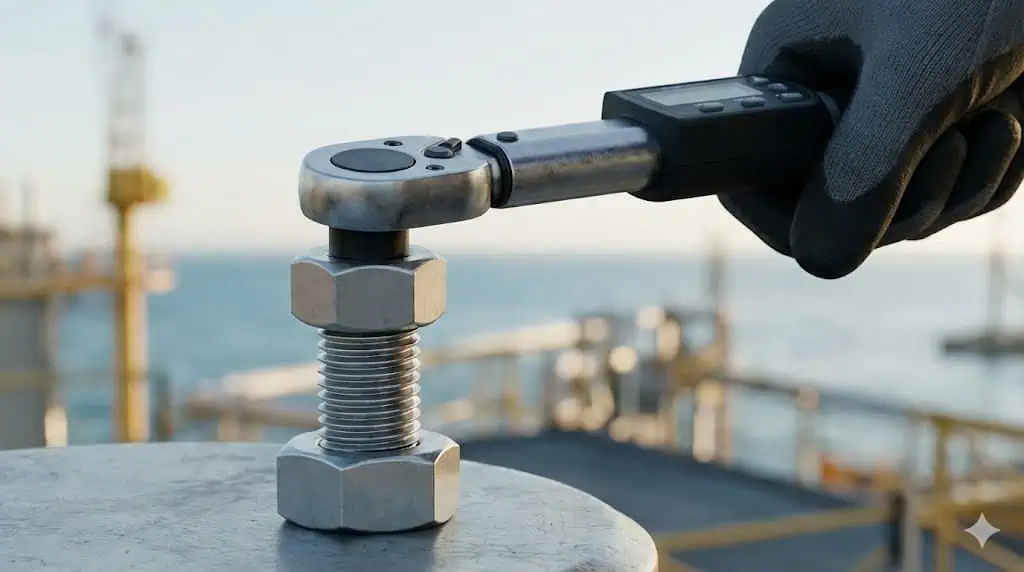
Spec-in-one-minute: choose the nut grade by combining chloride exposure, required preload, and galling risk. For dry indoor service and low chloride exposure, 304 / A2 is usually enough. For coastal air, salt spray, de-icing salts, washdown, or chemical splash, move to 316 / A4 to improve resistance to pitting and crevice corrosion at the first engaged threads and under the bearing face, where preload is most easily lost.
Selecting the correct hex nut grade is how you avoid pitting, thread stripping, galling, and preload loss that later turns into vibration loosening or fatigue damage. Geometry controls fit. Chemistry controls corrosion. Friction controls the torque-to-preload result. When one of those three is wrong, the joint may still look acceptable on day one and fail early in service.
Engineering warning: stainless steel fasteners should never be tightened “by feel” in critical joints. A small change in friction condition can move the joint from under-tightened to stripped or seized without changing the torque wrench reading very much.
304 Stainless Steel (A2): Composition and Use Cases
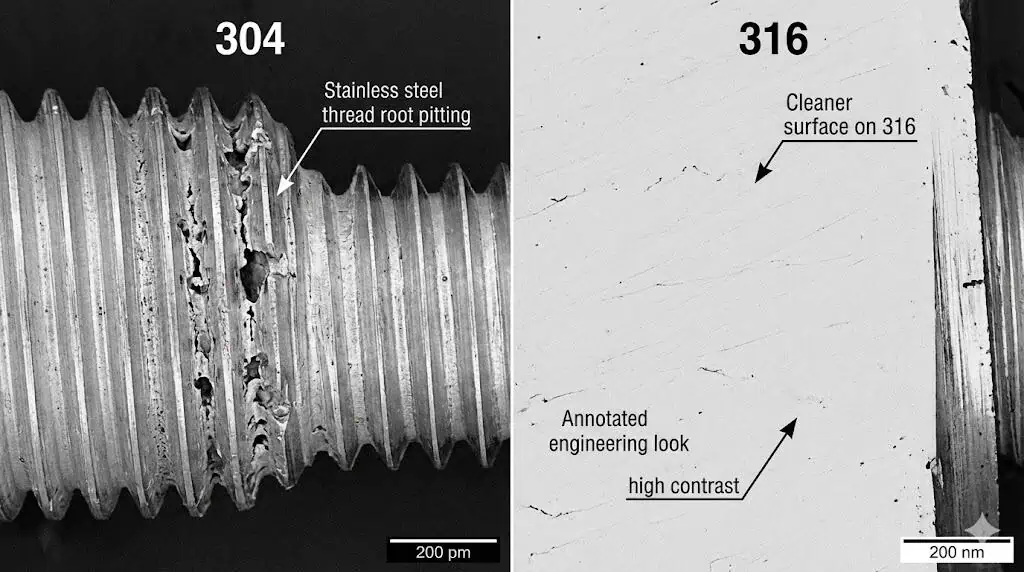
304 stainless is the workhorse option for general-service stainless hex nuts. It is widely referenced as A2 in the stainless fastener system. Buyers choose it because it balances corrosion resistance, availability, cost, and manufacturability. It performs well in indoor machinery, general industrial assemblies, architectural hardware, equipment enclosures, and outdoor service where chloride deposition is low or intermittent.
Where 304 gets punished is exactly where installers dislike surprises most: thread roots + trapped moisture + chlorides + cyclic load. Once pitting starts, the local section becomes a stress raiser. Friction rises, torque scatter widens, and the same installation torque no longer maps to the same preload. That is where stripping, loosening, and fatigue problems begin to appear as a system failure rather than a simple material failure.
- Best For: interior architecture, general machinery, light industrial assemblies, equipment skids, and sheltered outdoor service without constant chloride deposition.
- Limitations: more vulnerable than 316 / A4 in chloride-rich environments, especially under the bearing face and at the first engaged thread where oxygen access is restricted.
- Engineering Recommendation: use A2 hex nuts where chloride exposure is low and verify joint reliability through controlled preload, correct thread engagement, and stable lubrication condition rather than “tighten-until-it-feels-right” practice.
Safety note: stainless-on-stainless assemblies are prone to galling. If you are running an A2 nut on an A2 bolt, do not use impact tools for final tightening. Control installation speed and use a suitable anti-seize or validated lubricant.
316 Stainless Steel (A4): Marine Grade Benefits and Applications
When chloride exposure is real, 316 / A4 is usually the safer default. The addition of molybdenum improves resistance to chloride-driven pitting and crevice corrosion. That is why A4 fasteners are commonly specified for coastal equipment, marine structures, road-side infrastructure exposed to de-icing salts, chemical splash zones, and washdown environments where a joint must stay stable instead of just looking clean.
In practice, 316 earns its higher price because it stays quiet longer. You see fewer pits at chamfered entry threads, less under-face crevice attack, and less drift in the friction condition as the joint ages. That matters because torque is only an indirect control method. Once corrosion changes friction, your torque-to-preload relationship becomes guesswork.
Comparison of Standard Stainless Grades:
| Feature | 304 Stainless (A2) | 316 Stainless (A4) |
|---|---|---|
| Stainless Family | Austenitic stainless for general service | Austenitic stainless with molybdenum for stronger chloride resistance |
| Typical Service Environment | Indoor, sheltered, low-chloride | Coastal, marine, washdown, chemical splash |
| Pitting / Crevice Corrosion Resistance | Good in mild service | Better in chloride-rich service |
| Galling Risk if Assembled Dry | Present | Present |
| Cost Factor | More economical | Higher initial cost, lower corrosion risk in chloride exposure |
Field Case 1 (Problem → Analysis → Fix): A coastal HVAC frame used 304 / A2 nuts on stainless studs. After one wet season, pits formed at the first engaged threads. Problem: the torque still “felt” normal, but clamp load drifted and vibration started walking the joint loose. Analysis: chloride attack at the thread root increased friction scatter and reduced reliable preload. Fix: switch to 316 / A4, specify passivation, control thread lubrication, and add routine freshwater rinsing where salt deposition cannot be avoided.
Specialty Alloys: Duplex & Super Austenitic for Extreme Environments
Beyond 316 / A4, there are applications where standard austenitic stainless is no longer the right answer: seawater handling, desalination, chloride-rich process lines, and some high-temperature or high-cyclic-load assemblies. That is where duplex stainless and super austenitic grades come in. Duplex materials are often selected because they combine better chloride resistance with higher Yield Strength, which helps when the joint size is limited and higher preload is required.
These are not automatic upgrades for every project. They are engineered selections for applications where pitting, crevice corrosion, stress-corrosion cracking, or stripping risk makes A2/A4 insufficient. When the drawing tightly controls Pitch, Chamfer, thread engagement length, and bearing face flatness, a custom route is usually better than forcing a standard part into a critical joint.
Critical Standards and Dimensions (Metric vs. Imperial): Fit, Wrenching, and Thread Engagement
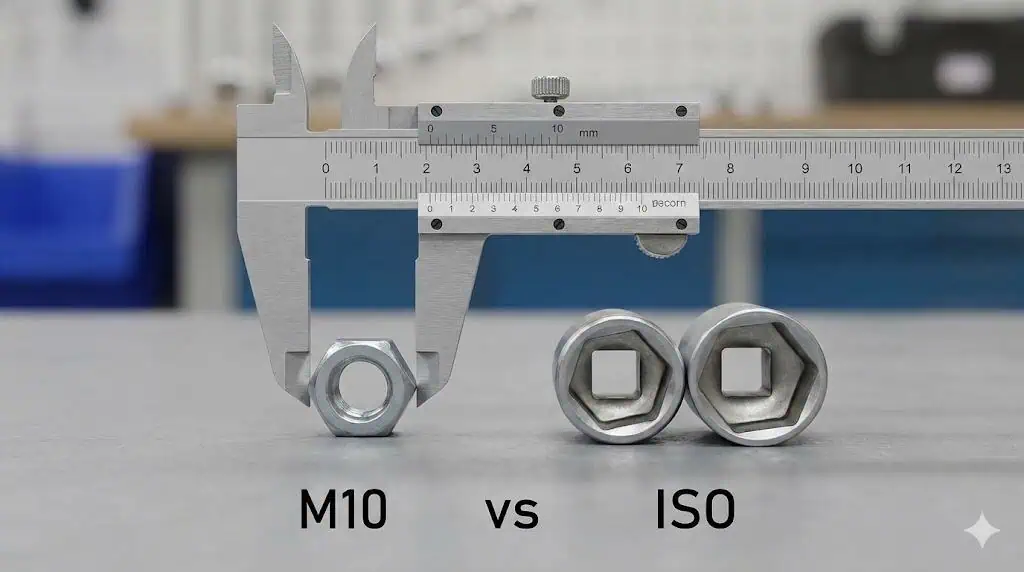
Spec-in-one-minute: a nut only fits when three things match: thread system (metric vs UNC/UNF), Pitch (coarse vs fine), and external geometry (width across flats, nut height, and bearing face). Mixing ISO, DIN, and ASME geometry creates wrenching problems, reduced engagement, and higher stripping risk when preload rises.
When sourcing a stainless steel hex nut, the fastest way to create assembly scrap is to mix standards casually. The threads may start, but the socket size, nut height, bearing surface, or thread form may still be wrong. That kind of mismatch shows up later as stripped threads, unstable clamp load, or poor tool access during installation.
DIN 934 vs. ISO 4032: Dimension Differences and Wrench Fit
DIN 934 and ISO 4032 should not be treated as interchangeable shortcuts. DIN 934 is a legacy reference still recognized in the market. ISO 4032 is the current product standard for style 1 hexagon regular nuts in steel and stainless steel within its defined metric size range. If your drawing, socket plan, and inspection method are built around one system, do not substitute the other without checking width across flats, nut height, tolerance class, and the mating thread requirements.
- Build to the drawing: do not assume legacy DIN inventory matches a current ISO callout dimension-for-dimension.
- Check wrench fit: width across flats follows the applicable product standard and tooling plan, not assumption.
- Check thread engagement: nut height directly affects thread Shear Stress and stripping resistance when preload is high.
| Feature | DIN 934 | ISO 4032 |
|---|---|---|
| Role in Current Procurement | Legacy reference widely recognized in trade | Current ISO style 1 product standard |
| Main Buyer Risk | Assuming older stock matches current drawings | Assuming every supplier builds to the same dimensions without verification |
| What to Verify | Across flats, nut height, thread tolerance, finish | Across flats, nut height, thread tolerance, finish |
Engineering note: if the joint is preload-controlled, nut height is not a cosmetic detail. It changes thread engagement length and therefore stripping resistance under load.
ANSI/ASME B18.2.2: US Imperial Nut Standards
For United States projects, inch-series nut dimensions are commonly specified through ASME B18.2.2. That matters because inch fasteners are not just metric parts with different labels. Thread form, wrenching dimensions, and geometry families are different. If the purchase order mixes imperial geometry with metric assumptions, the result is tool mismatch, wrong engagement, and rework.
Commercial reality: on many US projects, geometry and material specifications are paired. Keep the dimensional callout and the material/grade callout aligned on the purchase order so the joint is not mixing fit, strength, and corrosion requirements from different systems.
Thread Pitch Importance: Coarse vs. Fine Threads
Pitch changes installation behavior, vibration response, and stripping sensitivity. Coarse threads are generally faster to assemble, less sensitive to debris, and more forgiving on real shop floors. Fine threads can offer better adjustment control and a tighter torque-to-preload window in clean conditions, but they are more sensitive to contamination, damage, and galling in dry stainless assemblies.
- Metric Coarse / UNC: better tolerance to dirt, faster run-down, lower cross-thread risk, usually better for general industrial assembly.
- Fine / UNF: often better for controlled clamp force and some vibration-sensitive joints, but less forgiving when installers use speed, poor lubrication, or damaged threads.
Engineering warning: fine thread is not a free upgrade. If the process control is poor, fine-pitch stainless can seize earlier and lose preload repeatability faster than coarse-pitch stainless.
Manufacturing Quality: Cold Heading vs. CNC Machining (What Changes Strength, Not Just Price)
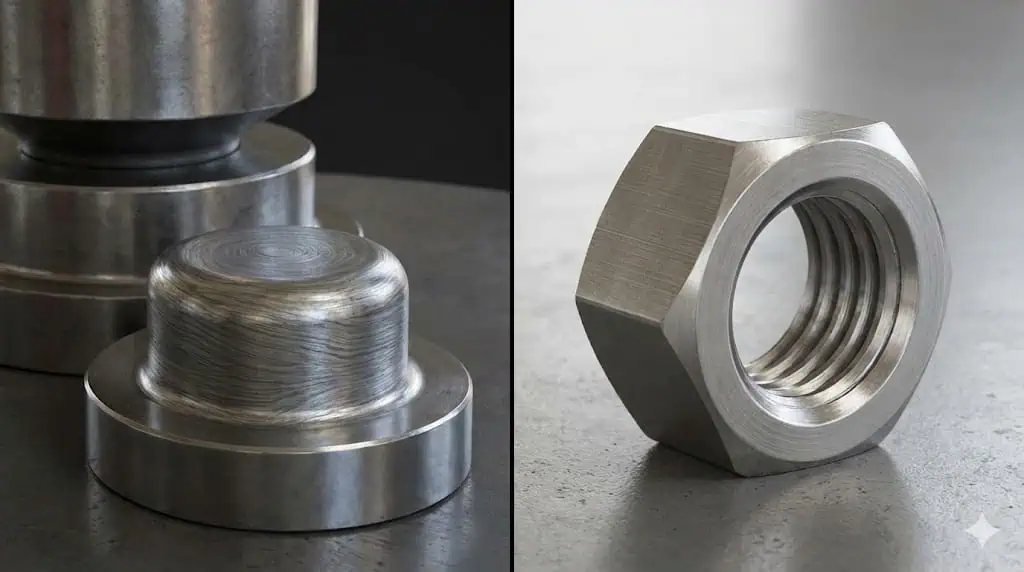
Spec-in-one-minute: cold heading is usually best for standard nuts because it is efficient, repeatable, and suited to volume. CNC machining is the better choice for non-standard geometry, special alloys, or drawings that tightly control nut height, Chamfer, or bearing-face quality. In critical joints, manufacturing method changes friction behavior and therefore changes preload consistency.
At Sunhy, manufacturing method is not a shop-floor footnote. It changes performance. A hex nut that looks acceptable on a bench can still create torque scatter in the field if the bearing face is unstable, the chamfer is inconsistent, or thread finish varies from lot to lot.
Cold Heading Process: Volume Efficiency and Strength
Cold heading forms stainless at room temperature under high die pressure. That makes it the practical choice for standard nuts when volume, dimensional repeatability, and cost control all matter.
- Consistency: stable across-flats dimension, chamfer form, and bearing face from lot to lot when tooling is controlled.
- Volume Efficiency: lower cost per part on large runs of standard DIN, ISO, and ASME geometry.
- Joint Reliability: more repeatable geometry means less friction scatter during installation.
CNC Precision Machining: Custom Sizes and Special Alloys
CNC machining is slower, but it solves the jobs that standard cold heading cannot solve cleanly.
- Customization: non-standard dimensions, special heights, special bearing faces, and drawing-controlled features.
- Tolerance Control: better fit when the assembly depends on exact geometry rather than catalog substitution.
- Specialty Materials: useful when duplex or other harder-to-form alloys are required.
Field Case 2 (Problem → Analysis → Fix): A process-equipment OEM used catalog nuts on a drawing that required tighter bearing-face flatness. Problem: target torque was reached, but clamp-force variation remained high and inspection kept finding loose joints after thermal cycling. Analysis: the issue was not “weak stainless”; it was geometry variation changing under-face friction and preload repeatability. Fix: move the nut to a controlled machining route, verify face flatness and thread quality, and revalidate the torque-to-preload window.
Sunhy Manufacturing Standards: ISO 9001:2015 and Dimensional Inspection
Sunhy manufactures fasteners under documented quality control. That matters because reliable stainless joints come from repeatable process control: incoming material verification, in-process inspection, final dimensional checks, and lot-level traceability.
- Rigorous Inspection: pitch, across-flats dimension, bearing-face quality, and thread condition are checked against the drawing and the applicable standard.
- Material Verification: chemistry checks for A2 / A4 material families and extra PMI screening where the project risk justifies it.
- Global Compliance: support for metric ISO geometry and inch-series ASME geometry so the nut fits the bolt, tool, and service environment together.
Engineering note: do not confuse corrosion screening with service-life prediction. Salt spray methods are useful for comparing coatings or surface conditions, but they do not directly predict how long a stainless joint will last in a real marine atmosphere or a cyclic wet-dry chloride environment.
Common Issues and Solutions: Preventing Thread Galling (Cold Welding) in Stainless Assemblies

Spec-in-one-minute: galling starts when pressure and friction damage the passive film, then metal transfer locks the threads. Prevent it by using anti-seize, controlling installation speed, and avoiding dry same-grade stainless pairs where possible. If torque accuracy matters, validate clamp force instead of assuming a generic nut factor.
With stainless steel hex nut assemblies, the biggest installer headache is thread galling. The nut locks halfway down the bolt, preload becomes unpredictable, and the crew ends up cutting the fastener off. Most of the time it is not “bad product.” It is stainless ductility plus friction management done badly.
What is Galling? The Cold Welding Phenomenon in Stainless Steel Threads
Galling happens when pressure and friction between mating threads damage the protective oxide film. Once the film breaks, asperities shear, transfer metal, and the joint starts to cold weld. Heat accelerates the problem, so high-RPM installation is one of the quickest ways to ruin a stainless assembly.
This is most common when both parts share the same alloy family and similar hardness. Once galling starts, the threads are usually damaged beyond reliable reuse.
Engineering note (torque vs. preload): torque is an indirect control method. A practical model is T = K · F · d, where K is strongly influenced by lubrication, coating, roughness, and contact condition. On stainless assemblies, dry and lubricated K values can be far enough apart to make the same torque either too low for clamp force or high enough to drive the joint into stripping or seizure.
Prevention Tips: Proper Lubrication, Grade Mixing, and Installation Speed
You can prevent seizing without giving up corrosion resistance. This is what actually works on shop floors:
- Use Anti-Seize Lubricants: apply a suitable anti-seize to reduce friction and stabilize K. This improves repeatability and reduces heat buildup.
- Slow Down Installation Speed: avoid high RPM and avoid using impact tools for final torque on stainless joints.
- Mix Grades When Allowed: a small hardness difference can reduce galling tendency, provided the corrosion environment and joint design still work.
- Keep Threads Clean: debris, burrs, and damaged chamfers increase friction and make seizure more likely.
Field Case 3 (Problem → Analysis → Fix): A food-processing line assembled 316 nuts and bolts dry with high-speed drivers. Problem: repeated seizing at partial run-down, then thread tearing and scrap. Analysis: heat + identical hardness + damaged oxide film = galling. Fix: add anti-seize, reduce RPM, switch to controlled final torque, and where permitted introduce a property-class difference between the mating parts. Scrap rate dropped immediately because the friction condition stopped changing mid-install.
Why Sourcing Factory-Direct Matters for B2B Buyers (Cost, Traceability, and Correct Torque Data)

Spec-in-one-minute: factory-direct matters when you need repeatable friction behavior, verified chemistry, controlled geometry, and documented inspection. That is how you avoid “mystery stainless” that looks acceptable on day one and later pits, galls, or strips under real preload. If you do not know the friction condition, your torque spec is still just an estimate.
For industrial assembly and construction, the supply chain is part of joint reliability. Factory-direct supply reduces spec drift, mixed lots, and communication errors when the job calls for a specific pitch, nut height, heavy-hex geometry, or custom alloy route.
Cost Efficiency: Bulk Orders Without Middlemen
Bulk procurement is not only about a lower unit price. It is about holding cost and quality stable from lot to lot. Direct manufacturing is especially valuable when you are specifying higher-grade stainless such as 316 / A4 for marine or chemical exposure and you cannot afford substitution drift.
Traceability: Material Certificates and Quality Control
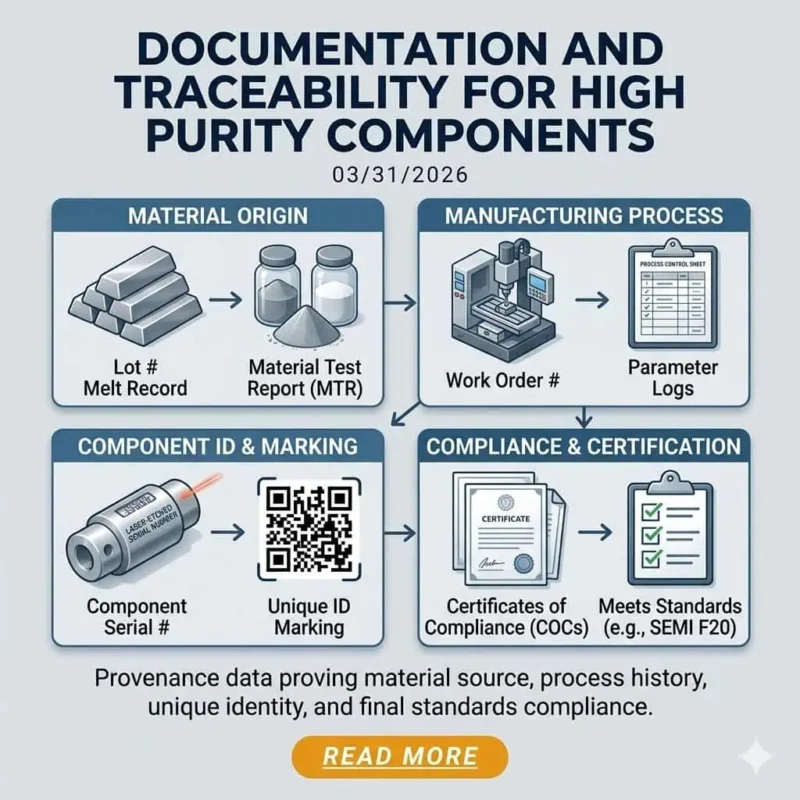
In heavy machinery, process equipment, and infrastructure work, knowing what stainless you are installing is not optional. Direct factory control supports traceability from raw material to final inspection.
- Material Verification: incoming chemistry checks for A2 / A4 material families.
- Standard Compliance: dimensional build to ISO / ASME and mechanical coordination with the correct stainless fastener standard for nuts and the mating bolts.
- Rigorous Inspection: thread accuracy, bearing-face quality, lot separation, and batch records before shipment.
Customization: OEM/ODM Capabilities for Non-Standard Drawings
Off-the-shelf parts do not always match the joint design. If your project needs a non-standard pitch, a specified nut height to reduce stripping risk, a heavy-hex profile, or CNC-machined specialty alloys, build it from the drawing and validate the clamp-force behavior instead of forcing a generic nut into a critical application.
CTA: If you are not sure about the friction factor under your actual installation condition—dry vs lubricated, passivated vs coated, plain washer vs hardened washer—ask our engineers for a torque table validated by clamp-force testing. That is much cheaper than chasing loose joints after commissioning.
Frequently Asked Questions About Stainless Steel Hex Nuts
What are the main differences between 304 and 316 stainless steel hex nuts in real service?
The difference is chloride behavior. 304 / A2 is suitable for general service with low chloride exposure. 316 / A4 is the safer choice where salt spray, coastal air, de-icing salts, or chemical splash can drive pitting and crevice corrosion. If chloride exposure is real, A4 usually buys far more service life than the price difference suggests.
How do DIN 934, ISO 4032, and ASME B18.2.2 affect hex nut selection?
They control geometry and thread system, so they are not interchangeable shortcuts.
- DIN 934 / ISO 4032: metric geometry, with ISO 4032 being the current style 1 product standard.
- ASME B18.2.2: inch-series geometry for US imperial applications.
- If you mix standards carelessly, you get wrong wrench fit, wrong thread form, or reduced engagement length, which raises stripping risk and preload scatter.
What causes thread galling and how can it be prevented without over-torquing?
Galling is cold welding caused by pressure and friction damaging the passive film, then metal transfer locks the threads. Prevention is straightforward:
- Lubrication: use anti-seize to lower friction and stabilize the nut factor.
- Slow Down: avoid high RPM and finish tightening with controlled tools.
- Grade Strategy: where permitted, introduce a small hardness difference between mating parts and avoid dry same-grade stainless pairs.
Why is manufacturing method important for hex nut quality beyond cost?
Because it changes geometry stability and friction behavior.
- Cold Heading: better for standard-volume production and repeatable geometry.
- CNC Machining: better for custom sizes, tight tolerances, and specialty alloys where the drawing controls more than just the thread.
How does sourcing factory-direct improve quality assurance?
Factory-direct improves accountability. The buyer gets clearer control over chemistry verification, dimensional build, inspection method, and lot traceability. For critical joints, it also improves the chances of getting torque guidance based on real friction conditions instead of a copied generic chart.
Can Sunhy provide custom stainless steel hex nuts for specific industrial needs?
Yes. For non-standard dimensions, special pitch, heavy-hex profiles, or alloys beyond standard 304 / 316, Sunhy can manufacture to drawings or samples. If the application involves extreme chloride exposure, cyclic shear, or geometry-sensitive preload control, the part should be engineered as a joint system instead of purchased as a generic commodity.
Related Sources
ISO 4032 — Hexagon regular nuts (style 1)
ASME B18.2.2 — Nuts for General Applications (Inch Series)
ISO 16047 — Fasteners — Torque/clamp force testing
ASTM A967/A967M — Chemical passivation treatments for stainless steel parts
ISO 9227 — Corrosion tests in artificial atmospheres — Salt spray tests