To understand how to order socket weld flanges, you need to move beyond basic part numbers and provide precise engineering specifications. A successful purchase requires locking down the size (NPS), material grade (ASTM), pressure class, face finish, and—critically—the pipe schedule (bore).
Socket Weld (SW) flanges are designed for high-pressure, small-diameter piping systems (typically NPS 2 and smaller). Unlike Slip-On flanges, they require a precise match between the flange bore and the pipe’s internal diameter to function correctly. For your convenience, here are the most frequent combinations we manufacture:
| Material Grade | Typical Pressure Rating (Class) | Common Application |
|---|---|---|
| 304/304L Stainless Steel | Class 150 / 300 | General Utility, Water, Air, Low-Temp Steam |
| 316/316L Stainless Steel | Class 300 / 600 / 1500 | Corrosive Media, Marine, Chemical Processing |
| Carbon Steel (ASTM A105/A105N) | Class 150 / 300 / 600 | Oil & Gas, High Temp Steam, Hydraulic Lines |
Engineer’s Note (The #1 Ordering Mistake): In my 30 years of handling piping components, 80% of “wrong flange” returns happen because the buyer forgot to specify the Pipe Schedule (Wall Thickness).
Unlike slip-on flanges, a socket weld flange has a specific bore ID. If you order a “2-inch 300# SW Flange” without saying “Schedule 80,” you might receive a Schedule 40 bore. This creates a “step” inside the pipe, causing turbulence, erosion, and potential weld failure.
Quick RFQ line template you can copy:
Socket Weld Flange / Standard: ASME B16.5 / NPS: [Size] / Class: [150-1500] / Face: [RF/FF/RTJ] / Bore for: Sch [40/80/160/XXS] / Material: ASTM A182 F[304L/316L] or A105 / Qty: [__] / Docs: EN10204 3.1 / Notes: Max Carbon 0.035% (if applicable).
Identifying Socket Weld Flange Requirements
Application and Pressure Rating
You must distinguish between “Operating Pressure” and “Design Pressure” before ordering. Socket weld flanges are standard in high-pressure, small-bore piping. However, temperature significantly de-rates the pressure capacity of the flange.
| Key Factor | Engineering Implication |
|---|---|
| Standards | ASME B16.5 dictates the Pressure-Temperature ratings. |
| Pressure Class | A Class 300 flange holds ~740 PSI at ambient temp, but drop to ~600 PSI at 400°F (depending on material). |
| Cyclic Loading | Socket welds are sensitive to vibration fatigue. Ensure the class handles the stress. |
Field Case #1 (The “Thermal Shock” Leak):
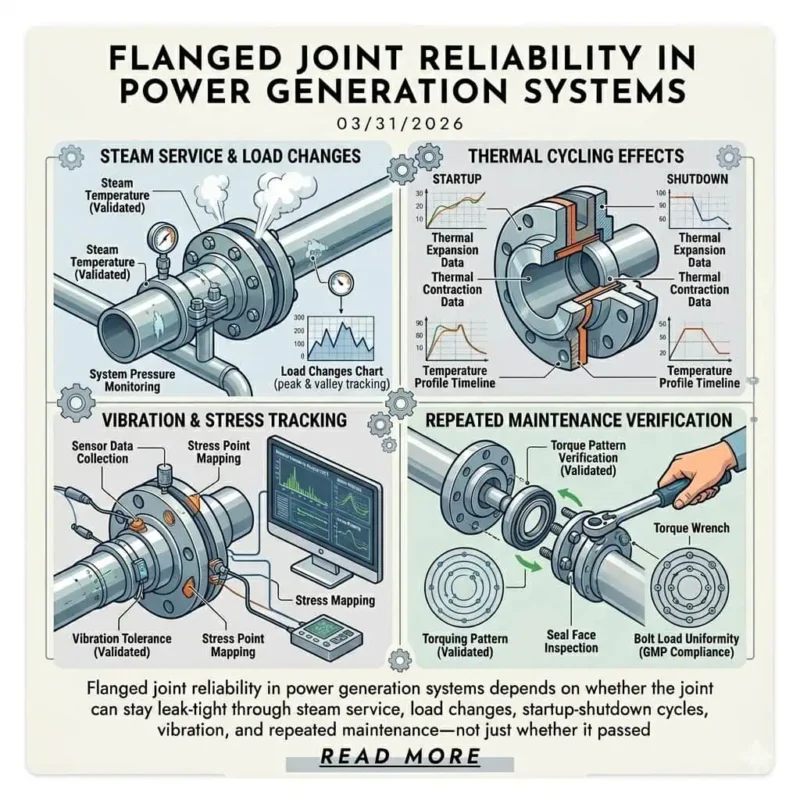
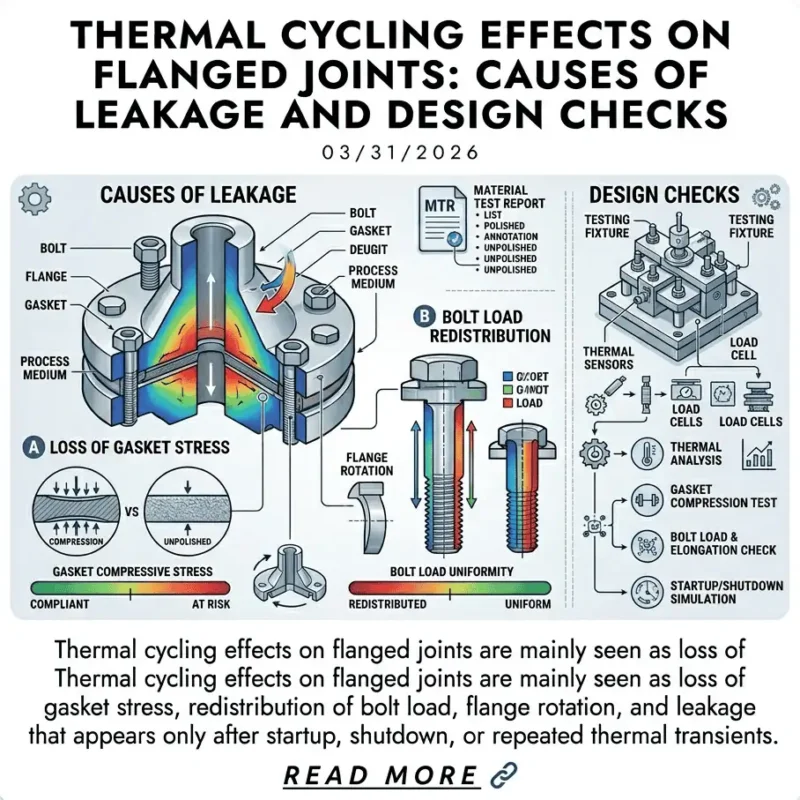
A client ordered Class 150 flanges for a steam trace line because the operating pressure was only 100 PSI. However, the line experienced rapid temperature spikes (thermal cycling). The light-duty flanges flexed during cycles, causing the gasket seal to relax and leak.
The Fix: We upgraded them to Class 300 flanges. The thicker flange stiffness prevented face rotation, maintaining gasket compression during thermal shocks.
Size, Pipe Schedule, and Face Type
You need to match the flange bore to the pipe schedule to prevent turbulence and corrosion. This is the most critical dimension for Socket Weld (SW) flanges.
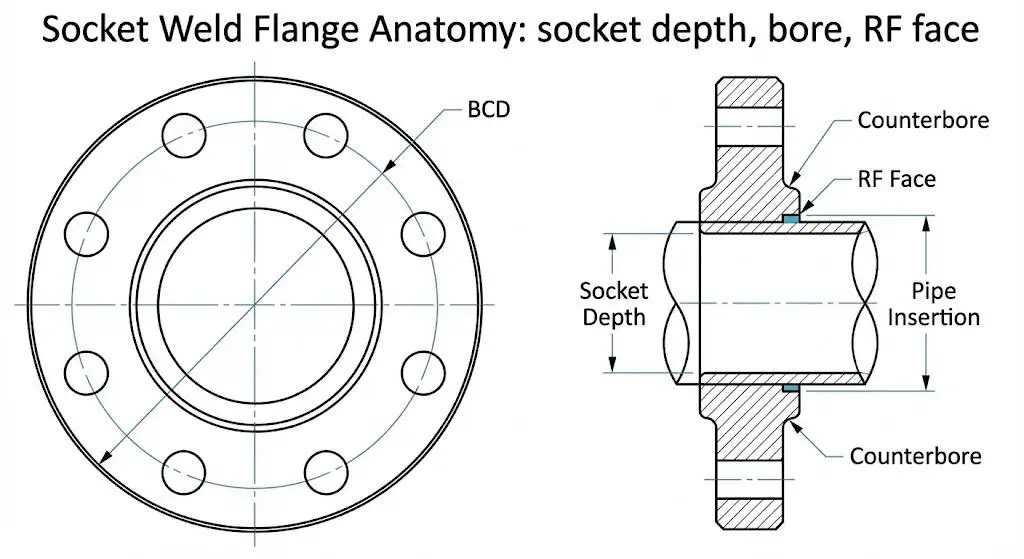
- Bore Matching: If your pipe is Schedule 80, the flange bore must be machined to match. A mismatch creates a crevice where corrosion starts.
- Expansion Gap (The 1/16″ Rule): When installing, the pipe must be inserted into the socket and then withdrawn approx. 1.6mm (1/16 inch) before welding. This gap prevents the weld from cracking due to thermal expansion.
- Face Finish: Standard RF (Raised Face) usually requires a serrated finish (125-250 AARH) to bite into the gasket.
Field Case #2 (The Mismatched Schedule):
A refinery contractor ordered “2-inch SW Flanges” for a high-pressure line using Schedule 160 pipe. The supplier sent standard Schedule 40 flanges.
Result: The thick pipe wall blocked the flow into the thinner flange bore, creating a dam. This caused severe turbulence and erosion downstream. The system had to be shut down and flanges replaced.
Comparison: Socket Weld vs. Slip-On vs. Weld Neck
Choosing the right flange type is just as important as ordering the right size. Here is why engineers choose Socket Weld over other options for small-bore piping:
| Feature | Socket Weld (SW) | Slip-On (SO) | Weld Neck (WN) |
|---|---|---|---|
| Primary Use | Small Bore (≤ NPS 2), High Pressure | Low Pressure, Low Criticality | Critical, High Pressure, Large Bore |
| Welding | Single Fillet Weld (Outside) | Double Fillet Weld (Inside & Outside) | Butt Weld (Full Penetration) |
| Alignment | Self-aligning (Socket holds the pipe) | Manual alignment required | Self-aligning (Butt joint) |
| Radiography (RT) | Difficult (Fillet weld) | Difficult | Easy (Butt weld is easy to X-ray) |
| Cost | Moderate | Low | High |
Decision Guide: Use Socket Weld when you have small pipes (under 2 inches) and high pressure (Class 300+), but you want to avoid the high cost of beveling pipes for Weld Neck flanges. Avoid Socket Weld in “Crevice Corrosion Sensitive” services (like food processing or highly corrosive acids) because the gap inside the socket can trap fluid.
Material Selection: Stainless vs. Carbon
Select material based on fluid compatibility and weldability, not just cost. Sunhy offers certified forgings (not castings) for critical duties.
| Material Type | Common Grades & ASTM Standard |
|---|---|
| Carbon Steel | ASTM A105 (Standard), A350 LF2 (Low Temp) |
| Stainless Steel | ASTM A182 F304/L, F316/L (Marine/Chemical) |
| Alloy Steel | ASTM A182 F11, F22 (High Temp Chrome-Moly) |
| Duplex Steel | A182 F51 / F53 (High strength, Chloride resistance) |
Engineering Insight: ASTM A105 vs. A105N
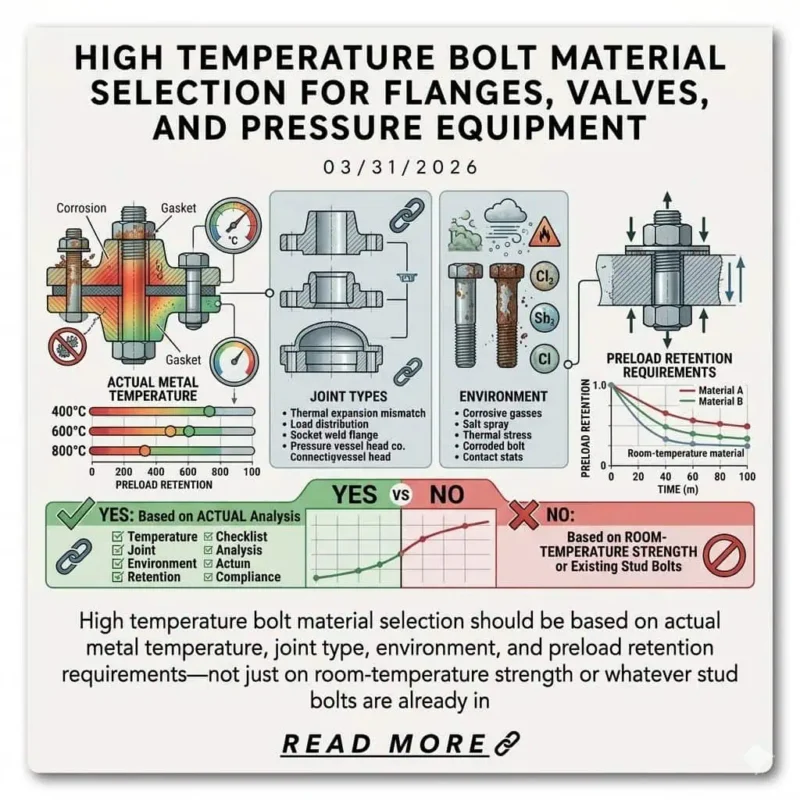
When ordering Carbon Steel flanges for colder environments or critical systems, you might see “A105N”. The “N” stands for Normalized. Normalization is a heat treatment that refines the grain structure, improving toughness and impact resistance at lower temperatures.
Recommendation: Always specify A105N for piping systems that might operate below 0°C or in high-stress offshore environments.
Material Reality Check (Why “L” Grade Matters):
For stainless steel socket welds, we strongly recommend Low Carbon grades (304L or 316L). The welding heat in a socket joint is concentrated. Standard carbon grades (304/316) can suffer from “Sensitization” (carbide precipitation) during welding, leading to intergranular corrosion and cracking later.
How to Order Socket Weld Flanges: Step-by-Step
Specifying Dimensions and Standards
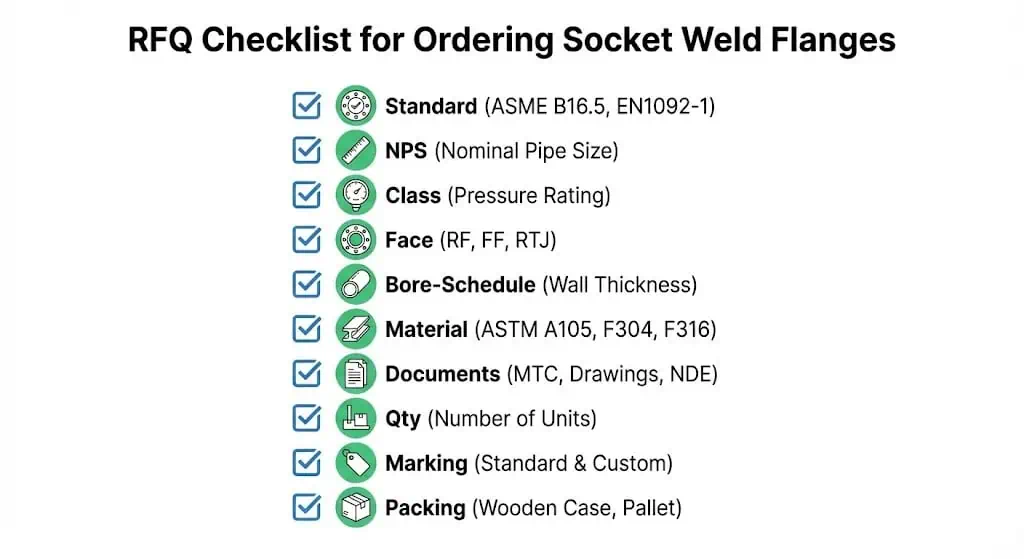
You must provide a complete data sheet to avoid “Assumed Specs.”
When learning how to order socket weld flanges, precision prevents site rejection. Verify these data points against your piping P&ID:
- NPS (Nominal Pipe Size): E.g., 1/2″, 1″, 2″.
- Pressure Class: 150, 300, 600, 900, 1500 (SW is rare above 1500).
- Bore Schedule: Sch 10S, 40, 80, XS, 160, XXS.
- Face Type: Raised Face (RF), Flat Face (FF), or RTJ.
- Material Spec: E.g., ASTM A182 F316L.
- Standard: ASME B16.5 (Dimensional) / ASTM (Material).
Tip: Always ask for the “Hub Diameter” if you have tight clearance insulation. Manufacturers vary slightly within B16.5 tolerances.
| Feature | Critical Tolerance (ASME B16.5) |
|---|---|
| Bolt Circle (P) | ±1.6 mm (Ensure alignment with mating flange) |
| Socket Diameter | +0.25mm / -0.0mm (Tight fit required for welding) |
| Socket Depth | Typically pipe OD + gap allowance |
| Facing Finish | Ra 3.2-6.3µm (125-250 AARH) for standard gaskets |
Communicating with Suppliers
Clear communication minimizes lead time.
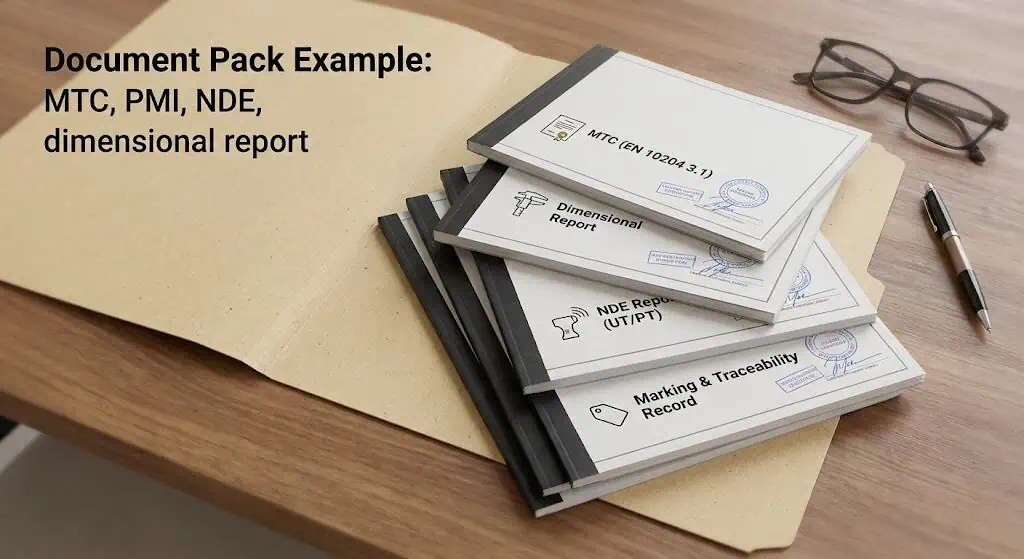
When sending your RFQ to Sunhy, include specific “Quality Holds” if your project requires them. Don’t wait until the order is ready to ship to ask for tests.
- MTC Level: Do you need EN 10204 3.1 (Manufacturer certified) or 3.2 (Third-party witness)?
- NACE Requirement: If the service is sour gas, specify NACE MR0175/ISO 15156 hardness limits.
- PMI: Request “100% Positive Material Identification” for alloy flanges to prevent material mix-ups.
Reviewing and Confirming Your Order
Double-check the drawing approval.
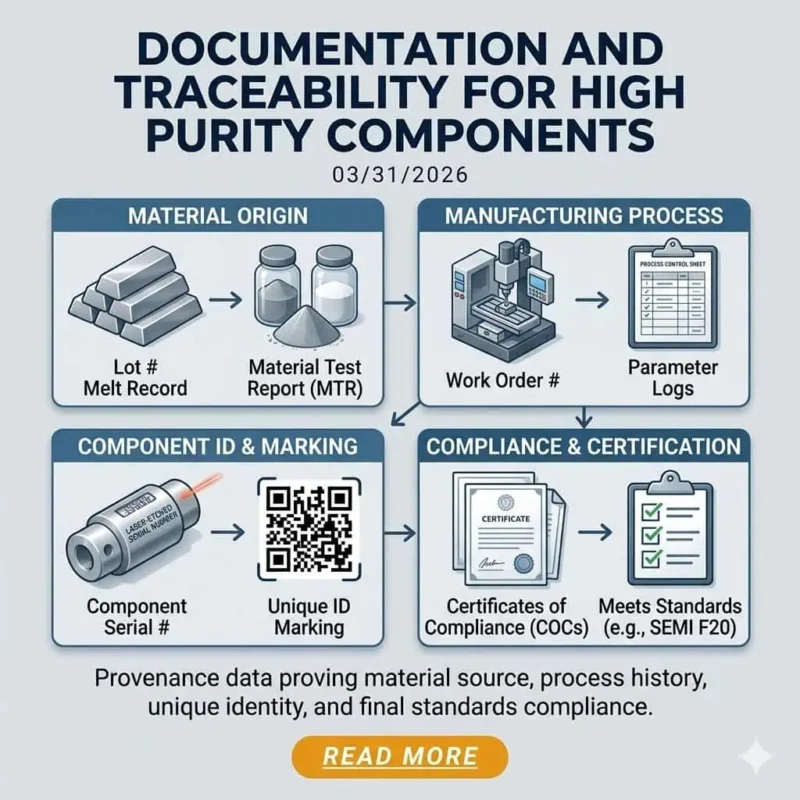
Before mass production, request a drawing if you are ordering special wall thicknesses. Ensure the MTC (Material Test Certificate) lists the Heat Number that will be stamped on the flange.
Tips and Mistakes to Avoid When Ordering Socket Weld Flanges
Common Specification Errors
Avoid the “Cast vs. Forged” trap.
- Error: Buying cheap “cast” stainless flanges for pressure systems. Castings are porous and brittle.
Fix: Always specify “Forged to ASTM A182.” Forgings have a directional grain structure that handles high pressure and impact. - Error: Ignoring the face finish.
Fix: If you use spiral wound gaskets, you need a specific roughness (typically 125-250 AARH). If the finish is too smooth, the gasket won’t seal; too rough, and it tears the graphite.
Ensuring Clear Communication
Define your “Acceptance Criteria.”
- Ask for photo proof of marking (Heat No., Size, Class, Material) before packaging.
- Specify “Export Seaworthy Packing” (wooden cases with vapor corrosion inhibitors) to prevent rust during ocean transit.
- Verify that the supplier understands your project’s specific “Approved Vendor List” (AVL) requirements if applicable.
Receiving Inspection Checklist (Site Guide)
Once your flanges arrive, use this 5-point checklist to avoid issues during installation. This simple process can save thousands of dollars in rework:
- Visual Check: Inspect the Raised Face (RF) for scratches or dents. Even a small scratch across the serrations can cause a leak path.
- Bore Verification: Use a caliper to measure the internal bore. Does it match your pipe’s ID?
- Socket Fit-Up: Insert a sample piece of pipe. It should slide in somewhat easily but not be loose or “sloppy.” A loose fit makes welding difficult and creates uneven stress.
- Marking Verification: Check that the stamped Heat Number matches the provided paper MTC exactly.
- Cleanliness: Ensure the socket is free of machining oil, rust, or debris that could contaminate the weld.
Double-Checking Order Details
Use this pre-order checklist:
| Step | Check Point |
|---|---|
| Bore Check | Does the flange bore match the pipe schedule (e.g., Sch 80)? |
| Material | Is it Dual Certified (e.g., 316/316L) to cover both strength and corrosion? |
| Standards | Is it strictly ASME B16.5 or a DIN/EN metric equivalent? |
| Testing | Is PMI required for high-alloy grades? |
Sunhy’s inspection process includes mechanical tensile testing, hardness testing (vital for NACE compliance), and visual inspection of the socket face to ensure no burrs prevent pipe insertion.
Maximizing Value: Pros & Cons of Sourcing Socket Weld Flanges from China
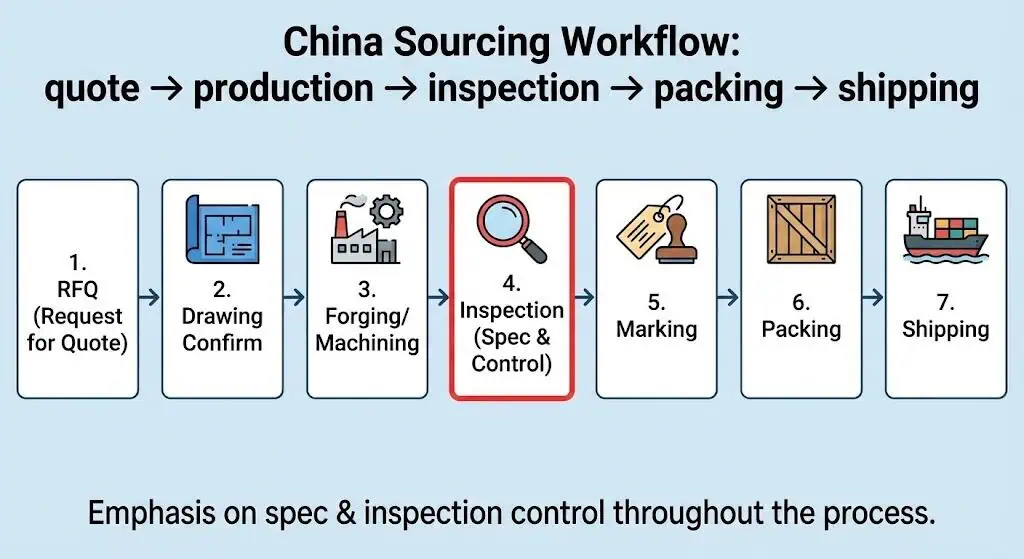
You gain significant cost savings when you source directly, but you must manage quality controls. As a global manufacturing hub, China offers competitive pricing on forged components.
How to ensure quality when importing:
- Raw Material Control: Sunhy ensures billets come from reputable steel mills with full traceability.
- Machining Precision: CNC machining ensures the socket diameter tolerance is within +0.25mm to ensure a good fit-up for welding.
- Lab Testing: We perform chemical analysis and intergranular corrosion testing (IGC) for stainless grades.
Trust Sunhy to deliver reliable, certified socket weld flanges for your next project.
- 📞 Phone: +86 18066318999
- 📧 E-mail: anna@sunhying.com
FAQ
What are the critical dimensions to specify for socket weld flanges?
You must specify Nominal Pipe Size (NPS), Pressure Class, and Bore Schedule.
The “Schedule” (wall thickness) dictates the bore ID. If this is wrong, the pipe won’t fit, or there will be a flow-restricting step inside the line.
Why is the “Expansion Gap” important in socket welds?
The gap prevents weld cracking.
ASME B31.3 requires a gap of approximately 1/16″ (1.5mm) between the pipe end and the bottom of the socket. This allows the metal to expand during the high heat of welding without stressing the root weld.
Can I use Socket Weld flanges for large pipes?
No, they are typically limited to NPS 2 (DN50) and smaller.
For larger sizes (NPS 3+), Slip-On or Weld Neck flanges are safer and easier to inspect. Large socket welds are prone to failure due to thermal stresses.
What certifications should I ask for?
Always request an EN 10204 3.1 MTC.
This certificate proves the chemical composition and mechanical properties (tensile/yield) of the specific batch (Heat Number) you are buying.
How long is the delivery time?
Forged flanges typically ship in 2–4 weeks.
Stock items (A105, 304L, 316L in standard schedules) may ship in 1 week. Special alloys (Duplex, Inconel) or non-standard bores require 4–6 weeks for forging and machining.