








Industrial Fastening Solutions · OEM Round Base & Specialty Weld Nut Manufacturer
Round Base & Specialty Weld Nuts: Engineered Geometry for Restricted Spaces & Tubular Assemblies
Stop compromising your sheet metal and tubular assemblies with standard off-the-shelf nuts. As a 30-year direct manufacturer, we engineer Round Base, D-Shape, Slab, and Oblong Weld Nuts designed specifically for confined channels, curved surfaces, and high-stress joints. From our extreme-duty 6-projection round nuts to custom long-barrel designs, we precisely control projection volumes to ±0.05mm, guaranteeing a flawless metallurgical bond without burn-through or thread spatter.
Configurations: Round Base (Plain/Projections), D-Shape, Slab Base, Oblong, Long Barrel (T-Nut style).
Standard Compliance: Custom OEM Prints, Industry Standard Metric/Unified variants.
Materials: C1010/1015 Low Carbon Steel (Weld-Optimized), 304/316 Stainless.
Readiness: EN 10204 3.1 Certification, PPAP Level 3, and 100% Optical Sorting.
Types of Round Base Weld Nut
 Special Nuts
Weld Nuts Series
Inserts & Rivet Series
Furniture & Specialty

Slab Base Weld Nut

Slab Base T-Nut (Weld Type)

Round Base Weld Nut
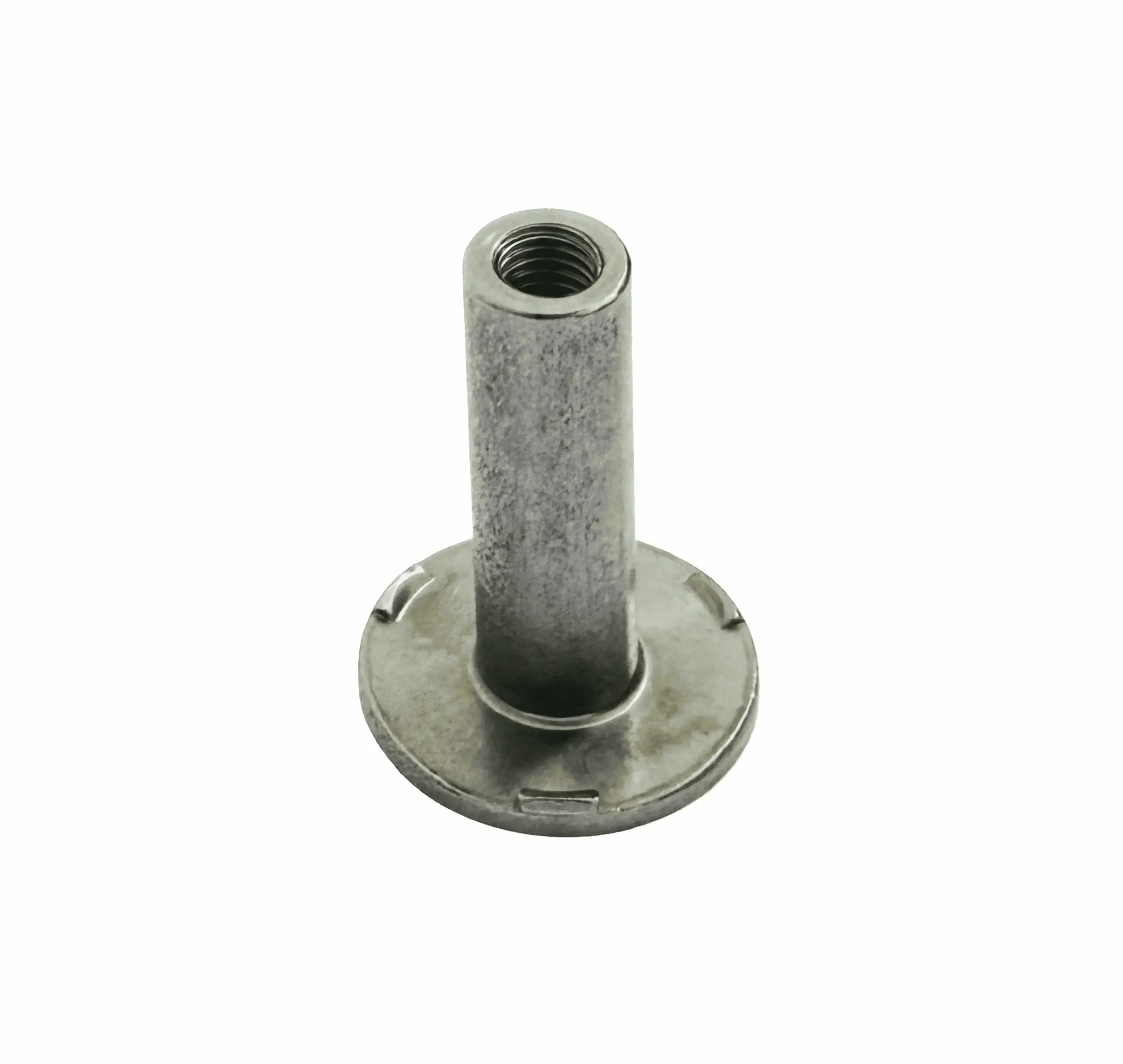
Round Base Weld Nut

Round Base Weld Nut with Projections
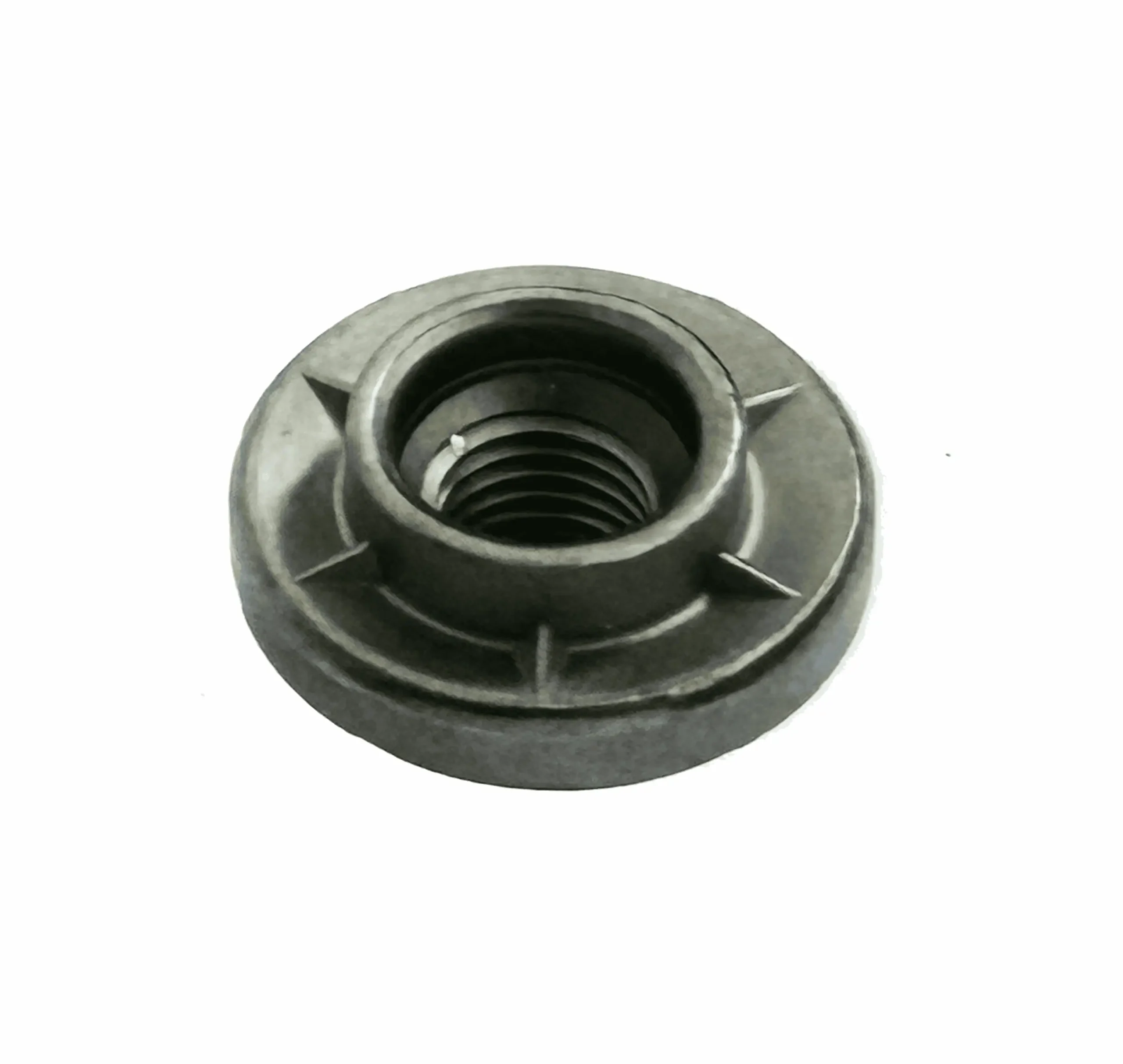
Round Weld Nut with 6 Projections

Plain Round Base Weld Nut

D-Shape Weld Nut

Oblong Weld Nut
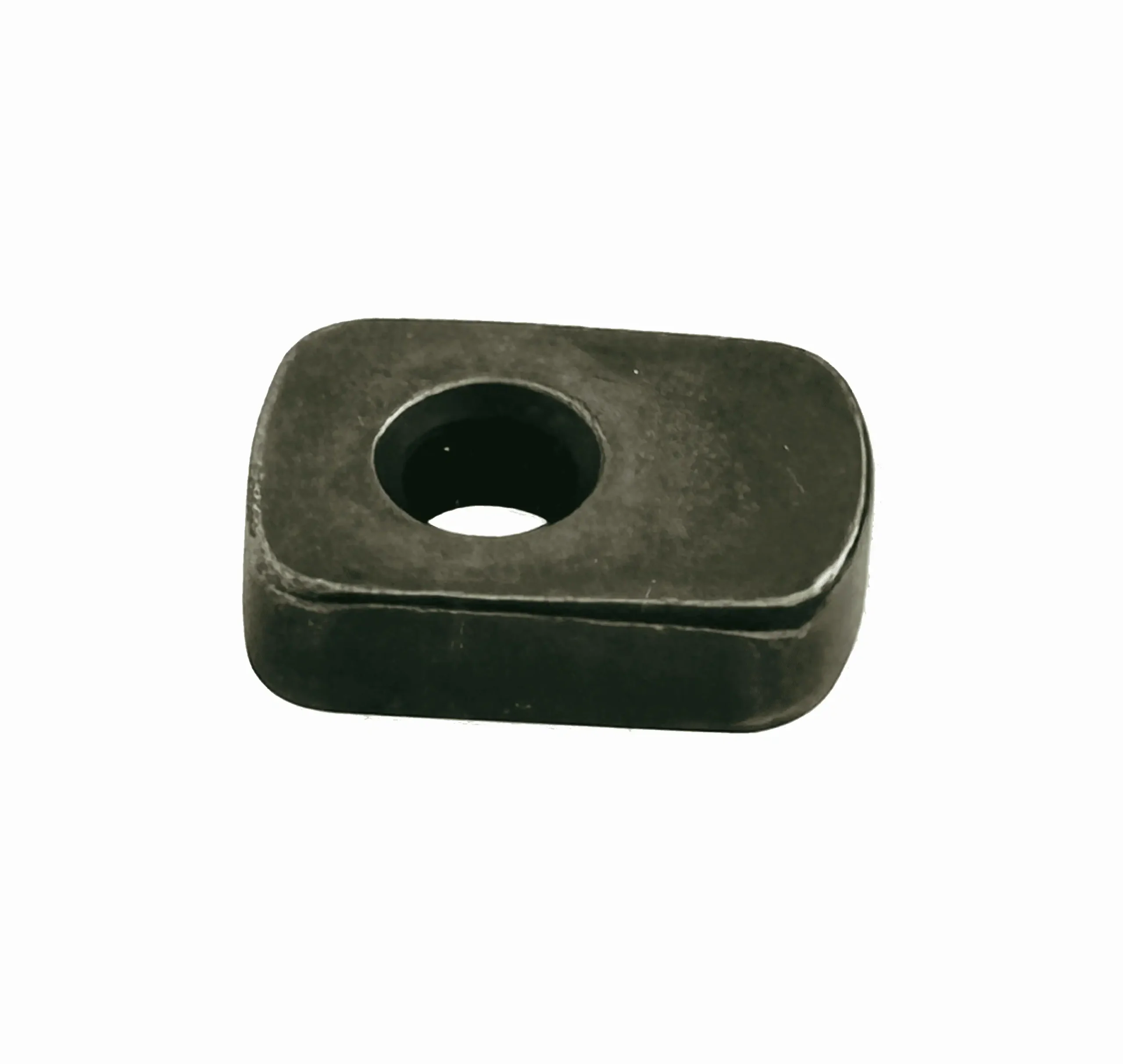
Rectangular Weld Nut
The Engineering Advantage: Why Geometry Matters
In structural welding, the shape of the nut dictates the survival of the joint.
The Oblong/Rectangular Advantage (WN14/WN15): When welding inside narrow C-channels, a traditional round or hex flange simply won’t fit. Our oblong bases maximize the weldable surface area along the Y-axis while keeping the X-axis narrow enough to drop into restricted grooves.
Flange Stress Distribution: The oversized circular flange on our plain round bases (WN09) acts like a built-in washer. When heavy clamping loads are applied to thin sheet metal, the wide base prevents the nut from pulling through the host material.
What Is A Round Base Weld Nut?
A round base weld nut is a specialized cold-forged industrial fastener designed to be permanently fused to sheet metal or tubular frameworks via resistance projection welding. Its symmetrical circular flange eliminates the need for radial orientation during high-speed automated feeding, instantly creating a robust, high-torque female thread in blind, enclosed, or inaccessible assembly areas.
Key Anatomy & Characteristics:
Circular Bearing Surface (Flange): Unlike hex or square profiles, the round base provides a 360-degree symmetrical footprint. This acts as an integrated washer, distributing clamping loads evenly across thin sheet metals and preventing the nut from pulling through the host panel.
Locating Pilot (Barrel/Boss): An extended cylindrical collar that drops perfectly into a pre-punched hole. It instantly self-centers the nut in robotic welding cells and physically shields the internal threads from molten metal expulsion (weld spatter).
Projections (Weld Dimples): Precisely engineered points (typically 3 or 6) forged on the underside of the base. They concentrate the electrical welding current, melting rapidly to forge a deep, balanced metallurgical bond without burning through thin-walled tubing.
Internal Thread: The precision-tapped core that provides a permanent, vibration-resistant fastening point in heavy-duty structural applications where a standard wrench cannot reach.
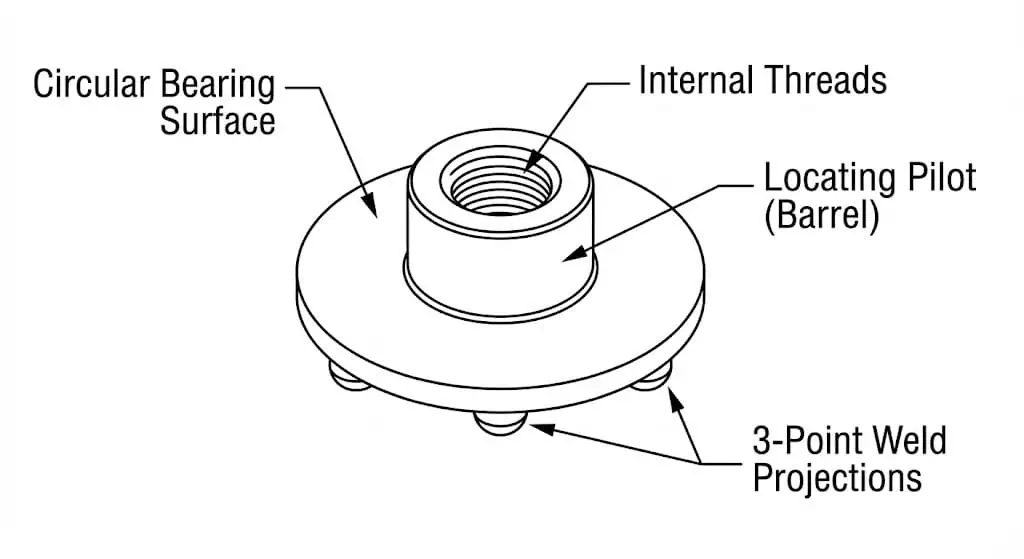
Dimensional Reference (General Sizing for Round Base Profiles)
(Note: Because this category includes custom D-shapes and Slab bases, dimensions are highly customizable. Below is a baseline reference for standard Round Base Weld Nuts.)
| Thread Size | Pitch (mm) | Base Diameter (Max) | Nut Height (Max) | Pilot/Barrel Dia. | Recommended Sheet Thickness |
| M5 | 0.80 | 14.00 mm | 6.50 mm | 7.00 mm | 1.0 – 1.5 mm |
| M6 | 1.00 | 16.00 mm | 7.50 mm | 8.00 mm | 1.2 – 2.0 mm |
| M8 | 1.25 | 18.00 mm | 9.00 mm | 10.50 mm | 1.5 – 2.5 mm |
| M10 | 1.50 | 22.00 mm | 11.00 mm | 12.50 mm | 2.0 – 3.0 mm |
| M12 | 1.75 | 25.00 mm | 13.00 mm | 14.80 mm | 2.5 – 4.0 mm |
Factory Engineering: Solving OEM Assembly Failures
Pain Point 1: Orientation Bottlenecks in Robotics
The Cause: Hex and square nuts must be physically rotated by the feeding equipment to align with the welding electrodes or pre-punched holes.
Our Solution: By switching your line to our Round Base Weld Nuts (WN05/WN07), the radial symmetry means the nut is always in the correct orientation the second it leaves the vibratory track, eliminating feeder jams and increasing cycle speed.
Pain Point 2: Burn-Through on Thin-Walled Tubes
The Cause: Standard projection volumes are too aggressive for thin-walled automotive tubing, causing the welder to blow a hole straight through the host material.
Our Solution: We utilize precision cold-heading to custom-forge micro-projections specifically calibrated for tubing under 1.2mm thick. Combined with strict CE < 0.20% low-carbon steel, we ensure surface-level fusion without penetrating the inner diameter of the tube.
Pain Point 3: Spatter Inside Long Barrels
The Cause: Welding a long-barrel nut (WN06) often traps expelled gas and molten metal inside the deep threads.
Our Solution: We engineer a specialized unthreaded counter-bore at the base of the barrel. This acts as a “spatter trap,” catching any molten expulsion before it reaches the functional threads, completely eliminating the need for manual re-tapping.
Industry Application Case Study
Sector: Automotive Seating Sub-Frames
The Challenge: A Tier-1 seating manufacturer was attempting to weld standard hex nuts inside a narrow, curved “D-tube” frame. The corners of the hex nuts were hanging up on the curved inner walls of the tube, causing the electrodes to clamp at an angle. This resulted in severe spatter and a 12% joint failure rate.
Our Solution: We engineered a custom D-Shape Weld Nut (WN13). The curved side perfectly mirrored the inner radius of the host tube, while the flat side provided necessary clearance for the welding electrode. We also optimized the material to pure C1010 steel to prevent martensite embrittlement during the fast-cooling cycle of the automated welder.
The Result: The D-Shape profile self-aligned instantly inside the tube. Spatter was eliminated, and the destructive pull-out failure rate dropped to 0 PPM, securing the structural integrity of the seatbelt anchor points.
FAQ
When should I specify 6 projections instead of the standard 3?
A 6-projection round base (like our WN08) should be specified when mating with heavy-gauge steel (2.5mm+) or in applications subjected to extreme rotational torque and vibration, such as heavy equipment chassis. The 6 points double the fusion area, preventing the nut from tearing out of the sheet metal under maximum bolt tension.
Are round base nuts suitable for welding onto curved surfaces like pipes?
Standard flat-base round nuts are not ideal for tight-radius curves because the projections won’t contact the pipe simultaneously. However, as a cold-forging factory, we can engineer the bearing surface of the round nut with a concave radius to perfectly match the outer diameter (OD) of your pipe, ensuring all projections ignite at the exact same millisecond.