
Sanitary & Hygienic Stainless Steel Components (ASME BPE / 3A / DIN)
Process integrity starts at the component level. In pharmaceutical and food processing, the cost of a compromised batch far outweighs the cost of hardware. Our range of Sanitary Components—including the Bolted Sight Glasses and Flow Diverter Manifolds shown above—are engineered to eliminate biofilm entrapment and ensure absolute cleanability. We bridge the gap between structural durability and sterile processing requirements, preventing common failures like crevice corrosion, gasket intrusion, and CIP (Clean-in-Place) shadowing. Whether upgrading a dairy line or specifying for a biotech WFI (Water for Injection) loop, these components ensure your system maintains its sterile barrier under thermal cycling.
Types of Sanitary Clamp Fittings We Supply
 Sanitary Fittings
Sanitary Clamp Fittings
Sanitary Threaded
Sanitary Weld
Components


Industry Standards
3-A Sanitary Standards (USA): Focuses on the physical cleanability of equipment for the dairy and food industries.
EHEDG (Europe): The European Hygienic Engineering & Design Group guidelines, which emphasize “cleanability” testing and microbial safety.
ASME BPE (Bioprocessing Equipment): The global standard for the design and manufacture of equipment used in biopharma, mandating strict controls on sulfur content and surface finish codes (SF1 – SF6).
FDA 21 CFR 177.2600: Governs the chemical safety of rubber and plastic seals (Gaskets like EPDM/PTFE) in contact with food.
What is Hygienic Components?
Hygienic components (also known as sanitary components) are specialized fluid handling parts designed for sterile environments such as food, pharmaceutical, and biotechnology processing. Unlike standard industrial hardware, they are engineered with crevice-free geometries, non-porous materials (typically SS316L), and ultra-smooth surface finishes (Ra < 0.8μm) to eliminate bacterial entrapment and ensure complete cleanability during Clean-in-Place (CIP) cycles.

The Core Difference: Industrial vs. Hygienic
In standard fluid dynamics, a simple pipe fitting only needs to contain pressure and prevent leaks. In Hygienic Engineering, the component must also prevent biological contamination.
To be classified as a “Hygienic Component,” the part must meet three critical engineering criteria:
1. Material Integrity (The Metallurgy)
Standard 304 stainless steel is often insufficient. Hygienic components predominantly use AISI 316L (EN 1.4404).
Why? The “L” stands for Low Carbon, which improves weldability and reduces the risk of intergranular corrosion.
Molybdenum Content: 316L contains 2-3% Molybdenum, providing essential resistance to pitting corrosion caused by chloride-rich sanitizers and high-temperature organic acids.
2. Surface Topography (The Ra Value)
Bacteria (such as Listeria or Salmonella) can hide in microscopic scratches.
Requirement: Hygienic surfaces must be polished to a Roughness Average (Ra) of less than 0.8μm (32μin).
High Purity: For pharmaceutical applications (ASME BPE), surfaces are often electropolished to Ra < 0.38μm (15μin) to create a passive, chromium-oxide-rich layer that physically repels biofilm adhesion.
3. Geometric Design (Zero Dead Legs)
The Problem: Sharp corners, threads in the product zone, and dead ends (dead legs) create stagnant areas where cleaning fluid cannot reach.
The Solution: Hygienic components feature large radii, flush-mounted instrumentation, and self-draining slopes. All connections (like Tri-Clamp® or DIN 11864) must align perfectly to prevent “steps” that disrupt laminar flow.
RELATED INDUSTRIES & APPLICATIONS
Related blog
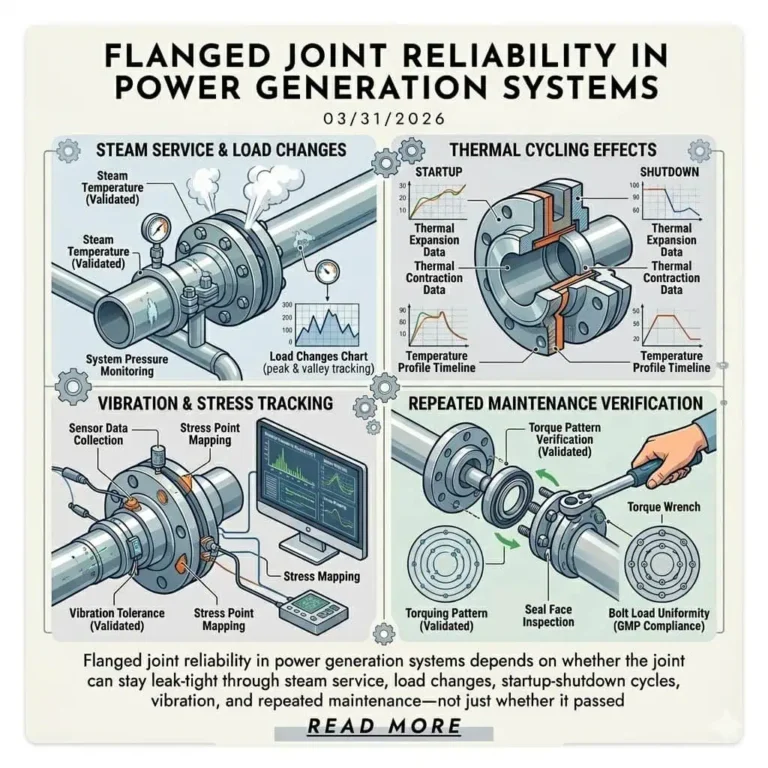
Flanged Joint Reliability in Power Generation Systems
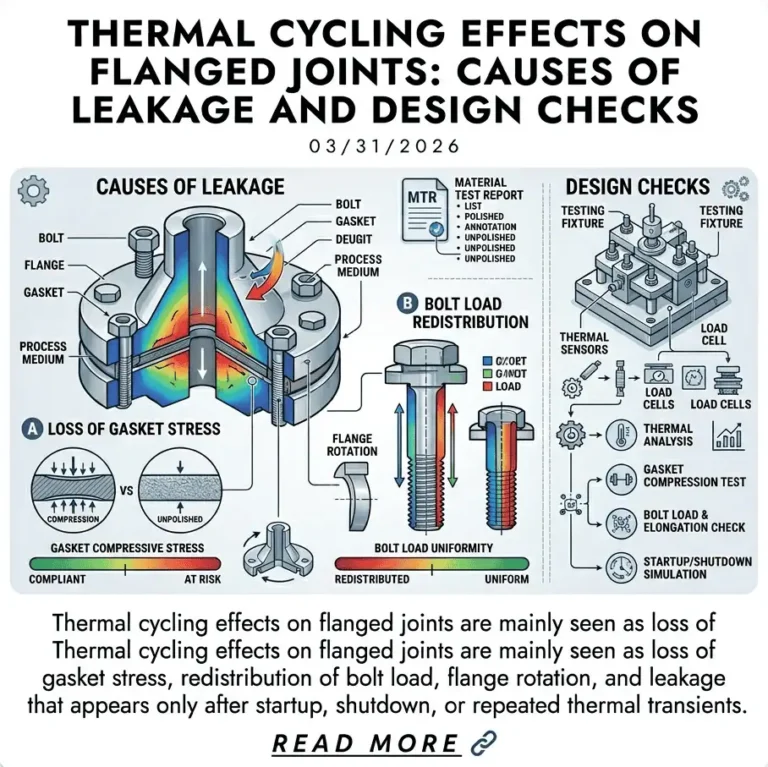
Thermal Cycling Effects on Flanged Joints: Causes of Leakage and Design Checks
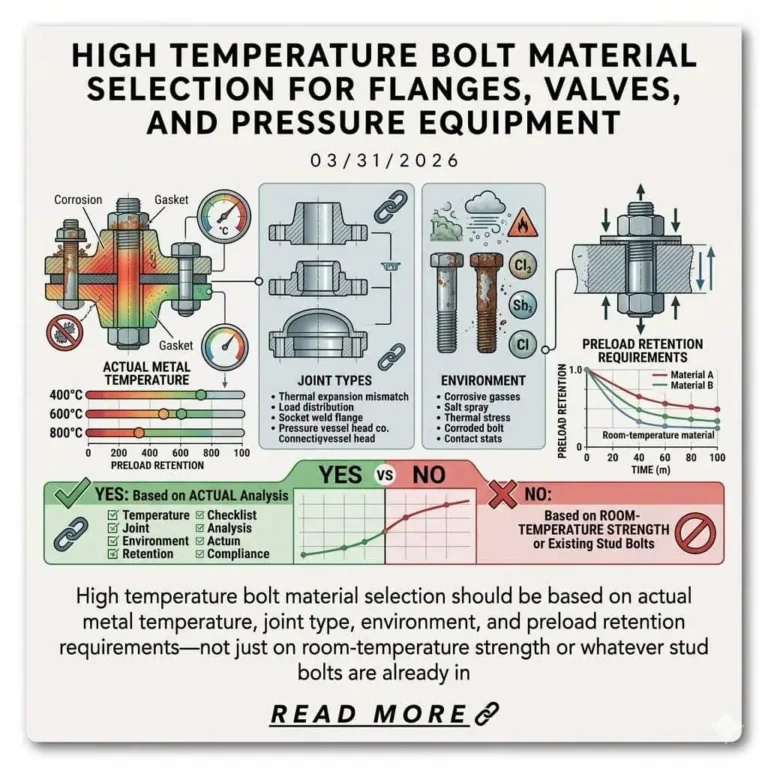
High Temperature Bolt Material Selection for Flanges, Valves, and Pressure Equipment
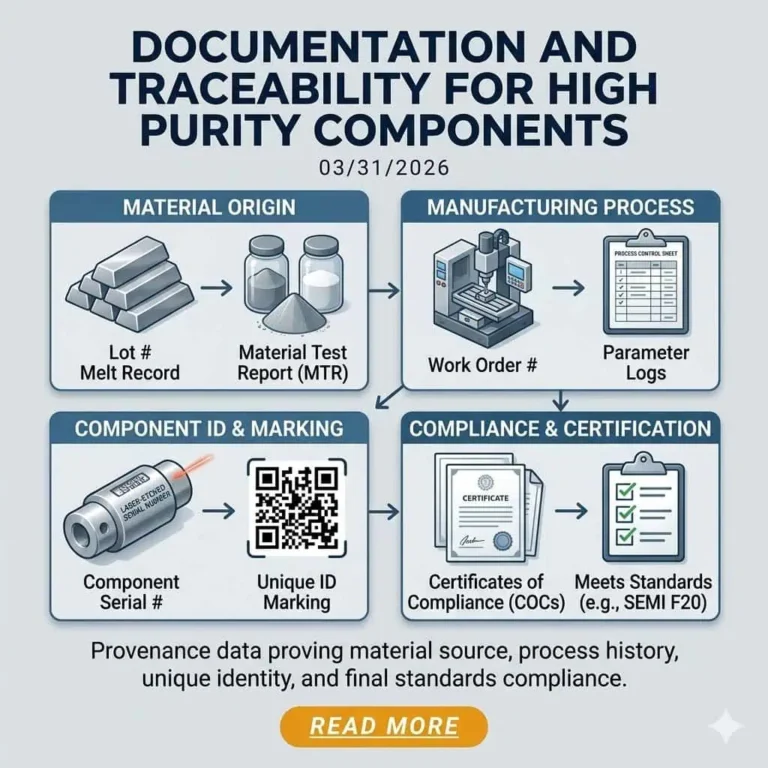
Documentation and Traceability for High Purity Components: What Engineering and QA Should Check
FAQ
What is the difference between 304 and 316L Sanitary Fittings?
SS316L contains Molybdenum (2-3%) and lower Carbon content compared to SS304. This addition makes 316L significantly more resistant to corrosion from chlorides, acids, and high temperatures found in pharmaceutical SIP cycles and harsh CIP chemicals, whereas 304 is generally sufficient for basic food and dry ingredient handling.
What does Ra value mean in Hygienic Components?
Ra (Roughness Average) measures the microscopic texture of the steel surface. In hygienic applications, a lower Ra (e.g., < 0.4μm or 15μin) means a smoother surface. This is critical because rough surfaces trap bacteria and protein residues, making cleaning difficult and increasing the risk of batch cross-contamination.
Are your components ASME BPE certified?
Yes, our specific High Purity Sanitary Fittings range is manufactured in strict accordance with ASME BPE (Bioprocessing Equipment) standards. This includes adherence to Dimensions, Material Chemistry (Sulfur control), and Surface Finish designations (SF1 through SF4) required for the biopharmaceutical industry.
How do I choose the right gasket material for sanitary fittings?
Gasket selection depends on process temperature and chemical exposure. EPDM is the standard for water/steam (-40°C to 140°C); Viton (FKM) is best for oils and acidic environments; PTFE offers the highest chemical resistance but has less elasticity; Silicone is ideal for high-purity, low-stress applications.
What is the difference between Concentric and Eccentric Sanitary Reducers?
Concentric reducers align the centerlines of two pipes and are used in vertical runs. Eccentric Reducers align one side of the pipe flat and are mandatory for horizontal hygienic lines (installed flat-side-down) to ensure the system is fully self-draining and no liquid pools inside the fitting.