








Where to buy screws in bulk depends on what you are actually buying: standard MRO stock, production-grade industrial screws, or custom OEM screws made to print. For factories and assembly lines, the best bulk screw supplier is usually not the fastest retail source. It is the source that can match your drawing, hold the correct material and property class, control coating and friction, and provide traceable documentation for every lot.
If you are buying bulk screws for OEM or industrial use, you should normally choose between three supplier routes: an OEM screw manufacturer for custom or high-volume production, a master distributor for mixed standard SKUs, or an industrial retailer for urgent maintenance and prototype buys. That decision should be based on volume, lead time, customisation, and documentation requirements rather than unit price alone.
For production sourcing, buyers usually need more than “a box of screws.” They need the correct thread standard, property class, coating system, and lot traceability. Standards such as ISO 898-1 define mechanical properties for carbon and alloy steel bolts, screws, and studs, while coating-related risk controls are commonly tied to documents such as ISO 4042 and ASTM F1941/F1941M. If the supplier cannot explain how they manage plating, thread fit, and certification, the low quote usually becomes an expensive failure later.
- Need standard screws fast? Use a distributor or industrial retailer.
- Need OEM screws in bulk? Use a direct manufacturer with drawing-based control and lot traceability.
- Need custom screws, special coatings, or PPAP support? Work directly with a manufacturer and lock the specification before quoting.
Where to Buy Screws in Bulk: Quick Answer
The best place to buy screws in bulk depends on the job type, not just the order size. Buyers looking for industrial screws, custom screws, stainless steel screws, or machine screws in bulk should not use the same sourcing method for every project.
| Supplier Type | Best For | What You Gain | Typical Risk |
|---|---|---|---|
| OEM Manufacturer | Custom screws, OEM production, stable annual volume | Lower cost at volume, drawing control, coatings, PPAP, traceability | Higher MOQ and longer setup lead time |
| Master Distributor | Mixed standard SKUs, bridge orders, moderate volume | Faster supply, broad inventory, easier split shipments | Documentation and lot control vary by SKU |
| Industrial Retailer / MRO | Emergency replacement, maintenance, prototypes | Fast availability, low order threshold | Higher piece price and limited engineering control |
Typical buying rule: if the screws go into a production line, a warranty-sensitive assembly, or a load-bearing joint, buy from a supplier that can prove the screw meets your drawing and your documentation requirements. If the screws are only for a one-time maintenance repair, urgent MRO channels may be enough.
Best Bulk Screw Supplier by Use Case
For OEM and manufacturing projects, a direct screw manufacturer is usually the best option. That is especially true when you need custom head geometry, controlled thread length, special materials, controlled friction coatings, or stable quality across repeated lots. A direct manufacturer can also align the screw to your other fastener pages and families, such as industrial fasteners, ISO/DIN standard screws, and drawing-based custom fasteners.
For maintenance teams and replacement work, distributors and industrial retailers are often the fastest path. The trade-off is that many stock items are sold as standard inventory rather than as project-controlled lots. If the joint is fatigue-sensitive, structural, or torque-critical, you still need to verify the grade, coating, thread fit, and documentation before release to use.
For design validation and prototypes, engineering catalog suppliers still have value. They make it easy to compare socket screws, machine screws, stainless screws, coarse-thread bolts, and fine-thread bolts quickly. The problem comes later, when prototype part numbers are copied into mass production without reviewing MOQ, price, coating process, or documentation capability.
OEM Manufacturer vs Distributor vs Retailer
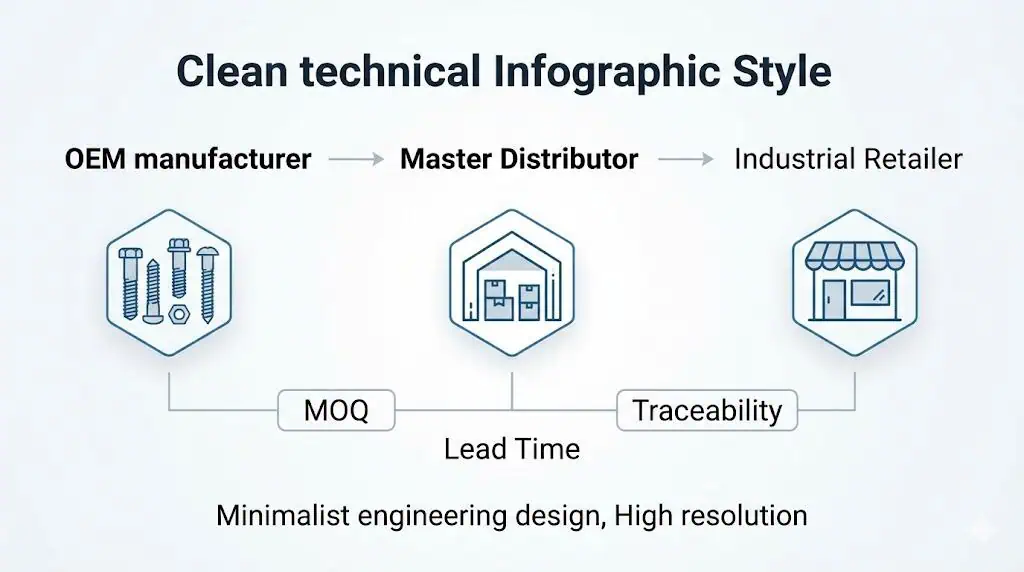
The main difference is control. A retailer controls availability. A distributor controls inventory flow. A manufacturer controls the process itself.
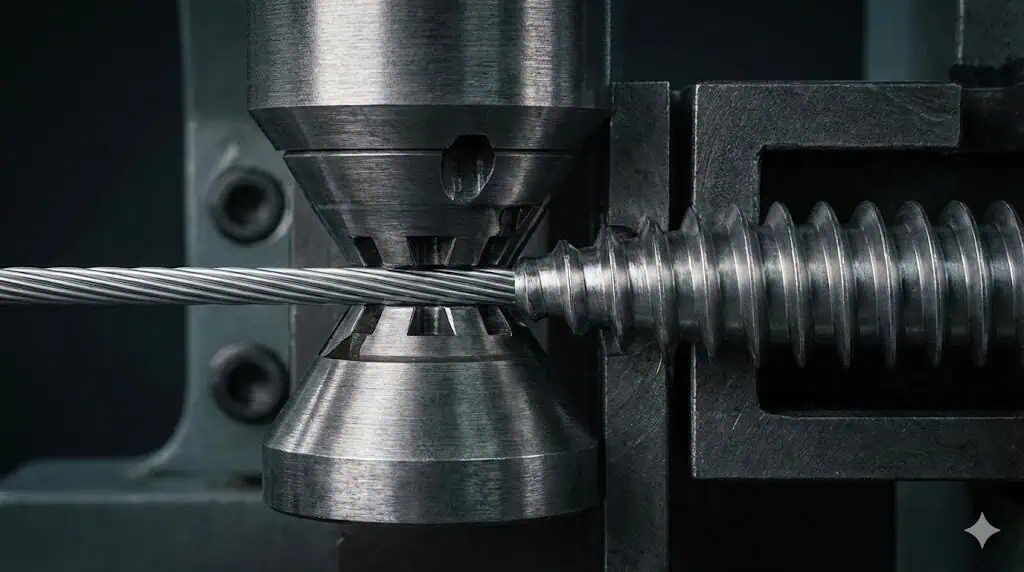
- Manufacturers control cold heading, thread rolling, heat treatment, coating, inspection, and packaging. That makes them the strongest option for OEM screws, custom screws, stainless screws in volume, and any part that must match a print exactly.
- Distributors are useful when you need many standard SKUs in one shipment. They reduce procurement friction, but the engineering team should still ask what documentation is available per lot.
- Retailers solve speed problems, not process control problems. Use them for downtime recovery, not for long-term standardisation of safety-critical joints.
A common mistake is to use the same supplier route for every screw. In one gearbox project, a buyer used a retail replacement source for a plated high-strength screw because the thread and head style “looked right.” The screws fit, torque was applied, and the line passed initial checks. The failure came later because the replacement source did not provide controlled friction data or hydrogen embrittlement process evidence. The joint loosened during vibration validation, and the team had to requalify the entire assembly. The lesson was simple: a screw that fits is not automatically a screw that qualifies.
How to Evaluate a Bulk Screw Supplier
Buyers should evaluate a bulk screw supplier the same way they evaluate any critical manufacturing process: by checking standards, materials, process controls, inspection evidence, and lot traceability. Price is only one input.
Check Standards, Grades, and Thread Requirements First
The drawing is the contract. If the drawing does not clearly define the standard, grade, thread pitch, finish, and fit, different suppliers will interpret the part differently. That is how buyers end up with wrong pitch, wrong thread length, wrong fit after coating, or screws that torque correctly but do not produce the required preload.
For bulk screw sourcing, define these items before RFQ:
- Standard: ISO, DIN, ASTM, ANSI, or drawing-based custom part
- Grade / property class: such as 8.8, 10.9, 12.9, A2-70, A4-80
- Thread pitch and fit: metric coarse vs fine, UNC vs UNF, and tolerance class such as 6g / 6H
- Head style and drive: socket cap, countersunk, pan head, Torx, hex, flange head
- Thread form: full thread or partial thread, especially in shear-sensitive joints
If you need help comparing thread classes before ordering, this is where pages like metric thread tolerances and DIN 931 vs DIN 933 become useful during purchasing review, not after parts arrive.
Verify Material, Coating, and Hydrogen Risk
Material selection and coating control decide whether the screw survives the environment and the assembly method. Carbon steel screws, alloy steel screws, and stainless steel screws all behave differently under preload, corrosion, and installation friction. A low-cost quote becomes dangerous when the supplier substitutes finish or plating route without telling you.
High-strength plated screws deserve special scrutiny. Documents such as ASTM F1941/F1941M and ISO 4042 cover electroplated coating systems on fasteners and specifically address hydrogen embrittlement precautions. If the part is high-strength and electroplated, ask how the supplier manages cleaning, plating, de-embrittlement baking, and lot-level process evidence.
A real procurement failure pattern looks like this: the customer specifies 10.9 zinc-plated screws for a gearbox cover, but does not define the coating system, lubricant condition, or hydrogen relief process. Two lots arrive from different process windows. Both pass visual checks. One lot performs normally. The other shows delayed cracking after installation. On paper they were the same screw. In process reality they were not.
Confirm Documentation and Traceability
If the supplier cannot prove what lot you received, they cannot really prove what screw you bought. This is why serious industrial sourcing asks for more than a packing list.
| Document | Why It Matters |
|---|---|
| MTR / Mill Certificate | Links chemistry and material lot to the supplied fastener batch |
| Inspection Report | Shows dimensional, mechanical, or process checks performed before shipment |
| Coating / Plating Record | Confirms thickness, finish system, and related process controls |
| PPAP / Control Plan | Important for automotive and OEM programmes with drawing approval and change control |
| Lab Competence Evidence | Testing under an ISO/IEC 17025 framework improves confidence in mechanical and coating data |
If the project needs repeatability across many lots, the supplier should also explain their change control rules. Buyers often assume a screw remains the same forever. In practice, wire source, coating chemistry, topcoat, lubrication, thread rolling tools, and even packaging method can change if the specification does not lock them down.
Bulk Screw Types Buyers Most Often Source
Not all bulk screws serve the same market. Buyers searching for “where to buy screws in bulk” may actually need very different things: machine screws for electronics, stainless steel screws for corrosion exposure, or high-strength screws for industrial assemblies.
Machine Screws, Socket Screws, and Standard Industrial Screws
Machine screws and ISO/DIN standard screws are the most common bulk purchase category for OEM assembly. These usually go into housings, covers, stamped brackets, control cabinets, fixtures, or machined components. Buyers normally focus on drive style, tolerance stability, coating friction, and automatic feeding performance.
If your sourcing priority is standardisation, the best anchor page on your site is ISO/DIN precision screws. That gives Google and buyers a direct route from the article into the actual screw product family instead of leaving the article isolated as a blog post.
Stainless Steel Screws for Corrosive Environments
Bulk stainless steel screws are common in outdoor equipment, food processing, marine-adjacent hardware, and chemical service. The buyer usually needs to choose between corrosion resistance, strength, galling risk, and price. A2-70 is often good enough for general outdoor service. A4-80 is commonly preferred where chloride exposure or stronger corrosion resistance is needed.
One common mistake is to switch from carbon steel to stainless steel without adjusting the installation method. Stainless screws may resist corrosion better, but they are more prone to galling in certain assemblies. That means the supplier should not only ship the screws, but also confirm whether anti-seize, lower installation RPM, or a different mating material condition is needed.
Custom Screws for OEM Projects
Custom screws become necessary when standard catalogue screws do not match the assembly function. Common reasons include special shoulder lengths, reduced head height, thread patch locking, captive washer features, unusual recesses, sealing features, or packaging for automated feeding.
This is the point where a buyer should stop shopping generic screw listings and move to a direct custom fasteners manufacturer. Custom screws are usually not a product search problem. They are a drawing control problem, a tooling problem, and a validation problem.
Engineering Checks Before You Buy Screws in Bulk
Torque, Friction, and Clamp Load Matter More Than the Quote
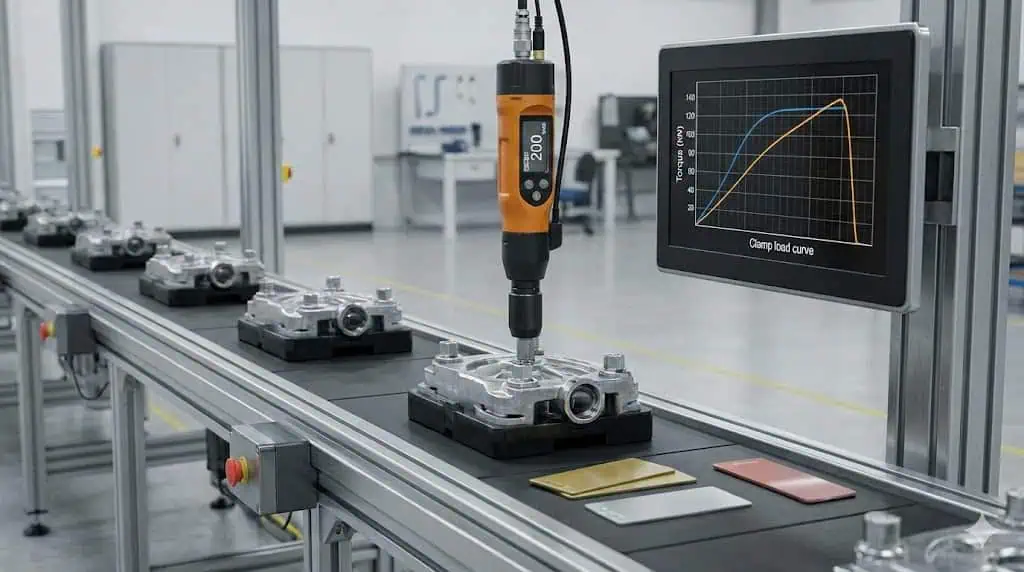
Bulk screw buying is not complete until the torque-tension relationship is understood. Many assembly failures happen because the screw was ordered by geometry and grade only, while friction behaviour was left undefined. That is risky in production lines using torque-controlled installation.
In one production case, the fastener dimensions and grade were correct, but the topcoat changed between lots. Assembly torque stayed the same. Clamp load did not. The result was repeat loosening during vibration validation. The corrective action was not “tighten harder.” It was to define the coating system and friction window in the drawing and then validate receiving lots against that condition.
This is also why related pages such as bolt grades, coarse-thread bolts, and fine-thread bolts should support this article by internal linking. They help Google understand that the article sits inside a broader fastener engineering cluster, not as a random procurement blog.
Choose the Right Grade and Material

Higher strength is not automatically better. Buyers should select the property class that matches the real joint duty, environment, and coating route.
| Grade / Material | Typical Use | Main Buying Check |
|---|---|---|
| 8.8 Carbon Steel | General machinery and industrial assembly | Good balance of strength and cost for many non-extreme joints |
| 10.9 Alloy Steel | Higher-load industrial and automotive duty | Control plating and hydrogen embrittlement risk carefully |
| 12.9 Alloy Steel | Very high preload, compact high-strength designs | High sensitivity to plating/process errors and delayed cracking risk |
| A2-70 Stainless | General corrosion resistance | Watch strength limits and galling behaviour |
| A4-80 Stainless | Marine or chloride-prone environments | Better corrosion resistance, still requires galling control |
Check MOQ, Lead Time, and Packaging Before Approval
Many bulk screw problems are supply problems, not technical problems. The part is correct, but the MOQ is too high, the production lead time is too long, or the packaging does not suit the assembly line.
- MOQ: cold-headed custom screws often require higher minimum runs than stock standard screws
- Lead time: add manufacturing time, coating time, testing time, and freight time together
- Packaging: bulk carton, returnable tote, VMI bin, or kitting may all change the total cost and line efficiency
For example, a custom screw that looks affordable at unit level can become expensive when the supplier only runs it in very large lots and the buyer has to hold six months of stock. That is why a good bulk screw supplier discussion should always include MOQ, blanket order options, release schedule, and packaging method—not just price per thousand.
Quality Assurance for Bulk Screw Buying
What Tests and Records Should a Supplier Provide?
A visually clean screw can still be a bad industrial screw. The most reliable suppliers support bulk orders with inspection data, test results, and lot traceability rather than only a commercial certificate.
| Check Item | What the Buyer Should Ask For |
|---|---|
| Thread quality | Go / No-Go gauge control and thread fit confirmation |
| Mechanical properties | Tensile, hardness, or other grade-relevant test evidence |
| Corrosion performance | Coating thickness and, where required, comparative testing such as ASTM B117 |
| Hydrogen control | Process evidence for plated high-strength fasteners and relief baking where specified |
| Lot traceability | Heat number, batch ID, and records tied to shipment labels |
It is important to explain ASTM B117 correctly in procurement discussions: it is a controlled salt spray comparison method, not a direct real-world service life predictor. Buyers should use it as a screening or benchmark tool, not as a promise that a screw will survive a certain number of years outdoors.
Hydrogen Embrittlement Is a Real Buying Risk
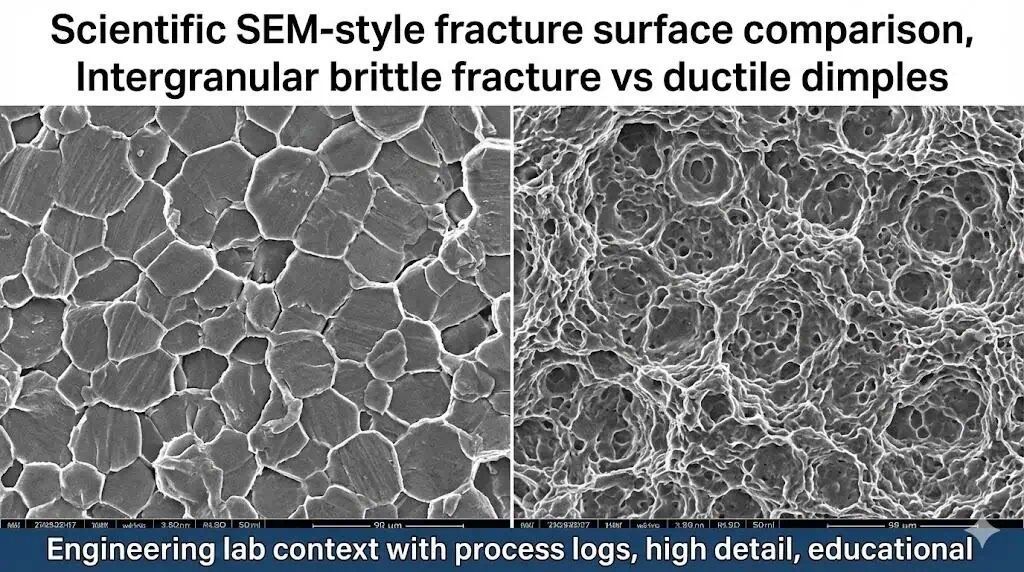
If you are buying plated 10.9 or 12.9 screws in bulk, hydrogen embrittlement must be part of the sourcing audit. The risk is not theoretical. It is one of the classic reasons why a screw can break hours after installation even when no obvious overload happened.
Process-control references such as ASTM F1940 are used in industry to monitor plating or coating processes to help prevent hydrogen embrittlement in fasteners, while coating specifications such as ASTM F1941/F1941M explicitly address coating requirements and hydrogen precautions for threaded fasteners. If a supplier cannot explain how they apply these controls, the risk should be treated as open.
A typical failure story is straightforward: high-strength screws are electroplated, the parts look excellent, installation torque is normal, and the joint passes immediate inspection. Then screws crack in storage or after light preload exposure. The fracture is brittle, not ductile. Root cause traces back to process control, not to the drawing. That is why bulk buying and process verification have to stay connected.
How to Buy Screws in Bulk Without Expensive Mistakes
Common Bulk Buying Mistakes
- Ordering by size only: M10 is not enough. Pitch, grade, finish, fit, and thread length all matter.
- Ignoring coating thickness: thick coatings can change thread fit and torque behaviour.
- Mixing prototype and production sourcing: a convenient sample source is rarely the best production source.
- Assuming “stainless” solves everything: corrosion resistance improves, but galling and strength limits still matter.
- Using retail screws in engineered joints: availability is not the same as qualification.
A Practical Bulk Screw Supplier Checklist
| Checklist Item | Buyer Question |
|---|---|
| Standard and grade | Does the quote match the drawing standard, property class, and thread pitch exactly? |
| Material and coating | Is the coating system defined and stable across future lots? |
| Thread fit | Has the supplier confirmed tolerance class and post-coating fit? |
| Traceability | Can the shipment be tied to a lot, heat, and inspection record? |
| Testing | What mechanical, dimensional, and coating checks are performed before release? |
| MOQ and lead time | Can the supplier support your real demand profile without overstocking you? |
| Change control | What can the supplier change without approval, and what requires formal notice? |
Simple rule: if the screw is critical to safety, warranty, sealing, vibration resistance, or structural integrity, do not buy it the way you buy office consumables. Buy it as a controlled engineered component.
Why Buyers Use Sunhy for Bulk Screws
Sunhy fits the part of the market that needs OEM, industrial, and custom screws with more control than a general retail source can provide. Buyers looking for standard screws, custom fasteners, and broader industrial fastener support usually care about the same things: stable lots, clear documentation, and fewer surprises during assembly.
- Support for standard and made-to-print screws
- Industrial fastener coverage beyond one SKU family
- Better fit for OEM projects that need customisation, lot control, and release planning
- Natural expansion path into related parts such as bolts, studs, and custom hardware
That is also why this page should not live as a generic “shopping article.” It should sit inside your fastener topic cluster and point buyers toward the actual destination pages where they can move from information to RFQ.
FAQ
Where is the best place to buy screws in bulk for OEM manufacturing?
For OEM manufacturing, the best place to buy screws in bulk is usually a direct screw manufacturer rather than a general retailer.
A manufacturer can better control drawing-based dimensions, thread rolling, coating, documentation, and lot traceability. That matters more than catalog convenience when the screws go into production assemblies or warranty-sensitive products.
What should buyers check before ordering screws in bulk?
Check five things first: standard, grade, thread pitch, coating system, and traceability.
Then confirm MOQ, lead time, packaging, and available inspection records. If the application is torque-critical or high-strength, also ask how the supplier controls friction and hydrogen embrittlement risk.
Can I buy stainless steel screws in bulk for outdoor or corrosive environments?
Yes, but you still need to choose the correct stainless grade and installation method.
A2-70 is common for general outdoor service, while A4-80 is often preferred where chloride exposure is more severe. Buyers should also check galling risk, lubrication practice, and the required preload for the joint.
Is it safe to buy high-strength plated screws from any supplier?
No.
High-strength plated screws need controlled plating and hydrogen embrittlement precautions. Buyers should ask for process evidence tied to coating specifications and hydrogen-risk controls, not just a visual pass or generic material statement.
What is the difference between a screw manufacturer and a fastener distributor?
A screw manufacturer controls how the screw is made, while a distributor mainly controls how it is stocked and delivered.
Distributors are useful for mixed inventory and faster supply. Manufacturers are better when you need custom screws, stable repeat lots, controlled coatings, or production-level documentation.