








Guia Técnico do Sensor de Oxigênio
Guia de substituição do sensor de oxigênio Toyota focado em diagnóstico, identificação exata do veículo e motor, posição do sensor, evidência de ajuste e verificação segura.
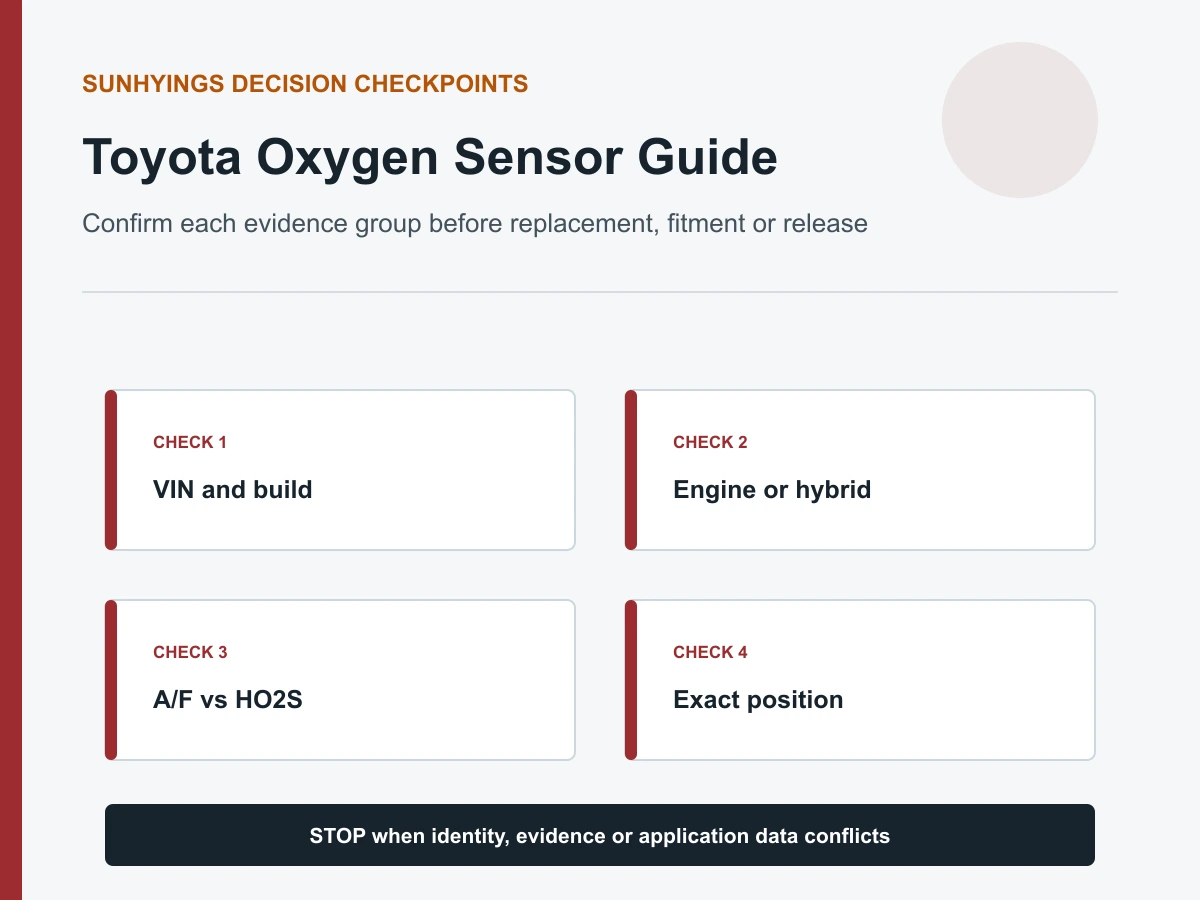
Resposta rápida
Para um veículo Toyota, não selecione ou substitua um sensor de oxigênio apenas pelo nome do modelo ou código de falha. Confirme o ano exato, modelo, motor, dados do VIN/data de montagem, mercado de vendas e configuração de emissões; em seguida, identifique a posição do Banco e do Sensor, tecnologia do sensor, referência OE, conector e cabo. As aplicações Toyota podem distinguir um sensor de relação ar-combustível a montante de outras posições de sensor de oxigênio; a terminologia exata deve ser verificada. Um código restringe o caminho de teste, mas não prova que o sensor falhou.
O que este guia Toyota pode e não pode confirmar
Este é um guia neutro de diagnóstico e verificação de ajuste. Ele não publica um número OE Toyota não verificado, aplicação por ano-modelo, contagem de sensores, tempo de mão de obra ou valor de torque. O estoque, fabricação e ajuste aprovado da Sunhyings não são reivindicados. Informações exatas de serviço e dados de aplicação atuais para o VIN/configuração controlam o reparo.
Nomes populares de modelos Toyota não são identidades completas de ajuste
| Pesquisa de modelo | Informações ainda necessárias | Por que é importante |
|---|---|---|
| Sensor de oxigênio Camry | Ano, motor, VIN/chassi, mercado/emissões e posição exata | Um nome de modelo pode abranger diferentes sistemas de escapamento e sensores. |
| Sensor de oxigênio Corolla | Ano, motor, VIN/chassi, mercado/emissões e posição exata | Um nome de modelo pode abranger diferentes sistemas de escapamento e sensores. |
| Sensor de oxigênio RAV4 | Ano, motor, VIN/chassi, mercado/emissões e posição exata | Um nome de modelo pode abranger diferentes sistemas de escapamento e sensores. |
| Sensor de oxigênio Tacoma | Ano, motor, VIN/chassi, mercado/emissões e posição exata | Um nome de modelo pode abranger diferentes sistemas de escapamento e sensores. |
Construa a identidade do veículo e do sensor
- Contexto do VIN e ano/modelo/versão exatos
- Cilindrada/código do motor e tipo de combustível quando aplicável
- Mercado de vendas e etiqueta/ configuração de emissões
- Banco 1 ou Banco 2 e Sensor 1 ou Sensor 2
- Número OE de uma fonte verificada ou etiqueta legível da peça antiga
- Tecnologia do sensor, chaveamento do conector, pinos, cabo e clipes
Diagnostique antes de pedir
Registre códigos atuais, pendentes e permanentes, quadro congelado e prontidão. Inspecione o roteamento do chicote, terminais e vazamentos de escape. Teste alimentação/terra/controle do aquecedor para códigos de aquecedor. Compare ajustes de combustível e resposta do sensor específica da tecnologia para códigos de mistura ou resposta. Códigos P0420/P0430 indicam eficiência do sistema catalisador e não são um pedido automático de sensor traseiro.
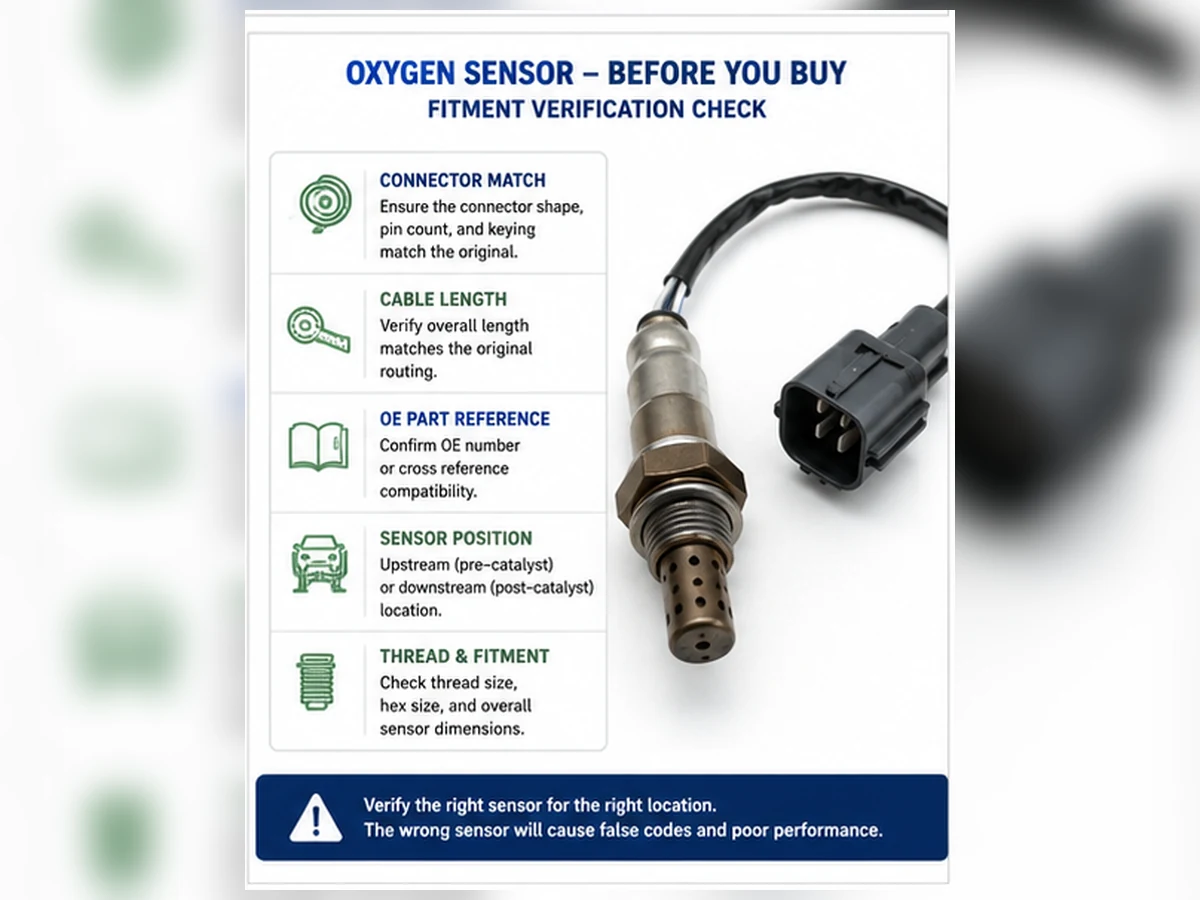
Limite seguro de instalação
Deixe o escape esfriar e use suporte veicular aprovado. Siga exatamente o procedimento de serviço Toyota e as instruções do sensor de substituição para acesso, torque e composto de rosca. Não corte um chicote de ajuste direto. Roteie o cabo para longe de calor, bordas afiadas e peças móveis, e restaure cada clipe e proteção.
Verificação pós-reparo
Verifique o conector, roteamento e vedação do escape, depois confirme a resposta do aquecedor/circuito e do sensor sob condições especificadas. Complete o procedimento de monitoramento legal aplicável. Limpar códigos, usar espaçador/simulador ou desabilitar um monitor não prova o reparo.
Uma sequência de verificação Toyota que evita adivinhação de nomes de modelos
| Etapa | Evidência para registro | Condição de parada |
|---|---|---|
| Identificação do veículo | VIN, ano, modelo, motor/montagem e mercado de vendas | Motor ou configuração permanece ambíguo |
| Identificação de emissões | Etiqueta sob o capô e configuração regional aplicável | Catálogo não distingue a configuração |
| Posição física | Relação entre banco, número do sensor e catalisador | Os diagramas de serviço e físicos não concordam |
| Identificação da peça | Referência OE, tecnologia, conector, terminal e clipes | Qualquer conflito de campo crítico |
| Evidência de falha | Códigos, verificações de circuito, vazamentos, ajustes e teste de resposta | Falha do sensor não é suportada |
As famílias de modelos Toyota podem abranger vários motores, gerações e configurações de trem de força. Variantes híbridas e não híbridas não devem ser mescladas, e a consulta ao manual do proprietário não substitui as informações de reparo ou um catálogo de peças atual. Use o contexto do VIN/construção e a etiqueta de emissões para selecionar o conjunto de informações correto.
Perguntas a responder para buscas comuns de modelos Toyota
| Frase de busca | Perguntas antes do diagnóstico ou pedido |
|---|---|
| Sensor de oxigênio Camry | Qual ano/modelo, motor, etiqueta de mercado/emissões e posição do banco/sensor? O dispositivo a montante é identificado como um sensor A/F nos dados de serviço exatos? |
| Sensor de oxigênio Corolla | Qual motor e faixa de produção/construção? A peça solicitada é pré-catalisador ou pós-catalisador, e qual referência OE é verificada? |
| Sensor de oxigênio RAV4 | O veículo é a gasolina, híbrido ou outra configuração exata de trem de força? Qual caminho de escape e posição do sensor estão envolvidos? |
| Sensor de oxigênio Tacoma | Qual motor, configuração de trem de força/mercado e banco? Qual arranjo de conector, cabo e clipe a posição exata usa? |
Uma tabela de família de modelos é uma lista de verificação, não uma lista de aplicação. Ela intencionalmente não contém contagem de sensores, lado, número OE ou faixa de ano. Esses fatos devem vir de informações atuais correspondentes ao veículo exato.
Leia a terminologia Toyota em contexto
Sensor de oxigênio, sensor de oxigênio aquecido e sensor A/F
As informações da Toyota podem distinguir um sensor de relação ar-combustível a montante de um sensor de oxigênio em outra posição. “Sensor de oxigênio” e “sensor O2” nomeiam a família ampla. Rótulos A/F, de banda larga e aquecidos podem implicar circuitos ou funções diferentes, mas a descrição completa do serviço controla. Não infira a tecnologia a partir do número de fios ou de um título de marketplace.
Designação de Banco e Sensor
O Banco 1 contém o cilindro 1. O Sensor 1 está geralmente antes do catalisador relevante e o Sensor 2 após ele. Essa nomenclatura comum ajuda a orientar o leitor, mas não fornece um lado físico universal. Confirme a numeração dos cilindros e o fluxo de escape para o motor exato.
Rótulos genéricos de scanner
Um scanner pode exibir tensão HO2S, corrente A/F, lambda ou razão de equivalência. Confirme se o PID é suportado, corresponde ao circuito físico e usa as unidades esperadas. Um menu genérico pode listar posições ou valores que não são implementados para o veículo.
Mapear bancos de motor, catalisadores e conectores
Um Toyota de quatro cilindros, um Toyota com motor V e uma configuração híbrida podem usar arquitetura de escape diferente. Não atribua dois ou quatro sensores a partir da contagem de cilindros. Para um motor V, localize o cilindro 1 antes de nomear o Banco 1; para cada motor, trace o caminho do catalisador relevante.
| Item do mapa | Fonte de evidência | Erro comum evitado |
|---|---|---|
| Cilindro 1 e banco | Diagrama de serviço do motor exato | Atalho motorista/passageiro ou dianteiro/traseiro |
| Pedido de catalisador | Layout do escapamento para a configuração | Posição incorreta do Sensor 1/Sensor 2 |
| Rota do conector | Diagrama de fiação e inspeção física completa | Teste de um circuito próximo, mas diferente |
| Tecnologia de sensor | Dados de serviço e aplicação aprovados | Incompatibilidade no teste de banda estreita/larga |
Considerar variantes de motor, montagem e emissões
Os nomes Camry, Corolla, RAV4 e Tacoma abrangem múltiplas gerações. A escolha do motor, status híbrido, etiqueta de emissões e ponto de interrupção da produção podem alterar o sensor e o conector. Mantenha o trem de força exato em cada captura de tela de diagnóstico e cotação.
Um ano de registro ou selo do modelo não equivale necessariamente à data de produção ou ponto de interrupção do VIN. Veículos importados também podem diferir do mercado assumido por um catálogo local. Registre a etiqueta de emissões sob o capô e use um catálogo que cubra explicitamente o mercado de vendas.
Converter códigos Toyota em caminhos de teste, não em pedidos de peças
| Tipo de código | Primeiras verificações | Não conclua |
|---|---|---|
| Circuito do aquecedor | Posição correta, fusível/alimentação, terra/controle, conector e elemento | O sensor está com falha apenas pelo código |
| Atividade baixa/alta/sem atividade | Circuito de sinal/referência, estado operacional e mistura real | Um limite exibido identifica o componente com falha |
| Resposta lenta | Habilitar critérios, vazamentos, tecnologia e resposta controlada | Todo gráfico lento requer substituição |
| P0420/P0430 | Falha de ignição, controle de combustível, vazamentos, ambos os sensores e catalisador | O sensor a jusante está automaticamente com defeito |
Salve todos os códigos atuais, pendentes e permanentes, quadro congelado e prontidão antes de limpar. Múltiplos códigos podem revelar uma falha compartilhada de fornecimento, mistura em todo o sistema ou falha de ignição. Limpar a memória pode remover o contexto e redefinir os monitores sem reparar nada.
Interpretar dados ao vivo com tecnologia e estado operacional
Confirme o estado de aquecimento e controle
Um sensor frio ou motor fora das condições de malha fechada não deve ser comparado com uma especificação de resposta a quente. Registre a temperatura do líquido de arrefecimento, carga, velocidade e estado comandado com o valor do sensor.
Comparar resposta com ajustes de combustível
A correção positiva ou negativa mostra o que o módulo de controle está tentando, não qual componente falhou. Vazamentos de admissão, erro de fluxo de ar/carga, fornecimento de combustível, purga, ignição e condição mecânica podem criar o resultado de escape que um sensor saudável relata.
Usar dados do sensor a jusante no contexto do catalisador
O sinal do sensor a jusante é avaliado com o comportamento do sensor a montante e as condições de monitoramento do catalisador. Uma comparação de forma de onda sem vedação do escapamento, condição do motor e critérios válidos de monitoramento não pode estabelecer um sensor ou catalisador com falha.
Construir a identidade de substituição apenas após o diagnóstico
| Campo de aplicação | Evidência necessária | Rejeitar quando |
|---|---|---|
| Referência OE | Peça legível ou fonte de catálogo controlada por corrente | Referência cruzada não verificada ou substituição não resolvida |
| Escopo do veículo | Configuração de VIN/montagem, motor, mercado e emissões | Apenas modelo/ano |
| Posição | Relação banco/sensor e catalisador | “Dianteiro” ou “traseiro” permanece ambíguo |
| Tecnologia | Circuito especificado de banda estreita, banda larga/A/F ou outro | A contagem de fios é a única correspondência |
| Interface | Rosca, blindagem, conector, pinos, cabo e clipes | O chicote deve ser forçado, cortado ou esticado |
Para uma consulta Toyota, envie o contexto VIN/montagem, configuração exata do motor ou híbrida, etiqueta de emissões, posição banco/sensor, número da peça antiga e fotos completas do conector/cabo. Não interprete um mapeamento OE substituído ou candidato como cobertura universal.
Ajuste direto e universal são decisões separadas
Um sensor de encaixe direto fornece um conector e arranjo de cabo específicos, mas ainda precisa de cobertura exata. Um sensor universal requer compatibilidade de circuito aprovada pelo fabricante e instruções de emenda; universal não significa todos os veículos Toyota. As cores dos fios não são um padrão universal de pinagem. Não corte um chicote de encaixe direto nem improvise uma emenda perto do escapamento.
Verificações de instalação e segurança
- Deixe o escapamento esfriar e use elevação/suporte aprovado para veículos.
- Confirme o sensor físico e o conector antes da desconexão.
- Proteja as roscas do escapamento e componentes próximos durante a remoção.
- Compare os detalhes de tecnologia e interface do sensor antigo e do novo.
- Siga exatamente as instruções de torque e composto de rosca do produto/serviço.
- Restabeleça mangas de proteção térmica, clipes, escudos e roteamento seguro de cabos.
Não existe torque universal ou tempo de mão de obra responsável para cada aplicação Toyota. Acesso, corrosão, projeto do sensor e componentes ao redor variam. Pare quando danos nas roscas, bung, conector ou chicote alterarem o escopo do trabalho.
Usar uma hierarquia de evidências quando as fontes discordam
Os resultados de pesquisa geralmente combinam discussões de proprietários, listagens de marketplaces, definições genéricas de códigos e catálogos de aplicação. Eles não têm autoridade igual. Comece com as informações de serviço exatas da Toyota para identidade do circuito, condições de diagnóstico, vistas do conector e procedimento de instalação. Use uma fonte atual de peças controladas para identidade OE e substituição. Use a etiqueta sob o capô, dados de VIN/fabricação e a peça removida para resolver a configuração. Catálogos de aftermarket podem então ser avaliados como referências cruzadas, não tratados como prova apenas porque vários vendedores repetem a mesma linha.
| Fonte de evidência | Uso apropriado | Limite |
|---|---|---|
| Informações exatas de serviço | Posição, circuito, condições de teste e procedimento de reparo | Deve corresponder ao motor, mercado e configuração |
| Dados controlados de peças OE | Identidade da peça, posição e caminho de substituição | Uma supersessão ainda precisa de reconciliação de aplicação |
| Etiqueta de VIN/montagem e emissões | Configuração do veículo e regulatória | A decodificação do VIN por si só não fornece o teste de reparo |
| Sensor e conector removidos | Comparação física e identificadores legíveis | A aparência não pode comprovar compatibilidade elétrica |
| Catálogo de reposição | Referência cruzada candidata e cobertura comercial | Fonte, revisão e exclusões devem ser conhecidas |
| Página de fórum ou marketplace | Possível sintoma ou termo técnico | Não é evidência de aprovação para diagnóstico ou montagem |
Quando duas fontes controladas conflitam, registre ambos os valores, suas datas e os campos exatos do veículo utilizados. Não faça a média das respostas nem escolha o anúncio com a foto mais clara do produto. Mantenha a aplicação pendente até que o conflito seja resolvido por uma fonte autoritativa ou por uma comparação documentada física e elétrica.
Monte um pacote de evidências de diagnóstico antes da substituição
Um registro útil permite que outro técnico entenda por que a substituição foi aprovada. Capture a descrição completa do DTC e seu status, condições de freeze-frame, etapa relevante do teste de serviço, tensão da bateria/sistema, verificações de potência e controle do aquecedor quando aplicável, condição do chicote e terminais, achados de vazamento de admissão e escape, fuel trims, evidência de falha de ignição e a resposta do sensor específica da tecnologia. Identifique o conector físico testado. Um gráfico sem estado do veículo, unidades e posição do sensor não pode ser interpretado de forma confiável.
Separe observações de conclusões. “P0135 armazenado” é uma observação. “O aquecedor tem alimentação especificada, mas um elemento aberto no conector identificado” é uma evidência que apoia uma decisão sobre o sensor. “O sensor está ruim” baseado apenas em um código é uma conclusão sem suporte. A mesma disciplina se aplica a códigos de mistura e monitor de catalisador: documente as causas concorrentes que foram testadas e a condição sob a qual o monitor ou a resposta falhou.
Preserve as evidências após o reparo
Registre a identidade da peça instalada e o lote, se disponível, o engate do conector, o percurso do cabo, a vedação do escapamento e os valores pós-reparo em condições comparáveis. Não apague o estado anterior antes de salvá-lo. Se um problema retornar, este pacote separa encaixe incorreto, dano de instalação, recorrência de circuito, falhas não resolvidas do motor e possível não conformidade do produto. Também fornece informações suficientes para que o fornecedor investigue sem assumir que cada luz de advertência é um defeito de garantia.
Compare o sensor antigo e o de substituição como um sistema
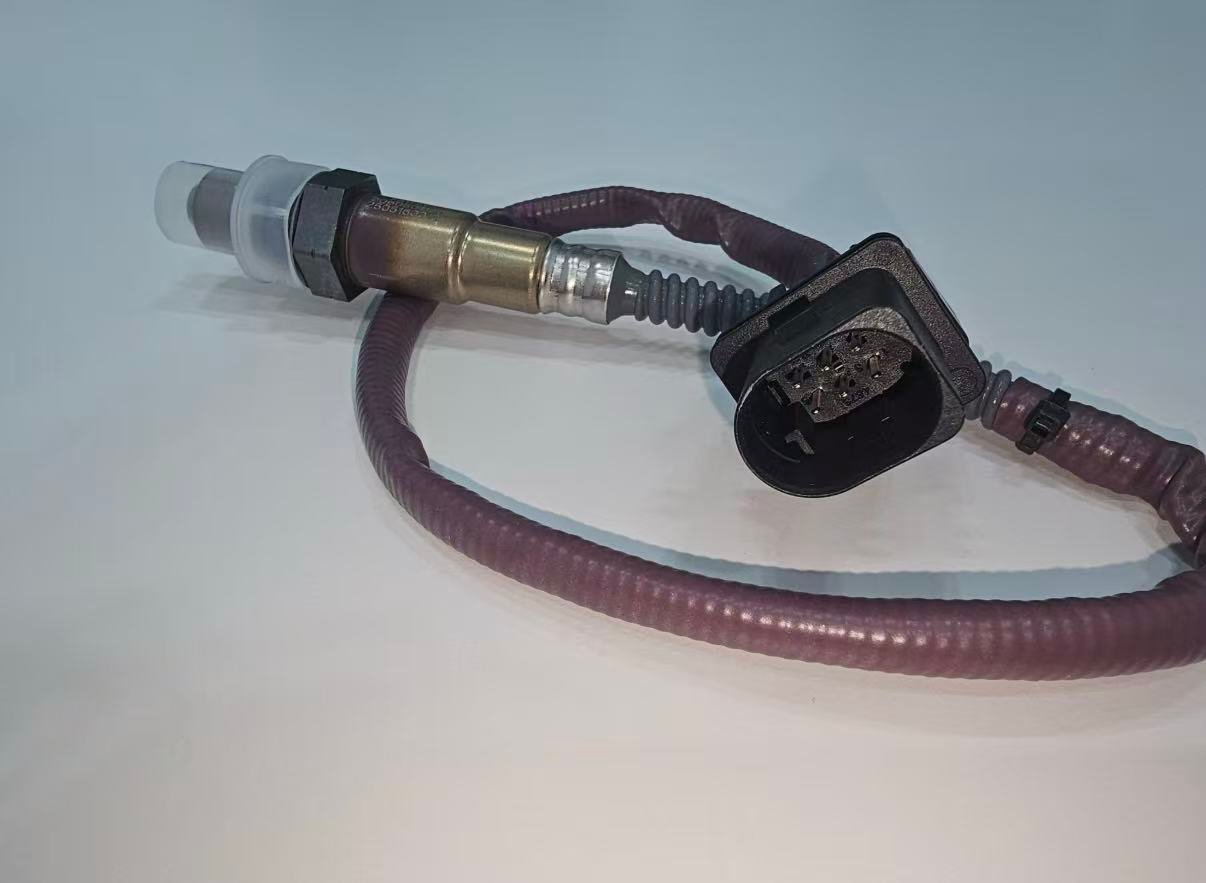
Coloque as peças lado a lado sem contaminar ou bater no elemento sensor. Compare os identificadores gravados ou etiquetados, a rosca e o assento de vedação, o acesso ao hexágono, o comprimento do escudo e o padrão de furos, a proteção do cabo, o comprimento total do fio, os grampos e clipes, o alojamento do conector, o chaveamento, a trava, a quantidade de terminais e a trava secundária. Em seguida, compare o desenho ou a especificação de aplicação. Uma correspondência visível é uma tela de rejeição, não uma aprovação final: a faixa de resistência do aquecedor, a estratégia de sinal, a calibração e a atribuição de pinos podem diferir enquanto os alojamentos parecem iguais.
Rejeite ou pare a instalação se o cabo precisar ser esticado sobre o escapamento, o conector precisar de força, um clipe não puder retornar à sua localização original, o escudo tocar em outro componente, a rosca ou o assento diferir, ou a tecnologia especificada não puder ser confirmada. Não modifique um conector de encaixe direto para fazer um candidato se encaixar. Se um sensor universal for expressamente aprovado, use apenas o procedimento de aplicação e emenda do fabricante e mantenha a proteção do chicote necessária perto do escapamento.
Use decisões explícitas de parada, diagnóstico e liberação
Um bom fluxo de trabalho não força cada consulta para uma venda. Use três estados visíveis. Pare quando a identidade do veículo, a configuração de emissões, a posição física ou a tecnologia do sensor forem ambíguas, ou quando duas fontes autoritativas entrarem em conflito. Diagnosticar quando a peça é conhecida, mas a evidência não estabelece falha do sensor; complete os testes de circuito, vazamento, controle de combustível e resposta exigidos pela reclamação. Liberar somente quando tanto a necessidade de substituição quanto a identidade da peça forem suportadas. Registre quem tomou a decisão e qual evidência foi usada.
Essa separação impede que uma conclusão diagnóstica correta seja emparelhada com a peça errada, e impede que uma peça aparentemente correta seja vendida para uma falha não diagnosticada. Também dá ao atendimento ao cliente uma resposta verdadeira quando dados-chave estão ausentes: o status é Pendente, não “provavelmente serve”. Para um RFQ, cotar apenas linhas de aplicação liberadas e listar linhas bloqueadas separadamente. Para um reparo, manter a evidência original até que a resposta do circuito relevante e o monitor legal sejam verificados após a instalação.
| Estado da decisão | Evidência típica | Próxima ação permitida |
|---|---|---|
| Pare | Conflito de motor, mercado, posição, tecnologia ou fonte | Solicite dados autoritativos; não peça nem reivindique ajuste |
| Diagnosticar | Veículo/circuito conhecido, causa da falha ainda em aberto | Execute o teste de serviço exato e as verificações de causas concorrentes |
| Liberar | Evidência de falha e identidade completa de substituição concordam | Aprove a peça controlada/aplicação e o plano de instalação |
| Verificar | Identidade instalada, roteamento, vedação e resposta documentados | Confirmar reparo nas condições especificadas e monitorar o status |
A redação do sensor A/F da Toyota altera a estratégia de teste
Muitas buscas Toyota usam “sensor O2” para todo sensor de escape roscado, enquanto informações de serviço e peças podem distinguir um sensor de relação ar-combustível a montante de um sensor de oxigênio aquecido a jusante. Essa distinção não é cosmética. Um sensor A/F e seu circuito de controle podem ser representados por corrente, lambda, razão de equivalência ou um valor de varredura escalado pelo fabricante, em vez da familiar tensão de comutação rica/pobre associada a um sensor de banda estreita. Confirme o identificador de dados exato, unidades e resposta esperada antes de julgar o gráfico.
Não aplique um teste genérico de tensão de banda estreita a um circuito identificado como sensor A/F. Não faça back-probe nos terminais até que o diagrama de fiação exato e um método de teste aprovado identifiquem o terminal e a ferramenta. Uma conexão de teste errada pode distorcer o sinal ou danificar um circuito sensível. Se a ferramenta de varredura oferecer dados genéricos de sensor de oxigênio e dados A/F específicos do fabricante, verifique qual item o procedimento Toyota usa e se o motor atingiu as condições de temperatura e carga de habilitação.
| Redação da fonte Toyota | Pergunta a resolver | Atalho inseguro |
|---|---|---|
| Sensor de relação ar-combustível | Qual representação de sinal e teste de resposta se aplicam? | Esperando comutação genérica de 0-1 V |
| Sensor de oxigênio aquecido | Qual banco, número do sensor e relação com o catalisador? | Chamar todo sensor traseiro pela mesma peça |
| Banco 1 Sensor 1 | Qual motor e onde está o cilindro 1? | Usar lado do motorista/passageiro como regra |
| Sensor 2 | Após qual catalisador no caminho exato do escapamento? | Pedido por “traseira” sem diagrama |
Mantenha as evidências de híbridos e não híbridos da Toyota separadas
Um nome de modelo Camry, Corolla ou RAV4 pode se referir a diferentes famílias de powertrain. O status híbrido afeta a identidade do veículo, a seleção de informações de serviço e, às vezes, a operação ou o empacotamento do sistema de escapamento. Não basta adicionar a palavra “híbrido” após escolher uma peça de uma listagem somente a gasolina. Inicie a busca novamente com o powertrain completo e o mercado. Preserve a designação exata do motor e o contexto de produção no registro de diagnóstico e no RFQ.
Durante o diagnóstico, confirme que o motor está operando no estado exigido pelo procedimento. Um veículo híbrido pode parar e reiniciar o motor sob sua estratégia de controle, portanto, uma captura feita sem registrar o estado de funcionamento do motor, a temperatura e a carga pode ser enganosa. Siga os requisitos de segurança de serviço da Toyota para o veículo completo. O trabalho no sensor de oxigênio não autoriza o trabalho em componentes de alta tensão, e este guia não substitui o isolamento do sistema híbrido ou os procedimentos de qualificação do técnico.
Concilie VIN, dados de montagem e a etiqueta de emissões
Use o VIN para acessar o contexto correto do veículo, mas não trate um decodificador básico de VIN como um catálogo completo de sensores. Confirme o motor/powertrain a partir de dados confiáveis e leia a etiqueta de emissões sob o capô. A etiqueta ajuda a estabelecer a configuração regulatória e pode expor uma incompatibilidade entre um veículo e uma linha de catálogo criada para outro mercado. As datas de produção e os pontos de interrupção do catálogo devem ser registrados exatamente; apenas o ano do modelo pode cruzar uma mudança.
- Registre o VIN e o mercado atual do veículo ou o histórico de importação.
- Confirme o motor exato ou o powertrain híbrido nas informações da Toyota.
- Fotografe ou transcreva a etiqueta de emissões sem publicar dados pessoais do veículo.
- Identifique a posição física do Banco/Sensor a partir do diagrama de serviço correspondente.
- Resolva a referência OE e qualquer substituição em uma fonte controlada atual.
- Compare o conector, o cabo, os clipes e a construção do sensor antes da instalação.
Se o número da peça removida discordar dos dados atuais da Toyota, investigue se um reparo anterior instalou a peça errada, se o número foi substituído ou se o contexto do catálogo está errado. Não use automaticamente o sensor removido como autoridade de ajuste.
Pontos de decisão de diagnóstico orientados para a Toyota
Para um código de aquecedor, identifique se o circuito pertence ao sensor A/F ou HO2S e, em seguida, teste a alimentação, o controle, o conector e o elemento especificados de acordo com o diagrama exato. Para um código de mistura, inspecione vazamentos de admissão e escape, cálculo de fluxo de ar/carga, fornecimento de combustível, comportamento de purga, ignição e condição mecânica antes de tratar o sensor que reporta como causa. Para um código de resposta, reproduza o estado operacional exigido e compare a resposta específica da tecnologia em vez de contar cruzamentos de tensão genéricos.
Para P0420 ou P0430, preserve as evidências de falha de ignição e controle de combustível, confirme a vedação do escapamento e compare os dispositivos corretos a montante e a jusante somente sob condições válidas de monitoramento do catalisador. Um sensor traseiro recentemente substituído, um gráfico plano em marcha lenta ou uma alegação de mercado de que um sensor “corrige P0420” não estabelece o reparo. O catalisador, o motor e ambos os caminhos de medição permanecem no escopo até que o procedimento de diagnóstico os reduza.
Prepare um registro de fornecimento de sensor da Toyota
| Campo de registro | Evidência aceitável | Manter gatilho |
|---|---|---|
| Veículo | VIN/construção, modelo, trem de força exato e mercado | Somente nome do modelo ou acabamento |
| Emissões | Rótulo/configuração correspondente ao catálogo | Distinção Federal/CARB/região não resolvida |
| Posição | Relação banco/sensor mais catalisador | Somente dianteiro/traseiro ou esquerdo/direito fornecido |
| Tecnologia | Fonte Toyota identifica estratégia A/F ou HO2S | Contagem de fios ou foto do conector é a única base |
| Identificação da peça | Registro controlado de referência OE e substituição | Conflito de referência cruzada no marketplace |
| Interface | Comparação de desenho ou conector/terminal/clipe verificado | Seria necessária modificação |
A Sunhyings pode revisar essas evidências para uma solicitação de fornecimento, mas isso não deve transformar uma palavra-chave de modelo Toyota em uma promessa de ajuste não verificada. Cite apenas as linhas cujas evidências de veículo, posição, tecnologia e interface concordam, e mantenha as variantes não resolvidas marcadas como Pendente.
Cenário composto de verificação Toyota
Cenário de engenharia composto: Uma pesquisa pelo nome do modelo RAV4 retorna vários candidatos, mas a solicitação omite a configuração de trem de força e emissões. O conector antigo se assemelha a mais de um anúncio e o código apenas indica um banco/posição. O revisor pausa o pedido, resolve a identidade do veículo e da posição e, em seguida, segue o teste de circuito correto. Este cenário combina riscos comuns de catálogo e diagnóstico; não é um caso de cliente Sunhyings, registro de ajuste ou alegação sobre um veículo específico.
Cenário composto de diagnóstico Toyota
Cenário de diagnóstico composto: Um Camry chega com um código de eficiência do catalisador após um sensor de relação ar-combustível a montante ter sido substituído em outro lugar. A substituição não é condenada pelo código. O técnico primeiro confirma a configuração exata do motor e das emissões, verifica se há vazamento no escapamento, verifica se o dispositivo a montante instalado corresponde à tecnologia A/F especificada e compara os dados a montante e a jusante nas condições do monitor. A investigação permanece aberta até que as evidências do motor, escapamento, sensor e catalisador concordem.
A sequência é intencionalmente baseada em evidências: confirme o circuito exato, teste as causas do lado do veículo e compare a resposta com o procedimento aplicável antes de aprovar uma peça. É um exemplo de treinamento composto, não um cliente Sunhyings, resultado de garantia ou declaração de que o modelo nomeado comumente apresenta essa falha.
Verificar o reparo e monitorar
Após o reparo, confirme a trava do conector, o roteamento dos cabos, a folga térmica e a vedação do escapamento. Verifique a resposta do aquecedor/circuito e do sensor específico da tecnologia sob condições definidas. Conclua o monitor de prontidão legal aplicável. Uma luz de advertência que foi apagada manualmente não é evidência de que o monitor original passou; códigos permanentes podem permanecer até que o módulo de controle confirme um resultado bem-sucedido.
Limite de emissões e reclamação de produto
Não use espaçadores, defoulers, simuladores, exclusões de sensor ou alterações de software para ocultar o monitoramento do catalisador. Esses métodos não reparam a causa raiz e podem violar a lei de emissões. Esta página educacional não confirma que a Sunhyings vende, estoca, fabrica ou garante um sensor para qualquer aplicação Toyota. O ajuste permanece Pendente até que evidências específicas do projeto sejam correspondidas.
Prepare uma solicitação de ajuste ou fornecimento
Envie o número OE, ano/marca/modelo, detalhes do motor ou VIN, mercado e pacote de emissões, posição exata do banco/sensor, fotos do conector e da peça antiga, quantidade e quaisquer requisitos de embalagem ou aprovação. A Sunhyings revisará os dados fornecidos para capacidade e viabilidade de fornecimento; o ajuste não é confirmado até que a evidência de aplicação seja correspondida.
Perguntas frequentes
Como encontro o sensor de oxigênio correto para Toyota?
Use o VIN/configuração, motor, pacote de mercado/emissões, banco e posição exatos, referência OE, tecnologia e detalhes do conector/cabo.
Um código de sensor de oxigênio da Toyota comprova que o sensor falhou?
Nº Diagnosticar fiação, alimentação/controle do aquecedor, vazamentos de exaustão, ajustes de combustível e resposta do sensor usando informações de serviço exatas.
O Banco 1 está sempre de um lado de um Toyota?
O banco nº 1 contém o cilindro 1; seu lado físico depende do motor e da instalação.
O Sensor 1 e o Sensor 2 podem usar a mesma peça?
Somente quando os dados atuais do aplicativo verificado listam essa peça exata para ambas as posições.
P0420 significa substituir o sensor a jusante?
O código P0420 é um código de eficiência do sistema catalisador e requer diagnóstico do motor, escapamento, sensor e catalisador.
A Sunhyings pode confirmar a compatibilidade com a Toyota a partir do nome do modelo?
Nº Envie veículo completo, motor, emissões, posição e evidências OE/físicas para uma revisão de ajuste.
Referências técnicas
- Manuais oficiais do proprietário e recursos do veículo Toyota
- Operação, instalação e localização de falhas do sensor lambda DENSO
- Sensores de oxigênio e lambda NTK / Niterra
- Tecnologia, diagnóstico e substituição do sensor lambda Bosch
- Alerta de fiscalização da EPA dos EUA sobre adulteração e dispositivos de anulação