








Guida tecnica al sensore di ossigeno
Guida alla sostituzione del sensore di ossigeno Toyota incentrata su diagnosi, identità esatta del veicolo e del motore, posizione del sensore, prove di montaggio e verifica in sicurezza.
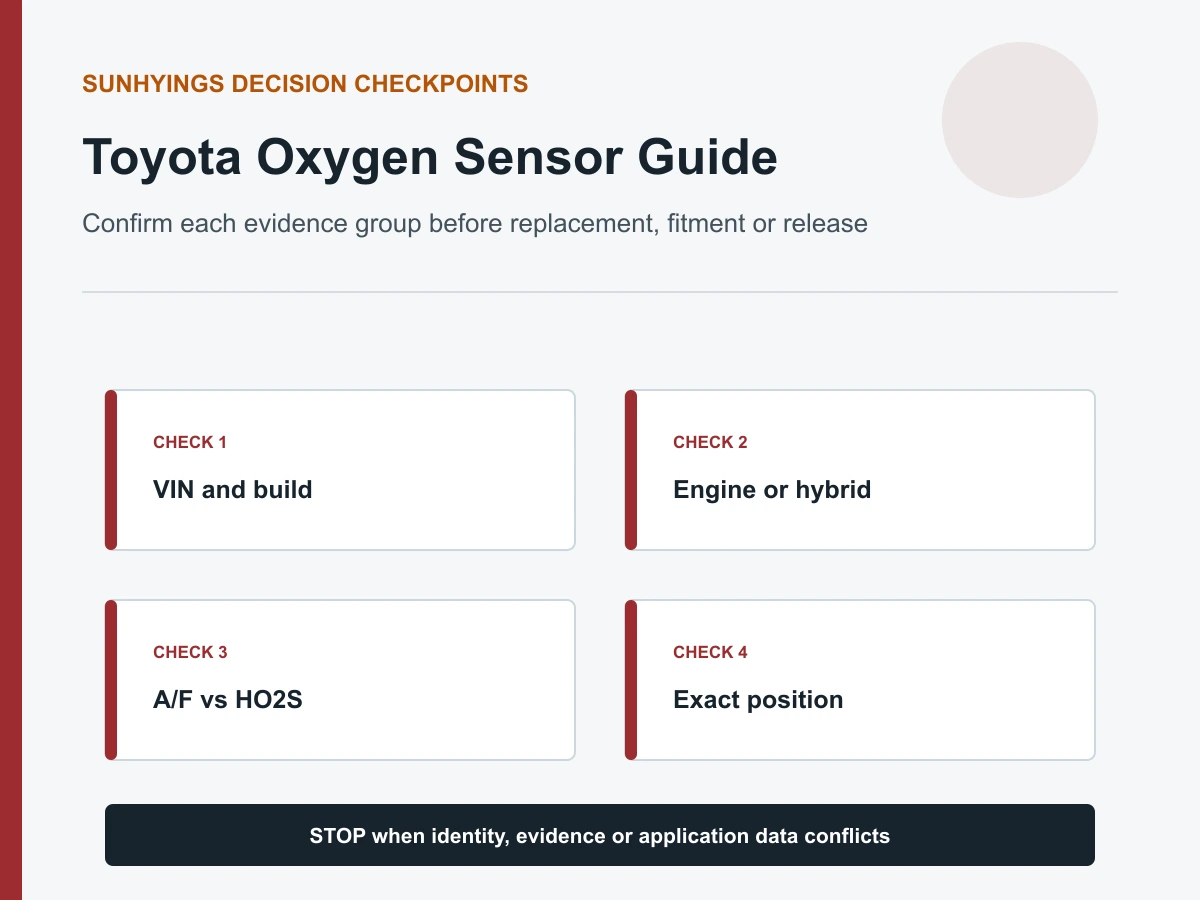
Risposta rapida
Per un veicolo Toyota, non selezionare o sostituire un sensore di ossigeno solo in base al nome del modello o al codice di guasto. Confermare l'anno esatto, il modello, il motore, il VIN/i dati di costruzione, il mercato di vendita e la configurazione delle emissioni; quindi identificare la posizione della bancata e del sensore, la tecnologia del sensore, il riferimento OE, il connettore e il cavo. Le applicazioni Toyota possono distinguere un sensore aria-carburante a monte da altre posizioni del sensore di ossigeno; la terminologia esatta deve essere verificata. Un codice restringe il percorso di test ma non dimostra che il sensore sia guasto.
Cosa questa guida Toyota può e non può confermare
Questa è una guida neutrale per la diagnostica e la verifica dell'idoneità. Non pubblica un numero OE Toyota non verificato, un'applicazione per anno-modello, il conteggio dei sensori, il tempo di manodopera o il valore di coppia. Non vengono rivendicate l'inventario, la produzione e l'idoneità approvata di Sunhyings. Le informazioni di servizio esatte e i dati di applicazione correnti per il VIN/la configurazione controllano la riparazione.
I nomi dei modelli Toyota più comuni non sono identità di montaggio complete
| Ricerca per modello | Informazioni ancora necessarie | Perché è importante |
|---|---|---|
| Sensore di ossigeno Camry | Anno, motore, VIN/costruzione, mercato/emissioni e posizione esatta | Un nome modello può coprire diversi sistemi di scarico e sensori. |
| Sensore di ossigeno Corolla | Anno, motore, VIN/costruzione, mercato/emissioni e posizione esatta | Un nome modello può coprire diversi sistemi di scarico e sensori. |
| Sensore di ossigeno RAV4 | Anno, motore, VIN/costruzione, mercato/emissioni e posizione esatta | Un nome modello può coprire diversi sistemi di scarico e sensori. |
| Sensore di ossigeno Tacoma | Anno, motore, VIN/costruzione, mercato/emissioni e posizione esatta | Un nome modello può coprire diversi sistemi di scarico e sensori. |
Costruisci l'identità del veicolo e del sensore
- Contesto VIN e anno/modello/allestimento esatto
- Cilindrata/codice motore e tipo di carburante dove applicabile
- Mercato di vendita ed etichetta/configurazione delle emissioni
- Banco 1 o Banco 2 e Sensore 1 o Sensore 2
- Numero OE da fonte verificata o etichetta leggibile del vecchio componente
- Tecnologia del sensore, codifica del connettore, pin, cavo e clip
Diagnostica prima di ordinare
Registrare codici correnti, in sospeso e permanenti, freeze frame e prontezza. Ispezionare il percorso del cablaggio, i terminali e le perdite di scarico. Testare alimentazione/massa/controllo del riscaldatore per codici riscaldatore. Confrontare i trim di carburante e la risposta del sensore specifica della tecnologia per codici di miscela o risposta. I codici P0420/P0430 riguardano l'efficienza del sistema catalitico e non sono un ordine automatico del sensore posteriore.
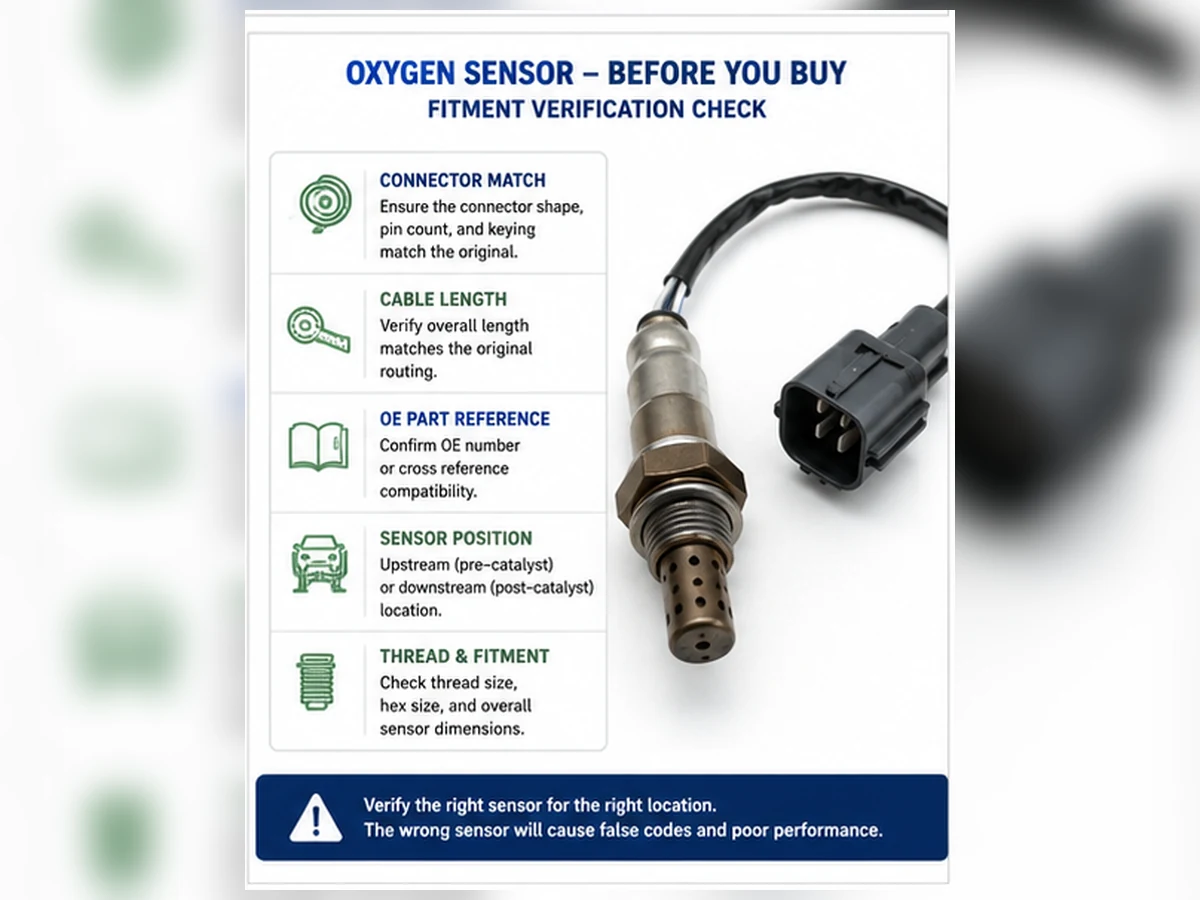
Limite di installazione sicura
Lasciare raffreddare lo scarico e utilizzare supporti veicolo approvati. Seguire la procedura di assistenza Toyota esatta e le istruzioni del sensore di ricambio per accesso, coppia e composto filettato. Non tagliare un cablaggio diretto. Instradare il cavo lontano da calore, bordi taglienti e parti in movimento, e ripristinare ogni clip e schermatura.
Verifica post-riparazione
Controllare connettore, instradamento e tenuta dello scarico, quindi confermare riscaldatore/circuito e risposta del sensore nelle condizioni specificate. Completare la procedura di monitoraggio legale applicabile. Cancellare i codici, utilizzare un distanziatore/simulatore o disabilitare un monitor non prova la riparazione.
Una sequenza di verifica Toyota che evita di indovinare il nome del modello
| Passaggio | Prova da registrare | Condizione di arresto |
|---|---|---|
| Identificazione del veicolo | VIN, anno, modello, motore/costruzione e mercato di vendita | Motore o configurazione rimane ambiguo |
| Identificazione delle emissioni | Etichetta sotto cofano e configurazione regionale applicabile | Il catalogo non distingue la configurazione |
| Posizione fisica | Relazione tra banca, numero sensore e catalizzatore | I diagrammi di servizio e fisici non concordano |
| Identificazione del componente | Riferimento OE, tecnologia, connettore, cavo e clip | Eventuali conflitti di campo critici |
| Evidenza di guasto | Codici, controlli circuito, perdite, regolazioni e test di risposta | Il guasto del sensore non è supportato |
Le famiglie di modelli Toyota possono comprendere diversi motori, generazioni e configurazioni di trasmissione. Le varianti ibride e non ibride non devono essere unite, e la consultazione del manuale del proprietario non sostituisce le informazioni di riparazione o un catalogo ricambi aggiornato. Utilizzare il contesto VIN/costruzione e l'etichetta delle emissioni per selezionare il set informativo corretto.
Domande a cui rispondere per le ricerche comuni di modelli Toyota
| Frase di ricerca | Domande prima della diagnosi o dell'ordine |
|---|---|
| Sensore di ossigeno Camry | Quale anno modello, motore, mercato/etichetta emissioni e posizione banco/sensore? Il dispositivo a monte è identificato come sensore A/F nei dati di servizio esatti? |
| Sensore di ossigeno Corolla | Quale motore e intervallo di produzione/costruzione? Il pezzo richiesto è pre-catalizzatore o post-catalizzatore, e quale riferimento OE è verificato? |
| Sensore di ossigeno RAV4 | Il veicolo è a benzina, ibrido o un'altra configurazione di trasmissione esatta? Quale percorso di scarico e posizione del sensore sono coinvolti? |
| Sensore di ossigeno Tacoma | Quale motore, configurazione di trasmissione/mercato e banco? Quale disposizione di connettore, cavo e clip utilizza la posizione esatta? |
Una tabella delle famiglie di modelli è una lista di verifica, non un elenco di compatibilità. Intenzionalmente non contiene conteggio sensori, lato, numero OE o intervallo di anni. Questi dati devono provenire da informazioni aggiornate corrispondenti al veicolo esatto.
Leggi la terminologia Toyota nel contesto
Sensore di ossigeno, sensore di ossigeno riscaldato e sensore A/F
Le informazioni Toyota possono distinguere un sensore del rapporto aria-carburante a monte da un sensore di ossigeno in un'altra posizione. “Sensore di ossigeno” e “sensore O2” denominano l'ampia famiglia. Le etichette A/F, wideband e riscaldato possono implicare circuiti o ruoli diversi, ma la descrizione completa del servizio è determinante. Non dedurre la tecnologia dal numero di fili o da un titolo di mercato.
Designazione della bancata e del sensore
La bancata 1 contiene il cilindro 1. Il sensore 1 si trova generalmente prima del catalizzatore di riferimento e il sensore 2 dopo. Questa nomenclatura comune aiuta a orientare il lettore, ma non fornisce un lato fisico universale. Confermare la numerazione dei cilindri e il flusso di scarico per il motore specifico.
Etichette generiche dello scanner
Uno scanner può visualizzare la tensione HO2S, la corrente A/F, lambda o il rapporto di equivalenza. Verificare che il PID sia supportato, corrisponda al circuito fisico e utilizzi le unità previste. Un menu generico può elencare posizioni o valori non implementati per il veicolo.
Mappatura dei banchi motore, catalizzatori e connettori
Una Toyota a quattro cilindri, una Toyota a motore a V e una configurazione ibrida possono utilizzare architetture di scarico diverse. Non assegnare due o quattro sensori in base al numero di cilindri. Per un motore a V, individuare il cilindro 1 prima di denominare il Banco 1; per ogni motore, tracciare il percorso del catalizzatore pertinente.
| Elemento mappa | Fonte di prova | Errore comune evitato |
|---|---|---|
| Cilindro 1 e bancata | Schema di servizio motore esatto | Scorciatoia conducente/passeggero o anteriore/posteriore |
| Ordine catalizzatore | Disposizione dello scarico per la configurazione | Posizione errata del Sensore 1/Sensore 2 |
| Percorso del connettore | Schema elettrico e ispezione fisica a freddo | Test di un circuito diverso ma vicino |
| Tecnologia dei sensori | Dati applicativi di servizio e approvati | Disadattamento test banda stretta/larga |
Considerare le varianti del motore, di assemblaggio e delle emissioni
I nomi Camry, Corolla, RAV4 e Tacoma coprono ciascuno più generazioni. La scelta del motore, lo stato ibrido, l'etichetta delle emissioni e il punto di interruzione della produzione possono modificare il sensore e il connettore. Mantieni esattamente il gruppo propulsore in ogni screenshot diagnostico e preventivo.
Un anno di immatricolazione o un badge del modello non corrisponde necessariamente alla data di produzione o al punto di interruzione del VIN. I veicoli importati possono anche differire dal mercato assunto da un catalogo locale. Registrare l'etichetta delle emissioni sotto il cofano e utilizzare un catalogo che copra esplicitamente il mercato di vendita.
Convertire i codici Toyota in percorsi di test, non in ordini di ricambi
| Tipo di codice | Primi controlli | Non concludere |
|---|---|---|
| Circuito riscaldatore | Posizione corretta, fusibile/alimentazione, massa/controllo, connettore ed elemento | Il sensore è guasto dal solo codice |
| Attività bassa/alta/nessuna | Circuito di segnale/riferimento, stato operativo e miscela reale | Un limite visualizzato identifica il componente guasto |
| Risposta lenta | Criteri di abilitazione, perdite, tecnologia e risposta controllata | Ogni grafico lento richiede sostituzione |
| P0420/P0430 | Mancata accensione, controllo carburante, perdite, entrambi i sensori e catalizzatore | Il sensore a valle è automaticamente difettoso |
Salvare tutti i codici correnti, in sospeso e permanenti, freeze frame e prontezza prima di cancellare. Codici multipli possono rivelare un'alimentazione condivisa, un guasto di miscela su tutto il sistema o una mancata accensione. Cancellare la memoria può rimuovere il contesto e resettare i monitor senza riparare nulla.
Interpretare i dati in tempo reale con tecnologia e stato operativo
Confermare lo stato di riscaldamento e controllo
Un sensore freddo o un motore in condizioni di anello aperto non dovrebbe essere confrontato con una specifica di risposta a caldo. Registrare la temperatura del liquido di raffreddamento, il carico, il regime e lo stato comandato con il valore del sensore.
Confrontare la risposta con i trim del carburante
La correzione positiva o negativa mostra ciò che il modulo di controllo sta tentando, non quale componente è guasto. Perdite di aspirazione, errore di flusso d'aria/carico, erogazione carburante, spurgo, accensione e condizioni meccaniche possono creare il risultato di scarico che un sensore sano riporta.
Utilizzare i dati a valle nel contesto del catalizzatore
Il segnale a valle viene valutato con il comportamento a monte e le condizioni di monitoraggio del catalizzatore. Un confronto di forme d'onda senza tenuta dello scarico, condizioni del motore e criteri di monitoraggio validi non può stabilire un sensore o un catalizzatore guasto.
Costruire l'identità del ricambio solo dopo la diagnosi
| Campo di applicazione | Prova richiesta | Rifiutare quando |
|---|---|---|
| Riferimento OE | Fonte catalogo leggibile o parte controllata corrente | Riferimento incrociato non verificato o sostituzione non risolta |
| Ambito veicolo | Configurazione VIN/costruzione, motore, mercato ed emissioni | Solo modello/anno |
| Posizione | Relazione bancale/sensore e catalizzatore | “Anteriore” o “posteriore” rimane ambiguo |
| Tecnologia | Specificato narrowband, wideband/A/F o altro circuito | Il numero di fili è l'unica corrispondenza |
| Interfaccia | Filettatura, schermatura, connettore, pin, cavo e clip | Il cablaggio deve essere forzato, tagliato o allungato |
Per una richiesta Toyota, invia il contesto VIN/costruzione, la configurazione esatta del motore o ibrida, l'etichetta delle emissioni, la posizione Bank/Sensore, il numero del vecchio componente e le foto complete del connettore e del cavo. Non interpretare una mappatura OE sostituita o candidata come copertura universale.
Adattamento diretto e universale sono decisioni separate
Un sensore direct-fit fornisce un connettore e una disposizione dei cavi specifici per l'applicazione, ma richiede comunque una copertura esatta. Un sensore universale richiede la compatibilità del circuito approvata dal produttore e le istruzioni di giunzione; universale non significa per ogni veicolo Toyota. I colori dei fili non sono uno standard universale per i pinout. Non tagliare un cablaggio direct-fit né improvvisare una giunzione vicino allo scarico.
Controlli di installazione e sicurezza
- Lasciare raffreddare lo scarico e utilizzare sollevamento/supporto del veicolo approvato.
- Confermare il sensore fisico e il connettore prima della disconnessione.
- Proteggere le filettature dello scarico e i componenti circostanti durante la rimozione.
- Confrontare i dettagli della tecnologia e dell'interfaccia tra vecchio e nuovo.
- Seguire esattamente le istruzioni di coppia e di composto per filettature del prodotto/servizio.
- Ripristinare manicotti termici, clip, schermi e instradamento sicuro dei cavi.
Non esiste una coppia o un tempo di manodopera universale responsabile per ogni applicazione Toyota. Accesso, corrosione, design del sensore e componenti circostanti variano. Fermati quando filettature, attacco, connettore o danni al cablaggio modificano l'ambito del lavoro.
Utilizzare una gerarchia di evidenze quando le fonti sono in disaccordo
I risultati di ricerca spesso combinano discussioni tra proprietari, annunci di mercato, definizioni generiche di codici e cataloghi di applicazioni. Non hanno la stessa autorità. Inizia con le informazioni di servizio esatte Toyota per l'identificazione del circuito, le condizioni diagnostiche, le viste del connettore e la procedura di installazione. Utilizza una fonte aggiornata di ricambi controllati per l'identità OE e la sostituzione. Utilizza l'etichetta sotto il cofano, i dati VIN/costruzione e il componente rimosso per risolvere la configurazione. I cataloghi aftermarket possono quindi essere valutati come riferimenti incrociati, non trattati come prova solo perché diversi venditori ripetono la stessa riga.
| Fonte di prova | Uso appropriato | Limite |
|---|---|---|
| Informazioni di servizio esatte | Posizione, circuito, condizioni di test e procedura di riparazione | Deve corrispondere a motore, mercato e configurazione |
| Dati controllati dei componenti OE | Identità, posizione e percorso di sostituzione del componente | Una sostituzione richiede ancora la riconciliazione dell'applicazione |
| Etichetta VIN/costruzione ed emissioni | Configurazione del veicolo e normativa | La sola decodifica del VIN non fornisce il test di riparazione |
| Sensore e connettore rimossi | Confronto fisico e identificatori leggibili | L'aspetto non può dimostrare la compatibilità elettrica |
| Catalogo aftermarket | Riferimento incrociato candidato e copertura commerciale | Fonte, revisione ed esclusioni devono essere note |
| Pagina del forum o del marketplace | Possibile sintomo o indicazione terminologica | Non è una prova di approvazione per diagnosi o montaggio |
Quando due fonti controllate sono in conflitto, registrare entrambi i valori, le loro date e i campi esatti del veicolo utilizzati. Non fare una media delle risposte né scegliere l'inserzione con la foto del prodotto più chiara. Tenere in sospeso l'applicazione interessata fino a quando il conflitto non viene risolto da una fonte autorevole o da un confronto fisico ed elettrico documentato.
Prepara un pacchetto di prove diagnostiche prima della sostituzione
Un registro utile permette a un altro tecnico di capire perché la sostituzione è stata approvata. Acquisisci la descrizione completa del DTC e lo stato, le condizioni di freeze-frame, il passo del test di servizio pertinente, la tensione della batteria/sistema, i controlli di potenza e comando del riscaldatore dove applicabili, le condizioni del cablaggio e dei terminali, i risultati delle perdite di aspirazione e scarico, i trim del carburante, le prove di mancata accensione e la risposta del sensore specifico della tecnologia. Identifica il connettore fisico testato. Un grafico senza stato del veicolo, unità e posizione del sensore non può essere interpretato in modo affidabile.
Separa le osservazioni dalle conclusioni. “P0135 memorizzato” è un'osservazione. “Il riscaldatore ha alimentazione specificata ma un elemento aperto al connettore identificato” è una prova a supporto di una decisione sul sensore. “Il sensore è guasto” basato solo su un codice è una conclusione non supportata. La stessa disciplina si applica ai codici di miscela e monitor catalizzatore: documenta le cause concorrenti che sono state testate e la condizione in cui il monitor o la risposta hanno fallito.
Conserva le prove dopo la riparazione
Registra l'identità del pezzo installato e il lotto se disponibile, l'accoppiamento del connettore, il percorso del cavo, la tenuta dello scarico e i valori post-riparazione in condizioni comparabili. Non cancellare lo stato precedente prima di averlo salvato. Se un problema si ripresenta, questo pacchetto separa montaggio errato, danni da installazione, ricorrenza del circuito, guasti irrisolti del motore e possibile non conformità del prodotto. Fornisce inoltre a un fornitore informazioni sufficienti per indagare senza presumere che ogni spia di avvertimento sia un difetto di garanzia.
Confronta il sensore vecchio e quello di ricambio come sistema
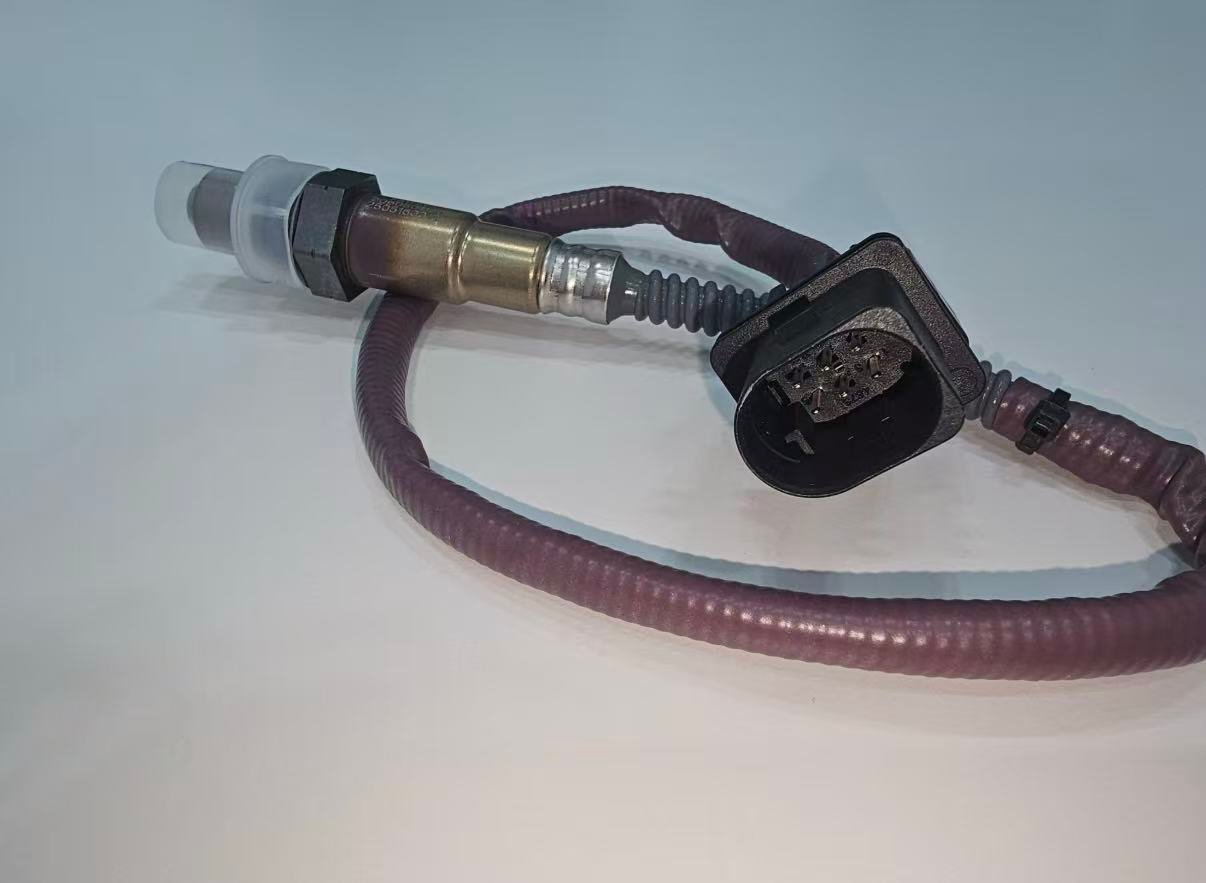
Disponi i pezzi fianco a fianco senza contaminare o colpire l'elemento sensibile. Confronta gli identificatori stampigliati o etichettati, la filettatura e la sede di tenuta, l'accesso esagonale, la lunghezza dello schermo e il modello dei fori, la protezione del cavo, la lunghezza totale del conduttore, i passacavi e le clip, l'alloggiamento del connettore, la codifica, il fermo, il conteggio dei terminali e il blocco secondario. Quindi confronta il disegno o la specifica applicativa. Una corrispondenza visiva è uno schermo di rifiuto, non un'approvazione finale: la gamma di resistenza del riscaldatore, la strategia del segnale, la calibrazione e l'assegnazione dei pin possono differire mentre gli alloggiamenti sembrano uguali.
Rifiuta o interrompi l'installazione se il cavo deve essere teso attraverso lo scarico, il connettore richiede forza, una clip non può tornare nella sua posizione originale, lo schermo tocca un altro componente, la filettatura o la sede differiscono, o la tecnologia specificata non può essere confermata. Non modificare un connettore direct-fit per far adattare un candidato. Se un sensore universale è espressamente approvato, utilizza solo la procedura di applicazione e giunzione del produttore e mantieni la protezione del cablaggio richiesta vicino allo scarico.
Utilizza decisioni esplicite di arresto, diagnosi e rilascio
Un buon flusso di lavoro non forza ogni richiesta verso una vendita. Usa tre stati visibili. Stop quando l'identità del veicolo, la configurazione delle emissioni, la posizione fisica o la tecnologia del sensore sono ambigue, o quando due fonti autorevoli sono in conflitto. Diagnostica quando l'adattamento è noto ma le prove non stabiliscono il guasto del sensore; completare i controlli del circuito, delle perdite, del controllo del carburante e della risposta richiesti dal reclamo. Rilascio solo quando sia la necessità di sostituzione che l'identità del pezzo sono supportate. Registrare chi ha preso la decisione e quali prove sono state utilizzate.
Questa separazione impedisce che una conclusione diagnostica corretta venga abbinata al pezzo sbagliato e impedisce che un pezzo apparentemente corretto venga venduto per un guasto non diagnosticato. Dà inoltre al servizio clienti una risposta veritiera quando mancano dati chiave: lo stato è In sospeso, non “probabilmente adatto”. Per un RFQ, quotare solo le righe di applicazione rilasciate e elencare le righe bloccate separatamente. Per una riparazione, conservare le prove originali fino a quando la risposta del circuito pertinente e il monitor legale non siano verificati dopo l'installazione.
| Stato della decisione | Evidenza tipica | Azione successiva consentita |
|---|---|---|
| Stop | Conflitto di motore, mercato, posizione, tecnologia o fonte | Richiedere dati autorevoli; non ordinare o rivendicare l'idoneità |
| Diagnostica | Veicolo/circuito noto, causa del guasto ancora aperta | Eseguire il test di servizio esatto e i controlli delle cause concorrenti |
| Rilascio | Evidenza del guasto e identità completa della sostituzione concordano | Approvare la parte/componente controllato e il piano di installazione |
| Verificare | Identità installata, instradamento, tenuta e risposta documentati | Confermare la riparazione in condizioni specificate e monitorare lo stato |
Le modifiche terminologiche del sensore A/F Toyota cambiano la strategia di test
Molte ricerche Toyota utilizzano “sensore O2” per ogni sensore di scarico filettato, mentre i manuali di servizio e ricambi possono distinguere un sensore aria-carburante a monte da un sensore di ossigeno riscaldato a valle. Tale distinzione non è estetica. Un sensore A/F e il suo circuito di controllo possono essere rappresentati da corrente, lambda, rapporto di equivalenza o un valore di scansione scalato dal costruttore, anziché dalla familiare tensione di commutazione ricco/magro associata a un sensore a banda stretta. Confermare l'esatto identificatore dati, le unità e la risposta prevista prima di giudicare il grafico.
Non applicare un test generico di tensione a banda stretta a un circuito identificato come sensore A/F. Non sondare i terminali dal retro fino a quando lo schema elettrico esatto e un metodo di prova approvato non identifichino il terminale e lo strumento. Un collegamento di prova errato può distorcere il segnale o danneggiare un circuito sensibile. Se lo strumento di scansione offre sia dati generici del sensore di ossigeno che dati A/F specifici del costruttore, verificare quale elemento utilizza la procedura Toyota e se il motore ha soddisfatto le condizioni di temperatura e carico di abilitazione.
| Terminologia originale Toyota | Domanda da risolvere | Scorciatoia non sicura |
|---|---|---|
| Sensore rapporto aria-carburante | Quale rappresentazione del segnale e test di risposta si applicano? | Ci si aspetta una commutazione generica 0-1 V |
| Sensore di ossigeno riscaldato | Quale banca, numero sensore e relazione con il catalizzatore? | Chiamare ogni sensore posteriore con lo stesso codice ricambio |
| Banco 1 Sensore 1 | Quale motore e dov'è il cilindro 1? | Usare il lato guidatore/passeggero come regola |
| Sensore 2 | Dopo quale catalizzatore sul percorso esatto dello scarico? | Ordinare per “posteriore” senza un diagramma |
Mantieni separate le prove per Toyota ibride e non ibride
Un nome modello Camry, Corolla o RAV4 può riferirsi a diverse famiglie di propulsori. Lo stato ibrido influisce sull'identità del veicolo, sulla selezione delle informazioni di assistenza e talvolta sul funzionamento o sul packaging del sistema di scarico. Non è sufficiente aggiungere la parola “ibrido” dopo aver scelto un ricambio da un elenco solo benzina. Ricominciare la ricerca con il propulsore completo e il mercato. Conservare la designazione esatta del motore e il contesto produttivo nel registro diagnostico e nella richiesta di offerta.
Durante la diagnosi, verificare che il motore funzioni nello stato richiesto dalla procedura. Un veicolo ibrido può arrestare e riavviare il motore secondo la propria strategia di controllo, quindi un'istantanea acquisita senza registrare lo stato di funzionamento del motore, la temperatura e il carico può essere fuorviante. Seguire i requisiti di sicurezza Toyota per l'intero veicolo. Il lavoro sui sensori di ossigeno non autorizza interventi su componenti ad alta tensione e questa guida non sostituisce le procedure di isolamento del sistema ibrido o la qualificazione del tecnico.
Concilia VIN, dati di costruzione e etichetta delle emissioni
Utilizzare il VIN per accedere al contesto corretto del veicolo, ma non trattare un decoder VIN di base come un catalogo completo di sensori. Confermare il motore/gruppo propulsore da dati autorevoli e leggere l'etichetta delle emissioni sotto il cofano. L'etichetta aiuta a stabilire la configurazione normativa e può evidenziare una discrepanza tra un veicolo e una riga di catalogo creata per un altro mercato. Le date di produzione e i punti di interruzione del catalogo devono essere registrati esattamente; l'anno modello da solo può superare una modifica.
- Registrare il VIN e il mercato attuale del veicolo o la cronologia delle importazioni.
- Confermare il motore esatto o il gruppo propulsore ibrido nelle informazioni Toyota.
- Fotografare o trascrivere l'etichetta delle emissioni senza pubblicare dati personali del veicolo.
- Identificare la posizione fisica del Banco/Sensore dal diagramma di servizio corrispondente.
- Risolvere il riferimento OE e qualsiasi sostituzione in una fonte controllata aggiornata.
- Confrontare connettore, cavo, clip e costruzione del sensore prima dell'installazione.
Se il numero del pezzo rimosso non corrisponde ai dati Toyota correnti, verificare se una riparazione precedente ha installato il pezzo sbagliato, se il numero è stato sostituito o se il contesto del catalogo è errato. Non utilizzare automaticamente il sensore rimosso come autorità di montaggio.
Punti decisionali diagnostici orientati a Toyota
Per un codice di riscaldatore, identificare se il circuito appartiene al sensore A/F o HO2S, quindi testare l'alimentazione, il controllo, il connettore e l'elemento specificati secondo lo schema esatto. Per un codice di miscela, ispezionare perdite di aspirazione e scarico, calcolo del flusso d'aria/carico, erogazione del carburante, comportamento dello spurgo, accensione e condizioni meccaniche prima di considerare il sensore che segnala come causa. Per un codice di risposta, riprodurre lo stato operativo richiesto e confrontare la risposta specifica della tecnologia anziché contare attraversamenti di tensione generici.
Per P0420 o P0430, conservare le prove di mancata accensione e controllo del carburante, confermare la tenuta dello scarico e confrontare i dispositivi a monte e a valle corretti solo in condizioni valide di monitoraggio del catalizzatore. Un sensore posteriore sostituito di recente, un grafico piatto al minimo o un'affermazione di mercato che un sensore “risolve P0420” non stabilisce la riparazione. Il catalizzatore, il motore e entrambi i percorsi di misurazione rimangono in esame fino a quando la procedura diagnostica non li restringe.
Prepara un registro di approvvigionamento del sensore Toyota
| Campo di registrazione | Prova accettabile | Attivazione di mantenimento |
|---|---|---|
| Veicolo | VIN/costruzione, modello, motorizzazione esatta e mercato | Solo nome modello o allestimento |
| Emissioni | Etichetta/configurazione corrispondente al catalogo | Distinzione federale/CARB/regione non risolta |
| Posizione | Relazione banca/sensore più catalizzatore | Solo anteriore/posteriore o sinistra/destra forniti |
| Tecnologia | La fonte Toyota identifica la strategia A/F o HO2S | Il conteggio dei fili o la foto del connettore è l'unica base |
| Identificazione del componente | Riferimento OE controllato e registrazione delle sostituzioni | Conflitto di riferimento incrociato nel marketplace |
| Interfaccia | Confronto di connettore/cavo/morsetto disegnato o verificato | Sarebbe necessaria una modifica |
Sunhyings può esaminare questa evidenza per una richiesta di approvvigionamento, ma non dovrebbe trasformare una parola chiave del modello Toyota in una promessa di compatibilità non verificata. Citare solo le righe in cui veicolo, posizione, tecnologia e interfaccia concordano, e mantenere le varianti non risolte come In sospeso.
Scenario di verifica composito Toyota
Scenario di ingegneria composita: Una ricerca per nome modello RAV4 restituisce diversi candidati, ma la richiesta omette la configurazione del gruppo propulsore e delle emissioni. Il vecchio connettore assomiglia a più di un inserzione e il codice indica solo una bancata/posizione. Il revisore mette in pausa l'ordine, risolve l'identità del veicolo e della posizione, quindi segue il corretto test del circuito. Questo scenario combina rischi comuni di catalogo e diagnostica; non è un caso cliente Sunhyings, un record di compatibilità o un'affermazione su un veicolo particolare.
Scenario diagnostico composito Toyota
Scenario diagnostico composito: Una Camry arriva con un codice di efficienza del catalizzatore dopo che un sensore del rapporto aria-carburante a monte è stato sostituito altrove. La sostituzione non è condannata dal codice. Il tecnico prima conferma l'esatta configurazione del motore e delle emissioni, controlla perdite di scarico, verifica che il dispositivo a monte installato corrisponda alla tecnologia A/F specificata, e confronta i dati a monte e a valle nelle condizioni di monitoraggio. L'indagine rimane aperta fino a quando motore, scarico, sensore e catalizzatore concordano.
La sequenza è intenzionalmente basata sull'evidenza: confermare il circuito esatto, testare le cause lato veicolo e confrontare la risposta con la procedura applicabile prima di approvare un componente. È un esempio di formazione composito, non un cliente Sunhyings, un risultato di garanzia o un'affermazione che il modello nominato ha comunemente questo guasto.
Verificare la riparazione e monitorare
Dopo la riparazione, confermare il blocco del connettore, il percorso del cavo, la distanza termica e la tenuta dello scarico. Controllare la risposta del riscaldatore/circuito e del sensore specifico della tecnologia in condizioni definite. Completare il monitor di prontezza legale applicabile. Una spia di avvertimento cancellata manualmente non è prova che il monitor originale sia stato superato; i codici permanenti possono rimanere fino a quando il modulo di controllo conferma un risultato positivo.
Limite tra emissioni e reclamo sul prodotto
Non utilizzare distanziatori, defoulers, simulatori, eliminazioni del sensore o modifiche software per nascondere il monitoraggio del catalizzatore. Questi metodi non riparano la causa principale e potrebbero violare le normative sulle emissioni. Questa pagina informativa non conferma che Sunhyings venda, tenga a magazzino, produca o garantisca un sensore per qualsiasi applicazione Toyota. L'idoneità rimane in sospeso fino a quando non vengono abbinate prove specifiche del progetto.
Prepara una richiesta di adattamento o approvvigionamento
Invia il numero OE, anno/marca/modello, motore o dettagli VIN, mercato e pacchetto emissioni, posizione esatta di banco/sensore, connettore e foto del vecchio componente, quantità e eventuali requisiti di imballaggio o approvazione. Sunhyings esaminerà i dati forniti per verificarne la capacità e la fattibilità dell'approvvigionamento; l'adattamento non è confermato fino a quando le prove di applicazione non vengono abbinate.
Domande frequenti
Come trovo il sensore di ossigeno Toyota corretto?
Utilizzare il VIN/configurazione, motore, pacchetto mercato/emissioni, banco e posizione esatti, riferimento OE, tecnologia e dettagli connettore/cavo.
Un codice del sensore di ossigeno Toyota prova che il sensore è guasto?
N. Diagnosticare cablaggio, alimentazione/controllo riscaldatore, perdite di scarico, correzioni carburante e risposta del sensore utilizzando informazioni di servizio esatte.
Bank 1 è sempre su un lato di una Toyota?
Il banco n. 1 contiene il cilindro 1; il suo lato fisico dipende dal motore e dall'installazione.
Il Sensore 1 e il Sensore 2 possono utilizzare la stessa parte?
Solo quando i dati dell'applicazione verificata corrente elencano quella parte esatta per entrambe le posizioni.
P0420 significa che è necessario sostituire il sensore a valle?
Il codice P0420 è un codice di efficienza del sistema catalizzatore e richiede la diagnosi del motore, dello scarico, dei sensori e del catalizzatore.
Sunhyings può confermare l'adattamento Toyota da un nome modello?
N. Inviare veicolo completo, motore, emissioni, posizione e prove fisiche/OE per una revisione dell'idoneità.
Riferimenti tecnici
- Manuali ufficiali del proprietario e risorse del veicolo Toyota
- Funzionamento, installazione e ricerca guasti del sensore lambda DENSO
- Sensori di ossigeno e lambda NTK / Niterra
- Tecnologia del sensore lambda Bosch, diagnosi e sostituzione
- Allerta di applicazione dell'EPA statunitense su manomissioni e dispositivi di elusione