Engenharia de Fixadores para Baterias de Veículos Elétricos
Porcas Especiais para Baterias de Veículos Elétricos: Considerações sobre Revestimento, Isolamento Elétrico e Rastreabilidade
Porcas especiais para baterias de veículos elétricos não devem ser selecionadas apenas pelo tamanho da rosca. Uma rosca M6, M8 ou M10 pode corresponder ao parafuso de acoplamento, mas não garante adequação do revestimento, ajuste da rosca após galvanoplastia, comportamento de torque, resistência ao arrancamento, resistência ao torque de extração, isolamento elétrico, desempenho de corrosão ou prontidão para rastreabilidade.
Antes da cotação, os compradores devem confirmar a localização da junta, função da porca, pilha de juntas, material, revestimento, sequência de revestimento, requisito de torque ou pré-carga, requisito de isolamento (se houver), escopo de rastreabilidade e documentos de aprovação do cliente.
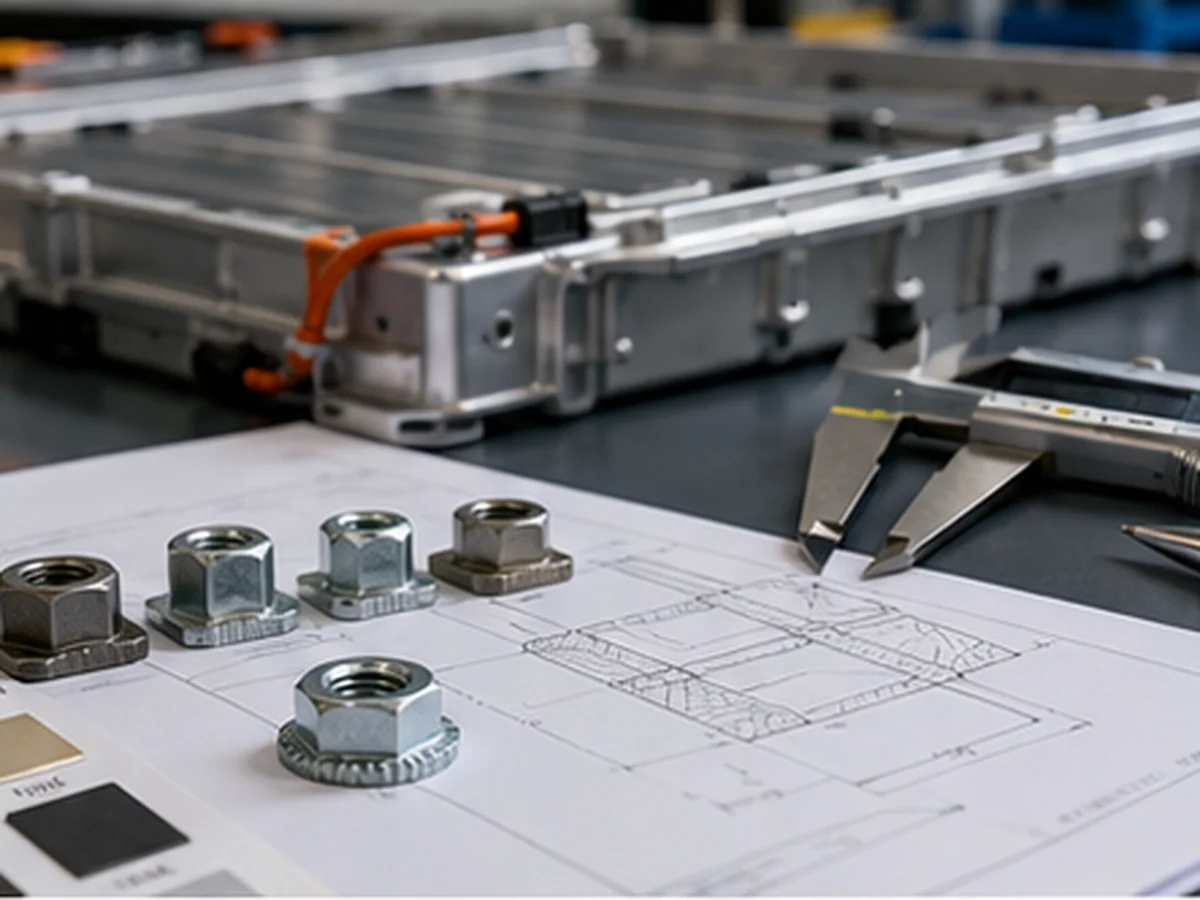
Porcas especiais para baterias de veículos elétricos devem ser revisadas quanto à localização da junta, revestimento, ajuste da rosca, limite de isolamento elétrico, rastreabilidade e requisitos de aprovação do cliente.
Imagem de engenharia conceitual apenas; a seleção final depende do desenho, pilha de juntas, especificação de revestimento, método de inspeção e padrão do cliente.
Resposta Rápida: O que os compradores devem confirmar para porcas especiais de pacotes de baterias EV?
Porcas especiais para pacotes de baterias EV devem ser revisadas como parte da montagem completa, não como um componente de rosca isolado. Para bandejas de bateria, invólucros de bateria, placas de cobertura, suportes de módulo e estruturas de suporte de chapa metálica, os compradores devem confirmar a localização da junta, função da porca, peças de acoplamento, material, revestimento, processo de montagem, método de inspeção e padrão do cliente.
Se o isolamento elétrico for necessário, deve ser tratado como um requisito de pilha de junta completa, não como uma característica apenas da porca. A porca, parafuso, arruela, bucha, revestimento, material do painel, condição de compressão, torque e método de teste podem afetar o resultado.
Preocupação com o Pacote de Baterias EV
Por que é Importante
Comprador Deve Confirmar
Revestimento
Afeta a proteção contra corrosão, ajuste da rosca, comportamento do torque e risco de instalação
Tipo de revestimento, espessura se especificada, sequência de revestimento e inspeção da rosca pós-galvanização
Isolamento elétrico
Não pode ser presumido apenas pelo revestimento
Junta completa do conjunto, requisito de isolamento, método de teste e norma do cliente
Rastreabilidade
Suporta o controle de qualidade e contenção automotiva
Número do lote, certificado de material, relatório de revestimento, registro de inspeção e etiqueta de embalagem
Resistência
Controla a confiabilidade da montagem
Torque, pré-carga, torque de saída, resistência à tração, resistência ao empuxo e requisito de afrouxamento, se especificado
Rota de fabricação
Afeta a consistência, o custo, o prazo de entrega e a aprovação
Rota de conformação a frio, usinagem, rosqueamento, formação de rosca, soldagem, cravação, tratamento térmico e revestimento
Documentos de aprovação
Exigido para programas automotivos quando especificado
PPAP, IMDS, relatório dimensional, certificado de material, relatório de revestimento e plano de controle, se necessário
O que deve ser conhecido antes que um fornecedor possa confirmar a adequação
Um fornecedor só pode fazer uma recomendação responsável quando a revisão do desenho, localização da aplicação, pilha da junta, requisito de rosca, material, dureza, revestimento, rota de instalação, condição de torque, método de inspeção e escopo de aprovação do cliente são conhecidos. Dados ausentes de revestimento, isolamento, torque de saída, resistência à tração ou rastreabilidade devem ser tratados como necessita confirmação, não assumidos a partir da frase “porca de pack de bateria EV”.”
Por que as porcas de pacotes de baterias EV precisam de mais do que a correspondência de rosca padrão
As montagens de pacotes de baterias EV geralmente combinam chapa metálica, fundições, tampas, suportes, bandejas, peças de isolamento, vedações e componentes revestidos. Uma porca usada neste ambiente pode precisar suportar fixação mecânica, proteção contra corrosão, resistência a vibrações, torque de montagem controlado, capacidade de manutenção e rastreabilidade de qualidade.
O ajuste da rosca é apenas uma parte desta decisão. Uma porca com a rosca correta ainda pode ser inadequada se o revestimento alterar a tolerância da rosca, se a junta exigir isolamento elétrico, se o processo de montagem danificar o revestimento, se a porca não resistir ao torque de saída ou se o projeto exigir documentos de rastreabilidade que o fornecedor não pode fornecer.
O ajuste da rosca é apenas um requisito
O tamanho, passo e tolerância da rosca devem ser confirmados em relação ao parafuso de acoplamento e ao desenho. No entanto, o ajuste da rosca não prova resistência ao arrancamento, resistência ao torque de saída, desempenho de corrosão, comportamento elétrico ou aprovação de produção. A condição da rosca pós-revestimento deve ser verificada pelo calibrador de rosca ou método de inspeção exigido, especialmente quando a espessura do revestimento ou o acúmulo de revestimento pode afetar o ajuste.
As juntas do pacote de baterias podem ter requisitos elétricos, de corrosão e de rastreabilidade
Em um pacote de baterias EV, algumas juntas fixadas podem estar próximas a áreas sensíveis elétricas, térmicas ou críticas para corrosão. A porca pode não ser o único componente que controla o requisito. Os compradores devem revisar a pilha completa da junta, incluindo o parafuso de acoplamento, arruela, luva isolante, bucha, painel, revestimento, adesivo, vedação ou tratamento de superfície, se presente.
Tipos Comuns de Porcas Usados em Montagens de Pacotes de Baterias de VE
As montagens de pacotes de baterias de VE podem usar diferentes porcas especiais personalizadas dependendo da localização da junta, espessura da chapa, acesso, permissão de soldagem, direção da carga e sequência de montagem. O tipo de porca deve seguir o desenho e o projeto de junta validado, não apenas uma descrição geral do pacote de baterias.
Diferentes locais do pacote de baterias de VE podem exigir porcas de solda, porcas auto-rosqueantes ou porcas especiais personalizadas, dependendo da condição da chapa, acesso, revestimento e direção da carga.
Exemplos de tipos de porcas não substituem a revisão do desenho ou a validação da montagem.
Porcas de Solda para Soldagem de Bandeja ou Suporte de Bateria
Porcas para solda de flange, porcas de solda sextavadas ou outros projetos de porcas de solda podem ser revisados quando a bandeja da bateria, suporte ou estrutura de chapa metálica é projetada para soldagem. O comprador deve confirmar o acesso à solda, o design da projeção, a soldabilidade da chapa, a condição do revestimento, o método de inspeção da solda e a proteção da rosca.
Porcas Auto-rosqueantes para Invólucros de Chapa Metálica
Porcas auto-encaixáveis podem ser considerados para invólucros de chapa metálica, placas de cobertura ou suportes quando houver acesso a prensa e a soldagem não for preferida. Eles dependem da espessura da chapa, dureza da chapa, diâmetro do furo, tolerância do furo e instalação controlada.
Tipo de Porca vs Localização do Pacote de Bateria
Localização do Pack de Bateria
Tipo de Porca Frequentemente Avaliado
Principal Risco a Confirmar
Dados Necessários para RFQ
Bandeja de bateria ou suporte soldado
Porca de solda ou porca de projeção personalizada
Qualidade da solda, sequência de revestimento, proteção da rosca e torque de arrancamento
Acesso para solda, material da chapa, requisito de projeção, rota de revestimento e método de inspeção
Invólucro ou tampa de chapa metálica
Porca auto-rosqueante ou porca personalizada de pressão
Deformação da chapa, má cravação, danos ao revestimento e arrancamento
Espessura da chapa, dureza, tolerância do furo, direção de instalação e direção da carga
Suporte ou peça de suporte do módulo
Porca personalizada, porca flangeada ou porca de solda conforme desenho
Limitação de espaço, carga de aperto, vibração e rastreabilidade
Desenho, função da junta, parafuso de acoplamento, requisito de torque e escopo do documento
Junta adjacente ao isolamento
Tipo de porca depende da pilha completa da junta
Suposição falsa de que revestimento equivale a isolamento elétrico
Pilha da junta, componentes isolantes, condição de torque, método de teste e padrão do cliente
Porcas Personalizadas Quando Espaço, Revestimento ou Rastreabilidade São Controlados por Desenho
Porcas personalizadas podem ser necessárias quando a junta do pacote de baterias tem espaço limitado, profundidade de rosca especial, geometria de flange especial, revestimento controlado, recursos antirrotação, interface de vedação, marcação de rastreabilidade, requisitos de embalagem ou documentos de aprovação específicos do cliente. Nesses casos, uma porcas especiais fabricadas sob desenho abordagem geralmente é mais segura do que selecionar uma porca padrão pela aparência.
Considerações sobre Revestimento: Proteção contra Corrosão, Ajuste da Rosca e Risco de Montagem
O revestimento é uma das considerações mais importantes para porcas de bateria de veículos elétricos, pois pode afetar a proteção contra corrosão, ajuste da rosca, comportamento de instalação, resposta ao torque e inspeção. Os compradores devem definir o requisito de revestimento a partir do desenho, padrão do cliente ou especificação do projeto.
Exemplos comuns de revestimento ou tratamento de superfície podem incluir zincagem, zinco-níquel, fosfatização, oxidação negra, passivação ou outros acabamentos especificados pelo cliente. A escolha correta depende do material, requisito de corrosão, processo de montagem, exposição ambiental, peças de acoplamento e aprovação do cliente. Não existe um “melhor revestimento” universal para todas as porcas de bateria de veículos elétricos.
O revestimento pode afetar a proteção contra corrosão, ajuste da rosca, comportamento de torque e risco de instalação, portanto, a inspeção da rosca pós-revestimento deve ser confirmada quando necessário.
Nenhuma espessura de revestimento, valor de névoa salina ou resultado de aprovação está implícito na imagem.
O Tipo de Revestimento Deve Seguir o Desenho ou Padrão do Cliente
O tipo de revestimento deve ser especificado claramente no RFQ. Os compradores devem confirmar se o revestimento é necessário para proteção contra corrosão, aparência, controle de atrito, comportamento de montagem ou compatibilidade com materiais próximos. Se o desempenho em névoa salina, espessura do revestimento ou coeficiente de atrito for exigido, o valor e o método de teste devem vir do desenho ou padrão do cliente.
O Ajuste da Rosca Pós-Revestimento Precisa de Inspeção
O revestimento pode alterar o ajuste da rosca. Se a zincagem ou o tratamento de superfície se acumular na rosca, o parafuso de acoplamento pode ficar apertado, cruzar a rosca, causar geração de cavacos, emperrar ou falhar na inspeção. A tolerância da rosca pós-revestimento e a inspeção com calibrador de rosca devem ser definidas quando o desenho ou padrão do cliente assim exigir.
Sequência de Revestimento Pode Alterar o Risco
A sequência de revestimento e instalação pode alterar o perfil de risco. Uma porca pode ser revestida antes da instalação, revestida após a conformação, soldada antes do revestimento, soldada após o revestimento ou montada em um painel revestido. Cada rota pode afetar a proteção contra corrosão, soldabilidade, marcação superficial, condição da rosca ou comportamento elétrico.
Problema Relacionado ao Revestimento
Risco Possível
Comprador Deve Confirmar
Espessura do revestimento
Interferência na rosca ou alteração no ajuste
Tolerância pós-revestimento e método de calibragem da rosca
Danos ao revestimento durante a soldagem
Risco de corrosão ou qualidade da solda
Sequência de soldagem e proteção pós-solda
Danos ao revestimento durante a prensagem
Risco de marcação superficial ou corrosão localizada
Método de instalação e área de inspeção
Requisito de corrosão
Seleção incorreta de revestimento
Norma do cliente, método de ensaio e critérios de aceitação
Comportamento de atrito
Variação de torque
Parafuso de acoplamento, arruela, lubrificação e método de torque
Comportamento elétrico
Suposição de isolamento falsa
Método de empilhamento completo da junta e teste elétrico
Se os dados de revestimento estiverem faltando: o fornecedor não deve inferir desempenho de névoa salina, espessura do revestimento, comportamento de atrito, tolerância de rosca pós-revestimento ou comportamento elétrico. Estes devem vir do desenho, especificação de revestimento, norma do cliente ou método de teste aprovado.
Isolamento Elétrico: Por que uma Porca Revestida Não é Automaticamente uma Junta Isolada
Uma porca revestida não deve ser descrita como uma porca eletricamente isolada, a menos que o projeto completo da junta, método de teste e requisito do cliente suportem essa afirmação. O isolamento elétrico é um requisito ao nível da junta. Não é comprovado apenas pelo revestimento da porca.
O comportamento elétrico final pode depender da porca, parafuso, arruela, bucha, revestimento, danos ao revestimento, painel de acoplamento, camada isolante, força de compressão, torque, umidade, contaminação, temperatura, vibração e condição de serviço. Se algum desses itens for desconhecido, a resposta correta é precisa de confirmação.
O isolamento elétrico deve ser revisado ao nível do empilhamento completo da junta, não reivindicado apenas a partir de uma porca revestida.
Esta imagem não representa um resultado de teste de isolamento; valores de isolamento e métodos de teste devem vir dos requisitos do cliente.
O isolamento depende do conjunto completo da junta
Uma junta de bateria pode incluir componentes metálicos e não metálicos. Mesmo que uma porca tenha revestimento, o parafuso pode cortar o revestimento, a arruela pode criar contato metálico, o revestimento pode ser danificado durante a instalação, ou a compressão pode alterar o caminho elétrico. Portanto, o isolamento elétrico deve ser especificado e testado no nível do conjunto.
Tabela de Limites de Isolamento Elétrico
Declaração do Comprador
Resposta Técnica da Safe Engineering
Dados Necessários Antes da Confirmação
“Precisamos de porcas revestidas para baterias.”
Revise revestimento, corrosão, ajuste da rosca e rota de montagem; não assuma isolamento.
Tipo de revestimento, peças de acoplamento, local de aplicação e requisito de inspeção
“A porca deve ser eletricamente isolada.”
Trate o isolamento como um requisito completo da junta empilhada.
Junta empilhada, peças isolantes, método de teste, condição de torque e critérios de aceitação
“O revestimento de zinco-níquel pode fornecer isolamento?”
Não confirme sem validação no nível da junta.
Especificação do cliente, sistema de revestimento, superfícies de contato e método de teste elétrico
“O desenho mostra apenas o tamanho da rosca.”
Solicitar dados de aplicação e desempenho antes da cotação.
Revisão do desenho, função da junta, revestimento, carga, torque e escopo do documento.
O que os compradores devem especificar se for necessário isolamento elétrico.
Local da montagem e revisão mais recente do desenho.
Conjunto completo da junta, incluindo arruela, bucha, luva ou camada isolante, se utilizado.
Material da porca, parafuso, painel e peça de acoplamento.
Requisito de revestimento ou camada isolante.
Condição de torque, compressão ou pré-carga.
Requisito de resistência de isolamento, se especificado pelo cliente.
Método de teste, tensão de teste e critérios de aceitação, se especificados.
Norma do cliente ou especificação interna.
Necessita confirmação: Sem a pilha de juntas, método de teste elétrico e requisito do cliente, um fornecedor pode revisar a capacidade de fabricação e viabilidade de revestimento, mas não deve garantir o desempenho de isolamento elétrico.
Requisitos de Rastreabilidade para Porcas Especiais de Bateria de Veículo Elétrico
A rastreabilidade é importante em projetos automotivos e de baterias de veículos elétricos porque um problema com o fixador pode afetar a contenção, retrabalho, investigação de campo ou auditoria do cliente. A rastreabilidade não prova que a porca é adequada para a aplicação, mas ajuda a identificar o histórico de material, produção, revestimento, inspeção e entrega quando ocorre um problema de qualidade.
A rastreabilidade pode incluir lote de material, lote de produção, lote de revestimento, registros de inspeção, etiquetas de embalagem e documentos de aprovação quando necessário.
As imagens dos documentos são genéricas e não representam certificação real ou aprovação do cliente.
O Que Deve Ser Rastreável?
Os requisitos de rastreabilidade podem incluir lote de matéria-prima, número de calor, lote de produção, lote de tratamento térmico, lote de revestimento, registro de inspeção, etiqueta de embalagem e lote de expedição. O escopo exato depende da norma do cliente, desenho, RFQ e acordo de qualidade.
Quais Documentos Podem Ser Exigidos?
Documentos comuns podem incluir certificado de material, relatório de revestimento, relatório de inspeção dimensional, registro de inspeção de rosca, relatório de dureza se especificado, relatório de teste de torque ou tração se especificado, certificado de conformidade, registro de etiqueta de embalagem, documentos PPAP ou submissão IMDS se exigido pelo cliente ou programa.
Isolamento elétrico, a menos que testado e especificado
Relatório dimensional
Controle dimensional do desenho
Torque de saída ou arrancamento, a menos que testado
Inspeção de rosca
Verificação de ajuste da rosca
Durabilidade do revestimento ou desempenho de corrosão
Etiqueta do lote
Identificação do lote
Aprovação da aplicação
Pacote PPAP
Documentação de aprovação automotiva quando necessário
Adequação universal para todas as juntas de bateria
Rastreabilidade não equivale à aprovação de aplicação
A rastreabilidade ajuda a identificar qual material, revestimento, lote de produção e registro de inspeção estão conectados a um embarque. Ela não prova que a porca é eletricamente isolada, qualificada contra corrosão, estável em torque ou aprovada para cada junta de bateria. A aprovação da aplicação ainda depende do desenho, da norma do cliente e do plano de validação.
Verificações de resistência e montagem: torque de extração, resistência ao arrancamento, carga na rosca e risco de afrouxamento
Porcas para baterias de veículos elétricos podem precisar suportar torque de montagem, carga de aperto, cargas de serviço, vibração e exposição à corrosão. Os compradores devem definir qual desempenho mecânico é relevante para a junta.
Torque, pré-carga, torque de extração e resistência ao arrancamento são diferentes. Um valor de torque de aperto não prova automaticamente que a porca pode resistir à rotação em chapa metálica. Um tamanho de rosca não prova automaticamente que a porca pode resistir ao arrancamento. Um requisito de revestimento não prova automaticamente a estabilidade do torque.
Torque e Pré-Carga Não São o Mesmo que Torque de Desaperto
O torque de aperto é usado durante a montagem para criar a carga de fixação, mas o torque de desaperto mede se a porca resiste à rotação em relação à chapa ou suporte. Uma porca auto-rosqueante pode precisar de validação de torque de desaperto se instalada em chapa fina. Uma porca soldada pode precisar de validação de torque de desaperto se a qualidade da solda ou o alinhamento forem críticos.
Arrancamento e Empuxo Dependem da Direção da Carga
O arrancamento e o empuxo devem ser revisados com base na direção da carga. Em montagens de chapa metálica, a porca pode ser carregada de diferentes direções durante a instalação, serviço, deformação relacionada a colisão, manutenção ou vibração. A direção do teste necessária e o valor de aceitação devem vir do desenho ou padrão do cliente.
Risco de Afrouxamento Requer Revisão no Nível da Junta
Se a junta for propensa a vibração ou crítica para o serviço, o risco de afrouxamento deve ser revisado com a montagem completa. O tipo de porca, parafuso de acoplamento, arruela, revestimento superficial, comprimento de fixação, método de aperto, retenção de pré-carga e ambiente de serviço afetam o comportamento de afrouxamento. Onde uma função de torque predominante é necessária, os compradores podem precisar comparar projetos de porca como porcas autotravantes totalmente metálicas somente após confirmar a junta e o requisito do desenho.
Verificação de Montagem
Por que é Importante
Dados Necessários
Tamanho e passo da rosca
Compatibilidade do parafuso de acoplamento
Especificação da rosca, tolerância e engajamento
Torque de aperto
Controle do processo de montagem
Método de torque, lubrificação e peças de acoplamento
a pré-carga
Retenção da junta
Parafuso, arruela, condição da superfície e relação torque-tração
Torque-out
Resistência à rotação da porca
Tipo de porca, condição da chapa, qualidade de solda ou clinch e método de teste
Arrancamento / expulsão
Resistência à carga axial ou reversa
Direção da carga, espessura da chapa e critérios de aceitação
Risco de afrouxamento
Estabilidade sob vibração ou serviço
Pilha da junta, comprimento de aperto, revestimento, arruela e condição de serviço
Não use um único teste como prova de todo o desempenho. A inspeção com calibrador de rosca não comprova torque de arrancamento. Torque de arrancamento não comprova resistência ao arrancamento. Rastreabilidade não comprova durabilidade do revestimento. Isolamento elétrico requer um teste definido no nível da junta quando especificado.
Rota de Fabricação: Porcas Soldadas, Cravadas, Conformadas a Frio ou Usinadas
A rota de fabricação da porca e a rota de instalação na montagem do conjunto de baterias devem ser separadas. Uma porca pode ser conformada a frio, usinada, rosqueada, formada por rosca, tratada termicamente, revestida e inspecionada antes de ser instalada. A instalação pode então envolver soldagem, cravação, aparafusamento ou outro processo de montagem.
Rota de Fabricação da Porca
A rota de fabricação da porca depende da geometria, material, volume anual, tolerância, requisito de rosca e complexidade do desenho. A conformação a frio pode ser adequada para peças de alto volume com geometria estável. A usinagem pode ser considerada para protótipos, recursos complexos, volumes menores ou detalhes personalizados mais rigorosos. Rosqueamento, formação de rosca, tratamento térmico, revestimento e classificação dependem do desenho e do requisito de qualidade.
Rota de Instalação na Montagem do Conjunto de Baterias
A rota de instalação afeta a junta final. Uma porca de solda depende do acesso à solda, parâmetros de solda, design do ressalto e inspeção de solda. Uma porca de autocravação depende da tolerância do furo, espessura da chapa, dureza da chapa e configuração da prensa. Uma porca personalizada pode exigir embalagem especial, orientação, ferramentas de montagem ou proteção de rosca.
Tabela de Rotas de Fabricação e Instalação
Item da Rota
O que ele controla
Comprador Deve Confirmar
Conformação a frio / recravamento a frio
Geometria do corpo da porca e fluxo de material em alto volume quando adequado
Volume anual, material, estabilidade geométrica e viabilidade de ferramentas
Usinagem CNC
Características complexas, protótipos, menor volume ou detalhes personalizados mais rigorosos
Tolerância, geometria, custo-alvo, cronograma de amostras e revisão de desenho
Rosqueamento / formação de rosca
Função e ajuste da rosca interna
Tamanho da rosca, passo, tolerância, método de calibragem e tolerância pós-revestimento
Tratamento térmico
Resistência, dureza e comportamento da rosca quando especificado
Grau do material, faixa de dureza e padrão do cliente
Revestimento / galvanoplastia
Proteção contra corrosão, aparência, ajuste da rosca e comportamento de montagem
Tipo de revestimento, sequência, espessura se especificada e método de inspeção
Soldagem ou cravação na montagem
Retenção final da junta instalada e risco do processo
Acesso para solda, acesso para prensa, dados da chapa, dispositivo e responsabilidade pela validação
Dados do Roteiro de Processo Necessários Antes do RFQ
Antes da cotação, o comprador deve esclarecer se a porca é fornecida solta, pré-instalada em um painel, soldada pelo comprador, soldada por um fornecedor, prensada em uma chapa ou montada posteriormente na linha do pacote de baterias. Isso afeta a responsabilidade pela inspeção, embalagem, rastreabilidade e escopo de aprovação.
Documentos de Inspeção e Qualidade que os Compradores Devem Confirmar
A inspeção deve seguir o desenho, a norma do cliente e o modo de falha. Para porcas especiais de pacote de bateria EV, o plano de inspeção pode incluir verificações dimensionais, inspeção de calibre de rosca, inspeção de revestimento, teste de dureza, teste de torque de saída, teste de tração, verificação de etiqueta de rastreabilidade e revisão de documentos.
Itens de Inspeção
Os compradores devem confirmar quais itens de inspeção são necessários para a própria porca e quais são necessários para a junta instalada. Um fornecedor de porcas pode inspecionar as dimensões, rosca e revestimento da porca solta. O desempenho da junta instalada pode exigir testes em nível de montagem pelo comprador ou pelo proprietário do processo aprovado.
Exemplos de Documentos
Relatório de inspeção dimensional.
Certificado de material.
Relatório de revestimento.
Registro de inspeção de rosca.
Relatório de dureza, se especificado.
Relatório de torque, se especificado.
Relatório de tração ou compressão, se especificado.
Certificado de conformidade.
Registro de rastreabilidade de lote.
Registro de embalagem e etiqueta.
Pacote PPAP, se necessário.
Submissão IMDS, se necessário.
Os compradores também podem revisar a SUNHYINGS guias técnicos para tópicos relacionados à engenharia de fixadores.
Requisito
Inspeção de Porca Solta
Validação de Junta Instalada
Entrada do Comprador Necessária
Ajuste de rosca
Sim
Às vezes
Tamanho da rosca, passo, tolerância e requisito de calibre
Revestimento
Sim
Às vezes
Tipo de revestimento, espessura se especificada e requisito de teste de corrosão
Torque-out
Condicional
Frequentemente exigido para junta instalada
Método de teste e valor de aceitação
Arrancamento / expulsão
Condicional
Frequentemente necessário para junta de chapa metálica
Direção de carga e valor de aceitação
Isolamento elétrico
Não, não apenas pela porca
Sim, teste em nível de junta
Pilha de juntas, método de teste e norma do cliente
Rastreabilidade
Sim
Sim, se necessário
Lote e escopo do documento
PPAP / IMDS
Condicional
Condicional
Requisito do cliente ou programa
Cenário de Engenharia Composta: Porca Revestida Próxima a uma Junta de Invólucro de Bateria VE
Cenário de engenharia composta apenas para treinamento: Um comprador solicita uma porca especial revestida para a tampa do compartimento da bateria de um veículo elétrico. O desenho mostra o tamanho da rosca e a geometria geral da porca, mas o RFQ não define se o revestimento é para proteção contra corrosão, controle de atrito, isolamento elétrico ou aparência. O comprador também menciona que a junta pode estar próxima a componentes isolados, mas não fornece a pilha de juntas completa.
Nesta situação, o fornecedor não deve afirmar que a porca revestida fornece isolamento elétrico. A resposta correta é solicitar a pilha de juntas, requisito de revestimento, método de teste, condição de torque, parafuso de acoplamento, detalhes de arruela ou bucha e norma do cliente. O fornecedor pode avaliar se a porca pode ser fabricada com o revestimento solicitado e a tolerância da rosca, mas o comportamento de isolamento deve ser validado no nível da junta.
Este cenário não representa um caso específico de cliente, programa de veículo ou resultado de teste aprovado. Ele está incluído para mostrar como os limites do RFQ devem ser tratados antes da cotação ou aprovação da amostra.
Lista de Verificação RFQ para Porcas Especiais de Bateria de VE
Um RFQ completo reduz a comunicação de ida e volta e evita suposições inseguras. Se o comprador enviar apenas um tamanho de rosca e disser “porca para bateria de veículo elétrico”, o fornecedor não pode confirmar com precisão o revestimento, isolamento elétrico, rastreabilidade ou desempenho instalado.
Um RFQ completo deve incluir revisão do desenho, pilha de juntas, requisito de rosca, revestimento, requisito de isolamento, se houver, escopo de rastreabilidade, volume anual e documentos de aprovação.
O visual da lista de verificação é apenas para preparação do RFQ e não substitui a revisão do desenho ou a validação do cliente.
Dados Mínimos do RFQ
Revisão do desenho.
Foto da amostra se o desenho estiver incompleto.
Localização do pacote de baterias do VE.
Tipo de junta e pilha de juntas.
Material de acoplamento ou material da chapa.
Tamanho da rosca, passo e tolerância.
Geometria da porca ou solicitação de seleção aberta.
Requisito de material.
Requisito de dureza ou tratamento térmico, se especificado.
Tipo de revestimento e sequência de revestimento.
Requisito de rosca pós-galvanização.
Requisito de torque ou pré-carga.
Requisito de torque de saída, arrancamento ou empuxo, se especificado.
Preocupação com afrouxamento ou vibração, se especificada.
Método de inspeção e critérios de aceitação.
Requisito de rastreabilidade.
Volume anual.
Plano de aprovação de amostra.
Requisito de embalagem e rotulagem.
Requisito de PPAP ou IMDS, se aplicável.
Dados adicionais se for necessário isolamento elétrico
Se for necessário isolamento elétrico, o comprador deve adicionar o conjunto completo da junta, componentes isolantes, tratamentos de superfície, condição de compressão ou torque, tensão ou método de teste se especificado, condição ambiental se especificada e critérios de aceitação.
Dados adicionais se for necessário rastreabilidade
Se for necessário rastreabilidade, o comprador deve informar o nível de rastreabilidade exigido, formato da etiqueta, método de controle de lote, requisito de certificado de material, requisito de relatório de revestimento, requisito de registro de inspeção, requisito de etiqueta de embalagem e requisito de retenção de documentos.
Campo de RFQ
Obrigatório / Condicional
Por que isso altera a cotação
Revisão do desenho
Obrigatório
Define geometria, rosca, tolerância e base de aprovação
Pilha de juntas
Obrigatório quando existe isolamento ou função especial
Controla revisão de risco elétrico, mecânico e de montagem
Revestimento e sequência
Obrigatório
Afeta a corrosão, o ajuste da rosca, a soldagem, o cravação e o comportamento de torque
Torque / pré-carga / torque de extração / extração
Condicional
Define se são necessários testes adicionais ou revisão de projeto
Escopo de rastreabilidade
Condicional
Afeta o controle de lote, documentação, embalagem e prontidão para auditoria
Volume anual
Obrigatório
Afeta a rota de fabricação, decisão de ferramentas e custo unitário
Como a SUNHYINGS Revisa RFQs de Porcas para Baterias de Veículos Elétricos
A SUNHYINGS pode revisar RFQs de porcas para baterias de veículos elétricos sob a perspectiva de completude do desenho, tipo de porca, requisito de rosca, material, dureza, revestimento, rota de fabricação, método de inspeção e requisitos de rastreabilidade.
Para aplicações de porca para solda, a revisão pode incluir geometria da porca, design do ressalto, acesso para solda, sequência de revestimento e proteção da rosca. Para aplicações de porca auto-encaixável, a revisão pode incluir espessura da chapa, dureza da chapa, diâmetro do furo, tolerância do furo, recurso de cravação, acesso para instalação e verificações de resistência ao arrancamento, extração ou torque.
Como um(a) SUNHYINGS, A SUNHYINGS pode revisar se o desenho e o RFQ contêm informações suficientes para cotação, preparação de amostras e planejamento de documentos de qualidade. No entanto, a aprovação final da aplicação deve seguir o design do pacote de baterias do comprador, padrão do cliente, teste de validação e processo de aprovação específico do projeto.
O que a SUNHYINGS pode revisar
Integridade do desenho e capacidade de fabricação.
Tipo de porca, geometria e requisito de rosca.
Requisito de material, dureza e tratamento térmico.
Necessidades de inspeção de rosca após revestimento e pós-galvanização.
Rota de fabricação e viabilidade de preparação de amostras.
Documento de inspeção e planejamento de rastreabilidade.
O que precisa de confirmação do cliente
Função da junta do pack de bateria e localização de aplicação.
Requisito de isolamento elétrico e método de teste.
Critérios de aceitação de torque, pré-carga, arrancamento, empuxo ou torque de saída.
Revisão do desenho e norma do cliente.
Validação da montagem final e rota de aprovação.
Requisito PPAP / IMDS e escopo do documento.
Tabela Resumo: Considerações para Seleção de Porcas para Pack de Bateria EV
Consideração
Por que é Importante
Necessita confirmação
Local de aplicação
Bandeja, invólucro, suporte ou tampa da bateria podem apresentar riscos diferentes
Posição de montagem e função da junta
Tipo de porca
Porca de solda, porca auto-rosqueante ou porca personalizada depende do processo e da carga
Desenho e rota de montagem
Tópico
O ajuste da rosca não comprova o desempenho
Tamanho, passo, tolerância, engajamento e parafuso de acoplamento
Material / dureza
Afeta resistência, conformação, soldagem, cravação e comportamento da rosca
Grau do material, dureza e tratamento térmico
Revestimento
Afeta corrosão, ajuste da rosca, torque e risco do processo
Tipo de revestimento, sequência, espessura se especificada e inspeção
Isolamento elétrico
Não pode ser comprovado apenas pelo revestimento
Pilha completa da junta, método de teste e requisito do cliente
Rastreabilidade
Suporta controle de qualidade automotivo
Registros de lote, material, revestimento, inspeção e etiqueta
Documentos
Escopo necessário depende do programa
PPAP / IMDS / relatórios apenas se necessário
Antes de Enviar uma RFQ
Prepare a revisão mais recente do desenho, local de aplicação, junta empilhada, tamanho e tolerância da rosca, requisito de material e dureza, revestimento e sequência de revestimento, condição de torque ou pré-carga, requisito de extração ou torque de extração se especificado, escopo de rastreabilidade, volume anual, plano de aprovação de amostra e requisito PPAP / IMDS se aplicável. Se for necessário isolamento elétrico, inclua o requisito completo de teste em nível de junta em vez de descrever a porca como isolada apenas pelo revestimento.
Páginas Relacionadas da SUNHYINGS
Revise as páginas relacionadas da SUNHYINGS para porcas personalizadas, porcas de solda, porcas de auto-fixação, fornecimento controlado por desenho e avaliação de fornecedor automotivo.
As seguintes fontes são fornecidas apenas para contexto técnico. Elas não substituem o desenho do comprador, a norma do cliente, a especificação de revestimento, o plano de validação elétrica ou o requisito de aprovação específico do programa.
Porcas especiais para conjuntos de baterias de VE são diferentes das porcas padrão?
Eles podem ser diferentes quando o desenho exige geometria especial, revestimento controlado, rastreabilidade, resistência ao torque, desempenho de arrancamento, consideração de isolamento elétrico ou documentos de aprovação automotiva. O tamanho da rosca por si só não comprova a adequação para uma junta de bateria de veículo elétrico.
Porcas revestidas podem fornecer isolamento elétrico?
Não automaticamente. O isolamento elétrico é um requisito de nível de junta. Depende da porca, parafuso, arruela, bucha, revestimento, painel, compressão, torque, ambiente e método de teste. Uma porca revestida não deve ser tratada como uma junta isolada, a menos que o requisito do cliente e o teste de validação suportem essa afirmação.
Qual revestimento é melhor para porcas de pacote de bateria de veículo elétrico?
Não existe um revestimento universalmente melhor. O revestimento correto depende do requisito de estampagem, alvo de corrosão, ajuste da rosca, rota de montagem, materiais de acoplamento, sequência de revestimento e padrão do cliente. Horas de névoa salina ou espessura do revestimento não devem ser inventadas sem a especificação real.
As porcas do pacote de baterias EV exigem PPAP?
Somente se o cliente ou programa automotivo exigir PPAP. O PPAP não deve ser assumido para cada pedido de porca. O nível necessário e o escopo do documento devem ser confirmados no RFQ.
Qual rastreabilidade os compradores devem solicitar?
Os compradores podem solicitar rastreabilidade de lote de material, lote de produção, lote de tratamento térmico, lote de revestimento, relatório dimensional, registro de inspeção de rosca, relatório de revestimento, etiqueta de embalagem e lote de embarque. O escopo exato depende do desenho, da norma do cliente e do acordo de qualidade.
Porcas para solda podem ser usadas em bandejas de baterias de veículos elétricos?
As porcas de solda podem ser usadas quando o projeto permite soldagem e o projeto confirma a soldabilidade da chapa, sequência de revestimento, acesso à solda, design de projeção, inspeção de solda e proteção da rosca. Elas não devem ser selecionadas apenas pelo tamanho da rosca.
As porcas auto-encaixáveis podem ser usadas em invólucros de baterias de VE?
Porcas auto-encaixáveis podem ser usadas quando a espessura da chapa, dureza, ductilidade, tolerância do furo e acesso à prensa suportam o processo de encaixe. Verificações de empuxo, tração ou torque podem ser necessárias dependendo do desenho ou padrão do cliente.
O que deve ser incluído em um RFQ de porca para pacote de bateria de VE?
A RFQ deve incluir revisão do desenho, local de aplicação, pilha de juntas, tamanho da rosca e tolerância, material, dureza, revestimento, sequência de revestimento, requisito de isolamento elétrico se houver, requisito de torque ou pré-carga, requisito de torque de saída ou resistência ao arrancamento, escopo de rastreabilidade, volume anual, aprovação de amostra e requisito de PPAP / IMDS se aplicável.
Nota de Revisão Técnica
Este guia foi preparado para engenheiros de projeto de pacotes de baterias EV, engenheiros de compras, equipes SQE e compradores de fixadores automotivos que revisam porcas especiais para bandejas de bateria, invólucros, suportes e montagens de chapas metálicas.
Escopo revisado: tipo de porca especial, ajuste de rosca, revestimento, inspeção de rosca pós-revestimento, limite de isolamento elétrico, rastreabilidade, dados de RFQ, documentos de inspeção e considerações de aprovação do cliente.
Este artigo não é um documento de projeto de segurança elétrica de pacote de baterias EV. Isolamento elétrico, segurança de alta tensão e aprovação final da aplicação do pacote de baterias devem ser validados pelo projeto completo da montagem do comprador, padrão do cliente e processo de validação qualificado.
Nota de padrões e limitações: Este artigo é um guia prático de engenharia e fornecimento. Ele não substitui o desenho do cliente, especificação de projeto do pacote de baterias EV, norma de segurança elétrica, especificação de revestimento, processo de montagem validado, aprovação PPAP ou requisito específico do cliente. O isolamento elétrico deve ser validado no nível da junta completa quando necessário. Dados de revestimento ausentes, requisito de isolamento, valor de torque, valor de arrancamento, escopo de rastreabilidade ou padrão do cliente devem ser tratados como necessidade de confirmação, não assumidos como fato.