Guia de Engenharia para Porca de Solda em Chapa Metálica Automotiva
Porcas de Solda por Projeção para Chapas Metálicas Automotivas: Torque de Arrancamento, Resistência ao Arrancamento e Design de Projeção
Porcas de solda por projeção para chapa metálica automotiva não são selecionadas apenas pelo tamanho da rosca. Uma porca de solda pode parecer simples, mas seu desempenho final depende da geometria da porca, design da projeção, espessura da chapa, condição do material, condição da superfície, processo de soldagem, controle do dispositivo e requisitos de inspeção.
Este guia ajuda os compradores a confirmar torque de arrancamento, resistência ao arrancamento, design da projeção, condição da chapa, compatibilidade de soldagem e dados de RFQ antes da amostragem ou aprovação de produção. Use-o para reduzir RFQs pouco claros, evitar suposições erradas sobre porcas de solda e separar a capacidade de fabricação da porca da responsabilidade final de validação da soldagem.
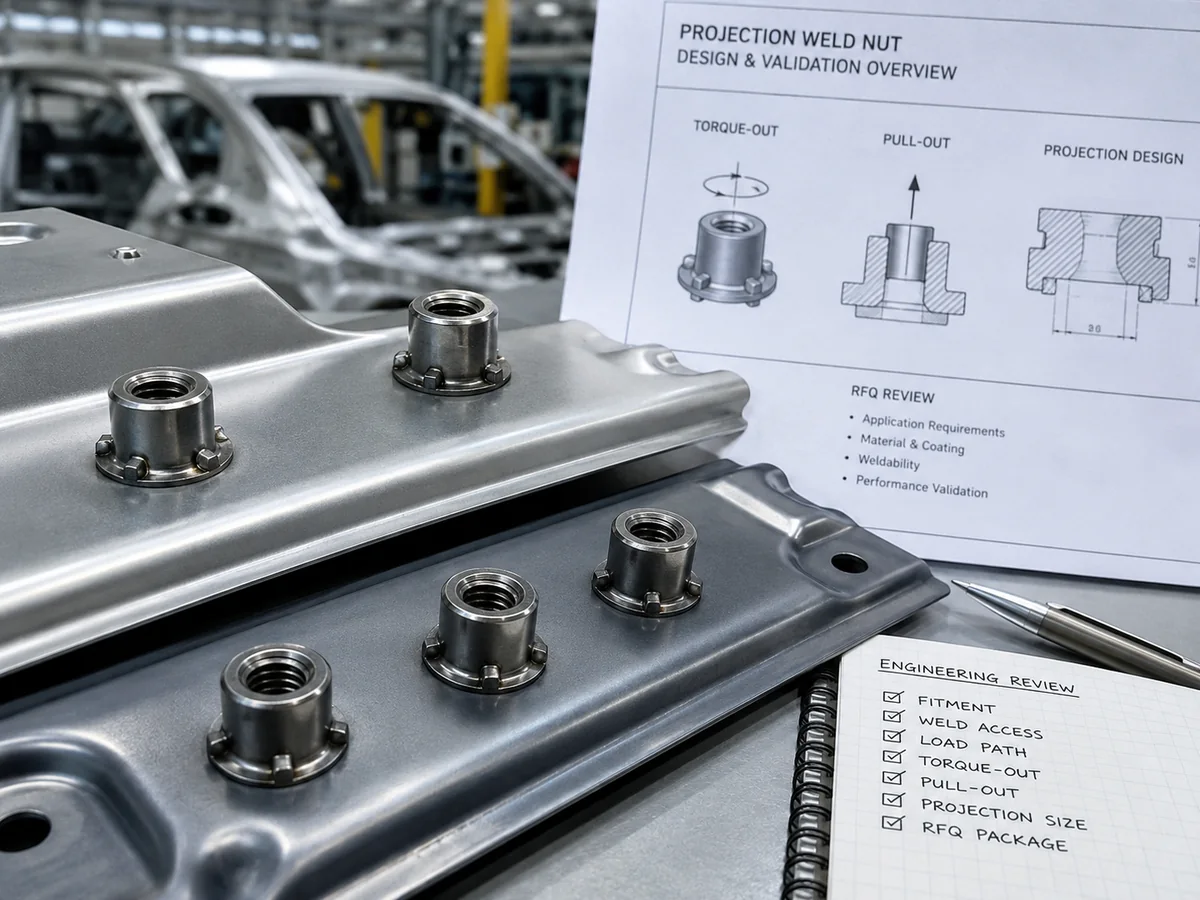
Porcas de solda por projeção para chapa metálica automotiva devem ser revisadas quanto ao requisito de rosca, design da projeção, condição da chapa, torque de arrancamento, resistência ao arrancamento e escopo de inspeção.
Apenas visual conceitual de engenharia; o desempenho final da soldagem depende da chapa metálica do comprador, processo de soldagem e validação do cliente.
Resposta Rápida: O que os compradores devem confirmar primeiro?
Antes de adquirir porcas de projeção para solda em chapa metálica automotiva, os compradores devem confirmar o desenho da porca, requisito de rosca, projeto de projeção, espessura da chapa, material da chapa, condição da superfície, rota de soldagem, requisito de torque de extração, requisito de tração e responsabilidade de inspeção.
Uma porca de projeção para solda não é aprovada apenas porque o tamanho da rosca corresponde ao parafuso. A porca também deve formar uma junta soldada estável com a chapa metálica após a soldagem por projeção. Os requisitos de torque de extração e tração não podem ser assumidos apenas pelo tamanho da porca.
Primeira Verificação
Por que é Importante
Ação do Comprador
Tamanho da rosca, passo e tolerância
Controla o ajuste do parafuso de acoplamento após a soldagem
Fornecer a especificação da rosca no desenho e o requisito do calibrador
Tipo de porca
Porcas flangeadas, sextavadas e personalizadas para solda podem usar geometria diferente
Confirme o desenho exato da porca ou norma
Geometria da saliência
Controla a concentração da corrente de solda e o colapso da saliência
Siga o desenho ou projeto aprovado
Espessura da chapa metálica
Afeta a formação da solda, o comportamento de arrancamento e o risco de queima
Forneça a espessura da chapa e a tolerância
Condição da superfície antes da soldagem
Revestimento, galvanização, óleo ou pré-tratamento podem afetar a estabilidade da soldagem
Confirmar chapa nua, galvanizada, revestida ou pré-tratada
Torque e arrancamento
Define os requisitos de retenção rotacional e axial
Fornecer método de teste e valor de aceitação, se necessário
Documentos de aprovação
Projetos automotivos podem exigir relatórios, PPAP ou plano de controle
Confirmar apenas se exigido pelo cliente ou programa
Nenhum valor de teste universal
Nenhum valor universal de torque ou arrancamento deve ser inserido no RFQ, a menos que venha do desenho, norma do cliente ou especificação de teste aprovada. Informações ausentes devem ser marcadas como necessita confirmação.
O que são porcas de solda por projeção para chapa metálica automotiva?
Porcas de solda por projeção são porcas projetadas com saliências que concentram corrente de soldagem, calor e pressão durante a soldagem por resistência por projeção. Quando o processo de soldagem é controlado corretamente, as saliências colapsam e ajudam a formar uma junta soldada entre a porca e a chapa metálica.
Em montagens de chapa metálica automotiva, porcas de solda por projeção são frequentemente usadas onde um ponto de fixação roscado confiável é necessário em uma peça metálica fina ou conformada. Elas podem ser usadas em suportes, reforços, painéis, pontos de montagem ou outros componentes de chapa metálica. A localização exata da aplicação, o tipo de junta e a condição de carga devem ser confirmados a partir do desenho ou da especificação do cliente.
O desempenho da porca de solda por projeção começa com a relação correta entre a rosca interna, a geometria da projeção, a superfície de apoio e o contato com a chapa metálica.
O diagrama é apenas explicativo; a geometria da projeção deve seguir o desenho aprovado ou a norma do cliente.
Formas comuns incluem porcas de solda com flange, porcas de solda sextavadas e porcas de solda com projeção personalizadas. Uma porca de solda com flange pode fornecer uma superfície de apoio maior e múltiplas projeções ao redor do flange. Uma porca de solda sextavada pode seguir uma geometria controlada por catálogo ou desenho. Uma porca de solda com projeção personalizada pode usar um layout de projeção especial, formato de flange, requisito de rosca ou orientação de embalagem.
Para compradores que estão adquirindo porcas especiais personalizadas, o ponto principal é que uma porca de solda não deve ser tratada como uma peça roscada genérica. Uma porca que funciona em uma aplicação de chapa metálica pode não ser adequada para outra se o material da chapa, espessura, revestimento, acesso à soldagem, eletrodo, dispositivo ou requisito de torque de extração mudar.
Por que Torque de Torção e Arrancamento Importam
O torque de torção e o arrancamento são dois dos pontos de validação mais importantes para porcas de solda com projeção em chapas metálicas automotivas. Eles estão relacionados à junta soldada, não apenas à rosca da porca.
Torque-out refere-se à resistência da porca soldada à falha rotacional quando o torque é aplicado após a soldagem. Se a resistência ao torque de torção não for suficiente, a porca pode girar na chapa metálica durante a montagem, serviço ou reparo.
Arrancamento refere-se à resistência da porca soldada a ser arrancada da chapa metálica. Se a resistência ao arrancamento não for suficiente, a chapa metálica pode deformar, rasgar ou separar-se da porca soldada sob carga axial.
O torque de torção verifica a resistência rotacional após a soldagem, enquanto o arrancamento verifica a retenção axial entre a porca de solda e a chapa metálica.
Nenhum valor de teste está implícito; os critérios de aceitação devem vir do desenho, da norma do cliente ou da especificação de teste aprovada.
O torque de desaperto não é o mesmo que o torque de aperto da montagem.
Os compradores não devem confundir torque de giro com torque normal de aperto do parafuso. O torque de montagem é o torque usado ao fixar o parafuso de acoplamento. O torque de giro é uma verificação de validação para saber se a porca soldada resiste à rotação em relação à chapa metálica. A relação entre esses dois valores deve ser definida pelo desenho do cliente, projeto da junta ou requisito de validação.
Requisito
O que verifica
Por que os compradores não devem presumir
Torque-out
Resistência à rotação da porca após soldagem
O tamanho da porca por si só não define a resistência da solda
Arrancamento
Resistência à separação axial da chapa metálica
A espessura da chapa e a qualidade da solda afetam fortemente os resultados
Calibrador de rosca após soldagem
Usabilidade da rosca interna após soldagem
Calor de soldagem, distorção ou respingos podem afetar o ajuste da rosca
Tolerância de posição
Localização da porca após soldagem
O controle do dispositivo e da peça chapa afeta a montagem final
Condição visual da solda
Aparência básica da solda e colapso da projeção
A inspeção visual por si só não substitui a validação de resistência
Projeto de Projeção: O que Controla a Resistência da Solda?
O projeto de projeção é central para o desempenho da porca de solda por projeção. As projeções não são características decorativas. Elas controlam como a corrente de soldagem e a pressão são concentradas nos pontos de contato entre a porca e a chapa metálica.
As principais variáveis do projeto de projeção incluem número de projeções, altura da projeção, formato da projeção, localização da projeção, espaçamento entre projeções, volume da projeção, área de contato antes da soldagem, colapso da projeção após a soldagem e compatibilidade com a espessura da chapa metálica e condição da superfície.
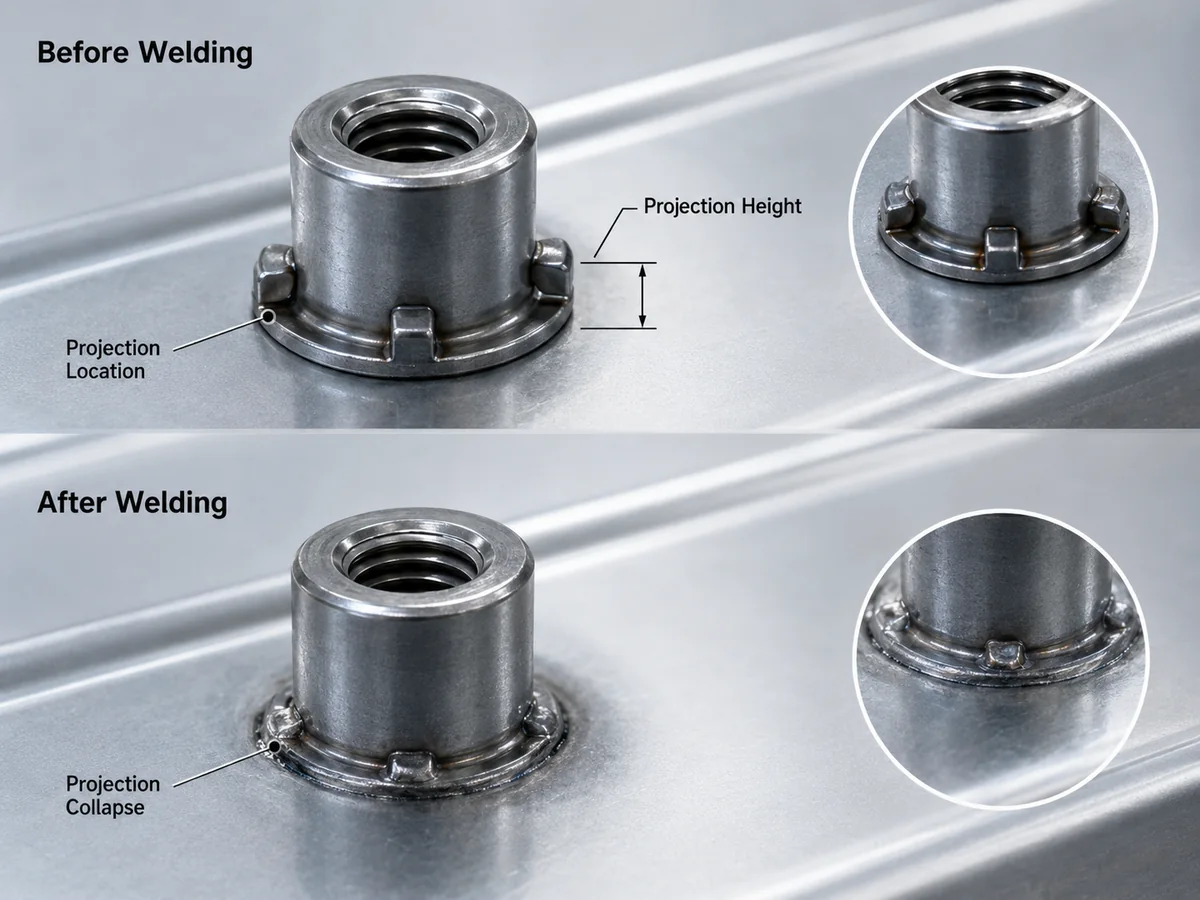
O projeto de projeção controla o contato inicial, a concentração de calor e o colapso da projeção, mas a resistência final da solda ainda requer validação do processo.
A geometria da projeção deve seguir o desenho aprovado; esta imagem não define as dimensões finais da projeção.
Item do Projeto de Projeção
Por que é Importante
Confirmação do Comprador
Número de projeções
Afeta a distribuição do ponto de solda
Confirme o requisito do desenho
Altura da projeção
Afeta o comportamento de contato inicial e colapso
Não presuma; siga o desenho
Forma da projeção
Afeta a concentração de corrente e formação de calor
Confirme a geometria aprovada
Localização da projeção
Afeta o alinhamento e o equilíbrio da solda
Confirme a tolerância e o datum
Colapso da projeção
Indica a resposta da soldagem durante o processo
Valide por meio de teste de soldagem, se necessário
Área de contato
Afeta a distribuição de calor e pressão
Confirmar chapa e condição da superfície
O design da projeção não é uma garantia de resistência
Um design de projeção não deve ser descrito como garantidamente resistente sem validação de soldagem. O design da porca, a chapa metálica e o processo de soldagem devem trabalhar juntos.
Espessura da chapa, material e condição da superfície
O desempenho da porca de solda por projeção não pode ser avaliado apenas pelo desenho da porca. A chapa metálica de acoplamento é uma parte crítica da junta.
A espessura da chapa afeta a formação da solda, o colapso da projeção, o comportamento de arrancamento e o risco de queima. O material da chapa também é importante. Diferentes graus de aço, níveis de resistência e condições de superfície podem afetar a estabilidade da soldagem por resistência.
Entrada da chapa metálica
Por que é Importante
Necessita confirmação
Grau do material da chapa
Afeta a soldabilidade e o comportamento de deformação
Grau do material ou especificação do cliente
Espessura da chapa
Afeta o risco de arrancamento e queima
Espessura e tolerância
Condição da superfície
Afeta o fluxo de corrente e a estabilidade da solda
Nu, galvanizado, revestido ou pré-tratado
Acesso pelo lado da solda
Afeta o design do eletrodo e do dispositivo
Direção de acesso e geometria da peça
Chapa de reforço
Altera a espessura efetiva da junta
Folha única ou pilha multicamadas
Revestimento pós-solda
Afeta o plano de proteção contra corrosão
Revestimento, selagem ou pintura após soldagem
Se os dados da chapa metálica estiverem ausentes, o fornecedor pode revisar a fabricabilidade da porca, mas não pode confirmar o desempenho final da montagem soldada. O status correto é necessita confirmação.
Rota do Processo de Fabricação: O que deve corresponder entre a amostra e a produção?
Para projetos de porca de solda por projeção automotiva, a aprovação de amostra só é útil quando a rota da amostra representa a rota de produção planejada. Os compradores devem confirmar se a porca cotada será produzida, soldada, inspecionada, embalada e submetida sob as mesmas premissas de processo esperadas para a produção em massa.
Item da Rota de Processo
Por que é Importante
Confirmação do Comprador / Fornecedor
Rota de fabricação da porca
Conformação a frio, usinagem, rosqueamento ou operações secundárias podem afetar o custo e a repetibilidade
Confirmar rota controlada por desenho, se especificado
Formação da projeção
Forma e consistência da projeção afetam a resposta de soldagem
Confirmar que a geometria da projeção segue o desenho
Rosqueamento / macho de roscar
O ajuste da rosca após a soldagem ainda deve atender ao requisito
Confirmar calibre de rosca e condição de inspeção
Condição da superfície antes da soldagem
Óleo, revestimento ou camada de chapa podem afetar a estabilidade da soldagem
Confirmar condição de soldagem e requisito de limpeza se especificado
Rota de validação da soldagem
A resistência final da junta depende da máquina de solda, eletrodo, dispositivo de fixação e schedule
Confirme quem possui a validação de soldagem
Rota de inspeção
Podem ser necessários torque, arrancamento, seccionamento ou calibrador de rosca
Confirme o método de teste, escopo da amostra e critérios de aceitação
Rota de embalagem
Danos por projeção, contaminação da rosca ou lotes misturados podem afetar o uso na produção
Confirme os requisitos de granel, bandeja, orientação e etiqueta
Limite da rota de produção: A SUNHYINGS pode revisar a capacidade de fabricação da porca e a completude do RFQ. A validação final da soldagem depende da chapa metálica do comprador, equipamento de soldagem, condição do eletrodo, dispositivo, programação de soldagem e método de aceitação do cliente.
Modos Comuns de Falha em Aplicações de Porcas de Solda por Projeção
A falha da porca de solda por projeção pode vir do projeto da porca, condição da chapa, processo de soldagem, controle do dispositivo ou lacunas de inspeção. As causas abaixo devem ser tratadas como causas possíveis, não conclusões garantidas.
Modo de Falha
Causa Possível
Confirmação do Comprador
Falha por torque
Nugget de solda fraco, colapso incompleto da projeção, condição superficial ruim ou programação de soldagem incorreta
Método de teste de torque e valor de aceitação
Falha por arrancamento
Chapa muito fina, penetração de solda deficiente, projeto de projeção errado ou área de solda insuficiente
Método de teste de tração, espessura da chapa e material da chapa
Danos na rosca
Respingos de solda, distorção térmica, acúmulo de revestimento ou danos por manuseio
Verificação visual e com calibrador de rosca pós-solda
Desalinhamento da porca
Problema de fixação, desequilíbrio de projeção ou erro de posicionamento da chapa
Tolerância de posição e controle de fixação
Queima por solda
Condição da chapa, calor excessivo ou configuração de solda inadequada
Espessura da chapa e validação dos parâmetros de soldagem
Porca de solda solta
Energia de soldagem insuficiente, contaminação superficial ou colapso instável da projeção
Rota do processo de soldagem e método de inspeção
Preocupação com corrosão
Sequência de revestimento, superfície danificada ou exposição pós-soldagem
Requisito de revestimento e selagem, se especificado
Lista de verificação do comprador antes da amostragem
Um RFQ útil para porcas de solda por projeção deve incluir todo o contexto de engenharia. Enviar apenas “preço de porca de solda por projeção” ou “porca de solda automotiva, zincada” não é suficiente.
Um RFQ de porca de solda por projeção deve definir o desenho, a rosca, o projeto da projeção, a condição da chapa metálica, torque de extração, resistência à tração, escopo de inspeção e requisitos de documentação.
A lista de verificação é apenas para preparação do RFQ; documentos de PPAP e validação se aplicam somente quando exigidos pelo cliente ou programa.
Item do RFQ
Por que é Importante
O comprador deve fornecer
Última revisão do desenho
Controla a linha de base final do projeto
Desenho e revisão atuais
Tipo de porca
Define a família de produtos e geometria
Porca de solda com flange, porca de solda sextavada ou porca de solda personalizada
Tamanho da rosca, passo e tolerância
Controla o ajuste do parafuso de acoplamento
Especificação completa da rosca
Material e dureza da porca
Afeta a conformação, soldagem e revisão de resistência, se especificado
Grau do material, dureza ou norma
Geometria da saliência
Controla o contato de soldagem e colapso
Projeto de projeção controlado por desenho
Material e espessura da chapa metálica
Afeta a soldabilidade e o comportamento de arrancamento
Grau do material, espessura e tolerância
Condição da superfície antes da soldagem
Afeta a estabilidade da soldagem
Nu, galvanizado, revestido ou pré-tratado
Local de montagem e tipo de junta
Define a direção da carga funcional e a sensibilidade de validação
Área do veículo, suporte, painel, reforço ou local de montagem
Requisito de torque / arrancamento
Define o requisito de validação
Método de teste e valor de aceitação, se necessário
Responsabilidade pelo processo de soldagem
Determina a responsabilidade pela validação
Comprador, fornecedor ou integrador de soldagem
Escopo do documento
Controla submissão de qualidade
PPAP, plano de controle, relatório de teste apenas se necessário
Volume anual e embalagem
Afeta ferramental, embalagem e rota de processo
Quantidade de protótipo, amostra e produção; método de embalagem
Para projetos controlados por desenho, os compradores podem revisar a SUNHYINGS porcas especiais fabricadas sob desenho orientação para entender por que a revisão do desenho e as notas técnicas devem estar claras antes da cotação.
Inspeção e Validação: Torque de Saída, Arrancamento e Calibrador de Rosca
A inspeção para porcas de solda por projeção deve abranger tanto a porca quanto o conjunto soldado, quando necessário. O escopo da inspeção depende do desenho do cliente, norma interna e requisito do programa automotivo.
A validação da porca de solda por projeção pode incluir revisão do processo de soldagem, condição visual da solda, torque de arrancamento, tração axial e inspeção com calibrador de rosca pós-soldagem.
O escopo da inspeção depende do desenho do comprador, da responsabilidade pelo processo de soldagem e dos requisitos de aprovação do cliente.
Item de Inspeção
O Que Confirma
Limite
Teste de torque de saída
Resistência à falha rotacional
Critérios de aceitação devem ser fornecidos
Teste de tração axial
Resistência à separação axial
O método de teste e a condição da chapa devem estar claros
Revisão visual da solda
Aspecto básico da solda e condição de colapso
Não substitui teste de resistência se exigido
Seccionamento / revisão do ponto de solda
Formação da solda se especificada
Somente se exigido pelo cliente ou programa
Calibrador de rosca pós-solda
Usabilidade da rosca após soldagem
Condição do calibrador deve ser definida
Tolerância de posição
Localização da porca após soldagem
Controle de matéria-prima e ferramenta
Plano de controle de produção
Repetibilidade durante a produção em massa
Exigido apenas se o cliente ou programa solicitar
A responsabilidade pela validação deve ser clara
Se o fornecedor da porca fornecer apenas a porca de solda por projeção, o comprador ou o responsável pelo processo de soldagem ainda deve validar o conjunto soldado sob a chapa metálica, ferramenta, eletrodo e cronograma de soldagem reais. Não transfira a responsabilidade final de validação da solda para o desenho da porca, a menos que o escopo do projeto exija explicitamente.
Notas do desenho que precisam de esclarecimento
Muitos problemas com porcas de solda por projeção começam com notas de desenho pouco claras. A redação pode parecer simples, mas pode criar diferentes interpretações entre comprador, fornecedor da porca, fornecedor de soldagem e montadora.
Nota de desenho pouco clara
Por que é arriscado
Esclarecimento necessário
“Porca de solda por projeção”
Não define o tipo ou geometria da projeção
Tipo exato da porca e desenho
“Porca de solda por projeção”
Pode ainda não definir altura, forma ou localização da projeção
Geometria de projeção aprovada
“Torque de saída necessário”
Nenhum valor ou método de aceitação
Método de teste e critérios de aceitação
“Arrancamento necessário”
Nenhuma condição de chapa ou direção de teste
Espessura da chapa, configuração de teste e critérios de aceitação
“Adequado para chapa metálica automotiva”
Muito genérico
Material da chapa, espessura e local de montagem
“PPAP exigido”
Escopo de submissão não está claro
Nível PPAP, documentos e requisitos especiais
O que os compradores não devem escrever no RFQ
Redação Fraca do RFQ
Problema
Melhor Redação
“Envie o preço da porca de solda M8.”
Tipo de porca ausente, design de projeção, chapa e dados de validação
Enviar revisão do desenho, especificação da rosca, geometria de projeção e dados de aplicação
“O torque de saída deve ser forte.”
Nenhum requisito de aceitação mensurável
Fornecer método de teste e valor de aceitação definido pelo cliente, se necessário
“Funciona em chapa galvanizada.”
Muito amplo; condição da superfície e configuração de soldagem são desconhecidas
Confirmar material da chapa, condição do revestimento e responsabilidade pela soldagem
“Fornecedor deve garantir resistência da solda.”
A resistência final da solda depende da chapa, fixação, eletrodo e programação de soldagem
Definir se o fornecedor, comprador ou integrador de soldagem é responsável pela validação
Se uma nota no desenho não estiver clara, o comprador não deve confiar na suposição do fornecedor. O requisito deve ser marcado como necessita confirmação antes da cotação ou produção da amostra.
Porcas de Solda por Projeção vs Porcas Autoperfurantes: Quando a Soldagem Não é Igual à Prensagem
Porcas de solda por projeção e porcas autoperfurantes são ambas usadas para criar pontos de fixação roscados em chapas metálicas, mas não são o mesmo método de união.
Item
Porca de Solda por Projeção
Porca de Auto-Fixação
Método de união
Soldagem por projeção por resistência
Prensagem / cravação
Requisito da chapa
Chapa compatível com soldagem e acesso para solda
Chapa dúctil adequada e espessura de instalação
Validação chave
Torque de saída, resistência ao arrancamento, condição de solda, calibre de rosca
Empuxo, torque de saída, deformação da chapa, calibrador de rosca
Risco principal
Qualidade da solda, colapso do ressalto, condição da superfície
Força de instalação, deformação da chapa, retenção
Dados do comprador
Rota de soldagem, condição da chapa, requisito de teste de solda
Dureza da chapa, espessura e método de prensagem
Se o projeto exigir soldagem, porcas de solda com ressalto podem ser adequadas. Se o acesso à soldagem, efeito térmico ou condição de revestimento não for adequado, porcas de auto-fixação podem ser consideradas como uma abordagem de fixação diferente. A decisão deve vir do projeto da montagem, condição da chapa metálica e aprovação do cliente.
Como a SUNHYINGS Analisa RFQs de Porcas de Solda com Ressalto
Como um(a) fabricante de fixadores personalizados, A SUNHYINGS pode revisar RFQs de porcas de solda por projeção do lado da capacidade de fabricação e completude da cotação. A revisão pode ajudar compradores a identificar dados de desenho ausentes antes da produção de amostras.
Área de revisão
O que a SUNHYINGS pode verificar
Limite
Desenho da porca
Rosca, geometria, layout de projeção e especificação do material
O desenho do cliente permanece como autoridade final
Capacidade de fabricação
Se o projeto da porca parece fabricável
Não substitui a validação de soldagem
Informações da folha
Material da chapa e espessura, se fornecidos
Dados da chapa ausentes = necessita confirmação
Torque de arrancamento / Resistência ao arrancamento
Se os requisitos estão declarados
Os valores devem vir dos requisitos do cliente
Método de inspeção
Calibrador de rosca e testes exigidos, se especificados
Nenhuma frequência de teste inventada
Documentos
PPAP ou relatórios, se exigidos
Somente quando exigido pelo cliente ou programa
Embalagem e volume
Volume anual, quantidade de amostra, separação de lotes e método de embalagem
Deve atender às necessidades de manuseio e produção do comprador
O que os compradores devem enviar antes da revisão
Para que a revisão seja útil, os compradores devem enviar a revisão mais recente do desenho, tipo de porca, tamanho da rosca, passo, tolerância, requisito de material, geometria da projeção, material da chapa metálica, espessura da chapa, condição da superfície, local de montagem, requisito de torque de saída, requisito de extração, responsabilidade de soldagem, escopo do documento, volume anual e requisito de embalagem.
Limite da revisão: O desempenho final da soldagem depende da chapa metálica do comprador, máquina de solda, eletrodo, dispositivo, programação de soldagem, condição da superfície e processo de validação. Se essas condições estiverem ausentes, marque o item como necessita confirmação.
Resumo de Preparação de RFQ
Antes de solicitar um orçamento para porcas de solda por projeção para chapa metálica automotiva, os compradores devem preparar o pacote técnico primeiro. Uma solicitação curta como “enviar preço para porca de solda por projeção” não é suficiente para um projeto automotivo controlado.
Pacote técnico mínimo
Prepare a revisão mais recente do desenho, tipo de porca, tamanho da rosca, passo, tolerância, requisito de material, geometria da projeção, material da chapa metálica, espessura da chapa e volume anual.
Dados de validação
Confirme a condição da superfície, responsabilidade pelo processo de soldagem, torque de extração, resistência à tração, calibrador de rosca pós-soldagem, método de inspeção, escopo do documento e requisito de embalagem.
Se algum item for desconhecido, marque como necessita confirmação. O processo de fornecimento mais seguro é esclarecer o desenho e os requisitos de teste antes da amostragem, e então usar uma rota de amostra aprovada antes da produção em massa.
Referências Técnicas Externas
As seguintes referências externas são fornecidas apenas para contexto técnico sobre soldagem por projeção, teste de porca de solda e categorias de produto de porca de solda. Elas não substituem o desenho do comprador, a norma do cliente, a especificação de soldagem ou o requisito de validação do projeto.
Referência de limite: As referências técnicas publicadas podem descrever soldagem por projeção geral ou dados específicos de produtos. Os compradores não devem copiar valores de torque de torção, resistência ao arrancamento, corrente de soldagem, tempo de soldagem ou força para um projeto diferente, a menos que o projeto da porca, o material da chapa, a espessura, a condição da superfície, o equipamento de soldagem e o método de validação sejam equivalentes e aprovados.
PERGUNTAS FREQUENTES
O que é uma porca de solda por projeção?
Uma porca de solda por projeção é uma porca com saliências projetadas para concentrar a corrente e o calor de soldagem durante a soldagem por resistência por projeção. É usada para criar um ponto de fixação rosqueado em chapas metálicas.
O que é torque de arrancamento em uma porca de solda por projeção?
Torque de torção é a resistência da porca soldada à falha rotacional após a soldagem. Verifica se a porca pode resistir ao giro na chapa metálica quando o torque é aplicado.
O que é arrancamento em uma porca de solda por projeção?
Resistência ao arrancamento é a resistência da porca soldada ao ser puxada da chapa metálica. Verifica a resistência axial de retenção da junta soldada.
O tamanho da porca determina a resistência ao torque?
Não. O tamanho da porca sozinho não determina a resistência ao torque. O design da projeção, a espessura da chapa metálica, o material, a condição da superfície, o processo de soldagem, o dispositivo e o método de teste afetam o resultado.
Por que a espessura da chapa metálica é importante?
A espessura da chapa afeta o colapso da projeção, a formação da solda, o comportamento de arrancamento e o risco de queima. Os compradores devem fornecer a espessura da chapa e a tolerância antes da amostragem.
Porcas de solda por projeção podem ser usadas em chapa de aço galvanizada?
Podem ser usados onde o desenho, a norma do cliente e o processo de soldagem permitirem, mas as condições de chapa galvanizada ou revestida devem ser confirmadas. A condição da superfície pode afetar a estabilidade e a validação da soldagem.
Quem define os parâmetros de soldagem?
Os parâmetros de soldagem devem ser definidos e validados pela parte responsável pelo processo de soldagem, com base na chapa metálica, no projeto da porca, no equipamento de soldagem, no eletrodo, no dispositivo de fixação e nos requisitos do cliente. O fornecedor da porca não deve inventar parâmetros finais de soldagem sem dados do projeto.
O PPAP é exigido para porcas de solda por projeção automotivas?
O PPAP é exigido apenas quando especificado pelo cliente ou programa automotivo. O nível exato do PPAP, o escopo dos documentos e as evidências de teste devem ser confirmados antes da amostragem.
Quais informações estão faltando quando um comprador envia apenas “porca de solda com projeção M8”?
Uma solicitação de “porca de solda com projeção M8” está faltando o desenho da porca, passo e tolerância, geometria da projeção, material e dureza se especificados, material da chapa metálica, espessura da chapa, condição da superfície, localização da montagem, requisito de torque de torção, requisito de resistência ao arrancamento, responsabilidade pela soldagem, método de inspeção, escopo do documento, volume anual e requisito de embalagem.
Páginas Relacionadas da SUNHYINGS
Consulte páginas relacionadas para porcas de solda automotivas, porcas personalizadas, fixação em chapas finas e orientação de fornecimento de engenharia.
Este artigo foi preparado para gerentes de sourcing, equipes SQE, engenheiros de compras, engenheiros de fixadores e equipes de projetos automotivos que revisam porcas de solda por projeção para chapas metálicas automotivas antes de RFQ, amostragem ou aprovação de produção.
Escopo revisado: desenho da porca, requisito de rosca, geometria da projeção, material da chapa metálica, espessura da chapa, condição da superfície, torque de saída, resistência ao arrancamento, calibrador de rosca pós-solda, registros de inspeção e PPAP, se necessário.
Nota de padrões e limitações: Este artigo é uma lista de verificação prática de sourcing e engenharia. Ele não substitui o desenho do cliente, a especificação de soldagem, o requisito específico do cliente, a validação de soldagem qualificada, a submissão formal de PPAP ou a aprovação do processo do fornecedor. Dados ausentes de desenho, projeção, chapa metálica, soldagem, torque de saída, resistência ao arrancamento ou documentos devem ser tratados como necessidade de confirmação, não assumidos como fato.