Les écrous spéciaux sont des écrous dérivés de normes ou entièrement personnalisés conçus pour une condition d'assemblage qu'un écrou de catalogue ne peut pas satisfaire. La différence peut résider dans le filetage, la hauteur, la bride, la douille, les projections de soudure, la fonction de freinage, le matériau, la classe de qualité, le revêtement, l'état de frottement, le plan d'inspection ou l'exigence de traçabilité. Dans les applications automobiles, un écrou spécial n'est justifié que lorsque l'assemblage nécessite une fonction définie telle qu'une installation en espace restreint, un effort de serrage contrôlé, une résistance aux vibrations, une soudure par bossages, une protection contre la corrosion, un isolement électrique ou une compatibilité avec la ligne de production.
Les acheteurs doivent donc définir l'écrou comme faisant partie de l'assemblage complet—pas seulement par une taille M ou un nom de produit. Le dessin, le boulon d'accouplement, la méthode d'assemblage, l'état du lubrifiant, la charge, l'environnement, le système de revêtement, le processus de production et les documents d'approbation doivent être en accord. Un écrou spécial correctement sélectionné doit s'adapter après le revêtement final, résister à son essai mécanique spécifié, supporter le processus de serrage prévu et rester cohérent des échantillons de préproduction à la production en série.
Écrous spéciaux pour l'automobileÉcrous personnalisésFixations sur planEffort de serrageRevêtement et ajustement du filetageExamen de demande de devis
Qu'est-ce qui rend un écrou “ spécial ” dans les fixations automobiles ?
Un écrou devient spécial lorsqu'une ou plusieurs caractéristiques contrôlées s'écartent d'une pièce de catalogue appropriée pour répondre à une exigence documentée d'assemblage, de montage, de fabrication ou de qualité. Le changement peut être minime—un chanfrein différent, une face d'appui contrôlée, un pas fin, une zone de couple résistant ou une tolérance de filetage après revêtement—ou il peut nécessiter une conception entièrement nouvelle matricée ou usinée.
La signification technique est souvent cachée. Deux écrous peuvent partager le même filetage nominal mais produire des charges de serrage différentes car leurs revêtements, lubrifiants, faces d'appui ou dispositifs de freinage modifient le frottement. Une pièce peut passer une inspection visuelle mais échouer à un calibre passe/ne-passe pas après revêtement. Un écrou peut également répondre à la dureté mais être inadapté si la charge d'épreuve, la soudabilité, la corrosion, le grippage ou les performances couple/effort de serrage n'ont jamais été définies.
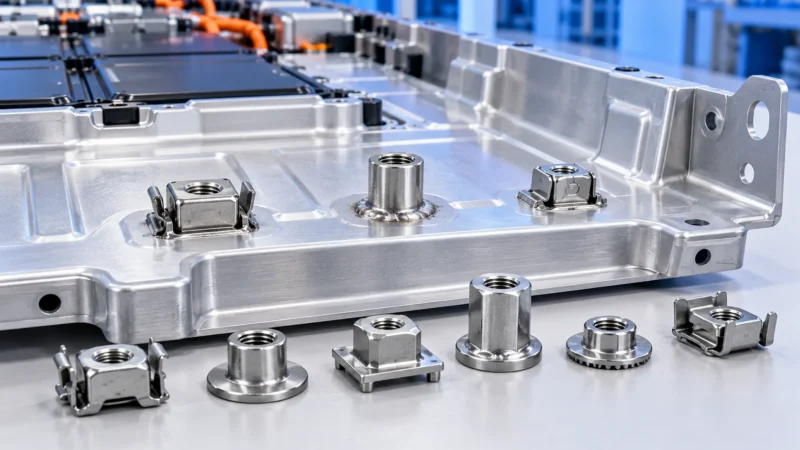
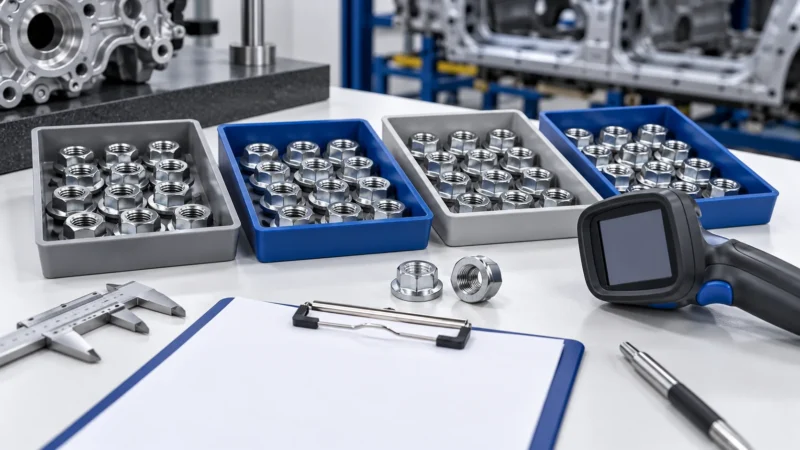
Figure 1 : Le statut d'écrou spécial provient de caractéristiques techniques contrôlées, pas seulement de l'apparence. La forme du filetage, la hauteur de l'écrou, la géométrie de la collerette, la longueur du manchon, la zone de freinage, les projections de soudure, le matériau et la finition finale peuvent tous modifier l'ajustement ou les performances de l'assemblage.
Écrous spéciaux vs écrous standards
Les écrous standard sont le choix à moindre risque lorsqu'une norme produit établie satisfait déjà au dessin, au système de filetage, aux dimensions, à la classe de qualité, à la surface d'appui, à la finition, à l'espace d'installation et à l'exigence de contrôle. Les écrous spéciaux sont appropriés lorsque cette pièce standard ne peut pas répondre à un besoin mesurable. Pour les géométries métriques et pouces de base, examinez le guide des dimensions des écrous hexagonaux avant de vous engager dans une conception personnalisée.
Écrous spéciaux vs écrous personnalisés et écrous non standard
Les termes se chevauchent mais ne sont pas identiques. Un écrou personnalisé est normalement fabriqué selon un dessin ou un échantillon approuvé. Un écrou non standard ne correspond pas entièrement à une géométrie de catalogue courante. Un écrou spécial peut être soit une pièce standard modifiée, soit un composant entièrement fabriqué sur plan. Acheter uniquement par son nom est risqué car “ contre-écrou ”, “ écrou à souder ” ou “ écrou à bride ” ne définit pas la tolérance du filetage, le matériau, la classe de performance, le revêtement, l'essai fonctionnel ou le domaine d'approbation.
Avertissement technique : le nom du produit n'est pas une spécification
Une demande pour un “ contre-écrou automobile M10 ” est incomplète. Elle n'identifie pas le pas et la tolérance du filetage, le principe de freinage (tout métal ou non métallique), l'exigence de couple résistant, le boulon d'accouplement, la température, le revêtement, le lubrifiant, la règle de réutilisation ou la méthode d'essai. Ces détails peuvent modifier à la fois le couple de serrage et la charge de serrage obtenue. Utilisez le dernier dessin et l'exigence fonctionnelle comme documents de référence.
Article
Écrou standard
Écrou spécial
Risque si la différence n'est pas prise en compte
Dimensions
Géométrie et tolérances standard du catalogue.
Hauteur, bride, douille, saillie, chanfrein, face d'appui, pilote ou forme extérieure modifiés.
Interférence d'outil, mauvais positionnement, engagement insuffisant, emplacement de soudure incorrect ou rejet d'échantillon.
Fil
Taille, pas et tolérance courants.
Pas fin, filetage à gauche, profondeur contrôlée, tolérance spéciale ou exigence de jauge après revêtement.
Faux filetage, grippage, arrachement, couple de serrage excessif ou défaillance de jauge.
Fonction
Serrage général sans fonction intégrée supplémentaire.
Verrouillage, soudage, espacement, anti-rotation, installation compacte, support d'étanchéité, conductivité ou isolation.
Perte de précharge, rotation dans le panneau, soudure faible, défaillance de fonction électrique ou reprise.
Propriétés mécaniques
Classe de propriété ou nuance sélectionnée selon une norme applicable.
Charge de preuve spécifique au dessin, dureté, matière, traitement thermique ou performance fonctionnelle.
Arrachement du filetage, comportement fragile, non-conformité avec le boulon d'accouplement ou capacité de charge non vérifiée.
Contrôle de la production
Processus de catalogue mature et itinéraire d'inspection établi.
Outillage dédié, échantillonnage conforme à la production, validation du processus, jauges spéciales, tri ou enregistrements de lots.
Variation prototype-production, pièces mélangées, approbation retardée ou confinement faible.
Pourquoi les acheteurs de pièces automobiles ont besoin d'écrous spéciaux
Les acheteurs automobiles ont besoin d'écrous spéciaux lorsque l'assemblage combine des contraintes qu'un écrou de catalogue ne peut pas satisfaire, telles qu'un accès limité, des vibrations, le soudage, la corrosion, la chaleur, l'alimentation automatisée, une fonction électrique ou une approbation spécifique du client. La bonne décision commence par le processus d'assemblage et de joint, et non par le diamètre nominal du filetage.
Un joint de véhicule peut subir des charges cycliques, des vibrations, des mouvements thermiques, de l'humidité, des contaminants routiers ou un démontage en service. Ces conditions ne nécessitent pas automatiquement une pièce sur mesure, mais elles doivent être vérifiées par rapport à l'option standard. Une conception spéciale n'est justifiée que si elle résout un mode de défaillance défini ou un problème de production sans créer un nouveau risque au niveau de l'engagement du filetage, de l'ajustement du revêtement, de la dispersion de la charge de serrage, de la déformation de soudure, du coût ou de la disponibilité de remplacement.
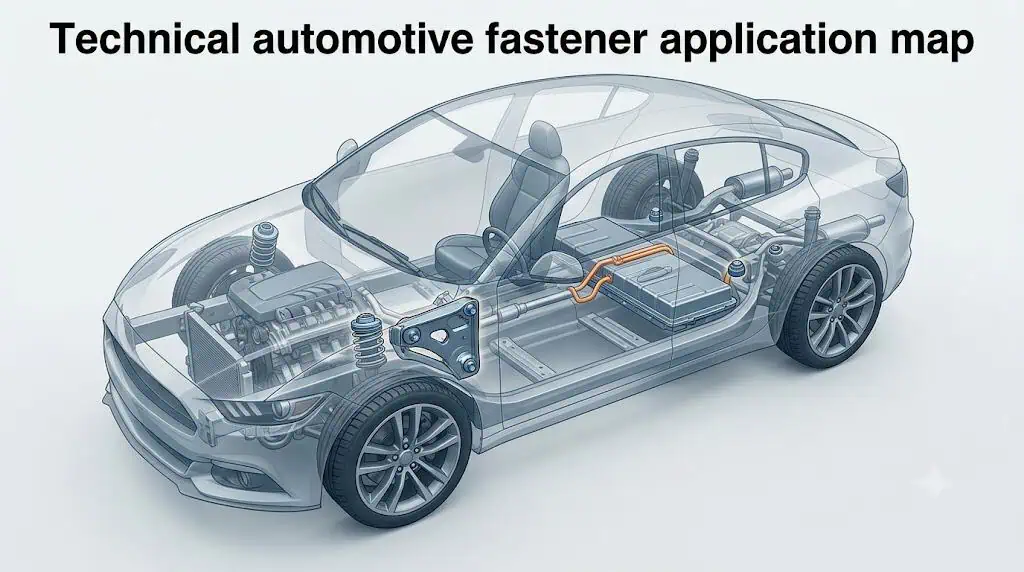
Figure 2 : Les supports de châssis, les sièges, les structures de carrosserie, les systèmes thermiques et les assemblages de batteries de véhicules électriques peuvent imposer des exigences différentes en matière d'accès, de vibrations, de corrosion, de soudage, de charge de serrage ou de comportement électrique.
Espace d'assemblage limité dans les composants du véhicule
Les écrous bas, à douille, pilotes, captifs ou de forme spéciale peuvent être utiles lorsqu'un écrou hexagonal standard bloque un outil ou interfère avec des composants voisins. La réduction de la hauteur de l'écrou n'est pas une modification gratuite : l'engagement du filetage, la capacité de charge de preuve, la pression de portée, l'accès de la douille, l'accumulation de tolérances et le démontage en service doivent encore être examinés.
Vibrations, verrouillage et stabilité de précharge
Les écrous à couple résistant, les écrous à bride striée et autres conceptions de verrouillage peuvent soutenir une stratégie validée de desserrage, mais ils ne remplacent pas la conception du joint. Le boulon d'accouplement, la longueur de serrage, la rigidité du joint, la surface de la rondelle ou de portée, la méthode de serrage, le revêtement, la lubrification et la charge de service affectent tous la précharge retenue.
Un exemple courant sur le terrain : un assemblage de support a réussi l'inspection dimensionnelle avec un écrou standard mais s'est desserré lors des tests de vibration. La taille du filetage était correcte ; l'exigence manquante était la stratégie de verrouillage et de charge de serrage. L'action corrective a consisté à définir le boulon d'accouplement, la condition de serrage, les surfaces du joint, l'exigence de couple résistant ou de verrouillage, et la validation fonctionnelle au lieu de substituer un écrou autofreiné par son seul nom.
Défis liés à la corrosion, à la chaleur et au traitement de surface
Le zingage, le zinc-nickel, le zinc-flocons, le phosphatage, l'oxydation noire et les revêtements organiques diffèrent par leur comportement à la corrosion, leur procédé de revêtement, leur contrôle de frottement, leur tolérance de filetage, leur aspect et leurs exigences d'approbation. L'exposition au brouillard salin est un essai comparatif contrôlé ; elle ne doit pas être présentée comme une prédiction directe de la durée de vie en service du véhicule. Pour une décision détaillée sur le revêtement, utilisez le guide des écrous zingués, zingage lamellaire et zinc-nickel.
Exigences OEM, de niveau et du marché secondaire
Les programmes de production automobile peuvent nécessiter un contrôle des révisions de plans, des échantillons représentatifs de la production, une traçabilité des lots, des enregistrements des matériaux et des processus, ainsi qu'un dossier d'approbation défini par le client. Ces exigences ne sont pas universelles pour chaque commande automobile. Leur étendue dépend du client, du programme, du niveau de la chaîne d'approvisionnement et du contrat d'achat. Les projets de rechange peuvent utiliser des voies d'approbation différentes, mais nécessitent toujours une définition technique suffisante pour éviter les erreurs d'ajustement, de revêtement et d'assemblage.
Note de sécurité sur les fixations : les écrous inoxydables peuvent gripper
Les écrous en acier inoxydable peuvent gripper lorsque les surfaces de filetage en contact adhèrent et se déchirent lors du serrage. Le risque est influencé par le couple de matériaux, la finition du filetage, la propreté, la lubrification, la pression de contact, la vitesse de serrage, l'alignement et l'utilisation répétée. Spécifier du 304, 316, A2, A4 ou une classe de propriété supérieure ne résout pas en soi le grippage.
Un problème d'assemblage typique : un écrou inoxydable grippé sur un boulon inoxydable lors d'un serrage motorisé. Le couple a augmenté fortement, mais l'assemblage n'avait pas atteint la précharge contrôlée. La ligne d'achat a identifié le matériau mais n'a pas défini la lubrification, la vitesse de serrage, l'état d'accouplement ou la réutilisation. La correction pratique consiste à valider un lubrifiant ou un système anti-grippage approuvé là où cela est permis, à améliorer l'état du filetage et l'alignement, à contrôler la vitesse d'installation et à envisager un matériau dissemblable ou un traitement de surface validé lorsque l'application le permet.
Les classes de propriété finales des écrous en acier inoxydable doivent suivre le plan et la norme applicables. Lorsque des écrous en acier inoxydable résistant à la corrosion sont spécifiés, les propriétés mécaniques doivent être examinées séparément du contrôle du grippage.
Types courants d'écrous spéciaux utilisés dans les pièces automobiles
Les écrous spéciaux courants dans l'automobile comprennent les écrous à embase, les écrous à couple résistant, les écrous à souder par bossages, les écrous tubulaires ou d'espacement, les écrous bas, les écrous auto-clincheurs, ainsi que les écrous à haute résistance ou résistant à la corrosion spécifiques au plan. Le nom du type n'est qu'un point de départ ; la fonction de l'assemblage et la méthode de validation déterminent s'il est approprié.
Type d'écrou spécial
Utilisation typique
Fonction principale
L'acheteur doit confirmer
Écrou à embase ou écrou à embase striée
Supports, cadres, assemblages de carrosserie ou de châssis.
Surface d'appui intégrée ; les stries peuvent augmenter la résistance à la rotation sur les surfaces appropriées.
Diamètre d'embase, géométrie des stries, surface d'appui, revêtement, surface de contact et validation de la charge de serrage. Voir écrous à embase dentelés.
Écrou à couple résistant tout métal
Applications nécessitant un comportement de verrouillage à des températures inadaptées à un insert polymère.
Couple résistant contrôlé provenant d'un élément de verrouillage métallique.
Exigence de performance applicable, température, boulon d'accouplement, couple de serrage, politique de réutilisation et revêtement. Voir écrous autofreinés tout métal.
Écrou à insert non métallique
Assemblages dans les limites de température et chimiques validées de l'insert.
Couple prédominant provenant d'un insert polymère.
Matériau de l'insert, température et exposition aux fluides, cycles d'installation, état du boulon d'accouplement et essai fonctionnel.
Écrou à souder par bossages
Structures en tôle, supports, sièges, composants de carrosserie et assemblages fermés.
Fixation filetée permanente avant l'assemblage final.
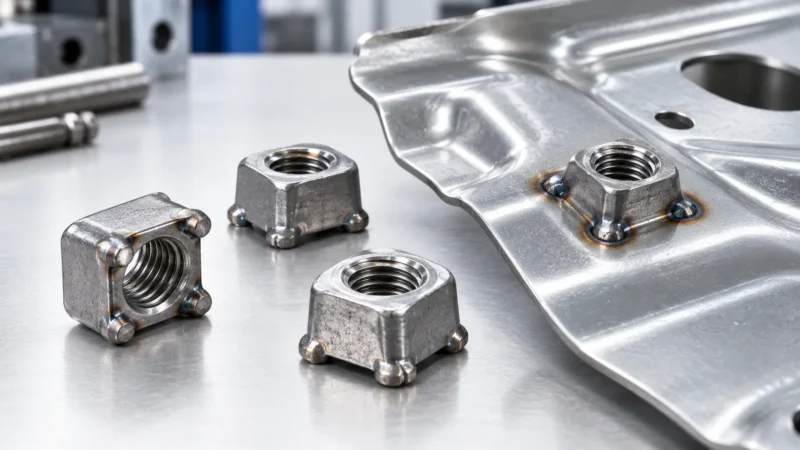
Géométrie de la projection, matériau et épaisseur de la tôle, fenêtre de soudage, emplacement, exigence de couple de dévissage, de poussée ou d'arrachement, contrôle des projections et état du filetage après soudage. Voir écrous à souder par projection pour tôle automobile.
écrou auto-poinçonneur
Tôle fine où la chaleur de soudure ou l'accès est indésirable et la tôle convient à une installation par refoulement à froid.
Filetage interne permanent et verrouillé mécaniquement.
Dureté et épaisseur de la tôle, diamètre du trou, distance au bord, force d'installation, couple de dévissage, force d'extraction et finition du panneau.
Douille, entretoise ou écrou long
Assemblages profonds, fonctions d'entretoise, tubes, supports ou chemins de charge spéciaux.
Engagement prolongé, espacement, alignement ou transfert de charge.
Concentricité, épaisseur de paroi, longueur d'engagement, cintrage, face d'appui et usinage secondaire.
Écrou mince ou à profil bas
Espaces de montage restreints et assemblages à faible dégagement.
Hauteur installée réduite.
Engagement minimal, capacité de charge d'épreuve, accès aux outils, pression d'appui et marge de sécurité contre l’arrachement des filets.
Écrou haute résistance ou inoxydable selon plan
Assemblages soumis à des contraintes mécaniques, à la corrosion, thermiques, esthétiques ou électriques.
Performances mécaniques, de corrosion, thermiques ou électriques définies par le projet.
Matériau, classe de propriété, traitement thermique, revêtement, grippage, risque de fragilisation par l'hydrogène, charge d'épreuve et documentation.
Écrous standards ou écrous spéciaux : comment les acheteurs doivent-ils décider ?
Choisissez un écrou standard lorsqu'il satisfait à l'ensemble des spécifications de l'assemblage et d'achat. Choisissez un écrou spécial uniquement lorsqu'une exigence documentée ne peut être satisfaite par une option standard ou modifiée-standard approuvée. La personnalisation ajoute des obligations d'outillage, de validation, de contrôle des modifications, de remplacement et de continuité d'approvisionnement, elle ne doit donc résoudre qu'un problème mesurable.
Facteur de décision
L'écrou standard est généralement moins risqué lorsque…
L'écrou spécial peut être justifié lorsque…
Preuve requise
Géométrie et accès
Les dimensions du catalogue s'adaptent à l'enveloppe et aux outils disponibles.
La hauteur, la bride, le pilote, le manchon, l'anti-rotation ou l'accès doivent être modifiés.
Plan d'assemblage, cumul de tolérances, vérification du dégagement d'outil et échantillon de production.
Performance des joints
La classe de propriété, la surface d'appui et la méthode de serrage répondent à l'exigence de l'assemblage.
La fonction de verrouillage, de charge de serrage, de fixation par soudure, électrique ou de transfert de charge est différente.
Essai fonctionnel défini, pièces d'accouplement, condition de serrage et critères d'acceptation.
Environnement
Une finition standard approuvée répond aux besoins d'exposition et d'assemblage.
Le revêtement, la couche de finition, le grade d'acier inoxydable, l'isolation, la conductivité ou le comportement thermique sont spécifiques au projet.
Code de revêtement, essai de corrosion, exigence de filetage, exigence de frottement et limite d'application.
Volume de fabrication
Un article du catalogue est disponible dans la quantité requise et le délai de livraison.
Un volume répété justifie un outillage ou un processus hybride, tandis qu'un faible volume nécessite un usinage.
Volume annuel, quantité d'échantillon, propriété de l'outillage, itinéraire de processus et politique de changement.
Qualité et approbation
L'inspection standard et les documents du fournisseur satisfont au contrat d'achat.
Des jauges spéciales, une approbation de production, un PPAP, une traçabilité ou des enregistrements clients sont requis.
Liste des documents, état de révision, plan d'échantillonnage, définition de lot et exigences spécifiques au client.
Règle de décision : ne pas approuver un écrou spécial sur la base d'un seul échantillon visuel. Confirmer le dernier plan, le boulon ou goujon d'accouplement, les surfaces de joint, la méthode de serrage, l'état du lubrifiant, l'essai fonctionnel, le revêtement, l'état du filetage après traitement final et le processus de production. Si un écrou standard répond déjà à ces exigences, il constitue normalement le choix d'approvisionnement le plus robuste.
Spécifications clés à confirmer avant de commander des écrous spéciaux
Une spécification complète d'écrou spécial doit définir la géométrie, le filetage, le matériau, les propriétés mécaniques, le traitement thermique, la finition finale, les conditions d'assemblage, les essais fonctionnels, l'inspection et les documents d'approbation. Une photo et une taille de filetage nominale ne suffisent pas pour un devis fiable ou une autorisation de production.
Figure 3 : La demande de devis doit relier le plan au joint d'accouplement, aux exigences de matériau et de propriété, au revêtement final, à la méthode d'inspection, au volume de production et au périmètre d'approbation.
Liste de contrôle RFQ d'ingénierie pour les écrous spéciaux
Enregistrement de conception : dernière révision du plan 2D, modèle 3D le cas échéant, état d'approbation de l'échantillon et notes contrôlées.
Filetage : système, diamètre nominal, pas, sens, classe de tolérance, profondeur de filet complète, tolérance de filet incomplet, norme de calibre et condition d'inspection du processus final.
Géométrie critique : hauteur de l'écrou, largeur sur plats, diamètre de la bride ou de la base, pilote, longueur du manchon, saillies, chanfrein, rayon, face d'appui, concentricité et tolérances de position.
Matériau : nuance exacte ou spécification approuvée, pas seulement “ acier ”, “ inox ” ou un équivalent local supposé.
Propriétés mécaniques : classe de propriété ou charge de preuve spécifique au dessin, dureté, couple de sortie, poussée, traction, couple prédominant ou autre exigence fonctionnelle selon le cas.
Traitement thermique : condition requise, plage de dureté, restrictions métallurgiques, préoccupations de distorsion et preuves requises du processus.
Système de surface : code de revêtement, prétraitement, couche de finition ou lubrifiant, aspect, épaisseur le cas échéant, exigence de corrosion, exigence de frottement et ajustement du filetage après revêtement.
Condition d'assemblage : boulon ou goujon d'accouplement, rondelle ou panneau, matériau du joint, outil de serrage, vitesse, stratégie de couple, lubrification, température de service et politique de réutilisation.
Voie de production : voie de prototypage, voie de production en série, outillage, opérations secondaires, fournisseurs de procédés spéciaux et exigence d'échantillon représentatif de la production.
Preuve de qualité : rapport dimensionnel, enregistrements de calibres de filetage, enregistrements de matériau et de traitement thermique, rapport de revêtement, résultats mécaniques ou fonctionnels, preuve de capacité le cas échéant, et traçabilité des lots.
Données du projet : quantité d'échantillon, prévisions, volume annuel, calendrier de livraison, emballage, étiquetage, destination et niveau de soumission requis.
Pourquoi les dessins sont plus importants que les noms de produits
Un dessin convertit une étiquette d'achat en exigences mesurables. Il doit séparer les dimensions critiques et de référence, identifier le filetage de contrôle et l'état de finition, et indiquer quelles caractéristiques fonctionnelles nécessitent une vérification. Lorsque la rétro-ingénierie est autorisée, le fournisseur doit identifier ce qui peut être mesuré à partir de l'échantillon et ce qui nécessite encore la confirmation de l'acheteur. Un échantillon usé ne peut pas prouver la tolérance de filetage d'origine, le traitement thermique, le code de revêtement ou l'intention de conception.
Pourquoi le traitement de surface doit être confirmé tôt
Le revêtement affecte plus que la corrosion. Il peut modifier l'ajustement du filetage intérieur, le frottement des paliers, le couple résistant, la conductivité, l'apparence et l'analyse des risques pour les matériaux à haute résistance. Une substitution de revêtement doit donc déclencher une révision de l'état final du filetage et du processus de serrage. Ne pas reporter automatiquement une valeur de couple existante après avoir changé de revêtement ou de lubrifiant.
Le guide PPAP dédié pour les écrous automobiles personnalisés explique quand les documents d'approbation de production doivent être définis. La portée du PPAP doit être confirmée par le client ou le programme ; elle n'est pas automatiquement incluse dans chaque demande de devis automobile.
Comment les écrous spéciaux sont fabriqués pour les projets automobiles
Les écrous spéciaux peuvent utiliser le refoulage à froid ou le formage à froid, l'usinage, le perçage, le taraudage ou le formage de filets, le traitement thermique, le contrôle des caractéristiques de soudage, le revêtement, le nettoyage, l'inspection, le tri et l'emballage contrôlé. La bonne voie dépend de la géométrie, de la formabilité du matériau, des tolérances, du volume annuel, des caractéristiques critiques et du stade d'approbation.
L'usinage CNC peut être approprié pour la vérification de conception ou les faibles volumes. Le formage à froid peut favoriser l'utilisation des matériaux et l'efficacité de la production en série lorsque la géométrie et le volume justifient l'outillage. De nombreuses pièces utilisent une voie hybride : une ébauche formée suivie d'un taraudage, d'un ébavurage, d'un usinage, d'un traitement thermique, d'un revêtement et d'une inspection finale. Une voie prototype ne doit jamais être supposée représenter la voie de production finale.
Figure 4 : Aperçu conceptuel de la voie de procédé uniquement. La séquence réelle et les opérations incluses dépendent du dessin, du matériau, du procédé de filetage, du traitement thermique, du système de revêtement, du volume et du plan de contrôle approuvé.
Un problème courant de transition de production : les prototypes usinés s'assemblent correctement, tandis que les pièces de série formées à froid échouent au calibre de filetage final après revêtement. La cause habituelle n'est pas une “ mauvaise production de masse ” isolée ; les voies d'échantillonnage et de production ont créé des conditions différentes de formage, de taraudage, de bavures, de traitement thermique et de revêtement. La correction consiste à approuver des pièces représentatives de la production à partir de la voie de série prévue et à vérifier le filetage après tous les processus finaux spécifiés.
Processus
Quand ça s'adapte
Principales questions d'ingénierie
Risque d'approbation
Refoulage à froid / Formage à froid
Le volume répété et la géométrie formable justifient un outillage dédié.
Formabilité du matériau, séquence de matrice, écoulement du grain, formation de saillie ou de bride, ébavurage, usure de l'outillage et opérations secondaires.
Modifications tardives du dessin, caractéristiques formées non validées, ou un prototype qui ne représente pas la voie de production.
Usinage CNC
Prototype, faible volume, conception changeante ou géométrie locale complexe.
Stratégie de mise en forme, bavures, concentricité, finition, temps de cycle, enlèvement de matière et coût unitaire.
L'ébavurage manuel ou les ajustements sur échantillons masquent les problèmes de répétabilité de production.
Filetage
Filetage intérieur réalisé par taraudage, roulage ou autre méthode approuvée.
Tolérance du filetage, usure de l'outil, lubrifiant, bavures, profondeur, méthode de calibrage et surépaisseur de revêtement final.
Résultat de calibrage vérifié avant — et non après — le revêtement final ou le traitement thermique.
Traitement thermique
Les propriétés mécaniques requises ne peuvent être obtenues à l'état brut de formage ou d'usinage.
Réponse du matériau, dureté, exigence de charge d'épreuve, déformation, décarburation, état métallurgique et traçabilité des lots.
La dureté est acceptée comme seule preuve de performance mécanique complète.
Traitement de surface
Lorsque le code de corrosion, frottement, aspect, conductivité, isolation ou revêtement client l'exige.
Prétraitement, voie de dépôt, épaisseur, couche de finition, lubrifiant, ajustement du filetage, frottement, risque de fragilisation et méthode d'essai.
Revêtement choisi par couleur ou résistance au brouillard salin sans validation d'assemblage.
Contrôle et tri
Les dimensions critiques, filetages, caractéristiques de soudure, risque de mélange ou exigences client justifient des contrôles définis.
Conception des calibres, adéquation du système de mesure, échantillonnage, limites de tri automatisé, plan de réaction, identité de lot et emballage.
“Le ” tri 100% » est présenté comme une garantie zéro défaut sans préciser les caractéristiques que le trieur peut détecter.
Avertissement technique : risque de fragilisation par l'hydrogène dans les pièces plaquées à haute résistance
Le risque de fragilisation par l'hydrogène doit être examiné lorsque des pièces en acier à haute résistance ou trempé sont exposées à des processus générateurs d'hydrogène tels que certains nettoyages, décapages ou électrozingage. L'inspection visuelle et dimensionnelle ordinaire ne peut confirmer que le risque a été maîtrisé. L'état du matériau, la dureté, le traitement thermique, le processus, la spécification de revêtement, le traitement de relaxation si nécessaire, le délai avant traitement, la manutention et les contrôles spécifiques au client peuvent tous être importants.
Un schéma typique d'échec d'approvisionnement : un ensemble de fixations traité thermiquement passe l'inspection de réception mais se fissure plus tard sous charge soutenue. Le dessin exigeait une haute résistance et une finition électrozingue, tandis que le RFQ ne définissait pas les contrôles ou preuves du risque de fragilisation. L'action corrective consiste à examiner l'ensemble du parcours matériau-traitement thermique-revêtement et la spécification client applicable avant approbation, et non à se fier à une déclaration générique selon laquelle les pièces ont été cuites.
Exigences de contrôle qualité pour les écrous spéciaux automobiles
Le contrôle qualité doit être construit à partir du dessin et de l'exigence fonctionnelle, puis lié au lot de production et au plan d'approbation. L'inspection visuelle seule ne peut vérifier l'ajustement du filetage interne, la charge d'épreuve, le couple de freinage, l'épaisseur du revêtement, les performances de soudure, le comportement de friction ou la traçabilité.
Figure 5 : Le contrôle du filetage fait partie de la libération. Le plan d'inspection doit également couvrir les cotes de dessin, les preuves de matériau et de traitement thermique, le revêtement, les essais fonctionnels, l'identité du lot et toute exigence de soumission spécifique au client.
Élément de contrôle
Ce qu'il vérifie
Limite importante
Preuves typiques requises
Contrôle dimensionnel
Géométrie critique, relations de référence, surfaces d'appui, saillies, alésages et ajustement d'assemblage.
Un petit échantillon ne démontre pas à lui seul la capacité à long terme du processus.
Rapport dimensionnel, résultats de jaugeage, étude de capabilité ou rapport d'implantation approuvé.
Inspection du filetage
Acceptation du filetage applicable dans l'état final spécifié.
Un calibre passe/ne-passe pas ne mesure pas chaque caractéristique de filet ni ne prouve la performance de serrage.
Statut d'étalonnage du calibre, enregistrement d'inspection et condition définie avant ou après revêtement.
Essais mécaniques
Charge d'épreuve, dureté ou autre propriété mécanique définie par le dessin ou la norme.
La dureté seule n'équivaut pas à la charge d'épreuve, la fatigue, la soudabilité ou la performance anticorrosion.
Rapport d'essai lié au lot et à la méthode applicable.
Essai de couple résistant ou de couple/force de serrage
Comportement de verrouillage ou réponse au serrage de la combinaison de fixations définie.
Les résultats dépendent de la fixation complémentaire, du revêtement, du lubrifiant, de l'état d'appui et de la configuration d'essai.
Rapport fonctionnel avec combinaison d'éprouvettes, cycles et critères d'acceptation.
Essai de soudure d'attache
Procédé de soudage par projection et résistance du joint, tels que couple de torsion, poussée, traction ou examen de section.
L'écrou seul ne peut pas prouver la performance de soudure sans la tôle définie et le procédé de soudage.
Étude de fenêtre de soudure, essai destructif, enregistrement de procédé ou méthode approuvée par le client.
Inspection du revêtement
Code de revêtement spécifié, épaisseur le cas échéant, aspect, essai de corrosion et/ou condition de frottement.
Les heures de brouillard salin ne prédisent pas directement la durée de vie réelle du véhicule, et l'épaisseur seule ne prouve pas le contrôle du frottement.
Certificat de revêtement, résultats d'épaisseur, rapport de corrosion, essai de frottement ou enregistrement d'applicateur approuvé.
Traçabilité des matériaux et des procédés
Lien entre la quantité expédiée et les enregistrements de matière, production, traitement thermique, revêtement, inspection et emballage.
La traçabilité doit être conçue pour soutenir le confinement ; une étiquette seule ne constitue pas un système de traçabilité complet.
Code de lot, bon de fabrication, enregistrements de processus, certificats, lot d'inspection et étiquette d'emballage.
Le niveau d'échantillonnage requis, les preuves de capacité et le dossier documentaire doivent être convenus avant la production. Pour une conception par lot, utilisez le guide dédié guide de traçabilité pour les fixations automobiles.
Erreurs d'achat courantes lors de l'achat d'écrous spéciaux
Les erreurs les plus coûteuses commencent par un RFQ incomplet, pas par l'inspection finale. Un devis bas peut être basé sur un mauvais matériau, une voie prototype, un revêtement, un périmètre d'inspection ou une hypothèse d'approbation. Ces différences n'apparaissent souvent qu'après l'outillage, l'échantillonnage ou les essais en ligne.
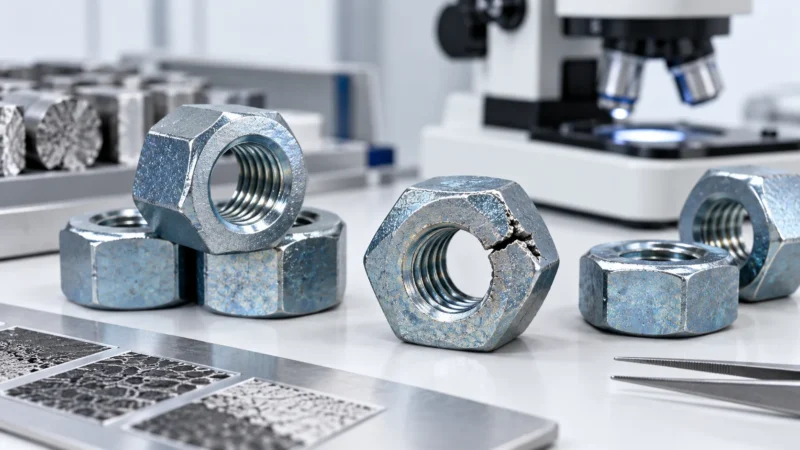
Figure 6 : Une fracture visible est le résultat final, pas le diagnostic. La matière, le traitement thermique, le processus de revêtement, l'ajustement du filetage, la précharge du joint, la charge et les preuves de fracture doivent être examinés avant d'attribuer une cause.
Erreur
Pourquoi cela se produit
Conséquence probable
Meilleur contrôle
Devis à partir d'une photo et du filetage nominal uniquement
L'acheteur suppose que l'apparence extérieure identifie la pièce.
Mauvais pas, tolérance, matériau, géométrie, finition ou exigence fonctionnelle.
Émettre le dernier plan ou créer un plan de rétro-ingénierie contrôlé avec les éléments ouverts marqués pour confirmation.
Comparer le prix unitaire sans comparer le périmètre de processus
Les fournisseurs supposent des outillages, traitements thermiques, revêtements, inspections, tris ou parcours documentaires différents.
Modifications de prix tardives, retard d'approbation, coût d'outillage caché ou absence de preuve de qualité.
Comparez les hypothèses de devis ligne par ligne, y compris le processus de production et les tests inclus.
Report du couple après changement de revêtement ou de lubrifiant
Le couple est traité comme une mesure directe de la charge de serrage.
Sous-serrage, surcharge, endommagement du filetage, limite d'élasticité du boulon ou dispersion excessive.
Revalidez la combinaison de fixations définie et les conditions de serrage.
Utilisation des heures de brouillard salin comme seul critère de décision pour le revêtement
La performance anticorrosion est réduite à un seul résultat de laboratoire.
Interférence de filetage, mauvais frottement, mauvais comportement des bords, conflit de fonction électrique ou désaccord de corrosion sur site.
Spécifiez le système de revêtement, le prétraitement, la couche de finition, le frottement, l'ajustement du filetage, la zone d'application et la méthode d'essai approuvée.
Approbation d'un prototype qui ne représente pas la production
L'échantillon a été usiné ou corrigé manuellement, tandis que la production en série sera formée et automatisée.
Variation du premier lot, bavures, problèmes d'ajustement du revêtement ou approbation de production retardée.
Identifier séparément les étapes du prototype et de l'intention de production et approuver la route série planifiée.
Demander “ PPAP ” sans définir la portée
PPAP est utilisé comme une étiquette de qualité générale plutôt que comme un processus de soumission client.
Documents manquants, coût inutile, niveau de soumission erroné ou litige d'approbation.
Confirmer le client, le programme, le niveau de soumission, le calendrier, les enregistrements et les exigences spécifiques du client avant la soumission.
Supposer que le tri garantit zéro défaut
Les limites de détection du système de tri ne sont pas examinées.
Fissures indétectables, problèmes de fonction de filetage, conditions mélangées ou fausse confiance.
Définir chaque caractéristique, méthode de détection, échantillon de défi, plan de réaction et risque résiduel.
Comment choisir un fabricant d'écrous spéciaux pour pièces automobiles
Évaluer si le fournisseur peut traduire le dessin et les exigences d'assemblage en une route de production et de contrôle réaliste. Les photos de produits et les devis rapides ne prouvent pas la capacité. Le fournisseur doit être capable d'expliquer ce qui sera formé, usiné, fileté, traité thermiquement, revêtu, testé, tracé et contrôlé entre les échantillons et la production en série.
Avis d'expert : un bon échantillon ne prouve pas la stabilité en série
Un échantillon CNC ébavuré manuellement peut s'ajuster parfaitement, tandis qu'un lot de production formé se comporte différemment après taraudage, traitement thermique et revêtement. Demandez quelles opérations diffèrent entre l'échantillon et la production en série, quelles caractéristiques sont affectées et quand la validation conforme à la production aura lieu.
Capacité du fournisseur
Preuve à examiner
Pourquoi c'est important
Examen du dessin et de l'application
Questions sur les références, les dimensions critiques, le filetage, les pièces d'accouplement, la charge, l'environnement et le processus d'assemblage.
Indique si le devis est basé sur l'assemblage réel plutôt que sur la seule apparence de la pièce.
Évaluation du processus de production
Explication claire du formage à froid, de l'usinage, du filetage, du traitement thermique, du revêtement, des processus spéciaux et de l'intention de production.
Évite les écarts entre le prototype et la production ainsi que les hypothèses de coûts irréalistes.
Mesures et essais fonctionnels
Calibres applicables, équipement étalonné, adéquation du système de mesure, dispositions pour les essais de charge ou fonctionnels, et plans de réaction.
Démontre que les caractéristiques critiques peuvent être vérifiées, et non simplement promises.
Contrôle des processus spéciaux
Traitement thermique et revêtement approuvés, contrôles du fournisseur, enregistrements, notification de changement et traçabilité des lots.
De nombreux risques liés aux matériaux et aux revêtements proviennent de l'extérieur de l'usinage final et nécessitent un contrôle de la chaîne d'approvisionnement.
Documentation automobile
Capacité à fournir la documentation PPAP, plan de contrôle, PFMEA, capabilité, traçabilité ou documentation de modification définie par le client lorsque requis contractuellement.
Évite de supposer qu'un certificat de système qualité couvre automatiquement l'approbation de pièce requise.
Emballage et prévention des mélanges
Identification des pièces, étiquettes de lot, quantité d'emballage, ségrégation, libération de ligne et compatibilité de réception.
Des écrous similaires sont difficiles à distinguer visuellement et peuvent entraîner des erreurs d'assemblage à fort impact.
Quelles informations les acheteurs doivent-ils fournir pour un devis précis ?
Le dossier de devis doit combiner la définition technique avec les données commerciales et d'approbation. La liste de contrôle RFQ précédente définit ce qu'est l'écrou ; cette section définit les hypothèses du projet qui déterminent l'outillage, le parcours d'échantillonnage, la portée des tests, les délais, l'emballage et le prix.
Liste de contrôle des informations de devis et de projet
Numéro de plan, révision et statut de publication les plus récents.
Nom de la pièce et application prévue sans utiliser le nom comme seule spécification.
Détails du boulon d'accouplement, goujon, panneau, rondelle, support ou joint nécessaires à l'examen fonctionnel.
Quantité de prototype, quantité d'échantillon représentatif de la production, commande d'essai, prévisions et volume annuel.
Date de début de production cible, date d'échantillon requise, cadence de livraison et destination.
Propriété de l'outillage, durée de vie prévue de l'outillage, responsabilité de remplacement et hypothèses de modification du plan.
Essais fonctionnels requis, éprouvettes, méthode d'essai du client et critères d'acceptation.
Dossier documentaire requis, niveau PPAP le cas échéant, langue, calendrier de soumission et autorité d'approbation.
Quantité d'emballage, étiquetage, séparation des lots, protection contre la corrosion, méthode de transport et prévention du mélange de pièces.
Toute exigence spécifique du client, liste de sources approuvées, exigence relative aux substances restreintes ou règle de notification de modification.
Si un dessin complet n'est pas disponible, envoyez l'échantillon physique, des photographies claires, la pièce d'accouplement, la description de l'application et les exigences connues. Le fournisseur doit renvoyer une liste des valeurs mesurées, des hypothèses et des éléments non résolus pour approbation avant l'outillage ou la production en série.
Normes techniques et références faisant autorité
L'ensemble de normes applicable dépend de la conception de l'écrou, du système de filetage, du matériau, du principe de freinage, du revêtement, de la méthode d'essai, du marché et du programme du client. Les normes doivent soutenir une exigence définie ; elles ne doivent pas être listées comme preuve décorative de qualité.
ISO 898-2:2022: propriétés mécaniques et physiques des écrous en acier au carbone et en acier allié avec des classes de propriétés spécifiées. Il ne définit pas en soi la résistance à la corrosion, la soudabilité, le couple résistant ou la performance couple/effort de serrage.
ISO 3506-2:2020: propriétés mécaniques et physiques des écrous en acier inoxydable résistant à la corrosion dans son domaine d'application déclaré.
ISO 2320:2015: propriétés fonctionnelles et essais combinés pour les écrous en acier à couple résistant dans son domaine d'application et ses conditions d'essai.
ISO 16047:2005: conditions pour les essais de couple/force de serrage des fixations filetées et des pièces connexes relevant de son domaine d'application.
ISO 4042:2018: systèmes de revêtement par électrozingage pour les fixations, y compris les exigences techniques relatives au choix du revêtement et à la réduction du risque de fragilisation par l'hydrogène.
ASTM F1941/F1941M: revêtements par électrodéposition sur les fixations mécaniques pour applications en pouces et métriques dans le cadre de la spécification.
Processus d'approbation de pièce de production AIAG: cadre d'approbation des pièces de production automobile utilisé pour démontrer que le processus de fabrication peut répondre aux exigences du dossier de conception technique et des spécifications lorsque le client exige un PPAP.
Ressources officielles IATF 16949:2016: informations sur le système de management de la qualité automobile, interprétations autorisées, FAQ et liens vers les exigences spécifiques du client. La certification ne remplace pas l'approbation spécifique des pièces.
Le dessin de l'acheteur, le cahier des charges contractuel, les exigences spécifiques du client, les méthodes d'essai approuvées et les éditions en vigueur des normes restent prépondérants. Tout conflit ou substitution doit être résolu par écrit avant la soumission de devis ou le lancement de la production.
FAQ sur les écrous spéciaux pour pièces automobiles
Qu'est-ce qu'un écrou spécial ?
Un écrou spécial est un écrou modifié par rapport à la norme ou entièrement personnalisé, créé pour répondre à un besoin qu'aucun écrou standard du catalogue ne peut satisfaire. La différence peut concerner la géométrie, le filetage, le freinage, la soudabilité, le matériau, la classe de qualité, le revêtement, le frottement, le contrôle, la traçabilité ou la fonction sur la ligne de production.
Quand un acheteur automobile doit-il utiliser un écrou spécial au lieu d'un écrou standard ?
Utilisez un écrou spécial uniquement lorsque le joint, l'espace d'assemblage, la charge, les vibrations, le processus de soudage, l'environnement, la fonction électrique ou l'exigence du client ne peuvent pas être satisfaits par une pièce standard ou modifiée approuvée. Ce besoin doit être justifié par un dessin et des critères d'acceptation mesurables.
Les écrous spéciaux et les écrous personnalisés sont-ils identiques ?
Pas toujours. Un écrou personnalisé est normalement fabriqué selon un dessin ou un échantillon approuvé. Un écrou spécial peut être une pièce entièrement sur mesure ou un écrou standard avec une modification contrôlée telle qu'un revêtement différent, une hauteur, une bride, une fonction de verrouillage ou un état de filetage.
Le changement du revêtement de l'écrou nécessite-t-il une validation du couple ?
Cela nécessite souvent une révision car le revêtement et le lubrifiant peuvent modifier le frottement du filetage et du palier, ce qui change la charge de serrage à un couple donné. Le besoin et la méthode d'essai dépendent de l'assemblage, de la stratégie de fixation, des spécifications du client et du fait que la nouvelle finition modifie l'ajustement du filetage ou le comportement fonctionnel.
Quels essais doivent être spécifiés pour les écrous spéciaux automobiles ?
Spécifiez uniquement les essais conformes au dessin et à la fonction. Ceux-ci peuvent inclure le contrôle dimensionnel et du filetage, l'essai de charge d'épreuve ou de dureté, le couple résistant, le couple/effort de serrage, le couple de soudure ou l'extraction, l'épaisseur du revêtement, le frottement, les essais de corrosion, la vérification des matériaux et la traçabilité des lots.
Est-ce que chaque écrou spécial automobile nécessite un PPAP ?
Non. Le PPAP est requis lorsque le client, le programme, le contrat ou l'étape d'approbation le spécifie. Le niveau de soumission, la liste des documents, l'état des échantillons, le calendrier et les exigences spécifiques du client doivent être confirmés avant le devis et l'échantillonnage.
Envoyer le dessin, l'échantillon ou les détails de l'application pour examen
Pour une révision d'écrou spécial, fournissez le dernier dessin ou échantillon contrôlé, les données de filetage, les exigences de matériau et de propriété, la finition, les pièces d'accouplement, les conditions d'assemblage, le test fonctionnel, la quantité, le volume annuel, le périmètre de documentation et les exigences de livraison. Ces informations permettent au fournisseur de déterminer si le projet doit utiliser un écrou standard, un écrou standard modifié, une pièce personnalisée formée à froid, une pièce usinée par CNC ou une voie hybride.
Cette page est un aperçu technique et d'approvisionnement des écrous spéciaux pour pièces automobiles. Elle explique la définition, les principaux types, les considérations d'assemblage et de montage, les voies de fabrication, la logique d'inspection, les exigences de demande de devis et les risques d'approvisionnement courants, sans remplacer une revue de conception spécifique au projet.
Le matériau final, la classe de propriété, le filetage, le revêtement, la condition de serrage, la méthode d'essai, le périmètre PPAP, la traçabilité et les critères d'acceptation doivent suivre le dernier dessin de l'acheteur, les normes applicables, les exigences spécifiques du client et le contrat d'achat approuvé.