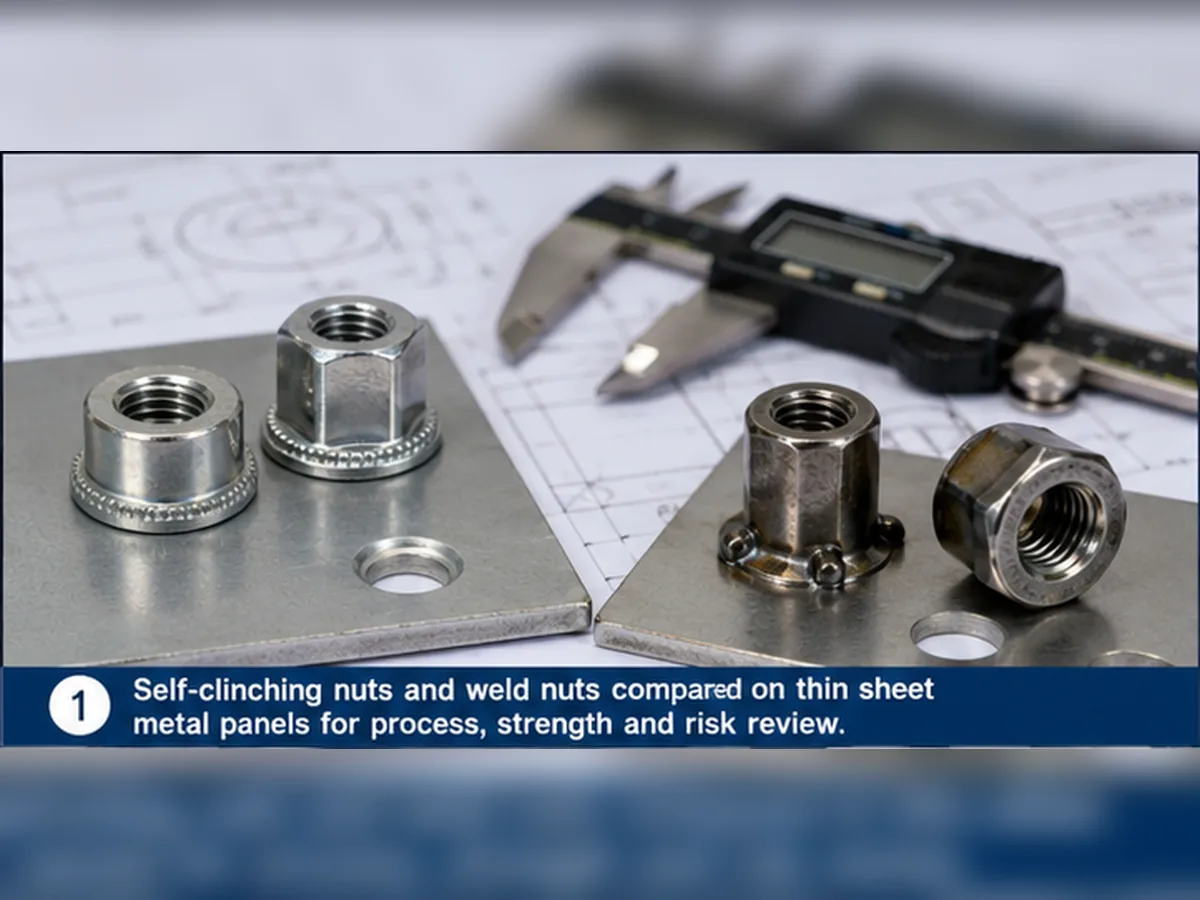
Vergleich von Befestigungselementen für dünne Bleche
Selbstklemmuttern vs. Schweißmuttern für dünne Bleche: Verfahren, Festigkeit und Risikovergleich
Einpressmuttern und Schweißmuttern können beide Innengewinde in dünnen Blechen erzeugen, sind jedoch nicht allein aufgrund der Gewindegröße austauschbar. Eine Einpressmutter ist abhängig von der Blechdicke, der Blechhärte, der Lochqualität und einer kontrollierten Einpressmontage. Eine Schweißmutter ist abhängig von der Schweißbarkeit, der Projektionsgeometrie, dem Schweißzugang, der Vorrichtungskontrolle und der Schweißprüfung.
Das Hauptrisiko bei der Auswahl besteht darin, nach Produktname statt nach Verbindungsbedingung zu wählen. Vor der Angebotserstellung sind das Blechmaterial, die Blechdicke, die Lochpositionstoleranz, die Beschichtung, die Lastrichtung, das Drehmomentausdrehen, das Ausziehen, das Herausdrücken, der Montageprozess, die Prüfmethode und die Kundennorm zu bestätigen.
Einpressmuttern und Schweißmuttern sollten nach Blechzustand, Montageprozess, Lastrichtung, Prüfung und Kundenanforderung verglichen werden.
Nur konzeptionelle technische Darstellung; endgültige Auswahl basiert auf Zeichnung, Blechdaten, Prozessvalidierung und Kundennorm.
Kurze Antwort: Wann sollten Käufer Einpressmuttern oder Schweißmuttern wählen?
Einpressmuttern werden in der Regel zuerst geprüft, wenn das Blechmaterial Kaltfließen in die Einpressfunktion unterstützen kann, das Loch innerhalb der Toleranz gehalten werden kann, Presszugang vorhanden ist und Schweißwärme oder Schweißrückstände vermieden werden sollten. Schweißmuttern werden in der Regel zuerst geprüft, wenn die Baugruppe für das Schweißen ausgelegt ist, Schweißzugang vorhanden ist, die Schweißbarkeit des Blechs bestätigt ist und die Schweißprüfung die Projektionsqualität, Ausrichtung und Gewindezustand kontrollieren kann.
Es gibt keinen universellen Gewinner. Eine Einpressmutter kann versagen, wenn das Blech zu hart, zu dünn, schlecht gestanzt oder falsch gepresst ist. Eine Schweißmutter kann versagen, wenn die Schweißnaht schwach, überhitzt, falsch ausgerichtet, durch Beschichtung verunreinigt ist oder Spritzer das Gewinde beschädigen.
Käuferbedingung
Üblicherweise Einpressmuttern prüfen
Üblicherweise Schweißmuttern prüfen
Bestätigung erforderlich
Dünnes Blech mit Presszugang
Möglich, wenn Blechhärte, Duktilität und Lochtoleranz das Einpressen unterstützen
Möglich, wenn Schweißen zugelassen ist
Blechdicke, Härte, Lochdurchmesser und Zugang
Schweißwärme sollte vermieden werden
Häufig zuerst bewertet
Erfordert Schweißrisikoprüfung
Beschichtung, Verzug, wärmeempfindliche Bauteile und Montagereihenfolge
Vorhandene Schweißnaht und Vorrichtung
Möglich, erfordert jedoch möglicherweise einen separaten Pressvorgang
Häufig zuerst bewertet
Schweißzugang, Projektionsdesign, Vorrichtung und Prüfverfahren
Schweißen konstruktiv nicht zulässig
Häufig überprüft
Normalerweise nicht bevorzugt
Zeichnungsvermerk, Kundennorm und Prozesseinschränkung
Hohe Anforderung an das Ausdrehmoment
Bedingt
Bedingt
Ausdrehmoment, Belastungsrichtung, Lochzustand und Prüfverfahren
Automobil-Freigabeprojekt
Bedingt
Bedingt
Kundenspezifikation, Zeichnungsrevision, Prüfplan und PPAP-Umfang, falls erforderlich
Die Gewindegröße allein beweist keine Verbindungsleistung
Eine Gewindebezeichnung M6, M8 oder M10 definiert nur das Passgewinde. Sie weist keine Auszugsfestigkeit, Durchdrückfestigkeit, Ausdrehmomentbeständigkeit, Schweißqualität, Einpresshaltbarkeit, Beschichtungskompatibilität oder Automobilzulassung nach. Die Blechverbindung muss als System betrachtet werden.
Was sind Einpressmuttern?
Einpressmuttern sind Innengewinde-Befestigungselemente, die durch einen Pressvorgang in vorbereitete Blechlöcher eingebaut werden. Während der Montage fließt das Blechmaterial in die Einpresskontur der Mutter. Dies erzeugt einen mechanischen Halt und hilft, Drehbewegungen, Durchdrücken oder Ausziehen zu widerstehen, wenn die Verbindung korrekt ausgelegt und montiert wird.
Einpressmuttern werden häufig für Blechbaugruppen geprüft, bei denen Schweißen nicht bevorzugt wird, bei denen Wärmeeintrag Beschichtungen oder umliegende Teile beschädigen könnte oder bei denen nach der Umformung oder Endbearbeitung ein sauberes Gewinde benötigt wird.
Wie die Einpresskontur funktioniert
Die Einpressfunktion ist so ausgelegt, dass sie sich nach dem Pressen im Blechmaterial verankert. Die genaue Geometrie hängt vom Mutterndesign und der Zeichnung ab. Das Blech muss duktil genug sein, um in die Rückhaltefunktion zu fließen, aber nicht so weich, dünn oder instabil, dass die Verbindung sich verformt oder an Festigkeit verliert.
Auch das Einbauloch ist entscheidend. Wenn das Loch zu groß, zu klein, unrund, gratbehaftet oder schlecht positioniert ist, kann die Mutter nicht richtig sitzen. Der Käufer sollte vor der Bemusterung Lochdurchmesser, Toleranz, Gratzustand, Blechebenheit und Einbaurichtung bestätigen.
Was kann während der Montage schiefgehen?
Häufige Probleme bei Einpressmuttern sind schlechter Sitz, Verformung des Blechs, unzureichendes Einpressen, Mutterndrehung, Ausreißen, Gewindeschäden, falsche Lochvorbereitung und Oberflächenmarkierungen. Diese Probleme sind in der Regel prozessbedingt und sollten durch Montageversuche und Prüfung überprüft werden, nicht durch Annahmen aus dem Katalog.
Was sind Schweißmuttern?
Schweißmuttern sind Gewindemuttern, die durch Schweißen an Blechen befestigt werden. Viele Schweißmutterkonstruktionen verwenden Noppen oder eine schweißbare Kontaktfläche, sodass die Mutter durch kontrolliertes Schweißen mit dem Blech verbunden werden kann. Die Schweißverbindung sorgt dann für Halt und Verdrehsicherung.
Zu den gängigen Schweißmutterfamilien gehören Flanschschweißmuttern, Sechskantschweißmuttern und kundenspezifische Noppenschweißmuttern. Der richtige Typ hängt von der Auflagefläche, der Blechposition, dem Zugang, der Lastrichtung, der Schweißvorrichtungskonstruktion und den Kundenzeichnungsanforderungen ab.
Funktion der Buckelschweißmutter
Buckelschweißmuttern nutzen speziell ausgelegte Kontaktpunkte oder Buckel, um die Schweißenergie zu konzentrieren. Dies ermöglicht die Erzeugung einer Schweißverbindung zwischen der Mutter und dem Blech. Die Leistung hängt von der Muttergeometrie, dem Blechmaterial, der Beschichtung, den Schweißparametern, der Ausrichtung der Vorrichtung und der Prozesswiederholbarkeit ab.
Eine Schweißmutter mit der korrekten Gewindegröße kann dennoch versagen, wenn die Schweißung schwach, falsch ausgerichtet, überhitzt, unterhitzt oder durch Beschichtung, Öl, Verunreinigung oder schlechte Projektionsgeometrie beeinträchtigt ist.
Gängige Schweißmutter-Typen für Blech
Flansch-Schweißmuttern können eine größere Auflagefläche und eine kontrollierte Schweißfläche bieten. Sechskant-Schweißmuttern können verwendet werden, wenn die Zeichnung, Vorrichtung und Montagebedingungen diese Geometrie erfordern. Kundenspezifische Schweißmuttern sind erforderlich, wenn Projektionsform, Führungslänge, Flanschdurchmesser, Gewindetiefe, Beschichtung oder Verpackung einer Kundenzeichnung folgen müssen.
Prozessvergleich: Einpressen (Clinchen) vs. Schweißen
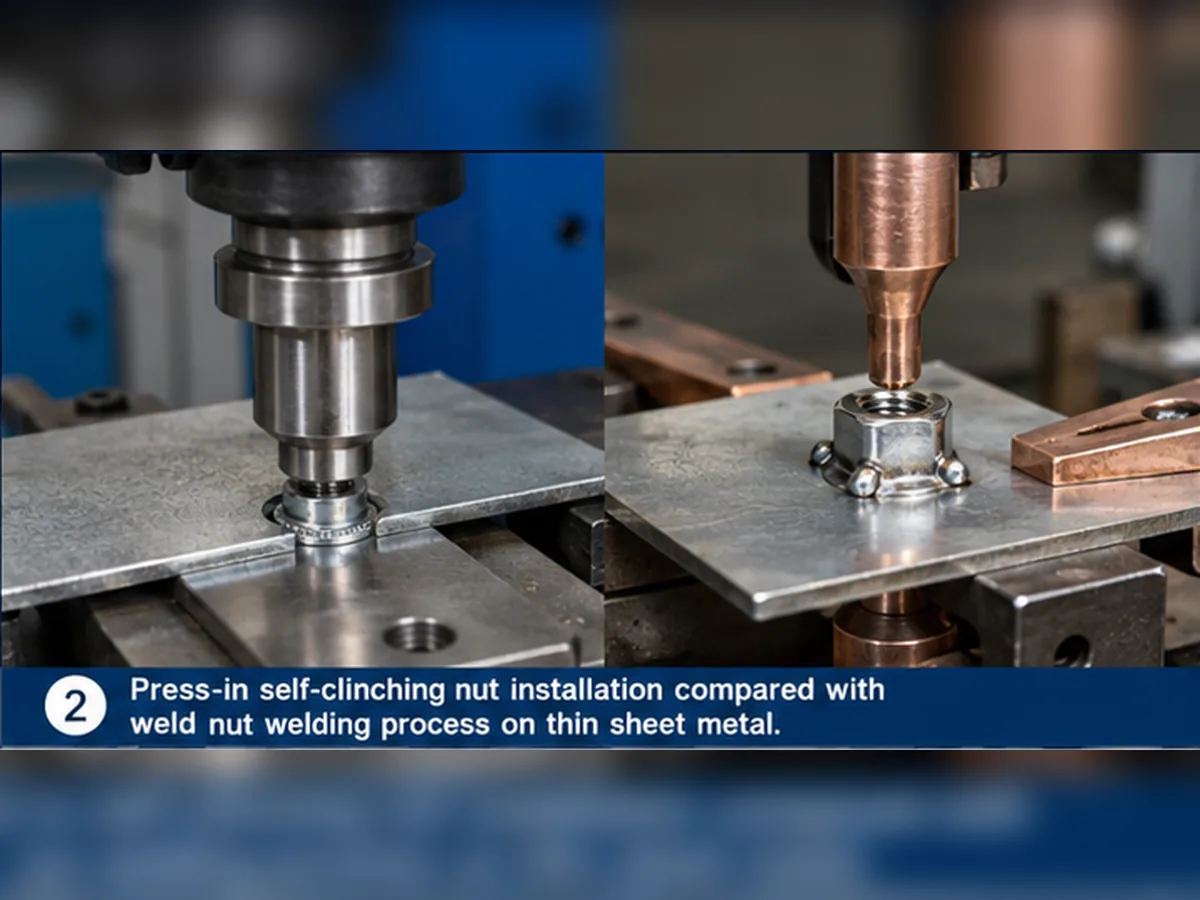
Der erste wesentliche Unterschied ist der Prozess. Einpressmuttern werden durch Einpressen in ein vorbereitetes Blechloch montiert. Schweißmuttern werden durch Schweißen befestigt. Jeder Prozess hat seine eigene Ausrüstung, Kontrollpunkte und Ausfallrisiken.
Die Einpressmontage erfordert in der Regel eine genaue Lochvorbereitung, kontrollierte Presskraft, korrekte Blechhärte und ausreichenden Zugang für das Montagewerkzeug. Die Schweißmutternmontage erfordert Schweißausrüstung, Elektroden- oder Schweißzugang, Projektionskontrolle, Vorrichtungsausrichtung, Schweißparameterkontrolle und Schweißnahtprüfung.
Einpressmuttern sind auf die Einpressmontage und den Blechfluss angewiesen, während Schweißmuttern vom Schweißzugang, der Projektionsqualität und der Schweißnahtprüfung abhängen.
Die Prozessdarstellung ist konzeptionell; tatsächliche Montagekräfte oder Schweißparameter müssen aus Zeichnung, Anlageneinrichtung und Kundenanforderung stammen.
Verarbeitungsteil
Selbstklemmende Mutter
Schweißmutter
Montagemethode
Einpressen
Buckelschweißen oder kundenspezifischer Schweißprozess
Hauptausrüstung
Presse, Einpresswerkzeug oder spezielle Einpressvorrichtung
Schweißgerät, Elektroden, Vorrichtung und Prozesssteuerung
Zustand des Schlüsselblechs
Dicke, Härte, Duktilität und Lochqualität
Schweißbarkeit, Beschichtung, Dicke und Schweißzugänglichkeit
Hauptprozesskontrolle
Lochtoleranz, Einpresskraft, Sitz und Rechtwinkligkeit falls erforderlich
Schweißparameter, Projektionsqualität, Ausrichtung, Spritzerkontrolle und Gewindeschutz
Hauptrisiko
Schlechte Einpressung, Mutternverdrehung, Blechverformung oder Oberflächenmarkierung
Schwache Schweißnaht, Spritzer, Durchbrand, Fehlausrichtung oder Gewindeverunreinigung
Prüfschwerpunkt
Sitz, Gewindelehre, Drehmomentausriss und Ausdrücken / Herausziehen falls erforderlich
Schweißqualität, Gewindelehre, Drehmomentausriss und Herausziehen falls erforderlich
Für Käufer, die beschaffen kundenspezifische Sondermuttern, Die Prozesswahl sollte als Teil der Verbindungskonstruktion betrachtet werden, nicht nur als Stückpreisvergleich.
Blechzustände, die die Entscheidung ändern
Dünnes Blech ist kein einheitlicher Zustand. Eine Mutter, die in einem Panel funktioniert, kann in einem anderen Panel mit anderer Dicke, Härte, Beschichtung oder Lochvorbereitung versagen.
Bei Einpressmuttern sind Blechdicke und -härte entscheidend, da sich das Blechmaterial in die Einpresskontur verformen muss. Bei Schweißmuttern sind Blechdicke und Schweißeignung entscheidend, da dünnes Blech empfindlich auf Wärmeeintrag, Verzug oder Durchbrennen reagieren kann.
Blechdicke, Härte, Lochmaßtoleranz, Beschichtung und Zugänglichkeit können die Entscheidung zwischen Einpressmuttern und Schweißmuttern ändern.
Es wird keine universelle Blechdickengrenze impliziert; Blechdaten müssen der Zeichnung, der Mutterkonstruktion und der Kundenanforderung folgen.
Blechdicke und Härte
Blechdicke und Härte sind aus der Zeichnung, der Materialspezifikation oder der Kundennorm zu entnehmen. Gehen Sie nicht von einer universellen Mindestblechdicke für alle Einpressmuttern oder Schweißmuttern aus. Der akzeptable Bereich hängt von der Mutternkonstruktion, dem Blechmaterial, der Einbaumethode und den geforderten Prüfleistungen ab.
Vorbereitung und Toleranz des Loches
Lochdurchmesser, Lochtoleanz, Gratrichtung, Lochposition und Blechebenheit beeinflussen die Einpressleistung. Bei Schweißmuttern beeinflussen Lochausrichtung und Spannvorrichtungsposition die Gewindelage und Montagekonsistenz. Wenn das Loch Teil eines gestanzten, lasergeschnittenen oder bearbeiteten Blechs ist, sollten der Prozessablauf und die Toleranzfähigkeit vor der Freigabe bestätigt werden.
Beschichtung und Oberflächenzustand
Die Beschichtung kann beide Optionen beeinflussen. Bei Einpressmuttern kann die Beschichtung den Lochzustand, die Oberflächenmarkierung und die Gewindepassung beeinflussen. Bei Schweißmuttern kann die Beschichtung die Schweißbarkeit, Schweißspritzer, Schweißfestigkeit, den Korrosionsschutz nach dem Schweißen und die Gewindereinheit beeinflussen. Die Beschichtungsreihenfolge sollte bestätigt werden, da ein nach der Beschichtung geschweißtes Teil andere Risiken birgt als ein nach dem Schweißen beschichtetes Teil.
Festigkeitsvergleich: Auszug, Durchdrücken, Drehmomentausbruch und Gewindebelastung
Wenn Käufer fragen, ob Einpressmuttern oder Schweißmuttern stärker sind, sollte die Frage in spezifische Festigkeitsmodi aufgeschlüsselt werden. Auszug, Durchdrücken, Drehmomentausbruch und Gewindebelastung sind unterschiedliche Leistungsanforderungen.
Die Auszugsfestigkeit bezieht sich auf die Fähigkeit der Mutter, einem Herausziehen aus dem Blech zu widerstehen. Die Durchdrückfestigkeit kann relevant sein, wenn die Last aus der entgegengesetzten Richtung wirkt. Die Drehmomentfestigkeit ist wichtig, wenn die Passschraube angezogen wird und die Mutter einer Drehung widerstehen muss. Die Gewindebelastung hängt von Gewindegröße, Eingriffslänge, Werkstoff, Passschraube und Montagezustand ab.
Auszug, Durchdrücken, Drehmomentausbruch und Gewindebelastung sind unterschiedliche Festigkeitsmodi und sollten separat spezifiziert werden.
Es wird kein fester Festigkeitswert impliziert; die Akzeptanzwerte müssen aus der Zeichnung, dem Prüfverfahren oder der Kundennorm stammen.
Festigkeitsmodus
Warum es wichtig ist
Prüfung der Einpressmutter
Prüfung der Schweißmutter
Auszugskraft
Widersteht axialem Herausziehen aus dem Blech
Einpressmerkmal, Blecheingriff, Blechhärte und Blechdicke
Schweißfestigkeit, Schweißfläche, Projektionsqualität und Blechzustand
Ausdrücken
Widersteht Kräften aus entgegengesetzter Richtung
Sitz, Einpressgeometrie, Blechverformung und Lastrichtung
Schweißkonsistenz, Blechunterstützung und Lastrichtung
Ausdrehmoment
Verhindert Mutterndrehung beim Anziehen
Lochzustand, Einpressverriegelung, Einbauqualität und Blechhärte
Schweißfestigkeit, Mutterausrichtung, Schweißlinsenqualität und Vorrichtungskontrolle
Gewindebelastung
Steuert die Funktion der Passschraube
Gewindegröße, Steigung, Toleranz, Eingriff, Material und Schraubenkompatibilität
Gewindegröße, Steigung, Toleranz, Eingriff, Material und Schraubenkompatibilität
Montagestabilität
Steuert, ob die Verbindung nach der Montage funktionsfähig bleibt
Montierte Sitzfläche, Plattenverformung und Klemmkraftpfad
Schweißausrichtung, Schweißintegrität und Klemmkraftpfad
Ohne Zeichnung, Produktnorm, Kundenanforderung oder Prüfverfahren sollte kein Auszug-, Durchdrück- oder Drehmomentwert angenommen werden. Für zeichnungsgesteuerte Projekte können Käufer die SUNHYINGS-Anleitung einsehen zu nach Zeichnung gefertigten Spezialmuttern.
Risikovergleich: Verformung, Schweißfehler, Gewindeschäden und Beschichtungseinfluss
Einpressmuttern und Schweißmuttern haben unterschiedliche Risikoprofile. Die beste Wahl hängt davon ab, welches Risiko in der Montage des Käufers leichter zu kontrollieren ist.
Selbstklemmende Muttern können zu Blechverformungen, Oberflächenmarkierungen oder schlechtem Halt führen, wenn das Blechmaterial, das Loch und die Einpresskraft nicht kontrolliert werden. Schweißmuttern können Schweißspritzer, schwache Schweißnähte, Durchbrennen, Gewindekontamination, Beschichtungsschäden oder Fehlausrichtungen verursachen, wenn die Schweißbedingungen nicht kontrolliert werden.
Wann jeder Mutterntyp nicht verwendet werden sollte
Ein sinnvoller Vergleich sollte auch definieren, wann jede Option unsicher oder ungeeignet sein kann. Dies sind keine universellen Verbote; es sind Bedingungen, die eine technische Bestätigung vor der RFQ oder Bemusterung auslösen sollten.
Wann Einpressmuttern möglicherweise nicht geeignet sind
Das Blechmaterial ist zu hart, zu spröde oder für die Kaltverformung in das Einpressmerkmal nicht geeignet.
Das Blech ist zu dünn oder instabil für die erforderliche Auszug-, Durchdrück- oder Drehmomentfestigkeit.
Der Lochdurchmesser, die Toleranz, der Gratzustand oder die Ebenheit können nicht kontrolliert werden.
Es gibt keinen Pressenzugang oder das Montagewerkzeug kann das Panel nicht richtig abstützen.
Oberflächenmarkierungen oder Panelverformungen sind nicht akzeptabel.
Die Kundenzeichnung erfordert eine Schweißverbindung oder eine bestimmte Schweißmutter-Norm.
Wann Schweißmuttern möglicherweise nicht geeignet sind
Die Baugruppe kann Schweißwärme, Verzug oder Spritzer nicht tolerieren.
Das Plattenmaterial oder die Beschichtung ist ohne zusätzliche Kontrolle für den erforderlichen Schweißprozess nicht geeignet.
Der Schweißzugang, der Elektrodenzugang oder die Ausrichtung der Vorrichtung kann nicht eingehalten werden.
Die Sauberkeit des Gewindes nach dem Schweißen kann nicht kontrolliert werden.
Das Teil ist bereits fertig bearbeitet oder beschichtet und der Korrosionsschutz nach dem Schweißen ist unklar.
Die Kundenzeichnung verbietet Schweißen oder erfordert einen eingepressten Gewindeeinsatz.
Auswahlgrenze: Wenn bei einer der Optionen ungeklärte Blechzustände, Beschichtungen, Zugänglichkeit, Lastrichtung oder Prüfdaten vorliegen, lautet der korrekte RFQ-Status bestätigungsbedürftig, nicht automatische Genehmigung.
Fertigungsweg und Produktionskontrolle
Der Fertigungsweg der Mutter und der Montageprozess sind nicht dasselbe. Eine Einpressmutter oder Schweißmutter kann je nach Zeichnung und Teileauslegung durch Kaltumformung, Stanzen, Zerspanen, Gewindeschneiden, Gewindeformen, Wärmebehandlung, Beschichtung oder sekundäre Bearbeitung hergestellt werden. Der Montageprozess erfolgt dann am Blech oder in der Baugruppe.
Bei Einpressmuttern umfasst die Produktionskontrolle die Mutterngeometrie, Gewindequalität, Lochqualität des Blechs, Einpresskraft, Sitzzustand und Prüfung nach der Montage. Bei Schweißmuttern umfasst die Produktionskontrolle die Mutterngeometrie, Schweißhöckergualität, Schweißzugang, Schweißvorrichtung, Schweißparameter, Gewindeschutz und Schweißnahtprüfung.
Kontrollbereich
Warum es wichtig ist
Bestätigung erforderlich
Fertigungsweg Mutter
Beeinflusst Geometrie, Gewindequalität, Kosten, Lieferzeit und Konsistenz
Kaltstauchen, Stanzen, Zerspanen, Gewindeschneiden, Gewindeformen oder Sekundäroperationen gemäß Zeichnung
Wärmebehandlung / Härte
Beeinflusst Festigkeit, Gewindeverhalten und Einpress- oder Schweißleistung
Werkstoff, Härtebereich und Kundenspezifikation falls angegeben
Beschichtungsreihenfolge
Beeinflusst Korrosionsschutz, Gewindepassung, Schweißbarkeit und Oberflächenmarkierung
Vor der Montage, nach der Montage, vor dem Schweißen oder nach dem Schweißen
Installationsprozess
Bestimmt die endgültige Verbindungsfunktion nach der Mutternherstellung
Presseneinrichtung, Vorrichtung, Schweißausrüstung, Prüfung und Prozessfenster
Chargenverfolgung
Unterstützt Rückverfolgbarkeit und Qualitätseingrenzung
Chargennummer, Verpackungsetikett, Prüfprotokoll und Dokumentationsanforderung
Chargenrückverfolgbarkeit, Prüfprotokolle, Beschichtungsberichte und Materialzertifikate können je nach Kundenprogramm erforderlich sein. PPAP, IMDS oder spezielle Freigabedokumente sollten nur dann enthalten sein, wenn sie vom Kunden oder Automobilprogramm gefordert werden.
Prüf- und Qualitätsdokumente, die Käufer bestätigen sollten
Die Prüfung sollte auf die Versagensart abgestimmt sein. Eine dünne Blechmutterverbindung kann je nach Konstruktion eine Maßprüfung, Gewindeprüfung, Prüfung der Einbauposition, Drehmomentausreißprüfung, Auszugprüfung, Durchdrückprüfung oder Schweißnahtprüfung erfordern.
Prüfpunkt
Selbstklemmende Mutter
Schweißmutter
Dokument / Nachweis falls erforderlich
Gewindelehre
Erforderlich, falls spezifiziert oder zeichnungsgesteuert
Erforderlich, falls spezifiziert oder zeichnungsgesteuert
Gewindeprüfprotokoll
Bohrungsprüfung
Kritisch vor der Montage
Wichtig für die Ausrichtung
Maßbericht oder prozessbegleitende Prüfung
Montagesitz
Kritisch
Wichtig für die Ausrichtung
Sicht- / Maßprüfprotokoll falls erforderlich
Schweißnahtprüfung
Nicht zutreffend, sofern keine Nachschweißung vorhanden
Kritisch
Schweißnahtprüfprotokoll falls erforderlich
Ausdrehmoment
Falls gemäß Zeichnung oder Kundennorm erforderlich
Falls gemäß Zeichnung oder Kundennorm erforderlich
Drehmomentprüfbericht falls erforderlich
Ausziehen / Herausdrücken
Falls gemäß Zeichnung oder Kundennorm erforderlich
Falls gemäß Zeichnung oder Kundennorm erforderlich
Auszug-/Eindrückprüfbericht falls erforderlich
Beschichtungszustand
Bestätigung erforderlich
Bestätigung erforderlich, insbesondere nach dem Schweißen
Beschichtungsbericht oder Korrosionsprüfung falls spezifiziert
Automobildokumente
Bedingt
Bedingt
PPAP / IMDS nur, wenn Kunde oder Programm es verlangt
Qualitätsdokumente sollten nicht automatisch für jede Bestellung versprochen werden. Sie sollten durch RFQ, Zeichnung, Kundennorm und Freigabeanforderung bestätigt werden. Käufer können auch die SUNHYINGS Technische Leitfäden zu verwandten Verbindungselementtechnik-Themen einsehen.
Entscheidungsmatrix für dünne Bleche im Automobilbau
Bei Automobilblechbaugruppen können je nach spezifischer Position, Funktion und Herstellungsprozess Einpressmuttern oder Schweißmuttern verwendet werden. Es gibt keine automatische Freigabe basierend auf dem Mutternamen.
Anwendungsbedingung
Einpressmuttern passen möglicherweise, wenn
Schweißmuttern passen möglicherweise, wenn
Bestätigung erforderlich
Innen- oder Konsolenblech
Presszugang und Blechzustand geeignet sind
Schweißen verfügbar und zugelassen ist
Blechdaten, Belastung, Lochtoleranz und Zeichnung
Wärmeempfindliches Fertigteil
Schweißwärme sollte vermieden werden
Schweißrisiko akzeptabel ist
Beschichtung, Wärmeverformung und Korrosionsschutz nach der Verarbeitung
Karosseriebau oder geschweißte Baugruppe
Nur möglich, wenn die Konstruktion das Pressen zulässt
Schweißprozess ist bereits geplant
Schweißzugang, Schweißnorm und Montagereihenfolge
Sitz oder Strukturhalterung
Bedingt
Bedingt
Lastrichtung, Ausdrehmoment, Auszugskraft, Ermüdungsrisiko und Kundenfreigabe
Batteriewannenabdeckung oder -gehäuse
Bedingt
Bedingt
Material, Beschichtung, Abdichtung, Korrosion und Kundenanforderung
Ersatzprojekt
Bedingt
Bedingt
Muster, Zeichnung, Lochzustand, Schweißspuren und Freigabeverfahren
Automobilkäufer sollten die Verbindungsfunktion vor der Auswahl der Mutter definieren. Lastaufnahme, Verdrehsicherung, Servicezugang, Beschichtungsschutz, Montagereihenfolge und Qualitätsdokumentation können die Entscheidung beeinflussen. Für die lieferantenseitige Bewertung in Automobilprogrammen können Käufer auch die Anleitung von SUNHYINGS einsehen zu Spezialmutternlieferant für Automobilanwendungen.
Komplexes technisches Szenario: Wenn die Zeichnung nicht ausreicht
Komplexes technisches Szenario nur für Schulungszwecke: Ein Käufer für Automobilhalterungen vergleicht eine Einpressmutter und eine Schweißmutter für eine dünne Blechhalterung. Die Zeichnung definiert die Gewindegröße, gibt jedoch nicht eindeutig die Blechhärte, die Lochpositionstoleranz, die Anforderung an das Ausdrehmoment oder an, ob Schweißwärme nach der Beschichtung zulässig ist.
In diesem Fall sollte der Lieferant die Mutter nicht nur nach der Gewindegröße auswählen. Der Käufer sollte bestätigen, ob das Blech gepresst werden kann, ob die Blechhärte das Einpressen unterstützt, ob die Lochpositionstoleranz in der Produktion eingehalten werden kann, ob die Beschichtung vor oder nach der Montage aufgetragen wird und ob eine Ausdrehmoment- oder Auszugskraftprüfung erforderlich ist.
Wenn Schweißen bereits Teil der Montagelinie ist und Schweißzugang besteht, kann eine Schweißmutter in Betracht gezogen werden. Wenn Schweißhitze oder Spritzer ein Problem darstellen und Presszugang besteht, kann eine Durchzieh-Mutter in Betracht gezogen werden. Die endgültige Genehmigung sollte der Zeichnung, der Kundennorm und der tatsächlichen Verbindungsvalidierung folgen.
Checkliste für Käufer-RFQ vor der Bemusterung
Eine aussagekräftige RFQ sollte nicht nur die Gewindegröße angeben. Sie sollte das Blech, die Verbindungsfunktion, den Prozessvorzug und die Qualitätsanforderung beschreiben. Wenn der Käufer sich noch nicht zwischen einer Durchzieh-Mutter und einer Schweißmutter entschieden hat, sollte die RFQ klar angeben, dass beide Optionen geprüft werden können.
Eine aussagekräftige RFQ sollte Zeichnungsrevision, Blechdaten, Lochtoleranz, Gewindeanforderung, Beschichtung, Festigkeitsprüfungen, Stückzahl und Freigabedokumente enthalten.
Die Checkliste stellt kein Zertifikat oder Freigabedokument dar; PPAP und IMDS gelten nur, wenn sie vom Kunden oder Programm gefordert werden.
Mindest-RFQ-Daten
Aktuelle Zeichnungsrevision oder Musterfoto.
Blechmaterial, Dicke und Härte.
Lochdurchmesser, Toleranz, Gratzustand und Lochherstellungsverfahren, falls bekannt.
Muttertyp-Präferenz oder offene Vergleichsanfrage.
Gewindegröße, Steigung, Toleranz und Zustand der Passschraube.
Montageort und Verbindungsart.
Lastrichtung und ob Auszug, Durchdrücken oder Drehmomentauszug erforderlich ist.
Beschichtung, Korrosionsanforderung und Beschichtungsreihenfolge.
Schweißbeschränkung oder Pressmontagezugang.
Jahresmenge, Musterstückzahl und angestrebter Freigabezeitplan.
Prüfmethode und Akzeptanzkriterien, falls erforderlich.
PPAP / IMDS nur, wenn vom Kunden oder Programm gefordert.
Verpackungs- und Kennzeichnungsanforderung.
Wann Muster oder Fotos zu senden sind
Muster oder Fotos sind hilfreich, wenn die Zeichnung unvollständig ist, das vorhandene Teil ersetzt wird, der Plattenzustand unklar ist oder der Käufer ein Ausfallproblem wie Mutternverdrehen, schwache Schweißnaht, Gewindeschaden, Auszug, Fehlausrichtung oder schlechten Beschichtungszustand hat.
Wie SUNHYINGS Angebote für Einpressmuttern und Schweißmuttern prüft
SUNHYINGS kann Angebote für Einpressmuttern und Schweißmuttern hinsichtlich Zeichnungsvollständigkeit, Mutterngeometrie, Gewindeanforderung, Blechdaten, Material, Beschichtung, Prozessablauf und Prüfanforderungen prüfen.
Bei Einpressmutterprojekten sollte die Prüfung Blechdicke, Blechhärte, Lochdurchmesser, Lochtoleranz, Einpressmerkmal, Montagezugang und gegebenenfalls geforderte Ausdrück-, Auszug- oder Drehmomentprüfungen umfassen.
Bei Schweißmutterprojekten sollte die Prüfung Schweißmutterngeometrie, Projektionsausführung, Schweißzugang, Schweißeignung des Blechs, Beschichtungszustand, Gewindeschutz und Schweißnahtprüfanforderungen umfassen.
Als Seiten zum kundenspezifischen Mutternhersteller, SUNHYINGS kann helfen zu identifizieren, ob die RFQ ausreichende technische Informationen für Angebot und Mustererstellung enthält. Die endgültige gemeinsame Validierung hängt weiterhin von den tatsächlichen Montagebedingungen des Käufers, der Kundenspezifikation, der Prozessfreigabe und den Prüfanforderungen ab.
Prüfgrenze: SUNHYINGS kann die Fertigbarkeit, Zeichnungsvollständigkeit und das RFQ-Risiko prüfen, aber die endgültige Anwendungsfreigabe muss der gemeinsamen Validierung des Käufers, der kundenspezifischen Anforderung und dem Qualitätsfreigabeprozess folgen.
Vergleichstabelle: Einpressmuttern vs. Schweißmuttern
Vergleichsmerkmal
Einpressmuttern
Schweißmuttern
Kernprozess
Einpressen
Schweißen
Abhängigkeit vom Hauptblech
Dicke, Härte, Duktilität und Lochqualität
Schweißbarkeit, Beschichtung, Dicke und Schweißzugänglichkeit
Wärmeeintrag
Keine Schweißwärme bei normaler Einpressmontage
Schweißwärme ist Teil des Prozesses
Hauptabhängigkeit der Festigkeit
Blecheingriff und Einpressmerkmal
Schweißfestigkeit, Vorsprungdesign und Schweißfläche
Hauptabhängigkeit des Ausdrehmoments
Einpressverriegelung, Lochzustand und Blechhärte
Schweißqualität, Mutterausrichtung und Vorrichtungssteuerung
Hauptrisiko
Blechverformung, schlechtes Einpressen, Mutterdrehen oder Oberflächenmarkierung
Schwache Schweißnaht, Spritzer, Durchbrennen, Fehlausrichtung oder Gewindeschaden
Schweißprüfung, Ausrichtung, Gewindelehre, Drehmomentausriss, Ausriss bei Bedarf
Üblicherweise geprüft, wenn
Schweißen ist nicht bevorzugt und Presszugang ist geeignet
Schweißen ist zugelassen und Schweißprozesskontrolle ist verfügbar
Endgültige Entscheidungsgrundlage
Zeichnung, Blechdaten, Belastung, Lochqualität, Montagemethode und Prüfanforderung
Zeichnung, Blechdaten, Belastung, Schweißprozess, Vorrichtung, Beschichtung und Prüfanforderung
Die sicherste Entscheidung ist, zuerst die Blechverbindung zu definieren und dann den Mutterntyp auszuwählen. Eine Mutter, die in einer Dünnblechanwendung gut funktioniert, kann in einer anderen versagen, wenn sich Blechdicke, Lochvorbereitung, Lastrichtung oder Prozesskontrolle ändern.
Verwandte SUNHYINGS-Seiten
Verwandte SUNHYINGS-Seiten für Einpressmuttern, Schweißmuttern, zeichnungsgesteuerte Beschaffung und Problemlösung im Automobilbau.
Die folgenden Referenzen dienen dem allgemeinen Prozessverständnis. Sie ersetzen nicht die Zeichnung des Käufers, die Kundennorm, das Produktdatenblatt, die Schweißanweisung, die Einpress-Installationsvalidierung oder die projektspezifische Freigabeanforderung.
TWI-Richtlinien für Buckelschweißmuttern — nützlicher Kontext für Mutternart, Schweißausrüstung, Schweißparameter, Schweißprüfung und mögliche Probleme mit Schweißmuttern.
Externe Referenzen dienen ausschließlich dem technischen Kontext. Die endgültige Auswahl muss der aktuellen Zeichnungsrevision, der Kundenspezifikation, der Produktspezifikation und dem validierten Montageprozess folgen.
FAQ
Sind Einpressmuttern stärker als Schweißmuttern?
Nicht universell. Die Festigkeit hängt vom Blechmaterial, der Blechdicke, der Blechhärte, der Mutterngeometrie, der Lastrichtung, der Montagequalität, der Schweißqualität (falls zutreffend) und der erforderlichen Prüfmethode ab.
Wann sollten Käufer selbstklemmende Muttern wählen?
Käufer prüfen häufig Einpressmuttern, wenn das Blech die Einpressmontage unterstützt, das Loch genau kontrolliert werden kann, Presszugang vorhanden ist und Schweißhitze oder Schweißrückstände vermieden werden sollen.
Wann sollten Käufer Schweißmuttern wählen?
Käufer prüfen häufig Schweißmuttern, wenn Schweißzugang, Schweißbarkeit, Projektionsgeometrie, Vorrichtungskontrolle und Schweißprüfung die erforderliche Verbindungsleistung unterstützen können.
Kann eine Einpressmutter eine Schweißmutter direkt ersetzen?
Nein. Ein direkter Austausch sollte nicht allein anhand von Aussehen oder Gewindegröße erfolgen. Käufer sollten Blechdicke, Blechhärte, Lochdurchmesser, Belastungsrichtung, Ausdrehmoment, Auszugskraft, Beschichtung, Prüfverfahren und Kundenfreigabe bestätigen.
Können Schweißmuttern an sehr dünnem Blech verwendet werden?
Erst nach Bestätigung von Blechmaterial, Blechdicke, Schweißeignung, Noppendesign, Beschichtungszustand, Schweißparametern und Prüfverfahren. Dünne Bleche können empfindlich auf Wärmeeintrag, Verzug oder Durchbrennen reagieren.
Was führt dazu, dass Einpressmuttern durchdrehen oder sich lösen?
Häufige Ursachen sind falscher Lochdurchmesser, ungeeignete Blechhärte, unzureichende Montagekraft, falsche Muttergeometrie, schlechte Sitzposition, Blechverformung oder falsche Lastrichtung.
Was verursacht das Versagen von Schweißmuttern?
Häufige Ursachen sind schwache Schweißnähte, schlechte Projektionsgestaltung, Fehlausrichtung, Schweißspritzer, Gewindeverunreinigung, Beschichtungsprobleme, Durchbrennen, schlechte Vorrichtungskontrolle oder unzureichende Schweißnahtprüfung.
Welche Prüfungen sollten für dünne Blechmuttern vorgeschrieben werden?
Je nach Zeichnung und Kundenanforderung können Käufer Gewindelehrenprüfung, Maßprüfung, Drehmomentprüfung, Auszugprüfung, Durchdrückprüfung, Prüfung der Einbauposition oder Schweißnahtprüfung vorgeben.
Gilt PPAP für Einpressmuttern oder Schweißmuttern?
PPAP gilt nur, wenn es vom Kunden oder Automobilprogramm gefordert wird. Es sollte nicht für jede Bestellung angenommen werden, es sei denn, die RFQ oder die Kundenspezifikation sieht es vor.
Welche Informationen sollten Käufer vor der Angebotserstellung senden?
Käufer sollten die Zeichnungsrevision, das Blechmaterial, die Blechdicke, die Blechhärte, den Lochdurchmesser und die Toleranz, die Gewindeanforderung, die Lastrichtung, die Beschichtung, den Montagezugang, die erforderlichen Prüfungen, das Jahresvolumen, die Musterfreigabeanforderung und den Umfang der Qualitätsdokumente angeben.
Technische Prüfnotiz
Dieser Leitfaden wurde für Konstrukteure, Einkäufer, SQE-Teams und Automobilprojektkäufer erstellt, die Einpressmuttern und Schweißmuttern für dünne Blechbaugruppen vergleichen.
Geprüfter Umfang: Dünnblechbedingungen, Einpressverfahren, Schweißmutterverfahren, Auszug, Ausdrücken, Ausdrehmoment, Gewindebelastung, Beschichtungseinfluss, Prüfanforderungen und Vollständigkeit der RFQ-Daten.
Normen- und Einschränkungshinweis: Dieser Artikel ist ein praktischer Leitfaden für Beschaffung und Technik. Er ersetzt nicht die Kundenzeichnung, Produktnorm, qualifiziertes Schweißverfahren, Einpress-Installationsvalidierung, formelle PPAP-Freigabe oder kundenspezifische Anforderung. Fehlende Blechdicke, Blechhärte, Lochtoleranz, Beschichtung, Ausdrehmoment, Auszug, Ausdrücken oder Prüfdaten sind als klärungsbedürftig zu behandeln, nicht als gegeben anzunehmen. Befolgen Sie stets die aktuelle Zeichnungsrevision, Kundenspezifikation und den validierten Montageprozess.