








Guia Técnico do Sensor de Oxigênio
Compare a localização a montante e a jusante do sensor de oxigênio, função, dados de varredura e requisitos de compra sem confundir Sensor 1 e Sensor 2.
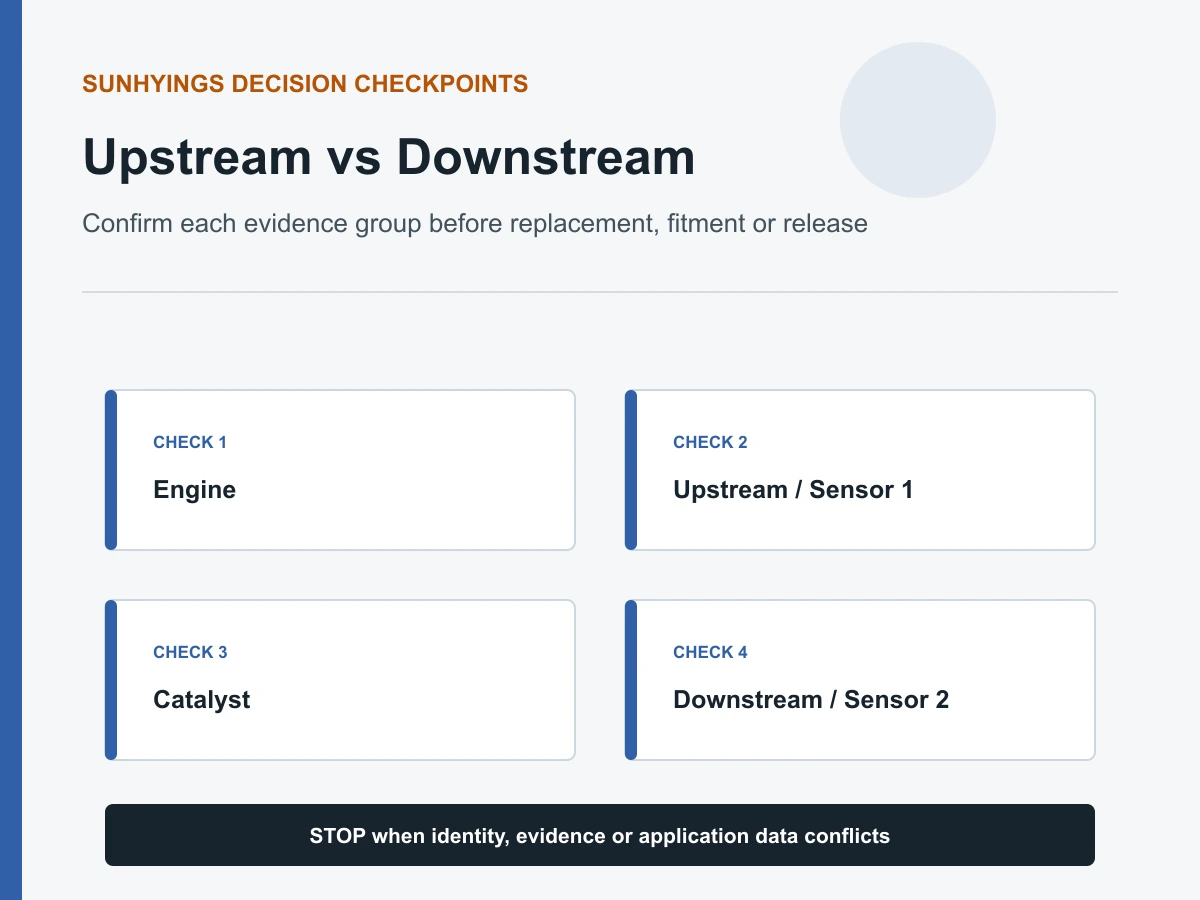
Resposta rápida
Um sensor de oxigênio a montante é instalado antes do catalisador e geralmente suporta o feedback de controle de combustível. Um sensor a jusante é instalado após o catalisador e geralmente suporta o monitoramento do catalisador. A montante geralmente significa Sensor 1 e a jusante geralmente significa Sensor 2, mas o banco, a posição e a peça exatos devem ser confirmados a partir dos dados de serviço ou ajuste do veículo.
Montante e jusante em um relance
| Pergunta | Sensor a montante | Sensor a jusante |
|---|---|---|
| Localização típica | Antes do catalisador | Após o catalisador |
| Nome da posição comum | Sensor 1 / pré-cat / dianteiro | Sensor 2 / pós-cat / traseiro |
| Estratégia primária | Feedback de mistura e controle de combustível | Feedback do monitor do catalisador |
| Dados esperados | Depende fortemente da tecnologia de banda estreita ou banda larga | Geralmente mais estável que o sensor dianteiro quando o catalisador está operando, mas a estratégia do veículo varia. |
| Risco de compra | Calibração, conector ou banco incorretos. | Comprimento do cabo, roteamento, conector ou posição incorretos. |
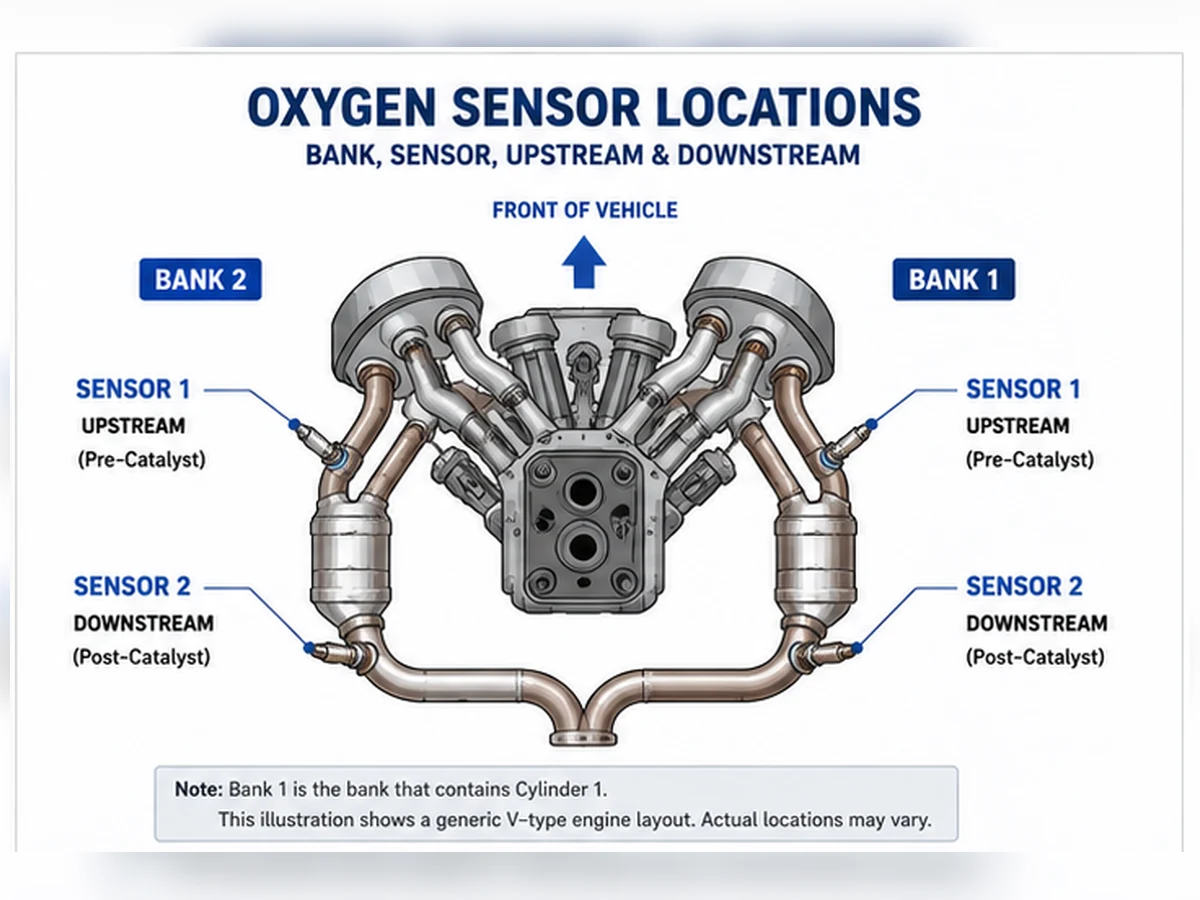
Nomenclatura dianteira, traseira, banco e sensor
“Dianteiro” e “traseiro” podem se tornar ambíguos em motores transversais ou sistemas com vários catalisadores. Use a identificação de Banco e Sensor quando disponível. O Banco 1 contém o cilindro 1. O Sensor 1 é o sensor a montante do catalisador para esse banco; o Sensor 2 é a jusante. Alguns veículos possuem sensores adicionais ou terminologia diferente, portanto, as informações de serviço continuam sendo a referência.
Por que os dados de varredura devem ser diferentes
Um sensor convencional de banda estreita a montante pode alternar entre rico e pobre durante a operação em malha fechada. Um sensor de banda larga é representado de forma diferente e pode ser exibido como corrente, lambda ou equivalência comandada. Um sinal a jusante é interpretado em relação à operação do catalisador. Comparar dois gráficos sem primeiro identificar a tecnologia e as condições de operação pode criar um diagnóstico falso.
Códigos que mencionam uma posição
Um código específico de posição restringe o circuito a ser inspecionado; não prova que o elemento sensor está com defeito. Verifique o conector e o chicote, a alimentação e o aterramento do aquecedor, vazamentos no escapamento e dados de operação. P0420 ou P0430 não devem ser tratados como uma instrução para substituir o sensor a jusante.
Os sensores de montante e jusante podem ser intercambiados?
Não assuma intercambialidade. Dois sensores podem compartilhar o tamanho da rosca ou a aparência do conector, mas diferir em tecnologia, calibração, comprimento do cabo, proteção ou chaveamento do conector. Corresponda à referência OE e ao veículo, motor, pacote de mercado/emissões, banco e posição exatos.
Lista de verificação de verificação de posição
- Leia a descrição completa do código e os dados de quadro congelado.
- Identifique o cilindro 1 e o banco 1 a partir das informações de serviço.
- Trace o fluxo de escape para distinguir as posições pré-cat e pós-cat.
- Compare o conector, o comprimento do cabo e os clipes de roteamento.
- Confirme a referência OE e a tecnologia do sensor antes de fazer o pedido.
A identidade da posição vem antes da interpretação do sinal
Montante e jusante descrevem a localização em relação a um catalisador, não uma direção física universal no veículo. Em um motor de dois bancos, cada banco pode ter seu próprio Sensor 1 e Sensor 2. Alguns sistemas de escape adicionam mais catalisadores ou sensores. Confirme a numeração dos cilindros, trace o caminho do escape e combine o código ou identificador de dados com o conector físico antes de testar.
| Entrada de identidade | Decisão de montante | Decisão de jusante |
|---|---|---|
| Cilindro e banco | Localize o Sensor 1 no banco que contém os cilindros nomeados | Localize o Sensor 2 após o catalisador monitorado desse banco |
| Fluxo de escape | Antes do catalisador relevante | Após o catalisador relevante |
| Dados do catálogo | Deve listar banco/posição e tecnologia exatos | Deve listar posição exata, roteamento do cabo e conector |
| Diagrama de serviço | Confirma o conector físico e o percurso do chicote | Evita confusão com sensores adicionais pós-catalisador |
Como seus papéis de controle diferem
Realimentação a montante
Após as condições de habilitação serem atendidas, o módulo de controle utiliza a realimentação a montante com fluxo de ar, carga, temperatura e outras entradas para avaliar a mistura. Um sensor de banda estreita pode alternar em torno de seu ponto de controle, enquanto um sensor de banda larga pode ser representado como corrente, lambda ou razão de equivalência. Um relatório de mistura pobre pode ser evidência precisa de entrada de ar não medida ou baixa entrega de combustível, em vez de um sensor com falha.
Monitoramento a jusante
O sensor a jusante comumente ajuda o módulo de controle a avaliar o comportamento de armazenamento de oxigênio do catalisador. Seu sinal é interpretado em relação ao sinal a montante e às condições de monitoramento definidas. Um sensor traseiro não deve simplesmente mostrar uma tensão fixa, e um código de catalisador não prova que o sensor traseiro deve ser substituído.
Exceções de estratégia
Os fabricantes podem usar informações a jusante para adaptações ou diagnósticos adicionais. As funções comuns fornecem orientação, não permissão para generalizar a lógica de um veículo para outro. Use informações de serviço exatas para o veículo, motor, pacote de emissões e calibração.
Compare sinais apenas em condições válidas
| Condição | Observação a montante | Observação a jusante | Limitação |
|---|---|---|---|
| Partida a frio | Pode ainda não fornecer feedback em malha fechada | Monitor do catalisador geralmente não pronto | Critérios de temperatura e habilitação não atendidos |
| Operação estável a quente | Resposta de mistura específica da tecnologia | Avaliado em relação ao comportamento do catalisador | Vazamentos e falhas de combustível podem distorcer ambos |
| Aceleração | O enriquecimento comandado pode alterar o sinal | A resposta pode ser atrasada pelo armazenamento do catalisador | Não é uma comparação em estado estacionário |
| Corte de combustível na desaceleração | Alto oxigênio no escapamento pode ser esperado | A resposta depende do catalisador e da estratégia | Não rotule o comportamento esperado como falha |
Use códigos específicos de posição como caminhos de teste
Códigos do circuito do sensor 1 ou de resposta
Inspecione o banco nomeado e o circuito a montante, mas também avalie as condições reais da mistura. Verifique a integridade do conector, operação do aquecedor, referência ou terra do sinal, vazamentos de escape antes do sensor e ajustes de combustível. Um teste de resposta deve corresponder à tecnologia de banda estreita ou larga.
Códigos do circuito do sensor 2 ou do aquecedor
Confirme o conector e chicote pós-catalisador, que podem estar expostos ao calor, água e impacto da parte inferior da carroceria. Teste os circuitos de alimentação, controle e sinal conforme especificado. Não substitua um diagnóstico de eficiência do catalisador por um teste direto do circuito.
P0420 e P0430
Esses códigos dizem respeito à eficiência do sistema catalisador. Confirme que não há falha de ignição ativa, falha de mistura ou vazamento de escape, valide ambos os sinais do sensor e siga o procedimento do catalisador. Substituir o sensor a jusante só se justifica quando suas próprias evidências mostram que ele não pode relatar corretamente.
Por que roscas correspondentes não tornam as posições intercambiáveis
Os sensores a montante e a jusante podem diferir em tecnologia de sensoriamento, calibração, características do aquecedor, escudo protetor, atribuição de pinos do conector, comprimento do cabo e clipes. Mesmo quando uma peça se encaixa fisicamente em ambos os bicos, o módulo de controle pode esperar um sistema elétrico diferente. Não estenda, force ou corte um chicote de encaixe direto para fazer a posição errada alcançar.
| Item de comparação | Evidência necessária | Rejeitar quando |
|---|---|---|
| Referência OE | Registro atual da aplicação para posição exata | Referência cruzada não verificada ou para outra variante de emissões |
| Tecnologia | Banda estreita, banda larga/A/F ou design especificado | Listagem depende apenas da contagem de fios |
| Conector | Codificação, trava e atribuição de circuito | O alojamento está forçado ou os pinos diferem |
| Cabo e clipes | Comprimento correto e roteamento seguro contra calor | O cabo deve ser esticado ou deixado próximo a peças móveis/quentes |
Cenário composto: um código traseiro é diagnosticado no conector dianteiro
Cenário de engenharia composto: um técnico segue uma etiqueta genérica de “sensor traseiro” em um motor transversal e testa o conector errado. O diagrama de escapamento de serviço mostra que o conector nomeado Bank 1 Sensor 2 roteia para um lado diferente do compartimento do motor. A identificação correta da posição altera o resultado do circuito e evita a substituição de um sensor funcional. Este é um cenário de ensino composto, não um caso de cliente da Sunhyings.
Registre a posição antes de fazer o pedido
Capture a descrição completa do código, identidade do motor, pacote de mercado/emissões, localização do cilindro 1, banco, número do sensor, relação com o catalisador, número OE, face do conector e rota do cabo. Uma foto deve mostrar o contexto e o plugue. Este registro permite que um vendedor ou reparador verifique a posição exata sem transformar “dianteiro” ou “traseiro” em uma alegação de ajuste.
Verifique o reparo sem forçar uma conclusão
Após um reparo no circuito, sensor, escapamento ou motor, verifique primeiro a instalação física. Confirme que o conector correto está travado, o cabo está preso longe de calor e movimento e não há vazamento de escapamento. Em seguida, observe o identificador de dados correto a montante ou a jusante sob as condições de operação especificadas pelo fabricante. Os sinais devem ser interpretados juntamente com os ajustes de combustível, estado comandado e status do monitor.
Uma forma de onda a jusante que se torna mais estável não é, por si só, prova de que um catalisador está saudável, assim como uma forma de onda a montante que muda não é prova de que o sensor está calibrado corretamente. O monitor deve funcionar sob condições válidas e a falha original não deve retornar. Códigos permanentes podem permanecer até que o módulo observe um monitor aprovado; limpar a memória repetidamente pode atrasar, em vez de acelerar, a confirmação.
Quando ambas as posições mostram dados incomuns
Quando as leituras a montante e a jusante parecem anormais, procure causas que afetem todo o caminho de escape: falha de ignição, fornecimento incorreto de combustível, vazamento de escapamento, problemas de temperatura ou parâmetros não suportados da ferramenta de varredura. Substituir ambos os sensores juntos pode remover evidências úteis e ainda deixar a causa raiz compartilhada.
Quando apenas uma posição tem uma falha elétrica
Uma falha de circuito aberto, curto ou aquecedor específica de uma posição deve ser rastreada com o diagrama de fiação correto. Verifique as fontes compartilhadas sem assumir que cada sensor usa o mesmo fusível ou terra. Teste com carga os circuitos suspeitos e proteja o encaixe do terminal. Um código que nomeia um sensor ainda não estabelece que o elemento substituível é o ponto com falha.
Montante e jusante em layouts de exaustão comuns
A montante significa antes do catalisador sendo monitorado; a jusante significa depois dele. As palavras não garantem que um sensor esteja fisicamente na frente ou atrás do veículo. O empacotamento pode colocar um sensor pré-catalisador atrás do motor, e alguns sistemas usam catalisadores de acoplamento próximo mais catalisadores adicionais sob o assoalho. Trace o fluxo de escape e use informações de serviço exatas.
| Layout | Identidade típica a montante | Identidade típica a jusante | Risco de identificação |
|---|---|---|---|
| Motor em linha, um catalisador monitorado | Sensor 1 antes do catalisador | Sensor 2 após o catalisador | Sensores adicionais ou estágios de catalisador podem alterar a contagem |
| Motor V, catalisadores separados por banco | B1S1 e B2S1 antes dos catalisadores de seus bancos | B1S2 e B2S2 após os catalisadores de seus bancos | Banco 1 é definido pelo cilindro 1, não por um lado universal |
| Catalisador de acoplamento próximo mais catalisador sob o assoalho | Sensor antes do catalisador monitorado relevante | Um ou mais sensores podem seguir diferentes estágios do catalisador | “Traseiro” pode não identificar exclusivamente o Sensor 2 ou Sensor 3 |
| Descarga simples após a junção dos dois bancos | Sensores específicos do banco podem estar a montante da junção | Um sensor compartilhado a jusante pode monitorar o caminho combinado | A nomenclatura dos bancos e a contagem física de tubos nem sempre correspondem à intuição |
| Motor transversal com embalagem compacta | Pode estar voltado para o firewall ou radiador, dependendo do layout do cilindro/escapamento | Pode estar abaixo do catalisador ou sob o veículo | As abreviações motorista/passageiro e dianteiro/traseiro podem estar erradas |
Função de controle: feedback da mistura versus monitoramento do catalisador
Um sensor a montante geralmente fornece o feedback rápido da mistura usado após as condições de habilitação em malha fechada serem atendidas. Um sensor a jusante geralmente contribui para o monitoramento do armazenamento de oxigênio do catalisador. Esses são papéis dominantes, não permissão universal para ignorar a estratégia de serviço. Alguns sistemas de controle usam informações a jusante para adaptação ou diagnósticos adicionais.
| Ponto de decisão | A montante / pré-catalisador | A jusante / pós-catalisador |
|---|---|---|
| Pergunta principal | O que o oxigênio do escapamento indica sobre o feedback da mistura? | Como o comportamento do gás após o catalisador se compara sob condições de monitoramento? |
| Tecnologia comum | Banda estreita ou banda larga/A/F dependendo da aplicação | Frequentemente banda estreita, mas a evidência da aplicação controla |
| Expectativa de resposta | Específico da tecnologia e geralmente responsivo a mudanças na mistura | Interpretado com armazenamento de catalisador e comportamento a montante |
| Principais fatores de confusão | Falhas de admissão/combustível/ignição, vazamento pré-sensor, circuito e temperatura | Falhas a montante, condição do catalisador, vazamentos, mistura, circuito e estado do monitor |
| Erro de substituição | Pedido por “dianteiro” sem banco/tecnologia | Substituir porque P0420/P0430 está presente |
A interpretação do sinal muda com a tecnologia e o estado operacional
Um sensor de banda estreita de zircônia aquecido a montante pode alternar em torno de seu ponto de controle durante a correção em malha fechada. Um sensor de banda larga/A/F pode ser exibido como corrente de bomba, lambda, razão de equivalência ou um valor derivado do fabricante. Os dois não devem ser julgados pelo mesmo padrão de tensão. Um sinal traseiro de banda estreita é moldado pelo armazenamento de oxigênio do catalisador e pela estratégia do monitor, portanto, um mito de tensão fixa também é inseguro.
| Estado operacional | Observação a montante | Observação a jusante | Limite de interpretação |
|---|---|---|---|
| Partida a frio | Pode ainda não fornecer feedback ativo | Monitor do catalisador normalmente não pronto | Condições de habilitação do aquecedor e temperatura são importantes |
| Marcha lenta quente | O feedback da mistura pode estar ativo | Baixo fluxo e pequenos vazamentos podem afetar a leitura | Apenas marcha lenta é um teste de sistema incompleto |
| Cruzeiro estável | A correção e resposta de combustível podem ser avaliadas | A comparação do catalisador pode ser significativa quando habilitada | Velocidade, carga e temperatura devem estar estáveis |
| Aceleração | O enriquecimento comandado pode alterar o sinal | A resposta pode ser atrasada pelo armazenamento do catalisador | Não é uma comparação de catalisador em estado estacionário |
| Corte de combustível na desaceleração | Alto oxigênio no escapamento pode ser esperado | O comportamento depende do armazenamento e da estratégia | O evento esperado não deve ser rotulado como falha |
Mapa de diagnóstico específico da posição
| Preocupação | Ênfase no teste a montante | Ênfase no teste a jusante | Verificações compartilhadas |
|---|---|---|---|
| Sinal baixo/alto | Mistura real, ajustes de combustível e circuito de referência | Circuito de sinal, vazamentos e contexto pós-catalisador | Conector, tecnologia e posição exata |
| Resposta lenta | Especificação de estímulo rico/pobre válido e resposta | Monitorar procedimento e influência do catalisador | Limites de temperatura, contaminação e dados de varredura |
| Código do aquecedor | Rota protegida do chicote de alimentação/controle e upstream | Exposição do chicote inferior e alimentação compartilhada | Teste com carga, pinos e resistência/corrente especificada |
| P0420/P0430 | Controle de mistura e validade upstream | Validade do sensor traseiro dentro do caminho do catalisador | Falha de ignição, vazamentos, contaminação e procedimento do catalisador |
| Baixo consumo de combustível | Efeito direto potencial através de realimentação tendenciosa | Geralmente não é o primeiro suspeito de controle de combustível | Confirme o uso real de combustível e causas concorrentes |
Por que peças a montante e a jusante podem parecer semelhantes, mas permanecem não intercambiáveis
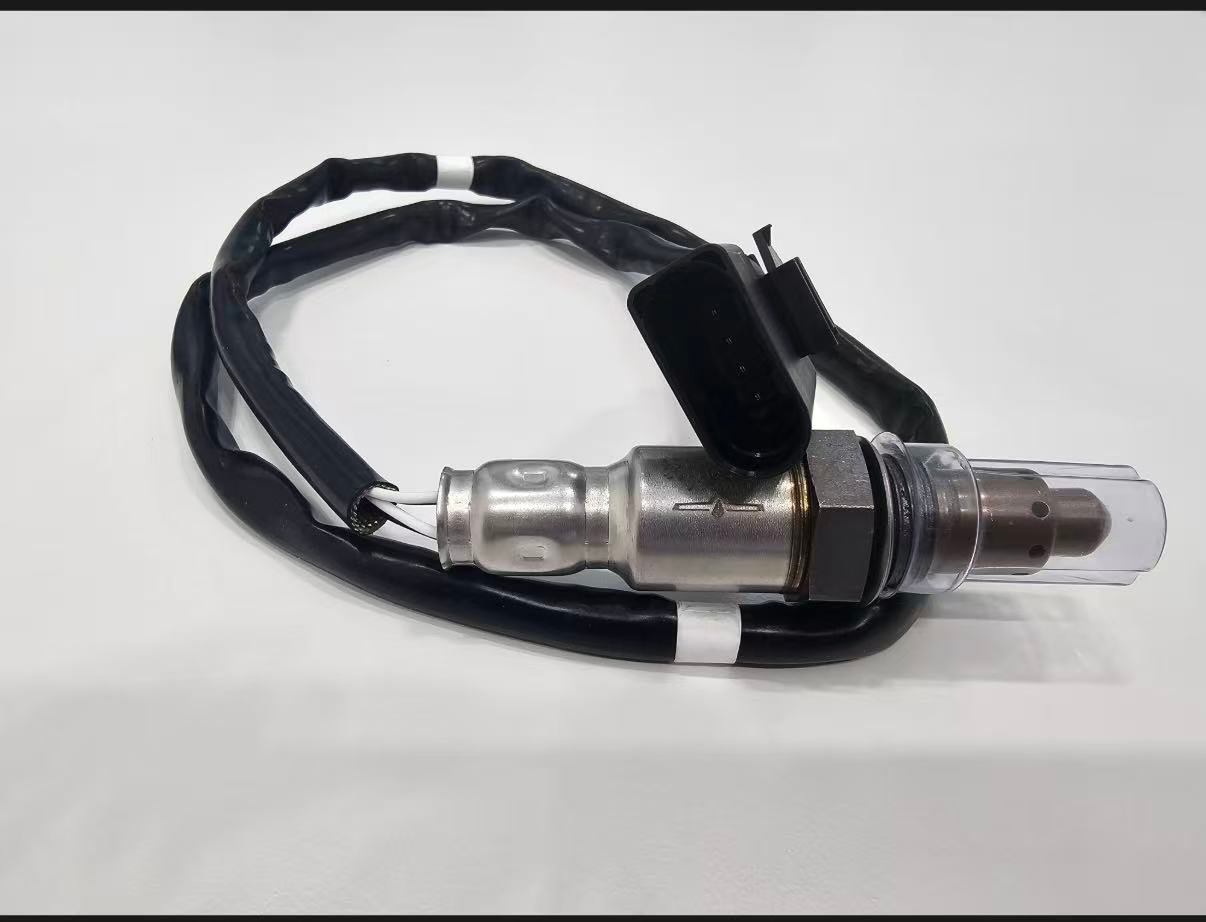
Dois sensores podem compartilhar a mesma rosca e até mesmo um invólucro semelhante, diferindo na tecnologia de detecção, calibração, aquecedor, chaveamento do conector, atribuição de terminais, comprimento do cabo, clipes e blindagem. Um cabo mais longo não é automaticamente um substituto seguro; um cabo não gerenciado pode tocar no escapamento ou em componentes móveis. Um cabo mais curto nunca deve ser esticado ou estendido para alcançar a posição errada.
| Característica de identidade | Evidência necessária | Atalho inseguro |
|---|---|---|
| Mapeamento de aplicação OE | Fonte atual para veículo, motor e posição exatos | Uma referência cruzada copiada sem revisão |
| Tecnologia | Especificação do produto e do veículo | Contagem de fios |
| Conector/pinagem | Chave, pinos, disposição dos terminais e circuito | Cor do conector ou ajuste forçado |
| Cabo e clipes | Comprimento e rota aprovada para posição exata | Extensão, corte ou amarração do excesso próximo ao calor |
| Blindagem/rosca | Especificação física desenhada ou verificada | Supondo que a rosca comum comprove a intercambialidade |
Caso composto: dois conectores semelhantes foram atribuídos às posições erradas
Cenário de workshop composto: após o trabalho de escapamento, um veículo define códigos de resposta específicos de posição. Ambos os sensores estão presentes e seus conectores podem ser roteados para ramificações próximas. O técnico reconcilia as cores dos fios, identificadores de conector e roteamento de serviço e descobre que os conectores estão trocados. Restaurar o mapeamento físico-para-dados correto resolve o conflito sem substituir sensores.
O cenário mostra por que as etiquetas de varredura, a posição física e a rota do conector devem concordar antes que os dados sejam interpretados. É um padrão composto, não um reparo de cliente da Sunhyings.
Caso composto: um sensor a jusante não foi a resposta automática para P0420
Cenário de diagnóstico composto: um gráfico do sensor traseiro aparece ativo e um código de catalisador é armazenado. Antes de solicitar um sensor traseiro, a oficina encontra um vazamento de escapamento antes dele e uma correção anormal de combustível a montante. O vazamento e a falha de mistura são corrigidos, os sensores exatos são verificados e o monitor do catalisador é executado novamente. Uma decisão de peça é adiada até que o sistema possa ser testado sob condições válidas.
Isso não promete que reparar um vazamento corrigirá todos os códigos de catalisador. Mostra a ordem de evidências necessária antes que um sensor a jusante ou catalisador seja condenado.
Registro de pedido específico da posição
- VIN/YMME, motor e configuração de mercado/emissões
- Cilindro 1 fonte, identidade do banco e número completo do sensor
- Posição relativa ao catalisador monitorado exato
- Referência OE e revisão de referência cruzada controlada
- Tecnologia de banda estreita, titânia ou banda larga/A/F
- Face do conector, chaveamento, pinos, comprimento do fio, clipes, rosca e blindagem
- Evidência de diagnóstico que suporta a substituição dessa posição
Projete um teste de resposta que responda a uma pergunta específica da posição
Antes de testar, formule a pergunta. Para um sensor a montante, pode ser se a mistura reportada segue uma mudança controlada rica/pobre dentro da especificação do veículo. Para um sensor a jusante, pode ser se o circuito está responsivo e se seu comportamento é plausível durante um monitor de catalisador definido. O estímulo, parâmetro esperado, escala de tempo e limite de aprovação devem corresponder à tecnologia do sensor e às informações de serviço.
| Campo de design de teste | Exemplo de montante | Exemplo de jusante | Atalho inválido |
|---|---|---|---|
| Condição Operacional | Circuito fechado aquecido na velocidade/carga especificada | Condições de habilitação do monitor do catalisador | Captura de tela de marcha lenta a frio |
| Canal de dados | Item correto de tensão/corrente/lambda | Item nomeado de sensor traseiro e referência a montante | Gráfico genérico não rotulado |
| Estímulo | Mudança de mistura controlada aprovada | Monitor do fabricante ou procedimento de resposta definido | Abertura e fechamento aleatório do acelerador |
| Verificações de fatores de confusão | Vazamentos, pressão de combustível, fluxo de ar e ajustes | Vazamentos, validade a montante, falha de ignição e estado do catalisador | Supondo que cada mudança venha do sensor |
| Conclusão | Aprovado/reprovado conforme especificação exata | Continuar caminho do circuito/sensor/catalisador | “Parece lento” sem escala ou limite |
Quando uma ferramenta de diagnóstico deriva ou filtra um parâmetro, documente a ferramenta e o rótulo dos dados. Se o veículo não suportar a informação necessária, use o método de teste OEM em vez de inventar um substituto universal. Não introduza alterações de combustível ou ar de forma que crie temperatura de escape insegura ou operação descontrolada.
A posição altera a exposição térmica e de roteamento
Sensores a montante podem ver temperatura de escape mais alta e de mudança mais rápida. Sensores a jusante geralmente têm rotas de underbody mais longas expostas a água, detritos da estrada e movimento da fiação. Essas tendências ajudam a planejar a inspeção, mas não substituem os desenhos de aplicação. Verifique protetores térmicos, grampos, clipes e localização do conector para o veículo exato.
| Exposição | Possível preocupação a montante | Possível preocupação a jusante | Registro de inspeção |
|---|---|---|---|
| Calor | Proximidade do coletor/catalisador e ciclagem rápida | Calor irradiado do escapamento e blindagens ausentes | Fotos completas do percurso instalado e folgas |
| Água/detritos | Vedação do conector no compartimento do motor | Impacto na parte inferior, entrada de sal e água | Condição do vedante, terminal e chicote |
| Movimento | Movimento do motor e terminal apertado | Movimento do escapamento e terminal longo sem suporte | Alívio de tensão e localização de cada braçadeira |
| Acesso para serviço | Acesso restrito ao coletor ou escudo | Acesso para elevação/suporte e bocal corroído | Plano de acesso e condição da rosca |
A evidência do fornecedor deve preservar a identidade da posição
Um distribuidor não deve agrupar a cobertura upstream e downstream em uma única família de marketing sem registros controlados a nível de peça. Cada peça vendável precisa de uma revisão, mapeamento OE/aplicação, tecnologia, especificação de conector e terminal, escopo de validação, controles de produção e rastreabilidade. Um certificado de gestão da qualidade pode apoiar a revisão do sistema de processo apenas dentro de sua entidade legal, local e escopo nomeados; ele não prova que a peça exata se encaixa em ambas as posições.
| Registro do fornecedor | Pergunta de posição que deve responder | Sinal de rejeição ou retenção |
|---|---|---|
| Tabela de aplicação | Quais linhas de veículo/motor/emissões/banco/sensor são aprovadas? | Lista em nível de modelo sem posição |
| Desenho do produto | O conector, cabo, clipes, rosca e blindagem estão na posição correta? | Apenas foto genérica da família |
| Especificação elétrica | A tecnologia/aquecedor/circuito corresponde à estratégia de posição? | Número de fios usado como prova de compatibilidade |
| Relatório de validação | Quais amostras e condições identificadas foram testadas? | Nomes de teste sem critérios, resultados ou identificação da amostra |
| Aviso de alteração | Alterações críticas de projeto/dados acionarão revisão? | Substituição não controlada de conector, cabo ou catálogo |
Análise de retorno para uma suspeita de incompatibilidade a montante/jusante
Preserve a etiqueta e o lote fornecidos, a identidade exata do veículo, a posição instalada, a fonte de mapeamento OE, a comparação antigo/novo e os resultados de diagnóstico. Uma reclamação de que o cabo é curto ou o conector difere pode indicar erro de embalagem, erro de catálogo, posição errada ou uma variante de emissão não registrada. Um DTC recorrente pode, em vez disso, refletir problemas no circuito do veículo ou na causa raiz. Investigue tanto a conformidade do produto quanto a precisão da aplicação.
Não altere o chicote direto para instalar uma peça contestada. Mantenha o sensor limpo, documente a face do conector e o roteamento, e pause até que o registro da peça e a evidência do veículo concordem. Isso protege o cliente e preserva as evidências para ações corretivas.
Árvore de decisão a montante/jusante, da reclamação à reparação verificada
- Defina a reclamação. Registre dirigibilidade, consumo de combustível, luz de advertência ou preocupação de inspeção sob condições operacionais repetíveis.
- Capture evidências do sistema. Leia todos os módulos e preserve o status do código, quadro congelado, prontidão e informações relacionadas a falhas de ignição ou controle de combustível.
- Nomeie a posição. Use a numeração dos cilindros do motor e o diagrama de escape para mapear banco, número do sensor, catalisador e conector físico.
- Identifique a tecnologia. Determine se a posição nomeada é de banda estreita, titânia ou banda larga/A/F e selecione os dados e testes suportados.
- Verifique o circuito e o contexto. Inspecione a alimentação/controle do aquecedor carregado, integridade do sinal/referência, vazamentos de escape, ajustes e causas concorrentes do motor.
- Execute um teste de resposta válido. Atenda aos requisitos de temperatura e estado de controle e documente estímulo, unidades, escala de tempo e resultado.
- Separe o sensor da lógica do catalisador. Para preocupações com sensor traseiro ou P0420/P0430, comprove a validade do sensor a montante e siga o caminho do catalisador.
- Selecione a peça exata. Corresponda ao OE/aplicação, posição, tecnologia, conector, cabo, clipes, rosca e blindagem.
- Instale sem alterar o sistema de emissões. Siga as instruções de segurança, torque, tratamento de rosca e roteamento; retenha todas as blindagens.
- Verifique a questão original. Reavalie o circuito/resposta e complete o monitor legal aplicável sob condições documentadas.
Se as evidências conflitarem em qualquer etapa, interrompa a decisão sobre a peça e resolva o conflito. Por exemplo, se o catálogo indicar downstream, mas o roteamento do conector alcançar o batoque pré-catalisador, nenhuma fonte deve ser preferida silenciosamente. Verifique o VIN/configuração, revisão do catálogo, peça removida e diagrama de serviço e registre a resolução.
Alegações comerciais que esta comparação não suporta
Este guia não estabelece que a Sunhyings mantém em estoque todos os sensores upstream ou downstream, que uma peça serve para todas as posições, ou que substituir um sensor reduzirá emissões ou consumo de combustível em uma porcentagem fixa. Ele não publica números OE, valores de torque, preços, MOQ, prazos de entrega ou aprovações não verificados. Esses detalhes exigem uma cotação específica da peça e revisão de evidências.
O convite comercial válido é submeter uma aplicação controlada e uma solicitação de produto. Os compradores devem incluir mercado de vendas, lista OE/peças, dados YMME/motor/emissões e posição, quantidade esperada, embalagem, validação e requisitos de documentação. Somente informações de projeto confirmadas devem entrar em uma cotação ou página de produto.
Para uma solicitação de varejo, a submissão mínima útil é menor, mas ainda exata: VIN ou YMME/motor completo, mercado de emissões, posição do Banco/Sensor, número da peça antiga legível e fotos do conector/chicote. Um código de falha ou as palavras “sensor a montante” não podem substituir esses dados de ajuste.
Mantenha as evidências com o pedido: revisão do catálogo, dados do veículo submetidos, posição selecionada e fotografias de comparação. Se o conector ou chicote entregue conflitar com o registro, pare antes da instalação e resolva o mapeamento. Isso é mais seguro e mais útil do que modificar uma peça de ajuste direto.
Prepare uma solicitação de ajuste ou fornecimento
Envie o número OE, ano/marca/modelo, detalhes do motor ou VIN, mercado e pacote de emissões, posição exata do banco/sensor, fotos do conector e da peça antiga, quantidade e quaisquer requisitos de embalagem ou aprovação. A Sunhyings revisará os dados fornecidos para capacidade e viabilidade de fornecimento; o ajuste não é confirmado até que a evidência de aplicação seja correspondida.
Perguntas frequentes
O Sensor 1 está a montante ou a jusante?
O sensor 1 geralmente está localizado a montante do conversor catalítico do seu banco. Confirme as informações de serviço do veículo, pois os layouts do sistema variam.
O Sensor 2 é o sensor de oxigênio traseiro?
O Sensor 2 é comumente o sensor a jusante ou pós-catalisador, mas use o diagrama do banco e do serviço em vez de confiar apenas na nomenclatura dianteiro ou traseiro.
Posso usar um sensor a montante a jusante?
Somente se o catálogo verificado ou a referência cruzada OE listar a peça exata para ambas as posições. Aparência semelhante não estabelece intercambialidade.
Um sensor a jusante controla o combustível?
Sua função principal é comumente o monitoramento do catalisador, embora as estratégias de controle variem. Não generalize a lógica de um veículo para todos os veículos.
O código P0420 significa que o sensor a jusante falhou?
O código P0420 refere-se à eficiência do sistema catalisador. Diagnostique os dados do sensor, a integridade do escapamento e a operação do catalisador antes de substituir peças.