








اختيار طلاء الصواميل للسيارات
صواميل مطلي بالزنك مقابل رقائق الزنك مقابل نيكل الزنك: دليل اختيار الطلاء للسيارات
اختيار الطلاء المناسب لصواميل السيارات ليس مجرد قرار لمقاومة التآكل. يمكن أن تتصرف الصواميل المطلية بالزنك ورقائق الزنك والزنك والنيكل بشكل مختلف بعد الطلاء وفحص السن اللولبي وعزم التجميع والاهتزاز والتعرض للملح واعتماد الإنتاج.
يقارن هذا الدليل بين خيارات الطلاء الثلاثة من حيث التعرض للتآكل وملاءمة السن الداخلي وخطر التقصف الهيدروجيني والتحكم في الاحتكاك والطبقة العلوية وبيانات طلب عرض الأسعار ومتطلبات وثائق السيارات.
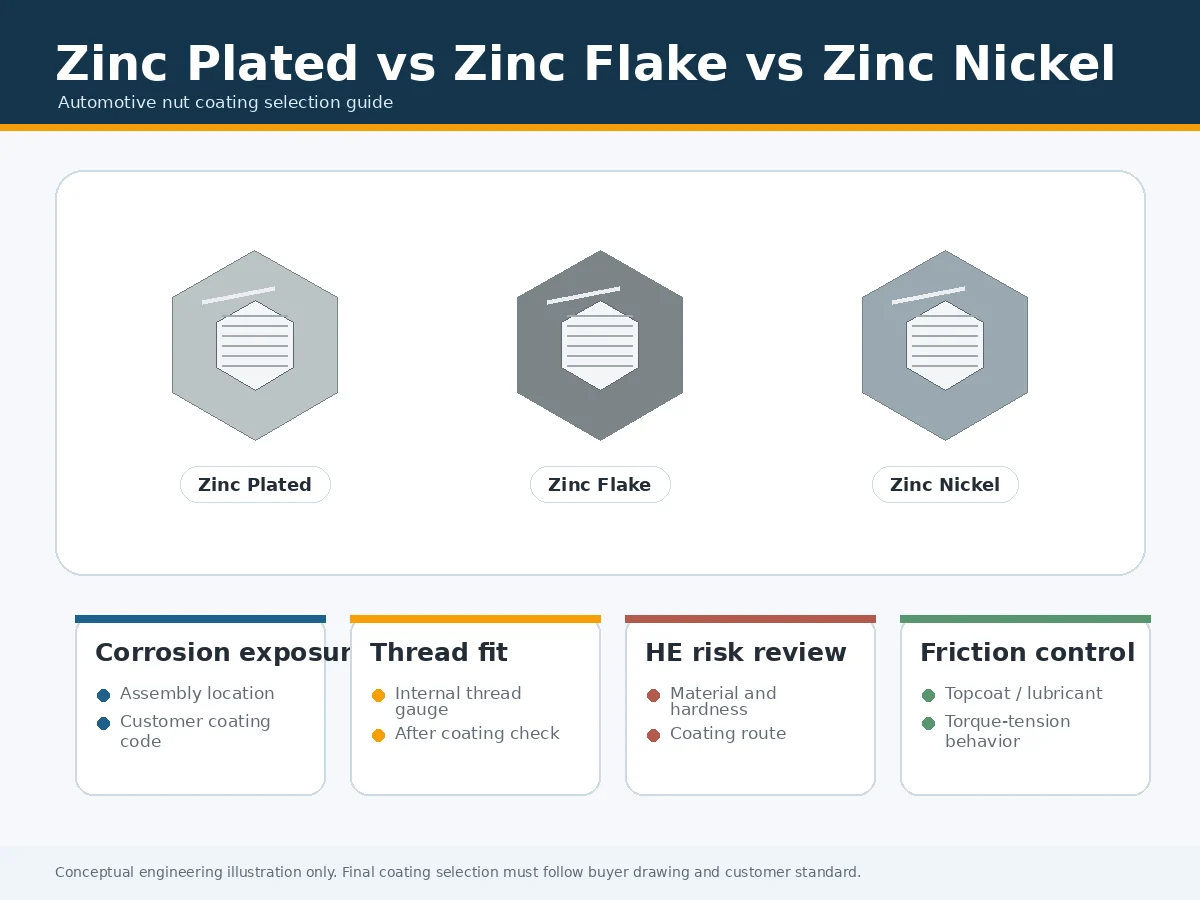
مقارنة مفاهيمية فقط؛ يجب أن يتبع اختيار الطلاء النهائي رسم المشتري ومعيار العميل.
إجابة سريعة: أي طلاء يجب أن يختاره مشترو السيارات؟
لا يوجد طلاء مثالي عالمي لكل صامولة سيارات. يعتمد الاختيار الصحيح على بيئة التطبيق، قوة المادة، المعالجة الحرارية، متطلبات ملاءمة السن، رمز الطلاء الخاص بالعميل، الطلاء العلوي، مادة التشحيم، نطاق الاحتكاك، طريقة الفحص ونطاق وثائق الموافقة.
غالبًا ما تُختار الصواميل المطلية بالزنك للتطبيقات الحساسة من حيث التكلفة، أو التعرض المنخفض للتآكل، أو المشاريع التي يحدد فيها رسم العميل بالفعل تشطيب زنك كهربائي. يمكن أن تكون عملية ومتاحة على نطاق واسع، ولكن الأجزاء عالية القوة أو المصلدة تتطلب مراجعة مخاطر هشاشة الهيدروجين عند استخدام الطلاء الكهربائي.
غالبًا ما تُعتبر الصواميل المطلية برقائق الزنك لمتطلبات التآكل الأعلى، أو مثبتات السيارات المعرضة خارجيًا، أو المشاريع التي يُفضل فيها مسار طلاء غير كهربائي. ومع ذلك، فإن رقائق الزنك لا تلغي الحاجة إلى تأكيد ملاءمة السن، تراكم الطلاء، الطلاء العلوي، معامل الاحتكاك وفحص المقياس النهائي.
غالبًا ما تُختار الصواميل المطلية بزنك النيكل عندما تتطلب مواصفات السيارات أداء تآكل أقوى من الطلاء القياسي بالزنك، أو مظهر محدد، أو سلوك سطح موصل، أو رمز طلاء عميل محدد. زنك النيكل لا يزال نظام طلاء كهربائي، لذا قد تظل صلابة المادة ومراجعة هشاشة الهيدروجين مهمة.
| حالة التطبيق | صواميل مطلية بالزنك | صواميل برقائق الزنك | صواميل زنك نيكل |
|---|---|---|---|
| تطبيق حساس للتكلفة | مناسب غالبًا | تكلفة أعلى عادةً | تكلفة أعلى عادةً |
| تعرض أقل للتآكل | مناسب غالبًا إذا تم تحديده | قد يكون أكثر من المطلوب | قد يكون أكثر من المطلوب |
| تعرض عالي للتآكل | محدود ما لم يعتمده العميل | غالبًا مرشح قوي | غالبًا مرشح قوي |
| صامولة عالية القوة أو مقساة | تحتاج مراجعة التقصف الهيدروجيني | غالبًا ما تُعتبر عندما يُفضل الطلاء غير الإلكتروليتي | تحتاج مراجعة التقصف الهيدروجيني |
| حساسية ملاءمة اللولب الداخلي | تحتاج التحكم في اللولب بعد الطلاء | تحتاج التحكم في سمك الطلاء والمقياس | تحتاج التحكم في السماح اللولبي والمقياس |
| التحكم في عزم الربط والشد | يحتاج إلى التحكم في التشطيب والتشحيم | يحتاج إلى طبقة علوية / التحكم في الاحتكاك | يحتاج إلى تشطيب / التحكم في الاحتكاك |
| قلق بشأن التأريض الكهربائي أو التوصيلية | يحتاج إلى تأكيد العميل | قد يكون غير مناسب ما لم يتم تحديده | يحتاج إلى تأكيد العميل |
| وظيفة اللحام أو التثبيت بالضغط | يحتاج إلى مراجعة خاصة بالعملية | يتطلب مراجعة توافق الطلاء / التركيب | يحتاج إلى مراجعة خاصة بالعملية |
قاعدة الاختيار
اختر الطلاء بناءً على المتطلبات الهندسية المؤكدة، وليس على اسم الطلاء وحده. بالنسبة لصواميل السيارات، يجب على المشتري تأكيد موقع التجميع، وظيفة الصامولة، حالة السن، صلابة المادة، رمز الطلاء لدى العميل، الطلاء النهائي، هدف الاحتكاك، طريقة اختبار التآكل، نطاق وثائق الاعتماد ومتطلبات التغليف قبل الاستفسار.
صواميل مجلفنة بالزنك مقابل رقائق الزنك مقابل الزنك والنيكل: جدول مقارنة
يجب أن تفصل المقارنة الأولى بين مسار الطلاء وتوقعات الأداء والمخاطر الهندسية. اسم الطلاء وحده لا يكفي للعرض السعري. يجب على المشترين تحديد رمز طلاء العميل الدقيق ونظام الطلاء والطبقة العلوية وحالة فحص الخيط ومتطلبات المستندات.
| عامل | صواميل مطلية بالزنك | صواميل برقائق الزنك | صواميل زنك نيكل |
|---|---|---|---|
| طريق الطلاء | نظام طلاء الزنك الكهربائي | نظام رقائق الزنك المطبق غير كهربائياً | نظام طلاء سبائك الزنك والنيكل الكهربائي |
| الميزة الرئيسية | التكلفة والتوفر وخيارات التشطيب الشائعة | أداء التآكل والمسار غير الكهربائي عند التحديد | أداء مقاومة التآكل، المظهر وملاءمة رمز العميل |
| الاهتمام الهندسي الرئيسي | مراجعة التقصف الهيدروجيني للأجزاء عالية القوة؛ تراكم الخيوط بعد الطلاء | الطبقة العلوية، سمك الطلاء، التحكم في الاحتكاك وفحص القلاووظ | التكلفة، المواصفات الدقيقة، التحكم في النظام ومراجعة التقصف الهيدروجيني |
| سؤال المشتري النموذجي | هل الطلاء بالزنك القياسي كافٍ لهذا الموقع؟ | هل يتطلب المشروع طلاء رقائق الزنك مع طبقة علوية والتحكم في الاحتكاك؟ | هل يتطلب الرسم أو معيار OEM وجود زنك نيكل؟ |
| خطر توافق الخيط | قد يحدث شد للخيط الداخلي بعد الطلاء | قد يؤثر تراكم الطلاء على مقياس الخيط الداخلي | قد تؤثر السماكة أو التخميل أو المادة المانعة للتسرب على توافق الخيط النهائي |
| سلوك العزم والشد | يمكن للطبقة النهائية ومواد التشحيم تغيير الاحتكاك | يمكن للطبقة العلوية ومواد التشحيم تغيير الاحتكاك | يمكن لنظام التشطيب تغيير الاحتكاك |
| مراجعة التقصف الهيدروجيني | مهم للأجزاء عالية القوة أو المصلدة | غالبًا ما يُعتبر عندما يُفضل مسار الطلاء غير الإلكتروليتي | مهم للأجزاء عالية القوة أو المصلدة |
| يجب تأكيد طلب عرض الأسعار | رمز الطلاء، السمك إذا تم تحديده، مقياس ما بعد الطلاء والتسخين إذا لزم الأمر | نظام الطلاء، الطبقة الأساسية، الطبقة العلوية، نطاق الاحتكاك ومقياس ما بعد الطلاء | مواصفات الزنك والنيكل، التخميل / المادة المانعة للتسرب، ملاءمة الخيط ونطاق التقرير |
| لا تفترض | جميع الطلاءات المجلفنة مقبولة للاستخدام في السيارات | جميع أنظمة طلاء الزنك الرقائقي تؤدي نفس الوظيفة | طلاء الزنك والنيكل يحل تلقائيًا كل مشكلة تآكل أو تجميع |

المصفوفة مخصصة لمناقشة الاختيار فقط؛ الموافقة النهائية على الطلاء تعتمد على الرسم، رمز طلاء العميل ومتطلبات الاختبار.
لماذا اختيار طلاء صواميل السيارات لا يتعلق فقط بساعات الرش الملحي
ساعات الرش الملحي سهلة المقارنة، لكنها لا تحدد بشكل كامل أداء صامولة السيارة. قد يبدو الطلاء قويًا في اختبار التآكل ولكنه لا يزال يخلق مشاكل في التجميع إذا أصبح الخيط الداخلي ضيقًا، أو لم يتم التحكم في معامل الاحتكاك، أو تم استخدام طبقة علوية خاطئة، أو لم يتم اتباع رمز طلاء العميل.
يجب أن يبدأ اختيار طلاء صواميل السيارات من الوصلة الفعلية والبيئة المحيطة. قد يكون لصامولة القوس الداخلي، صامولة المقعد الملحومة، صامولة أسفل الهيكل، صامولة التثبيت في الصفائح المعدنية، صامولة التأريض الكهربائي وصامولة القفل المعدنية بالكامل أولويات طلاء مختلفة. مقاومة التآكل مهمة، ولكن أيضًا ملاءمة الخيط، سلوك التثبيت، قابلية اللحام أو أداء التثبيت، الاحتكاك، سلوك العزم والشد، المظهر، التوصيل والتوثيق.
يجب على المشتري أيضًا التأكد مما إذا كان شرط مقاومة التآكل يعتمد على رذاذ الملح المحايد، أو التآكل الدوري، أو اختبار خاص بالعميل، أو طريقة تحقق أخرى. لا ينبغي أن تحل الادعاءات العامة محل الرسم أو مواصفات العميل.
قاعدة هندسية
لا تختار صواميل السيارات المطلية فقط بناءً على ساعات مقاومة التآكل المعلن عنها. تأكد من موقع التجميع، ورمز الطلاء الخاص بالعميل، وصلادة المادة، ومتطلبات السن اللولبي، ونطاق الاحتكاك، وطريقة الفحص قبل تقديم العرض.
موقع الوصلة
قد تتطلب المناطق الداخلية والخارجية وتحت الهيكل وحجرة المحرك والمناطق الكهربائية أنظمة طلاء مختلفة ونطاق فحص مختلف.
حالة السن
يمكن أن تصبح السنون اللولبية الداخلية ضيقة بعد الطلاء. يجب تحديد متطلبات المقياس بعد الطلاء إذا كان ملاءمة السن النهائية حرجة.
احتكاك التجميع
يمكن للطبقة العلوية ومواد التشحيم وتشطيب مسمار التزاوج أن تغير سلوك عزم الدوران. لا ينبغي تخمين قيم عزم الدوران من اسم الطلاء.
لماذا تغير وظيفة الصامولة اختيار الطلاء
قد لا يُحدث نفس الطلاء نفس المخاطر على كل نوع من الصواميل. فالصامولة السداسية القياسية، صامولة الفلنجة، صامولة اللحام، الصامولة ذاتية التثبيت، صامولة القفل المعدنية بالكامل، أو صامولة التأريض قد يكون لها أولويات طلاء مختلفة لأن نمط الفشل مختلف.
على سبيل المثال،, صواميل بفلنجة مسننة قد تحتاج إلى حالة سطح التحمل والتحكم في الاحتكاك، بينما قد تحتاج صواميل اللحام إلى مراجعة الطلاء حول حالة نتوء اللحام والحماية من التآكل لاحقًا. تحتاج الصامولة ذاتية التثبيت إلى التوافق مع مادة الصفيحة وسلوك التركيب. تحتاج صامولة القفل المعدنية بالكامل إلى سلوك عزم الدوران السائد. قد تتطلب صامولة التأريض تأكيد توصيلية السطح.
| وظيفة الصامولة | مخاوف اختيار الطلاء | يجب على المشتري التأكيد |
|---|---|---|
| صامولة قياسية ذات لولبة داخلية | ملاءمة الخيط بعد الطلاء والتعرض للتآكل | حالة مقياس الخيط، رمز الطلاء ومتطلبات التآكل |
| صامولة فلنجة | احتكاك سطح التحمل وسلوك التثبيت | الطبقة العلوية، المزلق، سطح التزاوج ومتطلبات عزم الشد إن وجد |
| صامولة لحام الفلنجة / صامولة لحام سداسية | سلوك نتوء اللحام والحماية من التآكل بعد التجميع | توافق عملية اللحام، تسلسل الطلاء ومتطلبات ما بعد اللحام |
| صامولة ذاتية التثبيت | سلوك التركيب في مادة الصفيحة وخطر تلف الطلاء | مادة الصفيحة، سمك الصفيحة، حالة الطلاء واختبار الدفع/العزم إذا لزم الأمر |
| صامولة قفل معدنية بالكامل | ثبات العزم السائد والاحتكاك | نظام الطلاء، مادة التشحيم، نطاق الاحتكاك واختبار العزم السائد إذا لزم الأمر |
| صامولة التأريض أو الكهربائية | موصلية السطح وموثوقية التلامس | الطلاء المعتمد من العميل ومتطلبات الموصلية إذا كانت قابلة للتطبيق |
الحدود الوظيفية: لا يمكن تحديد الطلاء النهائي بناءً على هندسة الصامولة وحدها. يجب على المورد معرفة موقع التجميع، ونوع الوصلة، والمادة المتصلة، ووضع الفشل، ومتطلبات السن اللولبي، وأي متطلبات لعزم الربط، أو قوة السحب، أو عزم الفك، أو قوة الدفع، أو عزم الربط المسبق، أو متطلبات التأريض التي يحددها المشتري.
الصواميل المطلية بالزنك: متى تكون مناسبة وأين تكون محفوفة بالمخاطر
تُستخدم الصواميل المطلية بالزنك على نطاق واسع لأنها متوفرة واقتصادية ومألوفة لدى العديد من المشترين. في البيئات منخفضة التآكل، أو التجميعات الحساسة من حيث التكلفة، أو التطبيقات المعتمدة من العميل، قد يكون الطلاء بالزنك خيارًا عمليًا.
ومع ذلك، لا ينبغي اختيار الصواميل المطلية بالزنك تلقائيًا لكل مشروع سيارات. تتطلب الطلاءات الكهربائية مراجعة أكثر دقة عندما تكون مادة الصامولة عالية القوة أو مقساة أو معالجة حرارياً. يغطي المعيار ISO 4042 أنظمة الطلاء الكهربائي للمثبتات الفولاذية ويتضمن توصيات لتقليل مخاطر التقصف الهيدروجيني.
متى قد تكون الصواميل المطلية بالزنك مناسبة
قد تكون الصواميل المطلية بالزنك مناسبة عندما يتطلب الرسم أو مواصفات العميل الطلاء بالزنك بالفعل، ويكون التعرض للتآكل معتدلاً أو منخفضًا، ولا تُستخدم الصامولة في بيئة خارجية أو تحت الهيكل شديدة القسوة، ويكون نظام الطلاء معتمدًا من العميل.
قد تكون مناسبة أيضًا للأقواس غير الحرجة، والتجميعات المغلقة، وقطع الغيار، أو التطبيقات التي تكون فيها التكلفة والتوفر مهمين. حتى في هذه الحالات، يجب على المشتري التأكد من ملاءمة السن اللولبي بعد الطلاء، وسماكة الطلاء إذا كانت محددة، ومعالجة التخميل، والطبقة العلوية، والخبز إذا لزم الأمر، ونطاق تقرير الفحص.
المخاطر الرئيسية للصواميل المطلية بالزنك
تشمل المخاطر الرئيسية مراجعة التقصف الهيدروجيني للأجزاء عالية القوة أو المصلدة، وتراكم الخيوط الداخلية بعد الطلاء، وعدم اتساق الاحتكاك إذا لم يتم التحكم في مادة التشحيم أو حالة التشطيب، وضعف أداء مقاومة التآكل للبيئات القاسية في السيارات.
قد تجتاز الصامولة المطلية بالزنك فحص الأبعاد قبل الطلاء ولكنها تفشل في مقياس الخيط بعد الطلاء إذا لم يتم تحديد السماح وحالة المقياس النهائي. هذا مهم بشكل خاص للخيوط الداخلية، وأحجام الخيوط الصغيرة، أو متطلبات تفاوت الخيوط الضيقة.
| بند طلب عرض أسعار مطلي بالزنك | لماذا يهم | يحتاج تأكيد |
|---|---|---|
| معيار الطلاء أو رمز العميل | يتجنب الاستبدال العام “مطلي بالزنك” | رسم المشتري أو مواصفات طلاء العميل |
| سمك الطلاء إذا كان محددًا | يؤثر على التآكل، وملاءمة الخيط، والفحص | ملاحظة معيار العميل أو الرسم |
| معالجة التخميل / مانع التسرب / الطبقة النهائية | يؤثر على المظهر وسلوك التآكل | رمز التشطيب والنظام المعتمد |
| متطلبات خالية من الكروم سداسي التكافؤ إن وجدت | يدعم متطلبات الامتثال للعميل | متطلبات العميل أو الجهة التنظيمية |
| المعالجة الحرارية / تخفيف التقصف إذا لزم الأمر | يدعم التحكم في مخاطر التقصف الهيدروجيني | معيار صلابة المادة والطلاء |
| مقياس اللولبة بعد الطلاء | يؤكد ملاءمة التجميع النهائي | قبل الطلاء، بعد الطلاء أو كليهما |
| تقرير الطلاء / اختبار التآكل | يحدد نطاق التوثيق والتحقق | فقط إذا كان مطلوبًا من قبل العميل أو البرنامج |
حدود الطلاء بالزنك
يمكن أن يكون الطلاء بالزنك طلاءً عمليًا، لكن لا ينبغي التعامل معه كحل افتراضي للسيارات. إذا كانت الصامولة مقساة أو معالجة حرارياً أو حرجة من حيث اللولبة أو حساسة لعزم الربط أو معرضة لتآكل شديد، فيجب مراجعة مسار الطلاء ومتطلبات العميل قبل تقديم العرض.
صواميل طلاء رقائق الزنك: أهداف عالية لمقاومة التآكل، أجزاء عالية القوة والتحكم في الاحتكاك
غالبًا ما تُعتبر طلاءات رقائق الزنك للمثبتات في السيارات لأنها تُطبق بطريقة غير كهربائياً ويمكن تحديدها مع أنظمة الطلاء العلوي والتشحيم. تغطي المواصفة ISO 10683 أنظمة طلاء رقائق الزنك غير الكهربائية للمثبتات الفولاذية وتنطبق على الصواميل والمسامير والبراغي والأوتاد وأنواع المثبتات الأخرى.
بالنسبة لصواميل السيارات، يمكن النظر في استخدام رقائق الزنك عندما تكون مقاومة التآكل مهمة، أو كان التطبيق معرضًا لبيئة الطريق، أو أراد المشروع تجنب الطلاء الكهربائي للأجزاء عالية القوة أو المصلدة. ومع ذلك، يجب تحديد رقائق الزنك بعناية. قد تتصرف الأنظمة المختلفة والطبقات الأساسية والطبقات العلوية ومواد التشحيم بشكل مختلف.
لماذا غالبًا ما يتم النظر في رقائق الزنك لمثبتات السيارات
تُستخدم أنظمة رقائق الزنك غالبًا عندما تكون مقاومة التآكل ومخاطر عملية الطلاء مهمة. يمكن أن تكون مفيدة للهيكل السفلي والشاسيه والأقواس المكشوفة أو تجميعات السيارات الأخرى عندما تسمح أو تتطلب مواصفات العميل ذلك.
غالبًا ما يتم مناقشة رقائق الزنك أيضًا للمثبتات عالية القوة لأنها ليست طريقة طلاء كهربائي. ومع ذلك، لا ينبغي للمشترين كتابة “رقائق الزنك تعني عدم وجود مخاطر” دون تأكيد هندسي. لا تزال حالة المادة والمعالجة المسبقة وعملية الطلاء والطبقة العلوية ومعيار العميل مهمة.
المخاطر الرئيسية لصواميل رقائق الزنك
يمكن أن تؤثر طلاءات رقائق الزنك على ملاءمة الخيط. قد يؤثر تراكم الطلاء أو سمك الطبقة العلوية أو التغطية غير المتساوية على مقياس الخيط الداخلي. يمكن أن يتغير سلوك الاحتكاك أيضًا اعتمادًا على الطبقة العلوية ومواد التشحيم. بالنسبة لتجميعات السيارات التي يتم التحكم فيها بعزم الدوران، يجب تأكيد معامل الاحتكاك إذا كان مطلوبًا في الرسم أو معيار العميل.
ليس كل نظام رقائق زنك له نفس الأداء. يجب على المشتري تجنب كتابة “رقائق الزنك” فقط في طلب عرض السعر دون تحديد نظام الطلاء والطبقة العلوية ونطاق الاحتكاك ومتطلبات التآكل وحالة الفحص.
| بند طلب عرض سعر لرقائق الزنك | التوضيح المطلوب | المخاطرة في حال الفقدان |
|---|---|---|
| نظام الطلاء | رمز العميل، النظام المعتمد أو مواصفات مورد الطلاء | يمكن للمورد تقديم نظام رقائق الزنك مختلف |
| طبقة أساس + طبقة علوية | مطلوب عندما يعتمد التآكل أو الاحتكاك على الطبقة العلوية | قد لا يتطابق توقع الاحتكاك أو التآكل |
| حالة المزلق | جاف، مزلق أو حالة احتكاك محددة | قد يتغير سلوك عزم الشد |
| معامل الاحتكاك | نطاق الهدف إذا لزم الأمر | تشتت عزم التجميع |
| مقياس اللولبة بعد الطلاء | حالة قبول الصامولة النهائية | نزاع مقياس اللولبة بعد الطلاء |
| طريقة اختبار التآكل | رذاذ الملح، التآكل الدوري أو اختبار خاص بالعميل | قد لا يفي الادعاء العام بالأداء بمتطلبات المشتري |
| حزمة المستندات | تقرير الطلاء، IMDS أو PPAP فقط إذا لزم الأمر | تعارض المستندات المتأخرة |
حدود رقائق الزنك
يجب تحديد رقائق الزنك كنظام طلاء، وليس مجرد اسم طلاء. يجب تأكيد الطبقة الأساسية، الطبقة العلوية، المزلق، حالة الاحتكاك، طريقة اختبار التآكل، مقياس اللولب بعد الطلاء ونطاق المستندات عندما تؤثر على الموافقة.
صواميل الزنك والنيكل: مقاومة التآكل، التحكم في اللولب وملاءمة المواصفات
غالبًا ما يتم اختيار صواميل الزنك والنيكل للمشاريع التي تتطلب مقاومة تآكل أفضل من الطلاء القياسي بالزنك، ومظهر نهائي محدد، وسلوك سطحي موصل أو رمز طلاء OEM محدد. يمكن أن يكون الزنك والنيكل خيارًا قويًا عندما يتطلبه الرسم ومعيار العميل.
ومع ذلك، فإن الزنك والنيكل ليس مجرد “طلاء زنك أفضل” في كل مشروع. عادة ما يكون أكثر تكلفة من الطلاء القياسي بالزنك، ويجب تحديد نظام الزنك والنيكل الدقيق. يجب على المشترين تأكيد رمز الطلاء، نطاق السماكة إذا تم تحديده، التخميل، المادة المانعة للتسرب، حالة فحص اللولب، متطلبات التآكل ونطاق المستندات.
لماذا قد يتم اختيار الزنك والنيكل
قد يتم اختيار الزنك والنيكل عندما يتعرض الجزء لظروف تآكل أكثر تطلبًا، أو عندما تتطلب مواصفات العميل الزنك والنيكل، أو عندما يحتاج المشروع إلى نظام تشطيب بخصائص مظهرية وهندسية محددة.
قد يتم اختياره أيضًا عندما تتطلب المجموعة توازنًا بين الحماية من التآكل والتحكم في الأبعاد وخصائص السطح الموصلة. تعتمد هذه الفوائد على نظام الطلاء الدقيق وموافقة العميل، وليس فقط على كلمتي “الزنك والنيكل”.”
المخاطر الرئيسية لصواميل الزنك والنيكل
تشمل المخاطر الرئيسية التكلفة الأعلى، والمواصفات غير الواضحة، وسُمك الطلاء غير الصحيح، ومشاكل توافق الخيوط بعد الطلاء، ومراجعة التقصف الهيدروجيني للأجزاء عالية القوة أو المصلدة. نظرًا لأن الزنك والنيكل هو نظام طلاء كهربائي، يجب على المشترين عدم تجاهل صلابة المادة ومخاطر مسار العملية.
إذا كان طلب عرض الأسعار يذكر فقط “الزنك والنيكل” دون رمز عميل أو مواصفات طلاء، فقد يقوم الموردون بعرض أنظمة مختلفة. يمكن أن يؤدي ذلك إلى مشاكل في الموافقة على العينة، أو عدم تطابق التقارير، أو خلاف في أداء الطلاء.
| بند طلب عرض أسعار الزنك والنيكل | لماذا يهم | يحتاج تأكيد |
|---|---|---|
| رمز طلاء الزنك والنيكل | يمنع الاستشهاد بالنظام الخطأ | رسم العميل أو مواصفات الطلاء |
| محتوى النيكل / متطلبات النظام إذا تم تحديدها | يجب اتباع معيار العميل | نظام نيكل-زنك معتمد |
| نطاق السمك إذا تم تحديده | يؤثر على التآكل وملاءمة الخيط | نطاق المواصفات وطريقة الفحص |
| معالجة التخميل / مانع التسرب / الطبقة النهائية | يؤثر على المظهر وسلوك التآكل | رمز تشطيب العميل |
| مقياس اللولبة بعد الطلاء | يؤكد ملاءمة التجميع النهائي | قبل الطلاء، بعد الطلاء أو كليهما |
| مراجعة التقصف الهيدروجيني | مطلوب حسب المادة والصلادة | المادة، الصلادة ومتطلبات عملية العميل |
| تقرير الطلاء / IMDS / PPAP | يحدد دليل الموافقة إذا كان مطلوبًا | نطاق المستند الخاص بالبرنامج |
حدود الزنك والنيكل
يجب اختيار الزنك والنيكل عندما يتطابق مع رمز طلاء العميل ومتطلبات المشروع. لا ينبغي استخدامه كبديل عام لجميع مشاكل التآكل في السيارات دون التأكد من التكلفة، ملاءمة الخيط، مراجعة التقصف الهيدروجيني، سلوك الاحتكاك ووثائق الموافقة.
ملاءمة الخيط بعد الطلاء: مقياس الخيط الداخلي وفحص ما بعد الطلاء
الصواميل هي مكونات ذات خيط داخلي، لذلك يجب أن يأخذ اختيار الطلاء في الاعتبار ملاءمة الخيط بعد الطلاء. نظام الطلاء الذي يعمل بشكل جيد على برغي خارجي قد يظل يشكل خطرًا داخل الصامولة إذا لم يتم التحكم في سماحية الخيط، تراكم الطلاء أو حالة المقياس النهائي.
فحص السن قبل الطلاء لا يضمن تلقائيًا قبول السن المطلي النهائي. يجب على المشتري توضيح ما إذا كانت الصامولة يجب أن تجتاز مقياس السن قبل الطلاء أو بعده أو كليهما. هذا مهم بشكل خاص عندما يتطلب الرسم تفاوتًا ضيقًا للسن أو حجم سن صغير أو نظام طلاء سميك أو تجميع وظيفي بعد الطلاء.
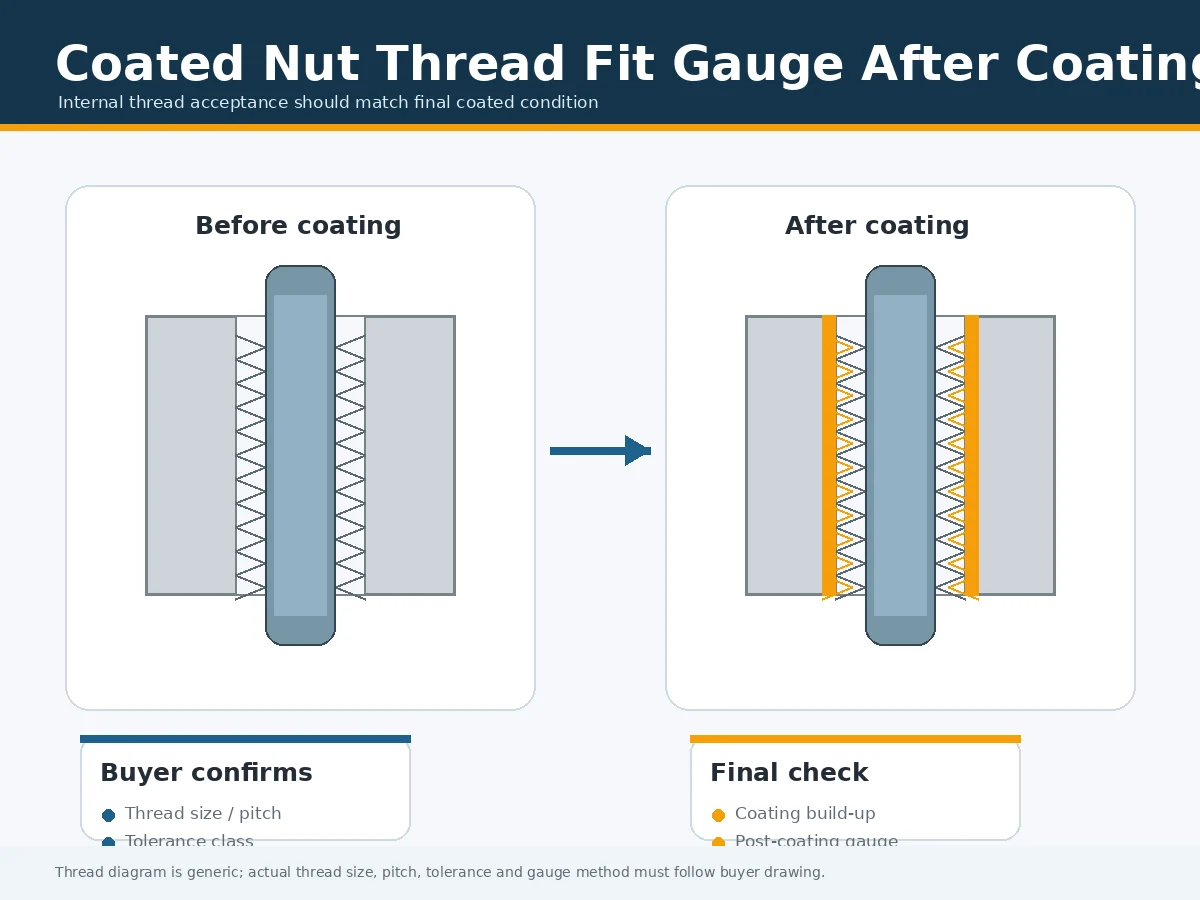
رسم السن عام؛ يجب أن يتبع حجم السن الفعلي والخطوة والتفاوت وطريقة القياس رسم المشتري.
بالنسبة للصواميل المطلية بالزنك وصواميل الزنك والنيكل، يمكن أن يقلل التراكم الكهربائي من الخلوص الداخلي للسن. بالنسبة للصواميل المطلية برقائق الزنك، يمكن أن يؤثر فيلم الطلاء والطبقة العلوية أيضًا على دخول المقياس والتجميع. الحل ليس التخمين. يجب أن يحدد الرسم أو طلب عرض السعر حالة الفحص النهائي.
| عنصر السن | يجب على المشتري التأكيد | المخاطرة في حال الفقدان |
|---|---|---|
| حجم السن والخطوة | مرجع الرسم | مسمار أو برغي أو قضيب ملولب غير مناسب |
| تفاوت اللولبة | متطلبات الفئة أو الملاءمة | خلاف في المقياس |
| سمك الطلاء إذا كان محددًا | معيار العميل أو رمز الطلاء | خيط ضيق أو عدم تناسق في التركيب |
| حالة المقياس | قبل الطلاء، بعد الطلاء أو كليهما | نزاع في الموافقة على العينة |
| شطف / مدخل | شرط دخول محكوم بالرسم | صعوبة في التجميع أو مشكلة في دخول المقياس |
| طبقة علوية / مادة تشحيم | إذا كان شرط الاحتكاك ساريًا | تشتت العزم أو تباين التحميل المسبق |
| سجل الفحص | تقرير المقياس إذا لزم الأمر | دليل موافقة مفقود |
اتصال الرسم: للمشاريع المخصصة، يجب توضيح متطلبات الطلاء والخيوط بوضوح في الرسم أو حزمة طلب العروض. لمزيد من السياق حول التحكم في الرسومات، راجع SUNHYINGS صواميل خاصة مصنوعة حسب الرسم.
مخاطر التقصف الهيدروجيني: ما يجب على المشترين تأكيده
يُعتبر خطر التقصف الهيدروجيني أحد أهم الاعتبارات الهندسية عند اختيار الطلاءات للمثبتات الفولاذية عالية القوة أو المصلدة. ويكون ذا أهمية خاصة عند استخدام أنظمة الطلاء الكهربائي.
بالنسبة لصواميل السيارات، يجب على المشتري التأكد من المادة والصلادة والمعالجة الحرارية وطريقة الطلاء قبل افتراض أن التشطيب مقبول. الصواميل المطلية بالزنك والزنك والنيكل هي أنظمة مطلي كهربائيًا، لذا قد تتطلب الأجزاء عالية القوة أو المصلدة مراجعة التقصف الهيدروجيني أو الخبز أو ضوابط عملية خاصة بالعميل إذا تم تحديد ذلك.

سير عمل المخاطر هو توضيحي فقط؛ يجب أن يتبع التحكم النهائي في العملية معيار العميل ومواصفات الطلاء المعتمدة.
رقائق الزنك هي نظام طلاء غير كهربائي وغالبًا ما يُعتبر عندما يكون تجنب خطر التقصف الهيدروجيني المرتبط بالطلاء الكهربائي مهمًا. ولكن لا ينبغي كتابة هذا على أنه “رقائق الزنك تقضي على جميع المخاطر.” لا يزال المشروع بحاجة إلى معالجة أولية صحيحة، والتحكم في عملية الطلاء، والطبقة العلوية، والفحص، وموافقة العميل.
| عامل الخطر | لماذا يهم | يجب على المشتري التأكيد |
|---|---|---|
| درجة المادة | يحدد القوة وحساسية العملية | رسم أو معيار العميل |
| الصلادة / فئة الخواص | يمكن أن تزيد الصلادة الأعلى من القلق | نطاق الصلادة وطريقة الاختبار |
| المعالجة الحرارية | يؤثر على السلوك الميكانيكي | متطلبات وسجلات المعالجة الحرارية |
| طريق الطلاء | مراجعة مخاطر تغيير المسار الكهربائي مقابل غير الكهربائي | معيار الطلاء أو العملية المعتمدة |
| المعالجة بالخبز / التخفيف | قد تكون مطلوبة حسب المواصفة القياسية أو العميل | التوقيت والشرط المطلوب إذا تم تحديده |
| موافقة العميل | القرار النهائي يعتمد على قواعد البرنامج | رمز طلاء العميل وعملية الموافقة |
لا يوجد ادعاء عالمي بعدم وجود خطر صفري
يمكن أن يكون مسار الطلاء غير الإلكتروليتي عاملاً مهماً في الاختيار، لكن مراجعة خطر التقصف الهيدروجيني لا تزال تعتمد على المادة والصلادة والمعالجة الحرارية وضوابط العملية ومتطلبات العميل. لا تدع بضمان عدم وجود تقصف هيدروجيني صفري دون التحقق الخاص بالمشروع.
طبقة علوية، مادة تشحيم وسلوك العزم والشد
الطلاء ليس مجرد طبقة مقاومة للتآكل. فهو يغير حالة سطح الصامولة ويمكن أن يؤثر على الاحتكاك أثناء الربط. عند نفس عزم الربط، قد تؤدي أنظمة الطلاء المختلفة أو الطبقات العلوية أو مواد التشحيم إلى قوة تثبيت مختلفة.
هذا مهم في الوصلات في صناعة السيارات حيث تكون قوة الشد المسبق، مقاومة الفك، عزم الثبات أو اتساق التجميع مهمة. وينطبق ذلك بشكل خاص عند استخدام صواميل مطلية مع براغي تزاوج لها طلاء أو مادة تشحيم أو حالة سطح خاصة بها.

لا يُقصد أي قيمة عزم أو احتكاك؛ يجب أن تأتي قيم الاختبار من رسم المشتري أو معيار التجميع.
بالنسبة للصواميل المطلية بالزنك، يمكن أن تؤثر حالة التخميل، المادة المانعة للتسرب ومادة التشحيم على الاحتكاك. بالنسبة للصواميل المطلية برقائق الزنك، يمكن أن تكون الطبقة العلوية ومواد التشحيم المدمجة أو المضافة حاسمة. بالنسبة للصواميل المطلية بزنك النيكل، قد يؤثر نظام التشطيب الدقيق أيضًا على سلوك الاحتكاك والتجميع.
لا ينبغي للمشتري أن يطلب من المورد تخمين قيمة عزم الربط أو معامل الاحتكاك. إذا كان سلوك العزم والشد مهمًا، يجب أن يتضمن طلب عرض السعر نطاق معامل الاحتكاك المطلوب، طريقة الاختبار، الحالة المزيتة أو الجافة، حالة برغي التزاوج ومعايير القبول.
| المتغير | لماذا يهم | يجب على المشتري التأكيد |
|---|---|---|
| طبقة علوية | يغير سلوك الاحتكاك والتآكل | رمز الطلاء النهائي المطلوب |
| مُزَلِّق | يغير سلوك العزم-الشد | حالة مشحمة أو جافة |
| معامل الاحتكاك | يتحكم في اتساق التجميع | نطاق الهدف إذا لزم الأمر |
| تشطيب المسمار المتزاوج | يؤثر على سلوك الوصلة بالكامل | طلاء المسمار وحالة السطح |
| خاصية القفل | يؤثر على عزم الربط السائد | طريقة الاختبار ومعايير القبول |
| سماكة الطلاء | يؤثر على ملاءمة السن اللولبي والاحتكاك | حالة القياس والفحص النهائية |
لوظيفة القفل والتطبيقات الحساسة لعزم الربط، يمكن للمشترين أيضًا مراجعة SUNHYINGS صواميل قفل معدنية بالكامل والشائعة مشاكل تجميع السيارات التي تم حلها بواسطة صواميل خاصة.
قائمة الرسم وطلب عرض الأسعار للصواميل المطلية للسيارات
يجب ألا يذكر طلب عرض الأسعار للصواميل المطلية للسيارات فقط “مطلي بالزنك” أو “رقائق الزنك” أو “نيكل الزنك”. هذه الأسماء ليست كافية للمراجعة الهندسية. يحتاج المورد إلى الرسم ورمز الطلاء ومعيار العميل وسياق التطبيق وحالة السن اللولبي وحالة المادة ومتطلبات الاحتكاك ونطاق الوثائق.

القائمة المرجعية مخصصة لإعداد طلب عرض السعر فقط؛ تنطبق تقارير PPAP و IMDS وتقارير الطلاء فقط عندما يطلبها العميل أو البرنامج.
يساعد طلب عرض أسعار كامل في منع استبدال الطلاء الخاطئ، فشل السن بعد الطلاء، تشتت عزم الدوران، الخلاف حول التآكل وتضارب المستندات المتأخر. لسياق مراجعة المورد، انظر SUNHYINGS كـ مورد صواميل خاصة لتطبيقات السيارات.
| عنصر طلب عرض السعر | مطلوب؟ | لماذا يهم | يحتاج تأكيد |
|---|---|---|---|
| أحدث مراجعة للرسم | نعم | التحكم في الأساس الفني | الرسم الحالي والمراجعة المعتمدة |
| نوع الصامولة ووظيفتها | نعم | صواميل اللحام، الكبس، القفل والفلنجة لها مخاطر مختلفة | الوظيفة، الجزء المتزاوج ووضع الفشل |
| موقع التجميع | نعم | يحدد التعرض للتآكل ووظيفة الوصلة | الداخلية، الخارجية، أسفل الهيكل، حجرة المحرك أو المنطقة الكهربائية |
| حجم السن، درجة الميل، والتسامح | نعم | يتحكم في ملاءمة التجميع النهائي | طريقة القياس وحالة السن قبل / بعد الطلاء |
| المادة / الصلادة / المعالجة الحرارية | نعم إذا تم تحديده | يدعم مراجعة التقصف الهيدروجيني | درجة المادة، فئة الخواص، نطاق الصلادة أو ملاحظة المعالجة الحرارية |
| نوع الطلاء | نعم | الطلاء بالزنك، رقائق الزنك أو الزنك والنيكل هو مجرد نقطة البداية | عائلة الطلاء والطريقة الدقيقة |
| رمز الطلاء الخاص بالعميل | موصى به بشدة | يمنع استبدال الطلاء العام | رسم العميل، رمز OEM أو مواصفات الشراء |
| سماكة الطلاء | إذا تم تحديده | يؤثر على ملاءمة السن اللولبي وتوقع التآكل | النطاق المحدد، طريقة الفحص والحالة النهائية |
| طبقة علوية / مانع تسرب / مادة تشحيم | إذا كان مطلوبًا | تتحكم في سلوك الاحتكاك والتشطيب | نظام معتمد وحالة جافة / مشحمة |
| طريقة اختبار التآكل | إذا كان مطلوبًا | يحدد توقعات التحقق من الصحة | رذاذ ملح محايد، تآكل دوري أو اختبار خاص بالعميل |
| مقياس اللولبة بعد الطلاء | إذا كان الخيط حرجًا | يمنع نزاع التركيب النهائي | قبل الطلاء، بعد الطلاء أو كليهما |
| معامل الاحتكاك | إذا كان مطلوبًا | يدعم اتساق عزم الربط | نطاق الهدف، طريقة الاختبار وحالة البرغي المطابق |
| تقرير PPAP / IMDS / الطلاء | إذا كان مطلوبًا | يحدد نطاق وثيقة الموافقة | متطلبات العميل أو البرنامج |
| الكمية السنوية | نعم | يؤثر على مسار الطلاء وتخطيط العملية | الموافقة على النموذج الأولي والعينة وحجم الإنتاج |
| التعبئة والتغليف | إذا كان مطلوبًا | يمنع تلف الطلاء واختلاط الدفعات | فصل الدفعات والأكياس والصواني والملصقات ومنع الصدأ |
يجب التعامل مع PPAP كمتطلبات خاصة بالعميل أو البرنامج. يجب أيضًا التعامل مع IMDS كمتطلبات بيانات المواد الخاصة بالسيارات عند الحاجة. يجب تأكيد ذلك قبل عرض السعر بدلاً من إضافته بعد الموافقة على السعر.
كيف تراجع SUNHYINGS متطلبات الطلاء قبل عرض السعر
يجب على SUNHYINGS مراجعة مشاريع الصواميل المطلية للسيارات من خلال فحص الرسم ومتطلبات الطلاء وحالة السنادة وخطر المادة وسياق التطبيق قبل عرض السعر. الهدف ليس اختيار أغلى طلاء، بل تأكيد نظام الطلاء الذي يتوافق مع رسم المشتري ومتطلبات العميل.
مراجعة كود الرسم والطلاء
تبدأ المراجعة بأحدث إصدار للرسم وملاحظة الطلاء. إذا كان الرسم يذكر فقط “زنك” أو “Zn” أو “تشطيب أسود” أو “مقاوم للتآكل”، فإن متطلبات الطلاء غير واضحة بما يكفي لعرض أسعار السيارات. يجب تأكيد كود الطلاء ولون التشطيب والطبقة العلوية والمادة المانعة للتسرب ومادة التشحيم ومتطلبات مقاومة التآكل ونطاق التقرير.
مراجعة مخاطر المادة والصلابة والتقصف الهيدروجيني
يجب على SUNHYINGS مراجعة درجة المادة والصلابة والمعالجة الحرارية ومتطلبات القوة قبل تأكيد مسار الطلاء الكهربائي. إذا كانت مخاطر التقصف الهيدروجيني ذات صلة، فيجب مراجعة المشروع وفقًا لمعيار العميل ومتطلبات عملية الطلاء.
مراجعة متطلبات الخيط والوظيفة
بالنسبة للصواميل، فإن حالة الخيط الداخلي النهائية حاسمة. يجب أن تؤكد المراجعة حجم الخيط، وخطوة اللولب، والتسامح، والشطب، ومتطلبات المقياس بعد الطلاء، واحتياجات الاختبار الوظيفي. صواميل لحام فلنجة, صواميل لحام سداسية, الصواميل ذاتية التثبيت, ، قد تتطلب صواميل القفل المعدنية بالكامل وصواميل الفلنجة نقاط مراجعة مختلفة.
مراجعة التحكم في العينة والإنتاج
قبل أخذ العينات، يجب على المشتري والمورد التأكد من أن مسار العينة يتوافق مع مسار الإنتاج. كما يجب عليهما تحديد نطاق تقرير الطلاء، خطة الفحص، التعبئة والتغليف، تتبع الدفعة، PPAP إذا لزم الأمر و IMDS إذا لزم الأمر.
ما يمكن التحقق منه قبل عرض السعر
بالنسبة لمشاريع الصواميل الحساسة للطلاء في صناعة السيارات، يمكن لشركة SUNHYINGS مراجعة رسم المشتري وحزمة طلب عرض السعر لتحديد البيانات الفنية المفقودة قبل تأكيد السعر. هذا المراجعة هي فحص هندسي في مرحلة عرض السعر، وليست بديلاً عن موافقة العميل، أو التحقق من مختبر الطلاء، أو تقديم PPAP الرسمي.
| مراجعة العنصر | ما يمكن لـ SUNHYINGS التحقق منه | الحدود |
|---|---|---|
| مراجعة الرسم وملاحظة الطلاء | ما إذا كان تحديد الطلاء واضحًا بما يكفي لعرض السعر وأخذ العينات | رسم العميل ومواصفات الطلاء هما المرجع النهائي |
| ملاءمة الخيط الداخلي | ما إذا كانت حالة مقياس اللولبة بعد الطلاء بحاجة إلى التحديد | يجب أن يتبع قبول المقياس الفعلي رسم المشتري وطريقة الفحص |
| المادة، الصلادة والمعالجة الحرارية | ما إذا كانت مراجعة التقصف الهيدروجيني المرتبط بالطلاء الكهربائي قد تكون ذات صلة | لا ينبغي الموافقة على أي مسار طلاء دون مراجعة متطلبات العميل |
| متطلبات تقرير الطلاء | ما إذا كان تقرير الطلاء أو بيانات اختبار التآكل أو وثائق المورد مطلوبة | نطاق التقرير يعتمد على العميل والبرنامج وقدرة شريك الطلاء |
| متطلبات الاحتكاك وعزم الربط | ما إذا كان الطلاء العلوي أو المزلق أو معامل الاحتكاك أو تشطيب المسمار المقترن مفقودًا | يجب أن تأتي قيم العزم والاحتكاك من معيار العميل أو اختبار مؤهل |
| التغليف وإمكانية تتبع الدفعة | ما إذا كانت متطلبات منع تلف الطلاء وفصل الدفعات ووضع العلامات محددة | يجب أن تتبع طريقة التغليف النهائية أمر الشراء ومتطلبات الخدمات اللوجستية للعميل |
أسئلة مفتوحة قبل عرض السعر
إذا كانت بيانات الطلاء غير كاملة، يجب على SUNHYINGS توضيح النقاط المفقودة قبل عرض السعر النهائي. تشمل الأسئلة المفتوحة النموذجية: ما هو رمز الطلاء الدقيق؟ هل الصامولة عالية القوة أو معالجة حرارياً؟ هل يجب أن يجتاز القضيب المقياس بعد الطلاء؟ هل نطاق الاحتكاك مطلوب؟ هل متطلبات التآكل هي رذاذ الملح أو التآكل الدوري أو خاص بالعميل؟ هل تقارير PPAP أو IMDS أو تقارير الطلاء مطلوبة؟
يمكن للمشترين مراجعة SUNHYINGS كـ مصنع الصواميل المخصصة لمشاريع الصواميل المخصصة للسيارات التي تتضمن مراجعة الرسم، توافق القضيب، متطلبات الطلاء والتحكم في الإنتاج.
حدود المراجعة: يجب وضع علامة “يحتاج تأكيد” على بيانات الطلاء أو الفحص المفقودة. لا ينبغي استبدالها بافتراض عام.
قبل طلب عرض سعر لصواميل السيارات المطلية
قم بإعداد مراجعة الرسم، رمز الطلاء، وظيفة الصامولة، موقع التجميع، المادة/الصلابة، تفاوت السن، متطلبات مقياس ما بعد الطلاء، الطلاء النهائي، مادة التشحيم، طريقة اختبار التآكل، نطاق الاحتكاك إذا لزم الأمر، الحجم السنوي ومتطلبات التغليف قبل الطلب.
إذا كان أي من هذه العناصر مفقودًا، فيجب معالجة اختيار الطلاء على أنه “يحتاج إلى تأكيد” بدلاً من افتراضه. هذا مهم بشكل خاص للصواميل المطلية بالزنك، رقائق الزنك والزنك والنيكل المستخدمة في وصلات السيارات حيث يؤثر ملاءمة السن، مراجعة هشاشة الهيدروجين أو سلوك عزم الدوران على الموافقة.
الحد الأدنى للحزمة الفنية
أرسل أحدث مراجعة للرسم، حجم السن وتفاوته، وظيفة الصامولة، ملاحظة الطلاء، متطلبات المادة أو الصلابة، موقع التجميع والحجم السنوي.
بيانات إضافية للمشاريع الحساسة للطلاء
تأكيد رمز طلاء العميل، الطلاء النهائي، مادة التشحيم، طريقة اختبار التآكل، مقياس السن بعد الطلاء، معامل الاحتكاك إذا لزم الأمر، PPAP إذا لزم الأمر و IMDS إذا لزم الأمر.
المراجع الفنية وسياق المعايير
المراجع أدناه مقدمة كسياق تقني لمسار الطلاء، أنظمة طلاء المثبتات، مراجعة مخاطر هشاشة الهيدروجين ومتطلبات وثائق السيارات. لا تحل محل رسم المشتري، المعيار الخاص بالعميل، مواصفات الطلاء أو المراجعة الهندسية المؤهلة.
| مرجع | كيف يدعم هذا الدليل | حدود الاستخدام |
|---|---|---|
| ISO 4042: المثبتات — أنظمة الطلاء الكهربائي | يوفر سياقًا لأنظمة الطلاء الكهربائي على المثبتات وإرشادات تقليل خطر التقصف الهيدروجيني. | يُستخدم فقط في سياق الطلاء كمرحلة وسيطة؛ يجب أن يتوافق المتطلب النهائي مع معيار العميل والرسم المعتمد. |
| ISO 10683: أنظمة طلاء رقائق الزنك المطبقة بطريقة غير كهربائياً | يوفر سياقًا لأنظمة طلاء رقائق الزنك لمثبتات الفولاذ، بما في ذلك الصواميل، مع أو بدون طبقة علوية أو مادة تشحيم. | يُستخدم فقط في سياق طلاء رقائق الزنك؛ يجب تحديد النظام النهائي بواسطة رمز العميل أو مواصفات الطلاء المعتمدة. |
| AIAG PPAP-4 | يوفر سياقًا لموافقة جزء الإنتاج عندما يجب إثبات سجلات التصميم الهندسي للعميل ومتطلبات المواصفات. | ينطبق PPAP فقط عندما يتطلبه العميل أو البرنامج أو مواصفات الشراء. |
| IMDS: نظام بيانات المواد الدولي | يوفر سياقًا للإبلاغ عن بيانات المواد في السيارات عندما تتطلبه برامج السيارات. | يجب التعامل مع IMDS كمتطلب من العميل أو برنامج السيارات، وليس كمتطلب افتراضي لكل طلب صامولة مخصص. |
لمزيد من موارد الهندسة من SUNHYINGS، راجع دلائل تقنية الأرشيف و صواميل خاصة مخصصة مركز المنتجات.
الأسئلة الشائعة
أيهما أفضل لصواميل السيارات، المطلية بالزنك، رقائق الزنك أم الزنك والنيكل؟
لا يوجد خيار مثالي عالمي. قد تكون الصواميل المطلية بالزنك مناسبة للتطبيقات الحساسة من حيث التكلفة ومنخفضة التآكل. غالبًا ما تُعتبر الصواميل المطلية برقائق الزنك لتلبية متطلبات التآكل الأعلى واحتياجات الطلاء غير الإلكتروليتي. غالبًا ما تُختار الصواميل المطلية بسبائك النيكل والزنك عندما تتطلب مواصفات العميل أداء تآكل أقوى أو نظام تشطيب محدد. يعتمد الاختيار النهائي على الرسم، ومعيار العميل، والمادة، والصلابة، وملاءمة السن، ومتطلبات الاحتكاك، ونطاق الموافقة.
هل الصواميل المطلية بالزنك مناسبة لتطبيقات السيارات؟
نعم، يمكن أن تكون الصواميل المطلية بالزنك مناسبة لبعض تطبيقات السيارات عندما يسمح الرسم أو مواصفات العميل بذلك. غالبًا ما تُستخدم في البيئات الحساسة من حيث التكلفة أو منخفضة التآكل. ومع ذلك، تتطلب الأجزاء عالية القوة أو المصلدة مراجعة التقصف الهيدروجيني، ويجب تأكيد ملاءمة الخيط النهائي بعد الطلاء عند الحاجة.
لماذا تُستخدم الطلاءات بقشور الزنك على مثبتات السيارات؟
غالبًا ما تُستخدم الطلاءات الرقائقية الزنكية لأنها توفر حماية قوية ضد التآكل ويتم تطبيقها بطريقة غير كهربائية. غالبًا ما يتم النظر فيها للمثبتات المكشوفة في السيارات أو المثبتات عالية القوة عندما تسمح مواصفات العميل بذلك. لا يزال المشتري بحاجة إلى تأكيد نظام الطلاء، والطبقة العلوية، ونطاق الاحتكاك، ومقياس اللولبة، ومتطلبات اختبار التآكل.
هل طلاء الزنك والنيكل أفضل من طلاء الزنك للصواميل؟
قد يوفر طلاء الزنك والنيكل أداءً أفضل ضد التآكل مقارنةً بالطلاء القياسي بالزنك عند تحديده بشكل صحيح، ولكنه ليس الخيار الأفضل تلقائيًا لكل صامولة. عادةً ما يكون أكثر تكلفة ولا يزال يتطلب رمز طلاء دقيق، والتحكم في ملاءمة الخيط، ومتطلبات مقاومة التآكل، ومراجعة التقصف الهيدروجيني عند استخدام أجزاء عالية القوة أو مقساة.
هل يؤثر الطلاء على ملاءمة الخيط الداخلي في الصواميل؟
نعم. يمكن للطلاء أن يقلل الخلوص الداخلي للسن ويؤثر على فحص المقياس. قد تجتاز الصامولة فحص السن قبل الطلاء ولكنها تفشل بعده إذا لم يتم تحديد سماحية السن أو سمك الطلاء أو حالة المقياس النهائي. يجب على المشترين تأكيد ما إذا كان القبول النهائي قبل الطلاء أو بعده أو كليهما.
أي طلاء لديه أقل خطر التقصف الهيدروجيني؟
تعتمد مخاطر التقصف الهيدروجيني على المادة والصلادة والمعالجة الحرارية وطريقة الطلاء ومتطلبات العميل. الطلاء بالزنك والزنك والنيكل هما نظامان مطليان كهربائياً، لذا قد تتطلب الأجزاء عالية القوة أو المصلدة مراجعة. رقائق الزنك تُطبق بطريقة غير كهربائية وغالباً ما تُعتبر عندما يكون تجنب المخاطر المرتبطة بالطلاء الكهربائياً مهماً، ولكن الموافقة النهائية يجب أن تتبع متطلبات العميل الهندسية.
هل يغير طلاء رقائق الزنك سلوك العزم والشد؟
نعم، يمكن ذلك. غالبًا ما تشتمل أنظمة رقائق الزنك على طبقة علوية أو مادة تشحيم، وقد تؤثر هذه على الاحتكاك. إذا كانت سلوكية العزم-الشد مهمة، يجب على المشتري تحديد معامل الاحتكاك، تشطيب المسمار المقابل، طريقة الاختبار وحالة التجميع بدلاً من الاعتماد على أسماء الطلاء العامة.
ماذا يجب أن أدرج في طلب عرض الأسعار (RFQ) للصواميل المطلية للسيارات؟
قم بتضمين أحدث مراجعة للرسم، نوع الصامولة، موقع التطبيق، حجم السن، درجة الميل، التفاوت المسموح، المادة، الصلابة، رمز الطلاء، الطلاء النهائي، مادة التشحيم، مقياس السن بعد الطلاء، متطلبات اختبار التآكل، معامل الاحتكاك إذا لزم الأمر، PPAP إذا لزم الأمر، IMDS إذا لزم الأمر، الحجم السنوي ومتطلبات التغليف.
صفحات SUNHYINGS ذات الصلة
راجع الصفحات ذات الصلة للصواميل المخصصة، تطبيقات السيارات، وظيفة الصامولة الخاصة والإرشادات الهندسية.
ملاحظة المراجعة الفنية
تم إعداد هذه المقالة لمديري المشتريات، ومهندسي المشتريات، وفرق SQE، ومهندسي المثبتات، وفرق مشاريع السيارات لمقارنة الصواميل المطلية بالزنك، ورقائق الزنك، والزنك والنيكل قبل طلب عرض الأسعار، أو أخذ العينات، أو الموافقة على الإنتاج.
نطاق المراجعة: طريقة الطلاء، التعرض للتآكل، ملاءمة الخيط الداخلي، حالة المقياس بعد الطلاء، مراجعة مخاطر التقصف الهيدروجيني، الطلاء العلوي، مادة التشحيم، سلوك عزم الدوران والشد، صلابة المادة، وظيفة الصامولة، بيانات RFQ، PPAP إذا لزم الأمر، و IMDS إذا لزم الأمر.
ملاحظة المعايير والقيود: هذه المقالة هي دليل عملي للمشتريات والهندسة. لا تحل محل رسم العميل، أو مواصفات الطلاء، أو المتطلبات الخاصة بالعميل، أو المراجعة الهندسية المؤهلة، أو تقديم PPAP الرسمي، أو متطلبات تقرير IMDS، أو موافقة عملية المورد. يجب التعامل مع بيانات الطلاء أو الخيط أو الاحتكاك أو المواد أو المستندات المفقودة على أنها بحاجة إلى تأكيد، وليس افتراضها كحقيقة.