قائمة مراجعة الرسم الفني للصواميل المخصصة: الخيط، التفاوت، المادة، الطلاء والتشطيب
رسم الصامولة المخصصة هو أكثر من مجرد ملف شكل. إنه الأساس الفني لعرض الأسعار، مراجعة قابلية التصنيع، أخذ العينات، الفحص، الطلاء، الاختبار الوظيفي، والموافقة على الإنتاج.
إذا لم يحدد الرسم بوضوح الخيط، التفاوت، المادة، الطلاء، التشطيب، الوظيفة، ونطاق الفحص، فقد يقتبس المورد العملية الخاطئة، أو يصنع عينة لا يمكن الموافقة عليها، أو يفحص ميزات ليست حرجة فعليًا للوصلة.
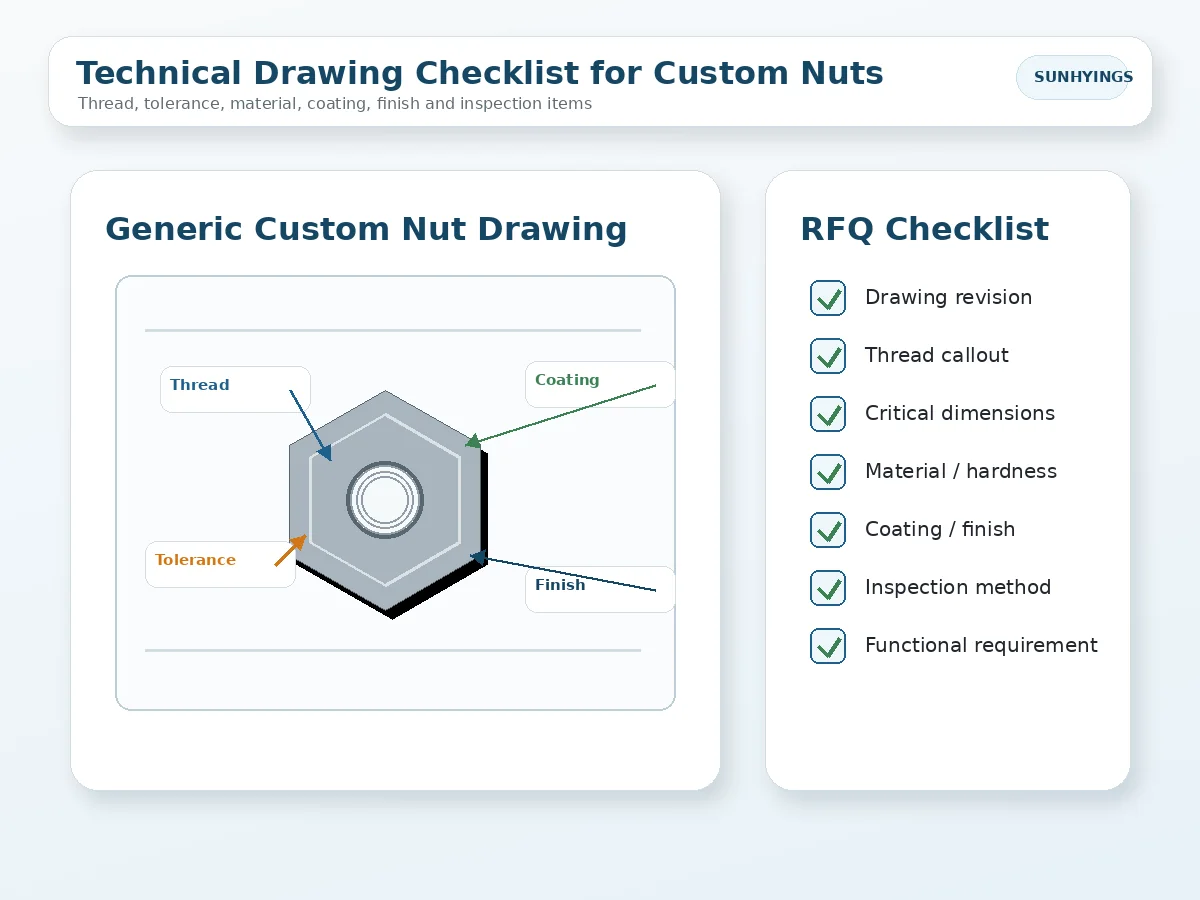
يجب أن يحدد رسم الصامولة المخصصة الكامل الخيط، التفاوت، المادة، الطلاء، التشطيب، متطلبات الفحص والوظيفة قبل طلب عرض الأسعار.
رسم توضيحي هندسي مفاهيمي فقط؛ ليس رسمًا حقيقيًا للعميل أو مستند إنتاج معتمد.
إجابة سريعة: ما الذي يجب أن يتضمنه الرسم الفني لصامولة مخصصة؟
يجب أن يتضمن الرسم الفني المفيد لصامولة مخصصة أحدث مراجعة للرسم، رقم القطعة، حجم السن، درجة الميل، تفاوت السن، الأبعاد الحرجة، التفاوت العام، المادة، الصلادة أو فئة الخواص إذا كانت محددة، المعالجة الحرارية إذا لزم الأمر، الطلاء، التشطيب، متطلبات السن بعد الطلاء، طريقة الفحص، المتطلبات الوظيفية وملاحظات الموافقة.
يجب أيضًا دعم الرسم بمعلومات طلب عرض السعر مثل التطبيق، موقع التجميع، نوع الوصلة، حالة القطعة المتزاوجة، الكمية السنوية، كمية العينة، التغليف والمستندات المطلوبة. قد لا تظهر بعض هذه البيانات مباشرة على الرسم، لكن المورد لا يزال بحاجة إليها لمراجعة مسار العملية ومخاطر الإنتاج. بالنسبة لفئات المنتجات الأوسع، يمكن للمشترين أيضًا مراجعة SUNHYINGS صواميل خاصة مخصصة.
القاعدة الأكثر أمانًا بسيطة: إذا كانت ملاءمة السن، القوة، الطلاء، العزم، قوة السحب، قوة الفك بالعزم، العزم السائد، طريقة الفحص أو مستندات الموافقة مهمة للتطبيق، فيجب إظهار هذه المتطلبات على الرسم أو تضمينها بوضوح في حزمة طلب عرض السعر. إذا لم يتم توفيرها، يجب على المورد وضع علامة عليها كـ بحاجة إلى تأكيد بدلاً من التعامل مع الافتراضات كحقائق.
بيان الخيطتفاوت حرجالمادةطلاء / تشطيبطريقة الفحص
عنصر الرسم
لماذا يهم
المخاطرة في حال الفقدان
إجراء المورد
مراجعة الرسم
التحكم في الأساس الفني
قد يتم تسعير أو إنتاج إصدار خاطئ
تأكيد أحدث رسم قبل التسعير
بيان الخيط
التحكم في ملاءمة التجميع وفحص المقاييس
خيط خاطئ أو درجة أو ملاءمة بعد الطلاء
تأكيد الحجم والدرجة والتسامح وحالة المقياس
الأبعاد الحرجة
يحدد الوظيفة وتركيز الفحص
عينة خاطئة أو خطة فحص غير واضحة
فصل أبعاد CTQ عن الأبعاد العامة
المادة / الصلادة
يؤثر على القوة، القابلية للتشكيل والتصنيع
قد يفترض المورد مادة خاطئة
تأكيد درجة المادة، فئة الخواص أو الصلابة إذا كانت محددة
طلاء / تشطيب
يؤثر على مقاومة التآكل، المظهر وملاءمة السنون
مشكلة تجميع بعد الطلاء
تأكيد حالة الطلاء النهائية ومتطلبات الفحص
متطلب وظيفي
يحدد حمل الإثبات، قوة السحب، عزم الفك أو عزم الاحتفاظ إذا لزم الأمر
قد ينجح شكل القطعة لكن الوظيفة قد تفشل
تأكيد نوع الوصلة والقطعة المتزاوجة ووضع الفشل
طريقة الفحص
مواءمة قبول المورد والمشتري
خلاف أثناء الموافقة على العينة
تأكيد نطاق المقياس أو CMM أو التقرير أو الاختبار الوظيفي إذا لزم الأمر
لماذا تفشل رسومات الصواميل المخصصة أثناء طلب عرض السعر أو أخذ العينات
غالبًا ما تفشل طلبات عروض أسعار الصواميل المخصصة لأسباب بسيطة: الرسم غير مكتمل، صورة العينة لا تطابق الرسم، الطلاء غير محدد، تفاوت اللولبة غير واضح، أو أن المشتري والمورد يستخدمان مراجعات رسم مختلفة.
يمكن للمورد عادةً تقديم عرض سعر لصامولة قياسية من تسمية قياسية. الصامولة المخصصة مختلفة. قد يتضمن الشكل فلنجة أو كتف أو نتوء لحام أو ميزة تثبيت أو ميزة قفل أو فتحة جانبية أو شق أو سطح تحمل خاص أو لولبة غير قياسية. إذا لم يتم التحكم في هذه الميزات بوضوح، يجب على المورد إما طرح أسئلة أو وضع افتراضات أو تقديم عرض سعر مع مخاطرة.
نطاق عرض سعر غير صحيح
إذا كان الرسم يظهر الشكل الخارجي فقط دون تحديد القلاووظ أو المادة أو الطلاء أو التفاوتات المسموح بها أو الكمية، فقد يستثني عرض السعر التشغيل الثانوي أو الطلاء أو الفحص الخاص أو المستندات المطلوبة.
مسار العينة خاطئ
قد يتم تصنيع النموذج الأولي باستخدام ماكينة CNC، بينما قد يتطلب الإنتاج التشكيل على البارد، القلاووظ، الطلاء أو خطوات معالجة أخرى. إذا اختلف مسار العينة عن الإنتاج، يجب التحكم في مخاطر الموافقة.
تركيز الفحص خاطئ
إذا لم يتم تحديد أبعاد CTQ، فقد يركز الفحص على الأبعاد السهلة مع إغفال ملاءمة القلاووظ، سطح التحمل، بروز اللحام، هندسة التثبيت أو وظيفة القفل.
بيانات الرسم مفقودة
مشكلة محتملة في طلب عرض السعر (RFQ)
مشكلة محتملة في العينة
معالجة صحيحة
تفاوت الخيط غير موضح
قد يعرض المورد افتراض خيط شائع
خلاف في مقياس الخيط بعد أخذ العينات
تأكيد فئة الخيط وطريقة القياس وحالة الطلاء
الطلاء غير محدد
قد يستثني العرض المعالجة السطحية
قد يفشل ملاءمة الخيط أو توقع التآكل
تأكيد نوع الطلاء والحالة النهائية ونطاق الفحص
المادة غير محددة
قد يقوم المورد بعرض مادة يسهل توفيرها
قد لا تتوافق القوة أو قابلية التشكيل أو سلوك التصنيع مع التطبيق
تأكد من درجة المادة والمعيار والصلادة أو فئة الخواص إذا لزم الأمر
وظيفة التجميع غير محددة
قد يقوم المورد بعرض شكل القطعة فقط
قد تكون القطعة مناسبة بصريًا ولكنها تفشل في متطلبات السحب أو عزم الفك أو عزم التثبيت الدائم
تأكيد نوع الوصلة والقطعة المتزاوجة ووضع الفشل
متطلبات الفحص غير واضحة
قد لا يتضمن العرض تقرير الأبعاد أو الاختبار الوظيفي
قد يختلف المشتري والمورد حول معايير القبول
تأكيد نطاق التقرير وطريقة القياس ومتطلبات الاختبار إذا لزم الأمر
قاعدة مراجعة المورد
يجب مراجعة رسم صامولة مخصصة من حيث قابلية التصنيع والفحص وحالة الطلاء والمخاطر الوظيفية. ملف الرسم وحده لا يضمن إمكانية إنتاج القطعة دون توضيح. عندما تكون البيانات مفقودة، يكون الرد المهني هو “يحتاج تأكيد”، وليس الاستبدال التلقائي بمادة أو تفاوت أو طلاء شائع.
مراجعة الرسم ورقم القطعة وكتلة العنوان: أساس طلب عرض الأسعار
العنصر الأول في قائمة فحص رسم الصامولة المخصصة هو كتلة العنوان. قد تبدو إدارية، لكنها تتحكم في أساس عرض الأسعار. إذا كانت مراجعة الرسم خاطئة، فقد تكون كل المناقشات اللاحقة حول السن والتفاوت والمادة والطلاء خاطئة.
يجب أن يعرف المورد أي رسم حالي، وما إذا كانت العينة تطابق ذلك الرسم، وما إذا كان المشروع للنموذج الأولي أو الموافقة على العينة أو الإنتاج أو الاستبدال. هذا مهم بشكل خاص لـ صواميل خاصة مصنوعة حسب الرسم, ، حيث يتحكم مراجعة الرسم في الجزء المقتبس والمفحوص.
رقم الرسم ورقم الجزء ومستوى المراجعة
يجب أن يحدد طلب عرض السعر (RFQ) رقم الرسم ورقم الجزء ومستوى المراجعة. إذا أرسل المشتري صورة عينة ورسمًا قديمًا، يجب على المورد أن يسأل أيهما هو المتحكم. إذا غيّر رسم محدّث سنًا أو فلنجة أو مادة أو ملاحظة طلاء، يجب أن يتبع عرض السعر المراجعة المحدّثة.
نظام الوحدات وطريقة الإسقاط والملاحظات
يجب أن يوضح الرسم بوضوح نظام الوحدات، مثل المتري أو البوصة، وأي ملاحظات عامة تتحكم في التفسير. لا ينبغي تجاهل التفاوت العام، تشطيب السطح، التحكم في النتوءات، كسر الحواف، ملاحظات الفحص والملاحظات الخاصة بالعميل.
الرسم مقابل حزمة طلب عرض السعر
لا يحتوي الرسم دائمًا على كل التفاصيل التجارية أو التطبيقية. قد يتم توفير الكمية السنوية، كمية العينة، التغليف، موقع التجميع ونطاق المستندات المطلوبة في بريد طلب عرض السعر أو مواصفات الشراء. يجب على المورد مراجعة كل من الرسم وحزمة طلب عرض السعر قبل تقديم عرض السعر.
قائمة التحقق من السن: الحجم، الخطوة، الفئة، التعشيق وطريقة القياس
تعتبر معلومات السن اللولبي من أهم أجزاء رسم الصامولة المخصصة. لا ينبغي اختزال تسمية السن إلى مجرد “M8” أو “1/2 بوصة” إذا كانت درجة الميل أو التفاوت أو الطلاء أو التداخل مهمة.
يحتاج المورد إلى بيانات كافية عن السن اللولبي لتأكيد قابلية التصنيع وطريقة الفحص وملاءمة ما بعد الطلاء. تؤثر معلومات السن أيضًا على مسار التصنيع لأن الصامولة المخصصة قد تتطلب القلاووظ أو الدرفلة أو التشكيل أو التشغيل الثانوي أو فحص المقاييس بعد الطلاء أو الاختبار الوظيفي حسب الرسم.
غالبًا ما يتم تمثيل السمات الملولبة رمزيًا على الرسومات الفنية، لذا يجب أن توفر ملاحظة السن المعلومات اللازمة لفهم متطلبات السن الفعلية. بالنسبة لطلب عرض أسعار صامولة مخصصة، يعني هذا أن المشتري لا ينبغي أن يعتمد على الرسم وحده عندما تكون درجة الميل أو الملاءمة أو التداخل أو حالة السن بعد الطلاء مهمة.
يجب تأكيد حجم السن ودرجة الميل والتفاوت والتداخل ومتطلبات مقاييس ما بعد الطلاء قبل أخذ العينات.
تسميات السن عامة؛ يجب أن تتبع متطلبات السن النهائية رسم المشتري ومعيار العميل.
حجم السن والخطوة
يجب أن يحدد الرسم حجم السن الاسمي ودرجة الميل. بالنسبة للسن المترية، يجب أن تكون درجة الميل واضحة عند وجود أي احتمال للخلط بين الميل الخشن أو الناعم أو الخاص. بالنسبة للسن البوصة، يجب أن تكون سلسلة السن أو عدد السنوات لكل بوصة واضحة. إذا كانت درجة الميل مفقودة، فقد يقتبس المورد افتراضًا شائعًا لا يتطابق مع مسمار التزاوج أو البرغي أو القضيب الملولب.
فئة تفاوت السن أو متطلبات الملاءمة
يتحكم تفاوت السن في قبول المقياس وملاءمة التجميع. إذا كان الرسم يتطلب فئة تفاوت سن محددة، فيجب إظهارها. إذا كان لدى العميل متطلب خاص لملاءمة السن، فيجب ذكره بوضوح. إذا قدم المشتري عينة صامولة فقط، فلا ينبغي للمورد افتراض ملاءمة السن حتى يتم قياسها أو تأكيدها.
اشتباك السن و حالة الشطب
يمكن أن يؤثر اشتباك السن على حمل الإثبات، ومقاومة السحب، ومقاومة القص، وموثوقية التجميع عندما تكون هذه الوظائف ذات صلة. يمكن أن تؤثر حالة الشطب والمدخل على بدء التجميع، وتراكم الطلاء، ودخول المقياس. إذا كان عمق السن، أو السن الجزئي، أو التجويف الخلفي، أو الشطب، أو حالة المدخل مهمًا، فيجب التحكم فيه على الرسم.
فحص السن اللولبي قبل وبعد الطلاء
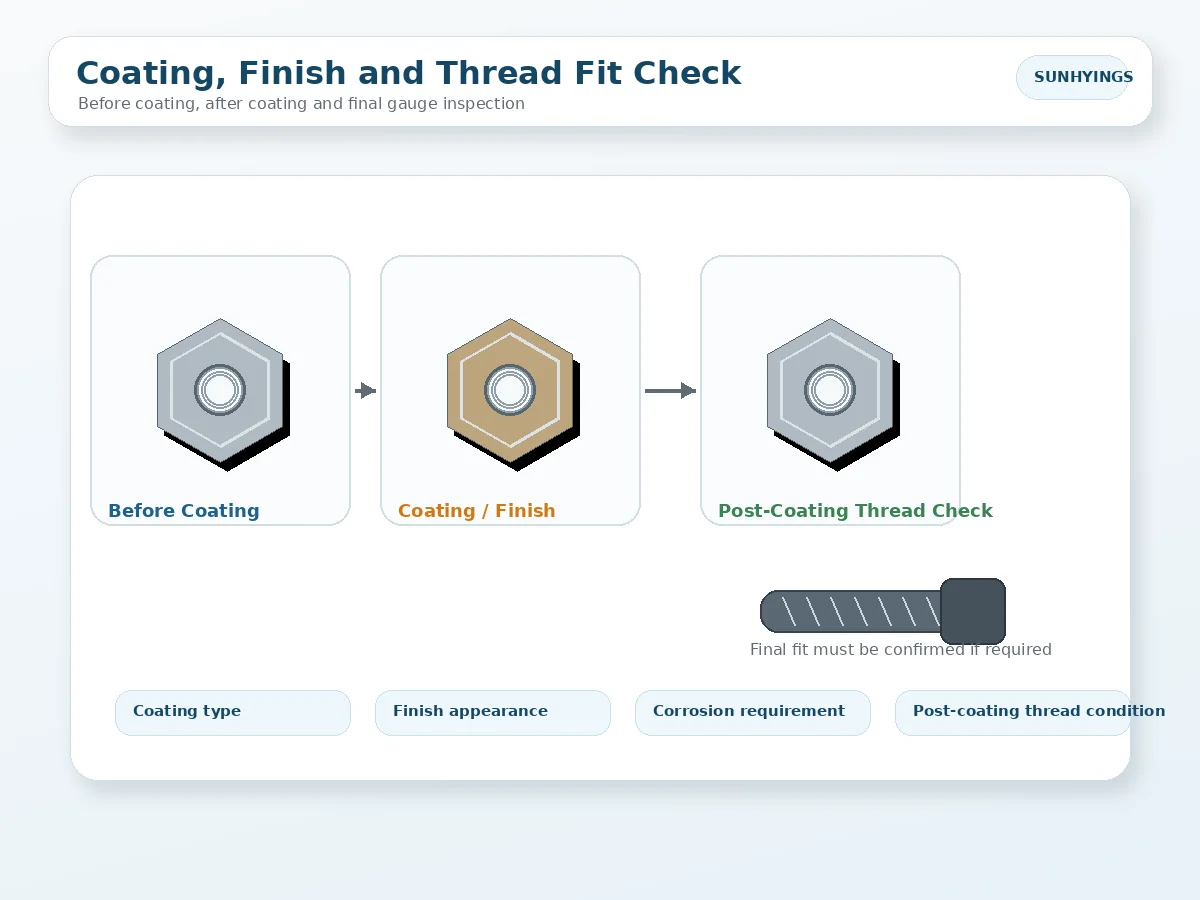
يمكن أن يؤثر الطلاء على ملاءمة السن اللولبي. إذا تم طلاء الجزء أو تغطيته أو معالجته بعد اللولبة، يجب على المشتري توضيح متطلبات السن اللولبي بعد الطلاء. يحتاج المورد إلى معرفة ما إذا كانت الصامولة النهائية يجب أن تجتاز فحص مقياس السن اللولبي بعد الطلاء. إذا كان الفحص قبل الطلاء وبعده مطلوبًا، يجب أن يذكر طلب عرض الأسعار (RFQ) ذلك بوضوح.
قائمة مراجعة الأبعاد والتفاوتات: ما الذي يجب التحكم فيه؟
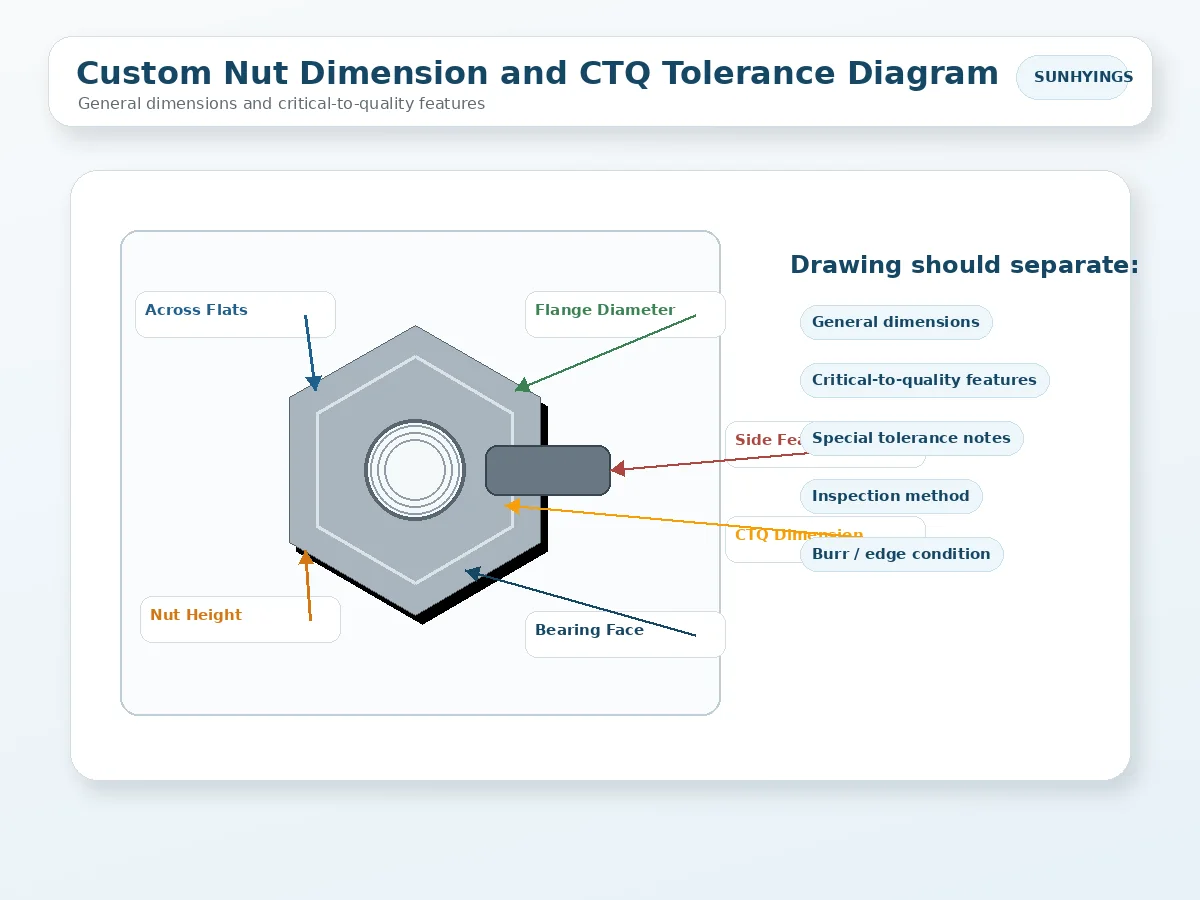
يجب أن يفصل رسم الصامولة المخصصة الأبعاد العامة عن الأبعاد الحرجة. ليست كل الأبعاد لها نفس الأهمية الوظيفية. بعض الأبعاد تؤثر على ملاءمة المفتاح، واشتباك السن اللولبي، والجلوس، وحمل التثبيت، وموقع اللحام، وقوة التثبيت بالضغط، أو خلوص التجميع.
يجب أن تميز رسومات الصامولة المخصصة الأبعاد العامة عن الميزات الحرجة للجودة التي تؤثر على التجميع والفحص.
إشارات أبعاد عامة فقط؛ يجب أن تأتي قيم التفاوتات الفعلية من رسم المشتري.
عرض المسطحات، الارتفاع، قطر الفلنجة وسطح التحمل
عرض المسطحات يمكن أن يؤثر على ملاءمة المفتاح أو المقبس. ارتفاع الصامولة يمكن أن يؤثر على اشتباك السن اللولبي. قطر الفلنجة يمكن أن يؤثر على توزيع الحمل. حالة سطح التحمل يمكن أن تؤثر على الجلوس والتحميل المسبق. بالنسبة للغة الأبعاد الأساسية مثل حجم السن اللولبي، عرض المسطحات وارتفاع الصامولة، يمكن للمشترين أيضًا مراجعة دليل أبعاد الصامولة السداسية من Sunhyings.
الأبعاد الحرجة للجودة
يجب وضع علامات على الأبعاد الحرجة للجودة أو توضيحها بوضوح. قد تشمل هذه الأبعاد موقع السن، قطر الكتف، سمك الفلنجة، موقع الفتحة الجانبية، عرض الشق، قطر الدليل، استواء سطح التحمل، هندسة الإسقاط أو شكل ميزة التثبيت. إذا كان البعد يتحكم في التجميع أو الوظيفة أو قبول الفحص، فلا ينبغي إخفاؤه تحت ملاحظة تفاوت عام.
التفاوت العام مقابل التفاوت الخاص
ينطبق التفاوت العام عندما لا يظهر تفاوت محدد. يجب استخدام التفاوت الخاص فقط عند الحاجة. التفاوتات الضيقة بشكل مفرط يمكن أن تزيد التكلفة، وتتطلب عمليات ثانوية، وتحد من مسار التصنيع. التفاوتات المفقودة يمكن أن تخلق خلافًا أثناء الفحص. يجب أن يوضح الرسم الميزات الحساسة للعملية والميزات الحساسة للوظيفة.
ملاحظات GD&T والمرجع وتركيبات الفحص
إذا كان الموضع أو العمودية أو الاستواء أو التمركز أو التوازي مهمًا للتجميع، يجب أن يحدد الرسم المتطلبات والمرجع. إذا كانت هناك حاجة إلى تركيبة خاصة أو مقياس وظيفي، فيجب مناقشته قبل عرض السعر. لا ينبغي للمورد تخمين منطق المرجع من صورة أو عينة صورة.
قائمة مراجعة المواد والصلابة والمعالجة الحرارية
لا ينبغي أبدًا تخمين المادة من المظهر. قد تبدو صامولتان متشابهتين ولكن تتطلبان مواد مختلفة، صلابة، معالجة حرارية أو إمكانية تتبع. يؤثر اختيار المادة على قابلية التشكيل، قابلية التشغيل، القوة، توافق الطلاء والتكلفة.
درجة المادة والمعيار
يجب أن يحدد الرسم درجة المادة أو معيار المادة عند الحاجة. إذا لم يكن لدى المشتري مادة مؤكدة، يمكن للمورد اقتراح خيارات، ولكن يجب تأكيد المادة النهائية قبل الإنتاج. يؤثر اختيار المادة أيضًا على ما إذا كانت الصامولة مناسبة بشكل أفضل للتشكيل على البارد، أو التشغيل الآلي، أو المعالجة الحرارية، أو العمليات الثانوية.
فئة الخواص أو نطاق الصلادة عند التحديد
إذا كانت الصامولة يجب أن تفي بفئة خواص أو نطاق صلادة أو متطلبات قوة وظيفية، فيجب ذكر ذلك. لا تفترض فئة خواص فقط لأن الصامولة تستخدم في تطبيق سيارات أو آلات. يجب أن يأتي المتطلب من الرسم أو معيار العميل أو مراجعة هندسية مؤهلة.
متطلبات المعالجة الحرارية
قد تتطلب بعض الصواميل معالجة حرارية. وقد لا تتطلب أخرى. إذا كانت المعالجة الحرارية مطلوبة، فيجب أن يحدد الرسم أو معيار العميل المتطلب والفحص المرتبط به. يمكن أن تؤثر المعالجة الحرارية على الصلادة والتشوه وملاءمة السن والفحص النهائي.
حدود التتبع وشهادة المادة
إذا كانت شهادة المادة أو سجل المعالجة الحرارية أو تتبع الدفعة مطلوبة، يجب على المشتري تحديد النطاق قبل عرض السعر. لا تتطلب كل طلبية صامولة مخصصة نفس حزمة المستندات. عندما يكون التتبع مطلوبًا، يجب على المورد فهم التحكم في الدفعة والاحتفاظ بالسجلات وتوقعات فصل التغليف.
قائمة فحص الطلاء والتشطيب: تجنب مشاكل توافق الخيوط بعد الطلاء
الطلاء والتشطيب ليسا مجرد مسائل جمالية، بل يمكن أن يؤثرا على مقاومة التآكل، توافق الخيوط، سلوك العزم، الاحتكاك، التجميع، الفرز، التعبئة وقبول العميل.
يجب أن توضح ملاحظات الطلاء والتشطيب فحص توافق الخيوط النهائي، توقعات التآكل ومتطلبات المظهر عند تحديدها.
الرسومات التوضيحية للطلاء هي مفاهيمية؛ لا يُفترض أي سمك طلاء أو أداء تآكل.
نوع الطلاء ولون التشطيب
يجب أن يحدد الرسم نوع الطلاء أو متطلبات التشطيب إذا لم يكن الجزء عاديًا. قد تشمل الأمثلة الطلاء بالزنك، الزنك والنيكل، الفوسفات، أكسيد أسود، التخميل أو تشطيبات أخرى يحددها العميل. يجب أن يتبع الطلاء الدقيق الرسم أو معيار العميل.
سماحية الخيوط بعد الطلاء
يمكن أن تصبح الخيوط الداخلية ضيقة بعد الطلاء. إذا كان يجب أن يجتاز الجزء مقياس خيوط بعد الطلاء أو التغطية، يجب أن يذكر الرسم هذا المطلب. قد يحتاج المورد إلى مراعاة سماحية الخيوط، التحكم في العملية والفحص النهائي. يجب أن يوضح الرسم ما إذا كان مطلب الخيوط ينطبق قبل الطلاء، بعد الطلاء أو كليهما.
المظهر مقابل التشطيب الوظيفي
قد يكون التشطيب مطلوبًا للمظهر أو مقاومة التآكل أو الاحتكاك أو التعريف أو أداء التجميع. يجب على المشتري توضيح ما إذا كان التشطيب بصريًا بشكل أساسي أم وظيفيًا. لا ينبغي معاملة متطلبات التشطيب التجميلي ومتطلبات مقاومة التآكل الوظيفية على أنهما نفس الشيء.
ملاحظات العملية الخاصة عند الحاجة
قد تتطلب بعض الطلاءات أو التطبيقات عالية القوة ضوابط إضافية عند تحديدها في الرسم أو معيار العميل أو متطلبات الشراء. قد تشمل هذه ملاحظات العملية، ومتطلبات الخبز، واختبار التآكل، والتحكم في الاحتكاك، أو نطاق تقرير الطلاء. لا ينبغي للمورد افتراض هذه المتطلبات ما لم يتم توفيرها.
قائمة متطلبات الوظيفة: موقع التجميع ونوع الوصلة ووضع الفشل
قد يُظهر رسم الصامولة المخصص الهندسة، ولكن المورد يحتاج أيضًا إلى فهم الوظيفة. يمكن أن يكون للشكل نفسه متطلبات مختلفة اعتمادًا على موقع التجميع ونوع الوصلة والجزء المتزاوج ووضع الفشل المتوقع.
تتطلب الصواميل الوظيفية معلومات عن التجميع والمفصل، وليس فقط الشكل والأبعاد.
أمثلة الوظائف عامة ولا تعني قيم اختبار ثابتة أو متطلبات موافقة عالمية.
موقع التجميع ونوع المفصل
يجب على المشتري توضيح مكان استخدام الصامولة. هل يتم تركيبها في حامل، لوح صفائح معدنية، تجميع ملحوم، مفصل هيكلي، غلاف، إطار مقعد، مكون هيكل، غلاف كهربائي أو تجميع آخر؟ يمكن أن يؤثر الموقع على المادة، الطلاء، عزم الربط، ثبات اللحام، سلوك الكبس والفحص.
وظيفة الصامولة ووضع الفشل
يجب أن تكون الوظيفة واضحة. قد تتطلب صامولة اللحام، الصامولة ذاتية الكبس، صامولة القفل المعدنية بالكامل، الصامولة ذات الحافة، صامولة المباعدة أو الصامولة الخاصة ذات الكتف اعتبارات مختلفة في المعالجة والاختبار. يجب أن يوضح الرسم أو طلب عرض الأسعار وضع الفشل الذي يجب تجنبه، مثل تجريد الخيط، الانسحاب، فشل عزم الربط، فقدان وظيفة القفل، فشل اللحام، ضعف ثبات الكبس، مشكلة التثبيت أو تداخل الخيط الناتج عن الطلاء.
يجب أن تأتي قيم الاختبار الوظيفي من متطلبات المشتري
لا تخترع قيم عزم الربط، التحميل المسبق، قوة الانسحاب، قوة عزم الربط، قوة الدفع، حمل الإثبات أو عزم الربط السائد. إذا كان المشروع يتطلب أي اختبار وظيفي، يجب على المشتري توفير القيمة، طريقة الاختبار، حجم العينة وشرط القبول. إذا كانت هذه التفاصيل مفقودة، يمكن للمورد فقط وضع علامة على المتطلب بأنه بحاجة إلى تأكيد.
ملاحظات مسار التصنيع: ما يجب أن يوضحه الرسم قبل عرض السعر
يمكن أن يؤثر رسم الصامولة المخصصة على ما إذا كان الجزء يتم تشكيله على البارد، أو تشكيله باستخدام الحاسب الآلي، أو تشكيله من فراغ مشكل، أو قلاوظته، أو درفلة خيوطه، أو ثقبه، أو تفريزه، أو تسوية وجهه، أو معالجته حرارياً، أو طلاؤه، أو فرزه.
هذه المقالة ليست مقارنة كاملة لطرق التصنيع. النقطة الأساسية هنا هي أن الرسم يجب أن يوفر معلومات كافية للمورد لمراجعة الطريقة بشكل صحيح. لا يحتاج الرسم إلى تحديد كل خطوة عملية ما لم يكن لدى المشتري سبب مثبت، ولكن يجب أن يجعل المتطلبات الوظيفية ومتطلبات الفحص واضحة بما يكفي للمورد لاقتراح طريقة مناسبة.
لا يمكن افتراض طريقة التشكيل على البارد أو التصنيع باستخدام الحاسب الآلي أو الطريقة الهجينة
قد تتطلب الصامولة البسيطة المظهر تشغيلًا ثانويًا. قد يتم تبسيط الصامولة المعقدة المظهر إذا تم فهم الوظيفة. قد يتم تصنيع النموذج الأولي باستخدام الحاسب الآلي، بينما قد يتطلب الإنتاج التشكيل على البارد أو طريقة هجينة. يجب أن يوضح الرسم وطلب عرض الأسعار مرحلة العينة وحجم الإنتاج والميزات الحرجة.
الميزات التي قد تتطلب عمليات ثانوية
قد تتطلب الثقوب الجانبية، الفتحات، الأكتاف الخاضعة للتحكم، أسطح التحمل، الشطف الخاص، أقطار الدليل أو الأبعاد المحلية الضيقة عمليات ثانوية. يجب عرض هذه الميزات بوضوح مع تحديد التفاوتات. إذا لم يحدد الرسم الميزات الحرجة للجودة (CTQ)، فقد يقوم المورد إما بمعالجة الجزء بشكل زائد أو يفوت الميزة التي تتحكم في التجميع.
لا ينبغي الخلط بين طريقة العينة وطريقة الإنتاج
يمكن أن تساعد عينة التصنيع باستخدام الحاسب الآلي في فحص التوافق، لكنها قد لا تمثل طريقة إنتاج لاحقة تعتمد على التشكيل على البارد أو طريقة هجينة. إذا كانت الموافقة على الإنتاج تعتمد على عملية مشابهة للإنتاج، يجب على المشتري والمورد التأكد مما إذا كانت هناك حاجة إلى تشغيل عينة آخر بعد تأكيد الأداة أو مسار العملية.
قائمة مراجعة الفحص ووثائق الجودة
يجب تحديد وثائق الفحص والجودة قبل تقديم العرض عند الحاجة إليها. إذا كان المشتري يتوقع تقرير أبعاد، شهادة مواد، سجل معالجة حرارية، تقرير طلاء، حزمة PPAP أو تقديم IMDS، فلا ينبغي أن يظهر هذا المطلب بعد الاتفاق على السعر.
الأبعاد الحرجة وطريقة الفحص
يجب أن يحدد الرسم الأبعاد الحرجة وأي طريقة فحص خاصة. إذا كان البعد يتطلب جهاز تثبيت، CMM، فحص بصري أو مقياس وظيفي، يحتاج المورد إلى المعرفة قبل تقديم العرض. يجب أن تتوافق خطة الفحص مع ميزات CTQ، وليس فقط الأبعاد الأسهل للقياس.
مقياس اللولبة ومقياس ما بعد الطلاء
يجب تعريف فحص اللولبة بوضوح. إذا كانت الصامولة المطلية النهائية يجب أن تجتاز مقياس اللولبة، فيجب أن يذكر الرسم أو RFQ ذلك. إذا كان الفحص فقط قبل الطلاء، فهذا يغير المخاطر أيضًا. يجب أن تحدد المشاريع الحرجة للولبة ما إذا كانت سجلات المقياس أو بيانات فحص العينة مطلوبة.
PPAP و IMDS فقط عند الحاجة
يجب التعامل مع PPAP و IMDS كمتطلبات خاصة بالعميل أو البرنامج. لا ينبغي افتراضهما لكل طلب صامولة مخصصة. إذا كان PPAP مطلوبًا، فيجب أن يتوافق مع سجل التصميم الهندسي، متطلبات المواصفات، مراجعة الرسم المعتمدة ومسار الإنتاج المقصود. إذا كان IMDS مطلوبًا، يجب على المشتري تحديد نطاق وتوقيت تقديم بيانات المواد.
قائمة مراجعة طلب عرض السعر (RFQ): ما يجب على المشترين إرساله مع الرسم
تساعد حزمة طلب عرض السعر (RFQ) الجيدة المورد على تقديم عرض سعر أسرع وطرح أسئلة توضيحية أقل. كما تقلل من فشل العينة وتأخيرات الموافقة. تجمع أقوى حزمة RFQ بين الرسم وسياق التطبيق وتوقعات مستندات الجودة وخطة الكمية.
يجب أن تتضمن حزمة RFQ الواضحة مراجعة الرسم وبيانات السن والمواد والتسامح والطلاء والوظيفة والكمية والمستندات المطلوبة.
صورة قائمة المراجعة مخصصة لإعداد RFQ فقط؛ يجب تأكيد نطاق المستندات حسب متطلبات العميل.
إدخال طلب عرض السعر
مطلوب؟
ملاحظات
لماذا يغير عرض السعر
رسم ثنائي الأبعاد
موصى به بشدة
ضوابط أحدث مراجعة للعرض السعري
يحدد الأبعاد والملاحظات وخط الأساس للقبول
ملف ثلاثي الأبعاد
مفيد
يدعم مراجعة الهندسة لكنه لا يحل محل ملاحظات الرسم
يساعد في فهم الميزات المعقدة والتداخل
صورة عينة أو جزء موجود
مفيد
توضيح إذا كانت العينة تختلف عن الرسم
يدعم المراجعة العكسية لكنه لا يحل محل المتطلبات المؤكدة
بيان الخيط
نعم
الحجم، الخطوة، التفاوت المسموح وحالة الطلاء
يؤثر على القولبة، القياس، سماح الطلاء وملاءمة التجميع
الأبعاد الحرجة
نعم
وضع علامات على ميزات CTQ
يؤثر على مسار العملية وطريقة الفحص
المادة / الصلادة
نعم إذا تم تحديده
لا تستنتج
يؤثر على قابلية التشكيل، قابلية التشغيل والقوة
المعالجة الحرارية
إذا كان مطلوبًا
تضمين متطلبات الفحص
يؤثر على الصلابة والتشوه واحتياجات التسجيل
طلاء / تشطيب
إذا كان مطلوبًا
تضمين حالة السن بعد الطلاء
يؤثر على ملاءمة السن، توقعات التآكل والتعبئة
بيانات التجميع / الوصلة
نعم للصواميل الوظيفية
الجزء المتزاوج، نوع الوصلة ووضع الفشل
يؤثر على الاختبار الوظيفي ومراجعة مخاطر العملية
كمية العينة
نعم
يؤثر على المسار والتوقيت
قد يختلف المسار النموذجي عن مسار الإنتاج
الكمية السنوية
نعم
يؤثر على أدوات التصنيع ومسار الإنتاج
يحدد ما إذا كانت الأدوات أو التحكم الرقمي الحاسوبي معقولة
وثائق الجودة
إذا كان مطلوبًا
تقرير الأبعاد، الشهادة، PPAP، IMDS
يؤثر على نطاق التسعير، المهلة الزمنية وأدلة العملية
التعبئة والتغليف
إذا كان مطلوبًا
يمنع تلف الطلاء أو خلط الدفعات
يؤثر على وضع العلامات، فصل الدفعات وحماية السطح
لتواصل أوسع مع الموردين، يمكن للمشترين مراجعة كيفية مورد صواميل خاصة لتطبيقات السيارات يقوم بتقييم الرسم والتطبيق والجودة ومتطلبات الإنتاج قبل عرض السعر.
كيف تراجع SUNHYINGS رسم صامولة مخصصة قبل عرض السعر
يجب على SUNHYINGS مراجعة رسم الصامولة المخصصة من خلال التحقق من الاكتمال والوظيفة ومخاطر الإنتاج قبل عرض السعر. الهدف ليس فقط نسخ الرسم، بل فهم الميزات التي تؤثر على التصنيع والفحص والتجميع.
مراجعة اكتمال الرسم
تبدأ المراجعة بأحدث إصدار للرسم ورقم القطعة والخيط والأبعاد والتسامح والمادة والطلاء والملاحظات. يجب وضع علامة على العناصر المفقودة للتأكيد قبل التسعير أو أخذ العينات.
مراجعة مخاطر الخيط والتسامح
يتم فحص حجم الخيط والخطوة والتسامح وحالة الطلاء أولاً لأنها تؤثر بشكل مباشر على التجميع والفحص. يتم فصل الأبعاد الحرجة عن الأبعاد العامة بحيث تتوافق خطة الفحص مع المخاطر الوظيفية.
مراجعة المادة والطلاء والتشطيب
يتم مراجعة المادة والصلادة والمعالجة الحرارية والطلاء والتشطيب مقابل الرسم والتطبيق. إذا كانت المتطلبات مفقودة، يجب تأكيدها بدلاً من افتراضها.
مراجعة مسار التصنيع والعمليات الثانوية
يتم مراجعة الرسم لتحديد ما إذا كانت القطعة قد تحتاج إلى التشكيل على البارد، أو التصنيع باستخدام الحاسب الآلي، أو القلاووظ، أو التصنيع الثانوي، أو المعالجة الحرارية، أو الطلاء، أو الفرز، أو الفحص الخاص. يعتمد المسار على الرسم والمادة والتسامح والكمية ومرحلة الاعتماد.
قائمة الأسئلة المفتوحة قبل أخذ العينات
قبل أخذ العينات، يجب توضيح العناصر المفتوحة: أحدث مراجعة للرسم، حالة القلاووظ، متطلبات القياس بعد الطلاء، المادة، الطلاء، الكمية السنوية، كمية العينة، وظيفة التجميع، الاختبارات المطلوبة، نطاق الوثائق ومتطلبات التعبئة. هذا يمنع صنع عينة قبل أن تكون شروط القبول واضحة.
يمكن للمشترين مراجعة SUNHYINGS كـ مصنع الصواميل المخصصة قبل إرسال الرسومات وصور العينات والمتطلبات الفنية.
المراجع الفنية وسياق المعايير
المراجع أدناه مقدمة كسياق فني للتواصل عبر الرسومات، وترميز السن اللولبي، ومتطلبات الموافقة/الوثائق في قطاع السيارات. لا تحل محل رسم المشتري، أو المواصفات الخاصة بالعميل، أو مواصفات الشراء، أو المراجعة الهندسية المؤهلة. لمزيد من الموارد الهندسية من SUNHYINGS، راجع دلائل تقنية الأرشيف.
يجب التعامل مع تقديم IMDS كمتطلب من العميل أو برنامج السيارات، وليس كمتطلب افتراضي لكل طلب صامولة مخصصة.
المرجع الحدودي: تساعد هذه المصادر في شرح سبب أهمية ملاحظات الخيط وسجلات التصميم الهندسي وموافقة الإنتاج وبيانات المواد. وهي لا تحدد معايير القبول النهائية لصامولة مخصصة محددة. يجب تأكيد المتطلبات النهائية من أحدث مراجعة للرسم ومعيار العميل واتفاقية الشراء.
الأسئلة الشائعة
ما الذي يجب تضمينه في الرسم الفني للصامولة المخصصة؟
يجب أن يتضمن الرسم الفني للصامولة المخصصة مراجعة الرسم، رقم القطعة، حجم السن، درجة الميل، تفاوت السن، الأبعاد الحرجة، التفاوت العام، المادة، الصلادة أو فئة الخواص إن وجدت، المعالجة الحرارية إن لزمت، الطلاء، التشطيب، طريقة الفحص، المتطلبات الوظيفية وملاحظات الاعتماد.
هل يكفي نموذج ثلاثي الأبعاد لتسعير صامولة مخصصة؟
النموذج ثلاثي الأبعاد مفيد، لكنه عادة لا يكون كافيًا بمفرده. لا يزال المورد بحاجة إلى مواصفات السن اللولبي، التفاوتات المسموحة، المادة، الطلاء، التشطيب، ملاحظات الفحص ومراجعة الرسم. قد يُظهر الملف ثلاثي الأبعاد الشكل الهندسي، لكنه عادة لا يحدد متطلبات القبول.
لماذا يعتبر تفاوت أبعاد القلاووظ مهمًا للصواميل المخصصة؟
تؤثر تفاوتات السنون على ملاءمة التجميع وفحص المقاييس والأداء بعد الطلاء. إذا كانت تفاوتات السنون مفقودة، فقد يختلف المورد والمشتري حول ما إذا كان الجزء مقبولًا، خاصة بعد الطلاء أو التغطية.
هل يجب إظهار الطلاء والتشطيب على الرسم؟
نعم، إذا كان الطلاء أو التشطيب مطلوبًا. يمكن أن يؤثر الطلاء على مقاومة التآكل والمظهر وملاءمة السن اللولبي وسلوك التجميع. يجب أن يوضح الرسم أو طلب عرض الأسعار نوع الطلاء والتشطيب وحالة السن بعد الطلاء وأي متطلبات خاصة بالعميل.
ماذا يحدث إذا لم يُظهر الرسم متطلبات الخيوط بعد الطلاء؟
قد تجتاز الصامولة فحص السن اللولبي قبل الطلاء ولكن تصبح ضيقة جدًا بعد الطلاء. إذا كان يجب أن يجتاز الجزء المطلي النهائي مقياس السن اللولبي، فيجب أن يذكر الرسم أو طلب عرض الأسعار هذا المطلب قبل التقديم وأخذ العينات.
هل تحتاج جميع الصواميل المخصصة إلى مستندات PPAP أو IMDS؟
لا، لا يُشترط تقديم PPAP و IMDS إلا عندما يحدد العميل أو البرنامج أو متطلبات الشراء ذلك. لا ينبغي افتراضهما لكل طلب صامولة مخصصة. إذا كان ذلك مطلوبًا، يجب على المشتري تقديم نطاق التسليم والتوقيت.
ماذا يجب أن أرسل إذا لم يكن لدي رسم كامل؟
أرسل صورة عينة، الأبعاد التقريبية، معلومات السن (اللولبة)، المادة إن وجدت، متطلبات الطلاء إن وجدت، وصف التطبيق، حالة التجميع، الكمية المتوقعة وأي متطلبات وظيفية. يمكن للمورد البدء في مراجعة أولية، لكن الإنتاج النهائي لا يزال بحاجة إلى تأكيد المتطلبات الفنية.
هل يمكن لـ SUNHYINGS التوصية بطريق تصنيع بناءً على الرسم؟
يمكن لـ SUNHYINGS مراجعة الرسم وبيانات طلب عرض الأسعار للتوصية بما إذا كانت الصامولة المخصصة قد تتطلب التشكيل على البارد، أو التصنيع باستخدام الحاسب الآلي، أو التصنيع الثانوي، أو القلاووظ، أو المعالجة الحرارية، أو الطلاء، أو الفحص. تعتمد التوصية على الهندسة، المادة، التفاوتات المسموح بها، الكمية، الوظيفة ومتطلبات الاعتماد.
تم إعداد هذه المقالة لمديري المشتريات، ومهندسي المشتريات، وفرق SQE، والمهندسين الميكانيكيين، ومهندسي أدوات التثبيت الذين يعدون رسومات الصواميل المخصصة وبيانات طلب عرض الأسعار. يجب أن تتبع المتطلبات النهائية للخيط، والتسامح، والمادة، والصلابة، والمعالجة الحرارية، والطلاء، والتشطيب، والفحص، والاختبار الوظيفي، والتعبئة، ووثائق الموافقة أحدث مراجعة للرسم، ومعيار العميل، واتفاقية الشراء.
نطاق المراجعة: مراجعة الرسم، تحديد الخيط، مخاطر التسامح، أبعاد CTQ، تأكيد المادة، الطلاء وملاءمة الخيط بعد الطلاء، بيانات الوصلة الوظيفية، ملاحظات مسار التصنيع، سجلات الفحص، اكتمال طلب عرض الأسعار وحدود البيانات المفقودة.
ملاحظة المعايير والقيود: هذه المقالة هي دليل عملي للمصادر والهندسة. لا تحل محل رسم العميل أو متطلبات العميل المحددة أو المراجعة الهندسية المؤهلة أو تقديم PPAP الرسمي أو متطلبات تقارير IMDS أو موافقة عملية المورد. يجب التعامل مع بيانات الرسم المفقودة على أنها بحاجة إلى تأكيد، وليس افتراضها كحقيقة.