






Выбор покрытия для автомобильных гаек
Гайки с цинковым покрытием, цинк-флэковым покрытием и цинк-никелевым покрытием: руководство по выбору покрытия для автомобильной промышленности
Выбор правильного покрытия для автомобильных гаек — это не только вопрос коррозии. Гайки с цинковым покрытием, цинковым напылением и цинк-никелевые могут вести себя по-разному после нанесения покрытия, контроля резьбы, момента сборки, вибрации, воздействия соли и утверждения производства.
В этом руководстве сравниваются три варианта покрытия по воздействию коррозии, посадке внутренней резьбы, риску водородного охрупчивания, контролю трения, финишному покрытию, данным RFQ и требованиям автомобильной документации.
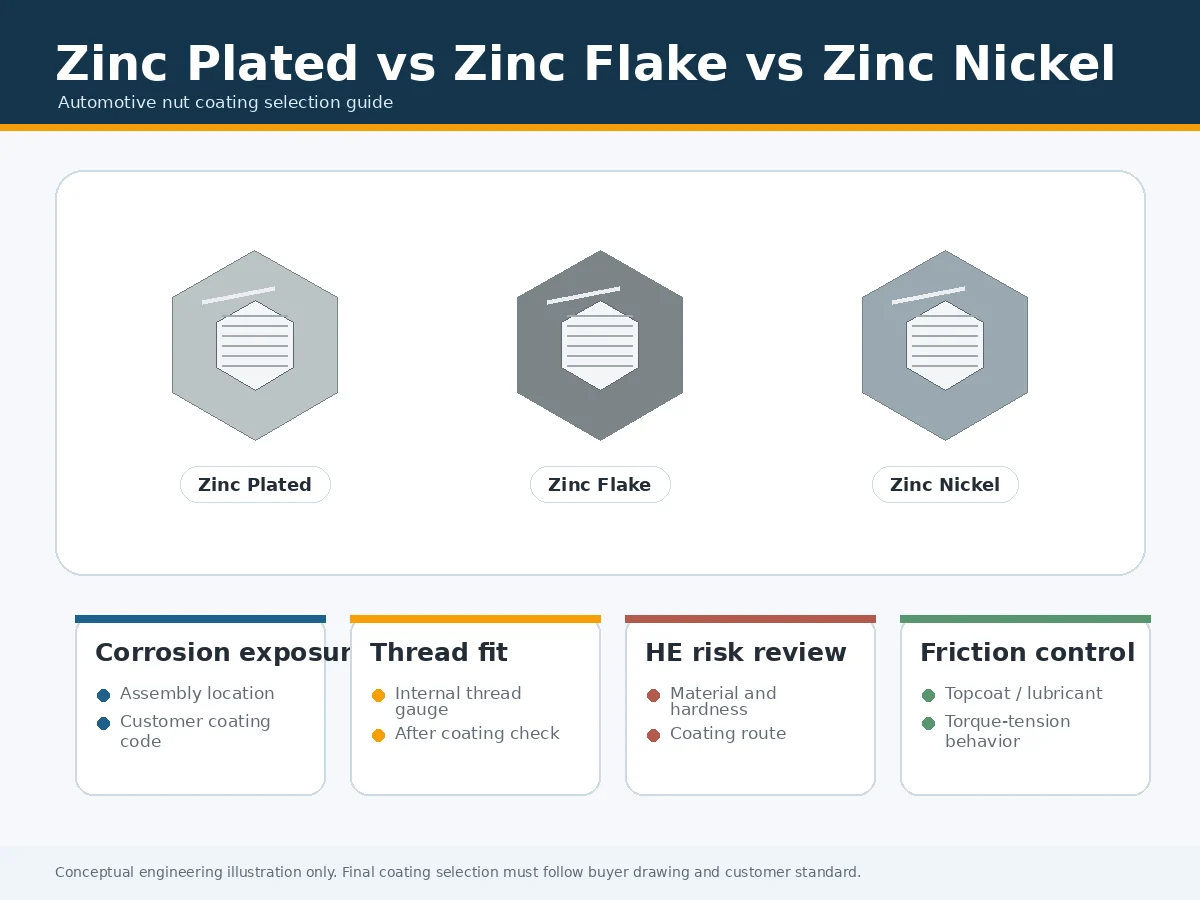
Концептуальное сравнение покрытий; окончательный выбор покрытия должен соответствовать чертежу покупателя и стандарту заказчика.
Краткий ответ: Какое покрытие следует выбирать автомобильным покупателям?
Не существует универсального лучшего покрытия для каждой автомобильной гайки. Правильный выбор зависит от условий эксплуатации, прочности материала, термообработки, требований к посадке резьбы, кода покрытия заказчика, верхнего покрытия, смазки, диапазона трения, метода контроля и объема разрешительной документации.
Гайки с цинковым покрытием часто выбирают для экономически эффективных применений, с низким воздействием коррозии или для проектов, где чертеж заказчика уже предусматривает гальваническое цинкование. Они могут быть практичными и широко доступными, но для высокопрочных или закаленных деталей требуется оценка риска водородного охрупчивания при использовании гальванического покрытия.
Гайки с цинк-флэковым покрытием часто рассматриваются для более высоких требований к коррозионной стойкости, наружных автомобильных крепежей или проектов, где предпочтительно неэлектролитическое покрытие. Однако цинк-флэк не отменяет необходимости подтверждения посадки резьбы, толщины покрытия, верхнего покрытия, коэффициента трения и окончательного контроля калибрами.
Гайки из цинк-никеля часто выбирают, когда автомобильная спецификация требует более высокой коррозионной стойкости, чем стандартное цинкование, определенного внешнего вида, электропроводящих свойств или определенного кода покрытия заказчика. Цинк-никель по-прежнему является гальванической системой, поэтому твердость материала и риск водородного охрупчивания могут иметь значение.
| Условия применения | Оцинкованные гайки | Гайки с цинковым флок-покрытием | Гайки из цинк-никеля |
|---|---|---|---|
| Чувствительное к стоимости применение | Часто подходит | Обычно более высокая стоимость | Обычно более высокая стоимость |
| Меньшее воздействие коррозии | Часто подходит, если указано | Может быть избыточным | Может быть избыточным |
| Высокое воздействие коррозии | Ограничено, если не одобрено заказчиком | Часто сильный кандидат | Часто сильный кандидат |
| Высокопрочная или закаленная гайка | Требует проверки на водородное охрупчивание | Часто рассматривается, когда предпочтительно неэлектролитическое покрытие | Требует проверки на водородное охрупчивание |
| Чувствительность посадки внутренней резьбы | Требует контроля резьбы после нанесения покрытия | Требует контроля толщины покрытия и калибра | Требует контроля припуска резьбы и калибра |
| Контроль крутящего момента и натяжения | Требуется контроль отделки и смазки | Требуется верхнее покрытие / контроль трения | Требуется отделка / контроль трения |
| Электрическое заземление или проводимость | Требуется подтверждение заказчика | Может быть непригодно, если не указано иное | Требуется подтверждение заказчика |
| Функция сварки или клепки | Требует проверки с учетом специфики процесса | Требует проверки совместимости покрытия / монтажа | Требует проверки с учетом специфики процесса |
Правило выбора
Выбирайте покрытие на основе подтвержденных технических требований, а не только по названию покрытия. Для автомобильных гаек покупатель должен подтвердить место сборки, функцию гайки, состояние резьбы, твердость материала, код покрытия заказчика, верхний слой, целевой коэффициент трения, метод испытания на коррозию, область действия одобрительной документации и требования к упаковке до запроса котировки.
Гайки с цинковым покрытием, цинк-флэковым покрытием и цинк-никелевым покрытием: сравнительная таблица
Первое сравнение должно разделять маршрут нанесения покрытия, ожидаемые характеристики и технические риски. Одного названия покрытия недостаточно для котировки. Покупатели должны указать точный код покрытия заказчика, систему покрытия, верхний слой, условия контроля резьбы и требования к документации.
| Фактор | Оцинкованные гайки | Гайки с цинковым флок-покрытием | Гайки из цинк-никеля |
|---|---|---|---|
| Маршрут покрытия | Система электролитического цинкования | Система неэлектролитического цинк-флэкового покрытия | Система электролитического цинк-никелевого покрытия |
| Основное преимущество | Стоимость, доступность и распространенные варианты отделки | Коррозионная стойкость и безэлектролитный метод, если указано | Коррозионная стойкость, внешний вид и соответствие коду заказчика |
| Основная инженерная задача | Проверка водородного охрупчивания для высокопрочных деталей; наращивание резьбы после покрытия | Контроль верхнего покрытия, толщины покрытия, трения и резьбового калибра | Стоимость, точное соответствие спецификации, контроль системы и проверка водородного охрупчивания |
| Типичный вопрос покупателя | Достаточно ли стандартного цинкования для этого места? | Требует ли проект цинк-чешуйчатое покрытие с верхним слоем и контролем трения? | Требует ли чертеж или стандарт OEM цинк-никелевое покрытие? |
| Риск посадки резьбы | Внутренняя резьба может затянуться после покрытия | Накопление покрытия может повлиять на калибр внутренней резьбы | Толщина, пассивация или герметик могут повлиять на конечную посадку резьбы |
| Поведение крутящего момента и натяжения | Финишная обработка и смазка могут изменить трение | Верхнее покрытие и смазка могут изменить трение | Система финишного покрытия может изменить трение |
| Обзор водородного охрупчивания | Важно для высокопрочных или закаленных деталей | Часто рассматривается, когда предпочтителен безэлектролитный метод нанесения покрытия | Важно для высокопрочных или закаленных деталей |
| RFQ должен подтвердить | Код покрытия, толщина, если указана, калибр после нанесения и термообработка, если требуется | Система покрытия, грунтовка, верхнее покрытие, диапазон трения и калибр после нанесения | Спецификация цинк-никеля, пассивация / герметик, резьбовая посадка и объем отчета |
| Не предполагайте | Все цинковое покрытие приемлемо для автомобильной промышленности | Все цинковые флок-системы работают одинаково | Цинк-никель автоматически решает любую проблему коррозии или сборки |

Матрица предназначена только для обсуждения выбора; окончательное утверждение покрытия зависит от чертежа, кода покрытия заказчика и требований к испытаниям.
Почему выбор покрытия для автомобильных гаек не сводится только к часам солевого тумана
Часы солевого тумана легко сравнивать, но они не полностью определяют характеристики автомобильной гайки. Покрытие может выглядеть прочным в коррозионном тесте, но все равно создавать проблемы при сборке, если внутренняя резьба становится тугой, коэффициент трения не контролируется, используется неправильное верхнее покрытие или не соблюдается код покрытия заказчика.
Выбор покрытия для автомобильных гаек должен начинаться с реального соединения и условий эксплуатации. Внутренняя кронштейнная гайка, приварная гайка каркаса сиденья, гайка днища, зажимная гайка для листового металла, гайка заземления и самоконтрящаяся цельнометаллическая гайка могут иметь разные приоритеты покрытия. Коррозионная стойкость важна, но также важны посадка резьбы, поведение при посадке, свариваемость или зажимные характеристики, трение, зависимость крутящий момент-натяжение, внешний вид, проводимость и документация.
Покупатель также должен подтвердить, основано ли требование по коррозии на испытаниях в нейтральном соляном тумане, циклической коррозии, специфических для заказчика испытаниях или другом методе валидации. Общие заявления не должны заменять чертеж или спецификацию заказчика.
Инженерное правило
Не выбирайте покрытые автомобильные гайки только по заявленным часам коррозии. Подтвердите место сборки, код покрытия заказчика, твердость материала, требование к резьбе, диапазон трения и метод контроля перед запросом котировки.
Место соединения
Внутренние, наружные, днищевые, моторные отсеки и электрические зоны могут требовать разных систем покрытия и разного объема контроля.
Состояние резьбы
Внутренняя резьба может стать тугой после нанесения покрытия. Требование к калибру после покрытия должно быть определено, если конечная посадка резьбы критична.
Трение при сборке
Верхнее покрытие, смазка и финиш ответного болта могут изменить поведение крутящий момент-натяжение. Значения крутящего момента не должны определяться по названию покрытия.
Почему функция гайки влияет на выбор покрытия
Одно и то же покрытие может создавать разный риск для разных типов гаек. Стандартная шестигранная гайка, фланцевая гайка, приварная гайка, самозаклепочная гайка, цельнометаллическая стопорная гайка или заземляющая гайка могут иметь разные приоритеты покрытия, поскольку характер отказа различен.
Например, фланцевые гайки с зубьями может потребоваться контроль состояния опорной поверхности и трения, а для приварных гаек может потребоваться проверка покрытия вокруг зоны сварного выступа и последующая защита от коррозии. Самофиксирующейся гайке требуется совместимость с материалом листа и поведение при установке. Цельнометаллической стопорной гайке требуется преобладающий момент затяжки. Заземляющая гайка может потребовать подтверждения проводимости поверхности.
| Функция гайки | Вопрос выбора покрытия | Покупатель должен подтвердить |
|---|---|---|
| Стандартная гайка с внутренней резьбой | Посадка резьбы после нанесения покрытия и воздействия коррозии | Состояние резьбового калибра, код покрытия и требования к коррозии |
| Фланцевая гайка | Трение на опорной поверхности и поведение при посадке | Финишное покрытие, смазка, сопрягаемая поверхность и требование к моменту затяжки (если применимо) |
| Приварная гайка для фланца / шестигранная приварная гайка | Поведение при выступе сварного шва и защита от коррозии после сборки | Совместимость сварочного процесса, последовательность нанесения покрытия и требования после сварки |
| Самофиксирующаяся гайка | Поведение при установке в листовой материал и риск повреждения покрытия | Листовой материал, толщина листа, состояние покрытия и выталкивание/выкручивание при необходимости |
| Цельнометаллическая стопорная гайка | Преобладающий момент и стабильность трения | Система покрытия, смазка, диапазон трения и испытание на преобладающий момент при необходимости |
| Гайка заземления или электрическая гайка | Поверхностная проводимость и надежность контакта | Покрытие, одобренное заказчиком, и требование к проводимости, если применимо |
Функциональная граница: Выбор покрытия не может быть окончательно определен только на основе геометрии гайки. Поставщику необходима информация о месте сборки, типе соединения, материале сопрягаемой детали, виде отказа, требованиях к резьбе, а также любые требования к крутящему моменту, усилию вырыва, срыву резьбы, выталкиванию, моменту затяжки или заземлению, указанные покупателем.
Оцинкованные гайки: когда они подходят и где есть риски
Оцинкованные гайки широко используются, поскольку они доступны, экономичны и знакомы многим покупателям. Для сред с низкой коррозией, чувствительных к стоимости сборок или применений, одобренных заказчиком, цинкование может быть практичным выбором.
Однако оцинкованные гайки не следует выбирать автоматически для каждого автомобильного проекта. Гальванические покрытия требуют более тщательного анализа, когда материал гайки является высокопрочным, закаленным или термообработанным. ISO 4042 охватывает системы гальванических покрытий для стальных крепежных изделий и включает рекомендации по минимизации риска водородного охрупчивания.
Когда оцинкованные гайки могут подходить
Оцинкованные гайки могут подходить, когда чертеж или спецификация заказчика уже требуют цинкования, коррозионное воздействие является умеренным или низким, гайка не используется в тяжелых условиях днища или внешней среды, и система покрытия одобрена заказчиком.
Они также могут подходить для некритичных кронштейнов, закрытых узлов, запасных частей или применений, где важны стоимость и доступность. Даже в этих случаях покупатель должен проверить посадку резьбы после покрытия, толщину покрытия, если указана, пассивацию, финишное покрытие, запекание, если требуется, и объем протокола испытаний.
Основные риски оцинкованных гаек
Основные риски включают проверку водородного охрупчивания для высокопрочных или закаленных деталей, наращивание внутренней резьбы после покрытия, непостоянное трение, если смазка или состояние покрытия не контролируются, и недостаточную коррозионную стойкость для суровых автомобильных условий.
Оцинкованная гайка может пройти размерный контроль до покрытия, но не пройти калибр резьбы после покрытия, если допуск и окончательное состояние калибра не определены. Это особенно важно для внутренних резьб, малых размеров резьбы или жестких допусков на резьбу.
| Позиция запроса предложения на оцинкованные изделия | Почему это важно | Требуется подтверждение |
|---|---|---|
| Стандарт покрытия или код заказчика | Исключает замену на общее “оцинкованное покрытие” | Чертеж покупателя или спецификация покрытия заказчика |
| Толщина покрытия, если указана | Влияет на коррозию, посадку резьбы и контроль | Стандарт заказчика или примечание на чертеже |
| Пассивация / герметик / верхнее покрытие | Влияет на внешний вид и коррозионную стойкость | Код финишной обработки и утвержденная система |
| Требование отсутствия Cr(VI), если применимо | Обеспечивает соблюдение требований заказчика | Требование заказчика или нормативное требование |
| Снятие напряжений / отпуск для устранения хрупкости при необходимости | Поддерживает контроль риска водородного охрупчивания | Стандарт твёрдости материала и покрытия |
| Калибр резьбы после гальванического покрытия | Подтверждает соответствие окончательной сборки | До покрытия, после покрытия или оба |
| Отчёт о покрытии / испытание на коррозию | Определяет объём документации и валидации | Только если требуется заказчиком или программой |
Граница цинкования
Цинкование может быть практичным покрытием, но его не следует рассматривать как стандартное решение для автомобильной промышленности. Если гайка закалена, подвергнута термообработке, критична по резьбе, чувствительна к крутящему моменту или подвержена сильной коррозии, метод нанесения покрытия и требования заказчика должны быть согласованы до оформления заказа.
Гайки с цинковым чешуйчатым покрытием: высокие требования к коррозионной стойкости, высокопрочные детали и контроль трения
Цинковые чешуйчатые покрытия часто рассматриваются для автомобильных крепежных изделий, поскольку они наносятся неэлектролитическим способом и могут быть дополнены верхним слоем и смазочными системами. ISO 10683 распространяется на неэлектролитические цинковые чешуйчатые покрытия для стальных крепежных изделий и применяется к гайкам, болтам, винтам, шпилькам и другим типам крепежа.
Для автомобильных гаек цинковое чешуйчатое покрытие может рассматриваться, когда важна коррозионная стойкость, деталь подвергается воздействию дорожной среды или проект хочет избежать гальванического покрытия для высокопрочных или закаленных деталей. Тем не менее, цинковое чешуйчатое покрытие должно быть тщательно специфицировано. Различные системы, грунтовки, верхние слои и смазки могут вести себя по-разному.
Почему цинковое чешуйчатое покрытие часто рассматривается для автомобильных крепежных изделий
Цинковые чешуйчатые системы часто используются, когда важны коррозионная стойкость и риск, связанный с технологическим процессом. Они могут быть полезны для деталей днища, шасси, открытых кронштейнов или других автомобильных узлов, если это допускается или требуется спецификацией заказчика.
Цинковое чешуйчатое покрытие также часто обсуждается для высокопрочных крепежных изделий, поскольку оно не является гальваническим покрытием. Однако покупатели не должны считать, что “цинковое чешуйчатое покрытие означает отсутствие риска”, без инженерного подтверждения. Состояние материала, предварительная обработка, процесс нанесения покрытия, верхний слой и стандарт заказчика все еще имеют значение.
Основные риски гаек с цинковым чешуйчатым покрытием
Цинк-ламельные покрытия могут влиять на посадку резьбы. Наращивание покрытия, толщина верхнего слоя или неравномерное нанесение могут повлиять на калибр внутренней резьбы. Поведение трения также может меняться в зависимости от верхнего слоя и смазки. Для моментно-контролируемых автомобильных сборок коэффициент трения должен быть подтвержден, если это требуется чертежом или стандартом заказчика.
Не все цинк-ламельные системы имеют одинаковые характеристики. Покупателю следует избегать указания в запросе только “цинк-ламельное покрытие” без указания системы покрытия, верхнего слоя, диапазона трения, требований к коррозионной стойкости и условий контроля.
| Позиция запроса на цинк-ламельное покрытие | Необходимое уточнение | Риск при отсутствии |
|---|---|---|
| Система покрытия | Код заказчика, утвержденная система или спецификация поставщика покрытия | Поставщик может предложить другую цинк-ламельную систему |
| Грунт + верхний слой | Требуется, если коррозионная стойкость или трение зависят от верхнего слоя | Ожидания по трению или коррозионной стойкости могут не совпадать |
| Состояние смазки | Сухое, смазанное или заданное условие трения | Поведение крутящий момент-натяжение может измениться |
| Коэффициент трения | Целевой диапазон, если требуется | Разброс момента затяжки при сборке |
| Калибр резьбы после нанесения покрытия | Условие приемки окончательной гайки | Спор по резьбовому калибру после покрытия |
| Метод испытания на коррозию | Солевой туман, циклическая коррозия или испытание по спецификации заказчика | Общее заявление о характеристиках может не соответствовать требованиям покупателя |
| Пакет документов | Отчет о покрытии, IMDS или PPAP только по требованию | Конфликт документов с опозданием |
Граница цинкового покрытия
Цинковое покрытие должно быть указано как система покрытия, а не просто название покрытия. Грунтовка, верхний слой, смазка, условия трения, метод испытания на коррозию, калибр резьбы после нанесения покрытия и объем документации должны быть подтверждены, если они влияют на утверждение.
Гайки из цинк-никеля: коррозионная стойкость, контроль резьбы и соответствие спецификации
Гайки из цинк-никеля часто выбирают для автомобильных проектов, требующих лучшей коррозионной стойкости, чем стандартное цинкование, определенного внешнего вида покрытия, электропроводящих свойств поверхности или определенного кода покрытия OEM. Цинк-никель может быть хорошим вариантом, когда чертеж и стандарт заказчика требуют этого.
Однако цинк-никель — это не просто “лучшее цинкование” в каждом проекте. Обычно он стоит дороже стандартного цинкования, и точная система цинк-никеля должна быть указана. Покупатели должны подтвердить код покрытия, диапазон толщины (если указан), пассивацию, герметик, условие контроля резьбы, требование к коррозии и объем документации.
Почему может быть выбран цинк-никель
Цинк-никель может быть выбран, когда деталь подвергается более жестким коррозионным условиям, когда спецификация заказчика требует цинк-никеля, или когда проект требует системы покрытия с определенным внешним видом и инженерными характеристиками.
Он также может быть выбран, когда сборка требует баланса коррозионной защиты, контроля размеров и электропроводящих свойств поверхности. Эти преимущества зависят от точной системы покрытия и одобрения заказчика, а не только от слов “цинк-никель”.”
Основные риски гаек из цинк-никеля
Основные риски включают более высокую стоимость, нечеткую спецификацию, неправильную толщину покрытия, проблемы с посадкой резьбы после покрытия и необходимость проверки на водородное охрупчивание для высокопрочных или закаленных деталей. Поскольку цинк-никель является гальванической системой, покупатели не должны игнорировать твердость материала и риск технологического маршрута.
Если в RFQ указано только “цинк-никель” без кода заказчика или спецификации покрытия, поставщики могут предлагать разные системы. Это может привести к проблемам с утверждением образцов, несоответствию отчетов или разногласиям по характеристикам покрытия.
| Позиция RFQ: цинк-никель | Почему это важно | Требуется подтверждение |
|---|---|---|
| Код цинк-никелевого покрытия | Предотвращает предложение неправильной системы | Чертеж заказчика или спецификация покрытия |
| Требование по содержанию никеля / системе (если указано) | Должен соответствовать стандарту заказчика | Утвержденная цинк-никелевая система |
| Диапазон толщины, если указано | Влияет на коррозию и посадку резьбы | Диапазон спецификаций и метод контроля |
| Пассивация / герметик / верхнее покрытие | Влияет на внешний вид и коррозионную стойкость | Код финишной обработки заказчика |
| Калибр резьбы после нанесения покрытия | Подтверждает соответствие окончательной сборки | До покрытия, после покрытия или оба |
| Обзор водородного охрупчивания | Требуется в зависимости от материала и твердости | Требования к материалу, твердости и процессу заказчика |
| Отчет о покрытии / IMDS / PPAP | Определяет подтверждение утверждения, если требуется | Объем документации для конкретной программы |
Граница цинк-никель
Цинк-никель следует выбирать, когда он соответствует коду покрытия заказчика и требованиям проекта. Его не следует использовать в качестве универсальной замены для всех проблем коррозии в автомобилестроении без подтверждения стоимости, посадки резьбы, проверки водородного охрупчивания, характеристик трения и утверждающей документации.
Посадка резьбы после покрытия: калибр внутренней резьбы и контроль после покрытия
Гайки являются компонентами с внутренней резьбой, поэтому при выборе покрытия необходимо учитывать посадку резьбы после покрытия. Система покрытия, которая хорошо работает на наружном болте, может создавать риск внутри гайки, если не контролируется допуск резьбы, толщина покрытия или конечное состояние калибра.
Контроль резьбы до нанесения покрытия не гарантирует автоматически приемку резьбы после покрытия. Покупатель должен уточнить, должна ли гайка проходить калибр-пробку до покрытия, после покрытия или в обоих случаях. Это особенно важно, когда чертеж требует жесткого допуска резьбы, малого размера резьбы, толстого покрытия или функциональной сборки после покрытия.
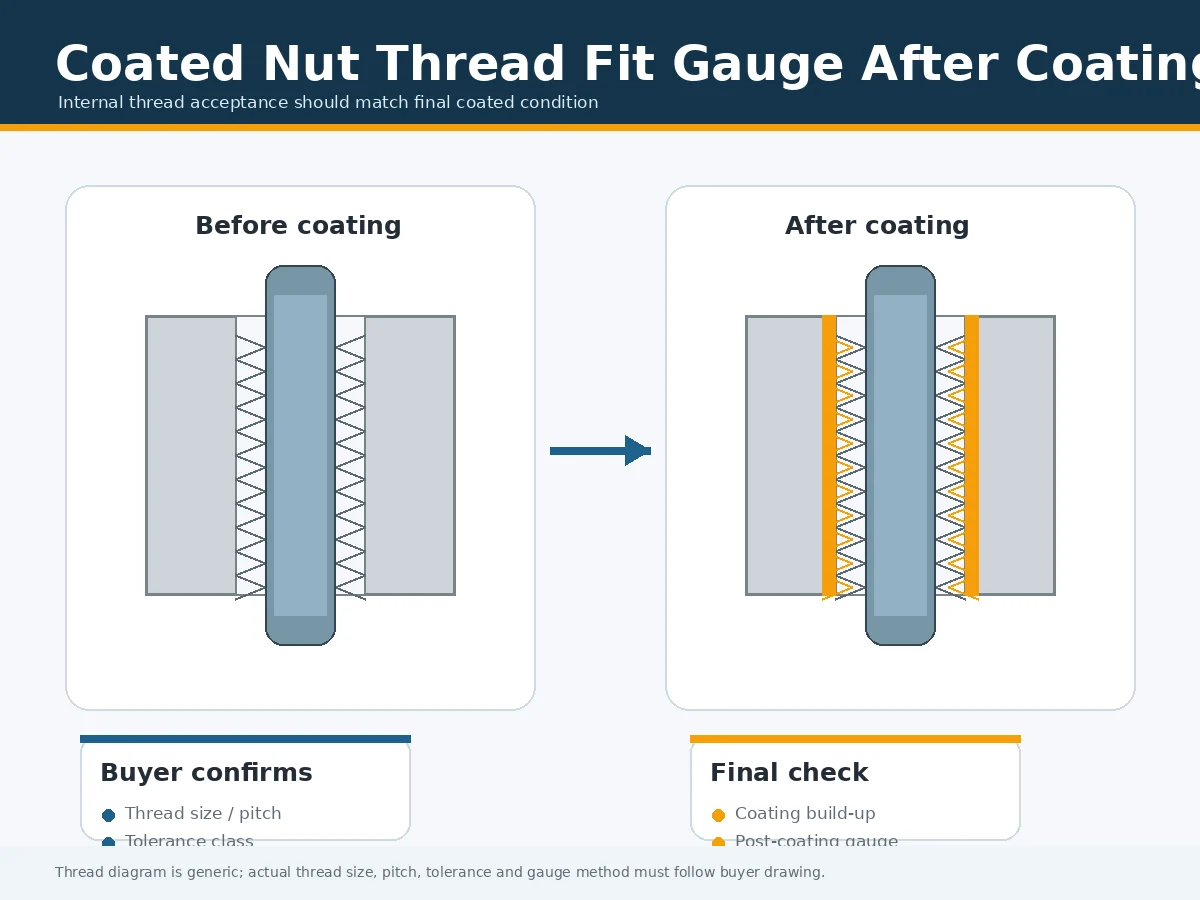
Схема резьбы является общей; фактический размер резьбы, шаг, допуск и метод калибровки должны соответствовать чертежу покупателя.
Для оцинкованных гаек и гаек с цинк-никелевым покрытием гальваническое наращивание может уменьшить зазор внутренней резьбы. Для гаек с цинковым чешуйчатым покрытием пленка покрытия и верхний слой также могут влиять на прохождение калибра и сборку. Решение — не гадать. Чертеж или запрос предложения должны определять конечное условие контроля.
| Резьбовой элемент | Покупатель должен подтвердить | Риск при отсутствии |
|---|---|---|
| Размер и шаг резьбы | Обозначение на чертеже | Неправильный ответный болт, винт или шпилька |
| Допуск резьбы | Требование к классу или посадке | Несоответствие калибра |
| Толщина покрытия, если указана | Стандарт заказчика или код покрытия | Тугая резьба или непостоянная посадка |
| Состояние калибра | До покрытия, после покрытия или оба | Спор по утверждению образца |
| Фаска / заходная часть | Входное условие по чертежу | Проблема сборки или входа калибра |
| Верхнее покрытие / смазка | Если применяется требование по трению | Разброс крутящего момента или усилия затяжки |
| Протокол контроля | Отчет по калибру при необходимости | Отсутствие подтверждения утверждения |
Требования к чертежу: Для индивидуальных проектов требования к покрытию и резьбе должны быть четко указаны на чертеже или в пакете RFQ. Для получения дополнительной информации о контроле чертежей обратитесь к SUNHYINGS нестандартным гайкам по чертежам.
Риск водородного охрупчивания: что должны подтвердить покупатели
Риск водородного охрупчивания является одним из наиболее важных инженерных соображений при выборе покрытий для высокопрочных или закаленных стальных крепежных изделий. Это особенно актуально при использовании гальванических систем покрытия.
Для автомобильных гаек покупатель должен подтвердить материал, твердость, термообработку и метод нанесения покрытия, прежде чем считать отделку приемлемой. Оцинкованные и цинк-никелевые гайки являются гальваническими системами, поэтому высокопрочные или закаленные детали могут потребовать проверки на водородное охрупчивание, отпуска или специального контроля процесса, указанного заказчиком.

Схема риска носит пояснительный характер; окончательный контроль процесса должен соответствовать стандарту заказчика и утвержденной спецификации покрытия.
Цинк-флейк является неэлектролитической системой покрытия и часто рассматривается, когда важно избежать риска водородного охрупчивания, связанного с гальваникой. Но это не должно быть записано как “цинк-флейк устраняет все риски”. Проект по-прежнему требует правильной предварительной обработки, контроля процесса нанесения покрытия, верхнего слоя, контроля и одобрения заказчика.
| Коэффициент риска | Почему это важно | Покупатель должен подтвердить |
|---|---|---|
| Марка материала | Определяет прочность и чувствительность к процессу | Чертеж или стандарт заказчика |
| Твердость / класс свойств | Повышенная твердость может увеличить риск | Диапазон твердости и метод испытания |
| Термическая обработка | Влияет на механическое поведение | Требования к термообработке и записи |
| Маршрут покрытия | Гальванический и безэлектролитный методы изменяют оценку риска | Стандарт покрытия или утвержденный процесс |
| Термообработка / отпуск | Может требоваться по стандарту или заказчику | Необходимые сроки и условия, если указаны |
| Утверждение заказчика | Окончательное решение зависит от правил программы | Код покрытия заказчика и процесс утверждения |
Отсутствие универсального заявления об отсутствии риска
Неэлектролитический метод нанесения покрытия может быть важным фактором выбора, но оценка риска водородного охрупчивания по-прежнему зависит от материала, твердости, термообработки, контроля процесса и требований заказчика. Не заявляйте о гарантированном отсутствии водородного охрупчивания без проверки для конкретного проекта.
Поведение верхнего покрытия, смазки и крутящего момента-натяжения
Покрытие — это не только коррозионный слой. Оно изменяет состояние поверхности гайки и может влиять на трение при затяжке. При одинаковом крутящем моменте затяжки разные системы покрытия, верхние покрытия или смазки могут создавать разную нагрузку зажима.
Это важно для автомобильных соединений, где важны предварительная нагрузка, сопротивление ослаблению, момент страгивания или стабильность сборки. Особенно актуально, когда покрытые гайки используются с ответными болтами, которые также имеют собственное покрытие, смазку или состояние поверхности.

Значение крутящего момента или трения не подразумевается; тестовые значения должны быть получены из чертежа покупателя или стандарта сборки.
Для оцинкованных гаек состояние пассивации, герметика и смазки может влиять на трение. Для гаек с цинковым покрытием верхнее покрытие и встроенная или добавленная смазка могут быть критичными. Для цинк-никелевых гаек точная система покрытия также может влиять на трение и поведение при сборке.
Покупатель не должен просить поставщика угадывать значение крутящего момента или коэффициент трения. Если поведение крутящий момент-натяжение имеет значение, запрос предложения должен включать требуемый диапазон коэффициента трения, метод испытаний, смазанное или сухое состояние, состояние сопрягаемого болта и критерии приемки.
| Переменная | Почему это важно | Покупатель должен подтвердить |
|---|---|---|
| Верхнее покрытие | Изменяет поведение трения и коррозии | Требуемый код верхнего покрытия |
| Смазка | Изменяет поведение крутящий момент-натяжение | Смазанное или сухое состояние |
| Коэффициент трения | Обеспечивает стабильность сборки | Целевой диапазон, если требуется |
| Чистота обработки сопрягаемого болта | Влияет на поведение всего соединения | Покрытие и состояние поверхности болта |
| Функция стопорения | Влияет на момент затяжки | Метод испытаний и приемка |
| Толщина покрытия | Влияет на посадку резьбы и трение | Окончательный контроль и состояние калибра |
Для фиксации и чувствительных к крутящему моменту применений покупатели также могут ознакомиться с SUNHYINGS полностью металлические самоконтрящиеся гайки и распространенными проблемы автомобильной сборки, решенные с помощью специальных гаек.
Чертеж и контрольный список RFQ для покрытых автомобильных гаек
RFQ на покрытую автомобильную гайку не должен содержать только “цинкование”, “цинковые хлопья” или “цинк-никель”. Эти названия недостаточны для инженерного анализа. Поставщику необходимы чертеж, код покрытия, стандарт заказчика, контекст применения, состояние резьбы, состояние материала, требование по трению и объем документации.

Контрольный список предназначен только для подготовки запроса котировок; PPAP, IMDS и отчеты о покрытии применяются только по требованию заказчика или программы.
Полный RFQ помогает предотвратить неправильную замену покрытия, отказ резьбы после нанесения покрытия, разброс крутящего момента, разногласия по коррозии и конфликты документов на поздних этапах. Для контекста рассмотрения со стороны поставщика см. SUNHYINGS в качестве специализированный поставщик гаек для автомобильной промышленности.
| Позиция запроса | Требуется? | Почему это важно | Требуется подтверждение |
|---|---|---|---|
| Последняя ревизия чертежа | Да | Контролирует техническую основу | Текущий чертеж и утвержденная ревизия |
| Тип и функция гайки | Да | Сварные, запрессовываемые, стопорные и фланцевые гайки имеют разные риски | Функция, ответная деталь и вид отказа |
| Место сборки | Да | Определяет коррозионное воздействие и функцию соединения | Внутренняя, наружная, днище, моторный отсек или электрическая зона |
| Размер резьбы, шаг и допуск | Да | Контролирует посадку при окончательной сборке | Метод калибровки и состояние до/после покрытия |
| Материал / твердость / термообработка | Да, если указано | Поддерживает анализ водородного охрупчивания | Марка материала, класс прочности, диапазон твердости или примечание по термообработке |
| Тип покрытия | Да | Цинкование, цинковое покрытие или цинк-никель — это только отправная точка | Точное семейство покрытий и способ нанесения |
| Код покрытия заказчика | Настоятельно рекомендуется | Предотвращает замену покрытия на неоригинальное | Чертеж заказчика, код OEM или спецификация закупки |
| Толщина покрытия | Если указано | Влияет на посадку резьбы и ожидаемую коррозионную стойкость | Указанный диапазон, метод контроля и конечное состояние |
| Верхнее покрытие / герметик / смазка | При необходимости | Контролирует трение и качество поверхности | Утвержденная система и сухое / смазанное состояние |
| Метод испытания на коррозию | При необходимости | Определяет ожидания по валидации | Испытание в нейтральном солевом тумане, циклическая коррозия или испытание по требованию заказчика |
| Калибр резьбы после нанесения покрытия | Если резьба критична | Предотвращает споры по окончательной посадке | До покрытия, после покрытия или оба |
| Коэффициент трения | При необходимости | Обеспечивает стабильность крутящего момента и натяжения | Целевой диапазон, метод испытаний и состояние ответного болта |
| Отчет PPAP / IMDS / о покрытии | При необходимости | Определяет объем документации на утверждение | Требование заказчика или программы |
| Годовой объем | Да | Влияет на маршрут нанесения покрытия и планирование процесса | Прототип, утверждение образца и объем производства |
| Упаковка | При необходимости | Предотвращает повреждение покрытия и смешивание партий | Насыпью, в мешках, на лотках, с этикетками, разделение по партиям и защита от ржавчины |
PPAP следует рассматривать как требование, специфичное для заказчика или программы. IMDS также следует рассматривать как требование к данным об автомобильных материалах, когда это необходимо. Их следует подтверждать до цитирования, а не добавлять после утверждения цены.
Как SUNHYINGS проверяет требования к покрытию перед цитированием
SUNHYINGS должен проверять проекты автомобильных гаек с покрытием, анализируя чертеж, требования к покрытию, состояние резьбы, риск по материалу и контекст применения перед цитированием. Цель состоит не в выборе самого дорогого покрытия, а в подтверждении системы покрытия, соответствующей чертежу покупателя и требованиям заказчика.
Проверка чертежа и кода покрытия
Проверка начинается с последней ревизии чертежа и примечания о покрытии. Если в чертеже указано только “цинк”, “Zn”, “черная отделка” или “коррозионностойкий”, требование к покрытию недостаточно ясно для цитирования в автомобильной отрасли. Код покрытия, цвет отделки, верхний слой, герметик, смазка, требование к коррозионной стойкости и объем отчета должны быть подтверждены.
Проверка риска по материалу, твердости и водородной хрупкости
SUNHYINGS должен проверить требования к марке материала, твердости, термообработке и прочности перед утверждением маршрута гальванического покрытия. Если существует риск водородного охрупчивания, проект должен быть рассмотрен в соответствии со стандартом заказчика и требованиями к процессу покрытия.
Проверка резьбы и функциональных требований
Для гаек конечное состояние внутренней резьбы является критическим. Проверка должна подтвердить размер резьбы, шаг, допуск, фаску, требование к калибру после покрытия и потребности в функциональных испытаниях. Фланцевые приварные гайки, шестигранные приварные гайки, самоконтрящиеся гайки, цельнометаллические стопорные гайки и фланцевые гайки могут требовать различных точек проверки.
Проверка образца и контроля производства
Перед изготовлением образца покупатель и поставщик должны подтвердить, соответствует ли маршрут образца производственному маршруту. Также необходимо определить объем отчета о покрытии, план контроля, упаковку, прослеживаемость партии, PPAP при необходимости и IMDS при необходимости.
Что можно проверить до запроса котировки
Для проектов автомобильных гаек, чувствительных к покрытию, SUNHYINGS может проверить чертеж покупателя и пакет RFQ для выявления отсутствующих технических данных до подтверждения цены. Эта проверка является инженерной проверкой на этапе котировки, а не заменой утверждения заказчиком, валидации лаборатории покрытия или официальной подачи PPAP.
| Проверить позицию | Что SUNHYINGS может проверить | Граница |
|---|---|---|
| Ревизия чертежа и примечание по покрытию | Достаточно ли четко указано покрытие для котировки и отбора образцов | Чертеж заказчика и спецификация покрытия остаются окончательным документом |
| Посадка внутренней резьбы | Необходимо ли определить состояние резьбы после нанесения покрытия | Фактическая приемка калибра должна соответствовать чертежу и методу контроля заказчика |
| Материал, твердость и термообработка | Может ли быть актуальным анализ водородного охрупчивания, связанного с гальваническим покрытием | Ни один маршрут нанесения покрытия не должен быть утвержден без анализа требований заказчика |
| Требование к отчету о покрытии | Запрашивается ли отчет о покрытии, данные коррозионных испытаний или документация поставщика | Объем отчета зависит от заказчика, программы и возможностей партнера по нанесению покрытия |
| Требование к трению и моменту затяжки | Отсутствует ли верхнее покрытие, смазка, коэффициент трения или финишная обработка ответного болта | Значения момента и трения должны поступать из стандарта заказчика или квалифицированных испытаний |
| Упаковка и прослеживаемость партий | Определены ли меры по предотвращению повреждения покрытия, разделению партий и требования к маркировке | Окончательный метод упаковки должен соответствовать заказу на поставку и требованиям заказчика к логистике. |
Открытые вопросы перед расчётом стоимости.
Если данные о покрытии неполные, SUNHYINGS должен уточнить недостающие моменты перед окончательным расчётом. Типичные открытые вопросы включают: точный код покрытия, является ли гайка высокопрочной или термообработанной, должна ли резьба проходить калибр после покрытия, требуется ли диапазон трения, является ли требование по коррозии солевым туманом, циклической коррозией или специфическим для заказчика, требуются ли PPAP, IMDS или отчёты о покрытии.
Покупатели могут ознакомиться с SUNHYINGS как страницами возможностей производителя специальных гаек для проектов по индивидуальным автомобильным гайкам, включающих проверку чертежа, посадку резьбы, требования к покрытию и контроль производства.
Граница рассмотрения: Отсутствующие данные о покрытии или контроле должны быть отмечены как “требует подтверждения”. Их не следует заменять общим предположением.
Перед запросом расчёта стоимости для автомобильных гаек с покрытием.
Подготовьте ревизию чертежа, код покрытия, функцию гайки, место сборки, материал/твёрдость, допуск резьбы, требование к калибру после покрытия, верхнее покрытие, смазку, метод испытания на коррозию, диапазон трения (если требуется), годовой объём и требования к упаковке перед расчётом.
Если какой-либо из этих пунктов отсутствует, выбор покрытия следует рассматривать как “требует подтверждения”, а не предполагать. Это особенно важно для гаек с цинковым покрытием, цинк-флэйком и цинк-никелем, используемых в автомобильных соединениях, где посадка резьбы, проверка на водородное охрупчивание или поведение крутящий момент-натяжение влияют на утверждение.
Минимальный технический пакет
Отправьте последнюю ревизию чертежа, размер и допуск резьбы, функцию гайки, примечание по покрытию, требования к материалу или твердости, место сборки и годовой объем.
Дополнительные данные для проектов, чувствительных к покрытию
Подтвердите код покрытия заказчика, финишное покрытие, смазку, метод испытания на коррозию, калибр резьбы после нанесения покрытия, коэффициент трения (если требуется), PPAP (если требуется) и IMDS (если требуется).
Технические ссылки и контекст стандартов
Приведенные ниже ссылки предоставлены в качестве технического контекста для маршрута покрытия, систем покрытия крепежа, оценки риска водородного охрупчивания и требований автомобильной документации. Они не заменяют чертеж покупателя, стандарт заказчика, спецификацию покрытия или квалифицированную инженерную оценку.
| Ссылка | Как это поддерживает данное руководство | Использовать границу |
|---|---|---|
| ISO 4042: Крепежные изделия — Гальванические покрытия | Предоставляет контекст для гальванических покрытий на крепежных изделиях и рекомендации по минимизации риска водородного охрупчивания. | Используйте только как контекст для метода нанесения покрытия; окончательные требования должны соответствовать стандарту заказчика и утвержденному чертежу. |
| ISO 10683: Цинк-ламельные покрытия, наносимые неэлектролитическим способом | Описывает контекст цинк-чешуйчатых покрытий для стальных крепежных изделий, включая гайки, с верхним покрытием или смазкой или без них. | Используйте только в контексте цинк-чешуйчатого покрытия; окончательная система должна быть указана кодом заказчика или утвержденной спецификацией покрытия. |
| AIAG PPAP-4 | Обеспечивает контекст для утверждения производственной части, когда необходимо продемонстрировать соответствие инженерным конструкторским документам и техническим требованиям заказчика. | PPAP применяется только тогда, когда это требуется заказчиком, программой или закупочной спецификацией. |
| IMDS: Международная система данных о материалах | Обеспечивает контекст для отчетности по данным о материалах в автомобильной промышленности, когда это требуется автомобильными программами. | IMDS следует рассматривать как требование заказчика или автомобильной программы, а не как обязательное требование для каждого заказа на нестандартные гайки. |
Для получения дополнительных инженерных ресурсов SUNHYINGS ознакомьтесь с технические руководства архивом и специальные гайки на заказ продуктовым центром.
Часто задаваемые вопросы
Что лучше для автомобильных гаек: цинкование, цинковое покрытие с хлопьями или цинк-никель?
Не существует универсального лучшего варианта. Оцинкованные гайки могут подходить для чувствительных к стоимости и менее коррозионных применений. Гайки с цинковым чешуйчатым покрытием часто рассматриваются для более высоких требований к коррозии и неэлектролитических покрытий. Гайки из цинк-никеля часто выбираются, когда спецификация заказчика требует более высокой коррозионной стойкости или определенной системы покрытия. Окончательный выбор зависит от чертежа, стандарта заказчика, материала, твердости, посадки резьбы, требований к трению и области утверждения.
Подходят ли оцинкованные гайки для автомобильных применений?
Да, оцинкованные гайки могут подходить для некоторых автомобильных применений, если это допускается чертежом или спецификацией заказчика. Они часто используются в чувствительных к стоимости средах или с низкой коррозией. Однако для высокопрочных или закаленных деталей требуется проверка на водородное охрупчивание, а также при необходимости следует подтвердить окончательную посадку резьбы после покрытия.
Почему цинк-флэковые покрытия используются на автомобильных крепежах?
Цинк-чешуйчатые покрытия часто используются, поскольку они обеспечивают надежную защиту от коррозии и наносятся безэлектролитическим способом. Их часто рассматривают для открытых автомобильных крепежных изделий или высокопрочных крепежных элементов, если это допускается спецификацией заказчика. Покупатель должен подтвердить систему покрытия, верхний слой, диапазон трения, калибр резьбы и требования к испытаниям на коррозию.
Цинк-никель лучше цинкового покрытия для гаек?
Цинк-никель при правильной спецификации может обеспечить лучшую коррозионную стойкость, чем стандартное цинкование, но он не является автоматически лучшим выбором для каждой гайки. Обычно он стоит дороже и по-прежнему требует точного кода покрытия, контроля посадки резьбы, требований к коррозионной стойкости и проверки на водородное охрупчивание при использовании высокопрочных или закаленных деталей.
Влияет ли покрытие на посадку внутренней резьбы гаек?
Да. Покрытие может уменьшить зазор внутренней резьбы и повлиять на калибровочный контроль. Гайка может пройти контроль резьбы до нанесения покрытия, но не пройти его после, если не определены допуск резьбы, толщина покрытия или состояние окончательного калибра. Покупатели должны уточнить, производится ли окончательная приемка до покрытия, после покрытия или в обоих случаях.
Какое покрытие имеет наименьший риск водородного охрупчивания?
Риск водородного охрупчивания зависит от материала, твердости, термообработки, метода покрытия и требований заказчика. Цинковое и цинк-никелевое покрытия наносятся гальваническим способом, поэтому высокопрочные или закаленные детали могут потребовать проверки. Цинковое чешуйчатое покрытие наносится неэлектролитическим методом и часто рассматривается, когда важно избежать рисков, связанных с гальваникой, однако окончательное решение должно соответствовать техническим требованиям заказчика.
Влияет ли цинк-флэковое покрытие на поведение крутящего момента и натяжения?
Да, это возможно. Цинк-чешуйчатые покрытия часто включают верхний слой или смазку, которые могут влиять на трение. Если поведение «момент-натяжение» имеет значение, покупатель должен указать коэффициент трения, финишную обработку сопрягаемого болта, метод испытаний и условия сборки, а не полагаться на общие названия покрытий.
Что следует включить в запрос предложения (RFQ) на оцинкованные автомобильные гайки?
Укажите последнюю ревизию чертежа, тип гайки, место применения, размер резьбы, шаг, допуск, материал, твердость, код покрытия, финишное покрытие, смазку, калибр резьбы после покрытия, требование к испытанию на коррозию, коэффициент трения (если требуется), PPAP (если требуется), IMDS (если требуется), годовой объем и требования к упаковке.
Связанные страницы SUNHYINGS
Просмотрите соответствующие страницы, посвященные нестандартным гайкам, автомобильным применениям, специальным функциям гаек и инженерным рекомендациям.
Техническая обзорная заметка
Эта статья подготовлена для менеджеров по закупкам, инженеров по закупкам, специалистов SQE, инженеров по крепежу и проектных групп автомобильной промышленности, сравнивающих оцинкованные, цинк-флейковые и цинк-никелевые гайки перед RFQ, отбором образцов или утверждением производства.
Рассмотренный объем: маршрут покрытия, коррозионное воздействие, посадка внутренней резьбы, состояние калибра после нанесения покрытия, оценка риска водородного охрупчивания, финишное покрытие, смазка, поведение момент-натяжение, твердость материала, функция гайки, данные RFQ, PPAP (если требуется) и IMDS (если требуется).
Примечание по стандартам и ограничениям: Эта статья является практическим руководством по закупкам и проектированию. Она не заменяет чертеж заказчика, спецификацию покрытия, требования заказчика, квалифицированную инженерную оценку, официальную подачу PPAP, требования к отчетности IMDS или одобрение процесса поставщика. Отсутствующие данные о покрытии, резьбе, трении, материале или документации следует рассматривать как требующие подтверждения, а не принимать как факт.