Руководство по качеству автомобильных крепежных изделий
Прослеживаемость автомобильных крепежных изделий: контроль партий, сертификаты материалов и записи термообработки
Прослеживаемость для автомобильного крепежа — это не единый сертификат. Это способность связать отгруженную партию с правильной партией сырья, производственной партией, записью термообработки, партией покрытия или гальванизации, результатом контроля, упаковочной этикеткой и записью отгрузки.
Для менеджеров по закупкам, команд SQE и инженеров по крепежу главный вопрос практический: если возникает проблема с качеством, может ли поставщик изолировать затронутую партию и доказать, какие записи по материалам, процессам и контролю относятся к отгруженным деталям?
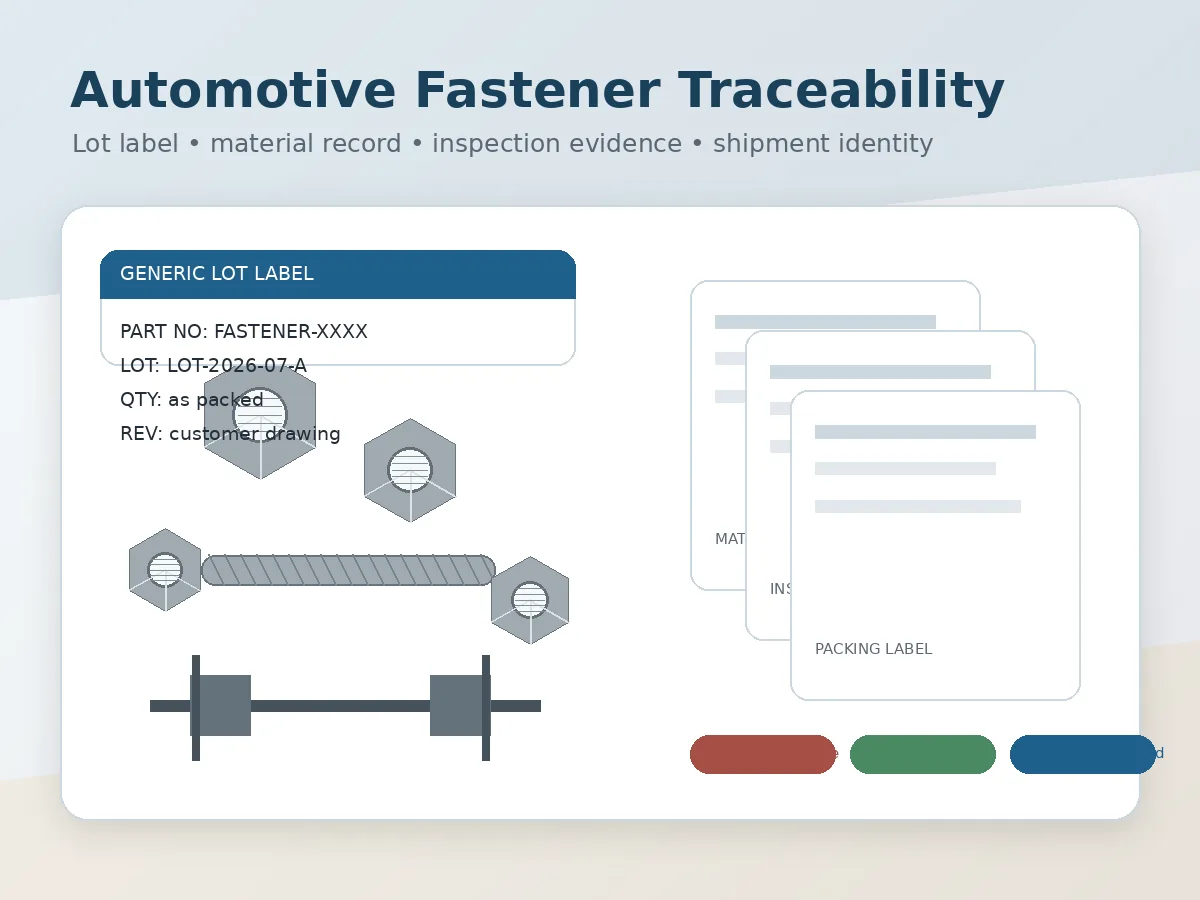
Прослеживаемость связывает физическую партию крепежа с записями по материалам, процессам, контролю и отгрузке.
Техническая иллюстрация для планирования прослеживаемости. Это изображение не является сертификатом продукта или разрешительным документом.
Краткий ответ
Прослеживаемость для автомобильных крепежных изделий означает, что каждая производственная партия может быть связана в обратном направлении с исходным материалом, записями процесса и контроля, а в прямом направлении — с упаковкой и идентификацией отгрузки. Сертификат на материал сам по себе не доказывает, что отгруженные детали были изготовлены из этого материала. Запись термообработки сама по себе не доказывает, что партия соответствовала требованиям по твердости или классу свойств, если она не связана с правильной партией. Перед запросом котировки, отбором образцов или планированием PPAP покупатели должны подтвердить номер чертежа, материал, термообработку, покрытие, допуск резьбы, метод контроля, годовой объем, этикетку упаковки и требуемый объем документации по качеству.
Наиболее надежный пакет прослеживаемости — это не самый толстый пакет документов. Это тот, в котором номер детали, редакция чертежа, партия поставщика, номер плавки материала, технологическая партия, отчет о контроле и этикетка отгрузки могут быть связаны без противоречий.
Управление партиямиСертификат на материалЗапись термообработкиОтчет о контролеМаркировка упаковки
Что означает прослеживаемость для автомобильных крепежных изделий?
Прослеживаемость означает, что каждая партия автомобильных крепежных изделий может быть отслежена в прямом и обратном направлении по цепочке поставок и производственному процессу. Обратная прослеживаемость отвечает на вопрос: какое сырье, номер плавки, партия термообработки, партия покрытия и запись контроля произвели эту отгрузку? Прямая прослеживаемость отвечает на вопрос: куда пошла эта партия материала или процесса, и какие отгрузки клиентам могут быть затронуты, если будет обнаружено несоответствие?
Для стандартных крепежных изделий покупатель может в основном требовать соответствия размеров и материала. Для нестандартных гаек, приварных гаек, цельнометаллических стопорных гаек, самозаклепочных гаек или специальных крепежных изделий, изготовленных по чертежам, прослеживаемость обычно становится более важной, поскольку деталь может быть привязана к конкретной ревизии чертежа, положению сборки, механической функции и требованиям утверждения. Для более широкого контекста программы покупатели также могут ознакомиться с тем, как специальные гайки для автомобильных OEM-производителей оцениваются по чертежу, применению и возможностям поставщика.
Обратная прослеживаемость
Обратная прослеживаемость связывает партию отгрузки с сырьем, номером плавки, производственной партией, термообработкой, покрытием и записями контроля. Она используется, когда покупателю необходимо выяснить, откуда поступила подозрительная партия.
Прямая прослеживаемость
Прямая прослеживаемость позволяет определить, куда была отгружена подозрительная партия материала, термообработки или покрытия. Это помогает решить, какие коробки, отгрузки или места нахождения клиентов могут потребовать изоляции.
SUNHYINGS публикует информацию о связанных продуктах и поставщиках на своих промышленный крепёж и специальные гайки на заказ страницах. Эта статья посвящена именно записям прослеживаемости, а не полному выбору продукции или аудиту всей системы качества.
Базовая цепочка прослеживаемости: от партии стали до отгруженной партии крепежа
Цепочка прослеживаемости обычно начинается до того, как крепеж будет сформирован. Поставщик должен иметь возможность идентифицировать партию сырья, использованную для производственной партии. Для стального крепежа это может быть номер плавки или партия бухты/прутка. Для нержавеющей стали, латуни, алюминия или других сплавов запись должна по-прежнему связывать закупленный материал с производственной партией.
После поступления материала цепочка продолжается через производственный маршрут. Автомобильный крепеж может быть подвергнут холодной высадке, холодной штамповке, штамповке, обработке на станках с ЧПУ, нарезанию резьбы, накатке резьбы, термообработке, гальваническому покрытию, сортировке и упаковке. Точный технологический маршрут должен быть подтвержден типом детали и чертежом. Холодная высадка не обязательно лучше обработки на станках с ЧПУ; обработка на станках не обязательно слабее формовки. Правильный маршрут зависит от геометрии, объема, материала, допусков, стоимости и требований к утверждению.
Полная цепочка прослеживаемости должна связывать идентификацию материала, процесса, контроля и отгрузки.
Иллюстрация потока прослеживаемости для контроля партий автомобильного крепежа.
Точка прослеживаемости
Тип записи
Что должно быть связано
Риск для покупателя при отсутствии
Сырьё
MTC / сертификат материала
Номер плавки или партия поставщика к производственной партии
Невозможно проверить материал для отгруженных деталей
Партия производства
Наряд-заказ / запись партии продукции
Номер детали, ревизия чертежа и технологическая партия
Возможно смешение аналогичных деталей или ревизий чертежей
Термическая обработка
Партия термообработки / запись твёрдости
Партия обработки к партии крепежа
Детали с неправильной твёрдостью или без обработки может быть сложно изолировать
Покрытие / гальваническое покрытие
Отчет о покрытии / партия гальванизации
Партия покрытия к партии крепежа
Несоответствие резьбы или коррозия затрудняют расследование
Контроль качества
Отчет по размерам / резьбе / твердости / функциональности
Результат проверки по номеру партии
Отчет может не отражать отгруженные детали
Упаковка
Маркировка коробки / запись отгрузки
Отгрузка по производственной партии
Полевое сдерживание становится более широким и медленным
Номер партии сырья и номер плавки
Запись о сырье является первым доказательством. Она должна содержать номер партии поставщика, номер плавки (если применимо), марку материала и соответствующий сертификат. Для покупателя автомобильного крепежа ключевой вопрос не только “Есть ли у вас сертификат материала?”, но и “Можно ли связать этот сертификат с поставляемой партией крепежа?”
Производственная партия и технологическая партия
Производственная партия связывает материал с производственной операцией. Это может включать холодную высадку, формовку, штамповку, обработку на станках с ЧПУ, нарезание резьбы, накатку резьбы или вторичную обработку. Для нестандартным гайкам по чертежам, производственная запись также должна быть привязана к правильной редакции чертежа.
Записи о термообработке, покрытии и окончательном контроле
Термообработка и покрытие часто создают пробелы в прослеживаемости, если они не контролируются по идентификатору партии. Термообработка может влиять на твердость, класс прочности, прочность и риск хрупкости. Покрытие может влиять на коррозионное поведение, посадку резьбы и момент затяжки. Окончательный контроль подтверждает, соответствует ли измеренная партия согласованному чертежу и требованиям к качеству.
Маркировка упаковки и идентификация отгрузочной партии
Упаковочная этикетка — это видимая точка прослеживаемости для склада покупателя, сборочного цеха или отдела входного контроля. Полезная этикетка обычно содержит номер детали, количество, номер партии, ссылку на отгрузку, а иногда и номер редакции чертежа или информацию, специфичную для заказчика.
Матрица подтверждающих документов: что каждый документ доказывает и не доказывает
Распространённая ошибка при аудите поставщиков — считать все документы качества равноценными. В закупках автомобильного крепежа каждый документ отвечает на свой технический вопрос. Сертификат на материал не заменяет финальный контроль. Результат измерения твёрдости не заменяет идентификацию партии. Отчёт о покрытии не доказывает универсальную коррозионную стойкость.
Документ / Запись
Что он может подтвердить
Что он не доказывает сам по себе
Требуемая привязка
Сертификат на материал / MTC
Марка материала, номер плавки, химический состав и подтверждение происхождения материала
Финальное качество резьбы, поведение покрытия, функциональная прочность или фактическая идентичность отгруженной партии
MTC → партия сырья → производственная партия → отгрузочная партия
Запись термообработки
Идентификация технологической партии при необходимости термообработки
Окончательная приемка по твердости, если не связана с результатами испытанной партии
Партия термообработки → отчет по твердости → готовая партия крепежа
Результат измерения твердости
Задокументированное значение твердости для выборочных деталей
Что все визуально одинаковые детали на складе принадлежат одной партии
Испытуемые образцы → номер партии → чертеж или требование заказчика
Отчет по покрытию
Документальное подтверждение процесса нанесения покрытия или партии при указании покрытия
Универсальная гарантия коррозионной стойкости или контроль крутящего момента в каждом соединении
Партия покрытия → партия крепежа → контроль резьбы после нанесения покрытия
Отчет по размерам
Размеры по чертежу для определенной партии
Источник материала, термообработка или коррозионная стойкость
Ревизия чертежа → протокол испытаний → производственная партия
Маркировка упаковки
Идентификация отгрузки и ссылка на входной контроль
Соответствие материала или процесса, если не связано с внутренними записями
Маркировка коробки → запись отгрузки → записи производства и контроля
Инженерный вывод: Прослеживаемость наиболее сильна, когда документы связаны едиными идентификаторами: номер детали, ревизия чертежа, партия поставщика, технологическая партия, протокол контроля и этикетка отгрузки.
Управление партиями: что покупатели должны проверить до RFQ или PPAP
Управление партиями — это операционная система, лежащая в основе прослеживаемости. Оно определяет, как идентифицируются и разделяются партии материалов, производственные партии, субподрядные процессы, записи контроля и партии отгрузки. Для автомобильного крепежа управление партиями должно обсуждаться до котировки, а не только после возникновения проблемы.
Покупатель должен подтвердить, как поставщик предотвращает смешивание. Риск может исходить от внешне похожих деталей, остатков производства, переделок, сортировки, переданной на субподряд термообработки, гальваники, изменений упаковки или срочных отгрузок. Система партий поставщика должна поддерживать локализацию, если одна партия вызывает сомнения.
Что должен связывать номер партии
Практичный номер партии крепежа должен связывать номер детали заказчика, производственный заказ поставщика, ревизию чертежа, партию материала, партию термообработки, партию покрытия, протокол контроля и запись отгрузки.
Общие слабые места
Слабый контроль партий часто проявляется, когда сертификаты, записи термообработки, отчеты о покрытии, протоколы испытаний и маркировка коробок используют несогласованные идентификаторы.
Вопросы для оценки поставщика
Уточните, как поставщик определяет партию, разделяет похожие детали, обрабатывает переделку, интегрирует записи субподрядных процессов и изолирует подозрительные партии.
Важная граница
Прослеживаемость не означает, что дефект никогда не может возникнуть. Это означает, что поставщик может сузить область поражения, связать доказательства с физическими деталями и обеспечить более быстрое сдерживание при возникновении проблемы.
Сертификаты на материалы: что они подтверждают и что не подтверждают
Сертификат на материал, часто называемый MTC или сертификат испытаний материала, является важным доказательством, но не всей системой прослеживаемости. Он может показывать марку материала, номер плавки, химический состав и иногда механические свойства поставляемого материала. Для автомобильных крепежных изделий сертификат становится полезным только тогда, когда он привязан к сырью, фактически использованному для производственной партии.
Сертификат на материал является более весомым доказательством, когда его можно привязать к фактической партии производства и отгрузки крепежа.
Иллюстрация привязки документа. Это не настоящий MTC, штамп утверждения или запись сертификации.
Как читать привязку партии в сертификате на материал
Покупатель должен проверить, включает ли сертификат марку материала, номер плавки или партию поставщика, и фигурирует ли этот идентификатор во внутренней записи приемки или производства поставщика. Сертификат не следует рассматривать как изолированный документ.
Проверяемый пункт
Вопрос покупателя
Предупреждающий признак
Марка материала
Соответствует ли он чертежу?
В сертификате указана марка, но не требуемая
Номер плавки / партия
Можно ли привязать к используемому сырью?
Общий сертификат без указания плавки или партии
Химический состав
Указан ли химический состав для соответствующей плавки материала?
В сертификате указано только “углеродистая сталь” или аналогично
Данные о механических свойствах
Включены ли соответствующие данные, когда это требуется?
Сертификат не подтверждает риск применения
Привязка партий
Может ли поставщик связать MTC → производственную партию → отгрузочную партию?
Сертификат существует, но не может быть сопоставлен с отгрузкой
Управление версиями
Соответствует ли материал последней версии чертежа?
Сертификат относится к старой детали или неясной версии
MTC и конечные характеристики крепежа
MTC не гарантирует конечные характеристики крепежа. Только марка материала не подтверждает соответствие резьбы, пригодность покрытия, поведение при затяжке, сохранение усилия затяжки, сопротивление вырыву или усталостную прочность. Сертификат материала также не заменяет контроль размеров, испытания на твердость, функциональные испытания или утверждение по чертежу.
Когда сертификат становится слабым доказательством
Материальный сертификат становится слабым доказательством, если он является общим, не может быть привязан к заказ-наряду поставщика, относится к предыдущему заказу, не соответствует требованиям к материалу по чертежу или не подтвержден записями окончательного контроля, когда это требуется.
Записи термообработки: почему твердость, класс свойств и идентификация партии должны совпадать
Записи термообработки критически важны, когда чертеж, стандарт заказчика или класс свойств крепежа требуют контролируемой твердости или механических характеристик. Не все крепежные изделия требуют термообработки, и не каждая специальная гайка имеет одинаковые требования по твердости. Требование должно быть подтверждено по чертежу, спецификации заказчика и области применения.
Для термообработанных автомобильных крепежных изделий запись должна связывать партию термообработки с партией крепежа. Результат измерения твердости без идентификации партии недостаточен. Запись партии термообработки без окончательного контроля может не доказывать, что готовые детали соответствуют установленным требованиям.
Доказательство термообработки должно связывать идентификацию партии, контроль твердости и фактическую партию крепежа.
Иллюстрация прослеживаемости термообработки. Фактический объем испытаний должен соответствовать чертежу и требованиям заказчика.
Запись термообработки и результат измерения твердости
Запись термообработки описывает партию процесса. Результат измерения твердости показывает фактические данные после обработки. Они отвечают на разные вопросы. Запись термообработки показывает, какая партия прошла процесс. Результат измерения твердости показывает, соответствуют ли измеренные детали требуемому диапазону или критериям приемки.
Риск смешивания партий и локализации
Один из самых больших рисков термообработки — смешивание партий. Если обработанные и необработанные детали выглядят одинаково, или если партии с разной твердостью обрабатываются вместе, визуальный контроль может не выявить проблему. Если идентификация партии слабая, покупателю может потребоваться карантинировать больше деталей, чем необходимо, поскольку подозрительная область неясна.
Соответствует требованиям класса свойств или чертежа
Метод испытаний и критерии приемки
Связь записей
Связывает технологическую запись с фактической партией крепежа
Номер партии и номер отчета
Контроль субподрядчика
Внешний процесс должен оставаться прослеживаемым
Запись поставщика термообработки
Контроль переделок
Исключает несанкционированные изменения процесса
Метод утверждения переделки и перемаркировки
Что необходимо подтвердить для термообработанных автомобильных крепежных изделий
Перед утверждением RFQ или образца подтвердите, требуется ли термообработка, требуемый класс прочности или твердость, ревизию чертежа, метод идентификации партии, метод испытания на твердость, а также необходимость испытания на нагрузку, крутящий момент, вырыв, выкручивание или преобладающий крутящий момент. Никакой диапазон твердости не должен приниматься без чертежа или стандарта заказчика.
Записи о покрытии, гальванизации и последующей обработке в системе прослеживаемости крепежа
Прослеживаемость покрытия важна, поскольку поверхностная обработка может влиять на коррозионную стойкость, посадку резьбы, поведение при затяжке и сборочные характеристики. Цинкование, цинк-никель, фосфатирование, черное оксидирование, пассивация или другие виды обработки не должны рассматриваться только как косметические. Покрытие должно соответствовать чертежу, сопрягаемой детали, условиям сборки и требованиям заказчика.
Партия покрытия и посадка резьбы
Покрытие может изменить посадку резьбы. Если толщина покрытия или припуск после гальванизации не учтены, правильная резьба может стать тугой, нестабильной или трудной для сборки. Для гаек и резьбовых вставок контроль резьбы после нанесения покрытия особенно важен.
Отчет о покрытии и гарантия коррозионной стойкости
Отчет о покрытии может подтвердить, что процесс или партия были обработаны в соответствии с требованиями, но он не создает универсальной гарантии коррозионной стойкости. Коррозионные характеристики зависят от типа покрытия, толщины, контроля процесса, обращения, хранения, сопрягаемых деталей, окружающей среды и требований заказчика к испытаниям.
Когда следует требовать записи о покрытии
Записи о покрытии следует учитывать, когда крепеж используется в зоне, чувствительной к коррозии, покрытие влияет на посадку резьбы или момент затяжки, чертеж указывает толщину покрытия или поверхностную обработку, или требуется PPAP/одобрение заказчика с подтверждением покрытия.
Записи контроля, которые должны быть связаны с каждой партией крепежа
Записи контроля завершают цепочку прослеживаемости. Они показывают, что было фактически проверено и соответствовала ли проверенная партия согласованным требованиям. Для автомобильного крепежа контроль должен быть привязан к чертежу, функции и уровню риска.
Требуемый контроль зависит от типа крепежа. Для приварной гайки могут потребоваться проверки, связанные с геометрией выступов, состоянием резьбы, моментом отрыва или вырыва, если это указано. Для цельнометаллической стопорной гайки может потребоваться момент затяжки, если указано. Самозаклепочные гайки может потребоваться проверка на выталкивание или вырыв, если указано. Стандартная шестигранная гайка может требовать проверки размеров, резьбы и материала. Покупатель не должен предполагать, что каждый тест применим к каждой детали.
Протоколы контроля полезны только тогда, когда измеренные результаты можно связать с проверенной партией крепежа.
Иллюстрация протокола контроля. Фактические пункты контроля зависят от чертежа, функции крепежа и требований заказчика.
Контроль размеров и резьбы
Контроль размеров может включать размер под ключ, высоту, диаметр фланца, опорную поверхность, геометрию выступа, фаску, концентричность или другие размеры по чертежу. Контроль резьбы может включать проверку калибрами ПР-НЕ, допуск резьбы и посадку после покрытия.
Механические или функциональные испытания при необходимости
В зависимости от типа крепежа и чертежа механические или функциональные испытания могут включать твердость, испытание на прочность, поведение момент-натяжение, момент затяжки, вытягивание, выталкивание, вырыв, проверку сварки, толщину покрытия, коррозионные испытания при необходимости и оптическую сортировку при согласовании.
Например, фланцевые приварные гайки могут потребовать функциональных проверок сварки, если это указано в чертеже или требованиях заказчика, в то время как для других типов гаек могут потребоваться иные методы проверки. Объем испытаний должен соответствовать фактическому чертежу, состоянию соединения и стандарту заказчика.
Окончательная сортировка и упаковка. Записи
Записи окончательной сортировки и упаковки помогают предотвратить отгрузку смешанных, поврежденных или визуально несоответствующих деталей. Оптическая сортировка может снизить риск при правильном использовании, но не заменяет проверку чертежа, контроль процесса или прослеживаемость.
Функция крепежа и объем прослеживаемости
Объем прослеживаемости должен соответствовать функции детали. Приварная гайка, самоконтрящаяся гайка с преобладающим моментом и стандартная гайка — все это резьбовые крепежные изделия, но их виды отказов и записи проверок не одинаковы. Покупателям следует избегать копирования одного контрольного списка для всех типов гаек без анализа функции соединения, требований чертежа и стандартов заказчика.
Функция крепежа / гайки
Типичный фокус прослеживаемости
Записи, которые могут иметь значение
Не предполагайте
Приварная гайка или гайка для проекционной сварки
Геометрия выступа, состояние сварочной поверхности, состояние резьбы, разделение партий
Отчет по размерам, контроль резьбы, запись о покрытии, испытание на крутящий момент/вырыв при указании
Не предполагайте, что размер резьбы сам по себе подтверждает качество сварки
Цельнометаллическая стопорная гайка
Стопорящий элемент, стабильность момента затяжки, взаимодействие термообработки и покрытия
Отчет по размерам, запись о твердости, испытание на момент затяжки при указании
Не смешивайте момент затяжки стопорной гайки с моментом вырыва приварной гайки
Самофиксирующаяся гайка
Геометрия запрессовки, взаимодействие с листом, усилие выдавливания/скручивания при необходимости
Отчет по размерам, состояние поверхности, функциональное испытание при указании
Не рассматривайте проверку обжима как проверку сварки
Специальная гайка по чертежу
Ревизия чертежа, индивидуальная геометрия, маршрут материала и обработки
MTC, отчет по размерам, запись маршрута обработки, запись покрытия/термообработки при необходимости
Не заменяйте анализ чертежа подбором по внешнему виду
Стандартная шестигранная гайка
Контроль соответствия резьбы, материала, размеров и партии отгрузки
MTC, отчет по размерам, запись калибровки резьбы, упаковочная этикетка
Не предполагайте, что стандартный размер подтверждает пригодность для автомобильной промышленности
Что может пойти не так при слабой прослеживаемости?
Слабая прослеживаемость увеличивает стоимость и неопределенность проблем с качеством. Она может не создавать сам дефект, но замедляет расследование дефектов и расширяет область локализации.
Смешанный материал или неправильный класс свойств
Если визуально похожие партии смешаны, покупатель может получить крепеж с разным материалом или классом свойств. Сертификат материала может существовать, но он может не подтверждать, какой материал относится к каким деталям.
Несоответствие термообработки и твердости
Если партии термообработки не разделены или не записаны четко, обработанные и необработанные детали могут быть перепутаны. Если результаты твердости не привязаны к партии, протестированные образцы могут не представлять отгрузку.
Споры по покрытию или посадке резьбы
Проблемы с посадкой резьбы могут возникнуть, если толщина покрытия, допуск на резьбу после нанесения покрытия или окончательный контроль резьбы не контролируются.
Локализация становится дорогостоящей
Когда границы партии неясны, может потребоваться карантин большего объема запасов, поскольку невозможно сузить подозреваемую область.
Прослеживаемость особенно важна в автомобильных узлах, где функция крепежа может влиять на устойчивость кронштейна, сопротивление самоотвинчиванию, удержание приварной гайки, зацепление резьбы или замену при обслуживании. Для соответствующего чтения, ориентированного на отказы, см. проблемы автомобильной сборки, решенные с помощью специальных гаек.
Рабочий процесс локализации партии при возникновении проблемы с качеством крепежа
Прослеживаемость становится наиболее ценной после несоответствия, жалобы или проблемы на линии. Цель состоит не только в том, чтобы найти коренную причину, но и в том, чтобы быстро определить подозреваемую область и избежать ненужного карантина незатронутого запаса.
Срок хранения записей также должен быть согласован до начала массового производства. Период хранения, метод извлечения и объем предоставляемых документов должны соответствовать требованиям конкретного заказчика, заказу на поставку, редакции чертежа и любым применимым требованиям утверждения. Покупатели не должны предполагать фиксированный срок хранения, если он не указан в стандарте заказчика или договоре заказа.
Шаг
Вопрос покупателя / поставщика
Требуется запись
Принятое решение
1. Определите подозрительную партию
Какая коробка, партия или лот на линии показали проблему?
Маркировка упаковки, запись о партии, номер партии
Определите первую границу изоляции
2. Сопоставьте партию с производственной партией
По какому внутреннему производственному заказу изготовлены детали?
Запись производственной партии, наряд-заказ, ревизия чертежа
Проверьте, не относятся ли другие отгрузки к той же партии
3. Проверьте источник материала
Какая плавка материала или партия поставщика была использована?
MTC, запись приёмки сырья
Определите, требуется ли сдерживание на уровне материала
4. Проверьте термообработку и покрытие
Была ли подозрительная партия обработана или покрыта в одной партии с другими партиями?
Запись термообработки, отчет по твердости, отчет по покрытию
Изолировать затронутые технологические партии
5. Проверка доказательств контроля
Были ли проверены соответствующие характеристики подозрительной партии?
Отчет по контролю размеров, резьбы, твердости или функциональности
Сравнить заявленное соответствие с симптомами жалобы
6. Решение о выпуске, карантине или замене
Какие партии можно оставить в использовании, а какие требуют действий?
Карта прослеживаемости и запись изоляции
Сократите ненужные остановки производства или задержки запасов
Сценарий комплексного инжиниринга для обучения
Покупатель получает заказную приварную гайку для кронштейна из листового металла. Некоторые детали демонстрируют нестабильные характеристики крутящего момента после сварки. Поставщик может предоставить сертификат на материал, но он не привязан к производственной партии. Существует заявление о термообработке, но оно не идентифицирует обработанную партию. Отчет о покрытии является общим и не соответствует этикетке на коробке. В этой ситуации покупатель не может быстро определить, связана ли проблема с материалом, геометрией выступа, термообработкой, покрытием, настройкой сварки или смешанной отгрузкой. Надежная прослеживаемость помогла бы изолировать подозрительную партию и решить, требуется ли локализация одной отгрузки или нескольких партий.
Контрольный список RFQ: Требования к прослеживаемости для согласования с поставщиком
Прослеживаемость должна быть определена до RFQ или изготовления образцов. Если она добавляется после начала массового производства, поставщику может потребоваться изменить маркировку, документацию, планирование контроля, контроль субподрядчиков или методы упаковки. Это может повлиять на стоимость, сроки поставки и сроки утверждения.
Требования к прослеживаемости должны быть подтверждены до составления коммерческого предложения, изготовления образцов или планирования PPAP.
Иллюстрация контрольного списка для покупателя. Это не является универсальной гарантией документа.
Входные данные для RFQ
Почему это влияет на коммерческое предложение / утверждение
Ревизия чертежа
Определяет техническую основу
Номер детали
Управляет идентификацией этикетки и документа
Размер резьбы, шаг и допуск
Управляет контролем резьбы и посадкой после покрытия
Класс материала / свойств
Управляет MTC и подтверждением характеристик
Требования к термообработке
Управляет записью партии и испытанием на твердость
Требование к покрытию
Управляет отчетом о покрытии и допуском на резьбу
Место применения
Определяет уровень риска и необходимость проверки
Годовой объем
Влияет на размер партии и планирование записей
Уровень PPAP
Изменяет объем подачи, если требуется заказчиком
Необходимость IMDS
Должно быть запланировано до отчетности по автомобильным материалам
Требование к хранению записей
Определяет, как долго должны храниться записи о прослеживаемости, контроле и утверждении, когда это требуется
Формат маркировки упаковки
Обеспечивает прослеживаемость отгрузки
Текущая проблема с отказом
Фокусируется на планировании контроля и локализации
Документы, которые необходимо запросить перед отбором проб
Перед отбором проб покупатель может запросить предварительный план документов, а не полный пакет производственной документации. Это может включать ожидаемый объем MTC, формат отчета по размерам, подход к записям термообработки, требование к отчету о покрытии, контрольный список, формат маркировки и ожидания по хранению записей, когда это требуется заказчиком.
Вопросы по контролю партий при массовом производстве
При массовом производстве покупатели должны уточнить, как будут сохраняться записи, как номера партий будут отображаться на этикетках, как будут обрабатываться несколько партий в одной отгрузке и как будут интегрироваться записи о субподрядной термообработке или покрытии.
Как компания SUNHYINGS проверяет требования к прослеживаемости для нестандартных автомобильных крепежных изделий
Для нестандартных автомобильных крепежных изделий компания SUNHYINGS должна проверять требования к прослеживаемости вместе с чертежом, образцом, областью применения и ожиданиями по качественной документации. Изготовленная по чертежу гайка, приварная гайка, стопорная гайка или резьбовая вставка могут требовать различного контроля партий в зависимости от материала, термообработки, покрытия, механической функции и этапа утверждения.
Проверка требований к чертежам и документации
Проверка должна начинаться с ревизии чертежа, номера детали, требований к резьбе, материалу, твердости или классу свойств, покрытию и требованиям к контролю. Если покупатель требует PPAP, IMDS, CoC, MTC, отчет по размерам, отчет по покрытию, запись о термообработке или контроль сохранения записей, объем документации должен быть уточнен заранее.
Подготовка образцов, идентификация партий и утверждение
Во время изготовления образцов поставщик должен определить, как идентифицируется партия образцов и какие записи доступны для проверки. Если деталь переходит к автомобильному утверждению, идентификация партии должна быть согласована от разработки образца до планирования массового производства.
Планирование прослеживаемости при массовом производстве
При массовом производстве план прослеживаемости должен соответствовать уровню риска покупателя и требованиям заказчика. Высокорисковые функциональные крепежные изделия могут требовать более строгой документации и разделения партий, чем низкорисковые некритичные детали. Окончательные требования всегда должны быть подтверждены чертежом, стандартом заказчика, применением, условиями заказа и требованиями к хранению записей.
Запросить проверку прослеживаемости и качества документации
Для изготовления нестандартных автомобильных крепежных изделий подготовьте чертеж, фото образца, требования к материалу, термообработке, покрытию, годовой объем и ожидаемый объем документации по качеству. SUNHYINGS может проверить, какие записи необходимо подтвердить до составления коммерческого предложения, отбора образцов или планирования PPAP.
Рекомендуемые данные для RFQ
Почему это важно
Чертеж или фото образца
Подтверждает идентификацию и геометрию детали
Номер детали и ревизия чертежа
Базовый уровень утверждения контроля и идентификация партии
Размер резьбы, шаг и допуск
Управляет контролем резьбы и посадкой после покрытия
Класс материала и свойств / твердость
Сертификат контроля и свидетельство о термообработке
Требования к термообработке и покрытию
Протокол партии, отчет о покрытии и план контроля
Положение при установке и состояние сопрягаемой детали
Определяет риски соединения и потребности в функциональных испытаниях
Уровень PPAP и необходимость IMDS, если требуется
Определяет объем предоставления автомобильной документации
Требования к хранению записей, если указано
Определяет, как долго должны храниться записи о прослеживаемости и качестве
Требования к маркировке упаковки и партии отгрузки
Поддерживает входной контроль и полевую изоляцию
Укажите эти данные при запросе проверки документации по прослеживаемости и качеству. Окончательный пакет документов должен быть подтвержден в соответствии с ревизией чертежа, стандартом заказчика и требованиями заказа на закупку.
Технические ссылки и контекст стандартов
Используйте эти ссылки только для контекста. Чертежи заказчика, его специфические требования и требования заказа на закупку остаются основными документами для фактического утверждения крепежа.
AIAG IATF 16949:2016 — контекст требований к системе менеджмента качества в автомобильной промышленности.
IMDS Публичные страницы — контекст системы данных о материалах в автомобильной промышленности для отчетности по материалам.
Часто задаваемые вопросы
Достаточно ли сертификата материала для подтверждения прослеживаемости автомобильных крепежных изделий?
Нет. Сертификат на материал полезен только тогда, когда его можно привязать к сырью, использованному для конкретной производственной партии и отгруженной партии крепежа. Общий сертификат не доказывает, что отгруженные детали были изготовлены из этого материала.
Какие записи должны быть прослеживаемы для термообработанных крепежных изделий?
Для термообработанных крепежных изделий поставщик должен иметь возможность связать партию крепежа с партией термообработки, результатом измерения твердости, требованиями чертежа или класса прочности, протоколом контроля и этикеткой отгрузки. Точный объем документации зависит от чертежа и стандарта заказчика.
Требуется ли для каждого заказа автомобильных крепежей документация по отслеживаемости PPAP?
Нет. Документы PPAP требуются, когда они указаны заказчиком, проектом или этапом утверждения. Наличие возможности PPAP не означает, что каждый заказ автоматически включает PPAP. Объем документации следует подтвердить до запроса предложения или отбора образцов.
В чем разница между контролем партии и записями проверки?
Контроль партий позволяет идентифицировать и разделять партии. Протоколы проверок показывают измеренные результаты для определенной партии. Необходимы оба. Протокол испытаний является неполным, если его нельзя связать с фактически отгруженной партией.
Почему для крепежа необходима прослеживаемость покрытия?
Покрытие может влиять на коррозионную стойкость, посадку резьбы и момент затяжки. Если покрытие функционально важно или требуется по чертежу, партия покрытия должна быть связана с партией крепежа и записями окончательного контроля.
Что покупателям следует указывать в запросе котировки, когда важна прослеживаемость?
Покупатели должны указать номер ревизии чертежа, номер детали, размер резьбы и допуск, материал, класс твердости или свойств, термообработку, покрытие, годовой объем, уровень PPAP при необходимости, потребность в IMDS при необходимости, срок хранения записей, если указан, формат этикетки, упаковку и любые текущие проблемы с отказами.
Техническая обзорная заметка
Эта статья подготовлена для покупателей автомобильного крепежа, групп снабжения, инженеров SQE и инженеров по качеству, оценивающих прослеживаемость партий для специальных гаек, специального крепежа и автомобильных компонентов, изготовленных по чертежам. Окончательные требования к документам должны быть подтверждены в соответствии с последней ревизией чертежа, стандартом заказчика, требованием PPAP и заказом на поставку.
Рассмотренный объем: управление партиями крепежа, сертификаты материалов, записи термообработки, прослеживаемость покрытия, записи контроля, входные данные для RFQ, границы хранения записей и проверка документов поставщика.
Примечание по стандартам и ограничениям: Данная статья является практическим руководством по снабжению и проектированию. Она не заменяет чертеж заказчика, требование заказчика, официальную подачу PPAP, аудит IATF 16949, требование к отчетности IMDS или квалифицированную инженерную проверку. Окончательные требования к материалу, твердости, покрытию, контролю, прослеживаемости, предоставлению документов и хранению записей должны быть подтверждены ревизией чертежа, стандартом заказчика и договором на поставку.