







Antes de aprovar um fornecedor de porcas automotivas personalizadas, as equipes SQE e qualidade devem auditar mais do que certificados ou alegações de vendas. A auditoria deve verificar o controle de desenho, roteiro de processo, evidências de inspeção, registros de rastreabilidade e limites de documentos de qualidade para o número de peça e aplicação reais.
- Use o escopo IATF ou a capacidade do SGQ como contexto do sistema de qualidade, não como aprovação automática da peça.
- Verifique o controle de processo, inspeção de rosca, evidência de revestimento e testes funcionais quando necessário.
- Confirme a rastreabilidade desde o material e lote de produção até os registros de inspeção, etiquetas de embalagem e remessa.
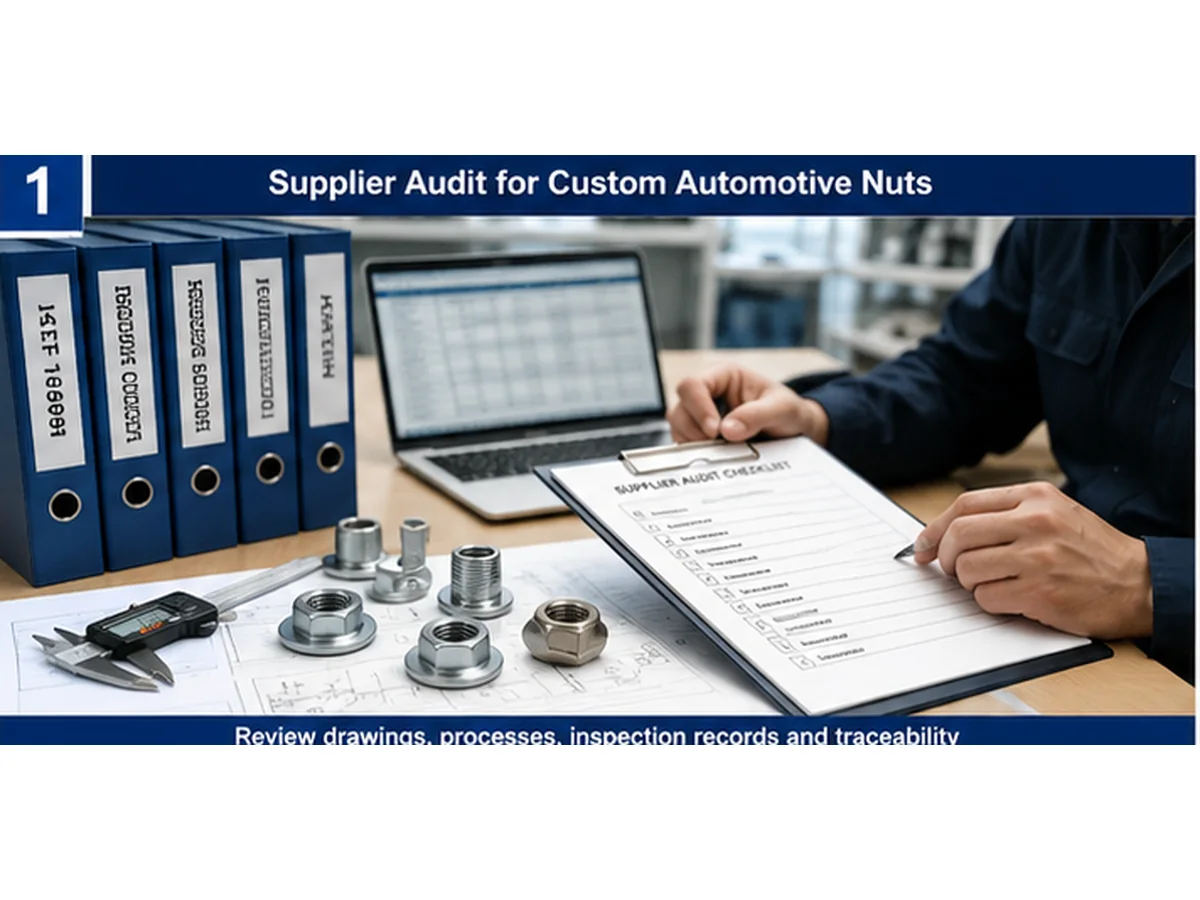
Imagem conceitual de auditoria. Não representa um projeto específico de cliente, certificado ou resultado de aprovação.
Resposta rápida: O que um SQE deve auditar antes de aprovar um fornecedor personalizado de porcas automotivas?
Antes de aprovar um fornecedor de porcas automotivas personalizadas, um SQE ou gerente de qualidade deve auditar se o fornecedor pode controlar a peça real, a revisão do desenho, o roteiro de processo, o fluxo de inspeção e a cadeia de rastreabilidade da porca personalizada que está sendo adquirida.
A auditoria deve abranger o escopo da IATF 16949, o controle de desenho e revisão, o controle de matéria-prima e lote térmico, o fluxo do processo de fabricação, o controle de ferramentas e setup, as verificações de rosqueamento ou formação de rosca, os controles de tratamento térmico e revestimento, a inspeção em processo, a inspeção final, os testes funcionais quando necessário, os limites do PPAP ou IMDS, a rastreabilidade de lotes e os rótulos de embalagem.
O que a lista de verificação deve comprovar
- O fornecedor entende o desenho controlado e a revisão mais recente.
- O roteiro de fabricação é definido e repetível.
- Os métodos de inspeção correspondem ao desenho e à função.
- A rastreabilidade conecta material, processo, inspeção, embalagem e expedição.
O que o checklist não pode comprovar
- Não substitui a aprovação do cliente.
- Não substitui a aprovação do PPAP se o PPAP for exigido.
- Não define critérios de aceitação sem o desenho ou padrão do cliente.
- Não garante que cada pedido inclua todos os documentos ou testes.
Matriz de Prontidão para Auditoria de Fornecedores
Um fornecedor pode parecer pronto do ponto de vista comercial, mas ainda ser fraco do ponto de vista da auditoria SQE. Antes do RFQ, amostragem ou aprovação do fornecedor, a equipe de auditoria deve decidir se as evidências disponíveis são suficientes para prosseguir ou se registros adicionais são necessários.
| Área de Auditoria | Evidência Mínima para Continuar | Evidência Necessária Antes da Aprovação | Gatilho de Acompanhamento |
|---|---|---|---|
| Controle de Desenhos | Fornecedor confirma a revisão mais recente do desenho e o número da peça. | Processo de controle de revisão, registro de revisão de desenho e método de controle de alterações. | Fornecedor cotou com base em um desenho antigo, foto ou amostra não controlada. |
| Rota de processo | O fornecedor pode explicar a rota proposta, desde o material até o embarque. | Fluxo do processo, limite do processo interno vs terceirizado e comparação da rota da amostra à produção. | Rota do protótipo e rota de produção são diferentes sem explicação. |
| Rosca e revestimento | Tamanho da rosca, passo e tipo de revestimento são identificados. | Condição do calibrador, verificação da rosca pós-revestimento e evidência do lote de revestimento, se necessário. | Fornecedor não discute o ajuste da rosca pós-revestimento. |
| Desempenho funcional | Função da porca e modo de falha esperado são identificados. | Método de torque de saída, arrancamento, empuxo ou torque predominante, se exigido pelo desenho ou norma do cliente. | Fornecedor trata porcas funcionais como peças dimensionais simples. |
| Rastreabilidade | Fornecedor pode identificar o lote de produção e o método de etiquetagem da embalagem. | Lote do material, lote do processo, lote do revestimento, registro de inspeção e vínculo com a remessa, se necessário. | Registros de lote não podem ser recuperados ou vinculados à remessa. |
| PPAP / IMDS | Fornecedor entende se são necessários. | Nível de PPAP definido, escopo do documento, quantidade de amostras, cronograma de submissão e responsabilidade pelo IMDS, se necessário. | Fornecedor diz que PPAP ou IMDS é “automático” sem escopo. |
Revisão Remota de Documentos vs. Auditoria de Processo no Local
Nem toda auditoria de fornecedor começa com uma visita ao local. Uma revisão remota de documentos pode reduzir o risco inicial de fornecimento, mas não pode substituir totalmente uma auditoria de processo no local quando o projeto exige verificação direta da disciplina de produção, segregação de materiais, controle de ferramentas ou execução de inspeção.
| Modo de Auditoria | O Que Pode Verificar | O Que Não Pode Confirmar Totalmente | Melhor Uso |
|---|---|---|---|
| Revisão remota de documentos | Revisão de desenho, fluxo de processo, relatório dimensional, certificado de material, relatório de revestimento, escopo PPAP se necessário, necessidade IMDS se necessário e amostra de rastreabilidade. | Disciplina real no chão de fábrica, condição das ferramentas, segregação de materiais, execução de inspeção e controle de processo de subcontratados. | Triagem pré-RFQ, pré-seleção de fornecedores e revisão de prontidão documental. |
| Auditoria de processo no local. | Roteiro de processo, uso de equipamentos, armazenamento de ferramentas, controle de lotes, posto de inspeção, manuseio de produtos não conformes e prática de etiquetagem de embalagem. | Consistência de longo prazo, a menos que registros históricos e vários lotes sejam amostrados. | Aprovação de fornecedor, revisão de peça crítica ou revisão de projeto automotivo de alto volume. |
| Revisão de aprovação de amostra. | Dimensões da amostra, ajuste de rosca, condição do revestimento, dureza e resultados de testes funcionais, se necessário. | Estabilidade de produção em massa se houver alterações na ferramenta, fonte de material, tratamento térmico, revestimento ou rota de produção após a amostragem. | Confirmação do protótipo, revisão do pedido de teste e preparação do PPAP, se necessário. |
Por que a Capacidade IATF Não Substitui a Evidência de Auditoria no Nível da Peça
A capacidade IATF 16949 é importante nas cadeias de suprimentos automotivas porque se relaciona aos requisitos do sistema de gestão da qualidade. No entanto, um SQE não deve tratar a capacidade IATF como prova automática de que cada pedido personalizado de porca automotiva é totalmente controlado, totalmente documentado ou aprovado para um desenho específico.
Para porcas personalizadas, a verdadeira questão da auditoria é se o fornecedor pode apresentar evidências para o número de peça real, revisão do desenho, material, rota de processo, método de inspeção e requisitos de rastreabilidade.
As equipes de SQE devem verificar se o certificado, escopo do local auditado, processo de fabricação e requisitos específicos do cliente aplicáveis se aplicam ao fornecedor e à peça sendo auditada. Se tratamento térmico, revestimento, classificação ou embalagem for terceirizado, a auditoria também deve verificar como esses processos subcontratados são aprovados, controlados e vinculados ao lote da peça.

Use isto apenas como um diagrama de limite. Não apresente como um certificado IATF oficial ou documento de aprovação de fornecedor.
| Tópico de Auditoria | O que Pode Mostrar | O que não prova automaticamente |
|---|---|---|
| Capacidade IATF | Direção do sistema de gestão da qualidade e conscientização sobre processos automotivos. | Que cada pedido de porca personalizada inclui PPAP, IMDS, inspeção completa, classificação óptica ou todos os testes funcionais. |
| Escopo do local auditado | Qual site ou operação está incluído no escopo do sistema de qualidade. | Que tratamento térmico, revestimento, classificação ou embalagem subcontratados são automaticamente cobertos. |
| Requisitos específicos do cliente | Se requisitos relacionados ao projeto ou OEM podem ser aplicados. | Que o fornecedor já revisou todos os requisitos específicos do cliente para o desenho atual. |
| Fluxo do processo | Rota de produção planejada. | Que a rota real é estável, a menos que registros e controles sejam revisados. |
| Plano de controle, se necessário | Pontos de controle planejados. | Que todas as características especiais são inspecionadas corretamente sem revisão específica da peça. |
| Relatório dimensional | Evidência de medição para dimensões selecionadas. | Essa função, comportamento de revestimento ou desempenho de montagem é automaticamente aprovado. |
| Pacote PPAP, se necessário. | Documentação de aprovação do cliente/projeto. | Essa aprovação é universal para todos os números de peça, revisões ou aplicações. |
Defina o Escopo da Auditoria: Tipo de Porca, Aplicação e Revisão do Desenho
Uma auditoria de fornecedor deve começar definindo o escopo exato da auditoria. Auditar um fornecedor de porca automotiva personalizada sem definir o tipo de porca, aplicação e revisão do desenho pode resultar em uma lista de verificação que parece completa, mas perde o risco real.
Porcas automotivas personalizadas podem ser usadas em conjuntos de chapa metálica, estruturas de assentos, suportes, componentes de chassi, bandejas de bateria, estruturas internas, módulos HVAC, invólucros eletrônicos ou outras juntas automotivas. Cada local pode criar requisitos diferentes para engate da rosca, área de apoio, desempenho de solda, torque de saída, resistência ao arrancamento, resistência ao empuxo, torque predominante, revestimento e rastreabilidade.
Para contexto de aplicação mais amplo, veja porcas especiais personalizadas para OEMs automotivos. Para contexto de fabricação baseado em desenho, veja porcas especiais fabricadas sob desenho.
| Tipo de Porca / Característica | Função Típica | Foco da Auditoria |
|---|---|---|
| Porcas para solda de flange | Âncora rosqueada soldada para chapa metálica. | Controle de projeção, processo de solda, alinhamento da rosca, torque de saída ou arrancamento, se necessário. |
| Porcas autotravantes totalmente metálicas | Torque predominante e anti-afrouxamento. | Controle de recurso de travamento, teste de torque predominante, se necessário, condição do parafuso de acoplamento. |
| Porcas auto-encaixáveis | Rosca de pressão para chapa fina. | Recurso de clinchagem, espessura da chapa, dureza do painel, push-out ou torque-out, se necessário. |
| Porcas personalizadas conforme desenho | Geometria personalizada conforme desenho. | Revisão do desenho, características especiais, viabilidade do processo, método de inspeção. |
Lista de Verificação de Controle de Processo para Porcas Automotivas Personalizadas
O controle de processo é uma das diferenças centrais entre uma simples cotação e um processo de fornecimento automotivo qualificado. Uma porca automotiva personalizada pode passar em uma primeira inspeção visual, mas ainda falhar se a rota do processo, ferramentaria, rosqueamento, tratamento térmico, revestimento ou sequência de inspeção não for controlada.

O fluxo de trabalho é conceitual. A rota real do processo depende do desenho, material, volume, revestimento, ferramentaria e requisitos do cliente.
A rota do processo pode incluir recebimento de matéria-prima, preparação de arame ou preparação de blank, encabeçamento a frio, forjamento a frio, torneamento ou fresamento CNC, rosqueamento, formação de rosca, laminação de rosca, usinagem secundária, tratamento térmico, tratamento de superfície, classificação óptica se utilizada, inspeção final, embalagem e expedição. Nem toda porca personalizada requer todas as etapas.
Para contexto mais amplo da rota, consulte SUNHYINGS fabricante de fixadores personalizados e SUNHYINGS páginas.
| Área de Auditoria | O que Perguntar | Evidência a Solicitar | Sinal de Alerta |
|---|---|---|---|
| Fluxo do processo | Qual é a rota completa desde o material até a expedição? | Fluxograma de processo ou ficha de rota. | Fornecedor não consegue explicar a rota. |
| Revisão do Desenho | Quem confirma a fabricabilidade e as dimensões críticas? | Registro de revisão de desenho ou nota de revisão de RFQ. | Fornecedor cotou sem revisar as notas do desenho. |
| Rota de amostra vs produção | Amostras e produção em massa usarão a mesma rota? | Declaração de rota de amostra, plano de rota de produção, plano de ferramentas. | Amostras CNC são aprovadas, mas a produção mudará de rota sem revisão. |
| Ferramentaria | É necessário e controlado o ferramental? | Lista de ferramentas, registro de manutenção se aplicável. | Nenhum controle de ferramentas para características conformadas. |
| Rosqueamento | Como a qualidade da rosca é controlada? | Registro de calibradores passa/não passa e plano de inspeção de rosca. | Rosca verificada apenas visualmente. |
| Tratamento térmico | É necessário tratamento térmico? | Registro de dureza e registro de lote se aplicável. | Nenhum vínculo de lote entre tratamento térmico e lote. |
| Revestimento | O revestimento é controlado por tipo e espessura? | Relatório de revestimento ou registro de lote de revestimento. | Revestimento adicionado após cotação sem revisão de rosca. |
| Controle de alterações | Como as alterações de processo são aprovadas? | Registro de controle de alterações. | Alterações de processo sem notificação ao comprador. |
Fluxo de Inspeção: Recebimento, Em Processo, Final e Verificações Funcionais
A inspeção não deve se limitar a uma verificação visual final. Para porcas automotivas personalizadas, as equipes de auditoria devem analisar todo o fluxo de inspeção, desde o recebimento do material até o embarque final.
O plano de inspeção deve corresponder ao desenho, à função da porca e à rota do processo. Uma porca de solda pode exigir verificações relacionadas à projeção. Uma porca de travamento pode exigir verificações de torque predominante, se especificado. Uma porca de auto-fixação pode exigir evidências de push-out ou torque-out, se necessário. Uma porca revestida pode exigir verificações de calibre de rosca pós-revestimento.
| Etapa de Inspeção | Verificações Típicas | Evidência de Auditoria |
|---|---|---|
| Inspeção de Recebimento | Certificado de material, lote de entrada, lote do fornecedor, verificações de processo terceirizado, se aplicável. | Registro de entrada, certificado de material, registro de lote. |
| Inspeção em processo | Inspeção da primeira peça, verificações dimensionais, verificações de rosca com calibrador, verificações de características conformadas. | Relatório da primeira peça, folha de inspeção, registro de calibrador. |
| Inspeção final | Inspeção dimensional, inspeção de rosca, aparência superficial, verificação de etiqueta de embalagem. | Relatório de inspeção final, registro de liberação, verificação de etiqueta. |
| Inspeção funcional | Torque de saída, extração, empuxo ou torque predominante, se necessário. | Relatório de teste com método definido e critérios de aceitação. |
Prioridade de Evidência de Inspeção
| Prioridade de Evidência | Caso de Uso | Por que é Importante |
|---|---|---|
| Dimensões críticas do desenho | Qualquer porca fabricada sob desenho com geometria controlada. | Confirma que o fornecedor pode inspecionar as características que afetam o ajuste e a montagem. |
| Evidência de calibrador de rosca | Todas as porcas personalizadas com rosca interna, especialmente porcas revestidas. | Evita falhas de ajuste da rosca antes ou após a galvanoplastia. |
| Evidência funcional | Porcas para solda, trava, cravação ou função especial quando necessário. | Conecta a evidência de auditoria ao modo de falha real. |
| Registros vinculados ao lote | Projetos automotivos com necessidades de rastreabilidade. | Suporta contenção, análise de causa raiz e revisão de auditoria do cliente. |
Evidência de Rosca, Revestimento, Dureza e Teste Funcional
Porcas automotivas personalizadas geralmente falham não porque a forma básica está errada, mas porque a rosca, o revestimento, a dureza ou a função não foram controlados corretamente. Estes são os registros que um SQE deve revisar cuidadosamente.

Ferramentas de inspeção são mostradas para planejamento de auditoria. Os métodos de teste final e critérios de aceitação devem seguir o desenho real e o padrão do cliente.
| Tipo de Evidência | Quando é Importante | O que Confirmar |
|---|---|---|
| Registro do calibrador de rosca | Ajuste de rosca interna e ajuste pós-revestimento. | Tipo de calibre, momento, regra de aceitação, condição antes/depois do revestimento. |
| Registro de dureza | Porcas tratadas termicamente ou com propriedades controladas. | Método de teste, faixa de aceitação, vínculo com o lote. |
| Relatório de revestimento | Requisito de espessura de corrosão ou revestimento. | Tipo de revestimento, espessura, lote, revisão da rosca pós-revestimento. |
| Teste de torque de saída | Aplicações de solda ou cravação, se necessário. | Método de teste, condição do painel, critérios de aceitação. |
| Teste de arrancamento / empuxo | Aplicações de solda ou cravação, se necessário. | Dispositivo de teste, substrato, critérios, revisão da peça. |
| Teste de torque predominante | Contraporcas, se necessário. | Parafuso de acoplamento, revestimento, regra de reutilização, método de teste. |
| Relatório dimensional | Aprovação baseada em desenho. | Dimensões críticas e regra de amostragem. |
Registros de Rastreabilidade: Material, Tratamento Térmico, Revestimento, Lote e Embalagem
Rastreabilidade não é apenas uma etiqueta na caixa. Para porcas automotivas personalizadas, a rastreabilidade deve conectar material, rota de fabricação, evidência de inspeção, lote de revestimento ou tratamento térmico, etiqueta de embalagem e registro de remessa.

A profundidade da rastreabilidade depende dos requisitos do cliente, do risco do desenho e do escopo do projeto.
| Ponto de Rastreabilidade | O que Verificar | Evidência |
|---|---|---|
| Origem do material | Grau do material e lote do fornecedor. | Certificado do material ou registro de entrada. |
| Número do forno | Vínculo entre o material e o lote de produção. | Registro do número de calor, se necessário. |
| Lote de produção | Vínculo entre a ordem de produção e as peças. | Registro do lote de produção. |
| Tratamento térmico | Vínculo entre lote de tratamento e lote de peça. | Registro do lote de tratamento térmico, se aplicável. |
| Revestimento | Vínculo entre lote de revestimento e lote de peça. | Relatório de revestimento ou registro de processo terceirizado. |
| Inspeção | Vínculo entre registros de inspeção e lote. | Registros dimensionais, de rosca, dureza ou funcionais. |
| Embalagem | Vínculo entre etiqueta da embalagem e lote. | Etiqueta de registro, etiqueta de caixa, etiqueta de palete. |
| Remessa | Vínculo entre remessa e lote de produção. | Nota de entrega ou registro de envio. |
Se um problema de campo surgir posteriormente, a rastreabilidade fraca pode dificultar a contenção. O fornecedor deve ser capaz de identificar os lotes afetados, isolar o estoque suspeito e conectar as evidências de inspeção ao registro da remessa quando o cliente exigir esse nível de rastreabilidade.
Para um contexto mais amplo de avaliação de fornecedores, consulte fornecedor especializado em porcas para aplicações automotivas.
PPAP, IMDS e Limites de Documentos Específicos do Cliente
PPAP, IMDS e documentos específicos do cliente devem ser discutidos antes da cotação, se forem exigidos. Eles podem afetar o prazo, a aprovação de amostras, o escopo de inspeção, a preparação de documentos e o preço.
Para porcas automotivas personalizadas, o PPAP pode ser exigido quando a peça faz parte de um processo de aprovação de projeto automotivo. O IMDS pode ser exigido quando o cliente precisa de relatórios de dados de materiais. Plano de Controle, FMEA, MSA, CEP ou outra documentação de Ferramentas Essenciais também podem ser solicitados dependendo dos requisitos do cliente.
| Documento | O que Suporta | Limite |
|---|---|---|
| Diagrama de fluxo de processo | Mostra a rota de produção planejada. | Deve corresponder ao processo real. |
| Plano de controle, se necessário | Define pontos críticos de controle. | Não substitui registros de inspeção. |
| Relatório dimensional | Mostra dimensões medidas. | Deve seguir a revisão do desenho. |
| Certificado de material | Mostra evidência do material. | Não comprova função final por si só. |
| Relatório de revestimento | Atende ao requisito de revestimento. | Deve ser conectado ao lote da peça, se necessário. |
| Relatório de teste funcional | Suporta função relacionada à aplicação. | Método de teste e critérios de aceitação devem ser definidos. |
| Pacote PPAP, se necessário. | Suporta aprovação de peça de produção. | Nível e escopo são específicos do projeto/cliente. |
| Submissão ao IMDS, se necessário. | Suporta relatórios de dados de materiais. | Não exigido automaticamente para cada pedido. |
| Registro de rastreabilidade | Suporta controle de lote. | Profundidade depende da exigência do cliente. |
Bandeiras Vermelhas em Auditoria de Fornecedores para Porcas Automotivas Personalizadas
Uma boa auditoria de fornecedor deve identificar riscos precocemente. As seguintes bandeiras vermelhas não desqualificam automaticamente um fornecedor, mas devem acionar uma revisão mais aprofundada.
| Sinal de Alerta | Por que é Importante | O que Perguntar em Seguida |
|---|---|---|
| Fornecedor alega capacidade IATF, mas não consegue definir o escopo. | A declaração do sistema pode não corresponder ao site ou processo auditado. | Quais sites e processos estão incluídos? |
| Nenhum controle de revisão de desenho. | Revisão errada pode ser cotada, amostrada ou produzida. | Como os desenhos antigos são controlados? |
| Nenhum fluxo de processo. | A rota do processo pode ser instável ou pouco clara. | Qual é a rota do material até o embarque? |
| Nenhum registro de calibre de rosca. | O ajuste da rosca pode não ser controlado. | Como a rosca é verificada antes e após o revestimento? |
| Nenhum controle de revestimento. | Riscos de corrosão e ajuste da rosca podem ser ignorados. | Como o tipo, espessura e lote do revestimento são controlados? |
| Nenhum método de teste funcional. | A função de solda, trava ou cravação pode não ser verificada. | Quais testes se aplicam a esta função da porca? |
| Nenhuma cadeia de rastreabilidade. | Recolhimento ou contenção podem ser difíceis. | O material, processo e remessa podem ser rastreados por lote? |
| “Inspeção 100%” usada como resposta universal. | A classificação pode ser usada para compensar o controle de processo fraco. | Quais características são inspecionadas, por qual método, em que ponto e como os rejeitos são contidos? |
Não Aprovar Sem Acompanhamento Quando Essas Lacunas Permanecerem
Uma auditoria SQE nem sempre resulta em aprovação ou reprovação simples. Em muitos casos, a decisão correta é reter a aprovação até que o fornecedor esclareça as evidências faltantes.
- o fornecedor não conseguir identificar a revisão mais recente do desenho usada para cotação ou amostragem;
- o fornecedor não conseguir explicar se a rota de amostra e a rota de produção em massa são as mesmas;
- a inspeção de rosca é apenas visual, especialmente para roscas internas revestidas;
- revestimento, tratamento térmico ou classificação é terceirizado, mas nenhum registro de controle está disponível;
- requisitos de teste funcional são mencionados, mas o método de teste e os critérios de aceitação não são definidos;
- PPAP ou IMDS é prometido sem escopo, nível, prazo ou responsabilidade;
- A inspeção 100% é reivindicada sem definir características verificadas, método, frequência, tratamento de rejeição e contenção;
- a rastreabilidade não pode conectar material, processo, inspeção, embalagem e expedição quando necessário.
Essas lacunas devem ser fechadas antes da aprovação do fornecedor, liberação de produção ou compra em alto volume. Em alguns casos, elas também podem afetar o escopo de cotação, plano de ferramentas, cronograma de amostras e custo de documentos de qualidade.
Tabela de Lista de Verificação de Auditoria de Fornecedor para Porcas Automotivas Personalizadas
Use esta lista de verificação antes de RFQ, aprovação de fornecedor ou envio de amostra. Deve ser adaptada à revisão real do desenho, padrão do cliente e função da peça.

A lista de verificação é apenas para preparação de auditoria. Ela não substitui a aprovação formal do fornecedor ou requisitos de qualidade específicos do cliente.
| Área de Auditoria | O que Perguntar | Evidência a Solicitar | Por que é Importante | Sinal de Alerta |
|---|---|---|---|---|
| IATF / sistema de qualidade | Qual é o escopo e o local auditado? | Explicação do escopo do certificado ou do sistema de qualidade. | Evita alegações amplas do sistema. | Escopo pouco claro. |
| Controle de Desenhos | Como é controlada a revisão mais recente? | Registro de revisão de desenho, processo de controle de revisão. | Evita produção com revisão errada. | Revisão antiga em uso. |
| Função da porca | Qual é a função da peça? | Notas de aplicação, notas de desenho. | Vincula a inspeção ao risco de falha. | Fornecedor trata como porca padrão. |
| Rota de processo | Qual é a rota do material até o embarque? | Fluxograma do processo. | Confirma plano de produção repetível. | Rota não documentada. |
| Rota de amostra vs produção | As amostras e a produção usarão o mesmo roteiro? | Comparação de roteiro, plano de ferramentas, nota de controle de alterações. | Evita aprovação baseada em amostras não representativas. | Roteiro de amostra não claro. |
| Controle de rosca | Como as roscas são inspecionadas? | Registros de calibradores passa/não passa. | Controla ajuste e montagem. | Apenas inspeção visual da rosca. |
| Controle do Revestimento | Como o revestimento é verificado? | Relatório de revestimento, registro de espessura se necessário. | Controla corrosão e ajuste da rosca. | Revestimento não vinculado ao lote. |
| Testes funcionais | Quais testes são necessários? | Registros de torque de saída, arrancamento, empuxo ou torque predominante, se necessário. | Verifica a função da aplicação. | Teste não definido. |
| Inspeção 100% se reivindicado | Quais características são inspecionadas e como as rejeições são contidas? | Critérios de classificação, método de inspeção, registro de rejeição e método de contenção. | Evita que alegações vagas de inspeção substituam o controle de processo. | Alegação feita sem características definidas. |
| Rastreabilidade | O lote pode ser rastreado desde o material até o embarque? | Registro do lote, etiqueta, registro de embarque. | Suporta contenção e auditoria. | Lotes mistos ou não identificados. |
| PPAP / IMDS | São necessários para este projeto? | Escopo do documento e cronograma. | Evita alterações tardias de custo ou prazo de entrega. | Assumido sem escopo. |
Cenários de Auditoria Compostos para Treinamento
Os cenários a seguir são exemplos compostos de engenharia para treinamento de auditoria. Não são casos reais de clientes, não representam um projeto específico e não comprovam nenhum resultado de produção.
Auditoria de Porca de Solda
Um suporte de chapa metálica utiliza uma porca de solda flangeada personalizada. O SQE deve verificar o controle de projeção, a inspeção relacionada à solda, o alinhamento da rosca, a influência do revestimento e a evidência de torque ou arrancamento, se exigido pelo desenho ou padrão do cliente.
Auditoria de Porca de Travamento
Uma porca de travamento totalmente metálica é usada em uma montagem sujeita a vibrações. A auditoria deve confirmar o controle do recurso de travamento, o método de torque predominante, se necessário, a condição do parafuso de acoplamento, a influência do revestimento e a regra de reutilização, se especificada.
Auditoria de Porca Personalizada Revestida
Uma porca personalizada revestida requer ajuste de rosca após a galvanoplastia. A auditoria deve confirmar o tipo de revestimento, a espessura do revestimento, o lote vinculado, a condição do calibrador de rosca pós-galvanoplastia e se a alteração do revestimento afeta a amostragem ou a evidência de aprovação.
O que a SUNHYINGS pode revisar antes da aprovação do fornecedor
Para projetos de porcas automotivas personalizadas baseadas em desenho, a SUNHYINGS pode apoiar a preparação para auditoria antecipada do fornecedor, revisando as informações necessárias para cotação, planejamento de amostras, discussão de inspeção e escopo da documentação de qualidade. Esta revisão visa esclarecer os requisitos de engenharia e documentação antes da RFQ ou aprovação do fornecedor; ela não substitui sua auditoria formal de SQE ou processo de aprovação do cliente.
| Área de revisão | O que a SUNHYINGS pode verificar | Limite |
|---|---|---|
| Desenho e revisão | Número da peça, revisão, dimensões principais, especificação da rosca, notas especiais e recursos controlados pelo desenho. | Os critérios de aceitação final devem vir do desenho do cliente ou de uma norma aprovada. |
| Rota de processo | Se a conformação a frio, usinagem CNC, rosqueamento, tratamento térmico, revestimento ou operações secundárias podem afetar o custo, prazo de entrega e escopo de inspeção. | A rota de produção real deve ser confirmada para o projeto e volume específicos. |
| Evidência de rosca, revestimento e dureza | Qual calibrador de rosca, ajuste pós-revestimento, relatório de revestimento ou evidência de dureza pode ser relevante. | O método de teste específico e a faixa de aceitação devem seguir o desenho ou requisito do cliente. |
| Requisito de teste funcional | Se a discussão sobre torque de saída, tração, empuxo ou torque predominante é necessária com base na função da porca. | Testes funcionais são exigidos apenas quando especificados pelo desenho, aplicação ou norma do cliente. |
| Escopo PPAP / IMDS | Se o nível PPAP, pacote de documentos, dados de material ou cronograma de submissão devem ser discutidos antes da cotação. | PPAP e IMDS são específicos do projeto/cliente e não devem ser assumidos para cada pedido. |
| Rastreabilidade e embalagem | Etiqueta de lote, informações de embalagem, link do lote de material, link do registro de inspeção e expectativa de rastreabilidade de remessa. | A profundidade da rastreabilidade depende do requisito do cliente, risco da peça e escopo de aprovação. |
Precisa revisar um fornecedor de porca automotiva personalizada antes da aprovação?
Envie para a SUNHYINGS sua revisão do desenho, tipo de porca, aplicação, material, revestimento, requisito de rosca, escopo de inspeção esperado, volume anual e requisito de PPAP ou IMDS, se aplicável. A SUNHYINGS pode ajudar a revisar se o escopo da auditoria deve focar no controle de processo, evidência de inspeção, rastreabilidade, teste funcional ou prontidão de documentos antes do RFQ, amostragem ou aprovação do fornecedor.
O URL de Contato / RFQ / upload de desenho não foi inserido porque o URL exato publicado ainda está pendente de confirmação.
Dados de Revisão de Auditoria a Preparar
- Desenho e revisão
- Tipo e função da porca
- Local de montagem
- Tamanho da rosca, passo e tolerância
- Material, dureza e revestimento
- Testes funcionais necessários
- Nível de PPAP, se necessário
- Necessário IMDS se exigido
- Requisito de embalagem e rastreabilidade
- Preocupação atual com auditoria de fornecedor
Nota de Referências Técnicas e Limitação
Este artigo fornece orientações de preparação para auditoria de fornecedor para a aquisição de porcas automotivas personalizadas. Ele não substitui os requisitos formais da IATF 16949, requisitos específicos do cliente, instruções PPAP, regras de submissão IMDS, normas técnicas, acordos contratuais de qualidade ou procedimentos oficiais de auditoria de fornecedor.
- Página oficial do Manual PPAP AIAG — direção de referência oficial para o Processo de Aprovação de Peças de Produção.
- Ferramentas da Qualidade AIAG — contexto para APQP, Plano de Controle, FMEA, MSA, SPC e PPAP.
- Visão geral da AIAG IATF 16949:2016 — contexto do sistema de gestão da qualidade automotiva.
- Requisitos específicos do cliente da IATF Global Oversight — contexto para revisão de requisitos específicos do cliente OEM.
- Site oficial do IMDS — contexto de relatório de dados de materiais automotivos.
FAQ: Lista de Verificação de Auditoria de Fornecedor para Porcas Automotivas Personalizadas
A IATF 16949 comprova que um fornecedor personalizado de porcas automotivas é aprovado para minha peça?
A capacidade IATF 16949 pode dar suporte à confiança no sistema de qualidade, mas não aprova automaticamente uma porca personalizada específica, revisão de desenho, revestimento, rota de processo ou pacote PPAP. A aprovação em nível de peça ainda depende da revisão do desenho, controle de processo, evidência de inspeção, requisitos específicos do cliente e procedimentos formais de aprovação.
Quais documentos devo solicitar antes de aprovar um fornecedor personalizado de porcas automotivas?
Dependendo do projeto, você pode solicitar um fluxograma de processo, relatório dimensional, certificado de material, relatório de revestimento, registro de dureza, registro de calibrador de rosca, relatório de teste funcional, registro de rastreabilidade, plano de controle se necessário, pacote PPAP se necessário e submissão IMDS se necessário.
O PPAP deve ser solicitado antes da cotação ou após a amostragem?
Se o PPAP for exigido pelo cliente ou projeto, discuta antes da cotação. O escopo do PPAP pode afetar a quantidade de amostras, relatórios, prazo de aprovação, custo e lead time. Não deve ser assumido como automaticamente incluído em todo pedido de porca personalizada.
Como faço para auditar a rastreabilidade de porcas automotivas personalizadas?
Verificar se o fornecedor pode conectar o calor ou lote do material, lote de produção, lote de tratamento térmico, se aplicável, lote de revestimento, registro de inspeção, etiqueta de embalagem e registro de remessa. A profundidade de rastreabilidade necessária deve corresponder ao requisito do cliente e ao risco da peça.
Quais registros de inspeção são mais importantes para porcas automotivas personalizadas?
Registros comuns incluem inspeção dimensional, registros de calibres de rosca, registros de dureza, relatórios de revestimento e testes funcionais, se necessário. Para porcas de solda, torque de arrancamento ou resistência à tração podem ser relevantes se especificados. Para porcas de travamento, o torque predominante pode ser relevante se especificado.
Qual é a diferença entre seleção de fornecedor e auditoria de fornecedor?
A seleção de fornecedores verifica se um fornecedor parece adequado com base em capacidade, comunicação, adequação do produto e alinhamento comercial. A auditoria de fornecedores verifica se o fornecedor pode fornecer evidências, controles, registros e rastreabilidade para apoiar os requisitos reais da peça e do projeto.
A classificação óptica pode substituir o controle de processo normal?
Não. A classificação óptica pode reduzir certos riscos de escape visual ou dimensional se for devidamente definida, mas não substitui o controle de desenho, controle de ferramentas, controle de processo, inspeção de rosca, validação funcional ou requisitos de aprovação do cliente.
Quando devo solicitar à SUNHYINGS a revisão de documentos de auditoria?
Consulte antes de RFQ, amostragem ou aprovação de fornecedor quando a porca automotiva personalizada for baseada em desenho, específica de função, sensível a revestimento, crítica de rosca, relacionada a automotivo ou sensível a documentação de qualidade. A revisão antecipada pode ajudar a esclarecer rota de processo, escopo de inspeção, requisitos de PPAP ou IMDS e expectativas de rastreabilidade.
Recursos Relacionados da SUNHYINGS
Autor e Revisão Técnica
Escrito por: Equipe de Conteúdo de Engenharia de Fixadores SUNHYINGS
Foco da revisão técnica: Revisado para lógica de auditoria de fornecedor de porcas automotivas personalizadas, linguagem de limite IATF e PPAP, evidência de controle de processo, fluxo de inspeção, pontos de auditoria de rosca e revestimento, registros de rastreabilidade e risco de qualidade do fornecedor.
Última revisão: Julho de 2026
Este artigo tem como objetivo ajudar equipes de SQE, gerentes de qualidade, engenheiros de compras e equipes de sourcing automotivo a preparar perguntas de auditoria de fornecedores para porcas automotivas personalizadas. Ele não substitui auditorias formais de fornecedores, requisitos específicos do cliente, aprovação PPAP, validação de engenharia ou avaliação qualificada do sistema de qualidade.