






Guía técnica del sensor de oxígeno
Comprenda qué identifican los códigos comunes de sensor de oxígeno P0130-P0167, por qué P0420 es diferente y qué verificaciones de circuito y sistema deben realizarse antes del reemplazo.
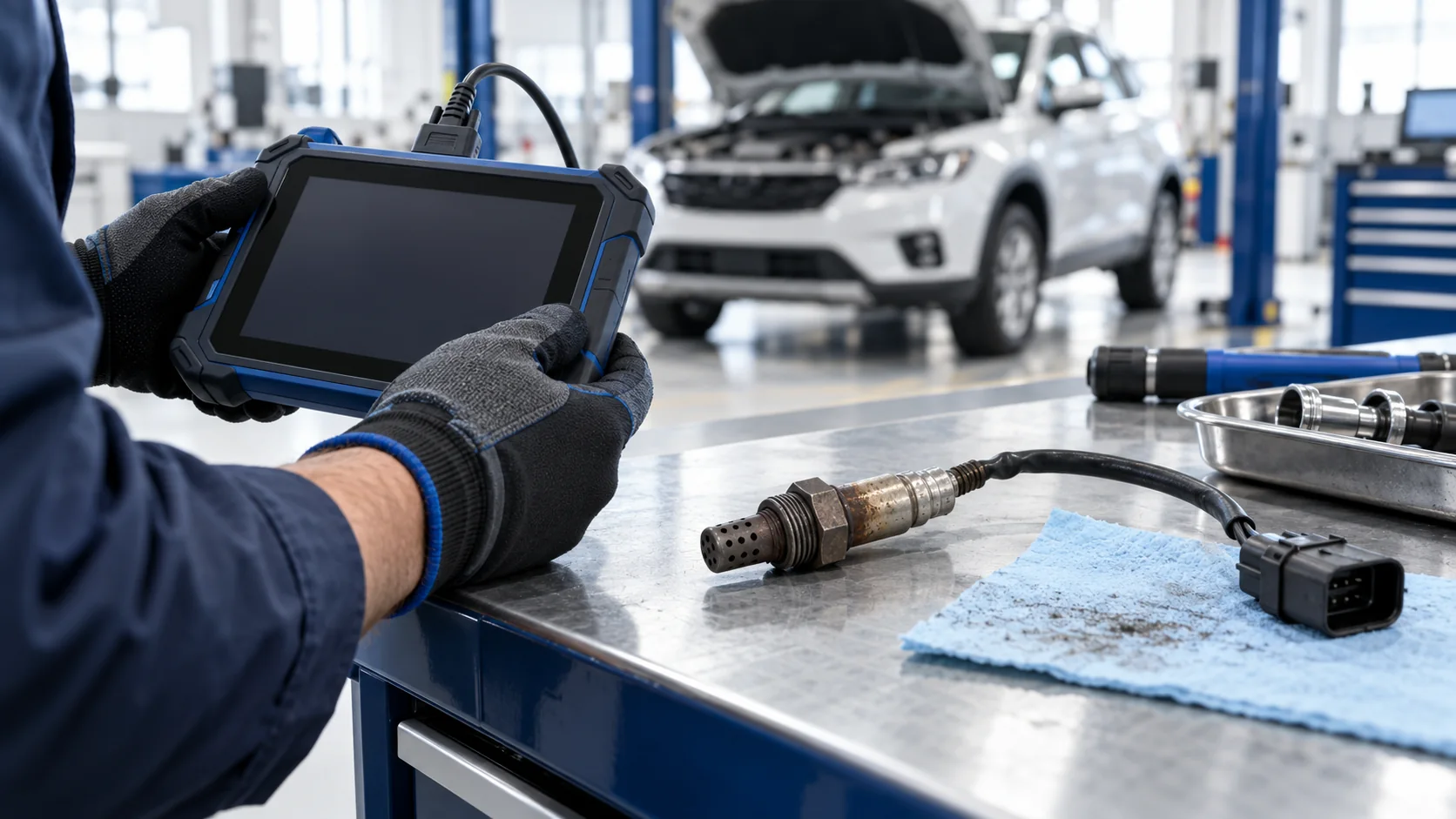
Respuesta rápida
Los códigos P0130-P0167 generalmente identifican un circuito de sensor de oxígeno, calentador, actividad o condición de respuesta para un banco y sensor determinados. No demuestran que el elemento sensor esté defectuoso. Diagnostique cableado, conectores, alimentación y tierra, fugas de escape, condiciones de mezcla y datos en vivo. P0420/P0430 se refieren a la eficiencia del sistema de catalizador y no deben tratarse como códigos automáticos de reemplazo del sensor de oxígeno.
Familias de códigos y la pregunta que cada una plantea
| Familia de ejemplo | Significado general | Primera pregunta de diagnóstico |
|---|---|---|
| P0130 / P0150 | Fallo en el circuito del sensor | ¿El circuito de señal está intacto y la condición del motor es plausible? |
| P0131-P0132 / P0151-P0152 | Señal baja o alta | ¿Es esto un límite eléctrico, una condición de mezcla real o contaminación? |
| P0133 / P0153 | Respuesta lenta | ¿Las condiciones de operación son correctas y hay fugas o fallos de combustible que ralentizan la transición observada? |
| P0134 / P0154 | No se detectó actividad | ¿El sensor está caliente, alimentado y conectado, y la señal llega al módulo? |
| P0135 / P0141 / P0155 / P0161 | Fallo del circuito del calentador | ¿Están dentro de las especificaciones la alimentación, masa, fusible, control y resistencia del calentador? |
| P0420 / P0430 | Eficiencia del catalizador por debajo del umbral | ¿Son válidas las condiciones del motor, escape, datos del sensor y del catalizador? |
La definición exacta y los criterios de habilitación varían según el fabricante. Siempre lea la descripción completa, los datos de congelación de imagen y el procedimiento de servicio del vehículo.
Decodifique Bank y Sensor antes de tocar una pieza
El banco 1 contiene el cilindro 1; el banco 2 es el banco opuesto cuando está presente. El sensor 1 está comúnmente antes del catalizador y el sensor 2 después. No use una regla universal del lado del conductor. Un diagnóstico correcto en el sensor físico equivocado sigue siendo una reparación incorrecta.
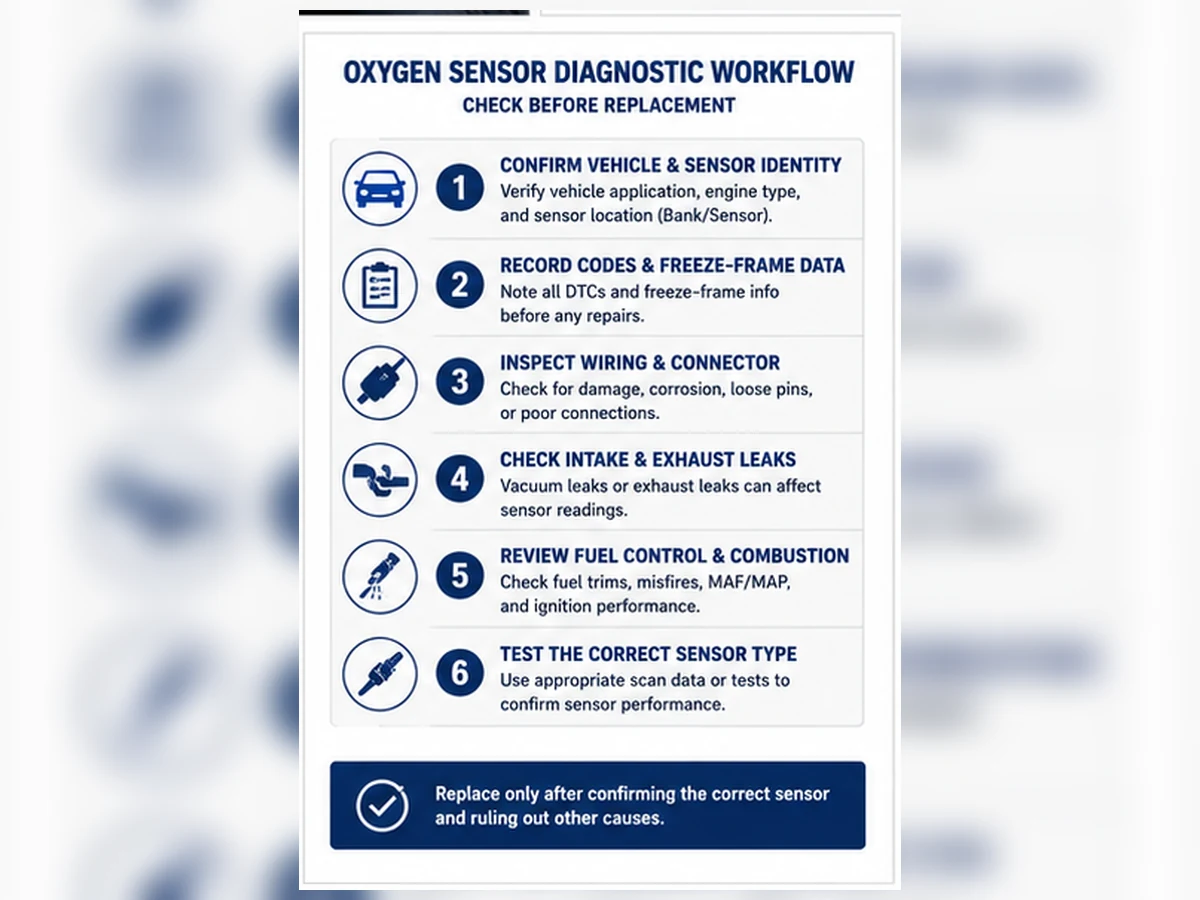
Un orden de diagnóstico de seis pasos
- Registre todos los códigos actuales, pendientes y permanentes, además de la congelación de imagen.
- Confirme el banco exacto, el sensor y la tecnología.
- Inspeccione el enrutamiento del arnés, el estado del conector y las fugas de escape.
- Pruebe la alimentación, la masa y el control del calentador cuando el código se refiera a la calefacción.
- Revise los trimados de combustible y el voltaje, la corriente o lambda del sensor según lo especificado.
- Repare la causa raíz y verifique el monitor sin dispositivos de derivación.
Por qué P0420 y P0430 requieren cuidado especial
Estos códigos evalúan el comportamiento del sistema catalizador utilizando varias condiciones y señales de sensores. Las fugas de escape, los fallos de encendido, los problemas de control de combustible, el sesgo del sensor y el deterioro del catalizador pueden afectar el resultado. Reemplazar un sensor aguas abajo sin validar su señal y el resto del sistema puede desperdiciar la oportunidad de reparación.
Acciones que no completan el diagnóstico
Borrar el código, desconectar la batería, instalar un espaciador o simulador, o reemplazar sensores repetidamente no establece la causa. Los controles de emisiones deben repararse cumpliendo con la ley aplicable. Utilice la información de código permanente y de preparación para verificar el proceso de reparación legal.
Lea cada DTC como sistema, posición y modo de falla
Una descripción completa del código combina el sistema monitoreado, la posición del banco/sensor y el modo de falla, como circuito bajo, circuito alto, sin actividad, respuesta lenta o fallo del calentador. El código indica qué ruta de prueba abrir. No identifica el sensor reemplazable como el punto de falla ni proporciona un número de pieza.
| Elemento del código | Pregunta respondida | Pregunta no respondida |
|---|---|---|
| Banco 1 / Banco 2 | ¿Qué banco del motor se monitorea? | Lado físico universal |
| Sensor 1 / Sensor 2 | Posición común pre/post catalizador | Conector exacto sin diagrama de servicio |
| Actividad baja/alta/sin actividad | Condición de señal detectada | Sensor versus cableado versus mezcla real |
| Circuito calefactor | Criterio de monitorización de ruta de calentamiento fallido | Elemento versus fusible/alimentación/tierra/control |
Significado diagnóstico de familias de códigos comunes
Fallo de circuito, códigos bajos y altos
P0130/P0150 y códigos relacionados de bajo/alto requieren comprobaciones de circuito y plausibilidad. Inspeccione los circuitos de señal y referencia, el estado del terminal y la evidencia de escape/mezcla. Un valor bajo puede reflejar una condición real de mezcla pobre; un valor alto puede reflejar una operación rica. Los límites eléctricos y las especificaciones de servicio controlan la distinción.
Respuesta lenta y sin actividad
P0133/P0153 y familias de sin actividad requieren temperatura de operación válida y criterios de habilitación. Verifique el funcionamiento del calentador, fugas, respuesta real de la mezcla y tasa de datos del escáner. Un PID plano no soportado no es prueba de un sensor muerto.
Códigos de calentador
P0135, P0141, P0155, P0161 y códigos relacionados abren una ruta del circuito del calentador. Pruebe la alimentación protegida, fusible, tierra/control, conector, arnés y elemento según el diagrama. La resistencia por sí sola no demuestra que se suministre potencia bajo carga.
Conserve la evidencia de fotograma congelado y preparación
Registre los códigos actuales, pendientes y permanentes antes de borrar. La imagen congelada muestra el estado del motor cuando el monitor detectó una falla y puede revelar contexto de arranque en frío, ralentí, carga o velocidad. El estado de preparación indica qué monitores se han completado. Borrar códigos elimina contexto útil y reinicia monitores, por lo que no debe ser la primera acción de diagnóstico.
| Registro | Por qué mantenerlo | Error común |
|---|---|---|
| Todos los códigos | Muestra patrones de potencia compartida, mezcla o fallo de encendido | Centrarse solo en un código de O2 |
| Fotograma congelado | Define las condiciones de detección | Borrar antes de guardar |
| Preparación | Muestra la finalización del monitor | Asumiendo que sin luz significa que todas las pruebas pasaron |
| DTC permanente | Requiere reparación confirmada por el monitor | Intentando borrarlo manualmente |
Confirme el circuito físico nombrado por el código
El banco 1 contiene el cilindro 1. El sensor 1 generalmente está antes del catalizador y el sensor 2 después. No use una regla universal del lado del conductor. Haga coincidir el código con el diagrama de escape y el enrutamiento del conector. Probar el sensor incorrecto puede producir mediciones técnicamente correctas para el circuito equivocado.
Seis comprobaciones antes de decidir sobre una pieza
- Confirme la definición del código y los criterios de habilitación para el vehículo exacto.
- Identifique el banco, la posición y la tecnología del sensor.
- Inspeccione el conector, los terminales, el enrutamiento del calor y las fugas de escape.
- Pruebe los circuitos del calentador y de señal con el diagrama correcto.
- Compare los ajustes de combustible, el estado comandado y la respuesta del sensor.
- Repare la causa raíz y verifique el monitor legalmente.
| Modo de fallo | Primera comprobación física | Comprobación del sistema requerida |
|---|---|---|
| Calentador | Arnés, conector y alimentación protegida | Control/tierra bajo condiciones especificadas |
| Señal baja/alta | Integridad de señal/referencia | Condición real rica/pobre y fugas |
| Sin actividad | Conexión y funcionamiento del calentador | PID compatible y temperatura de operación |
| Respuesta lenta | Contaminación e integridad del escape | Respuesta específica de tecnología controlada |
P0420/P0430 son una ruta separada del sistema de catalizador
Estos códigos evalúan la eficiencia del sistema catalizador utilizando el comportamiento aguas arriba/aguas abajo bajo condiciones definidas. Pueden verse afectados por deterioro del catalizador, fugas de escape, fallos de encendido, problemas de control de combustible y sesgo del sensor. No pertenecen a la familia de circuitos de sensores P0130-P0167 y no deben convertirse en un pedido de sensor aguas abajo sin validación.
Elija herramientas según la pregunta
Herramienta de escaneo
Úselo para códigos, fotograma congelado, preparación, ajustes y datos de sensores compatibles. Confirme unidades y tasa de muestreo. Un gráfico aún necesita condiciones de operación conocidas.
Multímetro y osciloscopio
Use un multímetro para comprobaciones de alimentación, tierra, continuidad o resistencia especificadas, y un osciloscopio donde se requiera detalle de forma de onda. Evite métodos de prueba que expandan terminales o dañen circuitos de banda ancha.
Verificaciones de fugas y mecánicas
Las fugas de admisión o escape, el suministro de combustible, el encendido y el estado del motor pueden crear el comportamiento de escape reportado. Use métodos seguros y apropiados para la aplicación y repare estas condiciones antes de condenar el sensor.
Escenario compuesto: un código de calentador sobrevive al reemplazo del sensor
Escenario de diagnóstico compuesto: Se instala un sensor nuevo para P0141, pero el código regresa. El diagrama de cableado correcto y la prueba con carga muestran falta de alimentación en el conector debido a cableado dañado por calor. Reparar y reubicar el arnés restaura el circuito. Este ejemplo compuesto no es un caso de Sunhyings ni evidencia para un vehículo específico.
Verifique el monitor original, no solo la luz de advertencia
Después de la reparación, confirme el enrutamiento físico, la función del circuito y los datos en vivo plausibles. Complete las condiciones de monitoreo requeridas por el fabricante de manera segura y legal. Un código permanente puede permanecer hasta que el monitor pase. La desconexión de la batería, el borrado repetido, los espaciadores, los simuladores o la derrota del software no demuestran la reparación y pueden interferir con el cumplimiento de emisiones.
Cree un registro de reparación que pueda resistir una reclamación
Guarde el estado del código original, la imagen congelada, las lecturas del circuito, los hallazgos de fugas o mezcla, la posición física, el componente reparado y los datos posteriores a la reparación. Incluya fotos del conector y el enrutamiento cuando haya calor o movimiento intermitente involucrado. Si el código regresa, este registro evita que el proceso de diagnóstico se reinicie con otro reemplazo de sensor no compatible.
Para una devolución de piezas, agregue la base OE/aplicación, la pieza y lote entregados, la posición de instalación y los resultados del circuito del lado del vehículo. Un sensor devuelto no puede juzgarse de manera justa cuando el vendedor recibe solo el número de código. Separe el error de catálogo, el daño de instalación, la causa raíz no resuelta, el cableado del vehículo y la no conformidad del producto.
Cuando aparecen varios códigos de sensor de oxígeno juntos
Busque suministros compartidos, tierras, daños en el arnés o condiciones generales de mezcla rica/pobre antes de tratar cada código como un sensor defectuoso independiente. Múltiples códigos de calentador pueden apuntar a un suministro protegido; múltiples códigos relacionados con la mezcla pueden apuntar a causas de aire, combustible o escape. El diagrama de cableado y el conjunto completo de códigos determinan si las fallas comparten una ruta.
Un código que cambia de actual a histórico o desaparece después de borrarse no necesariamente ha pasado su monitor. Registre cómo cambia el estado a través de las condiciones de conducción especificadas y si la preparación se completa. Las fallas intermitentes de calor o vibración pueden requerir observación durante el calentamiento y el movimiento del arnés utilizando métodos seguros. La verificación debe reproducir la pregunta del monitor, no simplemente producir un tablero limpio.
Cómo leer un DTC de sensor de oxígeno sin convertirlo en un pedido de piezas
Un código OBD-II nombra un circuito monitoreado, comportamiento de señal o resultado del sistema. No contiene la tecnología del sensor, conector, longitud del cable, rosca, calibración o número de reemplazo verificado. Comience escribiendo la descripción completa del código, el estado y las condiciones de la imagen congelada. Luego, mapee la identidad del Banco y del Sensor utilizando información de servicio antes de tocar un conector.
El rango familiar P0130-P0167 incluye preocupaciones de circuito de señal, bajo/alto voltaje, respuesta lenta, sin actividad y circuito de calentador en dos bancos y dos posiciones de sensor. Los códigos específicos del fabricante y las estrategias de banda ancha/A/F pueden usar diferentes descripciones y pruebas. La familia de códigos es un índice de enrutamiento, no una especificación de prueba universal.
| Familia de códigos | Preocupación de monitoreo | Verificaciones antes del reemplazo | Conclusión falsa común |
|---|---|---|---|
| P0130 / P0150 | Mal funcionamiento del circuito del sensor 1 | Conector, circuitos de señal/referencia, fugas de escape, estado y respuesta de la mezcla | “Circuito” siempre significa que el elemento sensor está abierto |
| P0131 / P0151 | Indicación baja del sensor 1 | Condición pobre real, cortocircuito en la señal, integridad de referencia y fuga previa al sensor | Un voltaje bajo siempre indica un motor funcionando pobre o un sensor defectuoso |
| P0132 / P0152 | Indicación alta del sensor 1 | Operación rica real, cortocircuito en la señal, presión de combustible, evidencia de inyector y purga | Un voltaje alto siempre significa que el sensor está atascado |
| P0133 / P0153 | Respuesta lenta | Temperatura de funcionamiento, fugas de escape, contaminación, condiciones de prueba y circuito | Un gráfico de escaneo lento demuestra el envejecimiento |
| P0134 / P0154 | No se detectó actividad | Habilitar condiciones, funcionamiento del calentador, circuitos de señal/referencia y soporte de datos | Un valor plano siempre proviene del sensor |
| P0135 / P0155 | Circuito del calentador del sensor 1 | Fusible, alimentación cargada, control/tierra, conector y resistencia/corriente especificada | Cada código de calentador requiere un sensor |
| P0136 / P0156 | Fallo en el circuito del sensor 2 | Exposición del arnés trasero, conector, integridad del circuito y condición del escape | Un código de circuito trasero es un veredicto del catalizador |
| P0137 / P0157 | Indicación baja del sensor 2 | Circuito de señal, fugas, mezcla real y condiciones del monitor | Reemplazar el sensor trasero sin verificar fugas de escape |
| P0138 / P0158 | Indicación alta del sensor 2 | Señal corta, condición rica real, contaminación y circuito | Un valor rico fijo demuestra fallo del catalizador |
| P0139 / P0159 | Sensor 2 respuesta lenta | Procedimiento de monitoreo exacto, temperatura, fugas y respuesta del sensor/circuito | Compare el sensor trasero directamente con la conmutación delantero en todo momento |
| P0140 / P0160 | Sensor 2 sin actividad | Habilitar condiciones, ruta de señal, conector y funcionamiento del calentador | Ninguna conmutación visible es siempre anormal para un sensor trasero |
| P0141 / P0161 | Circuito del calentador del sensor 2 | Alimentación protegida, control/tierra, conector y arnés cerca del escape | Reemplace primero y pruebe el circuito después |
Los códigos actuales, pendientes y permanentes responden a diferentes preguntas
Un código actual o confirmado indica que el monitor ha cumplido su lógica de confirmación. Un código pendiente puede preservar una falla temprana antes de la confirmación. Un código permanente se retiene bajo la lógica OBD regulada hasta que el sistema observe la operación exitosa requerida; no es necesariamente evidencia de que la reparación falló inmediatamente después del reemplazo de piezas. Las definiciones y el comportamiento de borrado varían según la regulación y la estrategia del vehículo, así que use el escáner y la información de servicio correctamente.
| Registro | Lo que contribuye | Lo que no puede probar |
|---|---|---|
| Estado del código | Si la falla está pendiente, confirmada o retenida como permanente | Qué componente físico causó la condición |
| Fotograma congelado | Carga, velocidad, temperatura y otras condiciones capturadas en el momento de la falla | Cada cambio que ocurrió antes o después de la captura |
| Preparación | Si los monitores relevantes se han completado desde el reinicio o la reparación | Que un sistema incompleto ha pasado |
| Modo 6 o datos de monitoreo | Resultados y límites de monitoreo compatibles con el fabricante, cuando estén disponibles | Un diagnóstico universal sin identificación y escalado correctos de la prueba |
| Datos en vivo | Comportamiento durante estados operativos controlados | Causa sin contexto de circuito, motor y escape |
Ruta de decisión para código de calentador
El calentador lleva el elemento sensor a la temperatura de funcionamiento y ayuda a mantenerla en condiciones de bajo flujo de escape. Según el diseño, el módulo de control puede monitorear resistencia, corriente, voltaje o tiempo de actividad. Comience con el diagrama correcto y la identificación de pines. Verifique el fusible o la alimentación compartida, pero no se detenga en la continuidad. Una conexión corroída puede pasar una prueba de medidor de baja corriente y fallar bajo la carga del calentador.
- Confirme que el código nombra el banco, sensor y circuito de calentador exactos.
- Inspeccione el arnés desde el conector hasta el mazo protegido, especialmente cerca de protectores y componentes móviles.
- Verifique la alimentación y el control o la conexión a tierra bajo las condiciones y carga especificadas.
- Mida la resistencia o corriente del lado del sensor solo con la temperatura y los límites especificados.
- Verifique los circuitos compartidos y los códigos relacionados antes de reemplazar una pieza aislada.
- Después de la reparación, confirme el funcionamiento del calentador y supervise la finalización en lugar de solo borrar la memoria.
Ruta de decisión para código de señal
Para códigos de baja, alta, lenta o sin actividad, determine si el módulo de control está viendo una condición real de escape. Inspeccione en busca de fugas antes del sensor y compare los trim de combustible, flujo de aire, temperatura del refrigerante, presión de combustible y evidencia de fallos de encendido. Verifique la integridad de la señal y la referencia. Luego aplique una prueba de mezcla rica/pobre o de respuesta correcta tecnológicamente bajo las condiciones de temperatura y operación requeridas.
No realice pruebas con back-probe ni aplique voltaje a menos que el procedimiento de servicio lo permita. Los circuitos de control de banda ancha pueden dañarse o malinterpretarse con hábitos de prueba de banda estrecha. Un medidor gráfico o escáner es útil solo cuando se comprenden su elemento de datos, escala y tasa de muestreo.
P0420 y P0430 son códigos de eficiencia del sistema catalizador
P0420 y P0430 indican que el monitor del catalizador ha evaluado la eficiencia por debajo de su umbral calibrado para el banco nombrado. El monitor utiliza información del sensor de oxígeno, pero el código no dice “reemplace el sensor de oxígeno aguas abajo”. Fallos de encendido, control de mezcla, contaminación por aceite o refrigerante, fugas de escape, sensores incorrectos, problemas de calibración y condición del catalizador pueden ser relevantes. Diagnostique primero las fallas relacionadas y siga el procedimiento del monitor del catalizador del fabricante.
| Evidencia | Por qué es importante | Límite |
|---|---|---|
| Códigos relacionados de fallo de encendido o control de combustible | Pueden dañar o distorsionar el rendimiento del catalizador | Repararlos no demuestra automáticamente la salud del catalizador |
| Inspección de fugas de escape | El oxígeno externo puede alterar el comportamiento del sensor | Una inspección visual puede pasar por alto una fuga que se abre en caliente |
| Identificación correcta del sensor | La tecnología o posición incorrecta puede invalidar la monitorización | Un conector que encaja no es prueba de calibración |
| Datos aguas arriba/aguas abajo | Admite análisis de monitoreo en condiciones válidas | Una captura de pantalla inactiva no es una prueba completa del catalizador |
| Evidencia de consumo de aceite/refrigerante | La contaminación puede afectar el sensor y el catalizador | El color del depósito por sí solo no es un análisis de laboratorio |
Caso compuesto: dos códigos de calentador y una falla de suministro compartido
Escenario de ingeniería compuesto: Dos sensores en bancos diferentes establecen códigos de calentador después de trabajos en el tren de rodaje. Reemplazar un sensor no cambia ninguno de los códigos. El diagrama de cableado muestra una alimentación protegida compartida por ambos calentadores. Una prueba de voltaje con carga encuentra una conexión de alta resistencia en una unión perturbada. La reparación restaura la corriente a ambos circuitos y los monitores se completan.
La pista importante es el patrón de falla común. Dos piezas pueden fallar, pero un circuito compartido merece examen antes de pedir dos componentes independientes. Este es un ejemplo de diagnóstico compuesto, no un caso de cliente de Sunhyings.
Caso compuesto: un pedido de sensor trasero fue detenido por evidencia anterior
Escenario de ingeniería compuesto: Un vehículo presenta P0420 sin código de circuito del sensor de oxígeno. La reparación propuesta es un sensor aguas abajo porque su gráfica se mueve. La revisión encuentra historial de fallos de encendido intermitentes y corrección excesiva de combustible en el banco monitoreado. El equipo corrige la falla del motor, verifica el sellado del escape y vuelve a ejecutar el monitor del catalizador antes de tomar una decisión sobre el catalizador o el sensor trasero.
Una señal trasera móvil no es por sí misma prueba de un sensor trasero defectuoso, y una señal trasera estable no es prueba universal de un buen catalizador. Los criterios de habilitación del monitor y el procedimiento del vehículo controlan la interpretación. Este escenario es compuesto y no contiene tasa de reparación reclamada ni identidad del cliente.
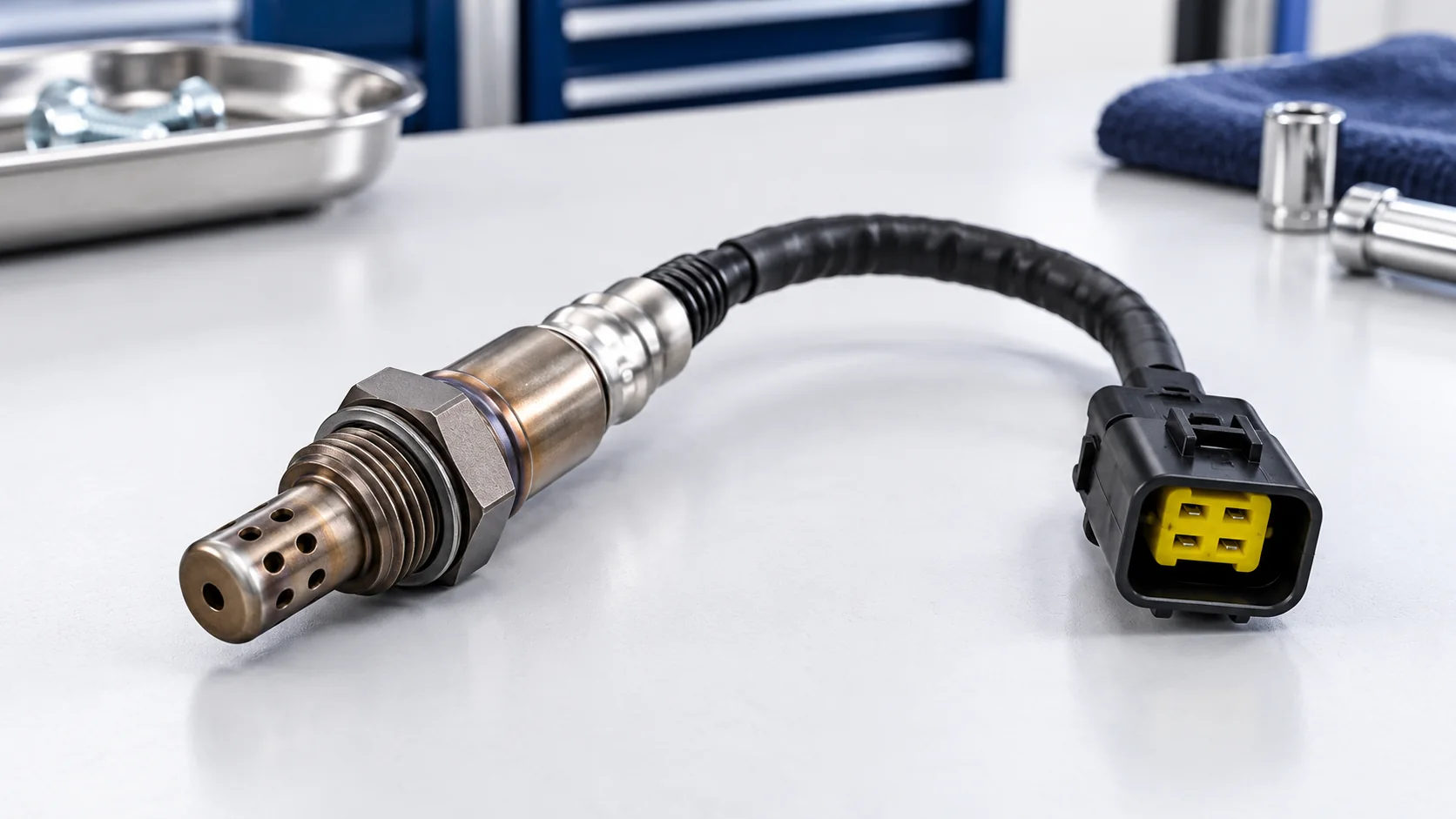
Crear un registro de prueba de DTC que sobreviva al traspaso
Un diagnóstico de código a menudo se mueve entre un conductor, mostrador de piezas, taller y proveedor. Cada traspaso puede perder contexto. Use un registro compacto que vincule el código con el circuito físico y las condiciones bajo las cuales falló. Las capturas de pantalla sin identidad del vehículo o etiquetas de elementos de datos son evidencia débil; los valores sin unidades o condiciones de operación pueden ser peores que ningún dato.
| Campo de registro | Contenido mínimo | Razón |
|---|---|---|
| Identidad del vehículo | VIN/YMME, motor y paquete de emisiones/mercado | Determina cableado, lógica del monitor y ajuste |
| Identidad del código | Número, descripción completa, estado y módulo | Evita que la abreviatura cambie la ruta de prueba |
| Condiciones de fallo | Imagen congelada, temperatura, carga, velocidad y estado del combustible cuando estén disponibles | Permite la reproducción en condiciones válidas |
| Identidad física | Banco/Sensor asignado al conector y posición de escape | Evita probar o reemplazar el sensor incorrecto |
| Resultados del circuito | Pin, método, carga, valor medido, unidad y fuente de especificación | Hace que la evidencia eléctrica sea revisable |
| Contexto del sistema | Evidencia de fugas, fallos de encendido, combustible, flujo de aire y códigos relacionados | Separa la información precisa del sesgo del sensor |
| Resultado de la respuesta | Tecnología, estado operativo, estímulo y comportamiento observado | Evita que se aplique una expectativa de banda estrecha a una banda ancha |
Límite entre recambios y comercio electrónico
Un catálogo puede traducir un vehículo verificado y una referencia OE en piezas candidatas. No puede diagnosticar el vehículo a partir de P0135, P0141 o P0420. El contenido del producto debe explicar la evidencia necesaria para la selección y no debe usar frases como “este código significa que necesita este sensor”. Para devoluciones, conserve lo que seleccionó el comprador, qué revisión del catálogo se utilizó y si la pieza entregada coincidió con el registro solicitado.
Cuando se haya instalado un sensor, investigue en lugar de rechazar o aprobar automáticamente la reclamación. Confirme la aplicación exacta, la posición, la compatibilidad eléctrica, el enrutamiento del arnés y los resultados de las pruebas. Un resultado de banco sin fallas no prueba por sí mismo que el diagnóstico del vehículo fuera incorrecto; igualmente, un código recurrente no prueba que la pieza de repuesto esté defectuosa.
Límite de cumplimiento de emisiones después de un DTC
El objetivo legal de la reparación es restaurar el sistema diseñado de detección, control de combustible y monitoreo del catalizador. No instale un simulador de O2, eliminación de sensor, defouler o espaciador para manipular un monitor, y no desactive códigos en el software. Estos enfoques no corrigen fallas en el circuito, motor o catalizador y pueden violar la ley de emisiones. El “uso fuera de carretera” no es una exención universal. Siga los requisitos de la EPA/CARB en los Estados Unidos y la autoridad aplicable en otros mercados.
Tras una reparación legítima, puede permanecer un código permanente o una preparación incompleta hasta que el vehículo complete la secuencia de monitoreo requerida. Eso no es permiso para omitir el monitor. Utilice el procedimiento de servicio, confirme que se pueden cumplir las condiciones de habilitación e investigue cualquier falla actual o pendiente que regrese.
Elija herramientas según la pregunta, no según lo que sea más fácil de conectar
Una herramienta de escaneo responde lo que informa el módulo de control. Un multímetro digital puede probar voltaje, resistencia o continuidad cuando se usa dentro de los límites del circuito. Un medidor gráfico u osciloscopio puede revelar sincronización y comportamiento intermitente. Una máquina de humo puede ayudar a localizar fugas de admisión o escape cuando se usa de manera segura y según el procedimiento del sistema. Ninguna es una fuente universal de verdad: cada herramienta tiene límites de frecuencia de muestreo, carga, acceso e interpretación.
| Pregunta | Método útil | Contexto requerido | Uso incorrecto a evitar |
|---|---|---|---|
| ¿Detectó el módulo una falla monitoreada? | Escaneo completo de código/estado/preparación | Módulo correcto y descripción completa | Lectura de un solo código genérico y borrado del historial |
| ¿Puede el circuito del calentador soportar corriente? | Prueba especificada de tensión/corriente bajo carga | Diagrama, distribución de pines, estado de funcionamiento y carga segura | Usar solo la continuidad como prueba de la capacidad del circuito |
| ¿Cambia la mezcla notificada? | Datos de escaneo o forma de onda técnicamente correctos | Estado en caliente, estímulo conocido y parámetro admitido | Esperando que cada sensor conmute 0-1 V |
| ¿Es una falla intermitente? | Graficación, movimiento del arnés y reproducción de la condición | Sondeo protegido y datos operativos con marca de tiempo | Perforar el aislamiento o cortocircuitar terminales sin reparación |
| ¿Podría el aire exterior afectar la señal? | Inspección de fugas en frío/caliente mediante método aprobado | Ubicación del escape, temperatura y ventilación | Aplicar presión insegura o ignorar una fuga que se abre en caliente |
| ¿Es el sensor el reemplazo correcto? | Catálogo controlado, comparación OE/aplicación y física | Vehículo, posición y tecnología exactos | Tratar la descripción del código de una herramienta como una búsqueda de pieza |
Escriba la fuente de la especificación junto a cada valor de aprobado/fallo. Una resistencia medida tiene poco valor diagnóstico sin la temperatura del sensor, la configuración del multímetro y el límite aplicable. Asimismo, una captura de forma de onda necesita base de tiempo, escala, estado de funcionamiento e identidad de canal. Esta disciplina mejora el E-E-A-T porque el lector puede ver cómo se acotó una conclusión en lugar de pedirle que confíe en una recomendación de pieza.
Decisión final: reparar, reemplazar, monitorear o continuar el diagnóstico
Elija el reemplazo solo cuando se identifique el sensor exacto y la evidencia respalde una falla del lado del sensor que el circuito del vehículo, el escape y el contexto del motor no expliquen. Repare el cableado, los conectores, las fugas o las fallas del motor cuando esas pruebas fallen. Continúe el diagnóstico cuando los resultados entren en conflicto o no se cumplan las condiciones de habilitación del servicio. Después de cualquier reparación, documente la misma familia de códigos, datos y estado del monitor para que la comparación antes y después responda la pregunta original.
Si la evidencia respalda el reemplazo, el DTC aún no identifica la pieza vendible. Realice una verificación de ajuste por separado utilizando la referencia OE, vehículo y motor, configuración de mercado o emisiones, banco y posición exactos, tecnología, conector, asignación de pines, longitud del cable y clips de enrutamiento. Esta separación entre diagnóstico y ajuste evita que una decisión de reparación correcta se convierta en un pedido de posición incorrecta.
Prepare una solicitud de ajuste o abastecimiento
Envíe el número OE, año/marca/modelo, detalles del motor o VIN, mercado y paquete de emisiones, posición exacta del banco/sensor, fotos del conector y de la pieza antigua, cantidad y cualquier requisito de embalaje o aprobación. Sunhyings revisará los datos proporcionados para determinar la capacidad y viabilidad de abastecimiento; el ajuste no se confirma hasta que se coteje la evidencia de aplicación.
Preguntas frecuentes
¿P0135 siempre significa que el calentador del sensor de oxígeno está defectuoso?
No. El elemento calefactor, fusible, cableado, conector, alimentación, tierra o circuito de control pueden ser los responsables.
¿Significa P0133 que el sensor debe ser reemplazado?
No. Primero confirme las condiciones de operación, la integridad del escape, el control de la mezcla y la prueba de respuesta especificada.
¿Es P0420 un código de sensor de O2?
Es un código de eficiencia del sistema catalizador que utiliza datos del sensor de oxígeno; no demuestra que un sensor de oxígeno haya fallado.
¿Puedo borrar el código para probar la reparación?
Registre primero los datos de diagnóstico. Siga el procedimiento del vehículo, ya que borrar códigos puede eliminar evidencia y restablecer los monitores de preparación.
¿Qué significa Banco 1 Sensor 2?
Comúnmente se refiere al sensor post-catalizador en el banco que contiene el cilindro 1, sujeto a confirmación específica del vehículo.