A threaded flange is a pipe flange with internal tapered threads that screws onto a matching threaded pipe end, creating a removable connection without welding. In real plant work, threaded flanges are most valuable on small-bore lines where hot work is restricted, shutdown time is limited, or future disassembly is expected. This guide is written for engineers, maintenance planners, QA/QC teams, and shutdown crews who need practical installation and leak-prevention guidance, not just a product overview.
The most important engineering point is that a threaded flange joint has two sealing paths, not one. The first is the thread helix between the pipe and the flange bore. The second is the gasketed flange face between the mating flanges. A joint can feel mechanically tight and still leak if the thread system is wrong, the sealant is unsuitable, or bolt load across the flange face is uneven.
Before installation, confirm four things: the thread system (NPT, BSPT, or another taper-thread standard), the flange face type (RF, FF, or RTJ where applicable), the gasket and sealant compatibility with the service, and whether the piping code actually permits threaded joints in that location. These checks prevent most of the rework seen during shutdowns and commissioning.
- What are threaded flanges?
- NPT vs BSPT compatibility and standards
- How threaded flanges solve problems
- When to use threaded flanges
- Threaded flange installation guide
- Maintenance and troubleshooting
- Public case examples and references
- FAQ
What are threaded flanges?
Threaded flange definition
A threaded flange is a type of pipe flange that connects to a pipe using internal threads instead of a weld. The pipe end is machined with external tapered threads; when you screw the flange onto this threaded end, the thread engagement provides mechanical retention and creates a potential sealing path at the thread helix. A gasket is then placed between mating flanges to complete the flange-face seal.
Threaded flanges are especially common on small-diameter lines, utility services, instrument tie-ins, and locations where welding is difficult, restricted, or temporarily not permitted. They are not a universal substitute for welded flanges. For severe cyclic loading, high vibration, or repeated thermal cycling, welded connections are often the more reliable long-term choice.
Tip: Threaded flanges are available in ASME rating classes, but allowable working pressure depends on material grade and temperature tables, not class number alone. Always confirm code and service limits before selecting the class. For context, review ASME B16.5.
NPT vs BSPT compatibility and standards
Why thread compatibility matters more than many teams expect
Threaded flanges are popular because they combine weld-free installation with standardized dimensions and sealing faces. But in field execution, the highest rework risk is usually not the flange class. It is the thread system mismatch, especially NPT vs BSPT or other project-specific taper-thread systems.
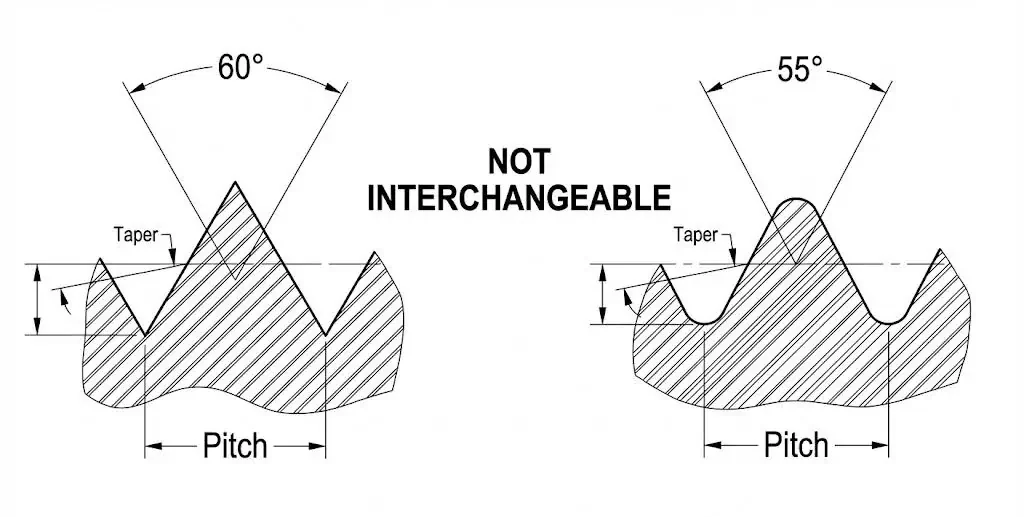
From an engineering review perspective, threaded flange selection should be tied to three standards categories:
- Flange dimensional and rating standard, such as ASME B16.5
- Thread system standard, such as ASME B1.20.1 for NPT
- Assembly and workmanship controls, including bolting, sealant application, and leak testing practices
In practical shutdown work, a simple field control is to confirm thread designation on drawings and MTOs, then verify with gauges during receiving inspection and pre-install checks. This is often enough to prevent the “looks-tight but still leaks” problem that happens when NPT and BSPT are mixed.
| Thread System | What It Controls | Why It Matters |
|---|---|---|
| NPT | Taper, pitch, angle, and gauge practice for North American taper threads | Common on industrial threaded flanges and small-bore threaded systems |
| BSPT / ISO taper thread | Different angle and profile from NPT | Can start by hand and still leak under pressure if mixed with NPT |
| Flange facing standard | RF / FF / RTJ geometry and gasket suitability | The face must match the gasket and mating flange |
| Project code / piping class | Where threaded joints are permitted | High-vibration or severe cyclic service may favor welded alternatives |
For supporting references during engineering review, teams commonly check ASME B16.5, ASME B1.20.1, and project-specific thread references such as ISO 7-1 / EN thread references.
Material compatibility and galling risk
The material grade affects corrosion life, torque margin, and galling tendency. In threaded systems, leaks often occur not because the thread design is bad, but because the material was mismatched to the environment or the mating part.
| Material Type | Typical Standard Family | Practical Selection Notes |
|---|---|---|
| Carbon Steel | ASTM A105, A350, A694 | Good for general utility service; protect against corrosion in wet duty |
| Alloy Steel | ASTM A182 | Used where higher temperature or strength matters |
| Stainless Steel | ASTM A182 | For chloride exposure, 316/316L is often preferred over 304/304L, depending on service |
| Duplex Steel | ASTM A182 | Higher strength and better SCC resistance in tougher environments |
| Nickel Alloys | ASTM B160, B166, B564 | Selected for severe corrosion or high-temperature service |
- The material grade determines mechanical strength, corrosion resistance, and service life.
- For stainless threaded joints, plan for galling control with clean threads, correct sealant, and controlled assembly torque.
- For product and material context, see our flange materials guide.
How threaded flanges solve problems
Fast, weld-free installation when controls are in place
Engineers choose threaded flanges when they need a weld-free connection that can be installed with controlled workmanship. Internal threads in the flange bore match the external threads on your pipe. After confirming thread type and cleaning the threads, apply a compatible sealant, screw the flange into position, and align the mating flange. There is no weld prep, no heat input, and no post-weld NDT planning.
These advantages matter during short shutdown windows or when ignition-risk controls restrict hot work. For hot-work risk context, review OSHA hot work guidance.
Field example – repair under hot-work restriction: A plant instrument air manifold needed a quick isolation spool replacement in a zone where hot work permits were delayed. The joint was completed using threaded flanges after thread verification and sealant selection, and the leak test passed on the first attempt. The key controls were clean threads, correct thread system confirmation, and even bolt loading at the flange face, not extra torque on the threads.
Easy maintenance and replacement
Threaded flanges make maintenance easier because removal does not require cutting or weld removal. When you need access to a valve, strainer, or spool piece, the flange can be unscrewed instead of cut out. This reduces hot work in operating plants and shortens shutdown windows.
Field example – stainless galling during disassembly: On a 316 stainless small-bore drain, a threaded flange seized during removal after multiple heat cycles. The root cause was thread galling from dry assembly and minor contamination. Corrective action was to replace the flange and pipe nipple, clean the threads, apply a compatible anti-seize or sealant, and control assembly torque.
Leak prevention benefits through two-seal-path thinking
The most reliable field approach is to treat the threaded flange joint as two separate sealing systems: the thread helix and the gasketed flange face. Both must be controlled.
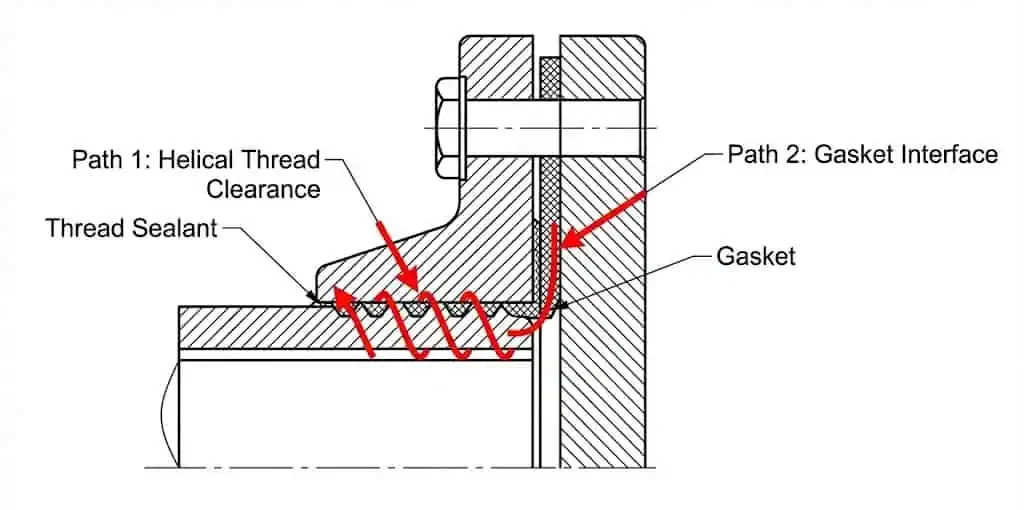
- Thread system control: confirm NPT vs BSPT or other taper-thread systems; tapered threads are not automatically interchangeable.
- Thread condition: clean, undamaged threads; reject flattened or torn threads.
- Sealant selection: choose PTFE tape or compound approved for your medium and temperature.
- Face + gasket match: RF/FF/RTJ must match the mating flange and gasket design.
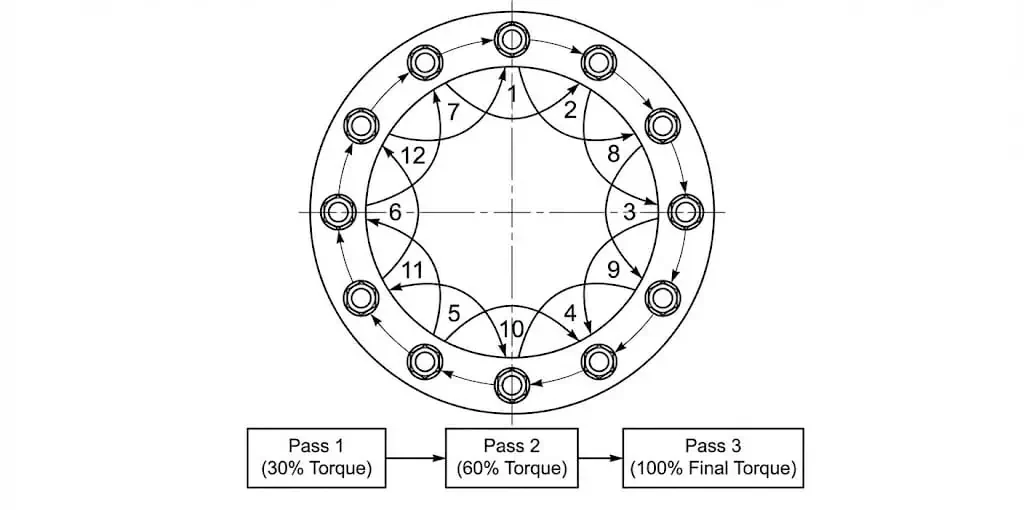
- Bolting method: tighten in a cross pattern in multiple passes; uneven compression is a common cause of flange-face seepage.
Field example – thread mismatch that “almost fit”: A shutdown crew installed a threaded flange that started by hand but wept during hydrotest. The root cause was mixed thread systems with similar OD but different angle and pitch. The fix was to replace the parts with the correct thread system and implement receiving gauge checks.
Versatile applications with limits engineers should respect
Threaded flanges are used across many industries because they provide a practical balance between speed and maintainability. They are often selected for chemical processing, water treatment, oil and gas utilities, and food production systems, especially on small-bore lines where future access is expected and hot work restrictions apply.
- Compared with fully welded joints, threaded joints are more sensitive to vibration and bending loads.
- Repeated thermal cycling can relax sealing stress and amplify minor workmanship issues.
- In stainless systems, galling can make disassembly difficult and reduce reusability.
Field example – vibration-related weeping: A threaded flange on a pump-skid instrument line developed intermittent leakage after weeks of operation. The root cause was vibration plus insufficient line support. Corrective action was to add proper support near the connection and replace gasket and sealant. Preventive action was to avoid threaded joints on high-vibration zones where welded alternatives are feasible.
When to use threaded flanges
Best use cases
Threaded flanges are most suitable when you need reliable, weld-free connections on small-bore piping and can control thread compatibility, sealing practice, and support conditions.
- Emergency repairs that require immediate restoration of service
- Piping systems in hazardous or flammable environments where hot work is restricted
- Temporary installations, test loops, and skid-mounted equipment
- Small-diameter piping where vibration is controlled and code permits threaded joints
- Projects where welding equipment or qualified welders are not readily available
Considerations and limitations
Before selecting a threaded flange, evaluate design conditions, line-opening controls, and long-term maintenance plans.
| Consideration | Description |
|---|---|
| Material Selection | Match medium, temperature, corrosion conditions, and galling risk |
| Dimensions | Verify flange size, schedule compatibility, face type, and bolt pattern standard |
| Quality Assurance | Confirm compliance to project standard; include thread and face inspection |
| Service Severity | High vibration, severe cyclic loading, and frequent thermal cycling often favor welded flanges |
| Cost | Balance purchase price with maintenance risk, leak criticality, and rework probability |
- Ensure full compatibility between the pipe thread and flange thread.
- Specify gasket material and thickness based on medium, pressure, and temperature.
- Use the recommended bolt tightening sequence and staged passes to avoid uneven gasket loading.
Threaded flange installation guide
Preparation and tools
Good preparation and the right tools are essential for a safe, leak-free threaded flange installation. A large percentage of field rework happens before bolting starts: mixed thread systems, damaged threads, wrong gasket/facing combinations, or poor line-opening controls.
- Inspect the threaded flange for damage and ensure the internal threads and sealing face are clean.
- Check the pipe end for correct thread form and cleanliness; remove rust, paint overspray, and debris.
- Confirm line isolation and leak-test method before disassembly.
- Gather approved thread sealant, correct gasket, suitable bolts/nuts, proper wrenching tools, and PPE.
Always clean the pipe ends thoroughly and inspect all threads before starting work. This reduces the risk of galling, cross-threading, and leakage.
Step-by-step process
- Clean the pipe ends to remove rust, dust, paint, and other debris.
- Inspect threads on both the pipe and inside the flange for damage or mismatch; verify thread system if there is any doubt.
- Apply PTFE tape or approved thread compound to the male pipe threads in the direction of tightening.
- Screw the flange on by hand until snug; do not cross-thread.
- Use a wrench to bring the flange to final position; do not use excessive force to mask a mismatch.
- Insert a new, clean gasket centered on the flange face; confirm facing type matches the gasket design.
- Insert bolts and nuts, then tighten in a crosswise pattern in multiple passes to achieve even gasket compression.
- Perform leak testing per project procedure after assembly and again after thermal stabilization where required.
Thread sealant practice
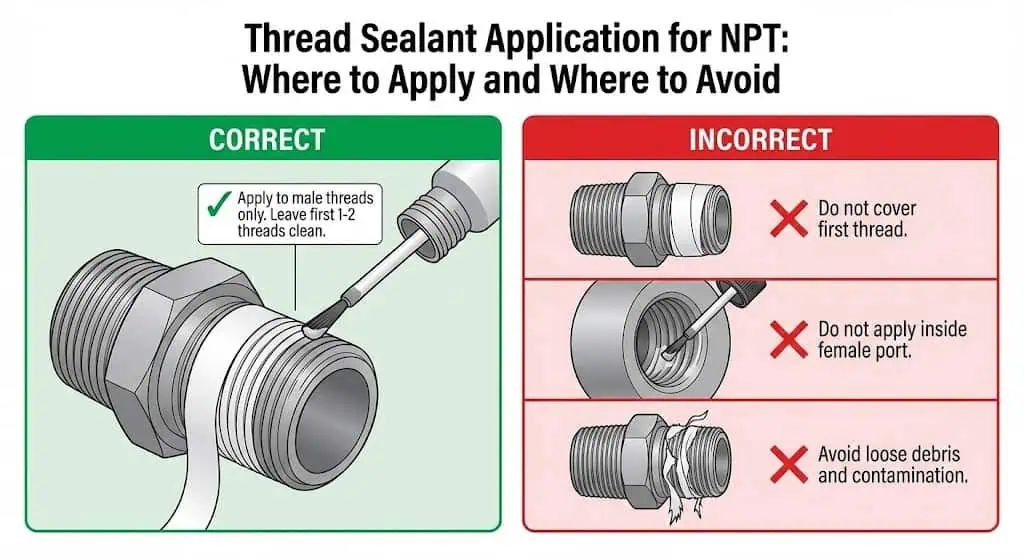
Engineer’s Tip on Sealants:
1. PTFE Tape: Good for general water and air; acts as a lubricant.
2. Pipe Dope (Paste): Better for vibration resistance and void filling.
3. Hybrid Method: In selected higher-pressure services, some fitters use a thin layer of paste over the tape, subject to project rules and media compatibility.
Maintenance and troubleshooting
Regular inspection and simple maintenance routines extend the life of threaded flanges and reduce unplanned outages. The most useful troubleshooting habit is to identify the leak source first: thread area vs flange face.
- Inspect for weeping at both the threads and flange face before re-tightening anything.
- Check bolt tightness periodically where vibration exists.
- Clean flange and bolting surfaces to reveal early corrosion or leak tracks.
- Apply protective coatings on external surfaces in corrosive environments, without contaminating sealing faces or threads.
- Replace components if you find cracked faces, distorted sealing surfaces, severe corrosion, or damaged threads.
- After repairs or modifications, pressure test to verify joint integrity.
| Symptom | Likely Cause | Corrective Action |
|---|---|---|
| Weeping at thread area | Thread mismatch, damaged threads, wrong or insufficient sealant | Disassemble, verify thread system, clean threads, reassemble with approved sealant; replace damaged parts |
| Leak at flange face | Uneven bolt load, wrong gasket, face mismatch | Replace gasket, verify facing, tighten in cross pattern with staged passes |
| Seized during disassembly | Stainless galling, contamination, over-torque | Replace affected parts; enforce clean-thread and anti-galling practice on next install |
| Recurring leaks after weeks | Vibration, support issue, or thermal cycling | Add support/restraint; reassess whether a threaded joint is appropriate in that zone |
Public case examples and references
Public incident investigations consistently show that joint integrity is not only a component issue; it is also a workmanship, isolation, and line-opening control issue. These references are included to strengthen engineering decision-making and site procedure discipline.
- Line opening and flange disconnection hazards: CSB reports include cases where workers were injured while disconnecting flanged connections because isolation conditions were not fully controlled. See CSB incident report collection.
- Hot work restriction context: OSHA guidance explains why some repairs are planned around no-hot-work conditions. See OSHA hot work guidance.
- Major incident context for screwed connections and vibration: Public investigation material from major incidents reinforces why vibration and support review matters in threaded systems. See major incident investigation report.
Practical takeaway: threaded flange performance is not just about the thread. It depends on how the joint is selected, installed, supported, inspected, and maintained throughout its service life.
For detailed product context, continue with:
- threaded flange product specifications
- flange standards overview
- flange materials guide
- ASME B16.5 explained
FAQ
What are the main benefits of using threaded flanges?
The main benefits are weld-free installation, faster tie-ins on small-bore lines, and easier future removal.
In practice, these benefits hold when thread type is verified, sealant is compatible with service, and vibration/support is controlled.
Can you use threaded flanges for high-pressure systems?
Threaded flanges can be used only when the piping code allows them and the correct rating class, material, and temperature limits are met.
For very high pressure, high temperature, severe cyclic duty, or strong vibration, welded alternatives are often preferred.
How do you prevent leaks with threaded flanges?
Control two sealing zones: the thread helix and the flange face.
Verify NPT vs BSPT, clean the threads, use approved sealant, match gasket to flange facing, and tighten bolts evenly in a staged cross pattern.
NPT vs BSPT: how do you avoid thread mismatch on site?
Confirm thread designation on drawings and verify it with gauges before assembly.
NPT and BSPT are both tapered but differ in thread angle and pitch; a connection may start by hand but still leak under pressure or after temperature cycling.
Do you need seal welding on threaded flanges?
Only if required by the project specification or code practice.
Seal welding may reduce leakage through the thread helix, but it must be executed correctly and it complicates future disassembly.
Can threaded flanges be reused after maintenance?
Sometimes, but only after inspection.
Reuse depends on thread condition, flange-face condition, service severity, and site QA requirements. In stainless systems, galling or thread damage often makes replacement the safer choice.