Selecting the right Blind Flange is an engineering decision about containment, not just procurement by size. A blind flange closes the end of a nozzle, valve, or piping line and must resist internal pressure, flange face distortion, gasket compression loss, and assembly errors. In practical plant work, blind flange problems usually do not start with “wrong diameter.” They start with a mismatch in standard, facing, gasket type, bolting practice, or external corrosion risk.
If your project follows ASME B16.5, remember what the standard actually governs: pressure-temperature ratings, materials, dimensions, tolerances, marking, testing, and even recommendations regarding bolting, gaskets, and flange joints. If your material is stainless steel, forged flange and fitting materials are commonly specified to ASTM A182/A182M. If your site controls assembly through structured bolting procedures, the usual reference point is ASME PCC-1.
This guide is written for the real selection question: how do you choose a blind flange that will seal during isolation, survive hydrotest, and not become the leak point after start-up? The answer is to match the flange to the service case, the governing standard, the gasket-facing system, and the inspection/reuse reality on site. If you need reference data for drilling, bolt circles, and blind flange thickness, use the dedicated ASME flange dimensions resource or the site’s ASME B16.5 standard guide as your dimensional checkpoint, not a generic summary table copied from unrelated systems.
Quick Selection Checklist (The 5-Point Rule)
Before placing an order or releasing a blind flange for installation, verify these five points. Missing any one of them can turn a correct-looking flange into a repeat leak problem.
- Standard Compatibility: Confirm whether the mating flange follows ASME B16.5, ASME B16.47, BS EN 1092-1, JIS, or another project standard. Do not assume “4 inch” and “DN100” are interchangeable. Bolt circle, hole count, facing geometry, and thickness rules may differ.
- Real Duty Case: Define whether the blind flange is for temporary maintenance isolation, hydrotest, transport protection, or permanent future tie-in. The service purpose changes the priority between reusability, corrosion resistance, and gasket strategy.
- Pressure-Temperature Envelope: Select the class or PN by the actual operating or test condition, not by habit. Pressure class is not a shortcut for “safe enough” unless it is checked against the correct material group and temperature range.
- Facing + Gasket + Bolting Match: Raised Face (RF), Flat Face (FF), and Ring Type Joint (RTJ) are not interchangeable sealing systems. The wrong facing-gasket combination creates leakage risk even when the flange body is correctly rated.
- Inspection and Reuse Risk: If the blind flange will be removed later, verify whether the face condition, flatness, corrosion level, and bolt engagement history support safe reuse. Repeatedly reinstalling a damaged blind flange is a common shutdown mistake.
| Decision Factor | What It Controls | Why It Matters in the Field |
|---|---|---|
| Pipeline Size and Standard | Dimensional interchangeability and bolt pattern | Standard mismatch is one of the fastest ways to create site rework. |
| Flange Material | Corrosion resistance, strength retention, lifecycle cost | The right internal-media material can still fail early if the external environment is ignored. |
| Flange Dimensions | OD, thickness, bolt circle, facing geometry, stud length window | Blind flange stiffness and correct stud engagement directly affect sealing reliability. |
| Pressure-Temperature Rating | Allowable service envelope | Class name alone is not the answer; temperature and material group matter. |
| Compatibility With Gaskets & Bolting | Sealing stress, assembly repeatability, leak resistance | Most repeat leaks are joint-system failures, not flange-body failures. |
For teams handling purchasing and field installation, the safest habit is to write the flange description as a full engineering callout rather than a short material note. Example: ASME B16.5, NPS 4, Class 300, RF, ASTM A182 F316L Blind Flange. That description gives purchasing, QA, and site personnel the same reference point.
Blind Flange Applications: Isolation & Testing
Purpose And Function
You should select blind flanges based on the duty they must perform as a removable pressure boundary. In real plant service, three application cases appear most often, and each one puts different stress on the selection logic:
- Temporary Isolation for Maintenance: Used to isolate a section of piping so valves, instruments, or downstream equipment can be opened safely. Here the priority is predictable sealing, safe removal later, and low risk of face damage during repeated shutdowns.
- Permanent Closure / Future Tie-In: Installed on headers, spare branches, and manifold ends where future expansion is planned. In this case, long-term corrosion resistance and identification/traceability are often more important than initial cost.
- Hydrostatic Pressure Testing: Used as a temporary test boundary. The blind flange must tolerate the hydrotest condition without excessive center deflection, gasket blowout, or permanent loss of flatness.
Blind flanges are also used for contamination control, protection during storage or shipment, and controlled commissioning steps. What changes from case to case is not the flange name, but the real engineering priority: isolation reliability, reusability, corrosion margin, or test boundary performance.
Field example 1 — maintenance isolation: A blind flange was reused during a valve replacement shutdown because the flange body showed no cracks and the material grade was still correct. The joint leaked during restart. Root cause was not the flange class; it was deep radial face scoring from previous gasket removal. The repair required face refinishing and gasket replacement. Lesson: “no crack” is not an inspection criterion. Face condition is part of flange fitness for reuse.
Pressure And Temperature Requirements
You must match the blind flange to the actual pressure-temperature case, including abnormal but intended conditions such as hydrotest or heat-up after restart. The class or PN designation is only useful when read together with the applicable material group and temperature table.
For ASME-based systems, ASME B16.5 defines rating classes and covers blind flanges as well as flange bolting and gasket considerations. For EN-based systems, BS EN 1092-1 covers PN-designated steel flanges, including dimensions, facings, pressure/temperature ratings, bolting, marking, inspection, and testing. The selection rule is simple: use the project standard that governs the mating component, then check the exact pressure-temperature table for the chosen material group.
Blind flanges deserve extra caution because they are solid closures rather than flow-through components. Under pressure, the center of the flange behaves like a loaded plate. That is why a blind flange that “matches the line size” but is chosen loosely on standard or class can distort, lose gasket seating stress, or create start-up leakage even when it survived initial assembly.

| Rating System | What You Verify | Engineering Use Note |
|---|---|---|
| ASME Class | Applicable B16.5/B16.47 class and material group table | Use the pressure-temperature table for the actual material, not just the class name. |
| EN/DIN PN | PN designation, facing form, drilling pattern, temperature rating | Check against the mating part; do not assume ASME equivalence by nominal size. |
| Project Hydrotest Case | Temporary test pressure, gasket suitability, bolt load control | Hydrotest is often the highest intended pressure case the blind flange sees. |
Field example 2 — hydrotest selection error: A blind flange was chosen because the nominal size matched the spool and the team assumed the test would be brief enough that “any matching blind” would do. The flange did not fail structurally, but the joint leaked during pressure hold because the gasket was not selected for the test assembly condition and bolt load was applied unevenly. Root cause: the team selected by size and class label only, not by full joint system.
Environmental And Industry Standards
You need to select blind flanges for the outside environment as well as the inside medium. This is where lifecycle failures often begin. A flange that is acceptable for non-corrosive media can still deteriorate quickly if it sits under wet insulation, in coastal air, or in chloride-contaminated washdown conditions.
Corrosion Under Insulation (CUI): Carbon steel blind flanges on dead-legs and future tie-ins are classic hidden-risk items. Water ingress under damaged insulation can attack the flange body and bolting for years with no visible warning until insulation is removed.
Chloride Exposure and SCC Risk: Standard austenitic stainless steels are not automatically immune in chloride service. Nickel Institute guidance notes that chloride stress corrosion cracking in austenitic stainless steels frequently occurs in the higher-temperature region of roughly 80°C and above. That does not mean all 316L blind flanges fail at 80°C; it means temperature, chlorides, stress state, and crevice conditions must be reviewed together.
For general stainless selection, Outokumpu’s 316L/4404 data describes 316L as a low-carbon molybdenum-alloyed austenitic stainless steel used in aggressive environments and common across process industries, including flanges and valves. That makes 316L a strong default candidate for many corrosive outdoor or washdown applications, but still not a substitute for checking chlorides, crevice geometry, insulation condition, and maintenance access.
| Material | Corrosion Direction | Typical Blind Flange Use Note |
|---|---|---|
| Carbon Steel (e.g., A105) | Economical but vulnerable without coating/corrosion management | Suitable where media and external environment are controlled; review CUI risk carefully. |
| Stainless Steel (e.g., A182 F304L / F316L) | Better corrosion resistance and easier lifecycle control | Often preferred for washdown, outdoor duty, aggressive media, and future tie-ins that must remain removable. |
| Duplex Stainless | Higher strength with stronger chloride resistance in many services | Useful where both strength and chloride resistance are needed; check system compatibility and fabrication practice. |
| Alloy Steel | Strength retention at elevated temperature | Used when temperature performance matters; corrosion resistance still depends on the actual environment. |
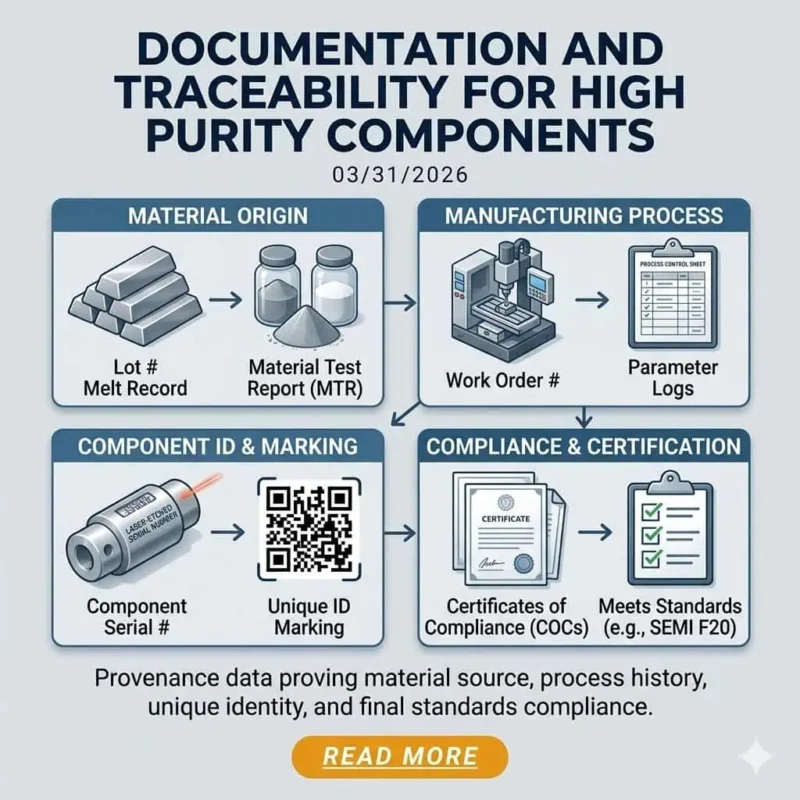
You should also verify whether the project specification requires ASME, EN, ASTM, or customer-specific material traceability, marking, PMI, or MTC rules. Selection mistakes at this stage often show up later as procurement delays or field non-conformance rather than immediate leaks.
Field example 3 — future tie-in under insulation: A carbon steel blind flange installed for future expansion met the piping class at handover. Several years later, insulation removal during tie-in planning revealed extensive external corrosion on the blind and studs. The issue was not internal media compatibility; it was the combination of outdoor exposure, trapped moisture, and no inspection interval for an idle line end.
ASME B16.5 Dimensions & Pressure Ratings
Flange Dimensions And Fit
You must match blind flange dimensions to the governing flange standard and the mating component, not just the pipe size. For ASME systems, ASME B16.5 flange guidance and the site’s flange dimensions reference are the right places to verify bolt circle, drilling, facing, and blind flange thickness. The dimensional check should always include:
- Nominal size and standard (NPS/DN + ASME/EN/JIS/project requirement)
- Outside diameter and blind flange thickness
- Bolt circle, number of bolt holes, and bolt-hole diameter
- Facing type and face finish requirement
- Stud size, length, and nut engagement after tightening
Blind flanges deserve tighter dimensional discipline than many people expect because the joint has no pipe bore to “hide” poor fit-up. If the facing is wrong, if the gasket seating width is unsuitable, or if stud length is marginal, the problem shows up quickly during tightening or pressure-up.

| Dimension Check | Why It Affects Performance | Site Inspection Question |
|---|---|---|
| Blind flange thickness | Controls stiffness and center deflection under load | Is the thickness consistent with the governing standard and class? |
| Bolt circle and hole pattern | Controls interchangeability and loading symmetry | Does the blind align freely with the mating flange without forcing bolts? |
| Facing geometry | Controls gasket seating area and compression behavior | Is the actual face RF, FF, or RTJ as specified? |
| Stud length | Controls nut engagement and final clamp load reliability | Will at least full engagement be visible after tightening? |
Material Selection For Blind Flanges
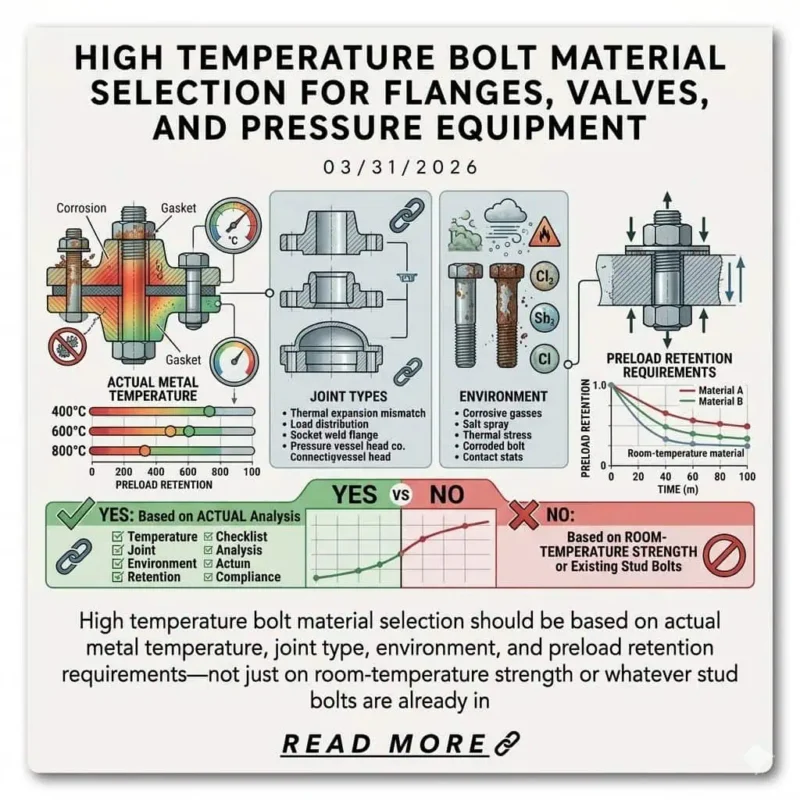
You should choose blind flange material by combining media chemistry, temperature, external corrosion exposure, fabrication route, and future maintenance needs. Stainless steel is often selected for blind flanges not only because of media resistance, but because it improves the odds that the flange can still be removed cleanly after years in service.
For forged stainless blind flanges, ASTM A182/A182M is the common specification basis for alloy and stainless steel flanges, forged fittings, and valves/parts for high-temperature service. Where 316L is under consideration, the Outokumpu 316L/4404 range information is useful because it highlights the role of molybdenum alloying, low carbon content, and typical use across aggressive process environments.
| Material | Corrosion Resistance Properties | Engineering Use Note |
|---|---|---|
| Stainless Steel (304L/316L) | Good general corrosion resistance; 316/316L performs better than 304L in many chloride-bearing services because of Mo alloying. | 316L is often the safer lifecycle choice for outdoor, washdown, and chemical duties, but chloride crevices and temperature still need review. |
| Duplex Stainless | Higher strength with stronger chloride resistance in many applications | Useful where both mechanical margin and chloride resistance are needed; check fabrication and material matching across the joint. |
| Alloy Steel (F11/F22) | Strength retention at elevated temperature | Selected when higher temperature duty governs; corrosion allowance and inspection still matter. |
| Carbon Steel (A105) | Cost-effective but dependent on coatings and environment control | Works well in non-corrosive service with proper corrosion management; future tie-ins under insulation need special caution. |
If the service is humid, marine, or chloride-bearing, material selection should be coordinated with the bolting and maintenance plan. A stainless blind flange with unsuitable bolting, poor lubrication control, or chloride-contaminated storage can still become a problem joint.
Pressure Rating And Standards
You must select blind flanges under the correct dimensional and rating standard, then verify the service case with the relevant pressure-temperature tables. For ASME work, blind flanges fall under the same standard framework as other flanges in ASME B16.5, which explicitly includes blind flanges, flange bolting, gasket considerations, and flange joints. For EN-based projects, use BS EN 1092-1 for PN-based steel flange selection and compatibility checks.
A good engineering rule is to separate three questions clearly:
- Which standard governs the geometry?
- Which material specification governs the flange forging or plate material?
- Which operating or test condition governs the final joint selection?
When those three questions are answered together, blind flange selection becomes much more repeatable and less dependent on site guesswork. When they are mixed together loosely, the result is usually one of three problems: ordering the wrong drilling pattern, installing the wrong facing/gasket combination, or assuming the class label alone guarantees performance.
Gasket Selection & Installation
Gasket And Component Matching
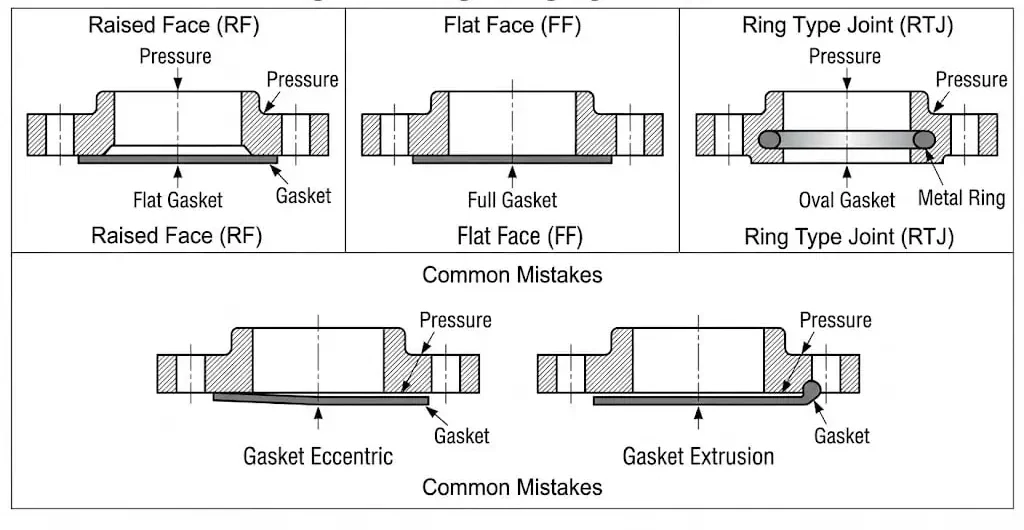
You ensure reliable sealing by treating the blind flange, gasket, studs, nuts, lubrication, and tightening method as one assembly system. The blind flange does not seal on its own. It seals because the assembly develops and retains enough gasket seating stress without overloading the face or losing clamp load during operation.
For RF joints, spiral wound gaskets remain a common choice in process service. For FF joints, full-face soft gasket solutions are often used to protect the flange rim and distribute compression more evenly. For RTJ joints, the ring and groove geometry must match exactly, and ring reuse policy should follow site procedure.
- Facing vs gasket type: Do not pair a gasket style to a face form by habit. Confirm the actual seating geometry and service severity.
- Chemical and temperature compatibility: PTFE-based options can be excellent in many chemical services, but creep and temperature limits matter. Graphite performs well at higher temperatures, but oxidation risk and assembly control still matter.
- Bolting grade: Select stud and nut materials to match the service environment and the site’s assembly method. Corrosion on bolting can ruin a good flange selection.
- Stud engagement: Full engagement after tightening is a basic but frequently missed check on shutdown jobs.
If you want a general technical reference for spiral wound gasket configurations used on flange joints, official Flexitallic resources such as Style CG and Style CGI are useful for understanding how outer/inner ring design relates to centering, compression control, and blowout resistance. They are not a substitute for project spec approval, but they are a practical technical reference when teams need to visualize gasket form differences.
| Service Condition | Common Facing | Typical Gasket Direction | Engineering Watch-Out |
|---|---|---|---|
| General water / utility service | FF or RF | Soft gasket or service-approved general gasket | Overtightening soft gaskets can distort the joint and shorten service life. |
| Steam / elevated temperature | RF | Graphite-based or spiral wound solutions | Heat-up can relax clamp load; assembly discipline matters. |
| Chemical duty | RF or FF | Chemically compatible PTFE-based or composite solution | Do not choose by chemistry alone; temperature and creep matter too. |
| Severe duty / higher pressure | RF or RTJ | Spiral wound or RTJ system as specified | Installation method, face condition, and groove accuracy determine success. |
Engineering reality: when a blind flange leaks repeatedly after gasket replacement, the next place to look is usually clamp load uniformity, face condition, and external pipe strain—not “trying another gasket brand” first.
Maintenance And Service Life
You extend blind flange service life through repeatable installation practice, corrosion control, and inspection before reuse. Blind flanges often remain untouched for long periods, so hidden deterioration can progress without obvious symptoms—especially on dead-legs, standby branches, hydrotest closures kept in storage, or insulated outdoor lines.
Use these best practices to reduce leak recurrence and premature replacement:
- Inspect before reuse: Check face flatness, radial scoring, pitting, bolt-hole condition, and any local distortion. A straight-edge check is basic but valuable.
- Protect machined faces: Use face protection during storage and transport. Many shutdown leak problems begin before installation because faces were damaged in laydown areas.
- Use controlled tightening: Multi-pass cross-pattern tightening aligns with ASME PCC-1 assembly principles for pressure-boundary flange joints.
- Control external corrosion: For insulated or outdoor service, review coating condition, water traps, drainage, and inspection intervals.
- Record what was installed: Gasket type, stud grade, lubrication condition, torque/stress method, and any special assembly notes should be documented if the joint may be reopened later.
| Cause of Failure | Description | What You Check On Site |
|---|---|---|
| Improper Installation | Uneven or inadequate clamp load causes leakage. | Tightening sequence, lubrication, pass count, and stud engagement. |
| Improper Material Selection | Corrosion or loss of performance in the actual service environment. | Media chemistry, chlorides, insulation condition, temperature, maintenance interval. |
| Inadequate Inspection | Face damage and local distortion go unnoticed until startup. | Flatness, radial scratches, pitting, bolt-hole elongation, protective covers. |
| Corrosion / CUI | External corrosion attacks idle or insulated blind flanges over time. | Moisture traps, damaged cladding, coating breakdown, coastal exposure. |
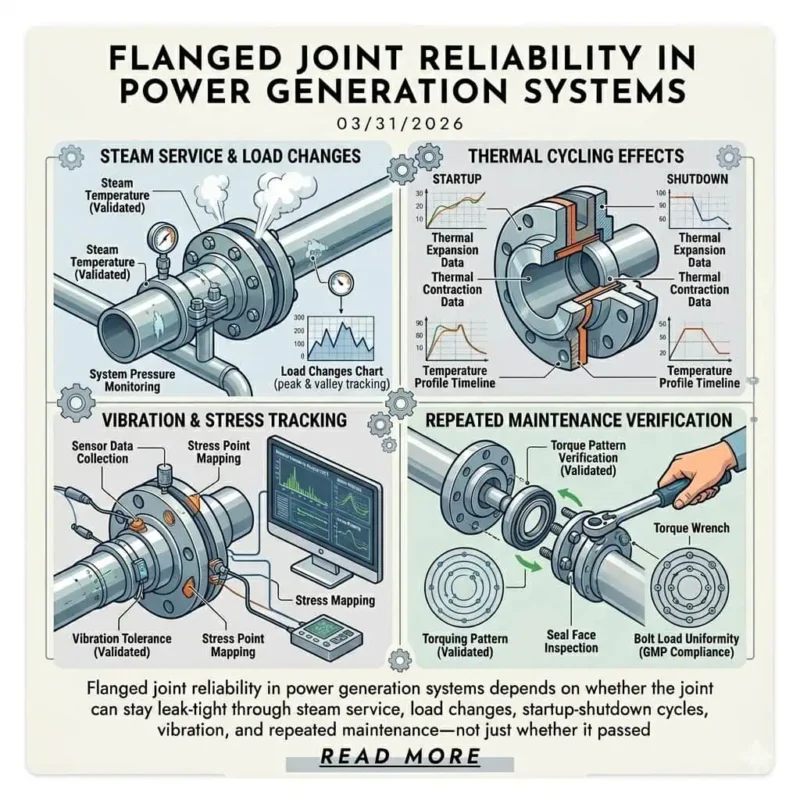
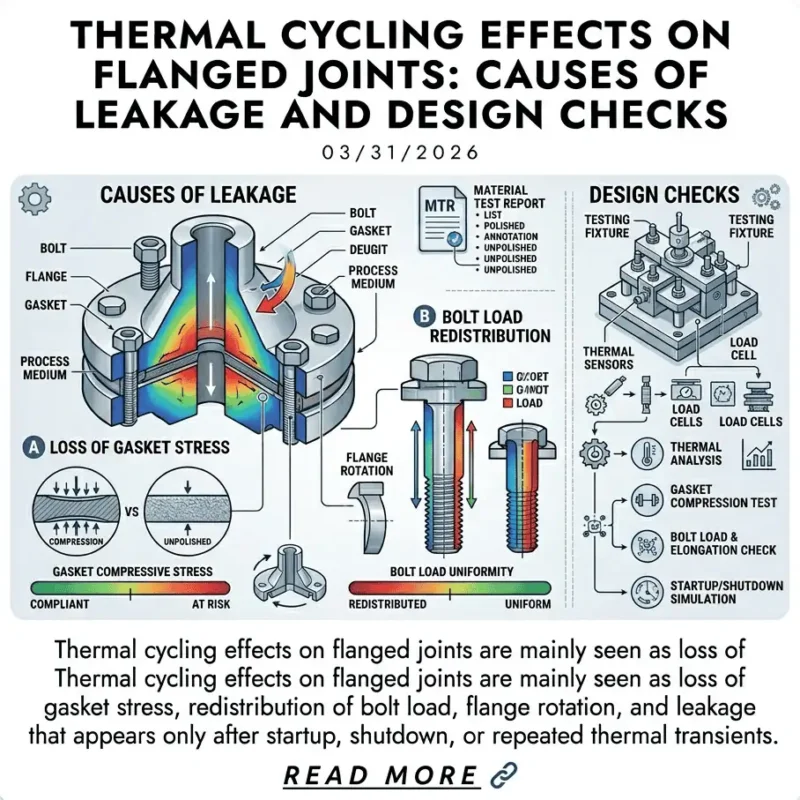
| Thermal Cycling | Heat-up and cooldown reduce effective gasket stress. | Leak history after temperature swings, gasket suitability, retightening procedure limits. |
| Mechanical Vibration | Vibration reduces clamp stability and accelerates leakage. | Support condition, adjacent rotating equipment, line movement. |
| Improper Gasket Installation | Wrong size, wrong type, or off-center positioning creates leak paths. | Gasket ID/OD, centering, seating condition, handling damage. |
| Excessive Piping Loads | External bending distorts the joint. | Alignment, support adequacy, pipe strain, nozzle load transfer. |
To choose blind flanges correctly, follow a simple engineering sequence.
- Define the service purpose: isolation, future tie-in, hydrotest, or storage protection.
- Confirm standard, size, rating, and facing against the mating flange.
- Check the actual pressure-temperature or test condition using the governing standard tables.
- Select the material for both internal media and external environment.
- Choose gasket and bolting as part of the same sealing system.
- Plan inspection, installation method, and whether reuse is permitted.
If you need a supply reference for stainless blind flanges, review the Blind Flange product page. If your question is dimensional or standard-specific, route readers to the ASME B16.5 guide, the flange dimensions data page, the Raised Face vs Flat Face flange comparison, or the Blind Flange vs Spectacle Blind comparison depending on the reader’s actual next step.
FAQ
What is the main purpose of a blind flange?
A blind flange provides a removable pressure boundary at the end of a pipeline, nozzle, valve, or branch connection.
It is commonly used for maintenance isolation, hydrotest closure, transport protection, and future tie-ins. The key engineering requirement is not only closure, but reliable sealing under the actual pressure, temperature, gasket, and bolting conditions.
How do you select the correct material for a blind flange?
Select the material by reviewing the internal medium, operating temperature, external environment, and maintenance/reuse expectation together.
Carbon steel may be suitable for controlled non-corrosive service, but outdoor, insulated, washdown, or chloride-bearing duties often justify stainless steel. In higher-temperature service, alloy steels may be needed for strength retention. Material selection should align with the project standard and material specification, such as ASTM A182 for forged stainless or alloy grades.
Can you reuse a blind flange after removal?
Yes, but only after inspection shows the flange is still fit for service.
Check face flatness, seating surface damage, corrosion pits, bolt-hole condition, and any local distortion. If the previous joint leaked, reuse should not be automatic. The cause of the leakage should be identified before the flange goes back into service.
Why does a blind flange leak after start-up even when it passed the initial pressure test?
Most repeat leaks come from clamp load loss, gasket relaxation, face damage, or poor load distribution rather than from flange-body failure.
Heat-up, thermal cycling, uneven tightening, insufficient lubrication control, and reused damaged faces are all common causes. Review assembly practice, gasket suitability, face condition, and external piping strain before blaming the flange material or class.
How do you avoid ordering the wrong blind flange standard?
Specify the blind flange as a full engineering callout, not by size and material alone.
Example: ASME B16.5, NPS 4, Class 300, RF, ASTM A182 F316L Blind Flange. This reduces ambiguity in standard, drilling pattern, facing, pressure class, and material grade. If the mating equipment is EN-based, specify the correct EN standard and PN designation instead of mixing ASME and EN terminology.
What gasket type is commonly used with blind flanges?
The gasket type depends on facing style, service severity, media chemistry, and assembly method.
RF joints commonly use spiral wound or other process-approved gasket types, FF joints often use full-face soft gasket styles, and RTJ joints require the correct ring-and-groove system. The right question is not “which gasket is most common?” but “which gasket matches this facing, this temperature, this medium, and this tightening method?”