








الدليل الفني لحساس الأكسجين
تعرف على كيفية قيام مستشعر الأكسجين بالإبلاغ عن الأكسجين في العادم إلى وحدة التحكم الإلكترونية (ECU)، وكيف يختلف المستشعر العلوي عن السفلي، وما يجب التحقق منه قبل التشخيص أو الاستبدال.

إجابة سريعة
يقوم مستشعر الأكسجين بقياس الأكسجين المتبقي في غاز العادم ويرسل إشارة كهربائية إلى وحدة التحكم في المحرك. تستخدم وحدة التحكم التغذية الراجعة من المستشعر العلوي لتقييم وضبط الاحتراق، بينما تُستخدم المستشعرات السفلية عادةً لمراقبة أداء المحفز. يقدم المستشعر دليلاً؛ فهو لا يضيف وقودًا مباشرةً، أو يصلح مشكلة خليط، أو يثبت أي مكون تعطل. يعتمد التفسير الصحيح على ما إذا كان المستشعر ضيق النطاق، أو عريض النطاق/نسبة الهواء إلى الوقود، أو التيتانيا، وما إذا كان قبل المحفز أو بعده، وما إذا كان المحرك قد وصل إلى حالة التشغيل المطلوبة. قبل الاستبدال، حدد البنك والموضع الدقيقين، وافحص الدائرة والعادم، وقارن تصحيحات الوقود والاستجابة الحية بمعلومات خدمة السيارة.
مسار الإشارة: العادم، الحساس، وحدة التحكم الإلكترونية، والتحكم في الوقود
يترك الاحتراق كمية متغيرة من الأكسجين في العادم. يتفاعل مستشعر مثبت في مجرى العادم مع ذلك الأكسجين وينتج إشارة جهد أو تيار. تفسر وحدة التحكم في المحرك الإشارة مع مدخلات الحمل ودرجة الحرارة وتدفق الهواء وتصحيح الوقود وغيرها. على محرك دافئ في وضع الحلقة المغلقة، يمكن للوحدة تصحيح أمر الحاقن للحفاظ على الاحتراق قريبًا من هدفه المقصود.
هذه حلقة تغذية راجعة، وليس نظام قياس مستقل. يمكن أن يؤدي تسرب السحب، أو انخفاض ضغط الوقود، أو مشكلة الحاقن، أو تسرب العادم، أو خلل في الأسلاك إلى تغيير إشارة المستشعر دون أن يكون عنصر الاستشعار هو السبب الجذري.
وظيفة الحساسات العلوية والسفلية
| الموضع | المهمة النموذجية | حدود التشخيص |
|---|---|---|
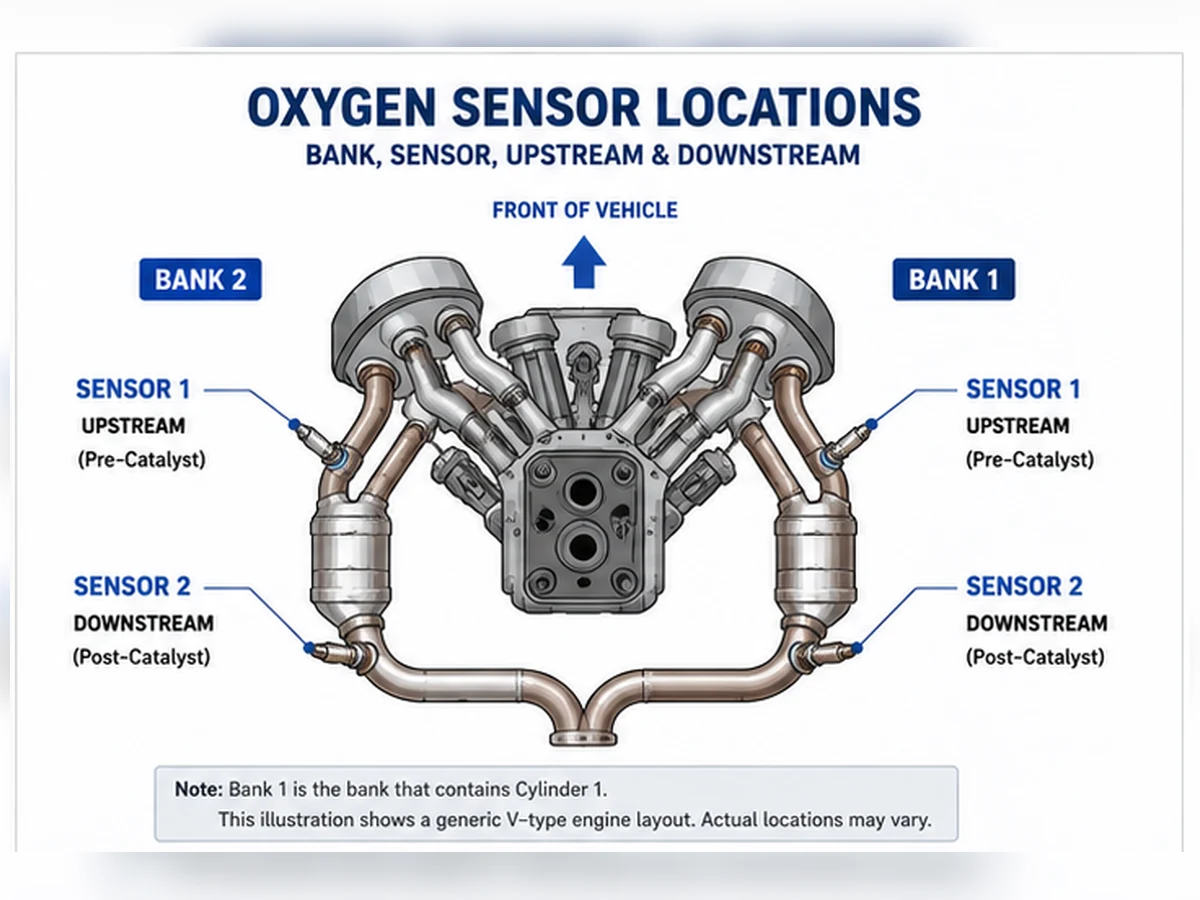
| المنبع / قبل المحفز / عادةً المستشعر 1 | يوفر تغذية راجعة للخليط تُستخدم للتحكم في الوقود. | قد يكون سبب إشارة الخليط الفقير أو الغني هو المحرك أو نظام الهواء/الوقود أو الأسلاك أو تسرب العادم. |
| المصب / بعد المحفز / عادةً المستشعر 2 | يساعد وحدة التحكم في تقييم أداء تخزين الأكسجين في المحفز. | رمز كفاءة المحفز لا يثبت تلقائيًا ضرورة استبدال المستشعر الخلفي أو المحفز. |
“عادةً” مهم. يجب تأكيد تسمية الموضع من معلومات خدمة السيارة. البنك 1 هو البنك الذي يحتوي على الأسطوانة 1، وليس قاعدة عالمية لجانب السائق أو الراكب.
لماذا تغير تقنية الحساس الإشارة
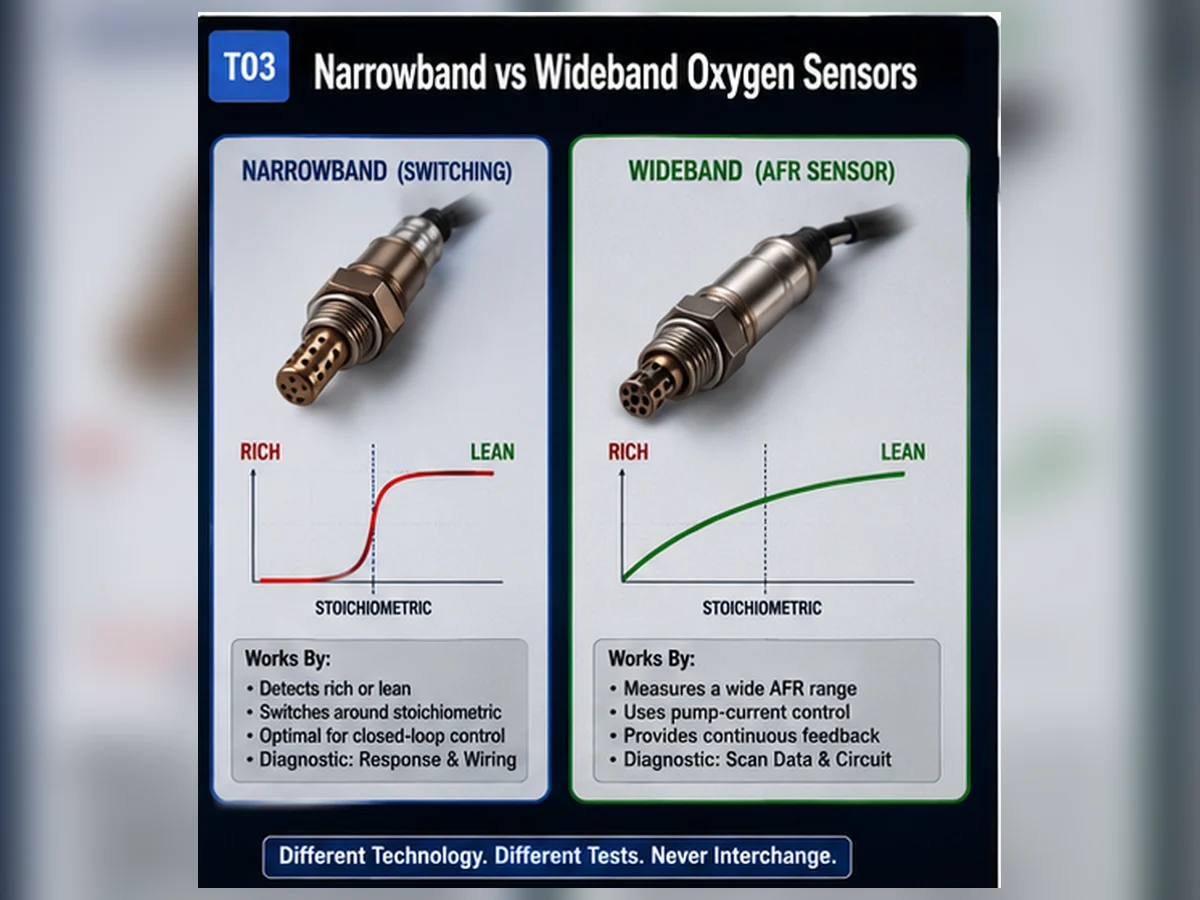
عادةً ما يتم تفسير مستشعرات الزركونيا ضيقة النطاق حول نقطة تحول غني/فقير. تستخدم مستشعرات النطاق العريض أو نسبة الهواء إلى الوقود دائرة تحكم أكثر تعقيدًا ويمكنها الإبلاغ عن انحراف الخليط عبر نطاق أوسع. تعمل تصميمات التيتانيا بشكل مختلف مرة أخرى. الرسم البياني من أداة المسح الذي يعتبر طبيعيًا لتقنية واحدة يمكن أن يكون مضللاً لأخرى، لذا يتطلب التشخيص المواصفات الصحيحة للخدمة.
ماذا يحدث عندما تكون الإشارة خاطئة
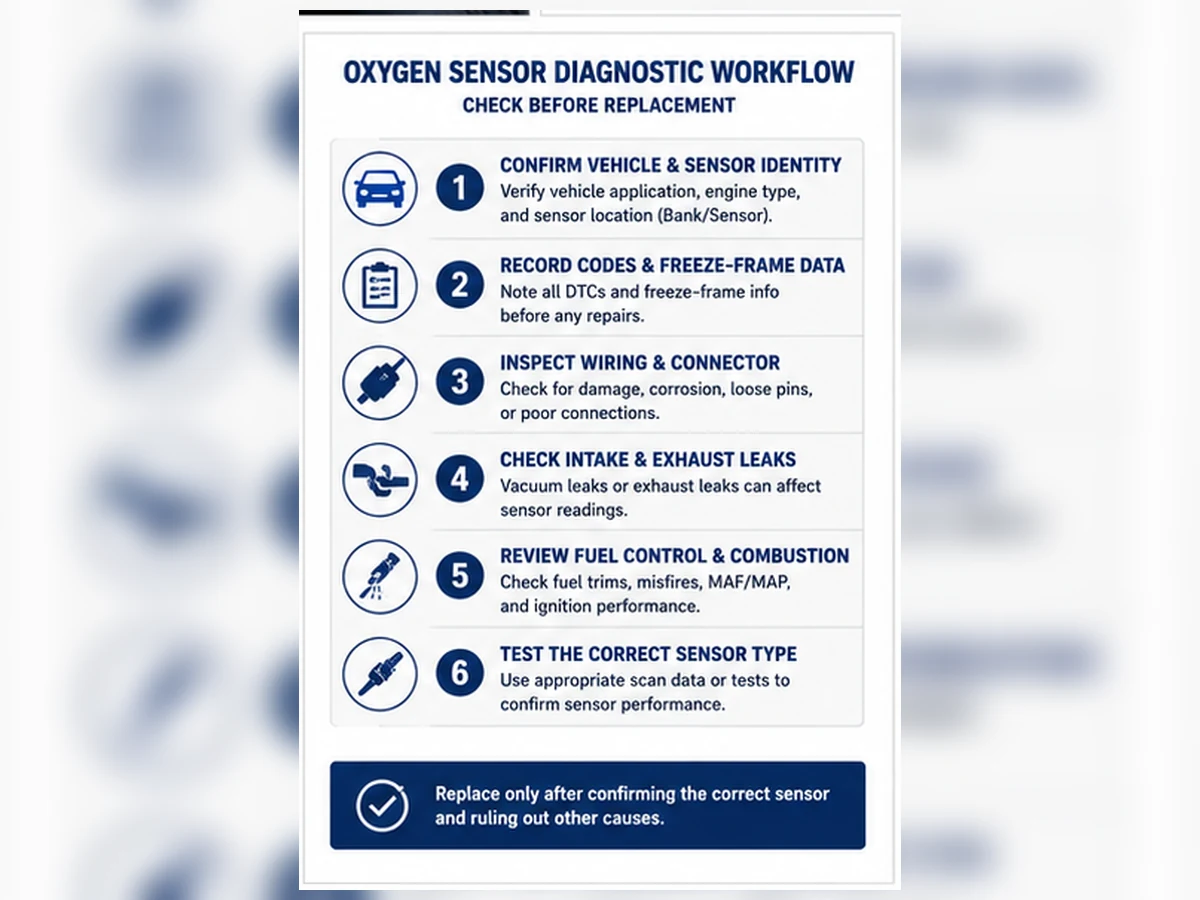
يمكن أن يساهم المستشعر المنحاز أو البطيء أو المنفصل أو غير المسخن في ضعف التحكم في الوقود، وزيادة الانبعاثات، وشكاوى القيادة، أو ضوء تحذيري. ومع ذلك، يمكن أن تنتج نفس الأعراض عن أنظمة أخرى. قبل الاستبدال، افحص الحزام والموصل، وتحقق من طاقة السخان والأرضي عند الاقتضاء، وابحث عن تسربات العادم، وراجع تصحيحات الوقود، وقارن البيانات الحية بإجراءات التشخيص الخاصة بالشركة المصنعة.
ما يجب تسجيله قبل الطلب
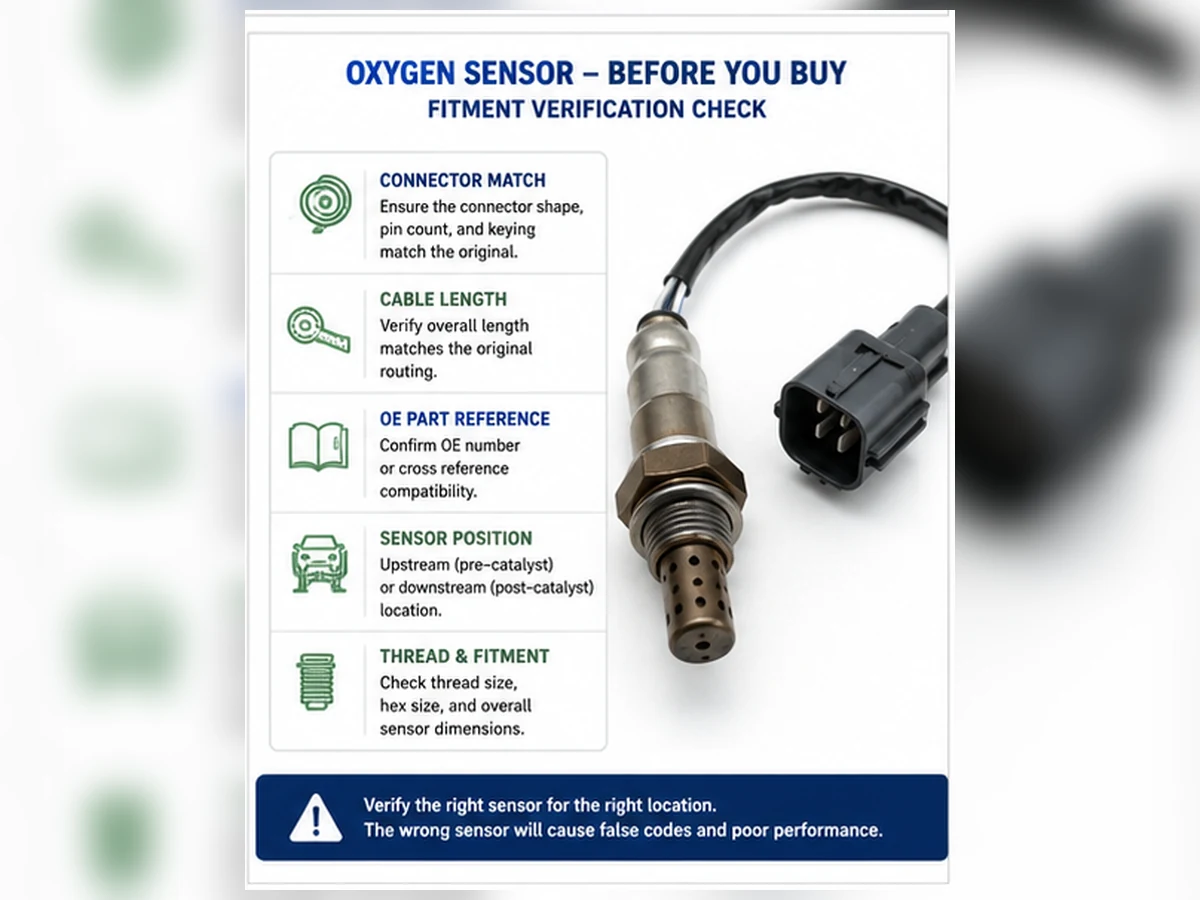
- رقم OE من الجزء المزال أو مصدر كتالوج موثوق
- السنة، الصنع، الموديل، المحرك والسوق
- البنك وموضع المستشعر
- توصيف الموصل، عدد الأطراف وطول السلك
- تقنية المستشعر وتصميم مباشر أو عالمي
- نتائج التشخيص ذات الصلة، وليس فقط رمز العطل
ماذا يوجد داخل حساس الأكسجين؟
الغلاف الملولب المرئي هو فقط الواجهة الميكانيكية. في الداخل، يعمل عنصر الاستشعار عند درجة حرارة مرتفعة ومحمي من تأثير العادم المباشر بواسطة درع. يساعد السخان العنصر على الوصول إلى نطاق تشغيله والحفاظ عليه. تحمل الأطراف الكهربائية دوائر الاستشعار والسخان عبر كابل مقاوم للحرارة إلى موصل خاص بالتطبيق. يختلف البناء الدقيق حسب التصميم ضيق النطاق، التيتانيا وعريض النطاق.
عنصر الاستشعار واستراتيجية المرجع
عنصر زركونيا ضيق النطاق يولد إشارة مرتبطة بفرق الأكسجين عبر السيراميك. إنه مفيد حول منطقة التبديل الغني/الفقير ولكنه ليس محلل غاز عادم مختبري. يضيف مستشعر عريض النطاق استراتيجية تحكم خلية ضخ تمكن من قياس خليط أوسع. تشكل وحدة التحكم والمستشعر نظامًا كهربائيًا متطابقًا؛ لا يمكن الحكم على الجزء عريض النطاق بنمط الجهد ضيق النطاق المألوف.
دائرة السخان
يقلل السخان الوقت قبل الحصول على تغذية راجعة مفيدة ويساعد في الحفاظ على درجة الحرارة عند التباطؤ أو الحمل المنخفض. يمكن أن ينتج رمز السخان عن عنصر مفتوح، مقاومة عالية، فيوز محترق، أسلاك تالفة، أرضي ضعيف، مقاومة موصل أو خطأ في جانب التحكم. قياس مقاومة المستشعر فقط لا يكمل تشخيص الدائرة.
درع، خيط، كابل وموصل
يتحكم الدرع في التعرض للغاز ويحمي العنصر. تحدد أبعاد الخيط والسداسي التركيب الميكانيكي. طول الكابل، العزل، تخفيف الإجهاد والمشابك تبعد الحزام عن العادم والمكونات المتحركة. شكل الموصل وحده غير كافٍ: يجب أن يتطابق التشفير، تخصيص الدبوس والخصائص الكهربائية مع التطبيق.
كيف يتغير دور الحساس حسب حالة التشغيل
| حالة التشغيل | ما قد يفعله نظام التحكم | تحذير تشخيصي |
|---|---|---|
| بدء التشغيل البارد | استخدم التزويد بالوقود المبرمج أثناء تسخين المستشعر والمحفز. | لا ينبغي مقارنة الإشارة الباردة بمواصفات الحلقة المغلقة الدافئة. |
| التدفئة الخاملة | استخدم التغذية الراجعة عند استيفاء شروط التمكين. | يمكن أن تؤثر تسريبات العادم وانخفاض التدفق بشكل كبير على القراءات. |
| إبحار ثابت | تطبيق تصحيح قصير وطويل المدى وتشغيل بعض المراقبات. | يجب أن يكون الحمل والسرعة ودرجة الحرارة مستقرة لإجراء المقارنات. |
| تسارع أو حمل عالٍ | استخدم إثراء خاص بالاستراتيجية أو تحكم في حلقة مفتوحة. | قد يتم الأمر بإشارة غنية بدلاً من عطل. |
| قطع الوقود أثناء التباطؤ | تقليل أو إيقاف الحقن تحت ظروف محددة. | قد يكون الأكسجين العالي في العادم متوقعًا أثناء الحدث. |
لهذا السبب نادرًا ما تجيب لقطة شاشة لقيمة أداة مسح واحدة على سؤال ما إذا كان المستشعر يعمل. يحتاج الفني إلى الحالة المأمورة، ودرجة حرارة المحرك، والحمل، وتصحيحات الوقود، وتقنية المستشعر، والاستجابة المتوقعة من الشركة المصنعة تحت ذلك الاختبار.
كيفية تفسير بيانات مستشعر الأكسجين دون تخمين
ابدأ بملصق البيانات والوحدات
قد تعرض أداة المسح الجهد، التيار، لامدا، نسبة التكافؤ أو قيمة محسوبة. تأكد من أن معرف البيانات مدعوم من قبل المركبة ويتوافق مع المستشعر الفعلي الذي يتم اختباره. يمكن لملصقات أدوات المسح العامة تبسيط أنظمة الشركة المصنعة المحددة.
قارن الاستجابة، وليس رقمًا واحدًا
بالنسبة لمستشعر ضيق النطاق، قد تكون الملاحظة المفيدة هي استجابة التبديل تحت ظروف دافئة محددة. بالنسبة لمستشعر عريض النطاق، قد يقوم الإجراء بتقييم تيار المضخة أو استجابة لامدا لتغيير متحكم فيه. قارن النتيجة مع تصحيحات الوقود والخليط المأمور. المستشعر الذي يقرأ فقيرًا بينما يضيف تصحيح الوقود وقودًا قد يكشف بدقة عن مشكلة في الهواء أو توصيل الوقود.
استخدم إشارة المصب في السياق
يتم تقييم المستشعر الخلفي جنبًا إلى جنب مع المستشعر الأمامي وظروف تشغيل المحفز. يمكن لأشكال موجية متشابهة إثارة قلق بشأن مراقبة المحفز، ولكن يجب استبعاد تسربات العادم، والاختلال في الإشعال، وانحياز المستشعر. P0420 أو P0430 ليس تعليمات مباشرة لاستبدال أي من المستشعرين.
ما يمكن لأدوات الاختبار الشائعة إثباته وما لا يمكنها إثباته
| أداة أو دليل | مفيد لـ | قيد مهم |
|---|---|---|
| فحص بصري للعملية | الكشف عن الأسلاك المنصهرة، والموصلات المرتخية، والتلف الناتج عن الصدمات، وتسرب العادم الواضح | لا يمكن إثبات الاستجابة الداخلية أو المعايرة. |
| أداة المسح | قراءة الرموز، وإطار التجميد، وتصحيحات الوقود، وحالة المراقبة، وبيانات المستشعر المدعومة | تختلف التسميات ومعدلات البيانات؛ قد لا تمثل القيم العامة اختبار الشركة المصنعة. |
| مقياس رقمي متعدد | فحص الطاقة، والأرضي، والاستمرارية، والمقاومة حيث يسمح الإجراء بذلك | قد لا يلتقط سلوك الإشارة السريع ويمكن أن يتلف الدوائر إذا تم استخدامه بشكل غير صحيح. |
| راسم الذبذبات | مراقبة شكل الموجة والاستجابة والسلوك المتقطع للدائرة | لا تزال الموجة بحاجة إلى ظروف تشغيل معروفة وتفسير خاص بالتكنولوجيا. |
| اختبار الدخان أو التسرب | تحديد مواقع تسرب السحب أو العادم التي تشوه دليل الخليط | يجب إجراؤه باستخدام معدات مناسبة وطريقة آمنة ومناسبة للتطبيق. |
| معلومات الخدمة | تحديد الموضع، الدائرة، معايير التمكين، البيانات المتوقعة وتسلسل الاختبار | يجب أن يتطابق تمامًا مع المركبة والمحرك والسوق والمعايرة المحددة. |
لا توجد أداة واحدة تحل محل سلسلة الأدلة. يمكن للمقياس المتعدد أن يظهر أن دائرة السخان مفتوحة ولكن لا يشرح سبب تخزين رمز خليط. يمكن لرسم المسح أن يظهر إشارة مسطحة ولكن لا يميز بين حساس ميت ومصدر طاقة مفقود، أو معرف بيانات غير مدعوم، أو محرك لم يدخل حالة الاختبار المطلوبة. ادمج نتيجة الأداة مع مخطط الدائرة وظروف التشغيل.
خطأ في المستشعر أم خطأ في النظام؟ استخدم تغييرًا محكومًا
يغير اختبار التشخيص المفيد حالة معروفة واحدة ويلاحظ ما إذا كانت القيمة المبلغ عنها تستجيب في الاتجاه والوقت المتوقعين. يجب أن تأتي الطريقة الدقيقة من معلومات الخدمة؛ إن خلق ظروف غنية أو فقيرة غير آمنة عمدًا ليس مناسبًا. المنطق هو ما يهم: إذا أكدت بيانات أخرى أن الخليط تغير ولم يستجب الحساس، ينتقل الشك نحو الحساس أو الدائرة. إذا استجاب الحساس ولكن ظلت تصحيحات الوقود غير طبيعية، استمر في فحص نظام الهواء أو الوقود أو الإشعال أو النظام الميكانيكي.
تحقق أيضًا مما إذا كان العطل يتبع حركة مجموعة الأسلاك أو تغير درجة الحرارة أو اضطراب الموصل. يمكن أن تظهر الانقطاعات المتقطعة بالقرب من العادم الساخن فقط بعد التمدد. وثق التوجيه الأصلي قبل الإصلاح وأعد تركيب كل واقي حراري ومشبك. لا يمكن لحساس صحيح متصل عبر مجموعة أسلاك تالفة أداء وظيفته بشكل موثوق.
لماذا تصبح مستشعرات الأكسجين بطيئة أو منحرفة أو تالفة
| الآلية | الأدلة المحتملة | الخطوة الصحيحة التالية |
|---|---|---|
| التقادم الحراري | استجابة أبطأ بعد التعرض الطويل للحرارة | تحقق من الاستجابة باستخدام الاختبار المحدد قبل الاستبدال. |
| تلوث بالزيت أو سائل التبريد | رواسب بالإضافة إلى أعراض نظام التبريد أو الاستهلاك | أصلح تسرب المحرك؛ قد يفشل المستشعر الجديد وحده مرة أخرى. |
| تسمم بالسيليكون أو المواد الكيميائية | انحياز مستمر أو رواسب مرتبطة بمانعات تسرب/سوائل غير مناسبة | أزل مصدر التلوث واستخدم المواد المعتمدة. |
| صدمة أو معالجة غير صحيحة | تلف في الدرع أو السيراميك أو الكابل | استبدل الجزء التالف وصحح ممارسة التركيب. |
| تلف الحرارة في الحزام | ذوبان العازل، إشارة متقطعة أو كود السخان | إصلاح مسار التوصيل وسلامة الدائرة، وليس فقط الحساس. |
| تسرب عادم | الهواء الخارجي يغير القراءة بالقرب من الحساس | أصلح التسرب قبل تقييم استجابة الحساس. |
سيناريو تشخيصي مركب: عندما تكون إشارة الخليط الفقير صحيحة
سيناريو هندسي مركب: محرك دافئ ينتج كود خليط فقير ويظل الحساس العلوي فقيرًا بينما يرتفع تصحيح الوقود. قد يكون استبدال الحساس مغريًا. بدلاً من ذلك، يكشف اختبار الدخان عن تسرب في مشعب السحب بعد قياس تدفق الهواء. بعد إصلاح التسرب، يعود تصحيح الوقود إلى النطاق المتوقع للمركبة ويستجيب الحساس بشكل طبيعي.
يجمع هذا السيناريو بين المنطق التشخيصي الشائع ولا يمثل عميلاً أو مركبة أو نتيجة اختبار لشركة Sunhyings. الغرض منه هو إظهار الوظيفة الفعلية للمستشعر: يمكن أن يكون الرسول وليس السبب.
ما لا يمكن لمستشعر الأكسجين إخبارك به بمفرده
- لا يمكنه تحديد أي حاقن أو حشية أو مكون إشعال تسبب في حالة العادم.
- لا يمكنه إثبات حالة المحفز من قراءة ثابتة واحدة.
- لا يمكنه تحديد توافق المركبة من مظهر الخيط أو الموصل.
- لا يمكنه تمييز كل مصدر تلوث دون أدلة مادية ونظامية.
- لا يمكنه جعل تجاوز الانبعاثات إصلاحًا قانونيًا أو فعالاً.
تعتمد الخطوة الصحيحة التالية على مهمة المستخدم. للتشخيص، اتبع مسار اختبار رمز الخطأ والبيانات الحية. للاستبدال، استخدم إجراءات المركبة وممارسات نظام العادم الآمنة. للشراء، قم ببناء سجل كامل لـ OE/YMME/الموضع قبل مقارنة الموردين أو الأسعار.
حدود السلامة والامتثال بعد التشخيص
إذا كان الاختبار يدعم الإزالة، اترك العادم يبرد واستخدم معدات رفع ودعم المركبة المعتمدة. قم بتوجيه مجموعة الأسلاك بعيدًا عن الحرارة والحواف الحادة والأجزاء المتحركة، وأعد كل مشبك ودرع حراري. استخدم تعليمات عزم الدوران ومضاد الالتصاق من مورد المركبة أو المستشعر بدلاً من قيمة عامة. لا تقطع مجموعة أسلاك مباشرة التركيب؛ يجب أن يكون تصميم التوصيل العام المدرج للتطبيق مثبتًا وفقًا لإجراءات الشركة المصنعة.
بعد الإصلاح، تحقق من استجابة الدائرة والحساس تحت الظروف المطلوبة واسمح لمراقب الجاهزية المناسب بإكمال الفحص. مسح الكود لا يثبت نجاح الإصلاح. لا يمكن للفواصل أو المحاكيات أو حذف الحساس أو تعطيل البرنامج أن يحل محل التشخيص القانوني وقد يخالف لوائح الانبعاثات.
جدول قرار من الوظيفة إلى الإجراء
| ملاحظة المستخدم | ما تشير إليه وظيفة الحساس | الإجراء قبل الطلب |
|---|---|---|
| كود الخليط الخفيف وتصحيح الوقود الإيجابي | قد يكون الحساس يبلغ عن وجود أكسجين زائد حقيقي. | افحص تسربات السحب/العادم، بيانات توصيل الوقود وتدفق الهواء. |
| كود السخان | قد لا يصل العنصر إلى درجة حرارة التشغيل المتوقعة. | افحص المصهر، الطاقة، الأرضي، التحكم، الموصل ومقاومة السخان. |
| رمز استجابة بطيئة | لم تتغير الإشارة ضمن معايير المراقبة. | تحقق من ظروف التشغيل، التسريبات، التحكم في الخليط وتقنية المستشعر. |
| رمز كفاءة المحفز | اكتشف المراقب مشكلة في العلاقة بين المنبع والمصب. | افحص المحرك، العادم، المستشعر والمحفز معًا. |
| التشخيص الصحيح يدعم الاستبدال | لا يمكن للحساس أو المجموعة السلكية المدمجة أداء وظيفته المطلوبة. | تحقق من المرجع الأصلي، الموضع الدقيق، التقنية والواجهة الفيزيائية. |
ما يقيسه المستشعر وما يستنتجه المحرك الإلكتروني
مستشعر الأكسجين في السيارات يستجيب لظروف الأكسجين في العادم. تفسر وحدة التحكم سلوك الجهد أو المقاومة أو تيار المضخة وفقًا لتصميم المستشعر. إنه ليس مسبارًا معمليًا لنسبة الأكسجين، ولا يقيس بشكل مستقل تدفق الوقود أو تحويل المحفز أو جودة الاحتراق. تلك الاستنتاجات تأتي من نموذج يجمع المستشعر مع أدلة أخرى من المحرك والعادم.
| طبقة الإشارة | ما تمثله | ما لا يمكن أن تثبته بمفردها |
|---|---|---|
| استجابة عنصر الاستشعار | استجابة تقنية محددة لظروف الأكسجين في العادم | أي مكون في المحرك تسبب في الخليط |
| سلوك السخان | القدرة على الوصول/الحفاظ على درجة حرارة التشغيل | دقة إشارة الحساس تحت كل الظروف |
| معامل بيانات وحدة التحكم الإلكترونية | قيمة خام أو مشتقة تم اختيارها بواسطة المعايرة/الأداة | تفسير عالمي للجهد/التيار |
| تعديل الوقود | استجابة تصحيح المتحكم عبر مناطق التشغيل | فشل المستشعر بدون سياق هواء/وقود/عادم |
| نتيجة مراقبة المحفز | تقييم معاير باستخدام سلوك المستشعر الأمامي/الخلفي | استبدال تلقائي للمستشعر الخلفي أو المحفز |
ثلاث عائلات تقنية تتطلب نماذج ذهنية مختلفة
| التقنية | مفهوم التشغيل العام | تمثيل تشخيصي شائع | تحذير اختيار |
|---|---|---|---|
| زركونيا ضيقة النطاق | انتقال قوي حول منطقة تحكم غنية/فقيرة | تبديل الجهد عند التسخين والتحكم | ليس مقياس AFR دقيق واسع النطاق |
| تيتانيا | تغير سلوك المقاومة مع حالة العادم | دائرة/قيمة خاصة بالشركة المصنعة | لا تطبق افتراضات الزركونيا |
| عريض النطاق/أ/نسبة الوقود | دارة التحكم تقود خلية المضخة لموازنة غرفة القياس | التيار، لامدا، نسبة التكافؤ أو قيمة الهواء/الوقود المشتقة | يجب أن يتطابق المتحكم والحساس والمعايرة |
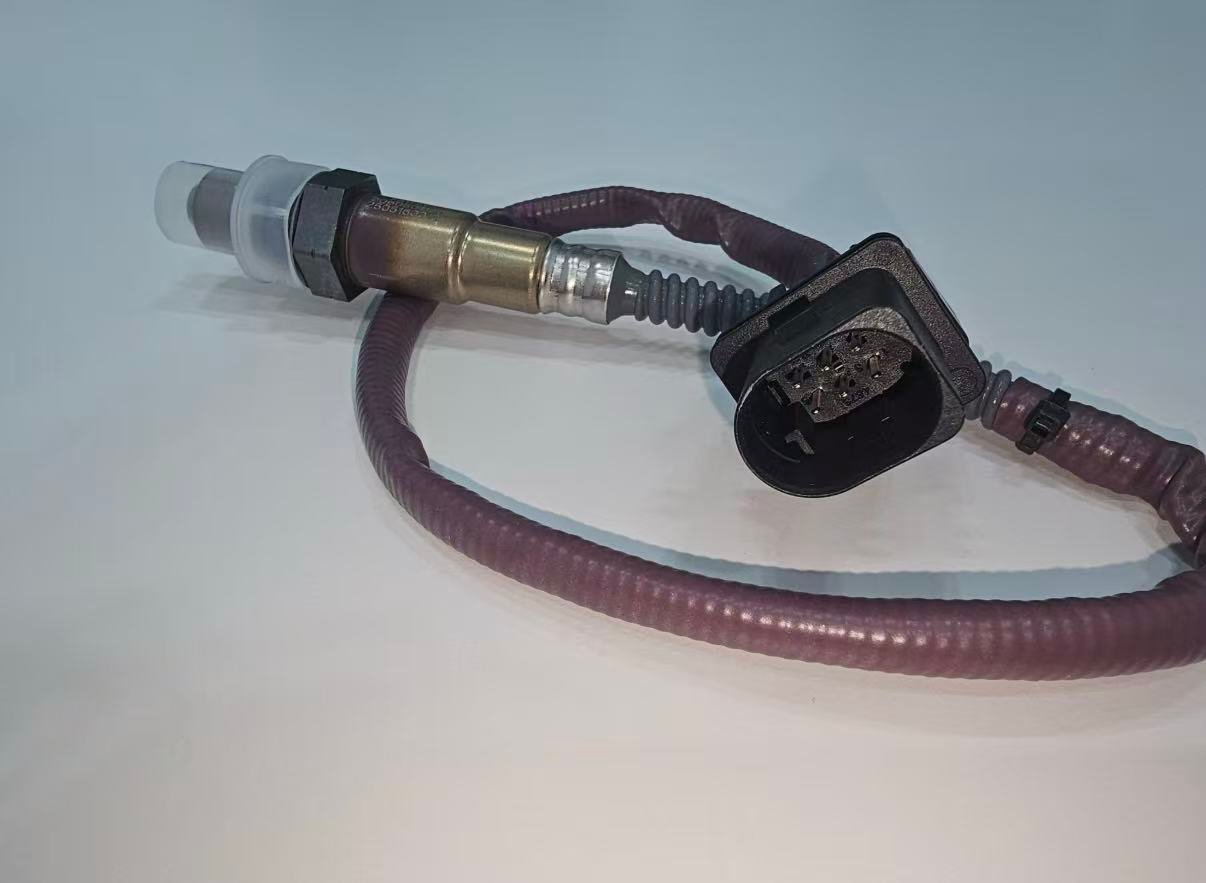
يمكن أن يكون عدد الأسلاك أو الأطراف دليلاً ولكنه ليس مواصفة تقنية. كما تقوم أدوات المسح بإعادة تسمية أو تحجيم البيانات. استخدم دائمًا معلومات خدمة السيارة الدقيقة ومواصفات المنتج قبل تفسير أو استبدال الحساس.
تتغير حلقة التحكم مع تغير حالة المحرك
| الحالة | استراتيجية تحكم محتملة | تنبيه تفسير الحساس |
|---|---|---|
| بدء التشغيل البارد | التزويد بالوقود المبرمج/بدون تغذية راجعة أثناء تسخين الحساسات والمحول الحفاز | لا يتم تقييم الخمول البارد بمعايير التشغيل الدافئ |
| التدفئة الخاملة | تصحيح الحلقة المغلقة عند التمكين | يمكن أن تؤثر التدفقات المنخفضة وتسربات العادم الصغيرة على القراءات |
| إبحار ثابت | التغذية الراجعة وبعض نشاط المراقبة | الحمل/درجة الحرارة المستقران ضروريان للمقارنة |
| التسارع/الحمل العالي | إثراء خاص بالاستراتيجية أو حلقة مفتوحة | قد يتم الأمر بسلوك غني |
| قطع الوقود أثناء التباطؤ | تم تقليل/إيقاف الوقود تحت ظروف محددة | قد يكون متوقعًا وجود أكسجين عالٍ في العادم |
| الرجوع إلى الخطأ | استبدال القيم أو التحكم البديل كما تمت معايرته | لا تأثير عام على استهلاك الوقود أو قابلية القيادة |
كيف تدعم المعلومات النهائية مراقبة المحفز
يقوم المحفز بتخزين وإطلاق الأكسجين مع تغير تركيبة العادم. يمكن لوحدة التحكم مقارنة السلوك قبل وبعد المحفز أثناء ظروف التمكين المحددة. غالبًا ما يغير النظام السليم نمط المستشعر السفلي بالنسبة لسلوك المستشعر العلوي، ولكن لا يوجد جهد ثابت عام يثبت صحة المحفز. معايرة المراقبة، تقنية المستشعر، التسريبات، عدم الاحتراق، والتحكم في الخليط كلها أمور مهمة.
P0420/P0430 يعني أن مراقب كفاءة المحفز قيم أقل من عتبته المعايرة لبنك معين. لا يعني ذلك “استبدال المستشعر 2”. تحقق من التحكم العلوي، الدائرة السفلية، إحكام العادم، أعطال المحرك، والتلوث قبل اتباع مسار تشخيص المحفز الدقيق.
ما الذي يمكن أن يعطل عمل المستشعر؟
| مسار العطل | التأثير على الوظيفة | الدليل قبل الاستبدال |
|---|---|---|
| دائرة مفتوحة/قصر/مقاومة عالية | سلوك إشارة/سخان مفقود أو غير معقول | اختبارات المخطط والأطراف والدائرة المحملة |
| فشل السخان | تشغيل متأخر أو مفقود تحت حرارة عادم منخفضة | الإمداد والتحكم/الأرضي والمقاومة/التيار المحددين |
| تسرب عادم | تغيرات الأكسجين الخارجية أبلغت عن حالة | فحص التسرب تحت درجة حرارة/حمل مناسب |
| تلوث | استجابة عنصر منحازة أو بطيئة | اختبار تشخيص المصدر بالإضافة إلى استجابة صحيحة تقنيًا |
| جزء/موضع خاطئ | عدم تطابق كهربائي أو معايرة | سجل OE/التطبيق والتقنية والواجهة |
| تسخين/تآكل الحزام | مشكلة دائرة متقطعة أو دائمة | فحص كامل للتوجيه والحركة |
حالة مركبة: المستشعر يعمل بشكل صحيح أثناء شكوى الخليط الفقير
سيناريو تشخيصي مركب: يبلغ مستشعر أعلى المنبع عن خليط فقير ويرتفع تصحيح الوقود عند التباطؤ. تستجيب الإشارة لتغيير معتمد في الخليط ويظهر كلا البنكين نمطًا مشابهًا. يتم تحديد تسرب في السحب وإصلاحه؛ تبقى المستشعرات في الخدمة.
توضح الحالة الوظيفة الحقيقية للمستشعر: الإبلاغ عن دليل العادم. الإبلاغ الدقيق عن العطل ليس فشلًا في المستشعر. إنها حالة مركبة، وليست حالة عميل لشركة Sunhyings.
حالة مركبة: عنصر جيد لا يمكنه العمل بدون طاقة السخان
سيناريو ورشة العمل المركبة: يظهر مستشعر نشاطًا متأخرًا ورمز DTC للسخان. مقاومة العنصر معقولة، لكن اختبار التحميل يجد عدم وجود مصدر طاقة من جانب المركبة بسبب دائرة مشتركة تالفة. الإصلاح يعيد التدفئة وتشغيل المراقبة دون استبدال المستشعر.
تفصل الحالة عنصر الاستشعار عن دائرة المستشعر الكاملة. لا تدعي أن كل رمز سخان مرتبط بالأسلاك.
سجل أدلة لقرار وظيفة المستشعر
- المركبة والمحرك وتكوين الانبعاثات وموضع البنك/المستشعر بالضبط
- تقنية المستشعر ومعلمات بيانات المسح المدعومة
- الرموز والحالة وإطار التجميد والجاهزية وظروف التشغيل
- نتائج اختبار السخن المحمل ودائرة الإشارة/المرجع
- سياق تسرب العادم، تصحيح الوقود، تدفق الهواء/الوقود، والأخطاء في الاحتراق
- مثير محدد، استجابة، وحدات، مقياس زمني، ومصدر المواصفات
- نتائج قبل/بعد وإتمام المراقبة القانونية المطبقة
حدود القياس المتكافئ، لامدا ونوع الوقود
يصف لامبدا العلاقة الفعلية بين الهواء والوقود بالنسبة إلى المرجع المتكافئ للوقود. يمثل لامبدا 1 هذا المرجع، بينما يعتمد رقم نسبة الهواء إلى الوقود للبنزين على تركيبة الوقود المفترضة. يمكن أن يغير محتوى الإيثانول وتركيبة الوقود قيمة AFR المقابلة لامبدا 1. وهذا سبب آخر لتفسير رقم العرض العام في الماسح الضوئي مع سياق المركبة والوقود.
| مفهوم | معنى مفيد | خطأ شائع |
|---|---|---|
| لامبدا | الخليط نسبة إلى المرجع الستوكيومتري | معاملته كنسبة مئوية للأكسجين |
| شاشة AFR | تمثيل الأداة/المعايرة باستخدام افتراض الوقود | افتراض أن رقم بنزين واحد ينطبق على كل وقود |
| التبديل ضيق النطاق | التغذية الراجعة حول منطقة التحكم | قراءة مقدار الغني/الفقير الدقيق من الجهد |
| تيار مضخة النطاق العريض | استجابة محكومة عبر نطاق خليط أوسع | تطبيق توقعات الجهد ضيق النطاق |
| تعديل الوقود | تصحيح وحدة التحكم داخل المناطق المحددة | تسمية التصحيح بأمر الوقود المباشر للحساس |
الأدوات تراقب طبقات مختلفة من الوظيفة
| أداة أو سجل | سؤال يمكنه الإجابة | الحد |
|---|---|---|
| أداة المسح | ما المعلمة ونتيجة المراقبة التي يبلغ عنها ECU | قد يقوم بالتصفية أو التحجيم أو لا يدعم البيانات المطلوبة |
| عداد رقمي | الجهد/المقاومة/الاستمرارية وفق طريقة محددة | قد يفوت سلوك الحمل أو التوقيت |
| عداد رسومي/راسم ذبذبات | الشكل الموجي والاستجابة والأحداث المتقطعة | يتطلب دائرة صحيحة ونطاق قياس وفحص آمن |
| محلل غازات العادم | دليل غاز مستقل تحت ظروف الاختبار | لا يحدد التركيب أو كل سبب جذري |
| طريقة الدخان/التسرب | تسرب محتمل في السحب/العادم | يجب أن يتوافق مع النظام ودرجة الحرارة وحدود السلامة |
| معلومات الخدمة | توصيل الدبابيس، البيانات المتوقعة، معايير التمكين والإجراء | يجب أن يطابق المركبة/التكوين المحدد بدقة |
نتيجة الأداة تكون موثوقة فقط مع الوحدات، حالة التشغيل، هوية القناة ومصدر المواصفات. لا تطبق جهدًا خارجيًا أو تفحص دائرة واسعة النطاق ما لم يسمح الإجراء بذلك صراحةً.
كيف تصبح الوظيفة مواصفات بديلة
بمجرد أن يدعم الاختبار الاستبدال، ترجم المتطلب الوظيفي إلى هوية جزء دقيقة. طابق OE/التطبيق، موضع البنك/الحساس، التقنية، سلوك السخان/الكهرباء، الموصل وخريطة الأطراف، مسار السلك/المشبك، الخيط والدرع. الحساس الذي يُثبت فيزيائيًا لكنه يرسل نوعًا خاطئًا من الإشارة لا يمكنه أداء الوظيفة المطلوبة.
يمكن لشركة Sunhyings مراجعة أدلة التركيب والتوريد المقدمة. صور المنتجات الحقيقية في هذه الصفحة تعرض أمثلة مادية فقط؛ ولا تثبت رقم OE أو ملاءمة العلامة التجارية أو المخزون أو الشهادة دون سجل مؤكد على مستوى القطعة.
يدعم المستشعر التحكم في الانبعاثات؛ وليس هدفًا للتجاوز
أجهزة المحاكاة والفواصل وحذف المستشعرات والتلاعب ببرامج مراقبة العوادم لا تحل محل الاستشعار والتشخيص القانونيين. يمكنها إخفاء أدلة المحفز أو الخليط وتنتهك قواعد الانبعاثات. أعد تركيب المستشعر والمحفز ونظام التحكم المصمم وتحقق من المراقبة المعمول بها. لا يمكن الوعد بأن أي مستشعر سيجعل كل مركبة تجتاز الفحص دون تشخيص كامل للمركبة.
بالنسبة للمركبات الأمريكية، تتحكم قواعد EPA/CARB ومعلومات الخدمة المعمول بها في أعمال الانبعاثات؛ وتتطلب الأسواق الأخرى مراجعة تنظيمية محلية. الدور المشروع للمستشعر هو القياس والتغذية الراجعة. تغيير موقعه أو إشارته للتلاعب بمراقب يكسر العلاقة بين أدلة العادم وتفسير وحدة التحكم الإلكترونية بدلاً من إصلاح النظام.
عندما يكون الاستبدال مبررًا، حافظ على الموضع المصمم والتوجيه المباشر، ثم تحقق من نفس السؤال الوظيفي الذي فشل قبل الإصلاح. هذا يغلق الحلقة من الجزء المادي إلى نتيجة المراقبة القانونية.
بالنسبة للمشتريات، اطلب دليلاً على أن المستشعر المقترح يمكنه أداء الوظيفة الدقيقة في الموضع المحدد: التقنية، مواصفات السخان/الكهرباء، الموصل، السلك، الخيط، الدرع، تعيين التطبيق، التحقق والتتبع. يمكن لصورة المنتج تأكيد البناء المرئي فقط؛ ولا يمكنها تأكيد المعايرة أو تغطية المركبة.
أثناء المطالبة، اختبر نفس الطبقة الوظيفية المتنازع عليها. شكوى السخان تحتاج إلى أدلة على الدائرة والسخان؛ شكوى الاستجابة تحتاج إلى ظروف تشغيل صالحة وبيانات صحيحة تقنيًا؛ شكوى التركيب الخاطئ تحتاج إلى سجلات المركبة والموضع والواجهة. لا تستخدم نجاح اختبار عام للإجابة على سؤال ميداني مختلف.
قم بإعداد طلب تركيب أو توريد
أرسل رقم OE، السنة/الماركة/الموديل، المحرك أو تفاصيل VIN، السوق وحزمة الانبعاثات، موضع البنك/الحساس بالضبط، صور الموصل والقطعة القديمة، الكمية وأي متطلبات تغليف أو موافقة. ستراجع Sunhyings البيانات المقدمة من حيث القدرة وجدوى التوريد؛ لا يتم تأكيد التركيب حتى يتم مطابقة دليل التطبيق.
الأسئلة المتكررة
هل يتحكم حساس الأكسجين في الوقود بشكل مباشر؟
لا، بل يرسل إشارة إلى وحدة التحكم في المحرك، والتي تقرر ما إذا كان سيتم ضبط أمر الحاقن وكيفية ذلك باستخدام مدخلات متعددة.
هل يؤدي كل مستشعر أكسجين نفس المهمة؟
لا. تدعم أجهزة الاستشعار الأولية بشكل أساسي تغذية راجعة للخليط، بينما تدعم أجهزة الاستشعار الثانوية عادة مراقبة المحفز. تختلف التكنولوجيا واستراتيجية المركبة أيضًا.
هل يمكن لمستشعر الأكسجين الجيد الإبلاغ عن حالة خليط فقير؟
نعم. تسربات السحب، ضعف توصيل الوقود، تسربات العادم وغيرها من الأعطال يمكن أن تخلق إشارة عادم ضعيفة حقيقية.
هل مستشعر O2 هو نفسه مستشعر الأكسجين؟
نعم. مستشعر O2 هو الاسم المختصر الشائع، على الرغم من أن مستشعرات نسبة الهواء إلى الوقود ومستشعرات النطاق العريض قد تستخدم استراتيجيات إشارة مختلفة.
هل يثبت الكود P0420 فشل حساس الأكسجين؟
الرمز P0420 يتعلق بكفاءة نظام المحفز. بيانات الحساس جزء من التشخيص، لكن الكود لا يحدد فشل حساس الأكسجين بمفرده.
ما هي المعلومات المطلوبة لاختيار بديل؟
تحقق من المرجع الأصلي (OE)، المركبة والمحرك، السوق أو حزمة الانبعاثات، البنك والموضع الدقيقين، الموصل، طول السلك وتقنية المستشعر.