






Risposta rapida: cosa significano i gradi dei dadi esagonali?
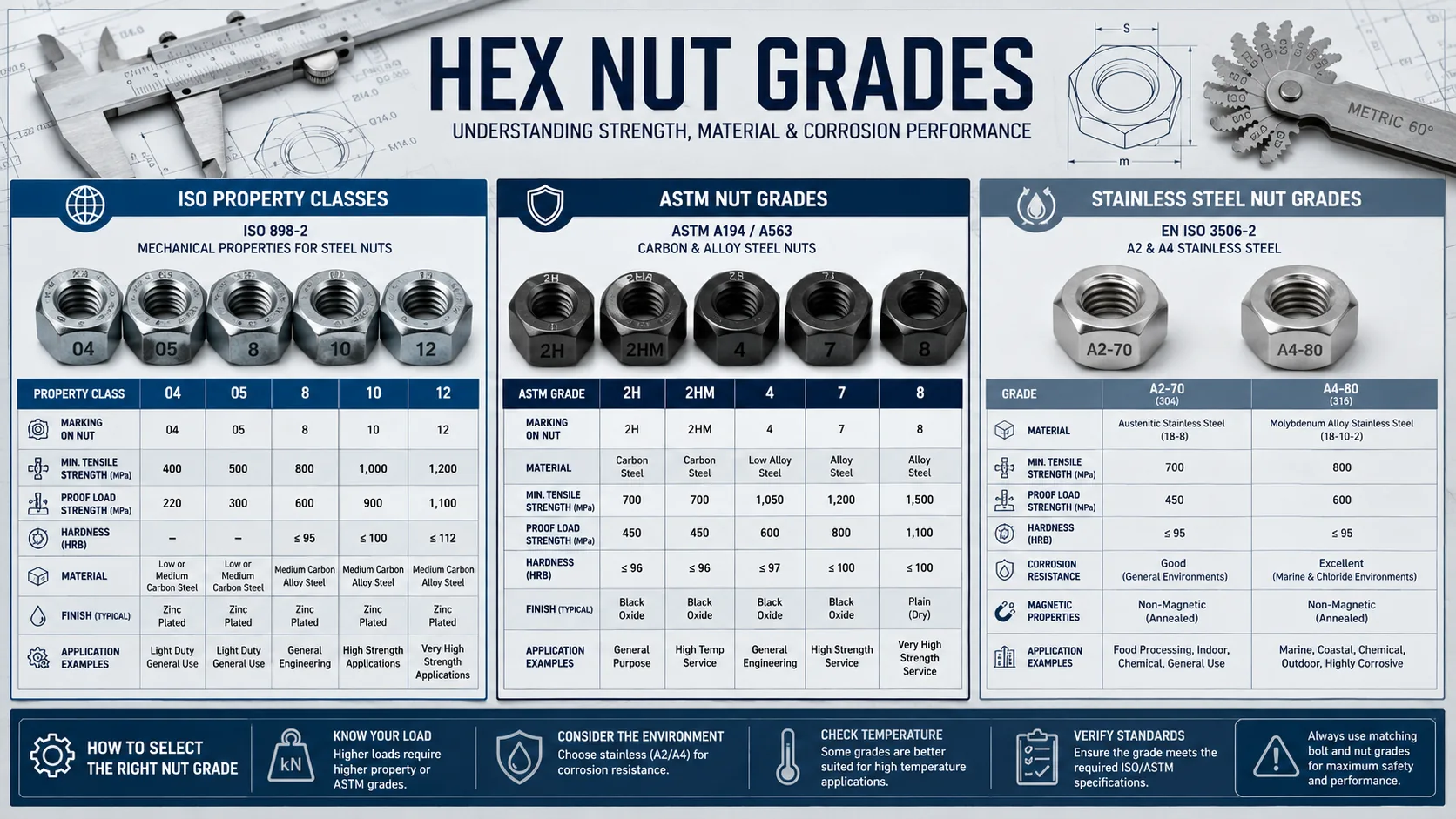
I gradi dei dadi esagonali determinano se un dado può sostenere in sicurezza il precarico del bullone senza che si verifichi la rottura della filettatura interna, il cedimento al carico di prova, la deformazione permanente, il grippaggio o l'allentamento del giunto. Nei sistemi metrici, i dadi in acciaio sono solitamente specificati da classi di proprietà ISO come Classe 8, Classe 10 e Classe 12. Nei sistemi in pollici, i dadi in acciaio al carbonio e legati sono spesso specificati secondo gradi ASTM come ASTM A563 Grado A, C, DH o DH3. I dadi in acciaio inossidabile utilizzano sistemi di grado resistenti alla corrosione come A2-70 e A4-80. Per gli acquisti B2B, la sola dimensione non è sufficiente. Una richiesta di offerta corretta dovrebbe indicare la norma, il diametro della filettatura, il passo, il grado del dado o la classe di proprietà, il materiale, il rivestimento, il requisito di ispezione, il grado del bullone di accoppiamento e l'ambiente di lavoro.
Riepilogo tecnico: Un dado esagonale non “tiene” un giunto per la sua forma. Porta il carico di serraggio attraverso le filettature interne impegnate. Se la classe del dado è troppo bassa, i fianchi della filettatura possono tagliarsi prima che il bullone raggiunga il precarico. Se il rivestimento, la lubrificazione o l'abbinamento dei materiali sono errati, il giunto può grippare, incrinarsi, allentarsi o non superare l'ispezione in entrata.
La Classe del Dado Esagonale Riguarda il Carico di Prova, Non Solo la Dimensione
La classe di un dado esagonale dice all'ingegnere se il dado può supportare il carico previsto dal bullone o prigioniero di accoppiamento. Un dado può avere il diametro, il passo, lo smusso e la larghezza tra le facce corretti, ma essere ancora troppo debole per il giunto. Ecco perché un dado di bassa classe può avvitarsi agevolmente su un bullone ad alta resistenza e poi strapparsi durante il serraggio finale.
Perché è importante: la classe sbagliata del dado influisce su più della resistenza. Può aumentare la rilavorazione in assemblaggio, causare il rifiuto del lotto, danneggiare i bulloni di accoppiamento, ritardare la produzione e creare una perdita nascosta di precarico in servizio.
Classe di Proprietà vs Grado ASTM vs Grado di Acciaio Inossidabile
I dadi metrici in acciaio usano normalmente le classi di proprietà ISO. I dadi in pollici in acciaio al carbonio e legato usano spesso i gradi ASTM. I dadi in acciaio inossidabile usano sistemi di grado per elementi di fissaggio resistenti alla corrosione, come A2 e A4, con classi di resistenza come 70 o 80. Questi sistemi non sono intercambiabili nelle richieste di preventivo. Una frase come “dado Grado 8” può significare cose diverse a seconda che l'acquirente usi il linguaggio ISO metrico o il linguaggio degli elementi di fissaggio in pollici.
Tabella Rapida di Compatibilità Bullone-Dado
| Bullone / Tirante di accoppiamento | Abbinamento dado comune | Rischio principale se errato |
|---|---|---|
| Bullone metrico 4.8 / 5.8 | Dado classe 5 o classe 6 | Basso carico di serraggio se utilizzato al di fuori di applicazioni a basso carico |
| Bullone metrico 8.8 | Dado classe 8 | Strappo del filetto se il dado è più debole del necessario |
| Bullone metrico 10.9 | Dado classe 10 | Rottura al carico di prova, perdita di precarico o danneggiamento del filetto interno |
| Bullone metrico 12.9 | Dado classe 12 o approvato dall'ingegneria | Elevata dispersione del precarico, rischio di rottura fragile, sensibilità al rivestimento |
| Bullone in acciaio inox A2-70 | Dado in acciaio inox A2 | Grippaggio se installato a secco o troppo velocemente |
| Bullone in acciaio inox A4-80 | Dado in acciaio inox A4 | Grippaggio, costo maggiore e dispersione del precarico se la lubrificazione non è controllata |
| Bullone strutturale ASTM o barra di ancoraggio | Grado ASTM A563 come specificato dai documenti di progetto | Un grado errato può causare il rigetto o il rischio di cedimento strutturale del giunto |
Questa tabella è una guida pratica per la selezione. La scelta finale deve seguire il disegno di progetto, la norma di acquisto e il requisito applicativo.
Perché i gradi dei dadi esagonali sono importanti nei giunti bullonati
Il grado del dado esagonale è importante perché il dado deve trasferire il precarico del bullone attraverso le sue filettature interne senza snervarsi, spogliarsi o perdere il carico di serraggio. In un giunto bullonato, il precarico blocca le parti insieme. Se il dado non può sopportare quel carico, il giunto può allentarsi, perdere, vibrare, perdere l'allineamento o cedere in servizio ciclico.
Precarico, carico di serraggio e impegno filettatura
Quando un bullone viene serrato, il bullone si allunga leggermente. Questo allungamento crea precarico, e il precarico crea il carico di serraggio. Il dado sopporta questo carico attraverso l'impegno della filettatura. I fianchi della filettatura interna subiscono la tensione di taglio. Se il materiale del dado, l'altezza, la durezza, la precisione del passo o la classe di qualità sono insufficienti, le filettature impegnate possono tagliarsi prima che il bullone raggiunga il precarico previsto.
Perché è importante: Un basso precarico consente il movimento tra le parti serrate. Il movimento aumenta l'usura, il carico di fatica, l'allentamento per vibrazione e l'usura. Per la produzione OEM, questo diventa un costo di garanzia. Per i team di manutenzione, diventa tempi di fermo ripetuti e perdita di fiducia nel lotto di ricambi.
Cosa Succede Quando il Grado del Dado è Troppo Basso
Un dado di basso grado su un bullone ad alta resistenza può sembrare accettabile durante il montaggio a mano. Il problema si manifesta durante il serraggio finale. La chiave dinamometrica può continuare a girare, ma il carico di serraggio non aumenta. Dopo la rimozione, le filettature interne del dado possono apparire strappate, appiattite o estroflesse.
- Il dado può strapparsi prima che il bullone raggiunga il precarico.
- Il giunto può superare l'ispezione visiva ma allentarsi in seguito.
- Il bullone può essere incolpato anche quando il carico di prova del dado era il vero problema.
- I team di montaggio possono perdere tempo a cambiare gli utensili di serraggio invece di correggere la specifica.
- La rilavorazione può danneggiare bulloni, rondelle, superfici rivestite e programmi di produzione.
Perché un dado più resistente non è sempre la risposta giusta
Un dado di grado superiore non è automaticamente un giunto migliore. Se il materiale di base è morbido, un dado e una rondella più duri possono affondare nella parte collegata. Se l'attrito del rivestimento non è controllato, un gruppo ad alta resistenza può essere serrato eccessivamente o insufficientemente. Se l'acciaio inossidabile viene installato a secco, una resistenza maggiore non previene grippaggio o saldatura a freddo.
Avviso tecnico: Tratta il giunto come un sistema: grado del bullone, grado del dado, durezza della rondella, passo della filettatura, superficie di appoggio, rivestimento, lubrificazione, utensile di serraggio e carico di lavoro. Un grado del dado scelto isolatamente può spostare il punto di rottura nel bullone, nella rondella, nel materiale di base o nel rivestimento.
Classi di proprietà dei dadi esagonali metrici ISO spiegate
I dadi esagonali metrici sono comunemente specificati dalle classi di proprietà ISO. ISO 898-2 specifica le proprietà meccaniche e fisiche dei dadi in acciaio realizzati con acciaio non legato o legato e testati a temperatura ambiente. Si applica a filettature metriche ISO, inclusi passo grosso M5 a M39 che a passo fine M8×1 a M39×3. Il carico di prova finale, la durezza, la marcatura e i requisiti dimensionali devono essere verificati rispetto all'ultima norma acquistata prima della produzione.
Dadi esagonali Classe 5 e Classe 6
I dadi di Classe 5 e Classe 6 sono utilizzati per assemblaggi a bassa resistenza dove non è richiesto un elevato precarico. Possono essere adatti per staffe leggere, ferramenta generica, coperchi, ferramenta per mobili leggeri e connessioni non critiche, a seconda del bullone di accoppiamento e del carico di servizio.
Cosa può andare storto: Se i dadi di Classe 5 o Classe 6 vengono mescolati in un contenitore destinato ad assemblaggi con bulloni 8.8 o 10.9, può verificarsi la rottura del filetto durante il serraggio finale. Il costo non è il prezzo del dado; è la rilavorazione, i tempi di fermo, i bulloni di accoppiamento danneggiati e la perdita di fiducia nel controllo del lotto.
Dadi esagonali Classe 8
I dadi Classe 8 sono comunemente abbinati a bulloni metrici 8.8 in telai di macchinari, staffe, basi di attrezzature e giunti industriali generali. Per molti ordini B2B, la Classe 8 è la prima linea seria in cui la classe di proprietà deve essere chiaramente scritta nella RFQ, non assunta dal fornitore.
Nota di acquisto: “Dado zincato M12” è incompleto. Una RFQ controllata dovrebbe dire ISO 4032 M12 × 1.75 Classe 8, quindi aggiungere materiale, rivestimento, tolleranza del filetto, ispezione e requisiti di imballaggio.
Dadi esagonali Classe 10
I dadi Classe 10 sono comunemente utilizzati con bulloni 10.9 dove è richiesto un precarico maggiore. Questi giunti sono più sensibili all'attrito del rivestimento, alla durezza della rondella, alle condizioni della filettatura e al metodo di installazione. Un dado Classe 10 può comunque cedere in pratica se lo spessore del rivestimento crea attrito sulla filettatura o se il serraggio finale viene eseguito con un utensile a percussione non controllato.
Dadi esagonali Classe 12
I dadi Classe 12 sono utilizzati per giunti ad alta resistenza dove il bullone di accoppiamento e il progetto del giunto richiedono una maggiore capacità di carico. Questi assemblaggi richiedono una revisione tecnica perché la dispersione della coppia, la lubrificazione, la durezza superficiale, il carico a fatica e il controllo del processo di rivestimento diventano più importanti. Per gli assemblaggi con bulloni 12.9, la scelta del dado non dovrebbe essere lasciata all'abitudine di acquisto.
Requisiti di carico di prova e durezza secondo ISO 898-2
Il carico di prova è una delle proprietà più importanti per i dadi. Verifica se il dado può sopportare un carico specificato senza rottura della filettatura o deformazione permanente. Anche la durezza è controllata perché riflette le condizioni del materiale e la risposta al trattamento termico.
| Classe del dado metrico | Abbinamento comune con bulloni | Utilizzo tipico | Rischio ingegneristico da monitorare |
|---|---|---|---|
| Classe 5 / Classe 6 | Bulloni 4.8 / 5.8 | Assemblaggi per carichi leggeri | Basso carico di serraggio se utilizzati su bulloni più resistenti |
| Classe 8 | Bulloni 8.8 | Telai di macchinari, attrezzature, giunti industriali generali | Rivestimento errato, passo danneggiato o scarso impegno della filettatura possono influenzare il precarico |
| Classe 10 | Bulloni 10.9 | Giunti meccanici ad alta resistenza | Carico di prova, durezza, attrito del rivestimento e rischio di idrogeno devono essere controllati |
| Classe 12 | Bulloni 12.9 o giunti progettati | Assiemi di precisione ad alto carico | Il controllo dell'installazione e la dispersione dell'attrito diventano critici |
Questa tabella è un riferimento di selezione. Verificare sempre i requisiti esatti delle proprietà rispetto alla ISO 898-2 e al disegno del progetto prima della produzione.
Gradi dei Dadi Esagonali ASTM Spiegati
I gradi ASTM per dadi sono comuni nei sistemi di fissaggio in pollici, bulloneria strutturale, barre di ancoraggio, servizi in pressione e specifiche di progetto nordamericane. La norma ASME B18.2.2 può definire lo stile dimensionale dei dadi in pollici, ma il grado meccanico è spesso specificato separatamente tramite norme ASTM.
Gradi ASTM A563 per dadi in acciaio al carbonio e lega
ASTM A563/A563M copre i requisiti chimici e meccanici per dadi in acciaio al carbonio e lega utilizzati per applicazioni strutturali e meccaniche generali su bulloni, prigionieri e altre parti filettate esternamente. Include requisiti come durezza, carico di prova, composizione chimica e proprietà meccaniche. Per applicazioni in edilizia, acciaio strutturale e ancoraggi, la specifica di progetto deve controllare il grado ASTM esatto.
| Grado ASTM A563 | Direzione d'uso comune | L'acquirente deve confermare |
|---|---|---|
| Grado A | Uso strutturale o meccanico generale a bassa resistenza | Grado del bullone di accoppiamento, rivestimento, stile del dado e accettazione del progetto |
| Grado C | Applicazioni ad alta resistenza a seconda della specifica | Durezza, carico di prova e approvazione del progetto |
| Grado DH | Bulloneria strutturale pesante e applicazioni ad alto carico | Requisito esagono pesante, rivestimento, durezza e certificazione |
| Grado DH3 | Applicazioni con acciaio resistente agli agenti atmosferici dove specificato | Requisito di resistenza alla corrosione atmosferica e nota sul disegno |
Dadi ASTM A194 per servizio ad alta temperatura e alta pressione
ASTM A194/A194M copre una varietà di dadi in acciaio al carbonio, legato, inossidabile martensitico e austenitico destinati a servizio ad alta pressione o alta temperatura, o entrambi. È rilevante nella bulloneria per flange, apparecchiature in pressione, sistemi di tubazioni e applicazioni petrolchimiche.
Perché è importante: il servizio di pressione e temperatura può modificare il margine di sicurezza. Un grado errato può influenzare l'approvazione in cantiere, il rilascio dell'ispezione e i tempi di consegna, poiché il lotto può essere respinto durante la revisione della documentazione anche se la dimensione della filettatura è corretta.
Gradi di dadi in acciaio inossidabile ASTM F594
ASTM F594 copre dadi in acciaio inossidabile da 0,25 a 1,50 pollici. diametro nominale in diversi gruppi comuni di acciaio inossidabile per applicazioni che richiedono resistenza generale alla corrosione. È principalmente rilevante per specifiche di dadi in acciaio inossidabile pollici. La selezione del grado di acciaio inossidabile deve considerare il gruppo di lega, l'ambiente corrosivo, il rischio di grippaggio, la specifica del dispositivo di fissaggio accoppiato e il requisito di carico di snervamento.
Dadi esagonali pesanti vs Dadi esagonali finiti
I dadi esagonali pesanti hanno una larghezza tra le facce maggiore e una superficie di appoggio più ampia rispetto ai dadi esagonali finiti. I bullonature strutturali e i gruppi di ancoraggio richiedono spesso dadi esagonali pesanti. Un dado esagonale finito può avere la filettatura corretta ma non la corretta superficie di appoggio, l'accettazione del progetto o il requisito di carico di prova.
Avviso tecnico: Non utilizzare la terminologia dimensionale ASME come sostituto dei requisiti di grado ASTM. Un dado può essere dimensionalmente corretto e meccanicamente sbagliato.
Compatibilità Bullone-Dado: Quale Grado di Dado Dovresti Usare?
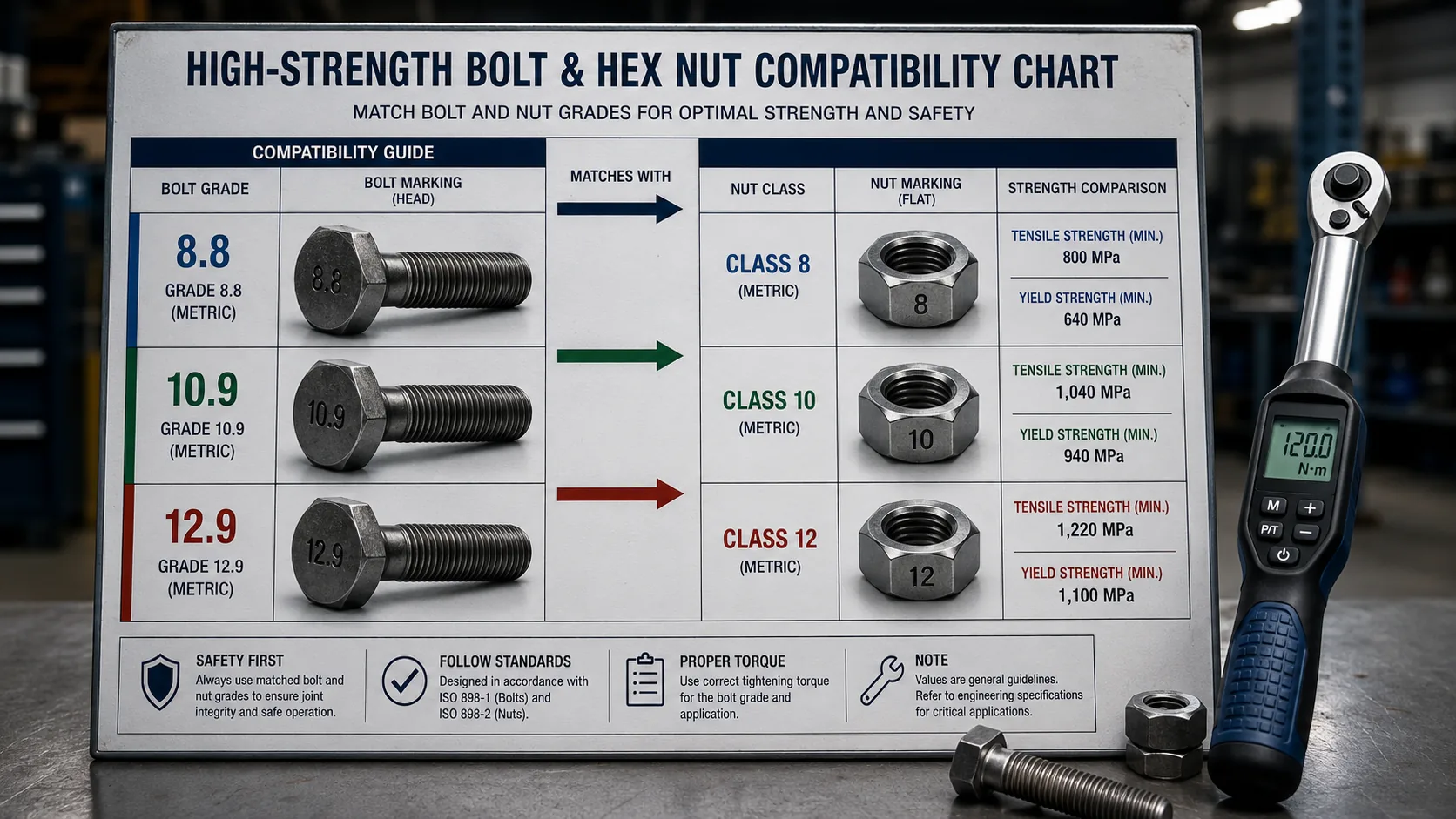
La compatibilità bullone-dado è la ragione principale per cui gli acquirenti cercano i gradi dei dadi esagonali. Il dado deve essere abbastanza resistente per il precarico del bullone, ma deve anche corrispondere al sistema di filettatura, al materiale, al rivestimento, alla condizione della rondella e al metodo di assemblaggio.
Quale Grado di Dado per Bulloni 8.8?
Per la maggior parte degli assemblaggi metrici in acciaio, i bulloni 8.8 sono comunemente abbinati a dadi di Classe 8. Il giunto deve comunque essere verificato per durezza della rondella, rivestimento, lubrificazione, impegno della filettatura e metodo di serraggio. Se una rondella morbida o un materiale di base morbido si deforma dopo il serraggio, il carico di serraggio può diminuire anche quando i gradi del bullone e del dado sono corretti.
Quale Grado di Dado per Bulloni 10.9?
Per bulloni 10.9, vengono comunemente utilizzati dadi di Classe 10. Se viene fornito un dado di grado inferiore, le filettature del dado possono strapparsi prima che il bullone raggiunga il precarico desiderato. Il guasto può sembrare un problema di installazione, ma la causa principale è spesso una classe di proprietà mancante nel RFQ o nella BOM.
Scenario sul campo integrato
Quale problema si è verificato: Un telaio di attrezzatura utilizzava bulloni 10.9, ma durante l'assemblaggio finale sono stati installati dadi di basso grado provenienti da scorte miste. Diversi dadi si sono strappati internamente prima di raggiungere il carico di serraggio target.
Perché è successo: La linea di acquisto specificava dimensione e finitura, ma non indicava dadi di Classe 10.
Causa reale del sistema: Il carico di prova del dado era inferiore al precarico richiesto dal giunto con bullone 10.9.
Azione correttiva: La BOM è stata rivista per includere norma ISO, dimensione, passo, Classe 10, materiale, rivestimento e requisiti di ispezione.
Prevenzione: Separare le scorte di dadi per classe di proprietà e richiedere la conferma del grado/classe su ogni RFQ per elementi di fissaggio ad alta resistenza.
Quale grado di dado per bulloni 12.9?
I gruppi bullone 12.9 richiedono una verifica ingegneristica. Possono essere necessari dadi di classe 12, ma il giunto deve essere anche valutato per dispersione di attrito, rischio di rivestimento, durezza della rondella, carico di fatica e metodo di serraggio. Questi gruppi non dovrebbero basarsi su valori di coppia generici senza validazione.
Abbinamento Bullone-Dado in Acciaio Inox A2-70 e A4-80
ISO 3506-2 copre le proprietà meccaniche e fisiche dei dadi in acciaio inossidabile resistenti alla corrosione con gradi e classi di proprietà specificati. I gruppi in acciaio inox A2-70 e A4-80 sono selezionati principalmente per la resistenza alla corrosione, non per il massimo precarico. A2 è comunemente associato all'acciaio inossidabile tipo 304, mentre A4 è comunemente associato all'acciaio inossidabile tipo 316. I fissaggi in acciaio inossidabile sono più soggetti a grippaggio rispetto a quelli in acciaio al carbonio, specialmente in installazioni a secco e ad alta velocità.
Compatibilità Bulloni Pollici e Dadi ASTM
Per i sistemi in pollici, non tradurre direttamente le classi di proprietà metriche in gradi ASTM. Confermare il disegno di progetto, la specifica ASTM del bullone, lo stile del dado, il requisito di rivestimento e il requisito del certificato di prova. Per applicazioni strutturali o di ancoraggio, i gradi ASTM A563 sono spesso specificati dai documenti di progetto.
Carico di prova, durezza e strappo della filettatura
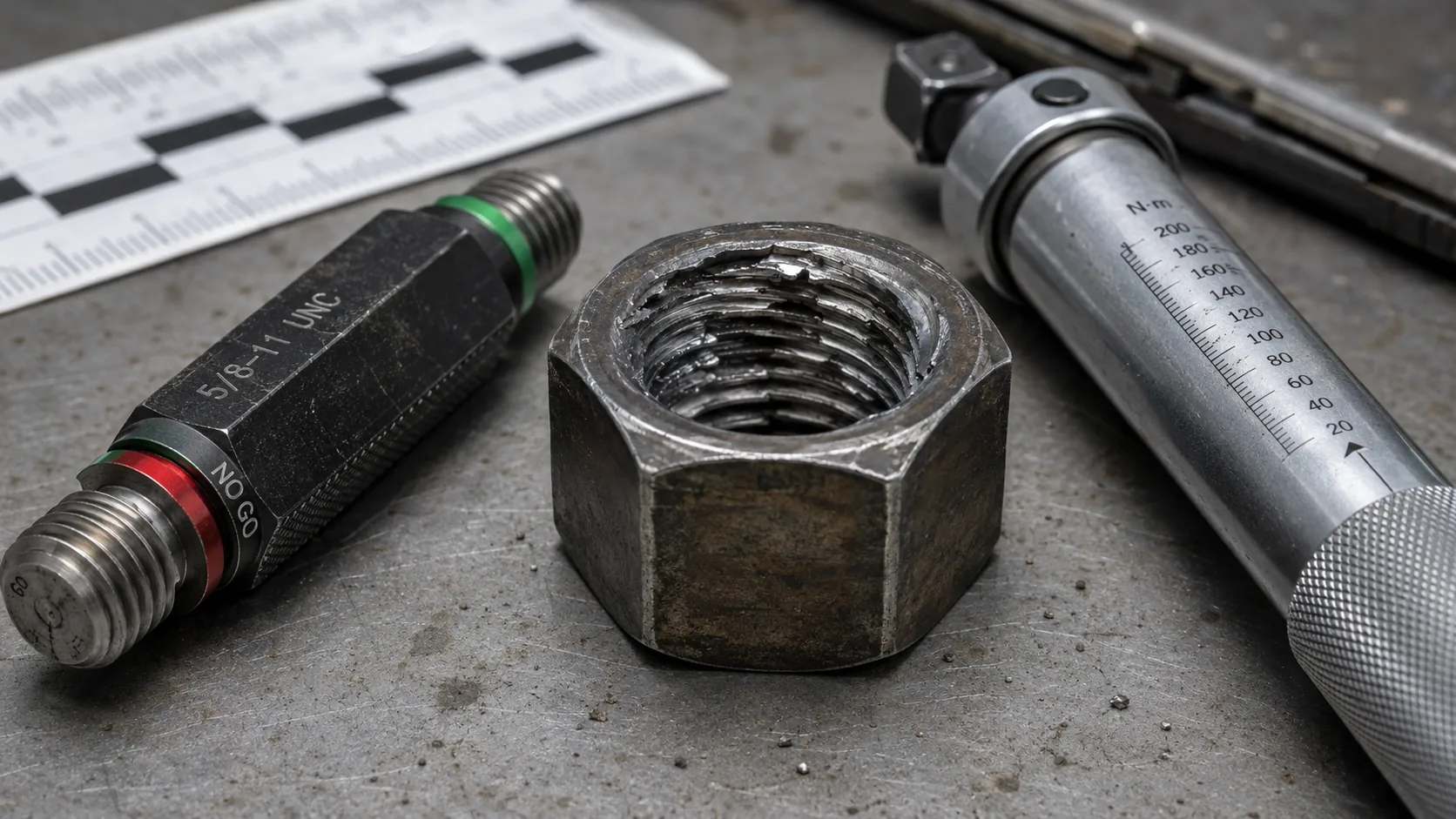
Il carico di prova e la durezza sono fondamentali per le prestazioni del grado del dado. Un dado può sembrare corretto, misurare corretto e comunque fallire se il suo carico di prova non è adatto al bullone di accoppiamento o se il controllo del trattamento termico è scarso.
Cos'è il carico di prova?
Il carico di prova è il carico specificato che un dado deve sopportare senza strippaggio della filettatura o deformazione permanente nelle condizioni di prova standard pertinenti. Negli assemblaggi reali, il carico di prova dà all'ingegnere la certezza che il dado possa sostenere il precarico previsto.
Perché è importante: Il carico di prova è più vicino alla modalità di rottura effettiva del dado rispetto a una descrizione generica di “resistente” o “per carichi pesanti”. Se il carico di prova è errato, il serraggio può richiedere tempo e coppia senza creare un carico di serraggio affidabile.
Perché le filettature interne dei dadi si strippano prima che il bullone si rompa
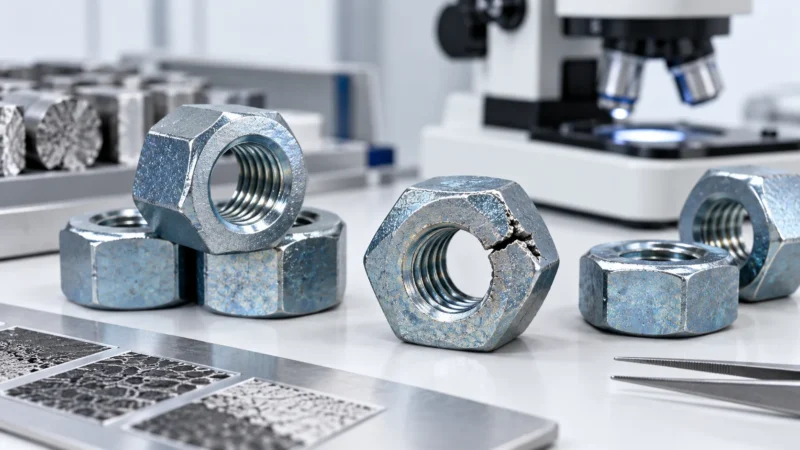
Le filettature dei dadi si strippano quando la capacità di taglio della filettatura interna è inferiore al carico applicato durante il serraggio. Ciò può essere causato da un basso grado, altezza del dado insufficiente, materiale errato, scarso trattamento termico, passo sbagliato, coppia eccessiva, smusso danneggiato o scarso impegno della filettatura.
Intervallo di durezza e controllo del trattamento termico
La durezza aiuta a confermare se il materiale e il trattamento termico rientrano nell'intervallo previsto. Un dado troppo morbido può deformarsi o stripparsi. Un dado troppo duro o mal lavorato può introdurre fragilità o rischio di cricche legate al rivestimento, a seconda del materiale e del processo. I dadi in acciaio legato come 35CrMo, 40Cr o equivalenti SCM435 necessitano di un controllo più stretto del trattamento termico quando utilizzati in giunti ad alto precarico.
Segni comuni di strippaggio della filettatura durante il montaggio
| Segno di montaggio | Significato probabile | Cosa Controllare |
|---|---|---|
| La chiave dinamometrica continua a girare ma il carico di serraggio non aumenta | Le filettature interne potrebbero tranciarsi | Grado del dado, carico di prova, impegno filettatura |
| Filettature appiattite dopo lo smontaggio | Strappo della filettatura o deformazione del materiale | Durezza, materiale, passo e sovracoppia |
| Il dado risulta morbido durante il serraggio finale | Bassa durezza o grado errato | Registrazione del trattamento termico e prova di durezza |
| Il dado si adatta a mano ma cede sotto coppia | La geometria è corretta ma la resistenza è insufficiente | Classe di proprietà e grado del bullone di accoppiamento |
| Il calibro passa/non passa fallisce dopo la verniciatura | Accoppiamento filettato influenzato dallo spessore del rivestimento | Spessore del rivestimento e ispezione post-rivestimento |
Scenari comuni di guasto del dado esagonale
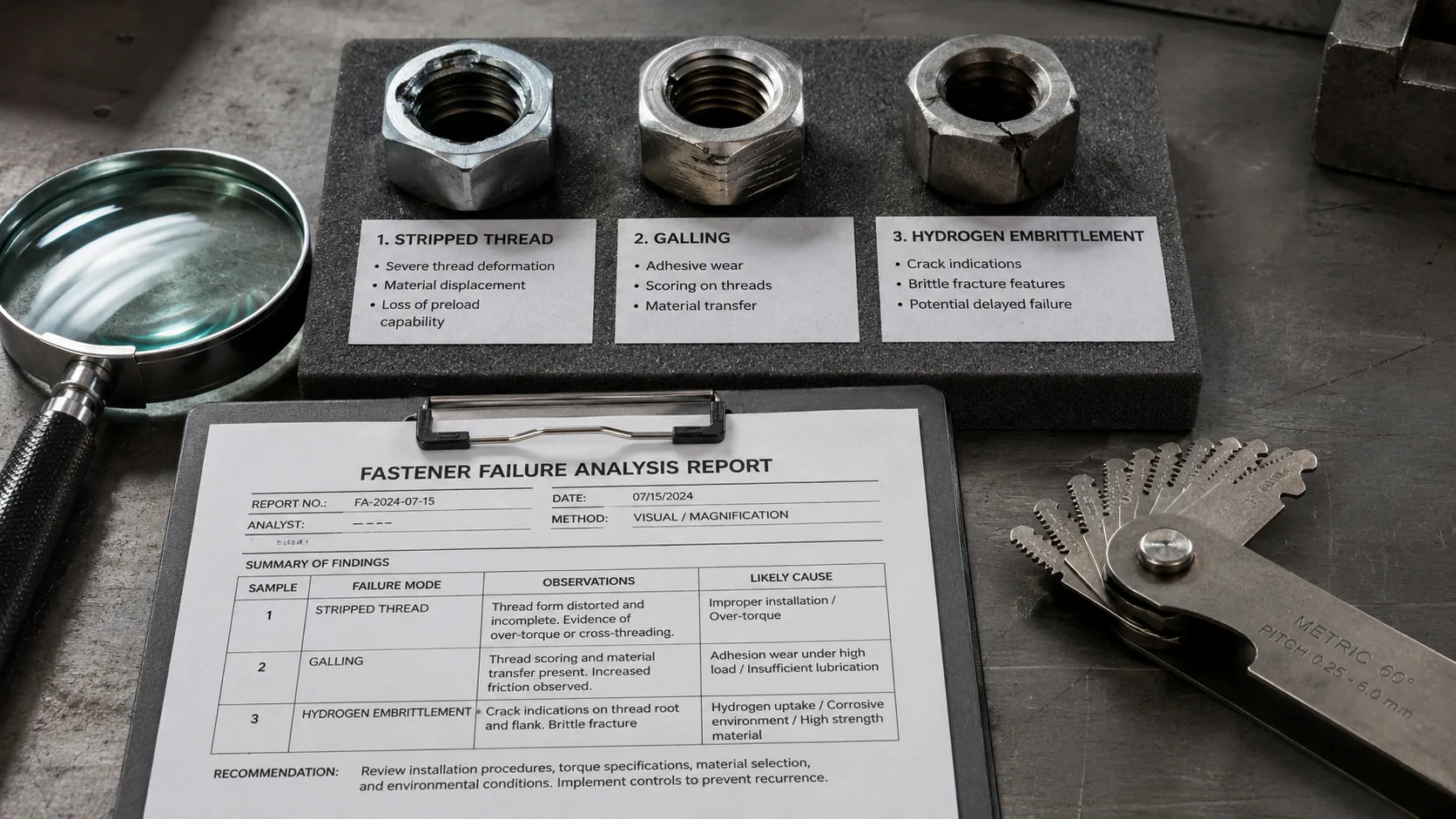
La maggior parte dei guasti del dado esagonale può essere ricondotta a una mancata corrispondenza tra carico, materiale, rivestimento e metodo di installazione. Il dado viene spesso incolpato come parte piccola, ma la causa principale è di solito una specifica incompleta o un processo di assemblaggio non controllato.
Dado di bassa qualità su bullone ad alta resistenza
Questo è il classico caso di strippatura del filetto. Il dado si adatta al bullone, ma il suo carico di prova non è sufficientemente alto per il precarico previsto. Il costo immediato è la rilavorazione. Il costo maggiore è il rischio di qualità se alcuni giunti lasciano la fabbrica sottoserraggiati.
Grippaggio e saldatura a freddo dell'acciaio inossidabile
I dadi in acciaio inossidabile possono grippare quando i filetti inossidabili scivolano sotto pressione. Il grippaggio non è una normale resistenza al serraggio. È una saldatura a freddo locale tra le superfici del filetto. Una volta iniziato il grippaggio, una coppia maggiore di solito peggiora il danno.
Scenario sul campo integrato
Quale problema si è verificato: Un bullone in acciaio inox 316 e un dado esagonale in acciaio inox 316 si sono grippati prima della coppia finale.
Perché è successo: I componenti sono stati installati a secco con un utensile elettrico.
Causa reale del sistema: Il contatto acciaio inox-acciaio inox, l'elevata pressione di contatto e l'alta velocità di installazione hanno causato grippaggio e saldatura a freddo.
Azione correttiva: I componenti danneggiati sono stati sostituiti, è stato aggiunto un composto antigrippaggio e la velocità di serraggio finale è stata ridotta.
Prevenzione: Utilizzare filetti puliti, composto antigrippaggio, velocità controllata e serraggio finale calibrato per assemblaggi in acciaio inox A2/A4.
Fragilizzazione da idrogeno dopo elettrodeposizione
I dadi in acciaio ad alta resistenza possono essere sensibili alla fragilizzazione da idrogeno quando la pulizia acida e l'elettrodeposizione sono scarsamente controllate. ASTM F1941/F1941M copre i rivestimenti elettrodeposti su fissaggi filettati e include precauzioni per la gestione del rischio di infragilimento da idrogeno e il trattamento termico di distensione per fissaggi ad alta resistenza e temprati superficialmente.
Scenario sul campo integrato
Quale problema si è verificato: Dadi elettrodeposti ad alta resistenza hanno mostrato cricche ritardate dopo il serraggio.
Perché è successo: I pezzi sono stati placcati dopo il trattamento termico e la documentazione di decompressione da idrogeno era incompleta.
Causa reale del sistema: L'idrogeno introdotto durante la lavorazione superficiale è rimasto nell'acciaio ad alta resistenza sollecitato.
Azione correttiva: L'acquirente richiedeva registrazioni di processo, conferma della cottura dove applicabile e campionamento del carico di prova.
Prevenzione: Per dadi ad alta resistenza, utilizzare fornitori di placcatura qualificati, specificare la decompressione da idrogeno quando richiesto e considerare il rivestimento in scaglie di zinco quando il rischio di idrogeno è inaccettabile.
Rottura per fatica dovuta a precarico insufficiente
La rottura per fatica non è sempre causata da una bassa resistenza del materiale. Se il precarico è troppo basso, i carichi ciclici esterni possono passare più gravemente attraverso il giunto bullone-dado. Un precarico insufficiente può derivare da un grado del dado errato, superfici di appoggio morbide, fattore K sbagliato, filettature danneggiate o serraggio non uniforme.
Allentamento per vibrazioni dovuto a progettazione errata del giunto
L'allentamento per vibrazioni può verificarsi quando il giunto perde il carico di serraggio o quando si verifica un movimento trasversale tra le parti serrate. Un grado del dado più alto da solo potrebbe non risolvere il problema. La soluzione può richiedere un precarico corretto, rondelle temprate, un metodo di bloccaggio della filettatura, un design del dado flangiato, dadi autobloccanti in metallo o una riprogettazione del giunto.
| Scenario di guasto | Causa probabile | Prevenzione |
|---|---|---|
| Strappo della filettatura | Grado del dado troppo basso, impegno insufficiente, passo errato | Abbinare il grado del dado al grado del bullone e verificare il carico di prova |
| Grippaggio dell'acciaio inossidabile | Serraggio a secco tra acciaio inossidabile | Utilizzare antigrippaggio e ridurre la velocità di installazione |
| Cricca ritardata | Infragilimento da idrogeno dopo la zincatura | Controllo del processo di zincatura e requisiti di distensione |
| Allentamento da vibrazioni | Precarico insufficiente o metodo di bloccaggio inadeguato | Verificare precarico, durezza della rondella e strategia di bloccaggio |
| Dispersione della coppia | Variazione del rivestimento, lubrificazione o superficie | Definire il fattore K o validare i dati coppia-precarico |
Effetto del materiale e del rivestimento sulle prestazioni dei dadi esagonali
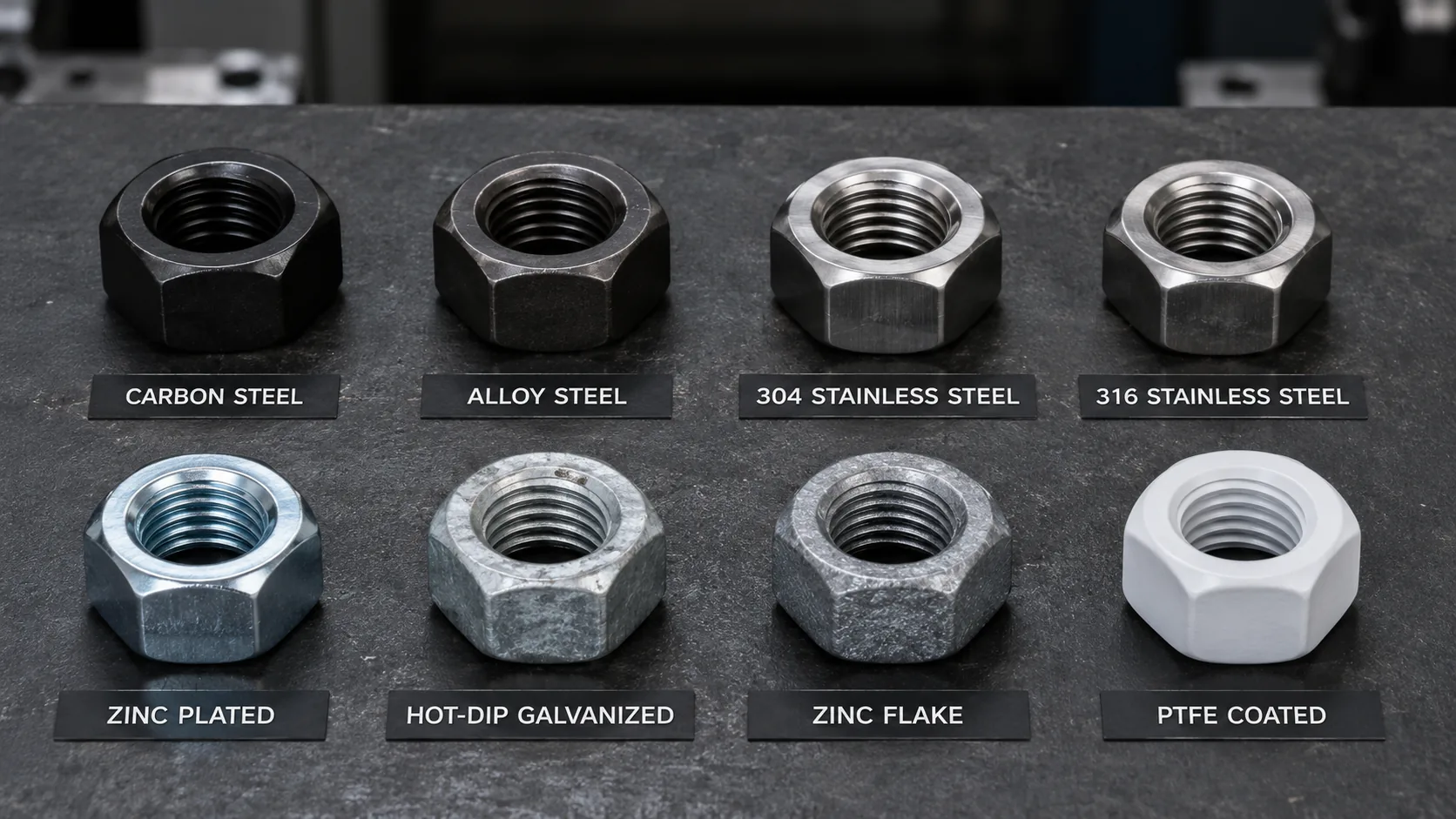
Il materiale e il rivestimento possono modificare le prestazioni di un dado in fase di assemblaggio. Il grado definisce la capacità meccanica in condizioni standard, ma la corrosione, l'attrito, lo spessore del rivestimento, il rischio di idrogeno e il metodo di installazione determinano se il giunto funziona in campo.
Dadi in acciaio al carbonio
I dadi in acciaio al carbonio sono economici e ampiamente utilizzati in macchinari generali e costruzioni. La loro resistenza alla corrosione dipende solitamente dal trattamento superficiale. Senza rivestimento o protezione con olio, la corrosione può influenzare l'accoppiamento della filettatura, la dispersione della coppia e lo smontaggio.
Dadi in acciaio legato
I dadi in acciaio legato sono scelti per giunti ad alta resistenza dove sono importanti la risposta al trattamento termico e il carico di prova. Questi dadi richiedono trattamento termico controllato, prove di durezza, controllo della decarburazione e controllo del processo di rivestimento. Le famiglie di materiali tipiche possono includere 35CrMo, 40Cr, SCM435 o acciai legati equivalenti, a seconda degli standard regionali e delle specifiche del cliente.
Dadi in acciaio inossidabile 304 / A2
I dadi in acciaio inossidabile 304 / A2 sono utilizzati per la resistenza generale alla corrosione in ambienti interni e in condizioni esterne moderate. Non sono una soluzione universale per ambienti marini o ricchi di cloruri. Il rischio di grippaggio deve essere considerato durante l'installazione, specialmente nelle combinazioni bullone in acciaio inossidabile + dado in acciaio inossidabile.
Dadi in acciaio inossidabile 316 / A4
I dadi in acciaio inossidabile 316 / A4 offrono una migliore resistenza ai cloruri rispetto al 304 / A2 e sono spesso scelti per ambienti marini, costieri, di trattamento acque reflue e chimici. Il compromesso è un costo più elevato e la stessa necessità di controllo dell'installazione antigrippaggio.
Zincatura elettrolitica, zincatura lamellare, zincatura a caldo e rivestimenti PTFE
La zincatura elettrolitica è comune per applicazioni economiche in interni e a bassa corrosione. La zincatura commerciale è spesso specificata in intervalli approssimativi come 5–12 μm, ma lo spessore richiesto e il test di corrosione devono essere definiti nella richiesta di offerta. La zincatura a caldo fornisce una protezione più forte dalla corrosione esterna, ma può creare problemi di accoppiamento della filettatura se la maschiatura e l'ispezione del dado non sono controllate. I rivestimenti a scaglie di zinco sono spesso considerati per elementi di fissaggio ad alta resistenza dove il rischio di infragilimento da idrogeno è una preoccupazione. I rivestimenti in PTFE riducono l'attrito e possono aumentare il precarico alla stessa coppia.
Scenario sul campo integrato
Quale problema si è verificato: I dadi zincati a caldo non potevano essere avvitati liberamente sui bulloni zincati a caldo in un cantiere.
Perché è successo: Il requisito del rivestimento era specificato, ma la tolleranza della filettatura e l'ispezione post-rivestimento con calibro non sono state effettuate.
Causa reale del sistema: Lo spessore dello zinco ha modificato l'accoppiamento della filettatura e i dadi non sono stati verificati con la condizione del bullone di accoppiamento.
Azione correttiva: Sono stati forniti dadi di ricambio con un'adeguata ispezione dell'accoppiamento della filettatura.
Prevenzione: Per i fissaggi HDG, specificare il rivestimento, il sovrametallo per la filettatura, l'ispezione con calibro passa/non passa e la compatibilità con il bullone di accoppiamento.
Spessore del rivestimento, fattore K e rischio di infragilimento da idrogeno
Il rivestimento modifica l'attrito. L'attrito modifica il precarico. Un rivestimento a basso attrito come il PTFE può creare un precarico maggiore alla stessa coppia rispetto alla zincatura a secco. La zincatura su acciaio ad alta resistenza può introdurre il rischio di infragilimento da idrogeno se i controlli di processo sono deboli.
| Condizione di assemblaggio/finitura | Intervallo tipico di discussione del fattore K | Rischio di prestazione del grado | Nota richiesta offerta |
|---|---|---|---|
| Acciaio semplice asciutto | Circa 0,20–0,30 | Elevata dispersione dovuta alle condizioni superficiali e alla ruggine | Definire la protezione con olio e stoccaggio |
| Zincato a secco | Circa 0,18–0,25 | Rischio idrogeno per acciai ad alta resistenza se la placcatura è mal controllata | Specificare spessore del rivestimento e trattamento di distensione se applicabile |
| Leggermente lubrificato | Circa 0,12–0,18 | La stessa coppia può generare un precarico maggiore | Non copiare i valori di coppia a secco |
| Scaglie di zinco con rivestimento superiore controllato | Specifico del fornitore | L'attrito deve essere ancora controllato | Definire il rivestimento superiore e la condizione di attrito |
| Zincatura a caldo | Specifico del progetto | Interferenza di accoppiamento della filettatura | Richiedere ispezione della filettatura dopo la rivestitura |
| Rivestimento PTFE / tipo Xylan | Spesso inferiori ai valori dello zinco a secco | Precarico maggiore alla stessa coppia se non ricalcolato | Confermare il fattore K o i dati coppia-precarico |
I range del fattore K sono solo per discussione ingegneristica preliminare. I giunti critici devono utilizzare dati coppia-precarico testati nelle condizioni effettive di rivestimento, rondella, lubrificazione e utensile.
Tabella comparativa dei gradi dei dadi esagonali
La tabella seguente è un confronto pratico per acquisti e discussioni tecniche. Non sostituisce lo standard acquistato più recente o il disegno di progetto.
| Grado / Classe del dado | Sistema di filettatura | Abbinamento comune con bulloni | Applicazione tipica | Rischio principale |
|---|---|---|---|---|
| Classe 5 / Classe 6 | Metrica | Bulloni 4.8 / 5.8 | Staffette per carichi leggeri e ferramenta generica | Bassa capacità di precarico se utilizzata con bulloni più resistenti |
| Classe 8 | Metrica | Bulloni 8.8 | Macchinari, telai, attrezzature | Rivestimento errato o danneggiamento della filettatura influisce sul serraggio |
| Classe 10 | Metrica | Bulloni 10.9 | Giunti meccanici ad alta resistenza | Carico di prova, durezza e rischio di idrogeno devono essere controllati |
| Classe 12 | Metrica | Bulloni 12.9 o giunti progettati | Giunti di precisione per carichi elevati | Installazione e controllo dell'attrito sono critici |
| ASTM A563 Grado A | Pollici / definito dal progetto | Bulloni di resistenza medio/bassa specificati dal progetto | Uso strutturale o meccanico generale | Abbinamento errato o grado mancante nella richiesta di offerta |
| ASTM A563 Grado DH | Pollici / definito dal progetto | Bulloni strutturali / assemblaggi di ancoraggio quando specificati | Bulloneria strutturale pesante | Discrepanza di grado o stile errato del dado |
| Dadi per servizio ASTM A194 | Pollici / metrico in base all'ordine | Sistemi di bulloneria per pressione o alta temperatura | Flange, tubazioni, apparecchiature a pressione | Una sostituzione errata può far fallire la revisione della documentazione |
| Dadi in acciaio inox ASTM F594 | Pollice | Bulloni / prigionieri in acciaio inox dove specificato | Servizio generale resistente alla corrosione | Gruppo di lega errato o rischio di grippaggio |
| A2-70 | Acciaio inox metrico | Bulloni in acciaio inox A2 | Assemblaggi generali in acciaio inox | Grippaggio se installato a secco |
| A4-80 | Acciaio inox metrico | Bulloni in acciaio A4 | Ambienti marini, costieri, chimici | Grippaggio, costo e dispersione del precarico |
Come specificare i gradi dei dadi esagonali nelle richieste di offerta
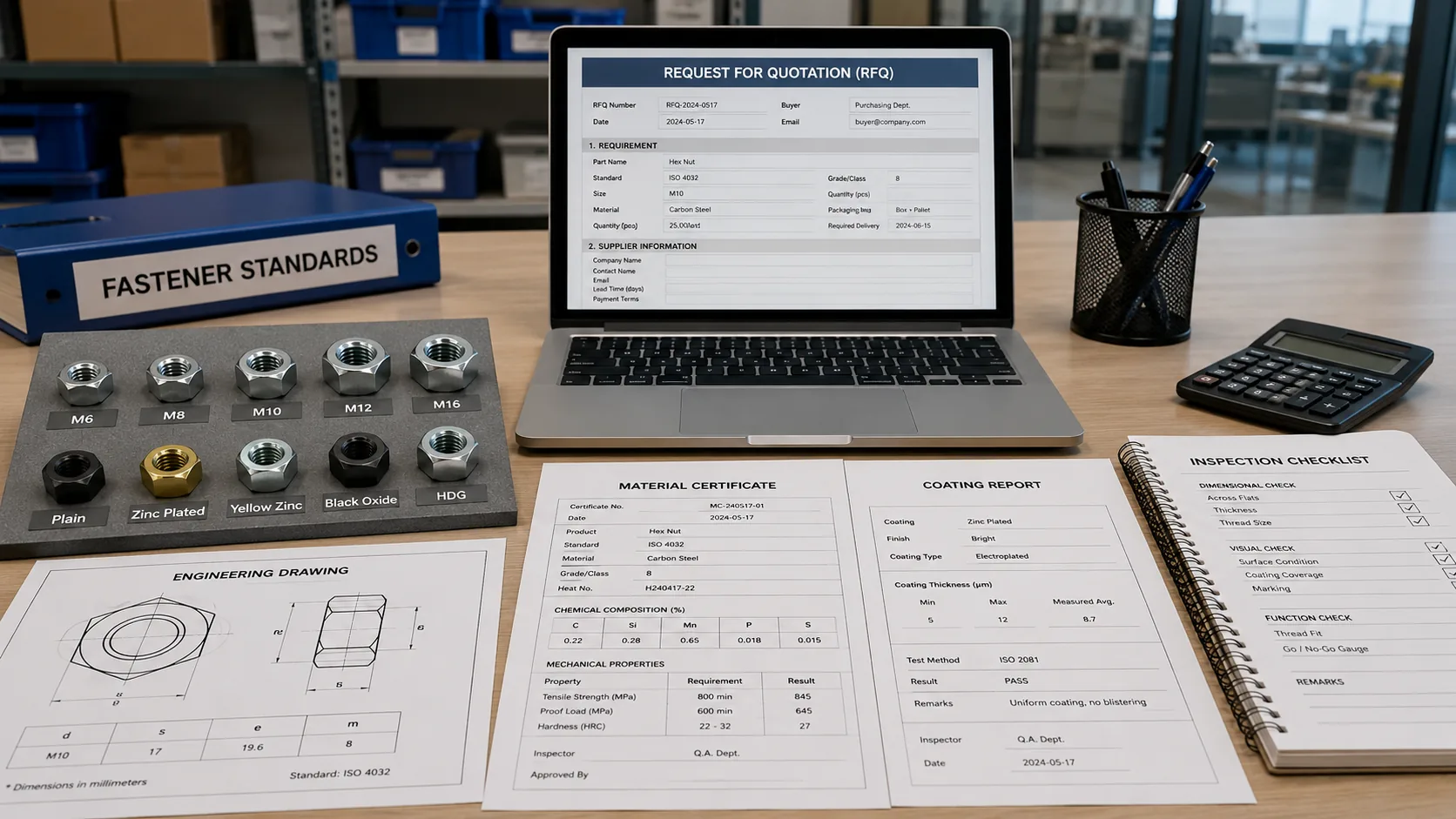
Una buona RFQ elimina le supposizioni. Comunica al fornitore lo standard dimensionale, la dimensione della filettatura, il passo, il grado, il materiale, il rivestimento, il requisito di ispezione e l'ambiente di applicazione. Ciò riduce quotazioni errate, ritardi nei campioni, lotti respinti e problemi di assemblaggio in campo.
Formato RFQ corretto per dadi metrici ISO
Dado esagonale ISO 4032 M12 × 1.75 Classe 8, acciaio al carbonio, zincato Cr3+, tolleranza filettatura 6H, con certificato del materiale, rapporto di durezza e ispezione con calibro passa/non passa.
Formato RFQ corretto per dadi ASTM in pollici
Dado esagonale pesante ASTM A563 Grado DH, 3/4-10 UNC, zincato a caldo, fornito con certificato di zincatura, prova di durezza e tracciabilità del lotto.
Errori comuni nelle richieste di preventivo
- Scrivere solo “dado M12” senza passo o grado.
- Usare “Grado 8” quando il progetto richiede effettivamente Classe 8 metrica.
- Specificare acciaio inossidabile senza A2/A4, gruppo ASTM F594 o grado del materiale.
- Richiedere zincatura a caldo senza controllo dell'accoppiamento della filettatura.
- Ignorare il grado del bullone di accoppiamento.
- Copiare una tabella di coppia generica senza verificare rivestimento e lubrificazione.
- Richiesta di dadi elettroplaccati ad alta resistenza senza chiedere informazioni sul controllo della fragilità da idrogeno.
Domande del fornitore prima dell'ordine all'ingrosso
| Domanda al Fornitore | Perché è importante |
|---|---|
| Quale grado di bullone o specifica di barra filettata viene utilizzato? | Conferma la compatibilità con il carico di prova del dado |
| Il montaggio è a secco o lubrificato? | Influisce sul fattore K e sul precarico finale |
| Quale rivestimento è richiesto? | Influisce su corrosione, accoppiamento della filettatura, attrito e rischio idrogeno |
| È richiesta la prova di carico o la prova di durezza? | Controlla l'accettazione meccanica |
| È richiesta la tracciabilità del lotto? | Supporta il controllo qualità e l'audit del cliente |
| Il dado è utilizzato in servizi strutturali, di pressione o di sicurezza? | Potrebbe richiedere documenti ASTM specifici o di progetto |
| Il dado sarà assemblato con bulloni in acciaio inossidabile? | Attiva il controllo dell'grippaggio e la revisione dell'anti-grippaggio |
CTA: Se non sei sicuro che il carico di prova del dado corrisponda al precarico del bullone, invia il tuo disegno, il grado del bullone, la dimensione della filettatura, il rivestimento, le condizioni della rondella e l'ambiente di applicazione al nostro team di ingegneria degli elementi di fissaggio per una revisione di compatibilità prima dell'ordine all'ingrosso.
Lista di controllo per l'ispezione dei gradi dei dadi esagonali
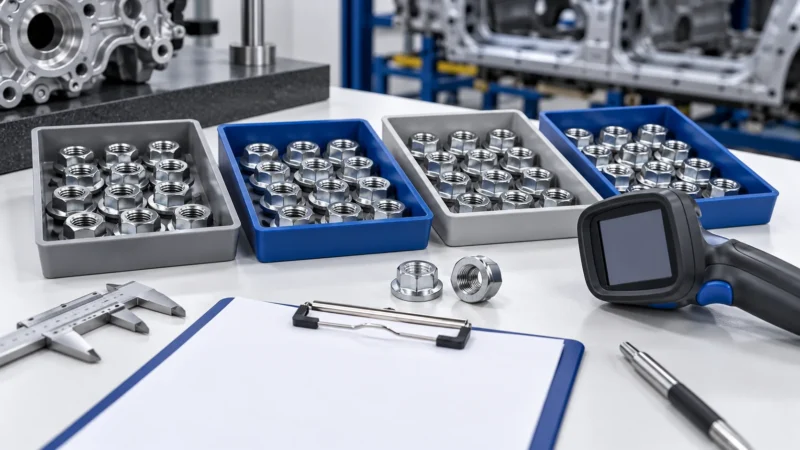
L'ispezione in entrata deve confermare che i dadi forniti corrispondano all'RFQ e al giunto previsto. L'ispezione non è solo visiva; il grado, l'accoppiamento della filettatura, la durezza, il carico di prova, il rivestimento e la documentazione possono influenzare le prestazioni.
Marcatura del grado e controllo visivo
Controllare le marcature del grado dove applicabile, i difetti superficiali, la copertura del rivestimento, la deformazione, la ruggine, le bave, le condizioni dello smusso e le etichette dell'imballaggio. La mancanza di marcatura non è sempre un difetto, a seconda dello standard e della dimensione, ma deve corrispondere al requisito di acquisto.
Ispezione con calibro per filettatura
Utilizzare calibri passa/non passa per verificare l'accoppiamento della filettatura, specialmente dopo la zincatura o la galvanizzazione. Per i dadi zincati a caldo, l'ispezione con calibro è un modo pratico per evitare ritardi nell'assemblaggio in cantiere.
Prova di carico e prova di durezza
Per lotti critici, richiedere i rapporti di prova di carico e durezza secondo la norma richiesta. Questi test aiutano a confermare che il materiale e il trattamento termico siano adatti al grado specificato.
Requisiti di spessore del rivestimento e nebbia salina
Se la resistenza alla corrosione è importante, specificare lo spessore del rivestimento, il requisito del test di nebbia salina e i criteri di accettazione. Solo “zincato” non è sufficiente per un acquisto B2B controllato. Per i sistemi di zincatura elettrolitica, ASTM F1941/F1941M o ASTM B633 può essere rilevante a seconda del pezzo e del requisito del cliente.
Tracciabilità del lotto e certificato del materiale
Per ordini OEM, strutturali, in servizio di pressione o per l'esportazione, la tracciabilità del lotto e i certificati del materiale aiutano a ridurre i tempi di contestazione se si presenta un problema di qualità in seguito. Una documentazione scarsa può aumentare i tempi di consegna anche quando il pezzo stesso è corretto.
| Voce di ispezione | Richiesto per ordini critici? | Perché è importante |
|---|---|---|
| Conferma di standard e grado | Sì | Previene la spedizione del grado errato |
| Ispezione con calibro filetto | Sì | Conferma l'accoppiamento della filettatura e il sovrametallo di rivestimento |
| Rapporto di durezza | Spesso | Verifica il trattamento termico e la consistenza del grado |
| Rapporto di prova di carico | Per ordini ad alto carico o specificati | Conferma della caricabilità |
| Rapporto sullo spessore del rivestimento | Quando è specificato il rivestimento | Controlla la corrosione e l'interferenza della filettatura |
| Registro del trattamento di distensione per fragilità da idrogeno | Per parti elettroplaccate ad alta resistenza quando richiesto | Riduce il rischio di cricche ritardate |
| Numero di lotto e certificato dei materiali (MTC) | Per ordini OEM / export / strutturali | Supporta la tracciabilità e l'audit di qualità |
| Etichetta di imballaggio e segregazione dei lotti | Sì | Previene la miscelazione di classi 8 / 10 / gradi ASTM |
CTA Revisione Progetto
Non sei sicuro che il precarico del bullone superi il carico di prova del dado? Inviaci il tuo disegno, grado del bullone, dimensione della filettatura, materiale, rivestimento, condizione della rondella e ambiente di applicazione. Il nostro team di ingegneria degli elementi di fissaggio può aiutare a verificare la compatibilità del grado del dado, il rischio di rivestimento, l'accoppiamento della filettatura, il rischio di grippaggio e i requisiti di ispezione prima dell'ordine in grandi quantità.
Puoi iniziare dal nostro pagina di richiesta preventivo o rivedere la più ampia guida completa ai dadi esagonali prima di preparare la tua richiesta di offerta.
FAQ sui gradi dei dadi esagonali
Che grado di dado devo usare con bulloni 8.8?
Per la maggior parte degli assemblaggi metrici in acciaio, un bullone 8.8 è comunemente abbinato a un dado di Classe 8. I giunti critici dovrebbero anche verificare il carico di prova, la durezza della rondella, il rivestimento, la lubrificazione, l'ingaggio della filettatura e il metodo di serraggio.
I dadi di classe 8 possono essere utilizzati con bulloni 10.9?
I dadi di classe 8 generalmente non sono l'abbinamento preferito per bulloni 10.9 dove è richiesto un precarico completo. Un dado di classe 10 è comunemente utilizzato, ma la decisione finale deve seguire il disegno, il progetto del giunto e la norma applicabile.
Qual è la differenza tra i dadi Classe 8 e Grado 8?
La Classe 8 si riferisce solitamente a una classe di proprietà metrica ISO. Il Grado 8 è spesso usato nel linguaggio dei fissatori in pollici, ma il significato esatto dipende dallo standard. Non trattare Classe 8 e Grado 8 come intercambiabili senza verificare il sistema di riferimento.
Cosa significa A2-70 sui dadi in acciaio inossidabile?
A2 si riferisce a un gruppo di acciaio inossidabile comunemente associato all'acciaio inossidabile tipo 304, e 70 si riferisce alla classe di resistenza. I dadi A2-70 sono utilizzati per applicazioni generali in acciaio inossidabile, ma richiedono comunque il controllo dell'incollaggio durante l'installazione.
Perché le filettature dei dadi esagonali si danneggiano durante il serraggio?
Le filettature si strappano quando la capacità di carico della filettatura interna è inferiore al carico di serraggio applicato. Le cause comuni includono grado del dado errato, carico di prova basso, impegno filettatura insufficiente, passo errato, coppia eccessiva, filettature danneggiate o trattamento termico scadente.
I dadi ad alta resistenza zincati presentano rischio di infragilimento da idrogeno?
I dadi elettrozincati ad alta resistenza possono presentare rischio di infragilimento da idrogeno se i processi di decapaggio acido, zincatura e distensione non sono controllati. Per ordini critici, specificare la norma di rivestimento pertinente, i registri di processo, il requisito di distensione e il requisito di prova.
Quali informazioni dovrei includere in una richiesta di preventivo per un dado esagonale di grado?
Includere norma, dimensione, passo, grado o classe di proprietà, materiale, rivestimento, quantità, requisito del certificato, requisito di ispezione, imballaggio, tracciabilità del lotto, applicazione e grado del bullone di accoppiamento.