








Le PPAP pour les écrous automobiles personnalisés est un processus d'approbation et de documentation au niveau du projet. Il aide les acheteurs à confirmer si un fournisseur peut fabriquer un écrou conformément au dessin client, à la révision, aux spécifications et aux contrôles de production convenus.
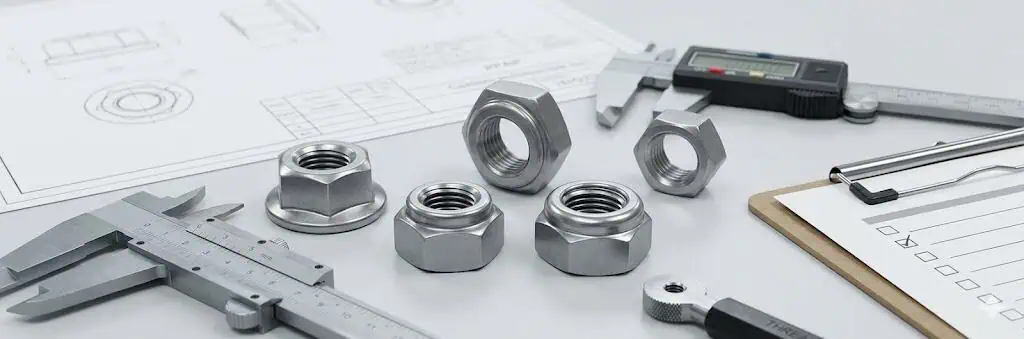
Image conceptuelle pour l'éducation de l'acheteur. Elle ne représente pas un package PPAP certifié ou une approbation client.
Réponse rapide
Le PPAP pour les écrous automobiles personnalisés aide un acheteur et un fournisseur à aligner un écrou fabriqué sur plan ou spécifique à une application avec la révision du dessin, le processus de fabrication, le plan d'inspection et l'exigence d'approbation du projet. Il est particulièrement pertinent lorsque l'écrou affecte un joint soudé de tôle, un support sujet aux vibrations, un panneau à sertissage automatique, une bride porteuse, un module intérieur, une structure de siège, un plateau de batterie, un support de châssis ou tout autre assemblage automobile où la documentation et la traçabilité sont importantes.
Le principal risque est de considérer le PPAP comme une promesse générique du fournisseur. Le PPAP ne remplace pas la révision du dessin, la confirmation du matériau et du revêtement, les contrôles de calibre de filetage, la charge d'épreuve, le couple de dévissage, l'arrachement, l'extraction, le couple de maintien ou la validation du client lorsque ces éléments sont requis. Avant la soumission de prix, confirmez le dessin, la fonction de l'écrou, le matériau, le revêtement, la portée des essais, le niveau PPAP, l'exigence IMDS, la traçabilité des lots et les étiquettes d'emballage. L'étape suivante consiste à envoyer le dessin et les exigences de documentation qualité pour examen du projet.
Ce que le PPAP signifie pour les écrous automobiles personnalisés
Pour les écrous automobiles personnalisés, le PPAP est utilisé pour soutenir l'approbation des pièces de production par rapport à une exigence spécifique du client. Dans le cadre de l'AIAG, le PPAP définit un processus d'approbation des pièces de production destiné à montrer que le processus de production du fournisseur peut répondre de manière cohérente aux exigences du dossier de conception technique et aux spécifications. Le mot clé pour les acheteurs est “ spécifique ”. Un dossier PPAP doit se rapporter à un dessin défini, une révision de dessin, un numéro de pièce, un matériau, un revêtement, un itinéraire de processus, un plan d'inspection et un niveau d'approbation.
Un écrou automobile personnalisé peut être un écrou hexagonal standard avec un matériau ou un revêtement spécial, ou une pièce fabriquée sur plan avec une bride, une saillie, une fonction de couple résistant, une profondeur de filet, un pilote, une dentelure, une douille ou une structure anti-rotation non standard. Pour plus d'informations sur les projets basés sur des plans, consultez le guide de SUNHYINGS sur écrous spéciaux fabriqués sur plan.
Le PPAP est spécifique au projet, pas une déclaration générique sur le produit
Une façon utile d'évaluer le PPAP est de se demander : “ Quelle pièce, quelle révision, quel processus et quelle exigence d'approbation ce dossier soutient-il ? ” Si ces éléments ne sont pas clairs, la discussion sur le PPAP n'est pas prête.
Un acheteur devrait éviter de demander seulement : “ Pouvez-vous fournir un PPAP ? ” Une meilleure question est : “ Pouvez-vous examiner cette révision de plan et confirmer quels documents, mesures, tests et enregistrements de traçabilité peuvent être préparés pour le niveau PPAP demandé ? ”
Pourquoi les écrous personnalisés nécessitent plus qu'une correspondance de taille
Pour les écrous automobiles, une taille de filet correcte n'est qu'une partie de la décision. Un écrou peut correspondre au boulon d'accouplement mais échouer parce que la surface d'appui est trop petite, que le revêtement affecte l'ajustement du filet, que la saillie de soudure est instable, que la fonction de couple résistant n'est pas adaptée à l'assemblage, ou que l'épaisseur de la tôle ne supporte pas la conception de sertissage ou de soudure.
Positionnement de SUNHYINGS écrous spéciaux personnalisés en tant que passerelle produit et ingénierie, mais cet article sur le PPAP se concentre sur la documentation côté acheteur et l'évaluation des fournisseurs plutôt que sur la sélection du catalogue de produits.
Quand le PPAP n'est pas la bonne première question
Dans l'approvisionnement précoce, la première question ne devrait pas toujours être “ Pouvez-vous fournir un PPAP ? ” Une meilleure première question est de savoir si le fournisseur dispose de suffisamment d'informations pour comprendre la fonction de l'écrou, le processus de fabrication, le risque d'inspection et le périmètre d'approbation. Sans cette base, une réponse PPAP peut être trop vague pour soutenir la cotation ou l'approbation d'échantillon.
| Situation de l'acheteur | Meilleure première question | Pourquoi c'est important |
|---|---|---|
| Seule une photo d'échantillon est disponible. | Le fournisseur peut-il vérifier les dimensions, le filetage et le matériau avant la cotation ? | Le périmètre PPAP ne peut pas être défini de manière fiable sans dessin ou données de mesure vérifiées. |
| La pièce est un écrou à souder pour tôle. | Quelle épaisseur de tôle, procédé de soudage et exigence de couple de dévissage ou de résistance à l'arrachement doivent être vérifiés ? | La performance de soudure dépend de la géométrie de la projection, de l'état du panneau et du contrôle du processus. |
| Le revêtement peut changer après l'échantillonnage. | Le changement de revêtement affecte-t-il l'ajustement du filetage, le contrôle par calibre ou le comportement au couple ? | Le revêtement peut modifier les performances fonctionnelles et les preuves d'approbation. |
| L'acheteur demande d'abord le prix unitaire le plus bas. | Le devis inclut-il les inspections requises, la traçabilité et la portée documentaire ? | Un prix bas peut exclure les tests, la préparation PPAP ou les exigences de contrôle de production. |
Ce que le PPAP peut prouver—et ce qu'il ne prouve pas
Le PPAP peut fournir la preuve que le fournisseur a examiné et maîtrisé la pièce par rapport aux exigences convenues. Il peut inclure des enregistrements liés au dessin, des résultats dimensionnels, des preuves de matériau, des preuves de revêtement, de la documentation de processus, des plans de contrôle, des résultats de tests fonctionnels et des documents de soumission si nécessaire.
Cependant, le PPAP ne doit pas être interprété comme une garantie que l'écrou fonctionnera dans tous les assemblages automobiles possibles. Il ne remplace pas une conception de joint correcte, une stratégie de couple validée, un contrôle du processus de soudage, des tests de corrosion, une évaluation des vibrations ou une approbation du client.

Utilisez le PPAP comme preuve documentaire, et non comme un remplacement des tests spécifiques à l'application et de l'approbation du client.
| Domaine PPAP | Ce qu'il peut étayer | Ce qu'il ne prouve pas automatiquement |
|---|---|---|
| Dessin et révision | La pièce est examinée par rapport à un enregistrement de conception spécifique. | La conception convient à toutes les conditions d'assemblage. |
| Résultats dimensionnels | Les dimensions clés sont mesurées par rapport aux exigences convenues. | Performance à long terme du joint ou comportement en fatigue. |
| Preuve matérielle | Un enregistrement ou certificat de matériau peut être fourni sur demande. | Résistance à la corrosion, soudabilité ou fatigue sans examen de l'application. |
| Preuve de revêtement | Le type de revêtement, l'épaisseur ou un rapport associé peuvent être vérifiés si nécessaire. | Comportement de couple correct après placage, sauf si testé ou spécifié. |
| Essais fonctionnels | Des essais spécifiques peuvent soutenir l'approbation s'ils sont définis par le dessin ou le client. | Toutes les charges de terrain possibles, conditions de vibration ou cas de mauvaise utilisation. |
| Traçabilité | L'identification des lots et les enregistrements de production peuvent être contrôlés si nécessaire. | Garantie zéro défaut ou approbation automatique du client. |
Preuve documentaire
La documentation PPAP est précieuse car elle crée un enregistrement d'approbation. Elle peut aider l'acheteur et le fournisseur à s'aligner sur le dessin, le processus de production, la méthode d'inspection et les attentes de soumission. Pour l'approvisionnement automobile, cela réduit l'ambiguïté avant la production de masse.
Validation technique toujours requise
Un rapport dimensionnel peut montrer que la hauteur de l'écrou, le plat, le filetage et le diamètre de la bride sont conformes aux spécifications, mais il ne prouve pas automatiquement que l'écrou maintiendra la charge de serrage dans un support sujet aux vibrations. Un rapport de revêtement peut soutenir les exigences de corrosion, mais il ne prouve pas automatiquement le comportement couple-tension après placage.
Pour un contexte orienté défaillance, les acheteurs peuvent également consulter Problèmes d'assemblage automobile résolus par des écrous spéciaux.
Saisies de l'acheteur nécessaires avant de demander un PPAP
Une demande de PPAP devient plus efficace lorsque l'acheteur fournit des données techniques et qualité complètes avant la soumission. Si le fournisseur ne reçoit qu'une photo d'échantillon ou un nom de pièce vague, la soumission peut manquer des exigences importantes. Cela peut entraîner des reprises, des échantillons retardés, un mauvais périmètre de documentation ou un risque d'approbation.

Les éléments de la liste de contrôle sont destinés à la préparation de l'acheteur et doivent être confirmés par rapport au plan réel et aux exigences du client.
| Saisie de l'acheteur | Pourquoi c'est important | Risque si manquant |
|---|---|---|
| Dernière révision du plan | Définit la géométrie approuvée et les notes. | Le fournisseur peut proposer ou échantillonner la mauvaise version. |
| Numéro de pièce et application | Relie l'écrou à son rôle d'assemblage. | Le contrôle qualité peut être trop générique. |
| Diamètre de filetage, pas et tolérance | Contrôle l'ajustement, l'inspection par calibre et la surépaisseur de placage. | Problèmes d'ajustement du filetage après revêtement. |
| Matériau et classe de dureté / propriété | Affecte la résistance, le processus de formage et le traitement thermique. | Hypothèse erronée sur le matériau ou la résistance. |
| Exigence de revêtement | Affecte la résistance à la corrosion, l'ajustement du filetage et le comportement au couple. | Défaillance de jauge, variation de couple ou inadéquation de corrosion. |
| Position d'application | Aide à évaluer le risque du joint. | Le fournisseur peut négliger les besoins en soudure, vibration, arrachement ou couple. |
| Exigence de test fonctionnel | Définit ce qui doit être prouvé. | Le dossier PPAP peut manquer de preuves de test critiques. |
| Niveau PPAP, IMDS et traçabilité | Définir les attentes en matière de soumission et de contrôle des enregistrements. | Modifications tardives de la documentation et retard d'approbation. |
Gestion des dessins et des révisions
Le dessin est la base d'une discussion PPAP pour un écrou personnalisé. Les acheteurs doivent fournir la dernière révision et marquer clairement toute caractéristique spéciale, cote critique, note de revêtement, note de traitement thermique, exigence d'inspection et norme client.
Si la révision du dessin change après l'échantillonnage, la discussion PPAP peut devoir être revue. Ceci est particulièrement important pour les écrous spéciaux personnalisés pour les équipementiers automobiles, où un petit changement de hauteur de projection, d'épaisseur de bride, de profondeur de filet, de surface d'appui, de chanfrein ou de dispositif de verrouillage peut modifier les exigences de fabrication et d'inspection.
Exigences d'application et d'essai
Le fournisseur doit également comprendre où l'écrou sera utilisé. Un écrou à souder sur une tôle mince présente des risques différents d'un écrou de sécurité tout métal utilisé dans un support sujet aux vibrations. Un écrou auto-poinçonneur utilisé dans un panneau de tôle a des besoins d'inspection différents d'un écrou à embase striée utilisé pour la répartition de charge.
Niveau PPAP, exigences IMDS et de traçabilité
Les acheteurs doivent définir tôt le niveau PPAP demandé et le périmètre documentaire. Si des exigences IMDS, de traçabilité de lot, d'étiquettes d'emballage spéciales, de formulaires spécifiques au client ou de séries de production sont nécessaires, elles doivent être incluses dans l'appel d'offres.
Documents PPAP courants que les acheteurs peuvent demander
Le dossier PPAP exact dépend du client, de l'application, du niveau demandé et du processus d'approbation du projet. Tous les éléments ne sont pas obligatoires pour chaque commande d'écrou personnalisé. Cependant, les acheteurs discutent généralement des catégories de documents suivantes lors de l'approbation des fixations automobiles.
Dessin et processus
Dessin client, modifications techniques, flux de processus et documents de contrôle si nécessaire.
Preuve dimensionnelle
Résultats mesurés pour les dimensions critiques, filetage, hauteur, surface d'appui, saillie ou caractéristiques personnalisées.
Matériau et revêtement
Fiche matière, preuve de revêtement, contrôles de dureté ou de corrosion si requis par le projet.
Dessin, processus et documents de contrôle
Un projet d'écrou automobile personnalisé commence souvent par le dessin client ou l'enregistrement de conception. Le fournisseur peut également avoir besoin de discuter des modifications techniques, du flux de processus, du plan de contrôle et de la route de production si nécessaire.
Par exemple, un écrou personnalisé fabriqué par refoulage à froid peut avoir un processus différent d'un écron usiné par CNC en faible volume. Un écrou à souder peut nécessiter une attention particulière au formage des bossages, au taraudage, au revêtement et à la protection du filetage. Un écrou autofreiné peut nécessiter un traitement thermique, un contrôle du couple de freinage ou une gestion liée au filetage selon la conception.
Preuves dimensionnelles, de matériau et de revêtement
Les résultats dimensionnels sont essentiels à l'approbation des fixations. Les acheteurs doivent confirmer quelles dimensions seront mesurées, quels calibres ou instruments sont utilisés, et si le dessin inclut des dimensions critiques ou des caractéristiques spéciales.
Les enregistrements de matériau et de revêtement peuvent également être requis. Un certificat matière peut soutenir la traçabilité du matériau, tandis que les preuves de revêtement peuvent soutenir les exigences de corrosion et de traitement de surface. Cependant, le grade de matériau seul ne prouve pas l'adéquation à l'application, et le choix du revêtement peut modifier l'ajustement du filetage et le comportement du couple.
Essais fonctionnels pour écrous et assemblages
Selon le type d'écrou et l'application, l'acheteur peut avoir besoin de preuves d'essais fonctionnels. Les exemples incluent la charge d'épreuve, le couple de freinage, le couple de dévissage, l'arrachement, la poussée, les performances de soudure, le contrôle par calibre de filetage, la dureté, l'épaisseur de revêtement ou le brouillard salin lorsque requis.
L'acheteur ne doit pas supposer que tous les essais sont inclus par défaut. Les essais requis doivent être définis par les notes du dessin, les normes client, le risque d'application ou l'accord du projet.
Matrice de documents PPAP pour écrous automobiles personnalisés
Une discussion utile sur le PPAP sépare l'objectif du document de la preuve technique. Le tableau ci-dessous aide les acheteurs à décider quelles preuves peuvent être pertinentes avant de demander un dossier de soumission formel à un fournisseur.
| Type de document ou de preuve | Objectif d'un projet d'écrou personnalisé | Avis de l'acheteur requis | Risque spécifique à la fixation en cas d'imprécision |
|---|---|---|---|
| Fiche de conception / dessin | Définit la géométrie, le filetage, le matériau, le revêtement et les notes. | Dernière révision du dessin et caractéristiques spéciales marquées. | Mauvaise révision, tolérance manquante ou caractéristique personnalisée mal comprise. |
| Résultat dimensionnel | Montre la conformité mesurée aux exigences du dessin. | Dimensions critiques, tolérance du filetage et méthode d'inspection. | Désalignement du filetage, de la bride, de la saillie, de la hauteur ou de la surface d'appui. |
| Certificat / enregistrement du matériau | Assure la traçabilité du matériau si nécessaire. | Nuance du matériau, classe de propriété, dureté ou exigence de traitement thermique. | Hypothèse de résistance, de formage, de soudabilité ou de fatigue. |
| Rapport de revêtement | Prend en charge le type de revêtement, l'épaisseur ou l'exigence de corrosion si nécessaire. | Système de revêtement, cible de corrosion et exigence de filetage après placage. | Défaut de calibre de filetage, variation de couple ou inadéquation de corrosion. |
| Rapport d'essai fonctionnel | Prend en charge une exigence de performance spécifique lorsqu'elle est définie. | Charge d'épreuve, résistance au couple, à l'arrachement, à la poussée, couple résistant ou autre champ d'essai. | Le dossier documentaire manque de preuves pour le risque réel du joint. |
| Schéma de processus / plan de contrôle | Explique les étapes de production et les points de contrôle lorsque requis. | Parcours attendu pour l'échantillon et la production en série. | L'échantillon diffère de la route de production sans révision. |
| Enregistrement de traçabilité | Prend en charge l'identification des lots et le contrôle de production. | Étiquette de lot, emballage, exigences de lot et de rétention. | Lots mélangés, données d'étiquette manquantes ou action de confinement retardée. |
| Support IMDS | Prend en charge la déclaration des données matérielles automobiles lorsque requis. | Instruction de déclaration des matériaux client et informations sur les pièces. | Une demande tardive de données matérielles retarde l'approbation. |
Comment les exigences PPAP varient selon le type d'écrou et l'application
Le PPAP pour les écrous automobiles personnalisés doit être lié à la fonction de l'écrou. Une liste de contrôle universelle peut omettre le risque le plus important. Un écrou à souder, un écrou frein, un écrou à bride, un écrou auto-poinçonneur et un écrou sur plan peuvent tous nécessiter un contrôle d'inspection différent.

Les exemples de types d'écrous sont conceptuels et doivent être vérifiés par rapport au dessin réel.
| Type d'écrou | Focus PPAP / Inspection possible | L'acheteur doit clarifier |
|---|---|---|
| Écrous à souder à bride | Surface d'appui de la bride, disposition des bossages, revêtement et protection du filetage. | Répartition de la charge, accès de soudage, épaisseur du panneau et exigence de performance de soudage. |
| Écrous à souder hexagonaux | Forme du bossage, pilote si applicable, calibre de filetage et accès de soudage. | Exigence DIN ou sur plan, état de la tôle et exigence de résistance à l'arrachement. |
| Les écrous autofreinés tout métal | Couple prédominant, ajustement du filet, traitement thermique et influence du revêtement. | Exigence de couple, hypothèse de réutilisation et condition de vibration. |
| Écrous à bride striés | Géométrie des stries, surface d'appui, revêtement et comportement au couple. | Surface d'accouplement, exigence anti-desserrage et risque d'endommagement de surface. |
| Écrous auto-clincheurs | Caractéristique de sertissage, épaisseur de tôle, résistance à l'extraction et au couple. | Matériau de la tôle, processus d'assemblage et dureté du panneau. |
| Écrous personnalisés fabriqués sur plan | Dimensions non standard, notes sur le dessin, matériau et processus de fabrication. | Révision du dessin, plan d'inspection et caractéristiques spéciales. |
Écrous à souder et assemblages de tôles
Pour les écrous à souder, la discussion PPAP ne doit pas s'arrêter à la taille du filetage. La géométrie des bossages, la compatibilité avec la tôle, l'état du revêtement, l'accès à la soudure, les exigences de couple et de résistance à l'extraction peuvent être importantes. Si l'écrou s'alimente mal ou se soude de manière irrégulière, l'assemblage peut échouer même si le filetage est correct.
Écrous autofreinés et assemblages soumis aux vibrations
Pour les écrous autobloquants tout métal ou autres écrous anti-desserrage, le couple de freinage est souvent plus important que l'apparence. Le traitement thermique, le revêtement, le contrôle du filetage et les tests de couple peuvent affecter les performances.
Écrous fabriqués sur plan avec géométrie spéciale
Les écrous fabriqués sur plan peuvent inclure des formes de bride spéciales, des douilles, des pilotes, des dentelures, des dispositions de bossages, des surfaces d'appui, une hauteur réduite, une profondeur de filetage spéciale ou des caractéristiques anti-rotation. Ces détails doivent être liés au plan et au plan d'inspection.
Matrice de test et de documentation : faire correspondre les preuves à la fonction de l'écrou
Pour un écrou automobile personnalisé, la demande de documents doit suivre la fonction de l'écrou dans l'assemblage. La même demande PPAP peut être trop faible pour un support structurel soudé et trop lourde pour une pièce non critique à faible risque. Les acheteurs doivent faire correspondre les preuves à la fonction.
| Fonction ou risque | Exemples typiques d'écrous | Preuves à discuter | Ce qu'il ne faut pas supposer |
|---|---|---|---|
| Ajustement du filetage après revêtement | Écrous à bride, écrous autofreinés, écrous sur plan | Calibre de filetage passe/pas, épaisseur de revêtement, surépaisseur de placage | Que le revêtement ne modifiera pas l'ajustement du filetage. |
| Ancrage par soudure | Écrous à souder hexagonaux, écrous à souder à bride, écrous à souder par bossages | Géométrie des bossages, résistance au couple, résistance à l'arrachement, conditions du procédé de soudage | Cette conformité du filetage prouve la performance de la soudure. |
| Anti-desserrage | Contre-écrous tout métal, écrous à bride crantée | Couple résistant, surface d'appui, comportement au couple, condition de réutilisation si pertinent | Cette similitude visuelle prouve la résistance aux vibrations. |
| Installation sur tôle mince | Écrous auto-clincheurs | Épaisseur de tôle, méthode d'installation, résistance à l'arrachement, résistance au couple | Qu'une fonction d'emboutissage fonctionne sur tout matériau de panneau. |
| Capacité de charge ou maintien par collier | Écrous de bride personnalisés, écrous à douille spéciaux, écrous de structure | Zone d'appui, charge d'épreuve, boulon d'accouplement, stratégie de couple | Cette nuance de matériau seule prouve la fiabilité de l'assemblage. |
| Traçabilité de production | Écrous fabriqués sur plan pour l'automobile | Étiquette de lot, fiche de contrôle, lien lot de matériau/revêtement | Cette approbation d'échantillon contrôle automatiquement les lots de production en série. |
Comment évaluer la préparation PPAP d'un fournisseur
La préparation PPAP d'un fournisseur ne se limite pas à sa capacité à envoyer des documents. Les acheteurs doivent évaluer si le fournisseur comprend la relation entre le dessin, le processus, l'inspection et le risque d'approbation. Cela fait également partie de l'évaluation d'un fournisseur d'écrous spéciaux pour l'automobile.
Transparence du processus de fabrication
Demandez comment l'écrou sera fabriqué. Les voies possibles incluent le refoulage à froid, le forgeage à froid, l'usinage CNC (tournage, fraisage), le taraudage, le laminage de filets, le traitement thermique, le placage, la passivation, l'inspection du revêtement et le tri optique. La bonne voie dépend de la géométrie, du volume, de la tolérance, du matériau, de l'exigence de résistance et de l'objectif de coût.
Le refoulage à froid peut être efficace pour les pièces à grand volume avec une géométrie adaptée, mais il n'est pas automatiquement meilleur pour chaque écrou personnalisé. L'usinage CNC peut être plus adapté pour les échantillons en faible volume, les géométries complexes ou la validation en phase précoce.
Contrôle de l'inspection et de la traçabilité
Les acheteurs doivent demander comment les dimensions et les filets seront vérifiés. Pour les écrous, cela peut inclure des calibres de filetage GO/NO-GO, des pieds à coulisse, des jauges de hauteur, une inspection optique, des tests de dureté, des contrôles d'épaisseur de revêtement ou des tests fonctionnels si nécessaire.
La traçabilité doit également être discutée. Le contrôle de lot, les informations sur les lots de matériaux, les informations sur les lots de revêtement, les enregistrements d'inspection et les étiquettes d'emballage peuvent devenir importants pour l'approbation automobile.
Définir le périmètre du document avant le devis
Un fournisseur pratique prêt pour le PPAP doit être capable de discuter du périmètre documentaire avant la soumission. Cela ne signifie pas promettre automatiquement chaque document. Cela signifie identifier les documents requis, les données qui doivent provenir de l'acheteur, les tests qui doivent être spécifiés et les éléments qui peuvent affecter le coût ou le délai.
| Question de préparation | Bonne interprétation de l'acheteur | Panneau d'avertissement |
|---|---|---|
| Le fournisseur peut-il examiner la dernière révision du dessin avant de soumettre un devis ? | Le fournisseur comprend que le PPAP commence à partir du dossier de conception approuvé. | Le fournisseur soumet un devis uniquement à partir d'une photo ou d'un ancien dessin sans noter l'incertitude. |
| Le fournisseur peut-il expliquer la route d'échantillon par rapport à la route de production ? | L'acheteur peut juger si l'approbation de l'échantillon reflète le contrôle de la production en série. | Le fournisseur ne peut pas expliquer si la pièce est échantillonnée par CNC et fabriquée par refoulage à froid en production. |
| Le fournisseur peut-il séparer les preuves dimensionnelles, matérielles, de revêtement et fonctionnelles ? | Le dossier documentaire peut être mis en correspondance avec le risque réel de la fixation. | Le fournisseur dit “ tous les documents sont disponibles ” sans vérifier le périmètre du projet. |
| Le fournisseur peut-il discuter de la traçabilité et des étiquettes d'emballage ? | La gestion de la production automobile et le contrôle de lots peuvent être planifiés tôt. | La traçabilité est traitée comme une réflexion après coup après l'approbation de l'échantillon. |
Scénarios d'ingénierie composites pour la formation
Les scénarios suivants sont des combinaisons hypothétiques utilisées pour expliquer la logique d'ingénierie. Il ne s'agit pas de cas clients, de preuves de produit ou d'enregistrements d'approbation PPAP.
Scénario 1 : Retard PPAP d'un écrou à souder
Un acheteur demande un écrou à souder sur bride personnalisé et envoie la taille du filetage, le revêtement et le volume annuel. Plus tard, le projet ajoute les résultats de couple de dévissage, d'arrachement, dimensionnels et la soumission PPAP. Le retard survient parce que l'épaisseur de la tôle, l'exigence de soudure, la révision du dessin et le périmètre des tests fonctionnels n'ont pas été définis lors de l'étape RFQ.
Scénario 2 : Changement de revêtement d'un écrou frein
Un acheteur valide un échantillon d'écrou frein tout métal avec un revêtement, puis change le revêtement avant la production. Le nouveau revêtement peut affecter l'ajustement du filetage et le comportement du couple résistant. L'acheteur et le fournisseur doivent examiner si les preuves d'inspection et d'approbation doivent être modifiées.
Erreurs courantes qui retardent le PPAP pour les écrous sur mesure
Les retards PPAP surviennent souvent avant le début de la production. De nombreux retards sont causés par des données d'entrée peu claires, des demandes de documents tardives ou des hypothèses sur la fonction de la pièce.
Plan obsolète
Une révision ancienne peut entraîner un outillage incorrect, des dimensions erronées ou des échantillons rejetés.
Essais peu clairs
Le couple de dévissage, l'arrachement, le couple résistant ou la charge de preuve doivent être définis si nécessaire.
Périmètre documentaire tardif
Les exigences de niveau PPAP, IMDS, traçabilité et emballage ne doivent pas être ajoutées après la négociation du prix.
Écarts entre le dessin et les exigences
Une erreur courante consiste à envoyer une révision de dessin obsolète. Une autre est de fournir une photo d'échantillon sans le dessin réel ni les dimensions critiques. Pour les écrous fabriqués sur plan, cela peut entraîner un outillage incorrect, un mauvais axe d'inspection ou une inadéquation entre les pièces d'échantillon et les pièces de production.
Hypothèses sur les tests et les revêtements
Le revêtement est souvent sous-estimé. Le zingage, le zinc-nickel, la phosphatation, l'oxydation noire, la passivation ou d'autres traitements de surface peuvent affecter les performances de corrosion, l'ajustement du filetage et le comportement du couple. Il faut tenir compte de la tolérance de filetage après revêtement et des exigences de calibre.
Les tests fonctionnels sont un autre écart courant. Si un test de couple de desserrage, d'arrachement, de poussée, de couple de freinage, de charge d'épreuve, de dureté ou de brouillard salin est requis, l'acheteur doit le préciser avant l'approbation de l'échantillon.
Demandes tardives de documents qualité
Les demandes tardives de PPAP, IMDS ou de traçabilité peuvent modifier le périmètre du projet. Un fournisseur peut proposer un prix différent si le projet nécessite un dossier PPAP formel, des enregistrements de production, des rapports d'essais supplémentaires, des étiquettes d'emballage spéciales ou une soumission de données matière.
Une liste de contrôle PPAP pratique avant d'envoyer un RFQ
Avant d'envoyer un RFQ pour des écrous automobiles personnalisés, les acheteurs peuvent utiliser la liste de contrôle ci-dessous. Un bon RFQ n'a pas besoin d'être long, mais il doit être spécifique.
| Élément à confirmer | Pourquoi c'est important | Avis de l'acheteur requis | Preuve à demander au fournisseur |
|---|---|---|---|
| Révision du dessin | Définit la conception approuvée. | Dernier dessin et historique des révisions. | Confirmation de la révision du dessin. |
| Fonction de la pièce | Relie la conception de l'écrou au risque d'assemblage. | Position d'application et type de joint. | Commentaires de l'examen technique. |
| Exigence de filetage. | Contrôle l'ajustement et l'inspection. | Taille de filet, pas, tolérance et boulon d'accouplement. | Plan d'inspection des calibres de filetage. |
| Dimensions critiques | Assemblage et performance des commandes. | Dimensions marquées ou caractéristiques spéciales. | Rapport dimensionnel si requis. |
| Matériau | Affecte la résistance, le formage et le traitement thermique. | Exigence de qualité ou de propriété du matériau. | MTC ou enregistrement des matériaux si requis. |
| Revêtement | Affecte la corrosion, l'ajustement du filetage et le couple. | Type de revêtement, épaisseur et exigence de corrosion. | Rapport de revêtement si requis. |
| Essais fonctionnels | Prend en charge l'approbation spécifique à l'application. | Test de dévissage, d'arrachement, de charge d'épreuve, de couple résistant ou autre test. | Rapport d'essai si requis. |
| PPAP / IMDS / Traçabilité | Définit la portée de la documentation qualité. | Niveau demandé, besoin de rapport de matériau et exigence de contrôle de lot. | Confirmation de la portée du dossier PPAP si nécessaire. |
Besoin d'un support PPAP pour un écrou automobile personnalisé ?
Envoyez votre dessin, photo d'échantillon et exigence PPAP avant la demande de devis. SUNHYINGS peut aider à examiner le type d'écrou, la révision du dessin, le matériau, le revêtement, la route de fabrication, les besoins d'inspection et la portée de la documentation au niveau du projet avant le développement de l'échantillon.
Pour rendre l'examen plus précis, incluez la taille et le pas du filetage, le matériau, le revêtement, la position d'application, l'épaisseur du boulon ou de la tôle d'accouplement, le volume annuel, les tests requis, le niveau PPAP, le besoin IMDS, l'emballage et les exigences de traçabilité.
Les documents PPAP, IMDS et autres documents qualité doivent être confirmés par projet, révision de plan et exigence client. Ils ne doivent pas être considérés comme par défaut pour chaque produit ou commande.

La portée de la documentation dépend du projet confirmé, de la révision du plan et de l'exigence client.
Références techniques et note de limitation
Cet article est un guide de préparation pour l'acheteur. Il ne reproduit pas le contenu propriétaire du manuel PPAP et ne remplace pas les normes spécifiques au client, l'examen du plan, l'approbation PPAP ou la validation technique qualifiée.
- Page officielle du manuel AIAG PPAP — direction de référence pour le PPAP en tant que processus d'approbation des pièces de production.
- Outils de base qualité AIAG — direction de référence pour le PPAP dans les outils de base qualité automobile.
- Aperçu de l'AIAG IATF 16949:2016 — direction de référence pour le contexte du système de management de la qualité automobile.
- Site officiel de l'IMDS — direction de référence pour le contexte de déclaration des données matérielles automobiles.
FAQ : PPAP pour les écrous automobiles personnalisés
Le PPAP est-il requis pour chaque commande d'écrou automobile personnalisé ?
Non. Le PPAP est requis lorsque le client, l'application, le dessin, le processus d'approbation du projet ou l'exigence d'achat le définit. Certaines commandes d'écrous personnalisés peuvent nécessiter uniquement des documents d'inspection de base, tandis que les projets automobiles peuvent exiger un dossier PPAP formel. Le périmètre doit être confirmé avant la soumission de l'offre.
Est-ce que la certification IATF 16949 inclut automatiquement le PPAP ?
La capacité IATF 16949 et le support PPAP sont liés à la gestion de la qualité automobile, mais ils ne sont pas équivalents à une soumission PPAP automatique pour chaque commande. Le niveau PPAP, l'étendue des documents et les exigences de soumission doivent être confirmés par le projet.
Quels documents dois-je demander pour le PPAP d'un écrou personnalisé ?
Selon le projet, les acheteurs peuvent demander des enregistrements de révision de plans, des résultats dimensionnels, des preuves de matériaux, des preuves de revêtement, le flux de processus, le plan de contrôle, les rapports d'essais fonctionnels, le support IMDS, les enregistrements de traçabilité et les documents de soumission. Tous les documents ne sont pas requis pour chaque commande.
Le PPAP prouve-t-il que l'écrou ne se défaillira pas dans l'assemblage ?
Pas en soi. Le PPAP peut apporter la preuve que le fournisseur maîtrise les exigences convenues, mais les performances réelles de l'assemblage dépendent toujours de la conception du joint, des pièces d'accouplement, de la stratégie de couple, du matériau, du revêtement, du procédé de soudage ou de sertissage, de l'exposition environnementale et de la validation client.
Que dois-je envoyer avant de demander un PPAP ?
Envoyez la dernière révision du dessin, une photo d'échantillon si disponible, la taille et le pas du filetage, le matériau, le revêtement, la position d'application, l'épaisseur du boulon ou de la tôle d'accouplement, le volume annuel, les essais requis, le niveau PPAP, l'exigence IMDS, les besoins d'emballage et de traçabilité.
Le PPAP peut-il s'appliquer aux écrous à souder et aux écrous autofreinés ?
Oui. Le PPAP peut s'appliquer aux écrous à souder, écrous autofreinés, écrous à bride, écrous auto-poinçonneurs et autres écrous automobiles personnalisés lorsque le projet l'exige. Le contrôle d'inspection varie selon le type d'écrou. Les écrous à souder peuvent nécessiter une vérification du couple de torsion et de l'arrachement, tandis que les écrous autofreinés peuvent nécessiter des contrôles du couple résistant et liés au revêtement.
SUNHYINGS peut-il examiner un dessin d'écrou personnalisé avant le PPAP ?
Oui. SUNHYINGS peut examiner le dessin, le type d'écrou, le matériau, le revêtement, le processus de fabrication, les besoins d'inspection et les exigences documentaires au niveau du projet avant le développement de l'échantillon. La portée finale du PPAP doit être confirmée en fonction des exigences du client et de la révision du dessin.
Ressources connexes SUNHYINGS
Utilisez ces pages SUNHYINGS confirmées pour le contexte produit et les décisions d'achat associées. L'optimisation finale des liens internes doit encore être examinée à l'étape 10A.
Auteur et révision technique
Écrit par : Équipe de contenu technique SUNHYINGS Fastener Engineering
Focus de la révision technique : Logique de fabrication des fixations et révision des limites des documents qualité
Dernière révision : Juin 2026
Cet article est destiné à aider les acheteurs, les ingénieurs d'approvisionnement et les ingénieurs qualité à préparer les discussions RFQ et PPAP pour les écrous automobiles personnalisés. Il ne remplace pas l'examen formel des dessins, l'examen des normes spécifiques au client, l'approbation PPAP, la validation technique qualifiée ou l'approbation du client.