








Guida tecnica al sensore di ossigeno
Comprendi cosa identificano i comuni codici del sensore di ossigeno P0130-P0167, perché il P0420 è diverso e quali controlli del circuito e del sistema vengono prima della sostituzione.

Risposta rapida
I codici P0130-P0167 generalmente identificano una condizione del circuito, riscaldatore, attività o risposta del sensore di ossigeno per un banco e sensore specifici. Non dimostrano che l'elemento sensibile sia difettoso. Diagnosticare cablaggio, connettori, alimentazione e massa, perdite di scarico, condizioni della miscela e dati in tempo reale. P0420/P0430 riguardano l'efficienza del sistema catalizzatore e non devono essere trattati come codici di sostituzione automatica del sensore di ossigeno.
Famiglie di codici e la domanda che ciascuna solleva
| Famiglia di esempio | Significato generale | Prima domanda diagnostica |
|---|---|---|
| P0130 / P0150 | Malfunzionamento del circuito del sensore | Il circuito del segnale è integro e la condizione del motore è plausibile? |
| P0131-P0132 / P0151-P0152 | Segnale basso o alto | Si tratta di un limite elettrico, di una condizione reale della miscela o di contaminazione? |
| P0133 / P0153 | Risposta lenta | Le condizioni operative sono corrette e perdite o guasti al carburante rallentano la transizione osservata? |
| P0134 / P0154 | Nessuna attività rilevata | Il sensore è caldo, alimentato e collegato, e il segnale raggiunge il modulo? |
| P0135 / P0141 / P0155 / P0161 | Guasto al circuito del riscaldatore | Alimentazione, massa, fusibile, controllo e resistenza del riscaldatore sono entro specifica? |
| P0420 / P0430 | Efficienza del catalizzatore al di sotto della soglia | Le condizioni del motore, dello scarico, dei dati del sensore e del catalizzatore sono tutte valide? |
La definizione esatta e i criteri di abilitazione variano a seconda del produttore. Leggere sempre la descrizione completa, i dati del freeze-frame e la procedura di assistenza per il veicolo.
Decodificare Bank e Sensore prima di toccare un componente
Il banco 1 contiene il cilindro 1; il banco 2 è il banco opposto quando presente. Il sensore 1 è comunemente a monte del catalizzatore e il sensore 2 a valle. Non utilizzare una regola universale lato guidatore. Una diagnosi corretta sul sensore fisico sbagliato è comunque una riparazione errata.
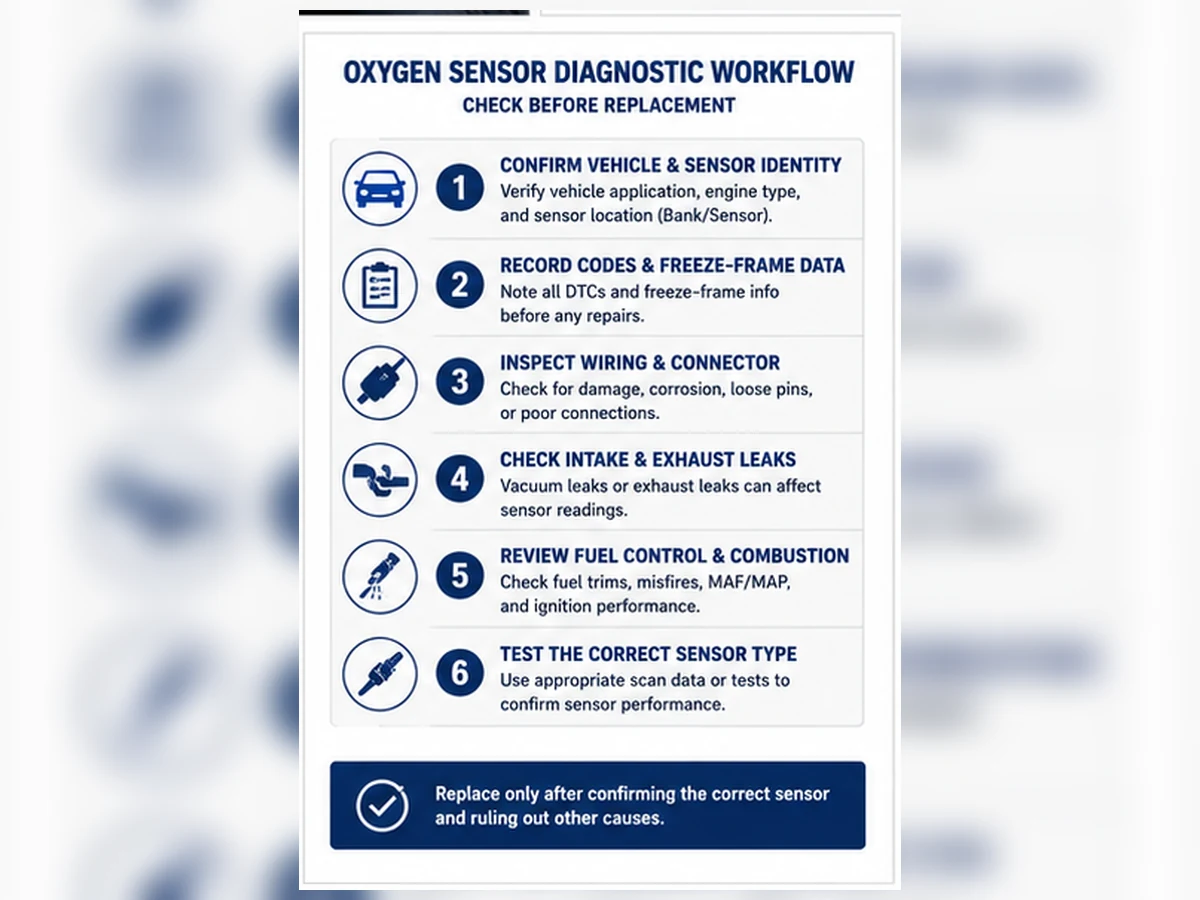
Un ordine diagnostico in sei fasi
- Registrare tutti i codici attuali, in sospeso e permanenti più il freeze frame.
- Confermare il banco esatto, il sensore e la tecnologia.
- Ispezionare il percorso del cablaggio, le condizioni del connettore e le perdite di scarico.
- Testare alimentazione, massa e controllo del riscaldatore quando il codice riguarda il riscaldamento.
- Rivedere i correttivi di carburante e la tensione, corrente o lambda del sensore come specificato.
- Riparare la causa principale e verificare il monitor senza dispositivi di bypass.
Perché P0420 e P0430 richiedono cure particolari
Questi codici valutano il comportamento del sistema catalizzatore utilizzando diverse condizioni e segnali dei sensori. Perdite di scarico, mancate accensioni, problemi di controllo del carburante, deriva del sensore e deterioramento del catalizzatore possono influenzare il risultato. Sostituire un sensore a valle senza convalidare il suo segnale e il resto del sistema può sprecare l'opportunità di riparazione.
Azioni che non completano la diagnosi
Cancellare il codice, scollegare la batteria, installare un distanziale o un simulatore, o sostituire ripetutamente i sensori non stabilisce la causa. I controlli delle emissioni devono essere riparati in conformità con la legge applicabile. Utilizzare le informazioni sul codice permanente e sulla prontezza per verificare il processo di riparazione legale.
Leggere ogni DTC come sistema, posizione e modalità di guasto
Una descrizione completa del codice combina il sistema monitorato, la posizione Banca/Sensore e la modalità di guasto come circuito basso, circuito alto, nessuna attività, risposta lenta o guasto del riscaldatore. Il codice indica quale percorso di test aprire. Non identifica il sensore sostituibile come punto guasto e non fornisce un numero di parte.
| Elemento del codice | Domanda risolta | Domanda senza risposta |
|---|---|---|
| Banca 1 / Banca 2 | Quale bancata del motore è monitorata? | Lato fisico universale |
| Sensore 1 / Sensore 2 | Posizione comune pre/post-catalizzatore | Connettore esatto senza schema di servizio |
| Attività bassa/alta/nessuna | Condizione del segnale rilevato | Sensore vs cablaggio vs miscela reale |
| Circuito riscaldatore | Criteri di monitoraggio del percorso di riscaldamento non superati | Elemento vs fusibile/alimentazione/massa/controllo |
Significato diagnostico delle famiglie di codici comuni
Malfunzionamento del circuito, codici bassi e alti
P0130/P0150 e i relativi codici bassi/alti richiedono controlli del circuito e di plausibilità. Ispezionare i circuiti di segnale e di riferimento, le condizioni dei terminali e le evidenze di scarico/miscela. Un valore basso può riflettere una condizione effettivamente magra; un valore alto può indicare un funzionamento ricco. I limiti elettrici e le specifiche di servizio determinano la distinzione.
Risposta lenta e nessuna attività
P0133/P0153 e le famiglie di nessuna attività richiedono temperatura di funzionamento valida e criteri di abilitazione. Controllare il funzionamento del riscaldatore, le perdite, la risposta effettiva della miscela e la frequenza dei dati dello scanner. Un PID piatto non supportato non è prova di un sensore morto.
Codici del riscaldatore
P0135, P0141, P0155, P0161 e codici correlati aprono un percorso del circuito del riscaldatore. Testare l'alimentazione protetta, il fusibile, la massa/controllo, il connettore, il cablaggio e l'elemento secondo lo schema. La sola resistenza non prova che l'alimentazione venga erogata sotto carico.
Preservare i dati di freeze frame e di prontezza
Registrare i codici correnti, in sospeso e permanenti prima di cancellarli. Il freeze frame mostra lo stato del motore quando il monitor ha rilevato un guasto e può rivelare il contesto di avviamento a freddo, minimo, carico o velocità. Lo stato di prontezza indica quali monitor sono stati completati. La cancellazione dei codici rimuove informazioni utili e resetta i monitor, quindi non dovrebbe essere la prima azione diagnostica.
| Registrare | Perché tenerlo | Errore comune |
|---|---|---|
| Tutti i codici | Mostra modelli di potenza condivisa, miscela o mancata accensione | Concentrandosi su un solo codice O2 |
| Fotogramma di congelamento | Definisce le condizioni di rilevamento | Cancellazione prima del salvataggio |
| Prontezza | Mostra il completamento del monitor | Supponendo che nessuna luce accesa significhi che tutti i test sono superati |
| DTC permanente | Richiede una riparazione confermata dal monitor | Tentativo di cancellarlo manualmente |
Confermare il circuito fisico denominato dal codice
Il banco 1 contiene il cilindro 1. Il sensore 1 si trova comunemente prima del catalizzatore e il sensore 2 dopo di esso. Non utilizzare una regola universale lato guida. Abbina il codice allo schema di scarico e al percorso del connettore. Testare il sensore sbagliato può produrre misurazioni tecnicamente corrette per il circuito sbagliato.
Sei controlli prima di una decisione sui ricambi
- Conferma la definizione del codice e i criteri di abilitazione per il veicolo specifico.
- Identificare banca, posizione e tecnologia del sensore.
- Ispezionare connettore, terminali, instradamento del calore e perdite di scarico.
- Testare i circuiti del riscaldatore e di segnale con lo schema corretto.
- Confrontare i trim del carburante, lo stato comandato e la risposta del sensore.
- Riparare la causa principale e verificare il monitor legalmente.
| Modalità di guasto | Primo controllo fisico | Controllo sistema richiesto |
|---|---|---|
| Riscaldatore | Cablaggio, connettore e alimentazione protetta | Controllo/messa a terra in condizioni specificate |
| Segnale basso/alto | Integrità del segnale/riferimento | Condizione effettiva ricca/magra e perdite |
| Nessuna attività | Collegamento e funzionamento del riscaldatore | PID supportato e temperatura operativa |
| Risposta lenta | Contaminazione e integrità dello scarico | Risposta controllata specifica della tecnologia |
P0420/P0430 sono un percorso separato del sistema catalizzatore
Questi codici valutano l'efficienza del sistema catalizzatore utilizzando il comportamento a monte/valle in condizioni definite. Possono essere influenzati dal deterioramento del catalizzatore, da perdite di scarico, da mancate accensioni, da problemi di controllo del carburante e da errori del sensore. Non appartengono alla famiglia dei sensori P0130-P0167 e non devono essere convertiti in un ordine di sensore a valle senza validazione.
Scegliere gli strumenti in base alla domanda
Strumento di scansione
Utilizzarlo per codici, freeze frame, prontezza, trim e dati dei sensori supportati. Confermare le unità di misura e la frequenza di campionamento. Un grafico richiede ancora condizioni operative note.
Multimetro e oscilloscopio
Utilizzare un multimetro per controlli specifici di alimentazione, massa, continuità o resistenza e un oscilloscopio dove sono necessari dettagli della forma d'onda. Evitare metodi di sondaggio che allarghino i terminali o danneggino i circuiti a banda larga.
Controlli di perdite e meccanici
Perdite di aspirazione o scarico, alimentazione carburante, accensione e condizioni del motore possono creare il comportamento di scarico segnalato. Utilizzare metodi sicuri e appropriati all'applicazione e riparare queste condizioni prima di condannare il segnalatore.
Scenario composito: un codice del riscaldatore sopravvive alla sostituzione del sensore
Scenario diagnostico composito: Un nuovo sensore viene installato per P0141, ma il codice ritorna. Lo schema elettrico corretto e un test sotto carico mostrano una mancanza di alimentazione al connettore a causa di un cablaggio danneggiato dal calore. Riparare e reindirizzare il cablaggio ripristina il circuito. Questo esempio composito non è un caso Sunhyings né una prova per un veicolo specifico.
Verificare il monitor originale, non solo la spia di avvertimento
Dopo la riparazione, confermare il percorso fisico, la funzionalità del circuito e dati live plausibili. Completare le condizioni di monitoraggio richieste dal costruttore in modo sicuro e legale. Un codice permanente può rimanere fino al superamento del monitor. La disconnessione della batteria, la cancellazione ripetuta, distanziatori, simulatori o manomissioni software non provano la riparazione e possono interferire con la conformità alle emissioni.
Creare un registro di riparazione che possa resistere a un reclamo
Salvare lo stato del codice originale, il fotogramma di blocco, le letture del circuito, le perdite o le miscele rilevate, la posizione fisica, il componente riparato e i dati post-riparazione. Includere foto del connettore e del percorso quando sono stati coinvolti calore o movimento intermittente. Se il codice ritorna, questa registrazione impedisce di riavviare il processo diagnostico con un'altra sostituzione di sensore non supportata.
Per una restituzione di parti, aggiungere la base OE/applicazione, la parte e il lotto consegnati, la posizione di installazione e i risultati del circuito lato veicolo. Un sensore restituito non può essere giudicato equamente quando il venditore riceve solo il numero del codice. Separare errore di catalogo, danno da installazione, causa principale non risolta, cablaggio veicolo e non conformità del prodotto.
Quando compaiono insieme diversi codici del sensore di ossigeno
Cercare alimentazioni condivise, masse, danni al cablaggio o condizioni di miscela ricca/povera a livello di sistema prima di trattare ogni codice come un sensore guasto indipendente. Più codici del riscaldatore possono indicare un'alimentazione protetta; più codici relativi alla miscela possono indicare cause legate ad aria, carburante o scarico. Lo schema elettrico e il set completo di codici determinano se i guasti condividono un percorso.
Un codice che passa da corrente a storico o scompare dopo la cancellazione non ha necessariamente superato il suo monitor. Registrare come lo stato cambia attraverso le condizioni di guida specificate e se la prontezza viene completata. I guasti intermittenti da calore o vibrazioni possono richiedere l'osservazione durante il riscaldamento e il movimento del cablaggio utilizzando metodi sicuri. La verifica deve riprodurre la domanda del monitor, non semplicemente produrre un cruscotto pulito.
Come leggere un DTC del sensore di ossigeno senza trasformarlo in un ordine di ricambi
Un codice OBD-II nomina un circuito monitorato, un comportamento del segnale o un risultato del sistema. Non contiene la tecnologia del sensore, il connettore, la lunghezza del cavo, la filettatura, la calibrazione o il numero di sostituzione verificato. Iniziare scrivendo la descrizione completa del codice, lo stato e le condizioni del fotogramma di blocco. Quindi mappare l'identità di Bank e Sensore utilizzando le informazioni di servizio prima di toccare un connettore.
La familiare gamma P0130-P0167 include problemi di circuito del segnale, bassa/alta tensione, risposta lenta, nessuna attività e riscaldatore su due banchi e due posizioni del sensore. I codici specifici del produttore e le strategie a banda larga/A/F possono utilizzare descrizioni e test diversi. La famiglia di codici è un indice di instradamento, non una specifica di test universale.
| Famiglia di codici | Monitoraggio anomalie | Controlli prima della sostituzione | Conclusione falsa comune |
|---|---|---|---|
| P0130 / P0150 | Malfunzionamento circuito sensore 1 | Connettore, circuiti segnale/riferimento, perdite di scarico, stato e risposta della miscela | “Circuito” significa sempre che l'elemento sensore è aperto |
| P0131 / P0151 | Indicazione bassa sensore 1 | Condizione di magra effettiva, corto del segnale, integrità del riferimento e perdita del pre-sensore | Una bassa tensione indica sempre un motore che funziona magro o un sensore difettoso |
| P0132 / P0152 | Indicazione alta del sensore 1 | Funzionamento ricco effettivo, corto del segnale, pressione del carburante, evidenza di iniettore e spurgo | Alta tensione significa sempre che il sensore è bloccato |
| P0133 / P0153 | Risposta lenta | Temperatura di esercizio, perdite di scarico, contaminazione, condizioni di test e circuito | Un grafico a scansione lenta indica invecchiamento |
| P0134 / P0154 | Nessuna attività rilevata | Abilita condizioni, funzionamento del riscaldatore, circuiti di segnale/riferimento e supporto dati | Un valore piatto proviene sempre dal sensore |
| P0135 / P0155 | Circuito riscaldatore sensore 1 | Fusibile, alimentazione caricata, controllo/massa, connettore e resistenza/corrente specificata | Ogni codice riscaldatore richiede un sensore |
| P0136 / P0156 | Malfunzionamento circuito sensore 2 | Esposizione cablaggio posteriore, connettore, integrità del circuito e condizione dello scarico | Un codice del circuito posteriore è un verdetto del catalizzatore |
| P0137 / P0157 | Indicazione bassa del sensore 2 | Circuito del segnale, perdite, miscela effettiva e condizioni di monitoraggio | Sostituire il sensore posteriore senza controllare le perdite di scarico |
| P0138 / P0158 | Indicazione alta del sensore 2 | Cortocircuito del segnale, condizione ricca effettiva, contaminazione e circuito | Un valore fisso ricco indica un guasto del catalizzatore |
| P0139 / P0159 | Risposta lenta del sensore 2 | Procedura di monitoraggio esatta, temperatura, perdite e risposta del sensore/circuito | Confrontare il sensore posteriore direttamente con la commutazione anteriore in ogni momento |
| P0140 / P0160 | Sensore 2 nessuna attività | Condizioni di abilitazione, percorso del segnale, connettore e funzionamento del riscaldatore | Nessuna commutazione visibile è sempre anomala per un sensore posteriore |
| P0141 / P0161 | Circuito riscaldatore del sensore 2 | Alimentazione protetta, controllo/massa, connettore e cablaggio vicino allo scarico | Sostituire prima e testare il circuito in seguito |
I codici attuali, in sospeso e permanenti rispondono a domande diverse
Un codice corrente o confermato indica che il monitor ha soddisfatto la sua logica di conferma. Un codice in sospeso può preservare un guasto precoce prima della conferma. Un codice permanente viene conservato secondo la logica OBD regolamentata fino a quando il sistema non osserva il funzionamento corretto richiesto; non è necessariamente la prova che la riparazione sia fallita immediatamente dopo la sostituzione dei componenti. Le definizioni e il comportamento di cancellazione variano in base alla normativa e alla strategia del veicolo, quindi utilizzare correttamente lo strumento di scansione e le informazioni di assistenza.
| Registrare | Cosa contribuisce | Cosa non può dimostrare |
|---|---|---|
| Stato del codice | Se il guasto è in sospeso, confermato o mantenuto come permanente | Quale componente fisico ha causato la condizione |
| Fotogramma di congelamento | Carico, velocità, temperatura e altre condizioni rilevate al momento del guasto | Ogni modifica avvenuta prima o dopo la rilevazione |
| Prontezza | Se i monitor pertinenti sono stati completati dopo il reset o la riparazione | Che un sistema incompleto ha superato |
| Dati del modo 6 o del monitor | Risultati e limiti del monitor supportati dal produttore, ove disponibili | Una diagnosi universale senza corretta identificazione e scalatura del test |
| Dati in tempo reale | Comportamento durante stati operativi controllati | Causa senza contesto di circuito, motore e scarico |
Percorso decisionale del codice riscaldatore
Il riscaldatore porta l'elemento sensore alla temperatura di esercizio e aiuta a mantenerla a basso flusso di scarico. A seconda del progetto, il modulo di controllo può monitorare resistenza, corrente, tensione o tempo di attività. Iniziare con lo schema corretto e l'identificazione dei pin. Controllare il fusibile o l'alimentazione condivisa, ma non fermarsi alla continuità. Un collegamento corrosivo può superare un test con un misuratore a bassa corrente e fallire sotto carico del riscaldatore.
- Confermare che il codice indichi il banco esatto, il sensore e il circuito del riscaldatore.
- Ispezionare il cablaggio dal connettore al fascio protetto, specialmente vicino a schermature e componenti mobili.
- Verificare l'alimentazione e il controllo o la messa a terra nelle condizioni e con il carico specificati.
- Misurare la resistenza o la corrente lato sensore solo con la temperatura e i limiti specificati.
- Controllare i circuiti condivisi e i codici correlati prima di sostituire un componente isolato.
- Dopo la riparazione, verificare il funzionamento del riscaldatore e monitorare il completamento anziché cancellare solo la memoria.
Percorso decisionale del codice segnale
Per codici di valore basso, alto, lento o assente, stabilire se il modulo di controllo rileva una condizione reale di scarico. Ispezionare perdite a monte del sensore e confrontare trim del carburante, flusso d'aria, temperatura del liquido di raffreddamento, pressione del carburante e evidenze di misfire. Verificare l'integrità del segnale e del riferimento. Quindi applicare un test ricco/magro o di risposta corretto per la tecnologia nelle condizioni di temperatura e funzionamento richieste.
Non effettuare back-probe o applicare tensione a meno che la procedura di servizio non lo consenta. I circuiti di controllo a banda larga possono essere danneggiati o interpretati erroneamente dalle abitudini di test a banda stretta. Un multimetro grafico o uno strumento di scansione è utile solo quando si comprendono l'elemento dati, la scala e la frequenza di campionamento.
P0420 e P0430 sono codici di efficienza del sistema catalizzatore
P0420 e P0430 indicano che il monitor del catalizzatore ha valutato l'efficienza al di sotto della soglia calibrata per il banco indicato. Il monitor utilizza le informazioni del sensore di ossigeno, ma il codice non dice “sostituire il sensore di ossigeno a valle”. Misfire, controllo della miscela, contaminazione da olio o liquido di raffreddamento, perdite di scarico, sensori errati, problemi di calibrazione e condizioni del catalizzatore possono essere rilevanti. Diagnosticare prima i guasti correlati e seguire la procedura del monitor del catalizzatore del produttore.
| Evidenza | Perché è importante | Limite |
|---|---|---|
| Codici correlati di misfire o controllo del carburante | Possono danneggiare o alterare le prestazioni del catalizzatore | La loro riparazione non prova automaticamente la salute del catalizzatore |
| Ispezione perdite di scarico | L'ossigeno esterno può alterare il comportamento del sensore | Un controllo visivo può non rilevare una perdita che si apre a caldo |
| Identificazione corretta del sensore | Tecnologia o posizione errate possono invalidare il monitoraggio | Un connettore che si adatta non è una prova di calibrazione |
| Dati a monte/valle | Supporta l'analisi del monitor in condizioni valide | Un singolo screenshot inattivo non è un test completo del catalizzatore |
| Evidenza del consumo di olio/liquido refrigerante | La contaminazione può influenzare sensore e catalizzatore | Il colore del deposito da solo non è un'analisi di laboratorio |
Caso composito: due codici riscaldatore e un guasto di alimentazione condiviso
Scenario di ingegneria composita: Due sensori su banchi diversi impostano codici del riscaldatore dopo lavori sottoscocca. Sostituire un sensore non modifica nessun codice. Lo schema elettrico mostra un'alimentazione protetta condivisa da entrambi i riscaldatori. Un test di tensione sotto carico rileva un collegamento ad alta resistenza in un giunto disturbato. La riparazione ripristina la corrente su entrambi i circuiti e i monitor si completano.
L'indizio importante è lo schema di guasto comune. Due parti possono guastarsi, ma un circuito condiviso merita un esame prima di ordinare due componenti indipendenti. Questo è un esempio diagnostico composito, non un caso cliente di Sunhyings.
Caso composito: un ordine del sensore posteriore è stato bloccato da prove a monte
Scenario di ingegneria composita: Un veicolo presenta P0420 senza codice del circuito del sensore di ossigeno. La riparazione proposta è un sensore a valle perché il suo grafico si muove. La revisione rileva una storia di mancate accensioni intermittenti e una correzione eccessiva del carburante sul banco monitorato. Il team corregge il guasto del motore, verifica la tenuta dello scarico e riesegue il monitor del catalizzatore prima di prendere una decisione sul catalizzatore o sul sensore posteriore.
Un segnale posteriore variabile non è di per sé prova di un sensore posteriore guasto, e un segnale posteriore stabile non è prova universale di un catalizzatore buono. I criteri di abilitazione del monitor e il controllo della procedura del veicolo determinano l'interpretazione. Questo scenario è composito e non contiene alcun tasso di riparazione dichiarato o identità del cliente.
Creare un record di test DTC che sopravviva al passaggio di consegne
Una diagnosi di codice spesso si sposta tra un conducente, un banco ricambi, un'officina e un fornitore. Ogni passaggio può perdere contesto. Utilizzare una registrazione compatta che colleghi il codice al circuito fisico e alle condizioni in cui si è verificato il guasto. Screenshot senza identità del veicolo o etichette degli elementi dati sono prove deboli; valori senza unità o condizioni operative possono essere peggiori dell'assenza di dati.
| Campo di registrazione | Contenuto minimo | Motivo |
|---|---|---|
| Identificazione del veicolo | VIN/YMME, motore e pacchetto mercato/emissioni | Determina cablaggio, logica del monitor e montaggio |
| Identificazione del codice | Numero, descrizione completa, stato e modulo | Impedisce che abbreviazioni modifichino il percorso di test |
| Condizioni di guasto | Fotogramma di blocco, temperatura, carico, velocità e stato del carburante se disponibili | Supporta la riproduzione in condizioni valide |
| Identità fisica | Banca/Sensore mappato al connettore e alla posizione di scarico | Impedisce il test o la sostituzione del sensore sbagliato |
| Risultati del circuito | Pin, metodo, carico, valore misurato, unità e fonte della specifica | Rende esaminabili le prove elettriche |
| Contesto del sistema | Prove di perdite, mancate accensioni, carburante, flusso d'aria e codici correlati | Separa la reportistica accurata dal bias del sensore |
| Risultato della risposta | Tecnologia, stato operativo, stimolo e comportamento osservato | Impedisce che un'aspettativa a banda stretta venga applicata a una banda larga |
Confine tra contatore pezzi e commercio elettronico
Un catalogo può tradurre un veicolo verificato e un riferimento OE in parti candidate. Non può diagnosticare il veicolo da P0135, P0141 o P0420. Il contenuto del prodotto dovrebbe spiegare le prove necessarie per la selezione e non dovrebbe usare frasi come “questo codice significa che hai bisogno di questo sensore”. Per i resi, conservare ciò che l'acquirente ha selezionato, quale revisione del catalogo è stata utilizzata e se la parte consegnata corrispondeva al record ordinato.
Quando un sensore è stato installato, indagare piuttosto che respingere o approvare automaticamente il reclamo. Confermare l'esatta applicazione, posizione, compatibilità elettrica, instradamento del cablaggio e risultati dei test. Un risultato di banco senza guasti non prova di per sé che la diagnosi del veicolo fosse errata; allo stesso modo, un codice di ritorno non prova che il pezzo di ricambio sia difettoso.
Limite di conformità alle emissioni dopo un DTC
L'obiettivo legale della riparazione è ripristinare il sistema di rilevamento, controllo del carburante e monitoraggio del catalizzatore come progettato. Non installare un simulatore di O2, un elimina-sensore, un defoulant o un distanziatore per manipolare un monitor, e non disabilitare i codici nel software. Questi approcci non correggono i guasti del circuito, del motore o del catalizzatore e possono violare le leggi sulle emissioni. L'uso fuoristrada non è un'esenzione universale. Seguire i requisiti EPA/CARB negli Stati Uniti e l'autorità applicabile in altri mercati.
Dopo una riparazione legittima, un codice permanente o una prontezza incompleta possono rimanere fino a quando il veicolo non completa la sequenza di monitoraggio richiesta. Ciò non autorizza a bypassare il monitor. Utilizzare la procedura di assistenza, confermare che le condizioni di abilitazione possano essere soddisfatte e indagare su eventuali guasti correnti o in sospeso che si ripresentano.
Scegli gli strumenti in base al problema, non a ciò che è più facile da collegare
Uno strumento di scansione risponde a ciò che riporta il modulo di controllo. Un multimetro digitale può testare tensione, resistenza o continuità se utilizzato entro i limiti del circuito. Un multimetro grafico o un oscilloscopio possono rivelare temporizzazione e comportamento intermittente. Una macchina per fumo può aiutare a localizzare perdite di aspirazione o scarico se utilizzata in sicurezza e secondo la procedura del sistema. Nessuno è una fonte di verità universale: ogni strumento ha limiti di campionamento, carico, accesso e interpretazione.
| Domanda | Metodo utile | Contesto richiesto | Uso improprio da evitare |
|---|---|---|---|
| Il modulo ha rilevato un guasto monitorato? | Scansione completa codice/stato/prontezza | Modulo corretto e descrizione completa | Lettura di un solo codice generico e cancellazione della cronologia |
| Il circuito del riscaldatore può trasportare corrente? | Test specificato di tensione/corrente sotto carico | Schema, piedinatura, stato operativo e carico sicuro | Utilizzo della sola continuità come prova della capacità del circuito |
| La miscela segnalata cambia? | Dati di scansione o forma d'onda corretti dalla tecnologia | Stato a caldo, stimolo noto e parametro supportato | Aspettandosi che ogni sensore commuti 0-1 V |
| Il guasto è intermittente? | Grafici, movimento del cablaggio e riproduzione delle condizioni | Sondaggio protetto e dati operativi con timestamp | Foratura dell'isolamento o cortocircuito dei terminali senza riparazione |
| L'aria esterna potrebbe influenzare il segnale? | Ispezione delle perdite a freddo/caldo utilizzando metodo approvato | Posizione dello scarico, temperatura e ventilazione | Applicare una pressione non sicura o ignorare una perdita che si apre a caldo |
| Il sensore è la sostituzione corretta? | Catalogo controllato, confronto OE/applicazione e fisico | Veicolo esatto, posizione e tecnologia | Trattare la descrizione del codice di uno strumento come una ricerca di ricambi |
Scrivere la fonte della specifica accanto a ogni valore superato/non superato. Una resistenza misurata ha scarso valore diagnostico senza la temperatura del sensore, la configurazione del multimetro e il limite applicabile. Allo stesso modo, una schermata di forma d'onda necessita di base dei tempi, scala, stato operativo e identità del canale. Questa disciplina migliora l'E-E-A-T perché il lettore può vedere come è stata delimitata una conclusione, invece di dover fidarsi di una raccomandazione di ricambi.
Decisione finale: riparare, sostituire, monitorare o continuare la diagnosi
Scegliere la sostituzione solo quando il sensore esatto è identificato e le prove supportano un guasto lato sensore che il circuito del veicolo, lo scarico e il contesto del motore non spiegano. Riparare cablaggi, connettori, perdite o guasti del motore quando questi test falliscono. Continuare la diagnosi quando i risultati sono in conflitto o le condizioni di abilitazione del servizio non sono state soddisfatte. Dopo qualsiasi riparazione, documentare la stessa famiglia di codici, i dati e lo stato del monitor in modo che il confronto prima e dopo risponda alla domanda originale.
Se le prove supportano la sostituzione, il DTC non identifica ancora il ricambio vendibile. Completare un controllo di adattamento separato utilizzando il riferimento OE, veicolo e motore, configurazione di mercato o emissioni, banco e posizione esatti, tecnologia, connettore, assegnazione dei pin, lunghezza del cavo e clip di instradamento. Questa separazione tra diagnosi e adattamento impedisce che una decisione di riparazione corretta diventi un ordine nella posizione sbagliata.
Prepara una richiesta di adattamento o approvvigionamento
Invia il numero OE, anno/marca/modello, motore o dettagli VIN, mercato e pacchetto emissioni, posizione esatta di banco/sensore, connettore e foto del vecchio componente, quantità e eventuali requisiti di imballaggio o approvazione. Sunhyings esaminerà i dati forniti per verificarne la capacità e la fattibilità dell'approvvigionamento; l'adattamento non è confermato fino a quando le prove di applicazione non vengono abbinate.
Domande frequenti
P0135 significa sempre che il riscaldatore del sensore di ossigeno è guasto?
No. L'elemento riscaldante, il fusibile, il cablaggio, il connettore, l'alimentazione, la messa a terra o il circuito di controllo potrebbero esserne la causa.
P0133 significa che il sensore deve essere sostituito?
Prima di tutto, confermare le condizioni operative, l'integrità dello scarico, il controllo della miscela e il test di risposta specificato.
Il codice P0420 è un codice del sensore di ossigeno?
È un codice di efficienza del sistema catalizzatore che utilizza i dati del sensore di ossigeno; non dimostra che un sensore di ossigeno sia guasto.
Posso cancellare il codice per testare la riparazione?
Registrare prima i dati diagnostici. Seguire la procedura del veicolo perché la cancellazione dei codici può cancellare le prove e resettare i monitor di prontezza.
Cosa significa Bank 1 Sensor 2?
Di solito indica il sensore post-catalizzatore sul banco contenente il cilindro 1, soggetto a conferma specifica del veicolo.