Поэтому A490 — более высокопрочное изделие, но не обязательно лучший выбор для стального соединения. Разница 25% между обозначениями групп не означает автоматического увеличения несущей способности соединения на 25%. A325 и A490 также необходимо сравнивать с учётом конструктивного расчёта, требований к защите от коррозии, применимых требований к монтажу и совместимых гаек и шайб.
A325 и A490 по ASTM F3125: что означают обозначения
Изначально A325 и A490 определялись отдельными спецификациями ASTM. Теперь требования к их конструкционному болтовому крепежу рассматриваются в ASTM F3125/F3125M, который объединяет несколько категорий высокопрочных конструкционных болтов.
В современной нормативной документации инженер может обозначить болт как ASTM F3125 Grade A325 или ASTM F3125 Grade A490. Марка определяет установленную категорию механической прочности, а тип указывает на химический состав материала и связанные с ним характеристики. Эти различия важны, поскольку в заказе на закупку, где указаны только “болты A490”, могут остаться неопределёнными соответствующие данные о материале и покрытии.
Обе марки связаны с классификациями материала Type 1 и Type 3, где это применимо. Type 1 представляет соответствующую классификацию неатмосферостойкого материала. Type 3 обозначает химический состав атмосферостойкой стали, предназначенный для повышения сопротивления атмосферной коррозии в подходящих условиях эксплуатации. Type 3 не является отдельной маркой по пределу прочности, и его обозначение не означает, что нанесённое защитное покрытие всегда не требуется.
Конструктивное исполнение изделия и размеры являются отдельными элементами спецификации. Тяжёлый высокопрочный болт для металлоконструкций должен соответствовать размерным требованиям, применимым к его заданной конфигурации изделия; визуально похожий стандартный болт с шестигранной головкой не обязательно является соответствующим заменителем. Номинальный диаметр, длина, конфигурация резьбы и применимый стандарт на изделие должны быть подтверждены, прежде чем компоненты будут приняты как эквивалентные.
Действующая редакция также имеет значение. Каталог издателя ASTM на 2026 год указывает ASTM F3125/F3125M-26, но проект может по договору требовать более раннюю редакцию. Инженер или закупщик не должен объединять механические свойства, допустимость покрытий или процедуры приёмки из разных редакций, не установив, какие требования регулируют заказ.
ASTM F3125 распространяется на болт как изделие; смонтированное строительное соединение должно отдельно удовлетворять действующим требованиям к его расчёту и монтажу. Для стальных строительных конструкций, где применяется система RCSC, эти требования включают соответствующие положения о типе соединения, сборке, монтажу и контролю.
Сравнение прочности: почему более прочный болт не всегда означает более прочное соединение
Основное механическое различие очевидно: марке A490 назначена более высокая группа минимальной прочности на растяжение, чем марке A325.
Приведённое ниже сравнение использует группы болтов и положения о покрытиях по RCSC 2025. Это не воспроизведение полных таблиц механической приёмки ASTM F3125.
| Характеристика | Класс A325 | Марка A490 |
|---|---|---|
| Спецификация изделия ASTM | ASTM F3125/F3125M | ASTM F3125/F3125M |
| Группа болтов RCSC 2025 | Группа 120 | Группа 150 |
| Минимальный уровень предела прочности группы | 120 ksi | 150 ksi |
| Группировка по относительной прочности на растяжение | Справочный уровень | 25% выше |
| Горячее или механическое цинкование по RCSC 2025 | Допускается для применимых соответствующих конфигураций | Запрещено для группы 150 |
| Цинкламельное покрытие | Требования к допуску и сборке должны быть проверены | Некоторые системы ASTM F3393 допускаются условно |
| Несущая способность конструктивного соединения | Должна определяться расчётом соединения | Должна определяться расчётом соединения |
Группа минимальной прочности на растяжение описывает требование к материалу болта. Она не устанавливает, какую нагрузку может воспринимать собранное соединение.
Рассмотрим два болта одинакового номинального диаметра: один A325, другой A490. Если их эффективные площади растяжения сопоставимы, болт повышенной прочности обеспечивает больший потенциальный запас сопротивления в условиях, когда несущая способность соединения определяется растяжением болта. Само по себе это наблюдение ничего не говорит окончательно о несущей способности всего соединения.
Несущая способность стального соединения может вместо этого определяться смятием пластины, деформацией отверстия под болт, расстоянием от края, прочностью соединяемых материалов, срезом блока или другим применимым предельным состоянием. Повышение прочности материала болта не увеличивает толщину пластины, не изменяет расстояния от края и не повышает прочность окружающего соединяемого материала.
Расположение резьбы также имеет значение. Включение резьбы в плоскость среза может влиять на сопротивление болта срезу, принимаемое по применяемому методу расчёта. Простая смена класса прочности без анализа заданной геометрии болта и деталей соединения может оставить нерешённым важное проектное допущение.
Предварительное натяжение — это не то же самое, что прочность на растяжение
Ещё один частый источник путаницы — связь между прочностью болта на растяжение и создаваемым при монтаже предварительным натяжением.
Прочность на растяжение — это свойство материала, устанавливаемое применимой спецификацией на изделие и требованиями к испытаниям. Предварительное натяжение — это усилие затяжки, создаваемое в смонтированном болтовом соединении, когда соединение требует предварительной затяжки.
Для соединения, работающего на трение, сопротивление сдвигу зависит от применимой расчётной зависимости, учитывающей предварительное натяжение болта, состояние контактных поверхностей, число плоскостей трения и другие предписанные факторы. Болт повышенной прочности может допускать иное заданное предварительное натяжение, но его влияние на несущую способность соединения должно оцениваться по действующим проектным требованиям.
Покрытие болта и подготовка контактных поверхностей — также разные вещи. Одобрение защитного покрытия болта не означает, что конкретная покрытая или непокрытая контактная поверхность соответствует требуемому классу сопротивления сдвигу.
В соединении, работающем на смятие, проверочные расчёты по несущей способности могут быть иными. В зависимости от фактической конструкции повышение прочности болта может дать инженерный выигрыш, не дать полезного прироста определяющей несущей способности соединения или потребовать пересмотра других элементов соединения.
Таким образом, решение о выборе — это не “150 ksi лучше, чем 120 ksi”. Вопрос в том, удовлетворяет ли более высокий класс прочности документально подтверждённому конструктивному требованию, которое может быть реализовано в полном соединении.
Рассмотрим иллюстративный анализ соединения, в котором A490 предлагается для устранения подвижности в узле с A325. Если причина — непроверенная процедура монтажа или неподходящие контактные поверхности, более высокий класс болта это не решит. Определите фактическое предельное состояние и подтверждение монтажа, прежде чем перепроектировать соединение. Используйте терминология прочности болтов чтобы отделить свойства изделия от характеристик соединения.
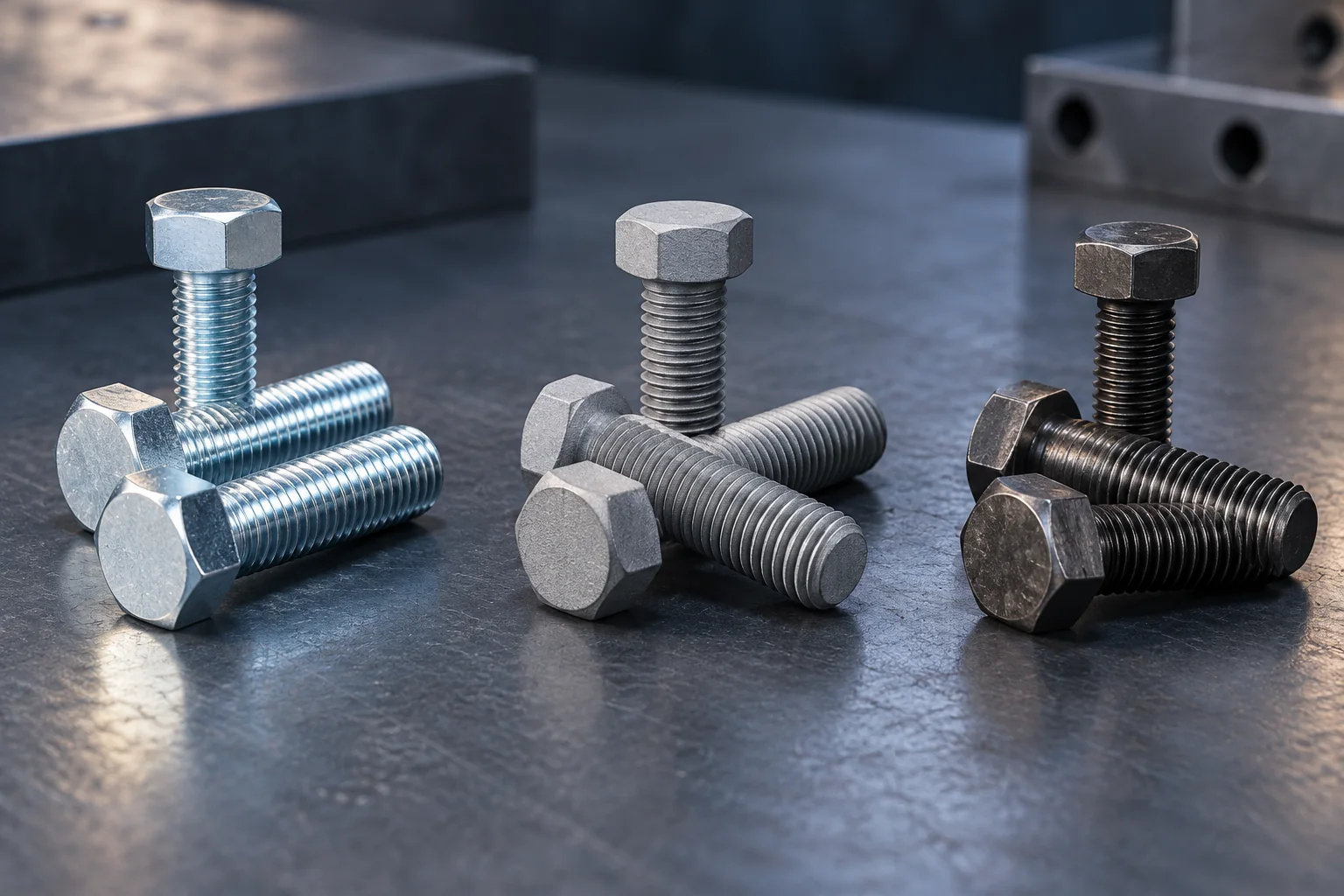
Различия покрытий: горячее цинкование, одобренные покрытия и защита от коррозии
Coating selection is one of the clearest practical differences between A325 and A490 structural bolts.
Steel structural bolts may require corrosion protection when used outdoors, in industrial atmospheres or in other environments where unprotected steel is unsuitable. However, an acceptable coating must be evaluated as part of the specified bolt assembly. Its chemistry, application process, interaction with the fastener material and effect on installation can all matter.
Why hot-dip galvanizing and zinc-flake coatings must be distinguished
Hot-dip galvanizing and mechanical galvanizing are established zinc-coating processes, but their acceptance is not identical across the two structural bolting groups.
Согласно Спецификация RCSC 2025, Group 150 bolting cannot be hot-dip galvanized or mechanically galvanized; specified ASTM F3393 zinc-flake systems are a separate, conditional route.
This distinction prevents two opposite specification errors.
The first error is ordering hot-dip galvanized A490 bolts because galvanized A325 bolts were previously accepted in a similar application. The higher-strength grade does not inherit the lower-strength group’s coating permissions.
The second error is rejecting every zinc-based coating for A490. Certain ASTM F3393 zinc-flake coating systems are permitted within the applicable RCSC requirements. That permission is not a blanket approval for any commercial zinc-flake coating, arbitrary application process or unverified bolt-and-nut combination.
The applicable coating specification, bolting grade, component configuration and qualification requirements must all agree.
Why high-strength bolt coatings receive special scrutiny
High-strength steel fasteners can be susceptible to hydrogen-assisted cracking under unfavorable combinations of material condition, applied stress and hydrogen exposure.
Coating and surface-treatment processes may introduce or influence that risk. Its significance depends on the strength and material characteristics of the fastener and the specific processing route.
This is one reason coating suitability cannot be judged solely by the appearance or nominal corrosion resistance of the finished bolt. A process that produces acceptable corrosion protection does not necessarily satisfy the requirements applicable to a particular high-strength structural bolt grade.
Measures intended to control hydrogen-related risks also do not override explicit prohibitions in the governing structural bolting specification.
There is an additional assembly consequence. Protective coatings can alter thread dimensions and frictional behavior. Galvanized or otherwise coated fasteners may require specific matching nut conditions and lubrication provisions. Combining a coated bolt with an unrelated nut is not equivalent to procuring a compliant structural bolting assembly.
When pretensioning is required, the specified assembly and installation procedure must also be capable of satisfying the applicable verification requirements. Coating qualification, product testing and field installation verification are related but separate responsibilities.
Type 3 weathering steel is another selection route
Type 3 structural bolts use weathering-steel material characteristics rather than relying exclusively on a subsequently applied protective coating.
In suitable atmospheric exposure, weathering steels can develop a protective corrosion-product layer that reduces further atmospheric corrosion compared with conventional unprotected steel. Their effectiveness depends on the environment and the conditions that allow the protective layer to develop.
Persistent wetness, aggressive chloride exposure, contaminated runoff and sheltered moisture-retaining details can change that behavior. A weathering designation alone does not establish acceptable corrosion performance in every outdoor location.
Where Type 3 bolts are specified, matching nuts and washers must also satisfy the applicable assembly requirements. Combining weathering and non-weathering components without checking the specified configuration can create an unintended materials mismatch.
The real decision is between approved protection systems for the actual service environment, not between a supposedly corrosion-proof bolt and one that always needs coating.
In a hypothetical outdoor order, the buyer changes A325 to A490 while retaining the hot-dip-galvanized finish line. The original coating permission cannot be carried across automatically. Hold the revised order, check the permitted coating route and confirm the corresponding nuts, washers and assembly evidence. Compare coating processes without treating a finish name as structural approval.
Когда инженерам следует указывать A325 или A490?
A325 is a reasonable selection when the governing structural design permits Group 120 bolting and its available, compliant corrosion-protection options satisfy the project requirements.
A490 becomes relevant when the engineer specifies Group 150 bolting or establishes that the higher-strength product offers a useful advantage for the actual connection design. That decision must still account for coating restrictions, assembly requirements and installation conditions.
The comparison becomes more useful when applied to specific purchasing situations.
A connection already designed and approved for A325
If an approved connection specifies Grade A325, purchasing should follow that designation unless a formal substitution is accepted. A490 should not be treated as an automatic upgrade merely because it has a higher minimum tensile-strength level.
Changing the grade may alter design assumptions, pretension requirements, coating eligibility and matching component selection. Even when the proposed bolt has the same nominal diameter and thread, those differences require review.
A connection where higher-strength bolting is specified
If the structural design specifically requires Grade A490, substituting A325 because it is more readily available or easier to galvanize is not acceptable without an engineering review.
The lower-strength grade may not satisfy the design basis. Where corrosion protection is also required, the coating system must be compatible with the specified higher-strength bolting group rather than selected independently.
An outdoor connection requiring corrosion protection
For an outdoor structural assembly, the designer must establish whether an appropriately galvanized Group 120 assembly, an approved coated Group 150 assembly or a suitable weathering-steel configuration fulfills the combined structural and exposure requirements.
The environmental requirement cannot be separated from the mechanical requirement. A coating acceptable on one grade is not necessarily transferable to the other, while a weathering material may be unsuitable for particular wet or chloride-rich conditions.
Hypothetical selection example: a proposed bolt upgrade
Consider a hypothetical outdoor steel connection whose approved documents specify ASTM F3125 Grade A325 Type 1 bolts with a compliant hot-dip galvanized assembly.
A purchaser proposes replacing the specified bolts with Grade A490 of the same nominal diameter, also hot-dip galvanized, on the assumption that stronger bolts provide a greater safety margin.
That substitution has two separate problems.
First, the stronger bolt does not automatically increase the approved connection resistance. The design would need to be checked against the relevant limit states and installation assumptions.
Second, the proposed hot-dip galvanized Group 150 configuration conflicts with the 2025 RCSC coating restriction. Matching the original bolt diameter cannot resolve a coating prohibition.
The appropriate response is to retain the specified compliant A325 assembly unless the engineer approves a different design and matching bolting configuration. If A490 is genuinely required, the protection system must be selected from the options permitted by the governing project requirements, with any applicable ASTM F3393 qualification independently confirmed.
This is an illustrative engineering scenario, not a SUNHY customer project, test result or approval of a particular product.
Как указывать и проверять болтовые комплекты A325/A490
A structural bolt order should identify more than the grade printed on the drawing.
The buyer needs sufficient information to distinguish the specified bolt product from visually similar fasteners, confirm the correct corrosion-protection system and ensure that the matching components meet the project requirements.
A practical purchasing specification should establish the following:
- Product identity: ASTM F3125/F3125M, the governing edition, Grade A325 or A490, applicable Type, product style, nominal diameter, length and thread configuration.
- Coating and exposure: Required surface protection, the exact coating specification, its eligibility for the selected grade and the relevant corrosion environment.
- Ответные компоненты: Applicable nut and washer product specifications, their grades or types, coating compatibility and any specified lubrication or assembly conditions.
- Joint requirements: The approved structural design basis, whether pretensioning is required, applicable installation method and any project-specific inspection requirements.
- Acceptance documents: Manufacturer identification, product and lot traceability, required material or mechanical test records, coating documentation and any additional project inspection evidence.
ASTM A563 nuts and ASTM F436 washers are commonly referenced in structural bolting assemblies, but their acceptable grades, types and coating combinations depend on the applicable specifications. A purchaser should not select a nut solely by nominal thread size or assume that any hardened washer satisfies every structural connection requirement.
The same principle applies to testing and documentation. A manufacturer may provide test records showing that a production lot was evaluated against specified product requirements. Those records do not by themselves demonstrate that a field-installed joint achieved the required pretension or that its installation inspection was completed correctly.
Product qualification and joint acceptance therefore require different evidence.
Bolt head markings can help identify the declared grade and manufacturer, but visual markings alone do not establish material chemistry, tensile-test compliance, coating qualification or full lot traceability. Receiving inspection should reconcile the actual components with the purchase order, applicable standard and supplied documentation.
For pretensioned assemblies, preinstallation verification and installation inspection must follow the governing requirements. A generic torque chart is not an adequate substitute for those procedures, since the torque needed to develop a particular clamp load can vary with the fastener assembly and its frictional condition.
There is also a difference between a supplier offering a nominally matching bolt and supplying a documented assembly acceptable for the specified structural work. If the requested grade, coating or matching components cannot be supported by appropriate records, the discrepancy should be resolved before substitution or installation.
The final choice should preserve the engineer’s approved connection requirements. Material strength determines only part of what a structural bolt can do; coating eligibility, matched components and verified installation requirements determine whether that bolt can be used as specified.
Часто задаваемые вопросы
Всегда ли A490 — лучший конструкционный болт?
Нет. Правильный класс прочности определяется утверждёнными требованиями к конструкции соединения, монтажу и антикоррозионной защите. Более высокая группа по пределу прочности не обязательно улучшает каждое соединение.
Можно ли болты A490 горячеоцинковывать по RCSC 2025?
Нет. Указанная спецификация запрещает этот способ для болтов группы 150. Другие допустимые варианты покрытия имеют отдельные условия, которые необходимо проверить.
Можно ли повторно использовать спецификацию гаек A325 после перехода на A490?
Проверьте ещё раз. Допустимые марки гаек зависят от группы болтов, типа и состояния покрытия; совпадения номинального размера резьбы недостаточно.