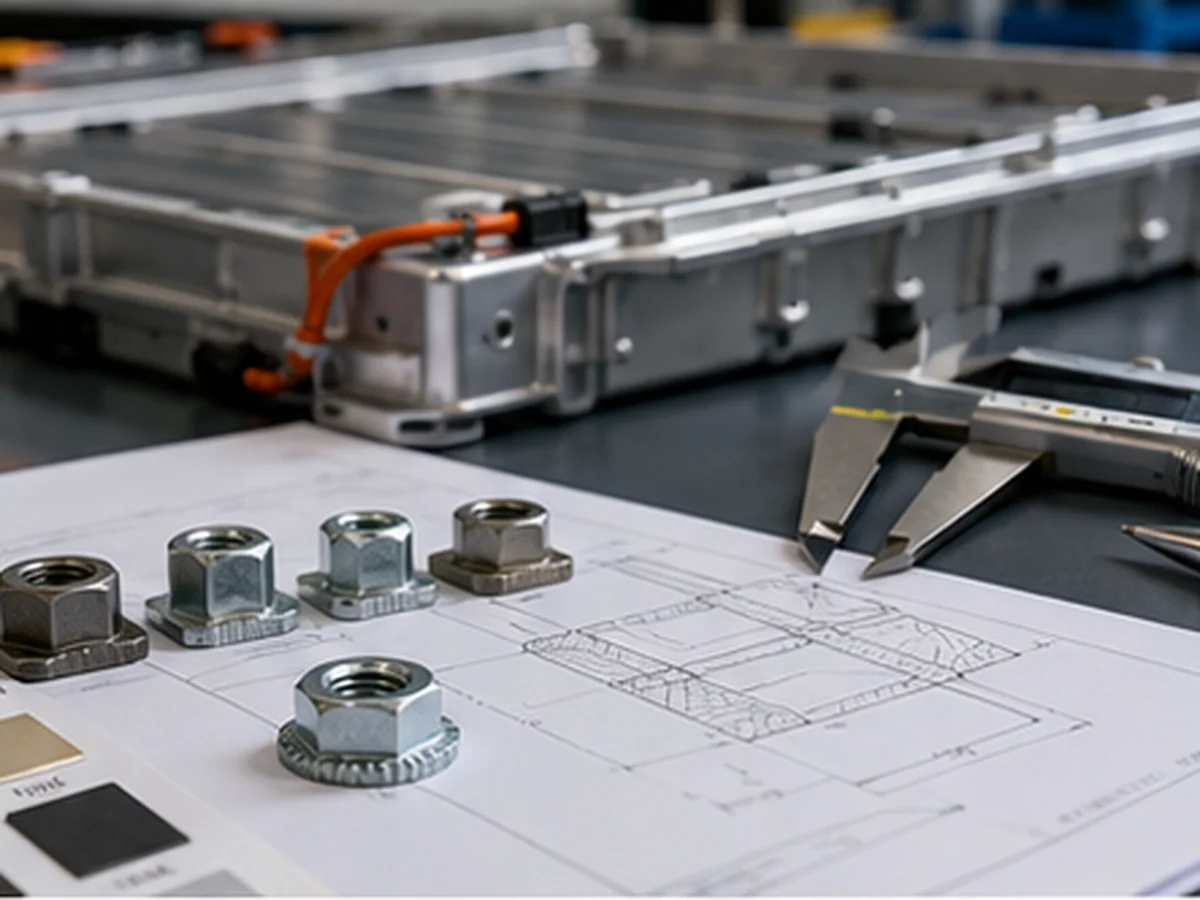
Проектирование крепежа для аккумуляторных блоков электромобилей
Специальные гайки для аккумуляторных блоков электромобилей: покрытие, электроизоляция и вопросы отслеживаемости
Специальные гайки для аккумуляторных блоков электромобилей не следует выбирать только по размеру резьбы. Резьба M6, M8 или M10 может соответствовать ответному болту, но это не гарантирует пригодность покрытия, посадку резьбы после гальванизации, поведение при затяжке, прочность на вырыв, сопротивление выкручиванию, электроизоляцию, коррозионную стойкость или готовность к отслеживаемости.
Перед запросом котировки покупатели должны подтвердить расположение соединения, функцию гайки, пакет соединения, материал, покрытие, последовательность нанесения покрытия, требования к моменту затяжки или предварительному натягу, требования к изоляции (если есть), объем отслеживаемости и документы для утверждения заказчиком.
Специальные гайки для аккумуляторных блоков электромобилей должны оцениваться по расположению соединения, покрытию, посадке резьбы, границе электроизоляции, отслеживаемости и требованиям к утверждению заказчиком.
Только концептуальная визуализация; окончательный выбор зависит от чертежа, пакета соединения, спецификации покрытия, метода контроля и стандарта заказчика.
Краткий ответ: Что следует подтвердить покупателю для специальных гаек аккумуляторных блоков электромобилей?
Специальные гайки для аккумуляторных блоков электромобилей следует рассматривать как часть полной сборки, а не как изолированный резьбовой компонент. Для поддонов аккумуляторов, корпусов аккумуляторов, крышек, модульных кронштейнов и листовых металлических опорных конструкций покупатели должны подтвердить расположение соединения, функцию гайки, сопрягаемые детали, материал, покрытие, процесс сборки, метод контроля и стандарт заказчика.
Если требуется электрическая изоляция, это должно рассматриваться как требование ко всему стеку соединения, а не только к гайке. Гайка, болт, шайба, втулка, покрытие, материал панели, условия сжатия, момент затяжки и метод испытаний могут повлиять на результат.
Проблема с аккумуляторной батареей электромобиля
Почему это важно
Покупатель должен подтвердить
Покрытие
Влияет на защиту от коррозии, посадку резьбы, момент затяжки и риск при установке
Тип покрытия, толщина (если указана), последовательность нанесения покрытия и контроль резьбы после гальванизации
Электрическая изоляция
Нельзя определить только по покрытию
Полный пакет соединения, требования к изоляции, метод испытаний и стандарт заказчика
Прослеживаемость
Поддерживает контроль качества и сдерживание в автомобильной промышленности
Номер партии, сертификат на материал, отчет о покрытии, протокол контроля и этикетка упаковки
Прочность
Контролирует надежность сборки
Требования к крутящему моменту, предварительной затяжке, срыву крутящего момента, вырыванию, выдавливанию и ослаблению, если указаны
Маршрут изготовления
Влияет на стабильность, стоимость, срок поставки и утверждение
Маршрут холодной формовки, механической обработки, нарезания резьбы, формовки резьбы, сварки, клепки, термообработки и нанесения покрытия
Утвердительные документы
Требуется для автомобильных программ, если указано
PPAP, IMDS, отчет по размерам, сертификат материала, отчет по покрытию и план контроля, если требуется
Что необходимо знать до того, как поставщик сможет подтвердить соответствие
Поставщик может дать ответственную рекомендацию только тогда, когда известны ревизия чертежа, место применения, пакет соединения, требования к резьбе, материал, твердость, покрытие, способ установки, условия крутящего момента, метод контроля и область утверждения заказчика. Отсутствие данных по покрытию, изоляции, срыву крутящего момента, вырыванию или прослеживаемости должно рассматриваться как требует подтверждения, а не предполагаться из фразы “гайка для аккумуляторной батареи электромобиля”.”
Почему гайки для аккумуляторных блоков EV требуют большего, чем стандартное соответствие резьбы
Сборки аккумуляторных блоков электромобилей часто объединяют листовой металл, литые детали, крышки, кронштейны, поддоны, изоляционные детали, уплотнения и покрытые компоненты. Гайка, используемая в этой среде, должна обеспечивать механическое крепление, защиту от коррозии, вибростойкость, контролируемый момент затяжки, ремонтопригодность и отслеживаемость качества.
Посадка резьбы — лишь одна часть этого решения. Гайка с правильной резьбой может быть непригодной, если покрытие изменяет допуск резьбы, если соединение требует электрической изоляции, если процесс сборки повреждает покрытие, если гайка не выдерживает крутящий момент или если проект требует документов отслеживаемости, которые поставщик не может предоставить.
Посадка резьбы — лишь одно требование
Размер, шаг и допуск резьбы должны быть проверены на соответствие ответному болту и чертежу. Однако посадка резьбы не гарантирует стойкость к вырыванию, стойкость к крутящему моменту, коррозионные свойства, электрическое поведение или одобрение производства. Состояние резьбы после нанесения покрытия должно проверяться требуемым калибром или методом контроля, особенно если толщина покрытия или его накопление могут повлиять на посадку.
Соединения аккумуляторного блока могут иметь требования по электричеству, коррозии и отслеживаемости
В аккумуляторном блоке EV некоторые крепежные соединения могут находиться рядом с чувствительными электрическими, тепловыми или коррозионно-опасными зонами. Гайка может быть не единственным компонентом, контролирующим требование. Покупателям следует проверить весь пакет соединения, включая ответный болт, шайбу, изолирующую втулку, втулку, панель, покрытие, клей, уплотнение или обработку поверхности, если они присутствуют.
Распространенные типы гаек, используемые в сборках аккумуляторных блоков электромобилей
Сборки аккумуляторных блоков электромобилей могут использовать различные специальные гайки на заказ в зависимости от места соединения, толщины листа, доступа, возможности сварки, направления нагрузки и последовательности сборки. Тип гайки должен соответствовать чертежу и утвержденной конструкции соединения, а не только общему описанию аккумуляторного блока.
Различные места аккумуляторного блока электромобиля могут требовать приварные гайки, самозаклепочные гайки или специальные гайки в зависимости от состояния листа, доступа, покрытия и направления нагрузки.
Примеры типов гаек не заменяют проверку чертежа или валидацию сборки.
Приварные гайки для сварки поддона аккумулятора или кронштейна
Фланцевые приварные гайки, шестигранные приварные гайки или другие конструкции приварных гаек могут быть рассмотрены, когда поддон аккумулятора, кронштейн или листовая металлическая конструкция спроектированы для сварки. Покупатель должен подтвердить доступ для сварки, конструкцию выступа, свариваемость листа, состояние покрытия, метод контроля сварки и защиту резьбы.
Самозаклепочные гайки для листовых металлических корпусов
Самозаклепочные гайки могут быть рассмотрены для листовых металлических корпусов, крышек или кронштейнов, когда доступен пресс и сварка не предпочтительна. Они зависят от толщины листа, твердости листа, диаметра отверстия, допуска отверстия и контролируемого монтажа.
Тип гайки в зависимости от расположения аккумуляторного блока
Расположение аккумуляторного блока
Тип гайки, часто упоминаемый в отзывах
Основной риск для подтверждения
Необходимые данные для RFQ
Лоток для аккумулятора или сварной кронштейн
Приварная гайка или заказная приварная гайка с выступами
Качество сварки, последовательность нанесения покрытия, защита резьбы и момент отрыва
Доступ для сварки, материал листа, требование к выступам, маршрут нанесения покрытия и метод контроля
Кожух или крышка из листового металла
Самофиксирующаяся гайка или запрессовываемая гайка по чертежу
Деформация листа, плохая фиксация, повреждение покрытия и вырыв
Толщина листа, твёрдость, допуск отверстия, направление установки и направление нагрузки
Кронштейн модуля или опорная деталь
Гайка по чертежу, фланцевая гайка или приварная гайка
Ограничение пространства, усилие зажима, вибрация и прослеживаемость
Чертёж, функция соединения, ответный болт, требования к крутящему моменту и объём документации
Соединение, примыкающее к изоляции
Тип гайки зависит от полного пакета соединения
Ошибочное предположение, что покрытие равно электрической изоляции
Пакет соединения, изолирующие компоненты, условие затяжки, метод испытаний и стандарт заказчика
Нестандартные гайки, когда пространство, покрытие или прослеживаемость контролируются чертежом
Нестандартные гайки могут потребоваться, когда соединение аккумуляторного блока имеет ограниченное пространство, специальную глубину резьбы, специальную геометрию фланца, контролируемое покрытие, элементы защиты от проворачивания, уплотнительный интерфейс, маркировку прослеживаемости, требования к упаковке или одобрительные документы заказчика. В таких случаях подход нестандартным гайкам по чертежам обычно безопаснее, чем выбор стандартной гайки по внешнему виду.
Соображения по покрытию: защита от коррозии, посадка резьбы и риск сборки
Покрытие является одним из наиболее важных факторов при выборе гаек для аккумуляторных блоков электромобилей, поскольку оно может влиять на защиту от коррозии, посадку резьбы, поведение при установке, момент затяжки и контроль. Покупатели должны определять требования к покрытию на основе чертежа, стандарта заказчика или спецификации проекта.
Примеры распространенных покрытий или обработки поверхности могут включать цинкование, цинк-никель, фосфатирование, черное оксидирование, пассивацию или другие финишные покрытия, указанные заказчиком. Правильный выбор зависит от материала, требований к коррозионной стойкости, процесса сборки, условий окружающей среды, сопрягаемых деталей и одобрения заказчика. Не существует универсального “лучшего покрытия” для всех гаек аккумуляторных блоков электромобилей.
Покрытие может влиять на защиту от коррозии, посадку резьбы, момент затяжки и риск при установке, поэтому при необходимости следует проводить контроль резьбы после нанесения покрытия.
Изображение не подразумевает какой-либо толщины покрытия, показателей солевого тумана или результатов одобрения.
Тип покрытия должен соответствовать чертежу или стандарту заказчика
Тип покрытия должен быть четко указан в запросе предложения (RFQ). Покупатели должны подтвердить, требуется ли покрытие для защиты от коррозии, внешнего вида, контроля трения, поведения при сборке или совместимости с соседними материалами. Если требуются показатели солевого тумана, толщина покрытия или коэффициент трения, значение и метод испытаний должны быть указаны в чертеже или стандарте заказчика.
Посадка резьбы после нанесения покрытия требует контроля
Покрытие может изменить посадку резьбы. Если гальваническое покрытие или обработка поверхности наращивается на резьбе, сопрягаемый болт может затягиваться туго, вызывать перекос резьбы, задиры, заедание или не проходить контроль. Допуск резьбы после нанесения покрытия и контроль резьбовыми калибрами должны быть определены, если это требуется чертежом или стандартом заказчика.
Последовательность нанесения покрытия может изменить риск
Последовательность нанесения покрытия и монтажа может изменить профиль риска. Гайка может быть покрыта до монтажа, покрыта после формовки, сварена до покрытия, сварена после покрытия или собрана в панель с покрытием. Каждый путь может повлиять на защиту от коррозии, свариваемость, маркировку поверхности, состояние резьбы или электрические свойства.
Проблема, связанная с покрытием
Возможный риск
Покупатель должен подтвердить
Толщина покрытия
Помехи резьбы или изменение посадки
Допуск после гальванизации и метод калибровки
Повреждение покрытия при сварке
Риск коррозии или качества сварки
Последовательность сварки и защита после сварки
Повреждение покрытия при запрессовке
Поверхностная маркировка или риск локальной коррозии
Метод монтажа и зона контроля
Требования к коррозионной стойкости
Неверный выбор покрытия
Стандарт заказчика, метод испытаний и критерии приемки
Фрикционное поведение
Изменение крутящего момента
Ответный болт, шайба, смазка и метод затяжки
Электрическое поведение
Ложное предположение об изоляции
Метод полной сборки соединения и электрического испытания
Если данные о покрытии отсутствуют: поставщик не должен предполагать характеристики солевого тумана, толщину покрытия, фрикционное поведение, допуск резьбы после гальванизации или электрическое поведение. Они должны быть указаны в чертеже, спецификации покрытия, стандарте заказчика или утвержденном методе испытаний.
Электрическая изоляция: почему покрытая гайка не является автоматически изолированным соединением
Покрытая гайка не должна описываться как электрически изолированная гайка, если полная конструкция соединения, метод испытаний и требования заказчика не подтверждают это утверждение. Электрическая изоляция — это требование на уровне соединения. Она не доказывается только покрытием гайки.
Конечное электрическое поведение может зависеть от гайки, болта, шайбы, втулки, покрытия, повреждения гальванического слоя, сопрягаемой панели, изолирующего слоя, усилия сжатия, крутящего момента, влажности, загрязнения, температуры, вибрации и условий эксплуатации. Если какие-либо из этих параметров неизвестны, правильный ответ — требуется подтверждение.
Электрическая изоляция должна оцениваться на уровне всего стыкового пакета, а не заявляться на основе только покрытой гайки.
Данное изображение не представляет результат испытания изоляции; значения изоляции и методы испытаний должны определяться требованиями заказчика.
Изоляция зависит от всего стыкового пакета
Стык аккумуляторной батареи может включать металлические и неметаллические компоненты. Даже если гайка имеет покрытие, болт может прорезать покрытие, шайба может создать металлический контакт, покрытие может быть повреждено при установке, или сжатие может изменить электрический путь. Поэтому электрическая изоляция должна быть задана и испытана на уровне сборки.
Таблица границ электрической изоляции
Заявление покупателя
Ответ отдела безопасности
Данные, необходимые до подтверждения
“Нам нужны гайки с покрытием для аккумуляторных блоков.”
Проверьте покрытие, коррозию, посадку резьбы и маршрут сборки; не предполагайте изоляцию.
Тип покрытия, сопрягаемые детали, место применения и требования к контролю
“Гайка должна быть электрически изолирована.”
Рассматривайте изоляцию как требование ко всему стыковому пакету.
Стыковой пакет, изолирующие детали, метод испытаний, условия затяжки и критерии приемки
“Может ли цинк-никелевое покрытие обеспечить изоляцию?”
Не подтверждайте без проверки на уровне стыка.
Спецификация заказчика, система покрытия, контактные поверхности и метод электрических испытаний
“На чертеже указан только размер резьбы”.”
Запросите недостающие данные о применении и производительности перед оформлением заказа.
Ревизия чертежа, функция соединения, покрытие, нагрузка, крутящий момент и объем документации
Что покупатели должны указать, если требуется электрическая изоляция
Место сборки и последняя ревизия чертежа.
Полный пакет соединения, включая шайбу, втулку, гильзу или изоляционный слой, если используется.
Материал гайки, болта, панели и ответной детали.
Требование к покрытию или изоляционному слою.
Условие по крутящему моменту, сжатию или предварительной нагрузке.
Требование к сопротивлению изоляции, если указано заказчиком.
Метод испытания, напряжение испытания и критерии приемки, если указаны.
Стандарт заказчика или внутренняя спецификация.
Требуется подтверждение: Без стыка соединения, метода электрических испытаний и требований заказчика поставщик может оценить технологичность и возможность нанесения покрытия, но не должен гарантировать электрическую изоляцию.
Требования к прослеживаемости для специальных гаек аккумуляторных блоков электромобилей.
Прослеживаемость важна в проектах автомобильной промышленности и аккумуляторных батарей для электромобилей, поскольку проблема с крепежом может повлиять на локализацию, доработку, полевое расследование или аудит заказчика. Прослеживаемость не доказывает, что гайка подходит для данного применения, но помогает идентифицировать историю материала, производства, покрытия, контроля и поставки при возникновении проблемы с качеством.
Прослеживаемость может включать партию материала, партию производства, партию покрытия, записи контроля, этикетки упаковки и документы об одобрении при необходимости.
Изображения документов являются общими и не представляют фактическую сертификацию или одобрение заказчика.
Что должно быть прослеживаемым?
Требования к прослеживаемости могут включать партию сырья, номер плавки, партию производства, партию термообработки, партию покрытия, запись контроля, этикетку упаковки и партию отгрузки. Точный объем зависит от стандарта заказчика, чертежа, RFQ и соглашения по качеству.
Какие документы могут потребоваться?
Обычные документы могут включать сертификат материала, отчет о покрытии, отчет о размерном контроле, запись контроля резьбы, отчет о твердости, если указано, отчет об испытании на крутящий момент или вырыв, если указано, сертификат соответствия, запись этикетки упаковки, документы PPAP или подачу IMDS, если это требуется заказчиком или программой.
Электрическая изоляция, если не проверено и не указано иное
Отчет по размерам
Контроль размеров по чертежу
Срыв резьбы или вырыв, если не проверено
Контроль резьбы
Проверка посадки резьбы
Долговечность покрытия или коррозионная стойкость
Маркировка партии
Идентификация партии
Утверждение применения
Пакет PPAP
Документация по утверждению для автомобильной промышленности, если требуется
Универсальная пригодность для всех соединений аккумуляторных блоков
Прослеживаемость не равна утверждению применения
Прослеживаемость помогает определить, какие материал, покрытие, производственная партия и запись контроля связаны с поставкой. Она не доказывает, что гайка электрически изолирована, прошла квалификацию по коррозионной стойкости, стабильна по моменту затяжки или одобрена для каждого соединения аккумуляторного блока. Утверждение применения по-прежнему зависит от чертежа, стандарта заказчика и плана валидации.
Проверка прочности и сборки: момент срыва, усилие вырыва, нагрузка на резьбу и риск ослабления
Гайки для аккумуляторных блоков электромобилей могут должны выдерживать момент затяжки при сборке, усилие зажима, эксплуатационные нагрузки, вибрацию и воздействие коррозии. Покупатели должны определить, какие механические характеристики важны для соединения.
Крутящий момент, предварительная затяжка, момент проворота и усилие на вырыв — это разные параметры. Значение момента затяжки не гарантирует, что гайка будет сопротивляться провороту в листовом металле. Размер резьбы не гарантирует, что гайка будет сопротивляться вырыву. Требование к покрытию не гарантирует стабильность момента затяжки.
Крутящий момент и предварительная затяжка — это не то же самое, что момент проворота
Момент затяжки используется при сборке для создания усилия зажима, но момент проворота измеряет сопротивление гайки вращению относительно листа или кронштейна. Самонарезающей гайке может потребоваться проверка на момент проворота, если она устанавливается в тонкий листовой металл. Приварной гайке может потребоваться проверка на момент проворота, если качество сварки или выравнивание критичны.
Усилие на вырыв и выдавливание зависят от направления нагрузки
Усилие на вырыв и выдавливание следует оценивать с учетом направления нагрузки. В сборках из листового металла гайка может нагружаться с разных направлений во время установки, эксплуатации, деформации при ударе, технического обслуживания или вибрации. Требуемое направление испытания и приемочное значение должны быть указаны на чертеже или в стандарте заказчика.
Риск ослабления требует проверки на уровне узла
Если соединение подвержено вибрации или является ответственным, риск ослабления следует оценивать в составе полной сборки. Тип гайки, ответный болт, шайба, покрытие поверхности, длина зажима, метод затяжки, сохранение предварительной затяжки и условия эксплуатации — все это влияет на поведение при ослаблении. Если требуется функция преобладающего момента, покупателям может потребоваться сравнить конструкции гаек, такие как полностью металлические самоконтрящиеся гайки только после подтверждения требований к соединению и чертежу.
Проверка сборки
Почему это важно
Необходимые данные
Размер и шаг резьбы
Совместимость ответных болтов
Обозначение резьбы, допуск и зацепление
Момент затяжки
Контроль процесса сборки
Метод затяжки, смазка и ответные детали
Преднатягом
Удержание соединения
Болт, шайба, состояние поверхности и зависимость момент-натяжение
Выкручивание
Сопротивление проворачиванию гайки
Тип гайки, состояние листа, качество сварки или обжима и метод испытания
Вырыв / выталкивание
Сопротивление осевой или обратной нагрузке
Направление нагрузки, толщина листа и критерии приемки
Риск самоотвинчивания
Стабильность при вибрации или эксплуатации
Пакет соединения, длина зажима, покрытие, шайба и условия эксплуатации
Не используйте одно испытание как подтверждение всех характеристик. Проверка резьбовым калибром не гарантирует отсутствие срыва при кручении. Отсутствие срыва при кручении не гарантирует отсутствие вырыва. Прослеживаемость не гарантирует долговечность покрытия. Электрическая изоляция требует определенного испытания на уровне соединения, если это указано.
Маршрут изготовления: сварные, обжатые, холодноформованные или механически обработанные гайки
Маршрут изготовления гайки и маршрут установки в сборке аккумуляторного блока должны быть разделены. Гайка может быть холодноформованной, механически обработанной, нарезанной, резьбонакатанной, термообработанной, покрытой и проверенной до установки. Установка может включать сварку, обжатие, болтовое соединение или другой процесс сборки.
Маршрут изготовления гайки
Маршрут изготовления гайки зависит от геометрии, материала, годового объема, допусков, требований к резьбе и сложности чертежа. Холодное формование может подходить для деталей с большим объемом и стабильной геометрией. Механическая обработка может рассматриваться для прототипов, сложных элементов, малых объемов или более жестких индивидуальных требований. Нарезка резьбы, резьбонакатывание, термообработка, покрытие и сортировка зависят от чертежа и требований к качеству.
Маршрут установки в сборке аккумуляторного блока
Маршрут установки влияет на конечное соединение. Приварная гайка зависит от доступа к сварке, параметров сварки, конструкции выступа и контроля сварки. Самоконтрящаяся гайка зависит от допуска отверстия, толщины листа, твердости листа и настройки пресса. Специальная гайка может требовать особой упаковки, ориентации, сборочной оснастки или защиты резьбы.
Таблица маршрутов изготовления и установки
Элемент маршрута
Что она контролирует
Покупатель должен подтвердить
Холодная формовка / холодная высадка
Геометрия корпуса гайки и течение материала при высоких объемах производства
Годовой объем, материал, стабильность геометрии и технологичность оснастки
Обработка на станках с ЧПУ
Сложные элементы, прототипы, малые объемы или более жесткие индивидуальные требования
Допуск, геометрия, целевая стоимость, график образцов и ревизия чертежа
Нарезание резьбы / формование резьбы
Функция и посадка внутренней резьбы
Размер резьбы, шаг, допуск, метод калибровки и припуск на покрытие
Термическая обработка
Прочность, твердость и поведение резьбы при заданных условиях
Марка материала, диапазон твердости и стандарт заказчика
Покрытие / гальваническое покрытие
Защита от коррозии, внешний вид, посадка резьбы и поведение при сборке
Тип покрытия, последовательность, толщина (если указана) и метод контроля
Сварка или запрессовка при сборке
Окончательное удержание соединения в сборе и технологический риск
Доступ для сварки, доступ для пресса, данные по листу, оснастка и ответственность за валидацию
Данные маршрута обработки, необходимые до запроса котировки
Перед запросом котировки покупатель должен уточнить, поставляется ли гайка россыпью, предустановлена в панели, сваривается покупателем, сваривается поставщиком, запрессовывается в лист или собирается позже на линии сборки батарейного блока. Это влияет на ответственность за контроль, упаковку, прослеживаемость и объем утверждения.
Документы по контролю качества, которые покупатель должен подтвердить
Контроль должен проводиться в соответствии с чертежом, стандартом заказчика и анализом отказов. Для специальных гаек аккумуляторных блоков электромобилей план контроля может включать проверку размеров, контроль резьбы калибрами, контроль покрытия, измерение твердости, испытание на выкручивание, испытание на вырыв, проверку маркировки прослеживаемости и проверку документации.
Пункты контроля
Покупатель должен определить, какие пункты контроля требуются для самой гайки, а какие — для установленного соединения. Поставщик гаек может проверить размеры, резьбу и покрытие отдельной гайки. Характеристики установленного соединения могут потребовать проверки на уровне сборки, проводимой покупателем или уполномоченным лицом.
Примеры документов
Протокол контроля размеров.
Сертификат на материал.
Отчет о покрытии.
Протокол контроля резьбы.
Отчет о твердости, если указано.
Отчет о крутящем моменте, если указано.
Отчет на вырыв или выдавливание, если указано.
Сертификат соответствия.
Запись прослеживаемости партии.
Запись упаковки и маркировки.
Пакет PPAP, если требуется.
Отправка IMDS, если требуется.
Покупатели также могут ознакомиться с SUNHYINGS технические руководства по смежным темам крепежного производства.
Требование
Контроль незатянутых гаек
Верификация смонтированного соединения
Требуется ввод покупателя
Класс посадки резьбы
Да
Иногда
Требования к размеру резьбы, шагу, допуску и калибру
Покрытие
Да
Иногда
Тип покрытия, толщина (если указана) и требования к испытаниям на коррозию
Выкручивание
Условно
Часто требуется для смонтированного соединения
Метод испытания и приемочное значение
Вырыв / выталкивание
Условно
Часто требуется для соединения листового металла
Направление нагрузки и приемочное значение
Электрическая изоляция
Нет, не только гайкой
Да, испытание на уровне соединения
Пакет соединений, метод испытания и стандарт заказчика
Прослеживаемость
Да
Да, если требуется
Партия и объем документации
PPAP / IMDS
Условно
Условно
Требование заказчика или программы
Сценарий композитного проектирования: покрытая гайка рядом с соединением корпуса аккумулятора электромобиля
Сценарий композитного проектирования только для обучения: Покупатель запрашивает специальную гайку с покрытием для крышки корпуса аккумуляторной батареи электромобиля. Чертеж показывает размер резьбы и общую геометрию гайки, но в RFQ не указано, предназначено ли покрытие для защиты от коррозии, контроля трения, электроизоляции или внешнего вида. Покупатель также упоминает, что соединение может находиться рядом с изолированными компонентами, но не предоставляет полный пакет соединения.
В этой ситуации поставщик не должен утверждать, что гайка с покрытием обеспечивает электроизоляцию. Правильный ответ — запросить пакет соединения, требования к покрытию, метод испытаний, условия затяжки, ответный болт, шайбу или втулку, а также стандарт заказчика. Поставщик может проверить возможность изготовления гайки с требуемым покрытием и допуском резьбы, но изоляционные свойства должны быть подтверждены на уровне соединения.
Данный сценарий не представляет конкретный случай заказчика, программу транспортного средства или утвержденный результат испытаний. Он включен для демонстрации того, как следует обрабатывать границы RFQ до составления коммерческого предложения или утверждения образца.
Контрольный список RFQ для специальных гаек аккумуляторного блока электромобиля
Хорошо составленный RFQ сокращает количество переписки и предотвращает небезопасные предположения. Если покупатель отправляет только размер резьбы и пишет “гайка для аккумуляторного блока”, поставщик не может точно подтвердить покрытие, электроизоляцию, прослеживаемость или эксплуатационные характеристики.
Полный RFQ должен включать ревизию чертежа, пакет соединения, требования к резьбе, покрытие, требования к изоляции (если есть), объем прослеживаемости, годовой объем и документы на утверждение.
Визуализация контрольного списка предназначена только для подготовки RFQ и не заменяет проверку чертежа или утверждение заказчиком.
Минимальные данные RFQ
Ревизия чертежа.
Фото образца, если чертеж неполный.
Расположение аккумуляторного блока электромобиля.
Тип соединения и пакет соединений.
Материал сопрягаемой детали или листовой материал.
Размер резьбы, шаг и допуск.
Геометрия гайки или запрос на открытый выбор.
Требования к материалу.
Требование к твердости или термообработке, если указано.
Тип покрытия и последовательность нанесения покрытия.
Требование к резьбе после гальванизации.
Требование к крутящему моменту или предварительной затяжке.
Требование к выкручиванию, вырыванию или выдавливанию, если указано.
Требование к ослаблению или вибрации, если указано.
Метод контроля и критерии приемки.
Требование к прослеживаемости.
Годовой объем.
План утверждения образцов.
Требования к упаковке и маркировке.
PPAP или IMDS при необходимости.
Дополнительные данные при необходимости электроизоляции
При необходимости электроизоляции покупатель должен указать полный пакет соединения, изолирующие компоненты, обработку поверхности, условия обжатия или затяжки, испытательное напряжение или метод (если указаны), условия окружающей среды (если указаны) и критерии приемки.
Дополнительные данные при необходимости прослеживаемости
При необходимости прослеживаемости покупатель должен указать требуемый уровень прослеживаемости, формат этикетки, метод контроля партии, требование к сертификату материала, требование к отчету о покрытии, требование к записям контроля, требование к этикетке упаковки и требование к хранению документации.
Поле запроса предложения
Обязательное / Условное
Почему это меняет предложение
Ревизия чертежа
Обязательное
Определяет геометрию, резьбу, допуски и основу утверждения
Сборка соединения
Требуется при наличии изоляции или специальной функции
Контролирует анализ рисков электрических, механических и сборочных работ
Покрытие и последовательность
Обязательное
Влияет на коррозию, посадку резьбы, сварку, обжим и поведение при затяжке
Крутящий момент / преднатяг / вырыв / выдергивание
Условно
Определяет, требуется ли дополнительное тестирование или анализ конструкции
Область прослеживаемости
Условно
Влияет на управление партиями, документацию, упаковку и готовность к аудиту
Годовой объем
Обязательное
Влияет на маршрут изготовления, выбор инструмента и себестоимость
Как SUNHYINGS рассматривает RFQ на гайки для аккумуляторных блоков электромобилей
SUNHYINGS может рассматривать RFQ на гайки для аккумуляторных блоков электромобилей с точки зрения полноты чертежа, типа гайки, требований к резьбе, материала, твердости, покрытия, маршрута изготовления, метода контроля и требований к прослеживаемости.
Для применения приварных гаек анализ может включать геометрию приварной гайки, конструкцию выступа, доступ для сварки, последовательность нанесения покрытия и защиту резьбы. Для применения самозаклепывающихся гаек анализ может включать толщину листа, твердость листа, диаметр отверстия, допуск на отверстие, заклепочный элемент, доступ для установки и проверки на выдавливание, вытягивание или скручивание.
В качестве страницами возможностей производителя специальных гаек, SUNHYINGS может проверить, содержит ли чертеж и RFQ достаточно информации для составления коммерческого предложения, подготовки образцов и планирования документации по качеству. Однако окончательное утверждение применения должно соответствовать конструкции аккумуляторного блока покупателя, стандарту заказчика, валидационным испытаниям и процессу утверждения, специфичному для проекта.
Что может проверить SUNHYINGS
Полнота чертежа и технологичность изготовления.
Тип гайки, геометрия и требования к резьбе.
Требования к материалу, твердости и термообработке.
Потребности в проверке резьбы после покрытия и гальванизации.
Маршрут изготовления и возможность подготовки образца.
Документация по контролю и планирование прослеживаемости.
Что требует подтверждения заказчика
Функция и место применения соединения аккумуляторного блока.
Требование к электрической изоляции и метод испытания.
Критерии приемки по крутящему моменту, предварительной нагрузке, вырыванию, выталкиванию или выкручиванию.
Стандарт заказчика и ревизия чертежа.
Валидация окончательной сборки и маршрут утверждения.
Требования PPAP/IMDS и объем документации.
Сводная таблица: Критерии выбора гаек для аккумуляторных блоков электромобилей
Рассмотрение
Почему это важно
Требуется подтверждение
Место применения
Поддон аккумулятора, корпус, кронштейн или крышка могут иметь различные риски
Положение сборки и функция соединения
Тип гайки
Приварная гайка, самозаклепывающаяся гайка или нестандартная гайка в зависимости от технологии и нагрузки
Чертеж и маршрут сборки
Резьба
Посадка резьбы не гарантирует работоспособность
Размер, шаг, допуск, длина свинчивания и ответный болт
Материал / твердость
Влияет на прочность, формовку, сварку, заклепывание и поведение резьбы
Марка материала, твердость и термообработка
Покрытие
Влияет на коррозию, посадку резьбы, крутящий момент и технологический риск
Тип покрытия, последовательность, толщина (если указана) и контроль
Электрическая изоляция
Не может быть подтверждено только покрытием
Полная сборка соединения, метод испытаний и требования заказчика
Прослеживаемость
Поддерживает контроль качества в автомобилестроении
Записи о партии, материале, покрытии, контроле и маркировке
Документы
Требуемый объем зависит от программы
PPAP / IMDS / отчеты только при необходимости
Перед отправкой запроса
Подготовьте последнюю ревизию чертежа, место применения, пакет соединения, размер и допуск резьбы, требования к материалу и твердости, покрытие и последовательность нанесения, условие по крутящему моменту или предварительной нагрузке, требование к вырыву или откручиванию (если указано), область прослеживаемости, годовой объем, план утверждения образцов и требования PPAP/IMDS (если применимо). Если требуется электрическая изоляция, включите полное требование к испытанию соединения, а не описывайте гайку как изолированную только покрытием.
Связанные страницы SUNHYINGS
Просмотрите соответствующие страницы SUNHYINGS для нестандартных гаек, приварных гаек, самозаклепочных гаек, закупок по чертежам и оценки поставщиков для автомобильной промышленности.
Следующие источники предоставлены только для технического контекста. Они не заменяют чертеж покупателя, стандарт заказчика, спецификацию покрытия, план электрической валидации или требование утверждения, специфичное для программы.
Отличаются ли специальные гайки для аккумуляторных блоков электромобилей от стандартных гаек?
Они могут отличаться, когда чертеж требует специальной геометрии, контролируемого покрытия, прослеживаемости, устойчивости к срыву резьбы, сопротивления выдергиванию, учета электроизоляции или автомобильных одобрительных документов. Размер резьбы сам по себе не подтверждает пригодность для соединения аккумуляторной батареи электромобиля.
Могут ли гайки с покрытием обеспечивать электроизоляцию?
Не автоматически. Электрическая изоляция — это требование на уровне соединения. Это зависит от гайки, болта, шайбы, втулки, покрытия, панели, обжатия, крутящего момента, окружающей среды и метода испытаний. Гайка с покрытием не должна рассматриваться как изолированное соединение, если требование заказчика и проверочные испытания не подтверждают это утверждение.
Какое покрытие лучше всего подходит для гаек аккумуляторных блоков электромобилей?
Не существует универсального лучшего покрытия. Правильное покрытие зависит от требований к вытяжке, целевой коррозионной стойкости, посадки резьбы, маршрута сборки, сопрягаемых материалов, последовательности нанесения покрытия и стандарта заказчика. Количество часов солевого тумана или толщина покрытия не должны выдумываться без фактической спецификации.
Требуют ли гайки для аккумуляторных блоков электромобилей PPAP?
Только если заказчик или автомобильная программа требует PPAP. PPAP не следует предполагать для каждого заказа гаек. Требуемый уровень и объем документации должны быть подтверждены в запросе котировки (RFQ).
Какую прослеживаемость следует запрашивать покупателям?
Покупатели могут запросить прослеживаемость партии материала, производственной партии, партии термообработки, партии покрытия, отчет по размерам, запись контроля резьбы, отчет по покрытию, упаковочную этикетку и партию отгрузки. Точный объем зависит от чертежа, стандарта заказчика и соглашения по качеству.
Можно ли использовать приварные гайки в поддонах аккумуляторных батарей электромобилей?
Приварные гайки могут использоваться, если конструкция допускает сварку, а проект подтверждает свариваемость листа, последовательность нанесения покрытия, доступ к сварке, конструкцию выступа, контроль сварки и защиту резьбы. Их не следует выбирать только по размеру резьбы.
Можно ли использовать самозаклепочные гайки в корпусах аккумуляторов электромобилей?
Самофиксирующиеся гайки могут использоваться, когда толщина листа, твердость, пластичность, допуск отверстия и доступ пресса поддерживают процесс запрессовки. В зависимости от чертежа или стандарта заказчика могут потребоваться проверки на выдавливание, вырывание или срыв резьбы.
Что должно быть включено в запрос предложения на гайку для аккумуляторной батареи электромобиля?
RFQ должен включать ревизию чертежа, место применения, пакет соединения, размер и допуск резьбы, материал, твердость, покрытие, последовательность нанесения покрытия, требование к электроизоляции (при наличии), требование к крутящему моменту или предварительной нагрузке, требование к выкручиванию или вырыванию, объем отслеживаемости, годовой объем, утверждение образцов и требование PPAP/IMDS (при применимости).
Техническая обзорная заметка
Это руководство подготовлено для инженеров-конструкторов аккумуляторных блоков электромобилей, инженеров по закупкам, команд SQE и покупателей автомобильного крепежа, рассматривающих специальные гайки для поддонов аккумуляторов, корпусов, кронштейнов и листовых металлических узлов.
Рассмотренный объем: тип специальной гайки, посадка резьбы, покрытие, контроль резьбы после нанесения покрытия, граница электрической изоляции, прослеживаемость, данные RFQ, инспекционные документы и требования к утверждению заказчиком.
Эта статья не является документом по проектированию электрической безопасности аккумуляторного блока электромобиля. Электрическая изоляция, безопасность высокого напряжения и окончательное утверждение применения аккумуляторного блока должны быть подтверждены полной конструкцией сборки покупателя, стандартом заказчика и квалифицированным процессом валидации.
Примечание по стандартам и ограничениям: Эта статья является практическим руководством по проектированию и закупкам. Она не заменяет чертеж заказчика, спецификацию конструкции аккумуляторного блока электромобиля, стандарт электрической безопасности, спецификацию покрытия, утвержденный процесс сборки, одобрение PPAP или требование заказчика. Электрическая изоляция должна быть подтверждена на уровне полного соединения, если это требуется. Отсутствующие данные о покрытии, требования к изоляции, значение крутящего момента, значение вырыва, объем прослеживаемости или стандарт заказчика следует рассматривать как требующие подтверждения, а не как факт.