Самофиксирующиеся гайки (Self-Clinching Nuts) против приварных гаек (Weld Nuts) для тонколистового металла: сравнение процесса, прочности и рисков
Самонарезающие гайки и приварные гайки могут создавать внутреннюю резьбу в тонколистовом металле, но они не взаимозаменяемы только по размеру резьбы. Самонарезающая гайка зависит от толщины листа, твердости листа, качества отверстия и контролируемой запрессовки. Приварная гайка зависит от свариваемости, конструкции выступа, доступа для сварки, контроля приспособлений и контроля сварки.
Основной риск при выборе — это выбор по названию продукта вместо условий соединения. Перед оформлением заказа подтвердите материал листа, толщину листа, допуск отверстия, покрытие, направление нагрузки, момент отрыва, вырыв, выдавливание, процесс установки, метод контроля и стандарт заказчика.
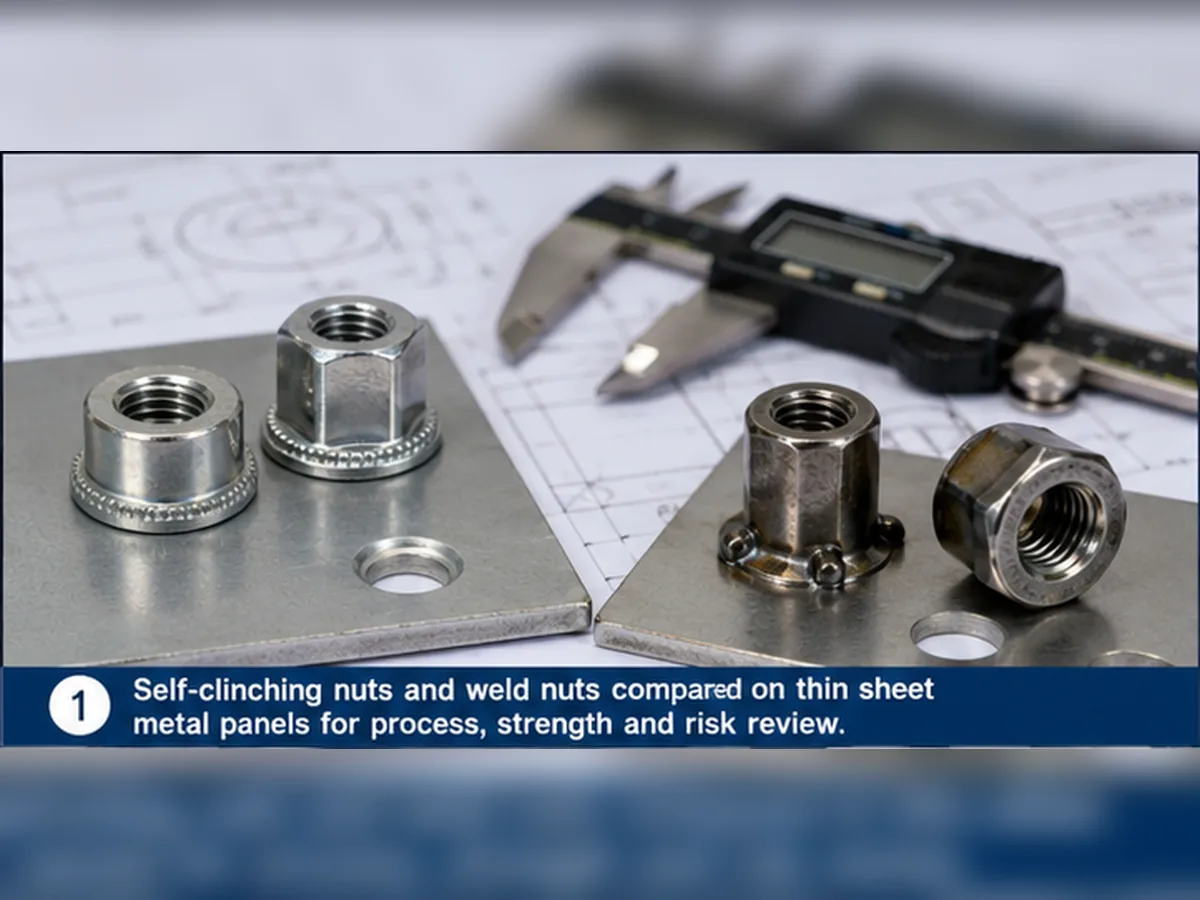
Самонарезающие гайки и приварные гайки следует сравнивать по состоянию листа, процессу установки, направлению нагрузки, контролю и требованиям заказчика.
Только концептуальная визуализация; окончательный выбор зависит от чертежа, данных по листовому металлу, валидации процесса и стандарта заказчика.
Краткий ответ: когда покупателям следует выбирать самоконтрящиеся гайки или приварные гайки?
Самоконтрящиеся гайки обычно рассматриваются в первую очередь, если материал листа может выдержать холодное течение в зону запрессовки, отверстие может быть выдержано в допуске, имеется доступ к прессу, и необходимо избегать сварочного нагрева или остатков сварки. Приварные гайки обычно рассматриваются в первую очередь, если сборка предназначена для сварки, имеется доступ для сварки, подтверждена свариваемость листа, и контроль сварки может обеспечить качество проекции, выравнивание и состояние резьбы.
Универсального победителя нет. Самоконтрящаяся гайка может выйти из строя, если лист слишком твердый, слишком тонкий, плохо пробит или неправильно запрессован. Приварная гайка может выйти из строя, если сварной шов слабый, перегрет, смещен, загрязнен покрытием или если брызги повреждают резьбу.
Условие покупателя
Обычно проверка самозаклепочных гаек
Обычно проверка приварных гаек
Требуется подтверждение
Тонкий лист с доступом для пресса
Возможно, если твердость листа, пластичность и допуск отверстия поддерживают заклепку
Возможно, если сварка одобрена
Толщина листа, твердость, диаметр отверстия и доступ
Следует избегать нагрева при сварке
Часто просматривается в первую очередь
Требуется проверка рисков сварки
Покрытие, деформация, термочувствительные компоненты и последовательность сборки
Существующая сварочная линия и приспособление
Возможно, но может потребоваться отдельная операция прессования
Часто просматривается в первую очередь
Доступ к сварке, конструкция выступа, приспособление и метод контроля
Сварка не допускается конструкцией
Часто пересматривается
Обычно не рекомендуется
Примечание на чертеже, стандарт заказчика и технологические ограничения
Высокое требование к крутящему моменту
Условно
Условно
Значение крутящего момента, направление нагрузки, состояние отверстия и метод испытания
Проект с утверждением для автомобильной промышленности
Условно
Условно
Стандарт заказчика, ревизия чертежа, план контроля и объем PPAP, если требуется
Только размер резьбы не гарантирует работоспособность соединения
Обозначение резьбы M6, M8 или M10 определяет только сопрягаемую резьбу. Оно не подтверждает прочность на вырыв, выдавливание, сопротивление проворачиванию, качество сварки, удерживающую способность запрессовки, совместимость покрытий или одобрение для автомобильной промышленности. Соединение листового металла должно рассматриваться как система.
Что такое самоконтрящиеся гайки?
Самозаклепочные гайки представляют собой крепежные элементы с внутренней резьбой, устанавливаемые в подготовленные отверстия в листовом металле методом запрессовки. В процессе установки материал листа затекает в контрящий элемент гайки. Это создает механическое удержание и помогает сопротивляться проворачиванию, выдавливанию или вырыву при правильной конструкции и установке соединения.
Самоконтрящиеся гайки обычно рассматриваются для сборок из листового металла, где сварка нежелательна, где нагрев может повредить покрытия или окружающие детали, или где требуется чистая резьба после формовки или финишной обработки панели.
Как работает контрящий элемент
Функция запрессовки предназначена для фиксации в листовом материале после прессования. Точная геометрия зависит от конструкции гайки и чертежа. Лист должен быть достаточно пластичным, чтобы материал затекал в удерживающий элемент, но не слишком мягким, тонким или нестабильным, чтобы соединение не деформировалось и не теряло прочность.
Монтажное отверстие также имеет решающее значение. Если отверстие слишком большое, слишком маленькое, не круглое, имеет заусенцы или плохо расположено, гайка может неправильно сесть. Покупатель должен подтвердить диаметр отверстия, допуск, состояние заусенцев, плоскостность листа и направление установки перед началом выборки.
Что может пойти не так при установке
Типичные проблемы с самозапрессовывающимися гайками включают плохую посадку, деформацию панели, недостаточную запрессовку, проворачивание гайки, вырыв, повреждение резьбы, неправильную подготовку отверстия и следы на поверхности. Эти проблемы обычно связаны с процессом и должны проверяться с помощью пробной установки и контроля, а не предполагаться по внешнему виду из каталога.
Что такое приварные гайки?
Приварные гайки — это резьбовые гайки, крепящиеся к листовому металлу сваркой. Многие конструкции приварных гаек используют выступы или свариваемую контактную площадку, чтобы гайка могла быть соединена с листом контролируемой сваркой. Сварное соединение затем обеспечивает удержание и защиту от проворачивания.
Распространенные семейства приварных гаек включают фланцевые приварные гайки, шестигранные приварные гайки и специальные приварные гайки с выступами. Правильный тип зависит от опорной площади, положения листа, доступа, направления нагрузки, конструкции сварочного приспособления и требований чертежа заказчика.
Функция приварной гайки с выступами
Приварные гайки с выступами используют специальные контактные точки или выступы для концентрации энергии сварки. Это помогает создать сварное соединение между гайкой и листовым металлом. Производительность зависит от геометрии гайки, материала листа, покрытия, параметров сварки, выравнивания приспособления и повторяемости процесса.
Приварная гайка с правильным размером резьбы может выйти из строя, если сварной шов слабый, смещенный, перегретый, недогретый или подвержен влиянию покрытия, масла, загрязнения или плохой геометрии выступа.
Распространенные типы приварных гаек для листового металла
Фланцевые приварные гайки могут обеспечивать большую опорную поверхность и контролируемую поверхность сварки. Шестигранные приварные гайки могут использоваться, когда чертеж, приспособление и условия сборки требуют такой геометрии. Индивидуальные приварные гайки могут потребоваться, когда форма выступа, длина пилота, диаметр фланца, глубина резьбы, покрытие или упаковка должны соответствовать чертежу заказчика.
Сравнение процессов: запрессовка с клинчем и сварка
Первое основное отличие — это процесс. Самофиксирующиеся гайки устанавливаются путем запрессовки в подготовленное отверстие в листовом металле. Приварные гайки крепятся сваркой. Каждый процесс имеет свое оборудование, точки контроля и риски отказа.
Установка самофиксирующихся гаек обычно требует точной подготовки отверстия, контролируемого усилия пресса, правильной твердости листа и достаточного доступа для установочного инструмента. Установка приварных гаек требует сварочного оборудования, доступа к электроду или сварке, контроля выступов, выравнивания приспособления, контроля параметров сварки и контроля сварного шва.
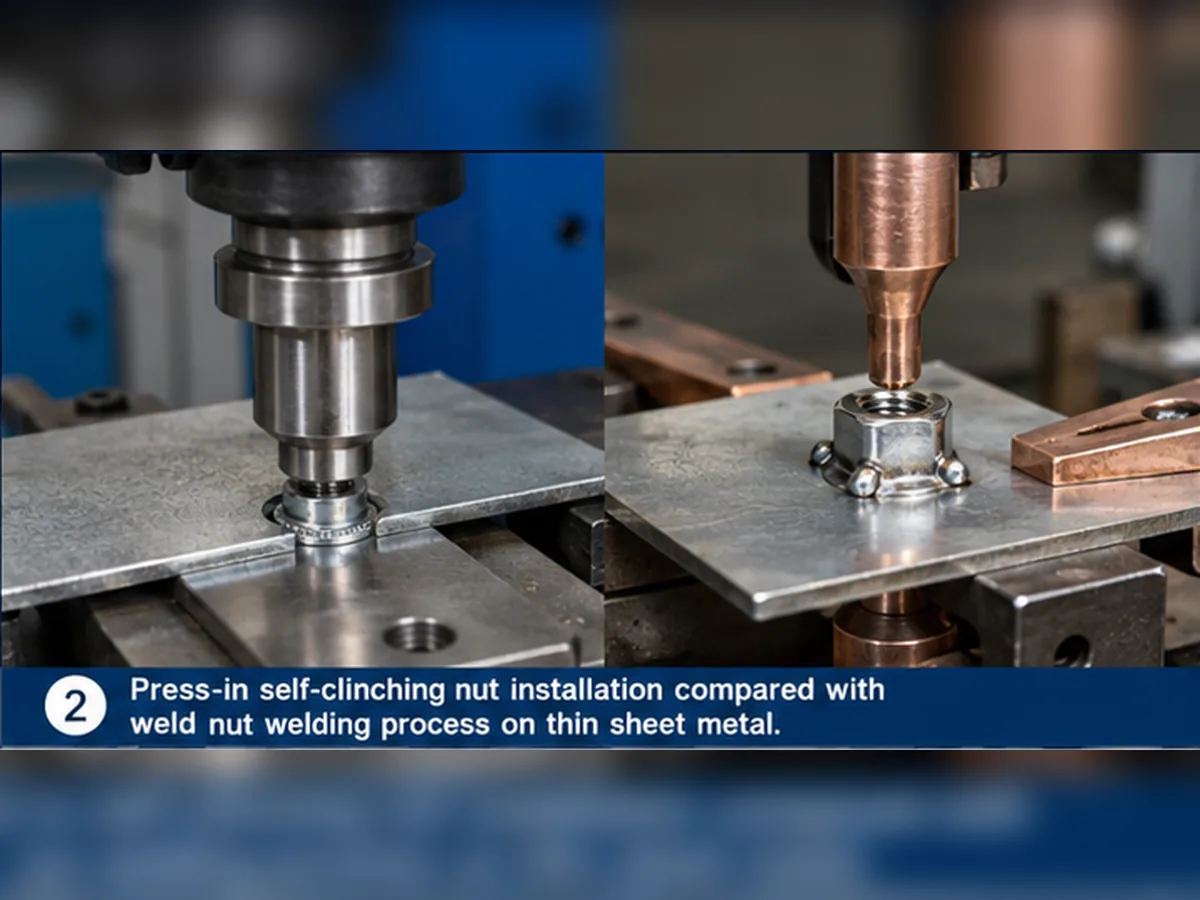
Самофиксирующиеся гайки зависят от запрессовки и течения металла листа, в то время как приварные гайки зависят от доступа к сварке, качества выступов и контроля сварного шва.
Визуализация процесса является концептуальной; фактические усилия установки или параметры сварки должны соответствовать чертежу, настройке оборудования и требованиям заказчика.
Технологическая операция
Самоустанавливающаяся гайка
Сварная гайка
Способ установки
Запрессовка
Контактная сварка или сварка по спецификации заказчика
Основное оборудование
Пресс, оснастка для запрессовки или специализированное оборудование
Сварочное оборудование, электроды, приспособления и средства контроля процесса
Состояние листа
Толщина, твердость, пластичность и качество отверстия
Свариваемость, покрытие, толщина и доступ к сварке
Основной контроль процесса
Допуск отверстия, усилие установки, посадка и перпендикулярность при необходимости
Параметры сварки, качество выступа, выравнивание, контроль разбрызгивания и защита резьбы
Основной риск
Плохая запрессовка, проворачивание гайки, деформация панели или следы на поверхности
Слабый сварной шов, разбрызгивание, прожог, смещение или загрязнение резьбы
Фокус контроля
Посадка, контроль резьбы, момент выкручивания и выталкивание/вытягивание при необходимости
Качество сварки, контроль резьбы, момент выкручивания и вытягивание при необходимости
Для покупателей, закупающих специальные гайки на заказ, Выбор процесса следует рассматривать как часть конструкции соединения, а не только как сравнение цены за единицу.
Состояния листового металла, влияющие на выбор
Тонкий листовой металл — это не единое условие. Гайка, работающая на одной панели, может не работать на другой панели с другой толщиной, твердостью, покрытием или подготовкой отверстия.
Для самозаклепочных гаек толщина и твердость листа критичны, так как материал листа должен деформироваться в заклепочный элемент. Для приварных гаек толщина листа и свариваемость критичны, так как тонкий листовой металл может быть чувствителен к тепловложению, деформации или прожогу.
Толщина листа, твердость, допуск отверстия, покрытие и доступ могут изменить выбор между самозаклепочными и приварными гайками.
Не подразумевается универсальное ограничение толщины листа; данные по листу должны соответствовать чертежу, конструкции гайки и требованиям заказчика.
Толщина листа и твердость
Толщина листа и твердость должны быть подтверждены по чертежу, спецификации материала или стандарту заказчика. Не предполагайте универсальную минимальную толщину листа для всех самозаклепочных гаек или всех гаек для сварки. Допустимый диапазон зависит от конструкции гайки, материала листа, метода установки и требуемых эксплуатационных характеристик.
Подготовка отверстия и допуски
Диаметр отверстия, допуск на отверстие, направление заусенца, положение отверстия и плоскостность листа влияют на характеристики самозаклепывания. Для гаек под сварку выравнивание отверстия и позиционирование приспособления влияют на положение резьбы и консистентность сборки. Если отверстие является частью штампованной, лазерной или механически обработанной панели, технологический маршрут и возможности допусков должны быть подтверждены до утверждения.
Покрытие и состояние поверхности
Покрытие может влиять на оба варианта. Для самозаклепочных гаек покрытие может влиять на состояние отверстия, маркировку поверхности и посадку резьбы. Для гаек под сварку покрытие может влиять на свариваемость, сварочные брызги, прочность сварного шва, защиту от коррозии после сварки и чистоту резьбы. Последовательность нанесения покрытия должна быть подтверждена, так как деталь, сваренная после покрытия, может создавать иные риски, чем деталь, покрытая после сварки.
Сравнение прочности: на вырыв, на выдавливание, на скручивание и нагрузка на резьбу
Когда покупатели спрашивают, какие гайки прочнее — самозаклепочные или под сварку, вопрос следует разбить на конкретные режимы прочности. Вырыв, выдавливание, скручивание и нагрузка на резьбу — это разные требования к производительности.
Сопротивление вырыву относится к способности гайки сопротивляться вырыванию из листа. Сопротивление выдавливанию может иметь значение, когда нагрузка действует с обратной стороны. Сопротивление провороту важно, когда ответный болт затягивается, и гайка должна сопротивляться вращению. Нагрузка на резьбу зависит от размера резьбы, длины свинчивания, материала, ответного болта и условий сборки.
Вырыв, выдавливание, проворот и нагрузка на резьбу — это различные виды прочности, которые следует указывать отдельно.
Фиксированное значение прочности не подразумевается; приемочные значения должны быть указаны в чертеже, методе испытаний или стандарте заказчика.
Вид прочности
Почему это важно
Проверка самоконтрящейся гайки
Проверка приварной гайки
Усилие на вырыв
Сопротивление осевому удалению из листа
Элемент запрессовки, зацепление с листом, твердость и толщина листа
Прочность сварного шва, площадь сварки, качество выступа и состояние листа
Выталкивание
Устойчивость к усилию с обратного направления
Посадка, геометрия обжима, деформация листа и направление нагрузки
Стабильность сварки, поддержка листа и направление нагрузки
Выкручивание
Предотвращает вращение гайки при затяжке
Состояние отверстия, фиксация обжима, качество установки и твердость листа
Прочность сварки, соосность гайки, качество сварной точки и контроль приспособления
Нагрузка на резьбу
Контролирует функцию ответного болта
Размер резьбы, шаг, допуск, длина свинчивания, материал и совместимость с болтами
Размер резьбы, шаг, допуск, длина свинчивания, материал и совместимость с болтами
Стабильность сборки
Контролирует, остается ли резьбовое соединение работоспособным после установки
Установочная посадка, деформация панели и путь передачи нагрузки зажима
Выравнивание сварного шва, целостность сварного шва и путь передачи нагрузки зажима
Значения вырывания, выдавливания или откручивания не должны приниматься без чертежа, стандарта на изделие, требований заказчика или метода испытаний. Для проектов, контролируемых чертежами, покупатели могут ознакомиться с рекомендациями SUNHYINGS по нестандартным гайкам по чертежам.
Сравнение рисков: деформация, дефекты сварки, повреждение резьбы и влияние покрытия
Самонарезающие гайки и приварные гайки имеют разные профили риска. Лучший выбор зависит от того, какой риск легче контролировать в сборке покупателя.
Самонарезающие гайки могут вызывать деформацию листа, следы на поверхности или плохую фиксацию, если не контролировать материал листа, отверстие и усилие установки. Приварные гайки могут создавать разбрызгивание, слабые сварные швы, прожоги, загрязнение резьбы, повреждение покрытия или смещение, если не контролировать условия сварки.
Технологические риски включают плохую обжимку, деформацию листа, слабый сварной шов, разбрызгивание, повреждение резьбы, смещение и воздействие на покрытие.
Визуализация рисков предназначена только для пояснения инженерам; фактические дефекты должны оцениваться по утвержденному плану контроля.
Риск
Более актуально для
Проверка покупателя
Деформация листа
Самозаклепочные гайки
Толщина листа, твердость, настройка пресса и поддержка установки
Плохая обжимка / проворачивание гайки
Самозаклепочные гайки
Диаметр отверстия, допуск отверстия, твердость листа и усилие установки
Прожог
Сварные гайки
Толщина листа, свариваемость и параметры сварки
Разбрызгивание при сварке
Сварные гайки
Защита резьбы, план очистки и метод контроля
Слабый сварной шов
Сварные гайки
Геометрия выступа, параметры сварки, приспособление и контроль сварного шва
Повреждение резьбы
Оба
Контроль резьбы калибром ПР/НЕ после монтажа или сварки
Повреждение покрытия
Оба, особенно приварные гайки
Последовательность нанесения покрытия, требования к коррозионной стойкости и состояние резьбы после обработки
Несоосность
Оба
Приспособление, положение отверстия, пилотный элемент, плоскостность листа и контроль размеров
Полезное сравнение также должно определять, когда каждый вариант может быть небезопасным или неподходящим. Это не универсальные запреты; это условия, которые должны вызывать инженерное подтверждение до RFQ или выборки.
Когда самофиксирующиеся гайки могут не подходить
Листовой материал слишком твердый, слишком хрупкий или не подходит для холодного течения в замыкающий элемент.
Лист слишком тонкий или нестабильный для требуемых характеристик на вырыв, выдавливание или откручивание.
Невозможно контролировать диаметр отверстия, допуск, наличие заусенцев или плоскостность.
Нет доступа для пресса или монтажный инструмент не может правильно поддерживать панель.
Маркировка поверхности или деформация панели неприемлемы.
Чертеж заказчика требует сварного крепления или определенного стандарта приварной гайки.
Когда приварные гайки могут не подходить
Сборка не выдерживает сварочного нагрева, деформации или разбрызгивания.
Листовой материал или покрытие не подходит для требуемого процесса сварки без дополнительного контроля.
Доступ к сварке, доступ к электроду или выравнивание приспособления не могут быть обеспечены.
Чистоту резьбы после сварки невозможно контролировать.
Деталь уже обработана или покрыта, и защита от коррозии после сварки неясна.
Чертеж заказчика запрещает сварку или требует запрессовываемую резьбовую вставку.
Граница выбора: Если по любому из вариантов остаются нерешенными вопросы состояния листа, покрытия, доступа, направления нагрузки или данных контроля, правильный статус RFQ — требует подтверждения, а не автоматическое одобрение.
Маршрут изготовления и контроль производства
Маршрут изготовления гайки и процесс установки — это не одно и то же. Самофиксирующаяся гайка или приварная гайка могут изготавливаться методом холодной высадки, штамповки, механической обработки, нарезания резьбы, формовки резьбы, термообработки, нанесения покрытия или дополнительных операций в зависимости от чертежа и конструкции детали. Затем процесс установки происходит на панели или на этапе сборки.
Для самозаклепочных гаек контроль производства включает геометрию гайки, качество резьбы, качество отверстия в листе, усилие установки, состояние посадки и контроль после установки. Для приварных гаек контроль производства включает геометрию гайки, качество выступа, доступ к сварке, сварочное приспособление, параметры сварки, защиту резьбы и контроль сварки.
Область контроля
Почему это важно
Требуется подтверждение
Маршрут изготовления гайки
Влияет на геометрию, качество резьбы, стоимость, сроки и стабильность
Холодная высадка, штамповка, механическая обработка, нарезание резьбы, формовка резьбы или вторичные операции согласно чертежу
Термообработка / твердость
Влияет на прочность, поведение резьбы и характеристики заклепки или сварки
Материал, диапазон твердости и стандарт заказчика, если указан
Последовательность нанесения покрытия
Влияет на защиту от коррозии, посадку резьбы, свариваемость и маркировку поверхности
Перед установкой, после установки, перед сваркой или после сварки
Процесс монтажа
Определяет конечную функцию соединения после производства гайки
Настройка пресса, приспособление, сварочное оборудование, контроль и технологическое окно
Управление партиями
Обеспечивает прослеживаемость и контроль качества
Номер партии, этикетка упаковки, запись контроля и требования к документации
Прослеживаемость партии, записи контроля, отчеты о покрытии и сертификаты материалов могут потребоваться в зависимости от программы заказчика. PPAP, IMDS или документы специального одобрения должны включаться только по требованию заказчика или автомобильной программы.
Документы по контролю качества, которые покупатель должен подтвердить
Контроль должен соответствовать виду отказа. Для тонколистового гайкового соединения может потребоваться контроль размеров, контроль резьбы, проверка положения установки, испытание на срыв крутящего момента, испытание на вырыв, испытание на выдавливание или контроль сварки в зависимости от конструкции.
Пункт осмотра
Самоустанавливающаяся гайка
Сварная гайка
Документ / подтверждение при необходимости
Резьбомер
Требуется, если указано или по чертежу
Требуется, если указано или по чертежу
Протокол контроля резьбы
Контроль отверстия
Критично перед установкой
Важно для выравнивания
Отчет по размерам или контроль в процессе
Установленная посадка
Критический
Важно для выравнивания
Протокол визуального/размерного контроля (при необходимости)
Контроль сварных швов
Не применимо, если нет вторичной сварки
Критический
Протокол контроля сварных швов (при необходимости)
Выкручивание
Если требуется по чертежу или стандарту заказчика
Если требуется по чертежу или стандарту заказчика
Протокол испытания на крутящий момент (при необходимости)
Вырыв / выталкивание
Если требуется по чертежу или стандарту заказчика
Если требуется по чертежу или стандарту заказчика
Протокол испытания на вырыв/выдавливание (при необходимости)
Состояние покрытия
Требует подтверждения
Требует подтверждения, особенно после сварки
Отчет о покрытии или испытание на коррозию, если указано
Автомобильные документы
Условно
Условно
PPAP / IMDS только если требуется заказчиком или программой
Документы по качеству не должны обещаться автоматически для каждого заказа. Они должны быть подтверждены запросом, чертежом, стандартом заказчика и требованиями утверждения. Покупатели также могут ознакомиться с SUNHYINGS технические руководства по смежным темам крепежного производства.
Матрица решений для автомобильного тонколистового металла
Автомобильные листовые металлические узлы могут использовать самозаклепывающиеся гайки или приварные гайки в зависимости от конкретного расположения, функции и производственного процесса. Автоматическое утверждение на основе названия гайки отсутствует.
Условия применения
Самофиксирующиеся гайки могут подходить, когда
Сварные гайки могут подходить, когда
Требуется подтверждение
Внутренняя панель или панель кронштейна
Условия доступа пресса и состояние листа подходят
Сварка возможна и одобрена
Данные листа, нагрузка, допуск отверстия и чертеж
Термочувствительная готовая деталь
Следует избегать нагрева при сварке
Риск сварки приемлем
Покрытие, тепловая деформация и защита от коррозии после обработки
Кузов или сварная панельная сборка
Возможно только при наличии возможности прессования в конструкции
Сварочный процесс уже запланирован
Доступ для сварки, стандарт сварки и последовательность сборки
Седло или конструкционный кронштейн
Условно
Условно
Направление нагрузки, вырыв, выдергивание, риск усталости и одобрение заказчика
Крышка или корпус лотка аккумуляторной батареи
Условно
Условно
Материал, покрытие, герметизация, коррозия и требование заказчика
Проект замены
Условно
Условно
Образец, чертеж, состояние отверстия, сварные швы и маршрут утверждения
Автомобильные покупатели должны определить функцию соединения перед выбором гайки. Несущая способность, защита от проворачивания, доступ для обслуживания, защита покрытия, последовательность сборки и документация по качеству могут повлиять на решение. Для оценки со стороны поставщика в автомобильных программах покупатели также могут ознакомиться с рекомендациями SUNHYINGS по специализированный поставщик гаек для автомобильной промышленности.
Сценарий композитного проектирования: когда чертежа недостаточно
Сценарий композитного проектирования только для обучения: Покупатель автомобильного кронштейна сравнивает самоконтрящуюся гайку и приварную гайку для тонкого листового металлического кронштейна. Чертеж определяет размер резьбы, но не указывает четко твердость листа, допуск отверстия, требование к крутящему моменту или допустимость нагрева при сварке после нанесения покрытия.
В этом случае поставщик не должен выбирать гайку только по размеру резьбы. Покупатель должен подтвердить, можно ли запрессовать панель, поддерживает ли твердость листа обжатие, можно ли выдержать допуск отверстия в производстве, наносится ли покрытие до или после установки, и требуются ли испытания на вырыв или выдергивание.
Если сварка уже является частью сборочной линии и доступ к сварке имеется, можно рассмотреть приварную гайку. Если нагрев или брызги при сварке вызывают беспокойство, а доступ для прессования имеется, можно рассмотреть самоконтрящуюся гайку. Окончательное утверждение должно соответствовать чертежу, стандарту заказчика и фактической валидации соединения.
Контрольный список RFQ для покупателя перед получением образца
Полезный RFQ должен не только указывать размер резьбы. Он должен описывать листовой металл, функцию соединения, предпочтения по процессу и требования к качеству. Если покупатель еще не определился между самоконтрящейся гайкой и приварной гайкой, в RFQ должно быть четко указано, что оба варианта могут быть рассмотрены.
Полезный RFQ должен включать ревизию чертежа, данные по листу, допуск отверстия, требования к резьбе, покрытие, испытания на прочность, объем и документы на утверждение.
Визуальный контрольный список не является сертификатом или записью об утверждении; PPAP и IMDS применяются только по требованию заказчика или программы.
Минимальные данные RFQ
Последняя ревизия чертежа или фото образца.
Материал листа, толщина и твердость.
Диаметр отверстия, допуск, состояние заусенцев и метод обработки отверстия, если известен.
Предпочтение по типу гайки или запрос на открытое сравнение.
Размер резьбы, шаг, допуск и состояние сопрягаемого болта.
Место сборки и тип соединения.
Направление нагрузки и необходимость испытания на вырыв, выдавливание или откручивание.
Требования к покрытию, коррозионной стойкости и последовательности нанесения покрытия.
Ограничения по сварке или доступ для прессовой установки.
Годовой объем, количество образцов и целевой график утверждения.
Метод контроля и критерии приемки, если требуется.
PPAP / IMDS только по требованию заказчика или программы.
Требования к упаковке и маркировке.
Когда отправлять образцы или фото
Образцы или фото полезны, когда чертеж неполный, заменяется существующая деталь, состояние панели неясно или у покупателя возникла проблема, такая как проворачивание гайки, слабая сварка, повреждение резьбы, вырыв, перекос или плохое состояние покрытия.
Как SUNHYINGS рассматривает запросы на прикатные и приварные гайки
SUNHYINGS может проверить запросы на прижимные гайки и приварные гайки с точки зрения полноты чертежа, геометрии гайки, требований к резьбе, данных о листе, материале, покрытии, технологическом маршруте и требованиях к контролю.
Для проектов с самозаклепочными гайками проверка должна включать толщину листа, твердость листа, диаметр отверстия, допуск отверстия, элемент заклепки, доступ для установки и требуемые испытания на выдавливание, вытягивание или крутящий момент, если они указаны.
Для проектов с приварными гайками проверка должна включать геометрию приварной гайки, конструкцию выступа, доступ для сварки, свариваемость листа, состояние покрытия, защиту резьбы и требования к контролю сварных швов.
В качестве страницами возможностей производителя специальных гаек, SUNHYINGS может помочь определить, содержит ли запрос достаточно технической информации для составления коммерческого предложения и подготовки образцов. Окончательная проверка соединения по-прежнему зависит от фактических условий сборки покупателя, стандарта заказчика, утверждения процесса и требований к испытаниям.
Граница рассмотрения: SUNHYINGS может помочь проверить технологичность, полноту чертежа и риски запроса, но окончательное утверждение применения должно соответствовать проверке соединения покупателя, требованиям конкретного заказчика и процессу утверждения качества.
Сводная таблица: самозаклепочные гайки и приварные гайки
Параметр сравнения
Запрессовочные гайки
Сварные гайки
Основной процесс
Запрессовка
Сварка
Основная зависимость от листа
Толщина, твердость, пластичность и качество отверстия
Свариваемость, покрытие, толщина и доступ к сварке
Тепловложение
Отсутствие сварочного нагрева при обычном монтаже обжимом
Сварочный нагрев является частью процесса
Основная зависимость прочности
Особенности зацепления и обжима листа
Прочность сварного шва, конструкция выступа и площадь сварки
Основная зависимость от крутящего момента
Фиксация обжима, состояние отверстия и твердость листа
Качество сварки, выравнивание гайки и контроль приспособления
Основной риск
Деформация листа, плохой обжим, проворачивание гайки или маркировка поверхности
Слабый сварной шов, разбрызгивание, прожог, смещение или повреждение резьбы
Основной контроль
Посадка, состояние отверстия, калибр резьбы, крутящий момент на вырыв, выталкивание/вытягивание при необходимости
Контроль сварки, выравнивание, калибр резьбы, крутящий момент на вырыв, вытягивание при необходимости
Обычно рассматривается, когда
Сварка не предпочтительна и доступна подходящая прессовая посадка
Сварка одобрена и доступен контроль сварочного процесса
Основание для окончательного решения
Чертеж, данные листа, нагрузка, качество отверстия, метод установки и требования к испытаниям
Чертеж, данные листа, нагрузка, процесс сварки, приспособление, покрытие и требования к испытаниям
Самое безопасное решение — сначала определить соединение листового металла, затем выбрать тип гайки. Гайка, которая хорошо работает в одном тонколистовом металле, может выйти из строя в другом, если изменятся толщина листа, подготовка отверстия, направление нагрузки или контроль процесса.
Связанные страницы SUNHYINGS
Просмотрите соответствующие страницы SUNHYINGS для самозаклепочных гаек, приварных гаек, закупок по чертежам и решения проблем автомобильной сборки.
Следующие ссылки приведены для общего контекста процесса. Они не заменяют чертеж покупателя, стандарт заказчика, технический паспорт изделия, процедуру сварки, валидацию установки заклепок или требования к утверждению проекта.
PEM самофиксирующиеся проекционные приварные гайки — полезный контекст для проекционных приварных гаек, обеспечивающих резьбу в тонких металлических листах, которые слишком тонки для нарезания резьбы.
Внешние ссылки приведены только для технического контекста. Окончательный выбор должен соответствовать последней версии чертежа, стандарту заказчика, спецификации изделия и утвержденному процессу сборки.
Часто задаваемые вопросы
Являются ли самозаклепочные гайки прочнее приварных гаек?
Не универсально. Прочность зависит от материала листа, толщины листа, твердости листа, геометрии гайки, направления нагрузки, качества установки, качества сварки (если применимо) и требуемого метода испытаний.
Когда покупателям следует выбирать самозаклепочные гайки?
Покупатели часто рассматривают самозаклепывающиеся гайки, когда листовой металл может выдержать запрессовку, отверстие можно точно контролировать, имеется доступ для пресса, и следует избегать сварочного нагрева или остатков сварки.
Когда покупателям следует выбирать приварные гайки?
Покупатели часто изучают приварные гайки, когда доступ к сварке, свариваемость, геометрия проекции, контроль приспособлений и контроль сварки могут обеспечить требуемые характеристики соединения.
Может ли самозаклепочная гайка напрямую заменить приварную гайку?
Нет. Замена не должна производиться только по внешнему виду или размеру резьбы. Покупатели должны подтвердить толщину листа, твердость листа, диаметр отверстия, направление нагрузки, усилие на вырыв, усилие на выдергивание, покрытие, метод контроля и одобрение заказчика.
Можно ли использовать приварные гайки на очень тонком листовом металле?
Только после подтверждения материала листа, толщины листа, свариваемости, конструкции выступа, состояния покрытия, параметров сварки и метода контроля. Тонколистовой металл может быть чувствителен к тепловложению, деформации или прожогу.
Почему самозаклепочные гайки проворачиваются или вырываются?
Распространенные причины включают неправильный диаметр отверстия, неподходящую твердость листа, недостаточное усилие установки, неверную геометрию гайки, плохую посадку, деформацию листа или несоответствие направления нагрузки.
Что вызывает разрушение приварной гайки?
Распространенные причины включают слабые сварные швы, плохую конструкцию выступа, несоосность, разбрызгивание сварки, загрязнение резьбы, проблемы с покрытием, прожог, плохой контроль приспособлений или недостаточный контроль сварки.
Какие испытания следует указывать для гаек из тонколистового металла?
В зависимости от чертежа и требований заказчика, покупатели могут указать контроль резьбовых калибров, проверку размеров, испытание на крутящий момент, испытание на вырыв, испытание на выталкивание, контроль установленной посадки или контроль сварных швов.
Распространяется ли PPAP на самозаклепывающиеся гайки или приварные гайки?
PPAP применяется только по требованию заказчика или автомобильной программы. Не следует предполагать его для каждого заказа, если только RFQ или стандарт заказчика не указывает иное.
Какую информацию покупатели должны отправить перед запросом цены?
Покупатели должны предоставить ревизию чертежа, материал листа, толщину листа, твердость листа, диаметр отверстия и допуск, требования к резьбе, направление нагрузки, покрытие, доступ для монтажа, необходимые испытания, годовой объем, требования к утверждению образца и объем документации по качеству.
Техническая обзорная заметка
Данное руководство подготовлено для инженеров-конструкторов, инженеров по закупкам, специалистов SQE и проектных закупщиков автомобильной отрасли, сравнивающих самозаклепочные и приварные гайки для сборок из тонкого листового металла.
Рассмотренный объем: условия тонкого листового металла, процесс запрессовки, процесс приварной гайки, усилие на вырыв, выдавливание, срыв резьбы, нагрузка на резьбу, влияние покрытия, требования к контролю и полнота данных RFQ.
Стандарты и ограничения: Данная статья является практическим руководством по закупкам и проектированию. Она не заменяет чертеж заказчика, стандарт на изделие, квалифицированную процедуру сварки, валидацию процесса запрессовки, официальное одобрение PPAP или требования заказчика. Отсутствие данных по толщине листа, твердости листа, допуску отверстия, покрытию, срыву резьбы, вырыву, выдавливанию или контролю следует рассматривать как требующие подтверждения, а не как факт. Всегда следуйте последней версии чертежа, стандарту заказчика и утвержденному процессу сборки.