








يجب أن يبدأ طلب عرض سعر موثوق للمثبتات غير القياسية برسم محكوم، ووظيفة التطبيق، ومتطلبات الخيط والتسامح، ودرجة المادة، والمعالجة الحرارية، والطلاء، ونطاق الفحص، والحجم السنوي، وخطة الموافقة على العينة، والمستندات المطلوبة للجودة. قد تدعم الصورة أو اسم الجزء أو السعر المستهدف المناقشة الأولية، لكنها لا تكفي لعرض السعر النهائي أو الإفراج عن الإنتاج. يجب على مشتري الشركة المصنعة الأصلية مقارنة نطاق عرض السعر الكامل، وليس فقط سعر الوحدة، خاصة عندما يتضمن الجزء خيوطًا خاصة، أو ميزات لحام، أو ميزات تثبيت، أو أكتاف، أو أخاديد، أو دبابيس، أو مسامير، أو فواصل، أو هندسة تشكيل على البارد، أو عمليات ثانوية باستخدام الحاسب الآلي، أو متطلبات طلاء، أو PPAP، أو IMDS، أو إمكانية التتبع.
- قم بإعداد بيانات الرسم والعينة والمادة والخيط والطلاء والوظيفة والجودة قبل طلب عرض السعر.
- افصل الصواميل المخصصة، والمسامير الخاصة، والمسامير الطويلة، والدبابيس، والحلقات، والبراشيم، والأجزاء المشكلة على البارد، والمثبتات المُشكَّلة باستخدام الحاسب الآلي قبل مقارنة الموردين.
- تجنب متطلبات الأدوات والفحص والفرز والمعالجة الحرارية والطلاء وPPAP وIMDS والتعبئة والتغليف وإمكانية التتبع التي تم تسعيرها بأقل من قيمتها.

صورة تحضيرية لطلب عرض السعر المفاهيمي. لا تثبت مشروع عميل محدد أو حالة موافقة أو دفعة إنتاج.
إجابة سريعة: ما يجب على مشتري التصنيع الأصلي التحقق منه قبل طلب عرض الأسعار
قبل إرسال طلب عرض أسعار إلى مصنع مثبتات غير قياسي في الصين، يجب على مشتري التصنيع الأصلي تأكيد أحدث مراجعة للرسم، وظيفة التطبيق، حجم السن والتفاوت المسموح، درجة المادة، الصلابة، المعالجة الحرارية، الطلاء، السماح المسموح للسن بعد الطلاء، مسار التصنيع، نطاق الفحص، مستندات الجودة، الكمية السنوية، خطة الموافقة على العينة، متطلبات التغليف وإمكانية التتبع.
قد يكون طلب عرض سعر يعتمد على الصورة فقط مفيدًا لمناقشة الجدوى المبكرة، لكنه غير موثوق لعرض السعر النهائي أو قرارات التصنيع أو الموافقة على العينة أو الإفراج عن الإنتاج. اسم المثبت مثل “برغي مخصص” أو “صامولة خاصة” أو “دبوس” أو “مسمار ملولب” أو “برشام” أو “وردة” لا يثبت أداء الوصلة أو ملاءمة السن أو سلوك الطلاء أو الصلادة أو حمل التجميع أو متطلبات الفحص.
ما يعنيه مشترو OEM بمصنع مثبتات غير قياسية في الصين
مصنع المثبتات غير القياسية ليس مجرد مورد يمكنه إنتاج برغي أو صامولة أو وردة قياسية بحجم مختلف. بالنسبة لمشاريع OEM، فإن “المثبت غير القياسي” يعني عادةً أن الجزء مصنوع وفقًا لرسم أو عينة أو شرط تجميع أو معيار عميل أو متطلبات تطبيق محددة.
قد يكون الجزء صامولة مخصصة أو برغيًا خاصًا أو برغي كتف أو مسمام لحام أو إدراج ملولب أو مثبت تثبيت ذاتي أو دبوس تحديد أو جلبة أو فاصل أو برشام أو وردة خاصة أو مكون مشكل على البارد أو مثبت مصنع باستخدام الحاسب الآلي أو جزء متعدد العمليات. قد يتضمن أسنانًا خاصة أو ارتفاعًا مخفضًا أو سطح تحمل غير قياسي أو نقر أو تسنن أو أخدود أو سطح مستو أو طوق أو دليل أو كتف أو نتوء لحام أو ميزة ضد الدوران أو شرط طلاء يؤثر على الملاءمة النهائية.
عندما يبحث مشتري OEM عن مصنع مثبتات غير قياسية في الصين، فإن السؤال الحقيقي ليس فقط “من يمكنه صنع هذا الجزء؟” السؤال الأفضل هو: هل يمكن لهذا المورد قراءة الرسم، وطرح أسئلة التطبيق الصحيحة، واختيار مسار عملية واقعي، والتحكم في الميزات الحرجة، ودعم الفحص المطلوب، والتواصل بوضوح قبل طلب عرض السعر والعينة والإنتاج؟
لمعرفة سياق المنتجات ذات الصلة، راجع SUNHYINGS مصنع مسامير مخصصة, صواميل خاصة مخصصة و مصنع الصواميل المخصصة القدرات.
لماذا يحتاج طلب عرض سعر للمثبتات غير القياسية إلى أكثر من اسم الجزء أو صورة
اسم جزء مثل “برغي خاص”، “صامولة مخصصة”، “مسمار لحام”، “دبوس”، “فاصل”، “برشام” أو “قفل CNC” لا يكفي لتقديم طلب عرض أسعار دقيق. يمكن للصورة أن تساعد المورد في فهم الشكل العام، لكنها لا تستطيع تأكيد المتطلبات الهندسية الخاضعة للرقابة.
| إدخال طلب عرض السعر | لماذا يهم | المخاطرة في حال الفقدان |
|---|---|---|
| مراجعة الرسم | يحدد متطلبات الجزء الخاضعة للرقابة. | قد يقوم المورد بعرض سعر أو عينة للإصدار الخاطئ. |
| وظيفة التطبيق | يوضح ما إذا كان الجزء يقوم بالتثبيت، التحديد، اللحام، الكبس، القفل، التباعد، التوصيل أو تحمل الحمل. | قد يقوم المورد بفحص الأبعاد الأساسية فقط ويفوته المخاطر الوظيفية. |
| تفاوت اللولبة | تتحكم في توافق التزاوج وحالة المقياس وسلوك التجميع. | قد يفشل الخيط بعد الطلاء أو مع المكون المتزاوج. |
| المادة والصلادة | يؤثر على التشكيل، التشغيل الآلي، القوة، المعالجة الحرارية، خطر التشقق والتكلفة. | قد يكون العرض غير واقعي أو غير مناسب تقنيًا. |
| متطلبات الطلاء | يؤثر على التآكل، المظهر، توافق الخيط، الاحتكاك ومراجعة هشاشة الهيدروجين. | قد يقتبس المورد المعالجة السطحية الخاطئة أو يتجاهل توافق ما بعد الطلاء. |
| وثائق الجودة | يؤثر على وقت الفحص ونطاق الموافقة والمهلة الزمنية. | قد لا يشمل السعر التقارير أو PPAP أو IMDS أو إمكانية التتبع إذا لزم الأمر. |
فحص الرسم والمراجعة قبل طلب عرض السعر
بالنسبة لمشروع مثبتات غير قياسي، يعتبر الرسم أساس طلب عرض السعر. يمكن للمورد تقديم عرض أسعار أكثر موثوقية عندما يظهر الرسم أحدث رقم قطعة، المراجعة، الأبعاد، التفاوتات، بيانات الخيط، المادة، الطلاء، المعالجة الحرارية وملاحظات الفحص.
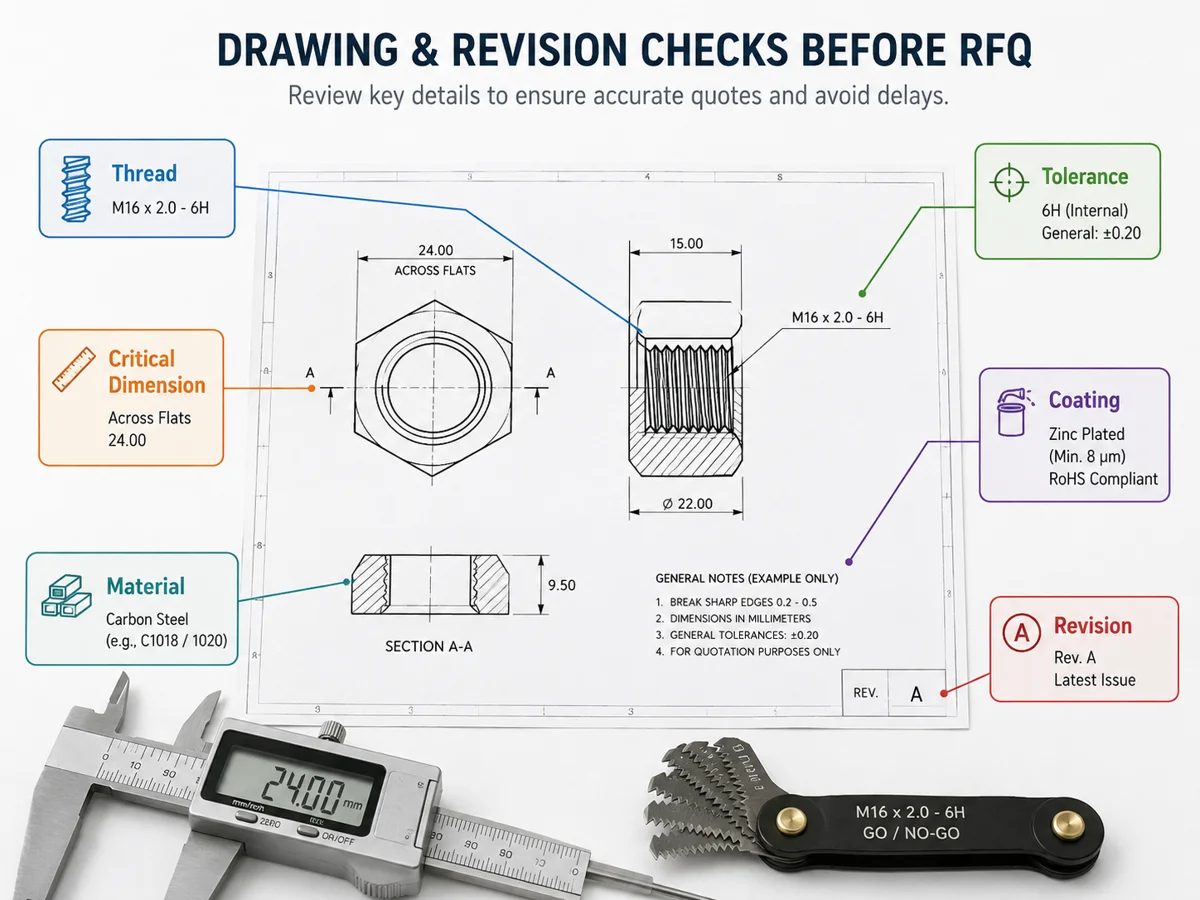
استخدم رسومات توضيحية عامة فقط. لا تظهر رسومات العملاء الخاصة أو أرقام القطع الحقيقية أو كتل العناوين المزيفة.
يجب على مشتري OEM التأكد مما إذا كان الرسم متحكمًا فيه وما إذا كان يتطابق مع العينة الحالية أو التطبيق. إذا أرسل المشتري رسمًا قديمًا مع صورة عينة جديدة، فقد لا يعرف المورد أي متطلب يجب أن يتحكم في عرض السعر.
لمنطق الشراء القائم على الرسم في الصواميل الخاصة، انظر صواميل خاصة مصنوعة حسب الرسم.
| مدخلات المشتري | لماذا يهم | خطر طلب عرض السعر في حالة فقدان الرسم |
|---|---|---|
| أحدث مراجعة للرسم | يحدد ما يجب عرض سعره. | قد يقوم المورد بعرض سعر لنسخة قديمة. |
| الأبعاد الحرجة | يؤثر على الأدوات، مسار العملية وطريقة الفحص. | قد يتم تفويت ميزات مهمة. |
| مواصفات الخيط | يتحكم في التوافق الشركي وحالة المقياس. | قد يفشل الخيط بعد الطلاء أو أثناء التجميع. |
| ملاحظة المادة | يؤثر على المادة الخام، مسار التشكيل، سلوك التصنيع والمعالجة الحرارية. | افتراض المادة الخاطئ قد يغير السعر والأداء. |
| ملاحظة الطلاء | يؤثر على مقاومة التآكل، الاحتكاك، ملاءمة الخيط ومراجعة التقصف الهيدروجيني. | قد لا يشمل العرض الطلاء المطلوب أو فحوصات ما بعد الطلاء. |
| معيار العميل | يحدد أساس الموافقة بما يتجاوز الممارسة الداخلية للمورد. | قد يقوم المورد بتقديم عرض دون المعيار المطلوب. |
| خصائص خاصة | يحدد أولوية الفحص وتركيز خطة التحكم. | قد يكون نطاق الجودة أقل من المطلوب. |
وظيفة المثبت: تثبيت، تحديد موضع، لحام، برشمة، قفل أو تباعد؟
يجب تقدير سعر المثبت غير القياسي وفقًا لوظيفته في التجميع. قد يبدو جزءان متشابهين ولكن لهما مخاطر مختلفة جدًا إذا كان أحدهما يحمل حمولة تثبيت، والآخر يحدد موضع حامل، والآخر ملحوم بالصفائح المعدنية، والآخر يتحكم في التأريض الكهربائي أو التباعد.
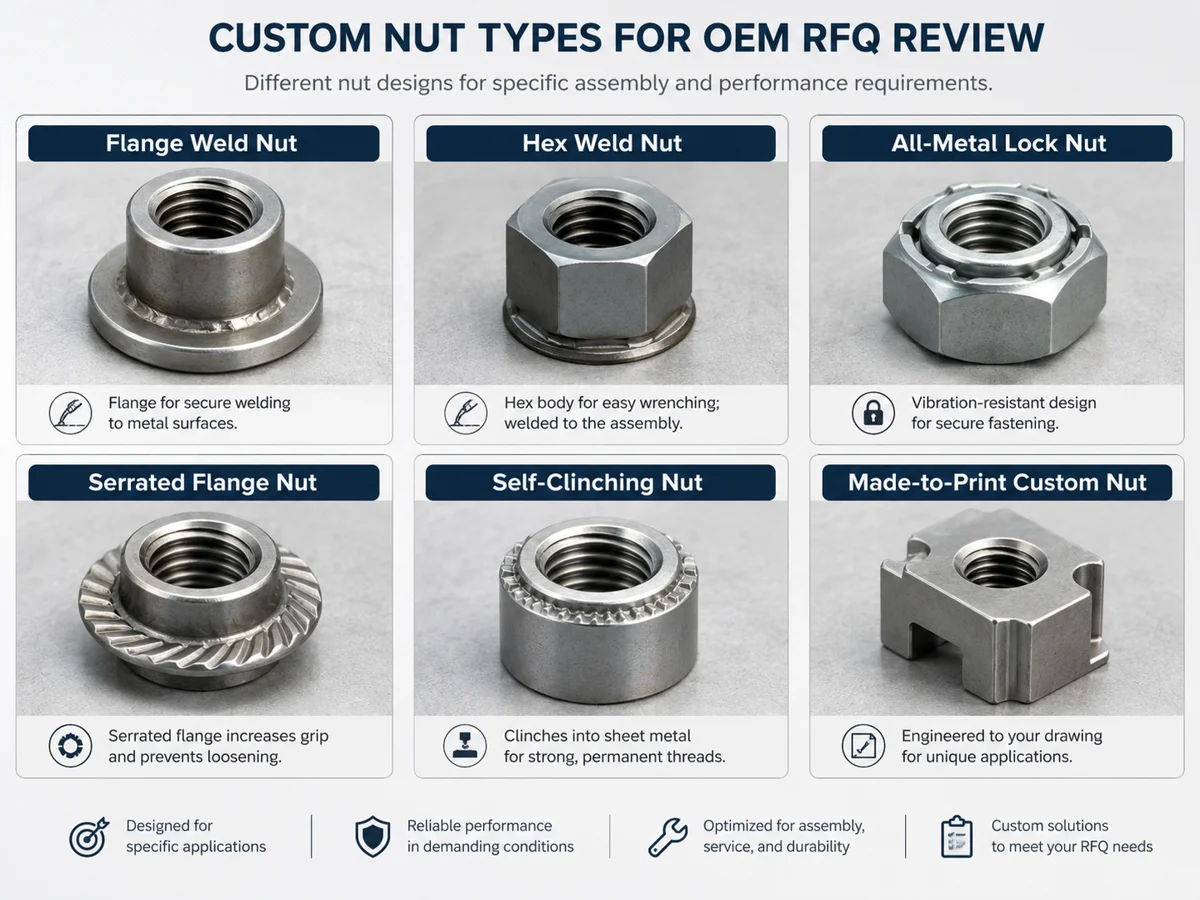
أمثلة المثبتات هي مفاهيمية. يجب أن يتوافق التكوين النهائي للجزء مع الرسم الفعلي ومتطلبات التطبيق.
| نوع المثبت | يجب على المشتري التأكيد | يجب على المورد التوضيح |
|---|---|---|
| صواميل مخصصة وصواميل خاصة | متطلبات الخيط، الفلنجة، القفل، اللحام، البرشمة، التسنين أو التصنيع حسب الرسم. | مسار التصنيع، فحص الخيوط، تأثير الطلاء وحدود الاختبار الوظيفي. |
| مسامير خاصة وبراغي ذات كتف | طول القبضة، قطر الكتف، سطح التحمل، طول الخيط، فئة الخواص وحمل التطبيق. | مسار التشكيل على البارد، التشغيل الآلي، درفلة الخيوط، المعالجة الحرارية والتحكم الأبعادي. |
| أسياخ ملولبة وأسياخ لحام | طريقة اللحام، المادة الأساسية، حماية الخيط، متطلبات السحب أو العزم إن وجدت. | هندسة نهاية اللحام، محاذاة الخيط، تسلسل الطلاء وطريقة الفحص. |
| مسامير دبوسية، جلبات وفواصل | وظيفة التحديد، تفاوت القطر الخارجي، الطول، تشطيب السطح وخلوص التجميع. | طريقة CNC، التشكيل البارد أو الطحن، طريقة القياس وحماية التغليف. |
| مثبتات ذاتية الثني والضغط | مادة اللوحة، سمك الصفيحة، حجم الفتحة، حالة التركيب وصلابة اللوحة. | خاصية الثني، دليل الدفع والعزم إذا لزم الأمر. |
| حلقات خاصة، مشابك ومثبتات مختومة | التسطيح، اتجاه النتوءات، وظيفة الزنبرك، الطلاء، السمك وحالة الحافة. | طريقة الختم، طريقة إزالة النتوءات، الصلابة، الطلاء وحدود الفحص. |
حجم السن، درجة الميل، التفاوت المسموح به، وملاءمة ما بعد الطلاء
حجم السن هو أحد أول التفاصيل التي يقدمها المشترون، لكن حجم السن وحده لا يكفي. يحتاج المورد أيضًا إلى خطوة السن، درجة التفاوت، عمق السن، حالة المقياس، حالة الجزء المتزاوج وتأثير الطلاء. للحصول على سياق أوسع لحجم الصامولة وملاءمتها، راجع دليل أبعاد الصامولة السداسية من Sunhyings.
على سبيل المثال، قول “قفل M8” لا يؤكد ما إذا كان السن يجب أن يفي بدرجة تفاوت محددة، وما إذا كان سيتم فحصه قبل أو بعد الطلاء، وما إذا كان البرغي المتزاوج مطليًا، وما إذا كان سلوك العزم مهمًا أو ما إذا كانت ميزة العزم السائد موجودة.
ملاءمة السن بعد الطلاء مهمة بشكل خاص للسنون الداخلية المطلية والسنون الخارجية الضيقة. يمكن أن يؤثر سمك الطلاء على قبول المقياس، وشعور التجميع وسلوك العزم. إذا تمت إضافة متطلبات الطلاء بعد عرض السعر، فقد يحتاج المورد إلى إعادة فحص القطع، ولف السن، وخلوص السن، وحالة المقياس وطريقة الفحص.
بيانات السن التي يجب تأكيدها
- حجم السن والخطوة
- درجة تفاوت السن الداخلي أو الخارجي
- عمق السن، طول التعشيق أو طول السن
- متطلبات مقياس الجو/نو-جو
- حالة البرغي المتزاوج أو الصامولة أو المدخل
بيانات الملاءمة بعد الطلاء
- نوع الطلاء وسمكه
- حالة المقياس قبل الطلاء وبعده
- سماحية السن اللولبي بعد الطلاء
- متطلبات عزم الربط السائد إن وجدت
- معيار فحص العميل إن وجد
المادة، الصلادة، المعالجة الحرارية والطلاء
تؤثر خيارات المواد والطلاء على أكثر من المظهر. يمكنها تغيير قابلية التشكيل، سلوك التصنيع، القوة، الصلابة، مقاومة التآكل، ملاءمة السن اللولبي، الاحتكاك، خطر التقصف الهيدروجيني ومتطلبات الفحص.
قد تحتاج شركة تصنيع مثبتات غير قياسية إلى معرفة ما إذا كان الجزء من الفولاذ الكربوني، الفولاذ السبائكي، الفولاذ المقاوم للصدأ، النحاس الأصفر، سبائك النحاس، الألومنيوم أو مادة أخرى محددة. قد يحدد الرسم أيضًا الصلابة، فئة الخواص، المعالجة الحرارية، عمق الطبقة السطحية، صلابة القلب أو المعالجة السطحية. يمكن أن تؤثر هذه المتطلبات على مسار العملية، عمر الأدوات، الاستقرار البعدي وأدلة الجودة.
| عنصر طلب عرض السعر | يجب على المشتري تقديم | لماذا يؤثر على عرض السعر |
|---|---|---|
| درجة المادة | درجة الفولاذ، درجة الفولاذ المقاوم للصدأ، سبائك النحاس، الألومنيوم أو متطلبات مكافئة. | يؤثر على المادة الخام، مسار التشكيل، سلوك التصنيع والتكلفة. |
| الخواص الميكانيكية / الصلابة | قيمة الرسم، فئة الخواص أو معيار العميل. | يؤثر على المعالجة الحرارية والفحص وخطر الفشل. |
| المعالجة الحرارية | العملية المطلوبة أو هدف الخاصية أو متطلبات الحالة. | يؤثر على القوة وخطر التشوه وأدلة الموافقة. |
| نوع الطلاء | الزنك، الزنك والنيكل، الفوسفات، أكسيد أسود، رقائق الزنك أو طلاء محدد. | يؤثر على التآكل والمظهر وملاءمة الخيط وسلوك الاحتكاك. |
| سماكة الطلاء | متطلبات الرسم أو العميل. | يؤثر على حالة المقياس والملاءمة والتجميع الوظيفي. |
| مراجعة التقصف الهيدروجيني | قوة المادة، مسار الطلاء ومتطلبات العميل إن وجدت. | يؤثر على عملية الطلاء، متطلبات التخمير والتحكم في المخاطر. |
| المواد المقيدة | متطلبات العميل أو السيارات أو الجهات التنظيمية إن وجدت. | يؤثر على إعلان المواد، اختيار الطلاء ونطاق IMDS. |
يجب على المشترين تجنب إضافة متطلبات الطلاء أو المعالجة الحرارية بعد الموافقة على العينات. قد يتطلب تغيير الطلاء المتأخر فحوصات خيوط جديدة، مراجعة وظيفية، مراجعة التقصف الهيدروجيني أو موافقة العميل حسب المشروع.
طريق التصنيع: التشكيل على البارد، التصنيع باستخدام الحاسب الآلي، الكبس أو العمليات الثانوية؟
يجب أن يتضمن طلب عرض الأسعار الموثوق مناقشة طريق التصنيع. يؤثر الطريق على السعر، الأدوات، الحد الأدنى لكمية الطلب، مهلة تسليم العينة، خطة الفحص واستقرار الإنتاج.
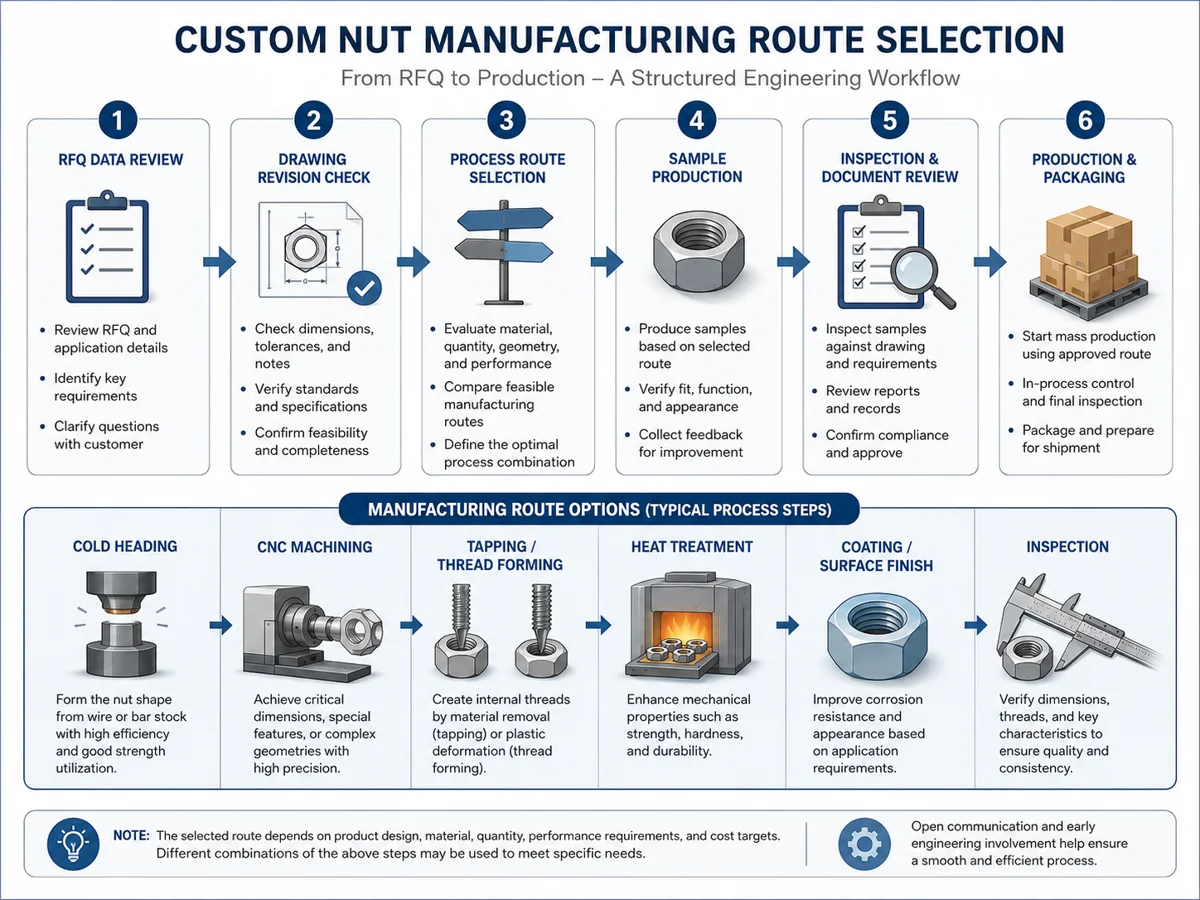
سير العمل هو أداة تخطيط. يعتمد طريق التصنيع الفعلي على الشكل الهندسي، المادة، الكمية، الأدوات ومتطلبات العميل.
بالنسبة للمثبتات غير القياسية، قد تشمل خطوات العملية المحتملة التشكيل على البارد، الحدادة على البارد، الكبس، التصنيع باستخدام الحاسب الآلي، لف الخيوط، القلاووظ، تشكيل الخيوط، التخريش، الشق، تشكيل النتوءات، التشغيل الثانوي، المعالجة الحرارية، الطلاء، الفرز والفحص النهائي. لا تحتاج كل قطعة إلى كل عملية، وليس كل شكل هندسي مناسب لنفس الطريق.
لمزيد من السياق حول تصنيع المثبتات المخصصة، انظر مصنع مسامير مخصصة.
| المسار | عندما يكون مناسبًا | يجب على المشتري أن يسأل |
|---|---|---|
| التشكيل على البارد / الحدادة على البارد | مسامير وصواميل وأوتاد أو أجزاء مشكلة بكميات أكبر عندما يكون الشكل الهندسي مناسبًا. | هل القوالب مطلوبة؟ ما هو الحد الأدنى لكمية الطلب؟ هل يمكن تشكيل الشكل الهندسي دون تشقق أو تشغيل ثانوي مفرط؟ |
| التصنيع باستخدام الحاسب الآلي | نموذج أولي، حجم منخفض، ميزات محلية ضيقة أو هندسة يصعب تشكيلها. | هل التصنيع باستخدام الحاسب الآلي مخصص للعينات فقط أم للإنتاج أيضًا؟ |
| ختم / كبس | حلقات مسطحة، مشابك، أقواس، ميزات صفائح رقيقة أو أجزاء شبيهة بالنوابض. | كيف سيتم التحكم في اتجاه النتوءات، التسطيح، والطلاء؟ |
| تشكيل اللولبة / تشكيل السن | لولبات خارجية أو لولبات داخلية عندما تكون العملية والمادة مناسبة. | كيف سيتم فحص اللولبة بعد الطلاء؟ |
| تشغيل ثانوي | فتحات، أسطح مستوية، تخفيفات، أوجه خاصة، أكتاف، تجاويف أو ميزات محلية ضيقة. | ما الميزات التي تتطلب عمليات ثانوية وهل هي مشمولة في عرض السعر؟ |
| المعالجة الحرارية | متطلبات القوة، الصلادة، التآكل أو الخواص. | ما الدليل المطلوب وما خطر التشويه الذي يجب مراجعته؟ |
| طلاء | متطلبات التآكل، المظهر، الاحتكاك أو العميل. | كيف سيتم التحكم في ملاءمة السن، خطر التقصف الهيدروجيني ونطاق تقرير الطلاء؟ |
| فرز / فحص | الأبعاد الحرجة، الخيوط، الميزات الوظيفية أو المتطلبات الخاصة بالعميل. | ما هي طريقة الفحص، حجم العينة أو نطاق الفرز المشمول في عرض السعر؟ |
وثائق الفحص والجودة التي يجب تأكيدها قبل تقديم عرض السعر
يمكن أن تؤثر وثائق الفحص والجودة بشكل كبير على التكلفة والمهلة الزمنية. يجب على مشتري OEM تأكيد هذه المتطلبات قبل تقديم عرض السعر، وليس بعد الموافقة على السعر.
قد يتطلب طلب عرض أسعار للمثبتات غير القياسية تقارير الأبعاد، سجلات مقاييس الخيوط، شهادات المواد، تقارير الطلاء، سجلات الصلادة، سجلات المعالجة الحرارية، تقارير الاختبارات الوظيفية، سجلات التتبع، PPAP، IMDS أو وثائق أخرى خاصة بالعميل. ومع ذلك، يجب التعامل مع هذه المتطلبات كمتطلبات خاصة بالمشروع. لا ينبغي افتراض أنها مضمنة تلقائيًا في كل طلب.
| الوثيقة / الدليل | متى يتم المناقشة | الحدود |
|---|---|---|
| تقرير الأبعاد | عندما تكون الموافقة المستندة إلى الرسم مطلوبة. | يعتمد النطاق على الرسم وخطة الفحص. |
| سجل مقياس السن | عندما يكون ملاءمة الخيط حرجة، خاصة بعد الطلاء. | يجب تأكيد حالة المقياس. |
| شهادة المواد | عندما يكون تتبع المواد مطلوبًا. | يعتمد على متطلبات المشروع والعميل. |
| سجل الصلابة / المعالجة الحرارية | عند تحديد الصلادة أو فئة الخواص أو المعالجة الحرارية. | يجب تحديد طريقة الاختبار ونطاق القبول. |
| تقرير الطلاء | عند تحديد الطلاء. | يجب تأكيد نوع الطلاء والسمك ونطاق الاختبار. |
| تقرير اختبار وظيفي | عند الحاجة إلى عزم الفك أو السحب أو الدفع أو حمل التثبيت أو العزم السائد. | يجب تحديد طريقة الاختبار والمعايير. |
| PPAP | موافقة السيارات أو موافقة العميل المطلوبة. | يجب تأكيد المستوى ونطاق التغليف قبل عرض السعر. |
| IMDS | متطلبات بيانات المواد في صناعة السيارات. | غير مطلوب تلقائيًا لكل طلب. |
| سجل التتبع | عندما يكون التحكم في الدفعة مطلوبًا. | يجب تحديد متطلبات التعبئة والتغليف والملصقات والاحتفاظ بالسجلات. |
ما يمكن لـ SUNHYINGS مراجعته قبل عرض السعر
بالنسبة لمشاريع المثبتات غير القياسية، فإن الرد الأكثر فائدة من المورد ليس سعر الوحدة المنخفض. بل هو مراجعة واضحة لمخاطر الرسم، مسار العملية، ملاءمة الخيط، افتراضات المادة والطلاء، نطاق الفحص وحدود عرض السعر. يمكن لـ SUNHYINGS مراجعة هذه العناصر قبل طلب عرض أسعار رسمي حتى يتمكن المشتري من مقارنة الموردين على نفس المتطلبات النهائية.
| منطقة المراجعة | ما تتحقق منه SUNHYINGS | لماذا يساعد مشتري OEM |
|---|---|---|
| الرسم والمراجعة | رقم القطعة، المراجعة، الأبعاد الحرجة، مراجع البيانات، مواصفات الخيوط، ملاحظات الطلاء والخصائص الخاصة. | يقلل من عروض الأسعار الخاطئة ومتطلبات الفحص المفقودة. |
| وظيفة المثبت | وظيفة التثبيت، التحديد، القفل، اللحام، الكبس، التباعد، التوصيل، الدعم أو الحماية في التجميع. | يربط نطاق عرض السعر والفحص بالتطبيق الفعلي، وليس فقط شكل القطعة. |
| مسار التصنيع | خيارات التشكيل على البارد، الحدادة على البارد، التصنيع باستخدام الحاسب الآلي، الختم، لف الخيوط، القلاووظ، التشغيل الثانوي، المعالجة الحرارية، الطلاء والفرز. | يساعد المشترين على فهم ما إذا كان مسار العينة المقدم يمكنه دعم الإنتاج الضخم. |
| الخيط والملاءمة | حجم السن، درجة الميل، فئة التفاوت المسموح، عمق السن، حالة مقياس القبول/الرفض، الجزء المتزاوج وبدل الطلاء بعد التصنيع. | يقلل مشاكل تطابق السن بعد الطلاء أو أثناء التجميع النهائي. |
| المادة والطلاء | درجة المادة، الصلادة، المعالجة الحرارية، نوع الطلاء، سمك الطلاء، متطلبات التآكل ومراجعة التقصف الهيدروجيني إذا كان ذلك مناسبًا. | يمنع التغييرات المتأخرة التي تؤثر على الموافقة على العينة والتكلفة والمهلة الزمنية. |
| وثائق الجودة | تقرير الأبعاد، شهادة المواد، سجل مقياس السن، تقرير الطلاء، سجل الصلادة، تقرير الاختبار الوظيفي، PPAP، IMDS وإمكانية التتبع عند الطلب. | يجعل نطاق عرض السعر مرئيًا قبل اختيار المورد. |
| التعبئة والخدمات اللوجستية | تعبئة سائبة أو منفصلة، حماية السن، منع الصدأ، حدود الكرتون، الملصقات، الباركود ومتطلبات تتبع الدفعة. | يقلل من أضرار الاستلام والملصقات المفقودة والنزاعات المتعلقة بالخدمات اللوجستية. |
معدات المصنع وأدلة الفحص وصور المنتج التي يجب على المشترين طلبها
بالنسبة لمصادر التثبيت غير القياسية، تتحسن ثقة المشتري عندما يمكن للمورد إظهار أدلة العملية بدلاً من تقديم ادعاءات عامة فقط. يجب على مشتري OEM طلب أدلة تطابق المنتج الفعلي ومسار العملية. لا يحتاج الدبوس المُشغل حسب الطلب، والبرغي المسحوب على البارد، والمثبت ذاتي القفل، والإدخال الملولب المطلي إلى نفس حزمة الأدلة.
| نوع الدليل | ما يجب طلبه | عندما يكون الأمر مهمًا |
|---|---|---|
| صور المنتج | صور واضحة للمثبتات غير القياسية المماثلة، بما في ذلك الخيط والرأس والكتف والفلنجة والشق والأخدود ونهاية الدبوس والطلاء وتفاصيل التغليف. | مفيدة أثناء الفحص الأولي للمورد، لكن لا ينبغي أن تحل الصور محل الرسومات الخاضعة للرقابة. |
| صور عملية التصنيع | أدلة مسار الإنتاج عند الاقتضاء: التشكيل على البارد، التشغيل باستخدام ماكينات التحكم الرقمي، القطع الداخلي للخيوط، لف الخيوط، الكبس، التشغيل الثانوي، المعالجة الحرارية، الطلاء أو الفرز. | مفيدة عندما يحتاج المشتري للتأكد من فهم المورد لمسار الإنتاج المطلوب. |
| أدلة معدات الفحص | مقاييس الخيوط، الفرجار، الميكرومتر، مقاييس الارتفاع، القياس البصري، اختبار الصلادة، فحوصات سمك الطلاء، اختبار رش الملح أو تقارير اختبار الطرف الثالث عند الاقتضاء. | مفيدة عندما تؤثر مطابقة الخيوط أو الصلادة أو الطلاء أو الأبعاد الحرجة على التجميع. |
| نماذج وثائق الجودة | تقرير أبعاد مع إخفاء البيانات السرية، شهادة المواد، تقرير الطلاء، سجل الصلادة، سجل مقاييس الخيوط، مؤشر PPAP أو دليل تقديم IMDS إذا لزم الأمر. | مفيد عندما تكون مستندات الجودة جزءًا من اختيار المورد. |
| صور التغليف وإمكانية التتبع | ملصقات الكرتون، ملصقات الدفعات، ملصقات الباركود، تغليف مقاوم للصدأ، تغليف منفصل وأمثلة على منصات التصدير. | مفيد عندما تكون مراقبة الاستلام، أو إمكانية تتبع الدفعات، أو حماية السطح مهمة. |
المعايير ذات الصلة ونقاط المرجع لعروض أسعار المثبتات غير القياسية
يجب استخدام المعايير فقط عندما تتطابق مع نوع المنتج، المادة، نظام الطلاء، الصناعة ومتطلبات العميل. لا ينبغي استخدام اسم المعيار كبديل لمراجعة الرسم. يجب على المشتري أن يسأل عن المتطلبات التي يتحكم فيها المعيار وما إذا كان هذا المتطلب جزءًا فعليًا من طلب عرض السعر.
| مرجع | عندما قد يكون ذلك مهمًا | لماذا يؤثر على قرارات المشترين |
|---|---|---|
| ISO 898-1 | مسامير وبراغي ومسامير ملولبة من الفولاذ الكربوني أو سبائك الصلب مع متطلبات الخواص الميكانيكية. | يساعد المشترين على مناقشة فئة الخواص الميكانيكية، توقع القوة، وحدود الاختبار. لا ينبغي تطبيقه على أنواع المثبتات غير ذات الصلة دون التحقق من النطاق. |
| ISO 4042 | مثبتات فولاذية مع أنظمة طلاء كهربائي. | ذو صلة عندما تحتاج سماكة الطلاء، ملاءمة السن، الحماية من التآكل، وخطر التقصف الهيدروجيني إلى المراجعة. |
| AIAG PPAP | موافقة جزء الإنتاج المطلوبة من قبل شركات السيارات أو العملاء. | يحدد توقعات موافقة جزء الإنتاج. يجب تأكيد مستوى PPAP وحزمة النطاق قبل تقديم العروض. |
| IMDS | الإبلاغ عن بيانات المواد في صناعة السيارات. | ذو صلة عندما يطلب عميل OEM أو Tier تقديم بيانات المواد. لا ينبغي افتراض ذلك لكل طلب. |
سيناريوهات ميدانية مركبة للتدريب الهندسي
السيناريوهات التالية هي أمثلة هندسية مركبة للتدريب. وهي ليست دراسات حالة للعملاء ولا تحدد مشروعًا أو مصنعًا أو دفعة إنتاج معينة.
| السيناريو | ما حدث | سبب النظام | التصحيح والوقاية |
|---|---|---|---|
| فشل السن بعد الطلاء | قطعة ملولبة داخليًا مخصصة اجتازت فحص المقياس قبل الطلاء ولكنها فشلت في التجميع بعد الطلاء. | لم يحدد طلب عرض الأسعار حالة المقياس بعد الطلاء، أو تأثير سمك الطلاء، أو حالة برغي التزاوج. | تأكيد تفاوت السن، نظام الطلاء، الفحص بعد الطلاء، وحالة الجزء المتزاوج قبل تقديم العرض. |
| العينة المشغلة لا تمثل مسار الإنتاج | تم تصنيع عينات النماذج الأولية باستخدام ماكينات CNC، لكن عرض الإنتاج اعتمد على التشكيل على البارد والتشغيل الثانوي. | لم يتم فصل مسار العينة ومسار الإنتاج الكمي أثناء الموافقة. | حدد ما إذا كانت العينات من تشغيل النماذج الأولية أو من أدوات الإنتاج؛ وأكد إعادة الموافقة إذا تغير المسار. |
| قفل الضغط يرتخي في اللوحة | دوران جزء ذاتي التثبيت أو ضغط أثناء التجميع. | لم يتم تضمين مادة اللوحة، حجم الثقب، سمك الصفيحة، والصلابة في طلب عرض الأسعار. | حدد حالة اللوحة، عملية التثبيت، متطلبات الدفع أو عزم الفك، وطريقة الفحص. |
| السعر المنخفض للوحدة لا يشمل مستندات الجودة | قام أحد الموردين بعرض سعر وحدة منخفض، ثم أضاف تكلفة ووقتًا لـ PPAP وتقرير الطلاء وإمكانية التتبع بعد الترشيح. | قارن المشتري السعر دون مقارنة نطاق العرض. | قم بإدراج متطلبات المستندات، مسار الموافقة على العينات، ملصقات التعبئة والتغليف وإمكانية التتبع قبل مقارنة الموردين. |
الحد الأدنى لكمية الطلب، الحجم السنوي، القوالب والموافقة على العينات
الحجم السنوي ليس مجرد رقم شراء. يمكن أن يؤثر على خطة التصنيع بأكملها. بالنسبة لمصنع المثبتات غير القياسية، قد يؤثر الحجم السنوي على ما إذا كان المورد يوصي بالقوالب، التصنيع باستخدام الحاسب الآلي، التشكيل على البارد، العمليات الثانوية، أتمتة الفرز أو التغليف الخاص.
| سؤال المشتري | لماذا يهم |
|---|---|
| ما هي كمية النموذج الأولي والحجم السنوي؟ | يؤثر على مسار العملية، القوالب وهيكل السعر. |
| هل القوالب مطلوبة؟ | يؤثر على التكلفة الأولية، المهلة الزمنية ومرونة تغيير التصميم. |
| هل العينات من أدوات الإنتاج؟ | يؤثر على ثقة الموافقة وقابلية تكرار الإنتاج. |
| هل التفتيش مشمول في العرض السعري؟ | يمنع تغييرات التكلفة لاحقًا. |
| هل PPAP أو الوثائق الخاصة مشمولة؟ | يمنع نطاق الجودة المقوم بأقل من قيمته. |
| ما هو مسار الموافقة على العينة؟ | يمنع تأخير الجدول الزمني. |
| هل السعر صالح للكمية المذكورة فقط؟ | يمنع سوء الفهم أثناء زيادة الإنتاج. |
قد يكون سعر الوحدة المنخفض مضللاً إذا تم استبعاد أدوات التشغيل، الفرز، الاختبار الوظيفي، تقارير الطلاء، PPAP، IMDS أو التغليف الخاص. يجب على المشترين مقارنة نطاق العروض وليس السعر فقط.
أسئلة التغليف، التتبع والخدمات اللوجستية
غالباً ما تتم مناقشة متطلبات التغليف في وقت متأخر، لكنها قد تؤثر على التكلفة، المناولة وجودة الاستلام. بالنسبة للمثبتات غير القياسية، يجب تأكيد التغليف عندما يكون للقطعة متطلبات تشطيب سطحي، حماية الخيوط، احتياجات التتبع، متطلبات منع الصدأ أو ملصقات خاصة بالعميل.
تفاصيل التغليف التي يجب تأكيدها
- تغليف بالجملة أو تغليف منفصل
- حماية الخيوط إذا لزم الأمر
- تغليف طبقي للأجزاء المطلية أو التجميلية
- تغليف مانع للصدأ
- حدود وزن الكرتون
- متطلبات الكرتون أو البالتة للتصدير
تفاصيل التتبع للتأكيد
- ملصقات رقم الدفعة
- ملصقات الباركود إذا لزم الأمر
- إمكانية التتبع حسب الدفعة أو رقم الصبة أو دفعة الطلاء
- ملصقات استلام العملاء
- متطلبات الاحتفاظ بالسجلات إذا كانت سارية
لا تتطلب كل مشاريع المثبتات غير القياسية تغليفًا خاصًا أو ملصقات باركود. يجب تأكيد هذه التفاصيل وفقًا لمعيار استلام العميل ووظيفة القطعة وعملية اللوجستيات.
علامات تحذيرية عند مقارنة مصنعي المثبتات غير القياسية في الصين
يجب على المورد الجيد طرح الأسئلة قبل تقديم عرض سعر للمثبت غير القياسي. إذا قدم المورد سعرًا سريعًا دون مناقشة الرسم أو المادة أو السن أو الطلاء أو الوظيفة أو نطاق الفحص، فيجب على المشتري التعامل مع هذا العرض بحذر.
| علامة تحذير | لماذا يهم | استجابة المشتري |
|---|---|---|
| المورد يقتبس السعر من الصورة فقط | خطر كبير لافتراض هندسة أو تفاوتات أو مادة أو عملية خاطئة. | أرسل الرسم واطلب من المورد إدراج الافتراضات. |
| لا نقاش حول السن أو الطلاء | قد يفشل تركيب السن بعد الطلاء. | تأكد من التفاوت المسموح، سمك الطلاء وحالة المقياس. |
| المورد يعد بـ PPAP / IMDS / الفحص الكامل افتراضيًا | قد يساء فهم نطاق وثائق الجودة. | اسأل عن المستندات المضمنة وأيها اختياري. |
| المورد لا يستطيع شرح مسار العملية | قد لا تمثل العينة الإنتاج. | اطلب خطة المسار، الأدوات والحجم. |
| لا مناقشة للاختبار الوظيفي | قد يتم تفويت مخاطر اللحام، القفل، الثني، التثبيت أو التحديد. | حدد عزم الخلع، السحب، الدفع، حمل التثبيت أو العزم السائد إذا لزم الأمر. |
| سعر وحدة منخفض جدًا مع نطاق غير واضح | قد يتم استبعاد الأدوات، الاختبار، الفرز، المستندات أو التغليف. | قارن نطاق عرض السعر سطرًا بسطر. |
| لا مناقشة للحجم السنوي | قد يكون مسار العملية غير واقعي. | يرجى تقديم النموذج الأولي والكمية السنوية بشكل منفصل. |
| يعامل المورد جميع أدوات التثبيت كأجزاء كتالوج قياسية | قد لا يتم التحكم في الميزات الخاصة. | اسأل كيف سيتم تصنيع الميزة الخاصة وقياسها والموافقة عليها. |
لمزيد من سياق تقييم الموردين في مشاريع التثبيت في صناعة السيارات، انظر مورد صواميل خاصة لتطبيقات السيارات.
قائمة فحص طلب عرض الأسعار من الشركة المصنعة الأصلية للمثبتات غير القياسية
قبل إرسال طلب عرض أسعار إلى مصنع مثبتات غير قياسية في الصين، يجب على مشتري الشركة المصنعة الأصلية إعداد أكبر قدر ممكن من المعلومات التالية.

صورة قائمة المراجعة هي للتوضيح ويجب تكييفها وفقًا للرسم الفعلي، معيار العميل والتطبيق.
| فئة طلب عرض الأسعار | المعلومات المطلوب تقديمها | لماذا يساعد |
|---|---|---|
| بيانات القطعة | الرسم، المراجعة، النموذج ثلاثي الأبعاد إن وجد، صورة عينة وحالة القطعة الحالية. | يمنع تقديم عروض أسعار بإصدار خاطئ. |
| الوظيفة | التثبيت، التحديد، اللحام، البرشمة، القفل، التباعد، التوصيل، الدعم أو الحماية. | يربط الفحص بالاستخدام الفعلي. |
| الخيط والملاءمة | حجم السن، درجة الميل، التفاوت المسموح، حالة المقياس، الجزء المقابل ومتطلبات الطلاء اللاحق. | يمنع مشاكل توافق السن والتجميع. |
| المادة والمعالجة الحرارية | درجة المادة، فئة الخواص، الصلادة، المعالجة الحرارية ومتطلبات المواد المقيدة. | يدعم التخطيط الواقعي للعملية والجودة. |
| طلاء | نوع الطلاء، السمك، متطلبات مقاومة التآكل، الاحتكاك أو المظهر. | يؤثر على توافق السن، التآكل، الاحتكاك وأدلة الموافقة. |
| الجودة والموافقة | تقرير الأبعاد، سجل الخيوط، شهادة المواد، تقرير الطلاء، PPAP، IMDS أو إمكانية التتبع. | يمنع نطاق الموافقة المقدر بأقل من قيمته. |
| بيانات تجارية | الكمية النموذجية، الحجم السنوي، الجدول الزمني المستهدف، متطلبات التعبئة والشحن. | يساعد في اختيار مسار تصنيع واقعي. |
اطلب من SUNHYINGS مراجعة رسم المثبت غير القياسي الخاص بك
إذا كان مشروعك يتضمن مثبتًا غير قياسي، أرسل الرسم، صورة العينة إن وجدت، متطلبات المادة، متطلبات السن اللولبي، متطلبات الطلاء، الحجم السنوي واحتياجات وثائق الجودة قبل طلب عرض سعر نهائي. يمكن لـ SUNHYINGS المساعدة في مراجعة ما إذا كان المشروع يجب أن يستخدم التشكيل على البارد، الطرق على البارد، التصنيع باستخدام الحاسب الآلي، الكبس، التشغيل الثانوي، المعالجة الحرارية، الطلاء، الفرز أو مسارًا مشتركًا.
اتصل بـ SUNHYINGS لمراجعة الرسم أو راجع مصنع مسامير مخصصة صفحة الإمكانيات قبل تقديم حزمة طلب عرض الأسعار الخاص بك.
الأسئلة الشائعة: مصنع المثبتات غير القياسية في الصين
ما الذي يجب إرساله إلى مصنع مثبتات غير قياسي في الصين قبل طلب عرض السعر؟
أرسل أحدث مراجعة للرسم، صورة عينة إن وجدت، حجم السن، المادة، الطلاء، وظيفة التطبيق، الكمية السنوية، كمية العينة، متطلبات الفحص، متطلبات وثائق الجودة واحتياجات التعبئة. بالنسبة للمثبتات الوظيفية، قم أيضًا بتضمين متطلبات عزم الخلع، عزم السحب، عزم الدفع، حمل التثبيت، عزم الاحتفاظ أو متطلبات التجميع المتزاوج إن أمكن.
هل يمكن لمصنع مثبتات غير قياسي تقديم عرض سعر بناءً على صورة فقط؟
يمكن للصورة أن تدعم المناقشة المبكرة، لكنها لا تكفي للحصول على عرض سعر نهائي موثوق. عادةً لا تستطيع الصورة تأكيد تفاوت الخيوط، المادة، الصلادة، الطلاء، الأبعاد الحرجة، معايير العميل أو نطاق الفحص. يُوصى بشدة باستخدام رسم فني محكوم لطلبات عروض أسعار المثبتات غير القياسية الخاصة بالتصنيع الأصلي (OEM).
كيف أعرف ما إذا كان التشكيل على البارد أو التصنيع باستخدام الحاسب الآلي أفضل؟
يعتمد أفضل مسار على الهندسة، التفاوتات المسموحة، الحجم، المادة، ميزانية القوالب وجدول العينات. قد تدعم ماكينات التحكم الرقمي النماذج الأولية أو القطع ذات الحجم المنخفض. قد يكون التشكيل على البارد أو الحدادة على البارد أكثر ملاءمة للإنتاج بكميات كبيرة عندما يمكن تشكيل الهندسة. يجب تأكيد مسار العينة ومسار الإنتاج قبل الموافقة.
لماذا يؤثر الطلاء على ملاءمة الخيوط؟
يضيف الطلاء مادة إلى السطح ويمكن أن يؤثر على توافق الخيط الداخلي والخارجي وحالة المقياس وسلوك عزم الربط. بالنسبة للمثبتات الملولبة المطلية، يجب على المشترين تأكيد نوع الطلاء وسمك الطلاء وتفاوت الخيط ومتطلبات المقياس بعد الطلاء قبل طلب عرض السعر.
ما هي أدلة الفحص التي يجب أن أطلبها من مورد مثبتات غير قياسية؟
طلب إثبات يطابق مخاطر الرسم: تقرير الأبعاد، سجل مقياس اللولبة، شهادة المواد، تقرير الطلاء، سجل الصلادة أو المعالجة الحرارية، تقرير الاختبار الوظيفي، صور التغليف وملصقات التتبع عند الحاجة. لا تطلب كل مستند افتراضيًا؛ طابق الإثبات مع وظيفة القطعة ومتطلبات العميل.
هل يجب أن أطلب PPAP قبل عرض السعر؟
نعم، إذا كان PPAP مطلوبًا من قبل العميل أو المشروع. يجب تأكيد مستوى PPAP المطلوب ونطاق المستندات ومتطلبات العينات وتوقيت الموافقة قبل عرض السعر لأنها قد تؤثر على التكلفة والمهلة الزمنية. لا ينبغي افتراض أن PPAP مشمول تلقائيًا في كل طلب مثبتات غير قياسي.
هل جميع طلبات المثبتات غير القياسية تحتاج إلى IMDS؟
لا، نظام IMDS يكون مطلوبًا عادةً عندما يطلب العميل أو مشروع السيارات تقارير بيانات المواد. يجب تأكيد ذلك قبل عرض السعر إذا لزم الأمر، لكنه ليس مطلوبًا تلقائيًا لكل طلب مثبتات غير قياسي.
ما الذي يؤثر على سعر أدوات التثبيت غير القياسية؟
قد يتأثر السعر بعوامل مثل المادة، الحجم، الشكل الهندسي، التفاوتات المسموحة، مسار الإنتاج، الأدوات، الكمية، الطلاء، المعالجة الحرارية، الفحص، الفرز، الاختبار الوظيفي، مستندات الجودة، التغليف ومتطلبات التسليم. يجب على المشترين مقارنة نطاق العروض السعرية، وليس فقط سعر الوحدة.
كيف يجب على مشتري OEM مقارنة موردي أدوات التثبيت غير القياسية في الصين؟
قارن الموردين من حيث جودة مراجعة الرسومات، شرح مسار العملية، فهم المواد والطلاء، طريقة فحص الخيوط، مناقشة الاختبار الوظيفي، حدود وثائق الجودة، خطة العينة، جودة الاتصال ونطاق العرض الإجمالي. السعر المنخفض جدًا دون نطاق واضح قد يخلق مخاطر لاحقة.
متى يجب أن أطلب من SUNHYINGS مراجعة رسمة أدوات التثبيت الخاصة بي؟
اطلب مراجعة الرسم عندما لا يكون الجزء من مثبتات الكتالوج، أو عندما يكون الخيط أو الطلاء حاسمًا، أو عندما يكون للجزء هندسة خاصة، أو عندما تختلف طريقة العينة عن الإنتاج الضخم، أو عندما يتطلب المشروع PPAP أو IMDS أو فحصًا خاصًا أو إمكانية التتبع أو اختبارًا وظيفيًا.