






Guida tecnica al sensore di ossigeno
Confronta sensori di ossigeno OEM e aftermarket utilizzando compatibilità verificata, tecnologia del sensore, design del connettore, tracciabilità, garanzia e prove del fornitore.
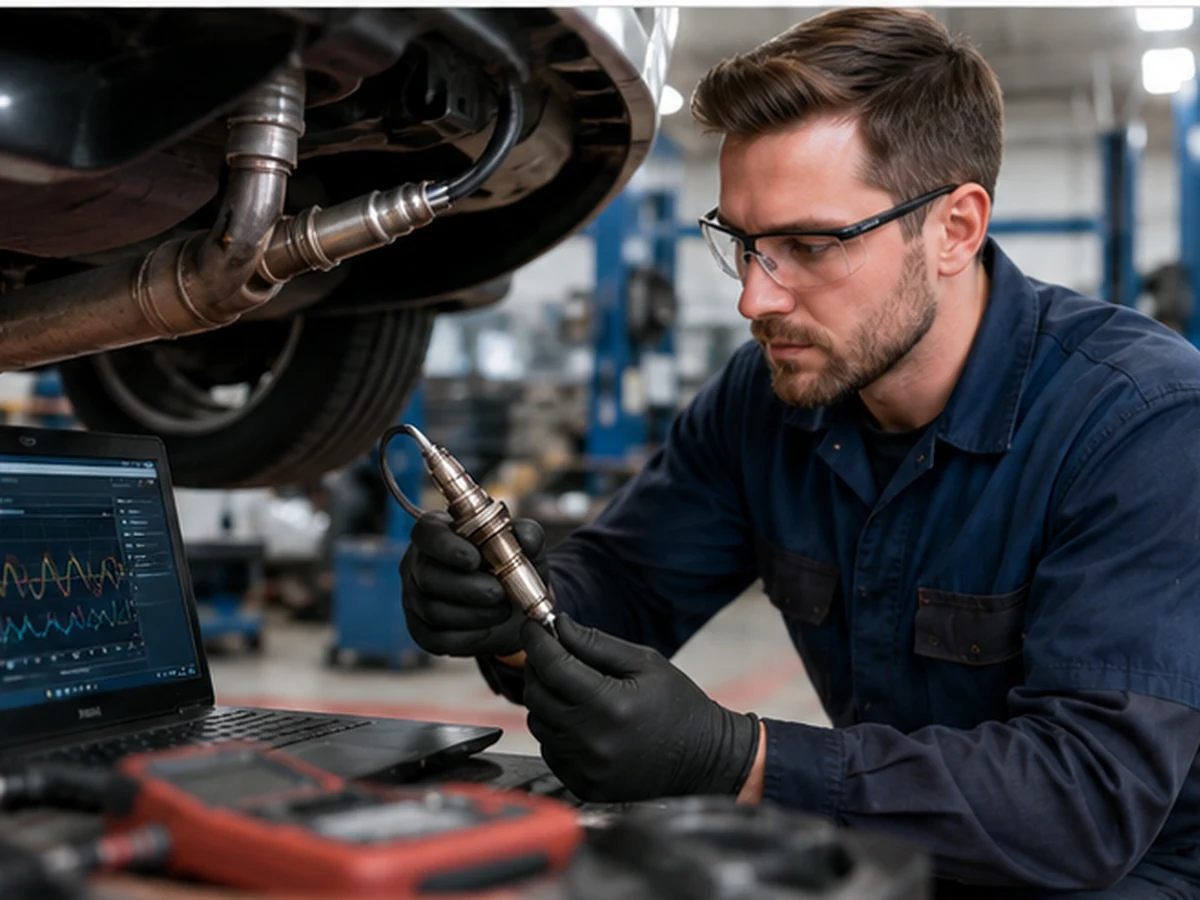
Risposta rapida
Un sensore di ossigeno del canale OEM è fornito attraverso il sistema di ricambi del costruttore del veicolo. Un sensore aftermarket è venduto al di fuori di quel canale. Nessuna delle due etichette da sola prova l'adattabilità, la durata o il valore. Confronta il riferimento incrociato OE esatto, la copertura del veicolo e della posizione, la tecnologia del sensore, la costruzione del connettore e del cavo, le prove di test, la tracciabilità, i termini di garanzia e il processo di controllo delle modifiche del fornitore.
OEM, fornitore OE e aftermarket non sono affermazioni identiche
“OEM” è spesso usato in modo approssimativo. Un componente in una confezione con marchio del veicolo, un componente realizzato da un fornitore OE e una sostituzione aftermarket indipendente hanno identità commerciali diverse. “Qualità OEM” senza una specifica definita o evidenza è una frase di marketing, non un risultato ingegneristico. Chiedere quale disegno, record di applicazione e requisiti di validazione supportano l'affermazione.
Una matrice decisionale per gli acquirenti
| Criterio | Evidenza per confrontare |
|---|---|
| Identità di montaggio | Riferimento OE, YMME/motore/mercato, posizione della sonda e del banco |
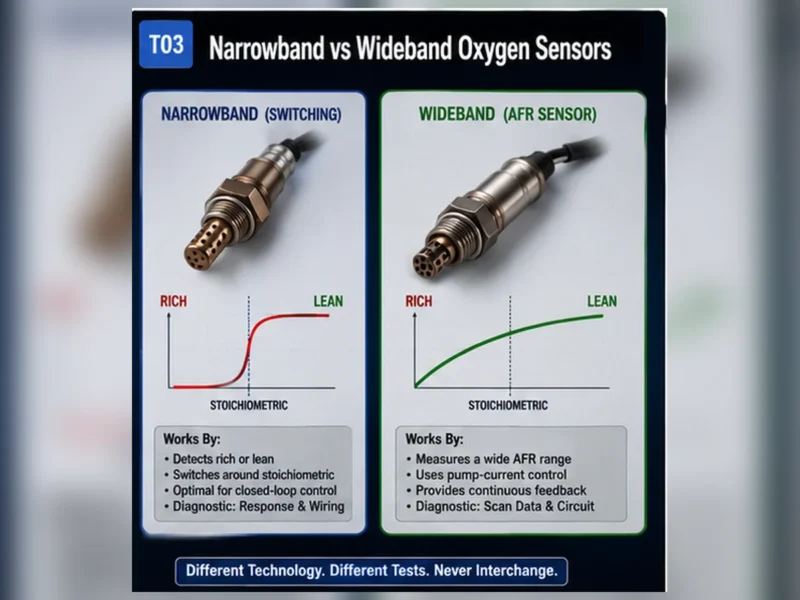
| Funzione del sensore | Tecnologia e circuito specificati: banda stretta, banda larga/A/F o altro |
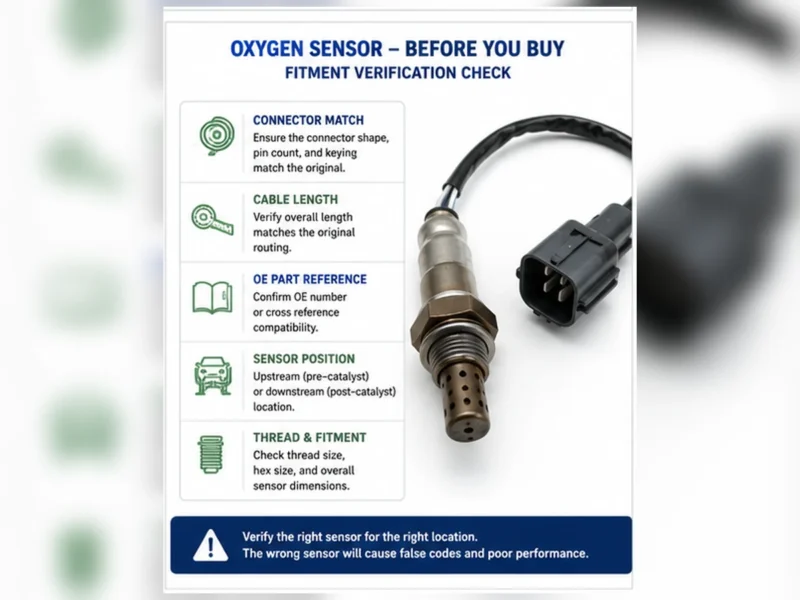
| Interfaccia fisica | Filettatura, schermatura, codifica del connettore, pin, lunghezza del cavo e clip |
| Validazione | Test definiti elettrici, termici, di risposta, durabilità e applicazione |
| Tracciabilità | Registrazioni di lotto, data, revisione e modifica associate al prodotto e all'imballaggio |
| Supporto commerciale | Ambito di garanzia, processo di reclamo, supporto dati e continuità di fornitura |
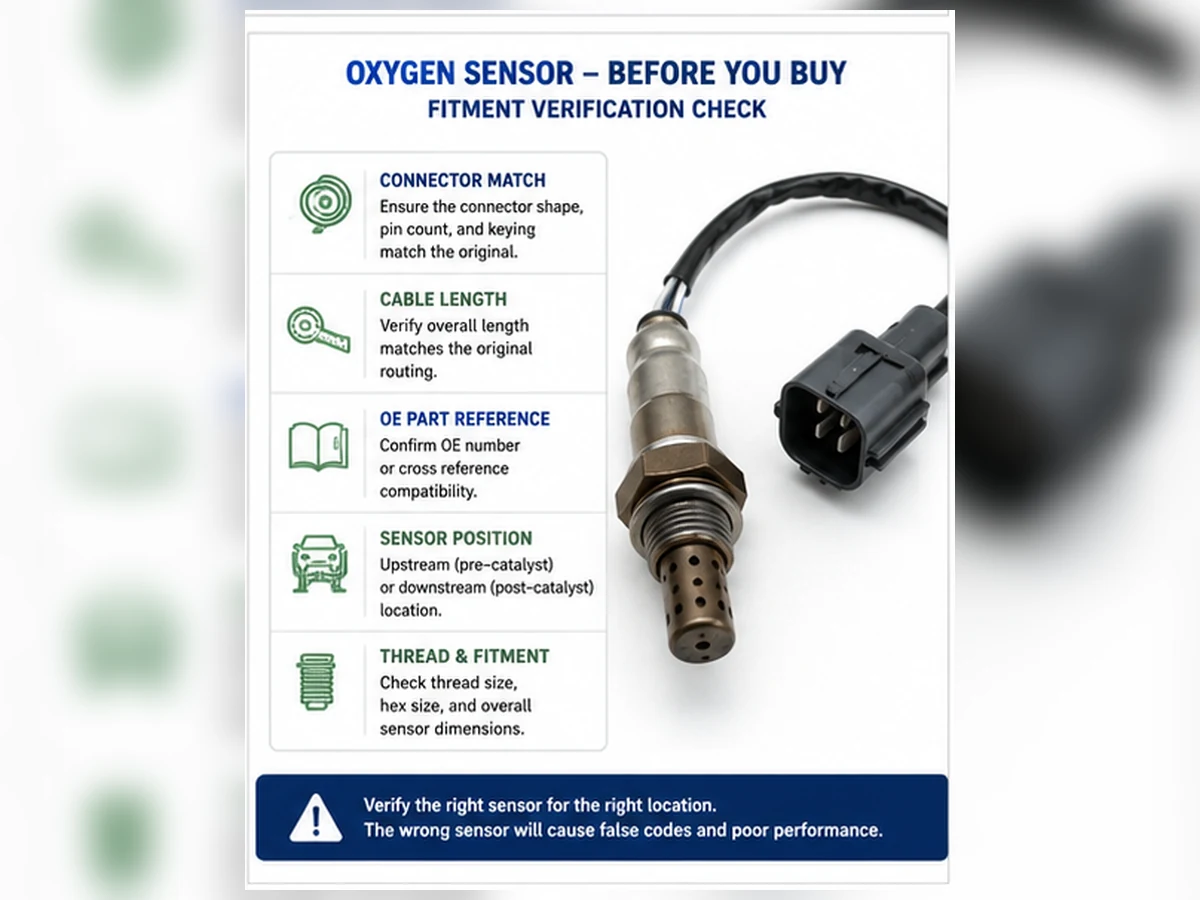
Adattamento diretto e universale sono scelte separate
Un sensore aftermarket può essere direct-fit o universale. Direct-fit riduce le variabili di installazione fornendo un connettore applicativo e una disposizione dei cavi. I design universali richiedono un metodo di giunzione specificato e non si adattano a tutti i veicoli. Non confondere “aftermarket” con “universale”.”
Errori comuni di confronto
- Scegliere in base al prezzo prima di verificare l'applicazione e la posizione
- Considerare lo stesso numero di fili come lo stesso circuito
- Accettare un riferimento incrociato OE senza evidenza attuale a catalogo
- Ignorare le configurazioni regionali delle emissioni
- Assuming a long warranty replaces test and traceability evidence
- Using certification logos as proof that a specific part number was validated
Cosa dovrebbe richiedere un distributore
Ask for a controlled application table, cross-reference source and revision, product specification, connector and dimensional records, validation plan and results, lot traceability, packaging controls, warranty process and change-notification terms. Any claim about OEM approval or supply history should be supported by authorization that covers the exact organization and product scope.
Separare il canale di vendita dalle prove del prodotto
A vehicle-brand service part, an OE-supplier branded replacement and an independent aftermarket part can all come through different channels. Channel affects packaging, support and catalog responsibility, but it does not replace exact part verification. Compare the delivered part and its controlled application record, not a broad statement that one channel is always superior.
| Label or claim | What it may establish | What still needs proof |
|---|---|---|
| Vehicle-brand service part | Sold through the vehicle manufacturer’s service channel | Correct supersession, market and exact position |
| OE supplier brand | Company may supply original-equipment programs | That this part number matches the claimed OE application |
| Aftermarket direct-fit | Connector and lead intended for listed applications | Catalog accuracy, technology, validation and change control |
| “OEM quality” | Marketing positioning | Defined specification, test evidence and authorization |
Confrontare le prove di adattamento prima di marca o prezzo
OE cross-reference
Ask for the source and revision of each cross-reference. A mapping can be wrong, obsolete or too broad. Confirm supersessions and reconcile the number with the removed part, full vehicle identity, emissions configuration and position.
YMME and position data
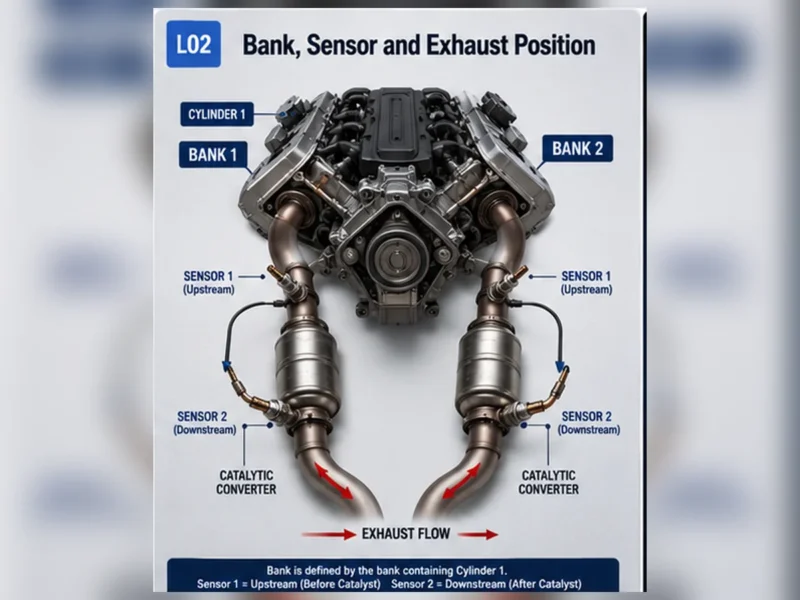
Year, make and model are not enough when engines, VIN breakpoints or regional exhaust systems differ. The application record should include engine and exact Bank/Sensor position. Distributor data should also define how conflicts and catalog corrections are controlled.
Physical and electrical specification
Compare technology, heater and signal requirements, thread, shield, connector keying, pin assignment, cable length and clips. Similar dimensions or wire count cannot establish interchangeability.
Che aspetto hanno le prove di validazione utili
| Evidence area | Useful record | Weak substitute |
|---|---|---|
| Electrical function | Defined method, sample identity, limits and results | A list of test names |
| Thermal/environmental | Conditions, cycles, acceptance criteria and report traceability | “High temperature tested” |
| Connector/interface | Controlled drawing and dimensional results | Product photo alone |
| Applicazione | Approved vehicle/engine/position matrix with revision | Long unreferenced fitment list |
| Produzione | Lot-linked end-of-line and inspection controls | Management certificate alone |
Test evidence must cover the actual product revision. A quality-system certificate describes an organization’s system and scope; it does not certify that every sensor part number meets an OE drawing or vehicle application.
Leggi i termini di garanzia e assistenza come controlli operativi
Compare coverage period, exclusions, required diagnostic evidence, labor treatment, return authorization and corrective-action process. A long headline warranty can still provide weak support if catalog errors, repeat failures and technical questions have no defined owner. Keep packaging and installation records until verification is complete.
Catalog-error responsibility
Ask what happens when the supplied part matches the seller’s listing but not the vehicle. A controlled process should capture the vehicle, engine, market, position, OE reference and physical conflict, then correct the underlying data rather than treating every case as installer error.
Field-return analysis
A useful return process separates no-fault-found parts, circuit or root-cause problems, installation damage, catalog mismatch and product nonconformance. Returned-part conclusions should be tied to methods and observations, not only a pass/fail label.
Il controllo delle modifiche può essere più importante del campione iniziale
Require notification for changes to sensing element, heater, protective coating, housing, connector source, cable, critical processes, test method, manufacturing site or application data. Define which changes need samples, document review or revalidation. A first sample cannot protect future orders if material and process changes are uncontrolled.
| Change | Effetto potenziale | Buyer response |
|---|---|---|
| Connector or cable supplier | Fit, sealing, resistance or heat durability | Drawing and validation review |
| Sensing element or heater | Signal, warm-up and durability | Functional revalidation |
| Application data | Wrong-fit returns and emissions risk | Catalog delta review and approval |
| Manufacturing site/process | Capability and traceability | Risk-based audit or submission |
Confronta il costo totale della decisione
Include purchase price, diagnosis, installation, catalog confidence, return freight, vehicle downtime, warranty handling and repeat-repair risk. The least expensive sensor is not the lowest-cost choice when evidence is weak; the highest-priced branded part is not automatically the best value when the identity is wrong. Use mandatory evidence gates before scoring commercial preferences.
Scenario composito: un componente a prezzo inferiore ha dati di posizione incompleti
Composite procurement scenario: two candidates share an OE reference, but one catalog lists only model/year while the other identifies engine, market and Bank 1 Sensor 1. Connector drawings also differ. The buyer pauses the price comparison and requests source data before approval. This is a composite due-diligence example, not a claim about a Sunhyings supplier or product.
Utilizza i campioni per verificare il sistema di evidenza
A sample should be linked to the quoted part revision, application record and test evidence. Compare label, connector, cable, clips, thread and shield with the controlled specification. If application testing is planned, define the exact vehicle, engine, emissions package, position, method and acceptance criteria before installation. A sample that merely threads into one bung does not validate coverage.
Traceability during sample review
Record lot or date code, package label, report references and any deviation. Ask whether production parts will use the same sensing element, heater, connector, cable and critical processes. If the sample cannot be connected to the later production control plan, its approval value is limited.
From sample to production order
Define what changes require notification, which inspections run on every unit, which tests are sampled and how nonconforming product is contained. Confirm packaging labels and barcode data against the approved application file. Commercial approval should remain conditional until documentation, product and data revisions agree.
Verifica le dichiarazioni OEM e di certificazione nell'esatto ambito
For an OEM supply claim, identify the legal entity, customer or authorized program, product family, site and validity of the evidence. Confidentiality can limit disclosure, but that does not make a broad unsupported claim acceptable. “Same factory,” “OE technology” and logo use do not establish that a specific aftermarket number is approved by a vehicle manufacturer.
For management-system certificates, verify the certificate owner, issuing body, standard, site, scope and current status. Then return to part-level evidence. A valid quality-system certificate can support supplier governance while still saying nothing about whether the ordered sensor fits a particular vehicle or meets a particular response specification.
Package and seller identity
Verify the legal seller, authorized channel where relevant, package label, part number, lot/date code and security features published by the brand. Suspicious spelling, altered labels or mismatched package and sensor markings require clarification before installation. Packaging can support identity and traceability, but genuine-looking packaging still cannot replace the application and technical checks.
Utilizza passaggi obbligatori prima di una scheda di valutazione ponderata
| Gate | Mandatory result | Do not compensate with |
|---|---|---|
| Identità di montaggio | Exact OE/application/position match | Lower price or longer warranty |
| Technology and interface | Specified circuit, connector and geometry | Brand familiarity |
| Evidence traceability | Reports and revisions tied to the part | Certificate logos |
| Controllo delle modifiche | Notification and revalidation rules | Initial sample appearance |
Only candidates that pass mandatory gates should enter a weighted comparison of price, lead time, warranty and service. This order keeps commercial preferences from masking an engineering or application mismatch.
Definisci correttamente OEM, fornitore OE, aftermarket e private label
“OEM sensor” can mean a part sold in the vehicle manufacturer’s service-parts channel. An OE supplier may manufacture parts for original vehicle programs, but that does not prove every aftermarket part under its brand is identical to the service part. Aftermarket covers direct-fit and universal products from many suppliers. Private label describes branding and commercial ownership, not a technology or quality level.
| Termine | What it can describe | Cosa non dimostra |
|---|---|---|
| OEM-channel part | Part distributed through vehicle manufacturer’s service system | That any visually similar part is identical |
| OE supplier | Company with documented original-equipment supply in a defined scope | OE approval for every aftermarket SKU |
| Aftermarket direct-fit | Application-specific replacement outside OEM channel | Fit, performance or durability without part evidence |
| Universal sensor | Product requiring approved circuit/connector adaptation | Compatibility with every vehicle or wire-color map |
| Private label | Product sold under distributor/customer brand | Who designed or manufactured it |
| OEM quality | Marketing phrase unless defined | OEM approval, supply relationship or test equivalence |
Applicare le stesse barriere obbligatorie a entrambi i canali
Do not start with brand preference. Confirm exact fitment, technology, interface, condition and traceability. An OEM-channel part for the wrong emissions variant is still wrong. An aftermarket part with strong evidence can be a valid candidate, but price or a long warranty cannot replace fitment and technical proof.
| Mandatory gate | Evidence for OEM-channel part | Evidence for aftermarket part |
|---|---|---|
| Exact identity | Current OEM catalog/part and supersession | Supplier part plus controlled OE cross-reference |
| Vehicle/position | VIN/YMME/engine/emissions and Bank/Sensor | Same complete application identity |
| Tecnologia | Service/product specification | Part-level electrical specification |
| Interfaccia | Correct connector, lead, clips, thread and shield | Drawing and verified comparison |
| Condition/source | Authentic, undamaged and traceable channel | Authentic, undamaged and traceable seller/supplier |
| Support | Warranty and technical process for exact market | Defined claim evidence, analysis and correction process |
Confrontare il pezzo, non il logo
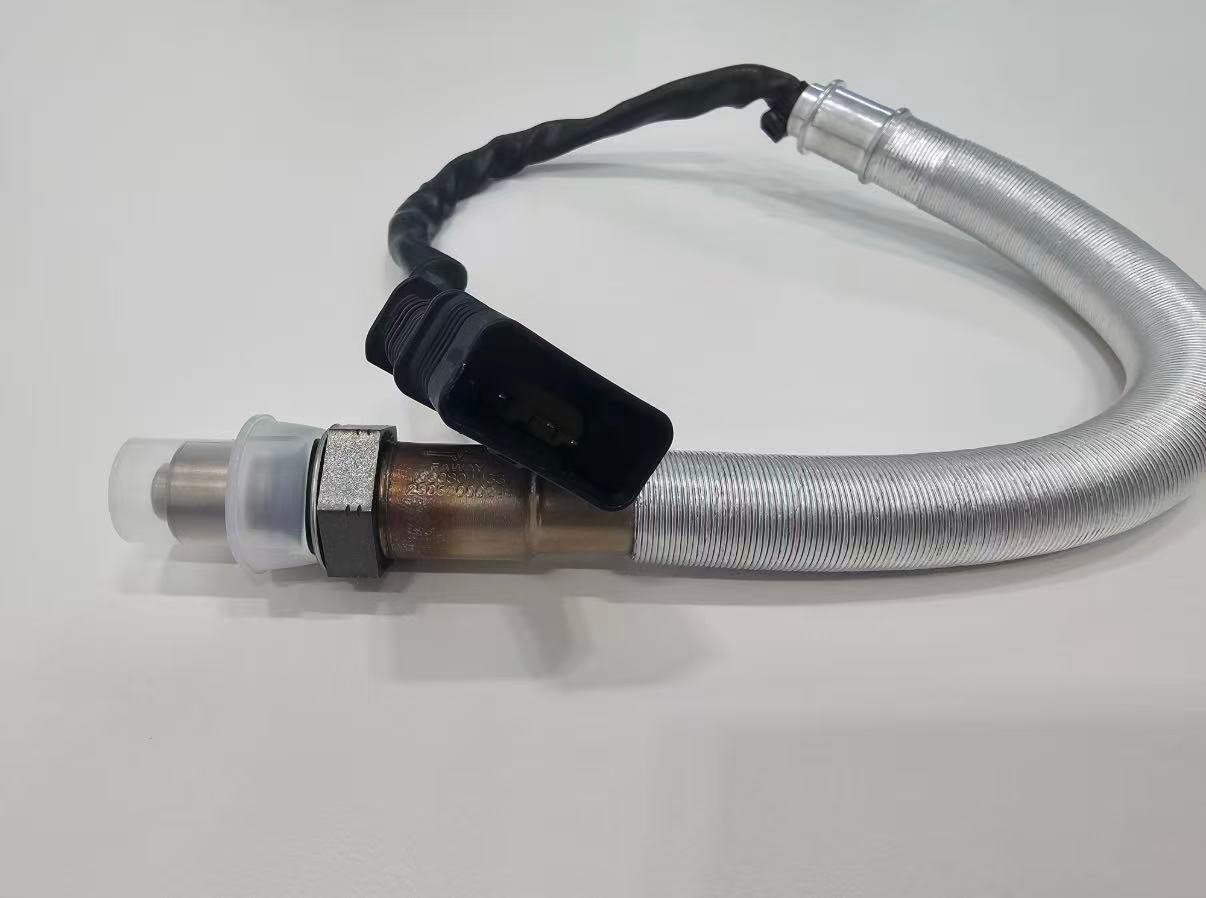
| Caratteristica | Evidenza per confrontare | Perché è importante |
|---|---|---|
| Sensing strategy | Narrowband, titania or wideband/A/F specification | Must match controller and diagnostic method |
| Heater | Electrical limits and validation under defined conditions | Controls warm-up and monitored circuit behavior |
| Connector/terminals | Keying, pin assignment, terminal retention and sealing | Controls electrical and environmental interface |
| Cable/strain relief | Length, insulation, routing provisions and heat exposure | Prevents stretch, chafe and melt |
| Thread/shield | Dimensions, treatment and position-specific geometry | Controls installation, sealing and gas exposure |
| Validazione | Method, criteria, sample identity and results | Separates tested evidence from adjectives |
| Controllo della produzione | End-of-line tests, sampling, measurement and traceability | Connects approved design to shipments |
Leggere certificati e approvazioni in modo restrittivo
A management-system certificate applies to the named legal entity, site, standard, validity period and written scope. It does not automatically certify a part number, fitment list or performance result. A supplier can have a strong quality system yet still require part-level specification, validation, application and change-control evidence.
| Claim | Evidence required | Insufficient evidence |
|---|---|---|
| IATF 16949 certified | Valid certificate naming the organization, site and relevant scope | Logo or another company’s certificate |
| OEM approved | Authorization covering exact organization, program/product and period | Supplying another part to an OEM |
| OE equivalent performance | Defined comparative specification and test evidence | Appearance or generic test-name list |
| Fits listed vehicles | Controlled application sources and part/position mapping | Unversioned marketplace compatibility table |
| Validated durability | Report with method, criteria, samples and results | “Lab tested” statement |
Confrontare il costo totale della decisione dopo le barriere di adattamento
The purchase price is visible; misfit, repeat diagnosis, downtime, return freight and claim handling are not. Do not invent a universal savings percentage. Build a project-specific comparison using known values and mark missing values DATA NOT AVAILABLE.
| Cost area | OEM-channel question | Aftermarket question |
|---|---|---|
| Part acquisition | Price, tax, availability and supersession | Price, quantity, freight and availability |
| Fitment confidence | Does exact VIN/position mapping exist? | What source/revision supports application? |
| Installazione | Correct direct-fit interface and access? | Direct-fit or approved universal method? |
| Repeat-repair exposure | What diagnostic/claim support is provided? | What analysis and corrective action process exists? |
| Supply continuity | Supersession and market availability? | Capacity, change notice and alternate control? |
| Catalog/warehouse | OEM data integration and returns? | Application updates, labels, barcodes and traceability? |
Controllare l'autenticità e la sostituzione non autorizzata
Packaging appearance alone does not prove authenticity. Buy from a traceable source, preserve invoices, labels and lot/date information, and compare the delivered part with the controlled record. For private label, define who owns artwork, part numbers, barcodes, country/language requirements and change approval.
A supplier substitution can preserve the outer label while changing sensing element, heater, connector, cable, process or production site. The purchase agreement should define which changes require notification, documents, samples or revalidation. This requirement applies regardless of OEM or aftermarket branding.
Caso del distributore composito: prezzo unitario basso perde dopo errori di catalogo
Composite distributor scenario: two aftermarket candidates pass an initial visual check. One has a lower unit price but only an unversioned model/year list; the other supplies engine, emissions and position records plus a correction process. A sample review finds connector variation inside the broad listing. The distributor blocks the uncertain rows before launch rather than treating returns as the application test.
No savings or return rate is claimed because none was provided. The case shows why fitment evidence precedes commercial scoring and is not a Sunhyings customer story.
Caso dell'officina composita: un ordine del canale OEM richiede comunque la posizione esatta
Composite workshop scenario: a vehicle has separate upstream and downstream part numbers. An OEM-channel part is ordered using model/year but not Bank/Sensor position. The connector is similar, yet lead length and catalog record identify the other position. The part is exchanged before installation.
OEM-channel sourcing can reduce some mapping uncertainty, but it cannot correct incomplete order inputs. The example is composite and does not compare a named manufacturer or product.
Scheda di valutazione basata su prove concrete
Use pass/fail gates first: exact fitment, technology, interface, legal emissions function and traceability. Only passing candidates receive weighted scores for price, delivery, warranty and service. Define formulas and data owners before scoring; missing data is not zero risk or perfect performance.
- Application accuracy and update governance
- Specification completeness and revision control
- Validation relevance and report traceability
- Production inspection and lot linkage
- Change notification and nonconformance response
- Packaging, label and warehouse accuracy
- Confirmed commercial terms for the actual project
Quale canale può soddisfare diverse esigenze di prova e servizio?
These are decision patterns, not universal recommendations. The correct choice depends on exact part identity, market and evidence available at purchase time.
| Use case | Decision emphasis | Evidence that still controls |
|---|---|---|
| One-off repair with uncertain supersession | Strong vehicle-specific catalog and technical support | VIN/engine/emissions/position and diagnosis |
| Older vehicle with OEM-channel supply gap | Aftermarket availability and documented application coverage | Technology/interface and current cross-reference |
| Workshop standardizing common applications | Repeat fitment accuracy, support and warranty analysis | Approved application list and controlled changes |
| Distributor assortment launch | Data governance, samples, traceability and scale | Part-level approval; no release of uncertain rows |
| Private-label program | Ownership of specification, brand, packaging and claims | Supplier/process evidence and change agreement |
| Universal service repair | Technology/circuit and approved joining method | No guessed pinout or emissions bypass |
La durata della garanzia non è qualità della garanzia
Compare what is covered, required evidence, exclusions, response times and corrective-action path. A long marketing term can be less useful than a clear process that distinguishes wrong fitment, installation damage, unresolved vehicle fault and possible product nonconformance. Do not interpret “lifetime” without the written definition, owner, transfer and remedy.
| Claim field | Evidence to preserve | Perché è importante |
|---|---|---|
| Purchase identity | Invoice, seller, part, package, lot/date | Connects complaint to supplied product |
| Applicazione | Vehicle/engine/emissions and exact position | Tests fitment claim |
| Diagnosi | Codes, circuit, leaks, trims and response tests | Separates sensor from vehicle system |
| Installazione | Routing, connector, torque source and exhaust condition | Identifies physical/thermal causes |
| Post-repair result | Before/after data and monitor status | Shows whether original fault changed |
| Supplier analysis | Method, result, disposition and corrective action | Avoids unexplained “pass” or “installer fault” labels |
I sensori di ossigeno a marchio privato richiedono una proprietà esplicita
Define who owns the technical specification, application database, brand claims, artwork, barcodes, instructions, warranty and regulatory review. A distributor that publishes fitment data cannot outsource responsibility for unchecked rows simply because a factory supplied a spreadsheet. Likewise, a supplier should not print unverified OE mappings or certification logos at the customer’s request.
| Controllo | Owner must be named | Release evidence |
|---|---|---|
| Part/application master | Approves OE, vehicle and position mappings | Revision and conflict closure |
| Specifica del prodotto | Approves technology and critical interface | Signed drawing/specification |
| Validazione | Defines methods, samples and acceptance | Approved reports and deviations |
| Artwork/claims | Controls brand, OE wording and certification marks | Legal/technical approval |
| Production changes | Receives and approves notifications | Revalidation decision |
| Field claims | Classifies, contains and closes issues | Traceable analysis and corrective action |
Verifica un componente tracciabile, non una presentazione
Select one quoted sensor and trace it from application row and drawing through materials, assembly, end-of-line result, label and shipment. Check that records agree on part and revision. Review failed-test containment, rework authorization, measurement control and field-return feedback. An equipment list or office certificate without a part trace does not establish control at the supplying site.
Internal supplier documents can support procurement review but must not be republished without authorization. Public claims should state only what Sunhyings can substantiate for its own role and the exact product scope. A supplier’s certificate must never be presented as Sunhyings’ certificate.
Registro finale della decisione tra OEM e aftermarket
- Exact vehicle, emissions configuration, OE candidate and Bank/Sensor position
- Channel/seller identity and authenticity evidence
- Part technology, connector, lead, thread and shield comparison
- Application-data source and revision
- Validation, production control, traceability and change terms
- Written warranty scope and claim evidence requirements
- Project-specific landed cost with unavailable values marked open
Sunhyings can review confirmed part lists and sourcing requirements. This page does not claim that one channel is always superior or that an unverified Sunhyings sensor is equivalent to an OEM part.
Linguaggio delle rivendicazioni che gli acquirenti dovrebbero contestare
| Marketing phrase | Domanda da porre | Acceptable evidence direction |
|---|---|---|
| OE quality | Which characteristics, criteria and comparative tests? | Part specification and traceable reports |
| Same as original | Same design, manufacturer, material, calibration or only fitment? | Authorized comparison for exact part |
| 100% tested | Which tests, limits, equipment and records? | End-of-line control plan and lot records |
| Fits all listed models | Which engine, emissions and position rows and source revision? | Controlled application database |
| OEM approved | Which OEM, program, organization, product and validity? | Scope-specific authorization |
| Lifetime warranty | Whose lifetime, which owner, remedy and exclusions? | Complete written warranty |
Precise claim language protects credible suppliers as well as buyers. It allows a genuine management-system certificate, part validation or application record to support exactly what it proves, without stretching that evidence into universal fitment or performance. Where evidence is private, the seller can maintain it for due diligence without exposing confidential documents publicly, but public wording must remain independently supportable.
Monitora il canale scelto dopo il lancio
Approval is not permanent. Track application conflicts, wrong-fit claims, no-fault-found returns, product nonconformities, label errors, delivery and change notifications by part and lot. Define formulas and denominators before using rates. A period with missing claims data is DATA NOT AVAILABLE, not zero defects.
| Signal | First action | Possible escalation |
|---|---|---|
| Repeated application conflict | Block affected catalog rows | Source review and stock/customer notification |
| Connector/lead nonconformance | Contain lot and compare drawing | Supplier corrective action and revalidation |
| Returning circuit code | Review vehicle and product evidence | Joint technical analysis |
| Unannounced design/site change | Hold approval status | Document review, samples and revalidation |
| Label/barcode error | Contain warehouse inventory | Artwork/data correction and trace review |
The scorecard should inform sourcing decisions without converting every field complaint into a product defect or every bench pass into installer fault. Category definitions, required evidence and closure ownership must be agreed before data is compared across OEM-channel and aftermarket sources.
Neither channel can promise an automatic warning-light reset, emissions-test pass or fixed fuel saving. Those outcomes depend on complete vehicle condition, correct diagnosis and monitor execution. A responsible seller promises only verified identity and documented product/support terms, then asks the repairer to validate the system legally.
When the evidence is genuinely equal, commercial preference can decide. When evidence is unequal, record the gap instead of using brand familiarity or low price as a proxy for engineering confidence.
For mixed fleets or distribution assortments, make the decision per part number. One strong aftermarket SKU does not validate an entire brand, and one OEM-channel service part does not establish the best commercial choice for every application.
Document why the selected channel won and which assumptions remain open. When availability, price or source changes, review the decision again because a previous approval is tied to the exact part, seller, condition and evidence package, not merely to the words OEM or aftermarket.
Prepara una richiesta di adattamento o approvvigionamento
Invia il numero OE, anno/marca/modello, motore o dettagli VIN, mercato e pacchetto emissioni, posizione esatta di banco/sensore, connettore e foto del vecchio componente, quantità e eventuali requisiti di imballaggio o approvazione. Sunhyings esaminerà i dati forniti per verificarne la capacità e la fattibilità dell'approvvigionamento; l'adattamento non è confermato fino a quando le prove di applicazione non vengono abbinate.
Domande frequenti
Un sensore di ossigeno OEM è sempre migliore?
Il canale OEM offre un forte riferimento applicativo, ma la decisione dovrebbe comunque considerare l'esatta identità del pezzo, le condizioni, il supporto e il costo.
I sensori O2 aftermarket sono affidabili?
L'affidabilità varia in base al componente e al fornitore. Valutare l'idoneità, le specifiche, la validazione, la tracciabilità e le prove di garanzia piuttosto che solo l'etichetta.
La qualità OEM significa approvato OEM?
No. La qualità OEM non equivale a un'approvazione documentata o a un rapporto di fornitura OE.
Ogni sensore aftermarket è universale?
No. I sensori aftermarket includono sia design diretti specifici per applicazione che design universali con giunzione.
Qual è il primo controllo di confronto?
Confermare il riferimento OE esatto, il veicolo/motore/mercato e la posizione della bancata/sensore prima di confrontare prezzo o garanzia.