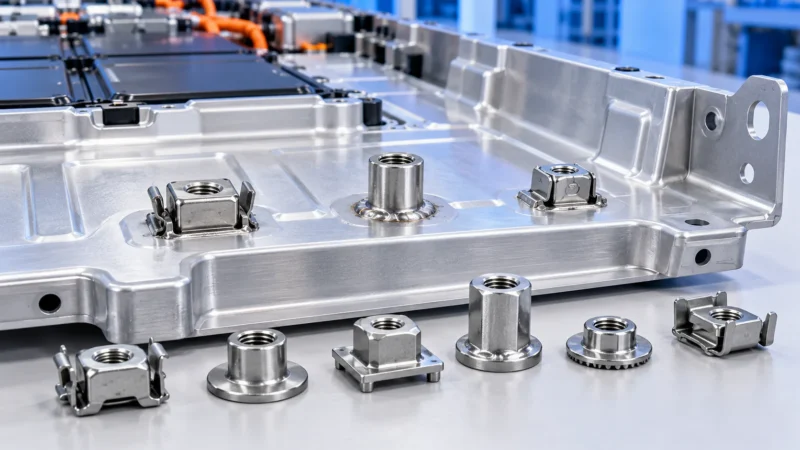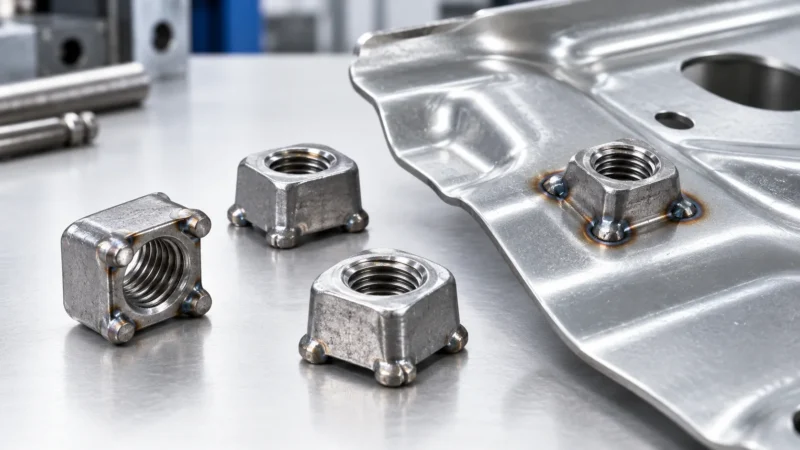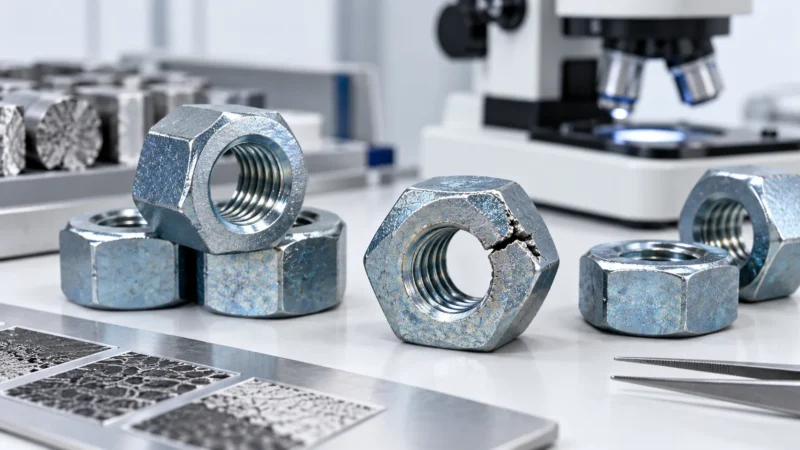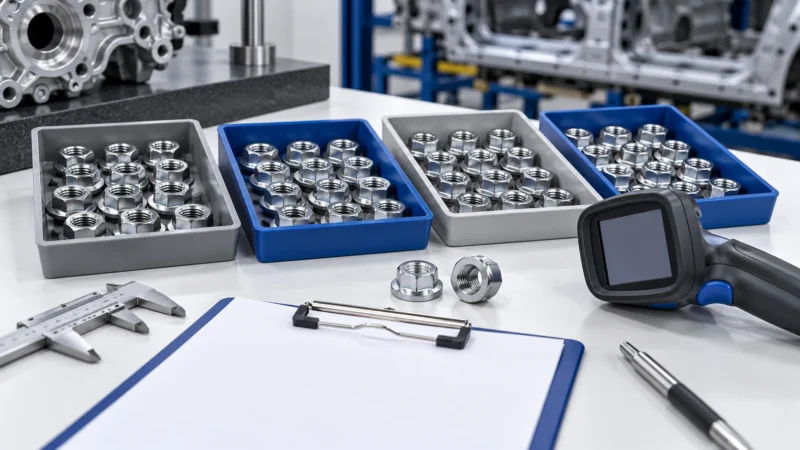







This distinction matters because the same 144 ksi strength group includes products that are not interchangeable. An ASTM F3125 Grade 144 heavy hex bolt, an F3125 Grade 144TC twist-off assembly, and an ASTM F3148 Grade 144 fixed-spline assembly have different product identities and installation arrangements. Specifying only “Grade 144 structural bolts” leaves important decisions unresolved.
When Did Grade 144 Enter ASTM F3125?
Grade 144 was not introduced for the first time in ASTM F3125/F3125M-26. The published scope of the 2023 edition identified 120 ksi and 150 ksi inch-series strength classifications, while the 2025 edition already included the additional 144 ksi grade. The 2026 edition retains it.
There is another potential source of confusion: ASTM F3148 addresses a separate Grade 144 fixed-spline structural bolting assembly. It is not simply another name for F3125 Grade 144TC. A historical project specification that explicitly calls for F3148 should not be converted to F3125 merely because both product families use the same nominal tensile-strength classification.
The practical rule is to identify the complete standard designation before comparing prices or accepting a substitution. The current ASTM catalog identifies F3125/F3125M-26, but a contract may require a different edition. Any proposed change to that governing basis belongs to the project’s approval process, not to the supplier’s interpretation of a grade number.
Grade 144 Heavy Hex, Twist-Off and Fixed-Spline: What Is Different?
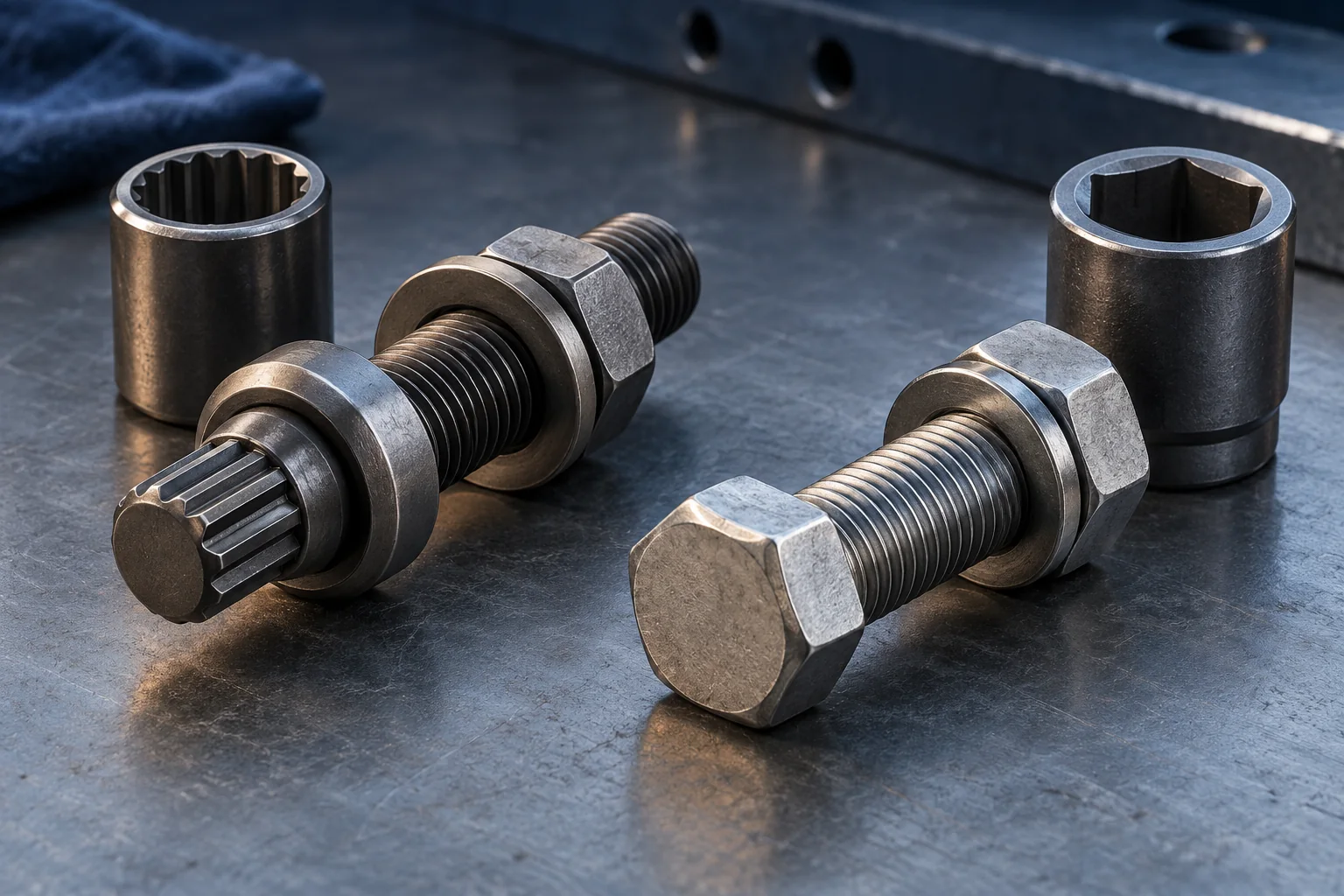
The most consequential difference between Grade 144 configurations is not the nominal tensile-strength classification. It is the physical arrangement of the fastener and the installation system for which the product is specified.
RCSC 2025 places the following products in Group 144:
| Product designation | Configuration | Procurement consequence |
|---|---|---|
| ASTM F3125 Grade 144 | Heavy hex structural bolt | Specify the bolt dimensions, compatible nuts and washers, finish, and applicable installation requirements. |
| ASTM F3125 Grade 144TC | Twist-off tension-control matched assembly | Order the specified matched assembly and verify the twist-off installation system and documentation. |
| ASTM F3148 Grade 144 | Fixed-spline matched assembly | Identify F3148 separately and verify its dedicated installation method and assembly requirements. |
For a heavy hex bolt, tightening is performed using an installation method permitted for the specified structural joint. Its heavy hex head geometry is governed by the applicable structural bolting dimensional requirements. The bolt still requires compatible mating components; its grade and head shape alone do not establish whether the assembled joint is suitable.
A Grade 144TC assembly has a spline end designed to separate during installation by the applicable twist-off tension-control method. It is a matched assembly rather than an unrestricted collection of individually interchangeable components. The characteristics of the bolt, nut, washer, finish, and lubrication must be compatible with the intended installation system.
An F3148 fixed-spline assembly works differently. Its spline is designed to remain attached after installation, and the applicable product specification describes a torque-and-angle arrangement. A fixed-spline assembly therefore cannot be treated as a Grade 144TC assembly simply because a powered wrench engages a spline at the end of the bolt.
Even the visible head shape is not sufficient to resolve every distinction. RCSC commentary recognizes that twist-off matched assemblies may have round or heavy hex heads. Consequently, a buyer should use the product designation, spline configuration, relevant markings, manufacturer documentation, and the applicable standard together rather than identifying the entire system from a photograph.
Type 1 and Type 3 are material classifications, not alternative styles
Grade 144 also has Type 1 and Type 3 material classifications.
Type 1 covers specified carbon and alloy-steel material families, including permitted boron-containing compositions. Type 3 identifies steels with weathering characteristics and improved atmospheric corrosion resistance.
Type 3 is not an unconditional corrosion-resistance guarantee. Actual suitability depends on environmental exposure, moisture retention, assembly details, protective finish, and the project’s corrosion-protection strategy. Nor does choosing Type 3 remove the need to match the appropriate nuts and washers.
RCSC 2025 commentary explains that where a Type is not specified, the manufacturer may have discretion to supply either permitted Type. A purchaser requiring a particular material category should therefore state it explicitly rather than relying on an assumption about what “Grade 144” normally means.
The chemistry and full acceptance criteria must still be checked against the applicable ASTM edition. A material-family description alone is not evidence that a particular production lot meets the required chemical or mechanical properties.
In an illustrative inquiry, the schedule says only Grade 144 and the quotation offers a fixed-spline system where a twist-off assembly was intended. The strength group did not identify the product. Confirm the complete specification, style and installation system before comparing components or prices. Keep the assembly identity and supporting records tied to that exact configuration.
What Size Range Does F3125 Grade 144 Cover?
ASTM F3125 Grade 144 heavy hex bolts and twist-off assemblies have a published nominal diameter range of 1/2–1-1/4 in. That limit applies to the Grade 144 products described in the published F3125 scope.
It must not be confused with the wider 1/2–1-1/2 in. range published for Grade A325 and Grade A490 heavy hex bolts under the same F3125 family.
This is an important purchasing distinction. A supplier’s general structural-bolt size chart may combine several grades, but a dimension appearing in that chart is not necessarily available or permitted for every grade.
RCSC 2025 also includes tables covering multiple strength groups and nominal diameters. Such a table cannot independently extend the diameter range specified by the ASTM product standard. Product-scope applicability must be established before using a group-level installation or verification value.
Nominal diameter is only one part of dimensional acceptance
Within the permitted range, the buyer must still specify the required bolt length and verify its suitability for the joint.
Structural bolt geometry involves more than a nominal diameter. Important considerations include head dimensions, threaded length, unthreaded shank, grip thickness, washer arrangement, and sufficient thread engagement after installation.
For example, two bolts with the same nominal diameter and overall length may not be appropriate for the same joint if their thread configurations differ. Where the connection design requires threads to be excluded from a shear plane, the position of the threaded portion becomes part of the dimensional selection.
RCSC identifies ASME B18.2.6 as the relevant dimensional standard for these structural bolting configurations, while its provisions for bolt length and thread engagement address installed-joint needs. These are separate from the grade’s basic diameter range. Exact length allowances, thread configurations, and dimensional tolerances should be obtained from the applicable standard and product documentation rather than inferred from a generic catalog illustration.
Hypothetical example: An EPC purchaser receives a request for an ASTM F3125 Grade 144 heavy hex bolt with a nominal diameter of 1-1/2 in. The procurement team notices that 1-1/2 in. bolts appear in other structural bolt listings and assumes this size can also be ordered as Grade 144.
The published F3125 Grade 144 scope does not support that assumption. The requested diameter exceeds the grade’s stated 1-1/4 in. upper limit.
The appropriate response is not to relabel the item as Grade A490, select an F3148 assembly, or approve a different nominal diameter without review. Each would change some aspect of the technical specification. The purchaser should return the discrepancy to the responsible engineer so that a suitable, explicitly approved product specification can be established.
This example illustrates a specification conflict, not a tested product limitation or an approved substitution.
A hypothetical purchaser copies a size from a general A325/A490 chart into a Grade 144 request. The shared F3125 family name does not extend each grade's published range. Check the actual Grade 144 scope before ordering and return any conflict to the engineer. Do not solve an out-of-scope size by silently changing grade or assembly system.
Why 144 ksi Does Not Complete the Structural Bolting Specification
A 144 ksi minimum tensile-strength classification describes a mechanical characteristic of the fastener product. It is not the required installed bolt pretension, the allowable tensile load of an assembled joint, or a universal tightening-torque value.
The distinction is fundamental. Product strength is established through the applicable ASTM requirements, while the structural connection must be designed and installed under its governing engineering and project requirements. Connection geometry, loading, pretension requirements, joint type, installation method, and inspection responsibilities cannot be derived from the grade number alone.
The RCSC Specification for Structural Joints Using High-Strength Bolts addresses these installed-joint considerations. Its 2025 edition recognizes Group 144 products, but it does not make every Group 144 assembly appropriate for every connection or installation method.
Matching nuts, washers and material Type
The selected nut must satisfy the applicable requirements for the bolt Group, material Type, and coating condition.
RCSC 2025 provides a useful example of how these variables interact. For Groups 144 and 150, its permitted-nut table identifies ASTM A563 Grades DH or DH3 for Type 1 plain-finish bolts, DH for the listed permitted Type 1 coated condition, and DH3 for Type 3 plain-finish bolts. Certain ASTM A194 Grade 2H substitutions are addressed separately.
These are not general permission to mix nut grades, material Types, and finishes. They demonstrate why a buyer needs the exact assembly specification rather than a statement that the nut has sufficient strength.
The washer also has a defined role. RCSC addresses ASTM F436 hardened washers and requires washer Type to correspond to the bolt Type. Other washer configurations, including direct-tension-indicating devices and specialized reaction washers, have their own requirements.
If a supplier proposes different components, the buyer should require confirmation that the complete combination is permitted under the governing requirements. Matching nominal thread size is not enough.
Coating choice can change the acceptable assembly
Grade 144 should not be described simply as either “galvanizable” or “not galvanizable.”
RCSC 2025 allows specified galvanizing arrangements for Grade 144 heavy hex bolting components, subject to the applicable process and assembly requirements. Its rules include requirements for galvanizing methods, nut thread allowances, and compatible components.
However, hot-dip galvanizing is not permitted for spline-end matched bolting assemblies under RCSC 2025, regardless of their Group. This distinction includes the spline-end Grade 144 systems discussed earlier.
Mechanical galvanizing of twist-off and fixed-spline assemblies is subject to manufacturer direction and permission under the respective product specifications. Zinc-flake coatings have a separate requirements framework and must not be assumed interchangeable with hot-dip or mechanical galvanizing.
The engineering reason for these restrictions goes beyond visible corrosion protection. Coating affects thread fit and friction. When nuts are overtapped to accommodate a coating, the effective thread engagement and resistance to stripping must remain adequate. Changes in lubrication and thread friction also affect the relationship between applied torque and developed bolt pretension.
For this reason, coated high-strength bolting components must be evaluated as the appropriate matched assembly rather than as independently finished items assembled without compatibility verification. A buyer specifying a coating should also specify the corresponding permitted nuts, washers, lubrication condition, and required assembly tests or documentation.
Product conformity and installation verification are different evidence
A bolt head marking can help identify the grade and manufacturer, but it cannot establish the complete chemical composition, mechanical test results, or acceptance status of a particular lot.
Likewise, a material test report or a supplier’s declaration should be evaluated for what it actually demonstrates. A report for raw material alone is not automatically evidence that the finished bolt and its assembled mating components satisfy all applicable requirements.
RCSC 2025 requires relevant test reports documenting conformity of bolting components and matched assemblies to be available to the Engineer of Record and Inspector before structural-steel assembly or erection. The applicable product specifications determine the required product tests and acceptance criteria.
Pre-installation verification serves a different purpose. Where required, it checks the behavior of representative bolting assemblies with the specified installation method and conditions. It does not replace the manufacturer’s product conformity evidence, and a product test report does not eliminate the project’s applicable installation verification.
The buyer should therefore distinguish three questions: Is the delivered product correctly identified? Does the documentation establish conformity to the applicable product and assembly requirements? Has the installed joint been verified according to the governing project requirements?
Those questions are related, but they are not interchangeable.
Grade 144 Procurement and Receiving Checks
The safest way to purchase Grade 144 bolting is to convert the engineering decision into an order that uniquely identifies the required product and assembly.
A useful Grade 144 RFQ should establish the following information:
- Governing standard and edition. State ASTM F3125/F3125M and the project-required edition, or ASTM F3148 where the engineer actually specifies that separate fixed-spline system. Identify any applicable RCSC edition and additional project requirements.
- Grade, Type and style. Specify Grade 144, Type 1 or Type 3, and the required heavy hex, Grade 144TC twist-off, or F3148 fixed-spline configuration. A request containing only “Grade 144” is insufficient to identify the intended assembly.
- Exact dimensions and configuration. Give the nominal inch diameter, required length, applicable thread and head configuration, and any restrictions on thread position or engagement established by the connection design. Check the diameter against the published grade scope before requesting pricing.
- Finish and coating. State whether the required assembly is plain or coated and identify the coating process and applicable specification. For a coated product, confirm its compatibility with the selected Grade 144 configuration rather than assuming permission transfers between styles.
- Mating components. Specify the required nuts and washers, including their applicable standards, grades, Types, and finish conditions. For matched assemblies, define the complete supply arrangement and any required manufacturer-controlled components.
- Inspection and documentary requirements. Identify required product test reports, lot or batch traceability, relevant marking verification, coating or assembly test evidence, and any additional inspection or acceptance documentation required by the contract. Distinguish the project’s requirements from optional documents requested for purchasing convenience.
- Quantity and delivery scope. State the required quantity and whether the order covers individual heavy hex bolts, complete matched bolting assemblies, or separately specified components. Confirm the precise supply scope and available documentation before finalizing the purchase order.
For receiving inspection, the purchasing description should be compared with the delivered product markings, packaging identification, component configuration, coating condition, and traceable documentation. A report bearing the right standard number is not enough if it describes a different grade, Type, assembly or production lot.
Physical inspection should also check for obvious discrepancies between the ordered and delivered configuration. A fixed spline presented as a twist-off assembly, an unapproved coating, or a bolt outside the specified dimensional scope should be identified before the parts enter the installation process.
Where a discrepancy exists, the appropriate response is to isolate the affected material for technical and contractual disposition. Receiving personnel should not independently approve a substitute structural fastener simply because the strength designation appears similar.
For an unfamiliar Grade 144 source, supplier verification should establish whether the manufacturer can supply the exact specified configuration and provide the required conformity evidence. Catalog information from another manufacturer may help explain product categories, but it cannot prove that a particular supplier’s Grade 144 bolts have been manufactured, tested, or approved.
The broader purchasing objective is straightforward: a Grade 144 designation is useful only when it leads to an identifiable product that matches the engineering specification and can be verified at delivery. When the style, size, Type, finish or documentary basis remains unresolved, those uncertainties should be settled before issuing the order.
Technical source basis: ASTM’s published scope pages for F3125/F3125M-23, F3125/F3125M-25, and F3125/F3125M-26; the published scope of ASTM F3148-17a(2024); and the RCSC 2025 Specification for Structural Joints Using High-Strength Bolts, especially its provisions on Group designations, matching components, dimensions, coatings, test reports and installation verification. Detailed product acceptance against a particular ASTM edition requires the applicable controlled requirements and lot-specific evidence.
Frequently asked questions
Are F3125 Grade 144TC and F3148 the same product?
No. They identify different assembly systems. Confirm twist-off versus fixed-spline configuration and the applicable product and installation requirements.
Does the F3125 A325 size range apply to Grade 144?
No. Check the grade-specific published scope. A multi-grade catalog or installation table does not extend the product range.
Was Grade 144 first introduced in F3125 in 2026?
No. The published 2025 scope already included it. Use the edition governing the order and verify the intended product style separately.